
GREE(000651)

Search documents
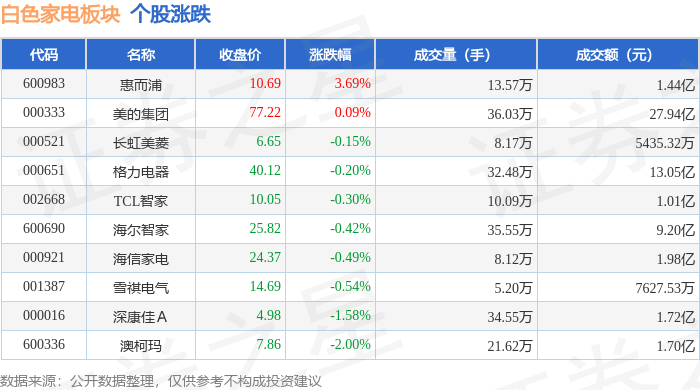
白色家电板块1月15日跌0.08%,澳柯玛领跌,主力资金净流入4.01亿元
Zheng Xing Xing Ye Ri Bao· 2026-01-15 08:53
Core Viewpoint - The white goods sector experienced a slight decline of 0.08% on January 15, with Aucma leading the drop, while the Shanghai Composite Index fell by 0.33% and the Shenzhen Component Index rose by 0.41% [1] Group 1: Market Performance - The closing price of Whirlpool was 10.69, with an increase of 3.69% and a trading volume of 135,700 shares, amounting to 144 million yuan [1] - Midea Group closed at 77.22, with a marginal increase of 0.09%, trading 360,300 shares for a total of 2.794 billion yuan [1] - Gree Electric Appliances closed at 40.12, down by 0.20%, with a trading volume of 324,800 shares and a transaction value of 1.305 billion yuan [1] - Haier Smart Home closed at 25.82, down by 0.42%, with a trading volume of 355,500 shares and a transaction value of 920 million yuan [1] - Aucma closed at 7.86, down by 2.00%, with a trading volume of 216,200 shares and a transaction value of 170 million yuan [1] Group 2: Capital Flow - The white goods sector saw a net inflow of 401 million yuan from institutional investors, while retail investors experienced a net outflow of 12.22 million yuan [1] - Midea Group had a net inflow of 24.4 million yuan from institutional investors, but a net outflow of 35.4 million yuan from retail investors [2] - Haier Smart Home recorded a net inflow of 11.9 million yuan from institutional investors, with a significant net outflow of 122 million yuan from retail investors [2] - Gree Electric Appliances had a net inflow of 61.64 million yuan from institutional investors, while retail investors saw a net outflow of 14.52 million yuan [2] - Aucma experienced a net outflow of 18.75 million yuan from institutional investors, but a net inflow of 13.98 million yuan from retail investors [2]







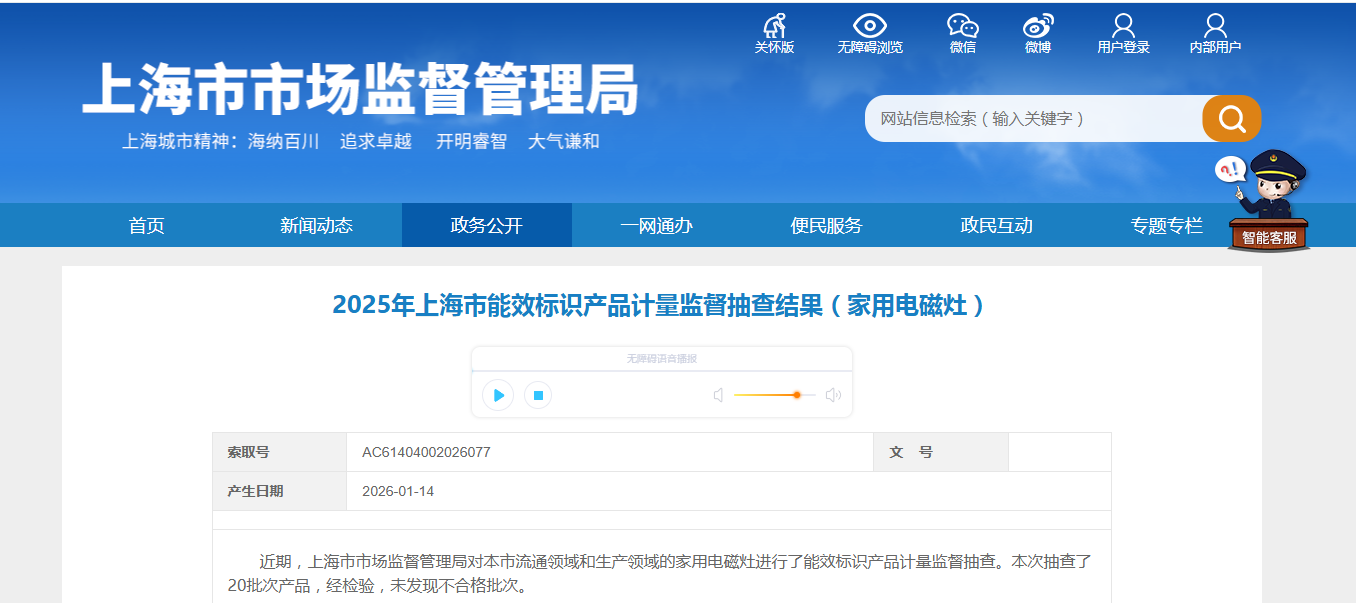
2025年上海市能效标识产品计量监督抽查结果(家用电磁灶)公布
Zhong Guo Zhi Liang Xin Wen Wang· 2026-01-15 07:40
中国质量新闻网讯 近日,2025年上海市能效标识产品计量监督抽查结果(家用电磁灶)公布。 附原文: 本次监督抽查依据为《SHSSXZJL4004-2025上海市能效水效标识产品计量监督抽查实施细则(家用电磁灶)》。具体抽查结果如下: 2025年上海市家用电磁灶能效标识产品计量监督抽查所检项目符合相关标准的产品 | 样品标称 | 标称商标 | 标称规格型号 | 标称生产日 | 标称生产者名称 | 被抽样生产者、销售者 | 被抽样销售者所在商场/ | 认证机构 | | --- | --- | --- | --- | --- | --- | --- | --- | | 名称 | | | 期/批号 | | | 电商平台 | | | 电磁炉 | 图形商标 | TCL09 | 2025.01/- | 纯米科技(上海)股份有 | | / / 淘宝 | 中国质量认证中心 | | | | | | 限公司 | | | 有限公司 | | 电磁灶 | 林内 | C22B12 | | 2023-03-15/- 上海林内有限公司 | | / / / | 威凯认证检测有限 | | | | | | | | | 公司 | | 电磁炉 | 小熊 ...


中国家电板块 2026 展望:补贴相关消费调研显示不同品类需求分化-China Consumer Appliances Sector_ Outlook 2026_ Consumer survey on subsidies shows diverging demand across categories
2026-01-15 06:33
Summary of Key Points from the Conference Call Industry Overview - **Industry**: China Consumer Appliances Sector - **Outlook**: The major appliance sector is entering a post-subsidy downcycle in H225-27, with expectations of subdued domestic demand in H126 due to fading subsidy benefits. However, demand may stabilize in H226 and potentially turn around in 2027 [2][11]. Core Insights - **Domestic Demand**: Anticipated declines in shipments for air conditioners (AC), washing machines (WM), refrigerators, and range hoods by 5%, 2%, 4%, and 5% YoY respectively in 2026, as trade-in subsidies continue to impact the market [2]. - **Average Selling Price (ASP)**: Expected to remain stable in 2026, with potential product mix downgrades offset by industry-wide price hikes led by Midea due to rising copper prices [2][36]. - **Consumer Survey Findings**: A UBS Evidence Lab survey indicated limited upside in white goods demand for 2026, with a median household budget for home appliances expected to drop by 11% YoY, particularly in tier-1 cities where the decline is projected at 27% [3][27]. Export Challenges and Opportunities - **Exports**: Global white goods demand is projected to grow by 1.5% YoY in 2026, but Chinese exports of AC, WM, and refrigerators are expected to decline by 4.0%, 0.2%, and 4.3% YoY respectively. Exports to Europe and the US are likely to remain muted due to US tariffs and capacity relocation [4][16]. - **Emerging Markets**: There is potential for demand growth in emerging markets and the US, particularly with lower interest rates [4][16]. Stock Recommendations - **Buy Ratings**: Midea, Haier, Hisense, and Roborock are recommended for their potential to consolidate market share and grow margins through price hikes. Midea is favored for its overseas demand exposure, Haier for its margin upside from US rate cuts, and Roborock as a beneficiary of trade-in subsidies [5][10]. - **Sell Rating**: Gree is viewed as vulnerable to domestic headwinds [5]. Earnings Forecast Adjustments - **Earnings Forecasts**: Adjustments made due to lower-than-expected domestic appliance sales and rising raw material prices, particularly copper. Price targets for major appliance companies have been revised upwards as valuations are rolled forward to 2027 [7][8]. Consumer Behavior Insights - **Purchase Intentions**: The survey revealed a decline in purchase intentions across most categories, with notable increases for TVs and cleaning appliances. The largest declines were seen in AC and WM, likely due to prior subsidy usage [3][27]. - **RVC Market**: Purchase intentions for leading robot vacuum cleaner brands (Ecovacs, Roborock, Dreame) have increased, indicating a shift towards these products due to improved affordability and consumer education [3][44]. Additional Insights - **Subsidy Impact**: The impact of trade-in subsidies has been significant, with 128 million units purchased in 2025. However, the demand pull-forward effect suggests limited upside for 2026 [19][26]. - **Market Trends**: The importance of smart features and integration with smart home platforms is rising among consumers when selecting RVCs, indicating a trend towards more technologically advanced products [45]. This summary encapsulates the key points from the conference call, highlighting the current state and future outlook of the China consumer appliances sector, along with consumer behavior trends and stock recommendations.


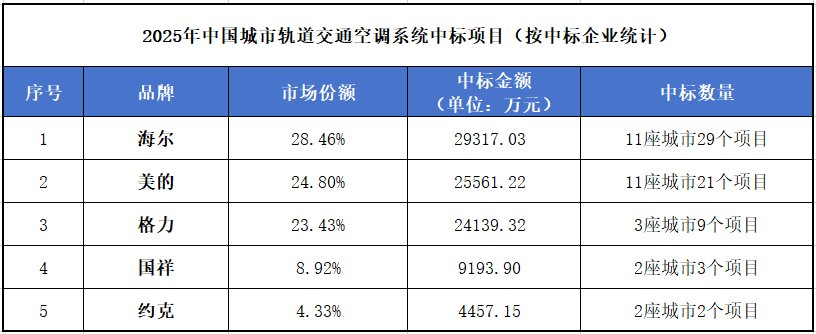
海尔、格力、美的包揽中国城轨空调超7成市场
Xin Lang Cai Jing· 2026-01-15 03:32
Core Insights - The report reveals that Haier, Midea, and Gree dominate the Chinese urban rail air conditioning market, collectively holding over 76% market share, indicating a significant shift from foreign brands that were once prominent in this sector [1][2]. Market Share and Bidding Data - Haier holds a market share of 28.46%, with a winning bid amount of 29,317.03 million yuan across 29 projects in 11 cities [2] - Midea follows with a 24.80% market share and a bid amount of 25,561.22 million yuan for 21 projects in 11 cities [2] - Gree has a market share of 23.43%, securing 24,139.32 million yuan in bids for 9 projects in 3 cities [2] - Other brands like Guoxiang and York hold smaller shares, with Guoxiang at 8.92% and York at 4.33% [2] Historical Context - Initially, foreign brands dominated the urban rail air conditioning market in China, starting from the first Beijing subway line in 1965, with local brands just beginning to emerge in the 1990s [2][3]. - Haier's breakthrough came in 2005 when it won a bid for the Guangzhou Metro Line 3, marking the end of foreign brand monopoly [3]. Competitive Landscape - Chinese brands have developed unique strategies: Midea focuses on high-efficiency systems and smart controls, while Gree emphasizes the localization of core components [5]. - Other specialized brands like Guoxiang and Shenling have established technical barriers in niche markets, contributing to a multi-layered competitive landscape among Chinese brands [5]. Future Outlook - The competition is shifting from a focus on foreign versus domestic brands to how Chinese brands can innovate in greener and smarter technologies, driving sustainable development in urban rail transportation both in China and globally [5].
“广货行天下”春季行动在佛山启幕!家电专场“打头炮”
Nan Fang Du Shi Bao· 2026-01-15 01:19
Core Viewpoint - The "Guanghuo Goes Global" Spring Action, launched on January 15, 2026, in Foshan, Guangdong, aims to stimulate consumer demand and enhance the market presence of high-quality Guangdong products through a series of promotional activities involving over 6,000 enterprises and major commercial platforms [6][8][10]. Group 1: Event Overview - The event features nearly 30 key activities, with participation from over 10 large commercial platforms and approximately 6,000 enterprises across various sectors including home appliances, mobile phones, clothing, food, and more [8]. - The home appliance promotion event on the same day gathered more than 1,300 local home appliance companies, showcasing quality products and conducting live-stream sales [10]. Group 2: Economic Context - The initiative is part of a broader strategy to boost domestic demand and optimize supply in Guangdong, a major manufacturing and consumption province, to support economic recovery and industrial upgrading [6][8]. Group 3: Promotional Strategies - The promotional campaign employs a multi-layered discount structure involving government subsidies, enterprise discounts, and platform support, effectively stimulating consumer spending [11]. - Consumers can benefit from various discounts, including government "national subsidies" and brand-specific promotions, with some companies offering up to 15% off through trade-in programs [14]. Group 4: Consumer Engagement - The event includes additional incentives such as gifts, service upgrades, and exclusive discounts for consumers who use specific codes during purchases, enhancing the overall shopping experience [15]. - Companies are also implementing ongoing promotional activities throughout the first quarter, ensuring sustained consumer engagement and value [15].
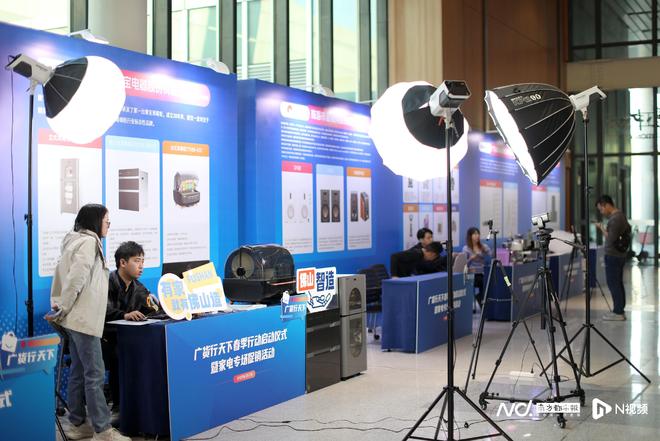
展示广东制造实力 传递品牌价值
Nan Fang Du Shi Bao· 2026-01-14 23:14
Core Viewpoint - Guangdong's manufacturing industry is evolving, with a strong emphasis on quality and innovation, positioning itself as a global leader in various sectors, including smart home appliances, food production, and beauty products [12][16][20]. Industry Overview - Guangdong accounts for approximately 30% of the global smart home appliance market, with significant contributions from companies like Gree and Skyworth [12][20]. - The province's cross-border e-commerce has expanded 66 times over the past nine years, holding over one-third of the national market share [13]. - By 2027, Guangdong aims for its food industry output to exceed 1.5 trillion yuan, with mooncake production leading the nation [14]. Ecosystem and Collaboration - Guangdong's manufacturing ecosystem includes 31 major manufacturing categories, with 15 being the largest in the country, fostering a collaborative environment that enhances efficiency and innovation [15][16]. - The textile and apparel sector has developed micro-ecosystems that allow for rapid production cycles, exemplified by a one-day turnaround from design to delivery [15]. - In consumer electronics, the "one-hour industrial circle" around Dongguan enables quick assembly of mobile phone components, supporting brands like Huawei and OPPO [15]. Technological Innovation - The integration of AI into manufacturing processes is transforming user experiences, with companies focusing on personalized solutions rather than just standardized products [17][19]. - Gree's smart factories and Skyworth's AI-driven product recommendations illustrate the shift towards technology that enhances daily life [18]. Global Expansion Initiatives - The "Guangdong Goods Going Global" initiative aims to strengthen market presence and brand recognition, particularly for small and medium enterprises [20][21]. - Experts suggest that enhancing brand image and leveraging high-tech innovations are crucial for Guangdong's global competitiveness [21]. Future Outlook - Guangdong's manufacturers are encouraged to harness traditional cultural elements alongside technological advancements to create unique products that resonate globally [21]. - The combination of a robust industrial ecosystem, innovative technologies, and rich cultural heritage positions Guangdong to redefine its global market presence [21].


好货好物尽在广东,2026“广货行天下”春季行动全球启幕
21世纪经济报道· 2026-01-14 11:16
Core Viewpoint - The "Guangdong Goods Going Global" Spring Action is set to launch on January 15, 2026, in Foshan, aiming to enhance the visibility and market influence of high-quality Guangdong products through government support and participation from major enterprises and platforms [1]. Group 1: Event Overview - The event is organized by multiple provincial departments, including the Provincial Propaganda Department and the Provincial Department of Commerce, to boost online sales of quality products from Guangdong [1]. - Over 6,000 enterprises from various sectors such as home appliances, mobile phones, clothing, food, smart devices, automotive, beauty products, and agriculture will participate [1]. - More than 10 major commercial platforms, including Alibaba International, JD.com, and Douyin, along with numerous offline supermarkets, will support the initiative [1]. Group 2: Promotion Strategy - A selection of key industries and quality brands will be promoted weekly, focusing on high-quality and cost-effective products [2]. - The initiative will connect with retailers, distributors, and buyers to facilitate demand collection and production-sales matching activities [2]. - Local cities will engage leading enterprises and industry clusters to organize promotional activities that integrate products with cultural tourism [2]. Group 3: Specific Activities - The launch event will feature a home appliance promotion with participation from over 1,300 local appliance companies, including major brands like Midea and Gree [2]. - The event will include live streaming sales to showcase high-quality products from Guangdong's appliance sector [2].

白色家电板块1月14日涨0.59%,雪祺电气领涨,主力资金净流入2.41亿元
Zheng Xing Xing Ye Ri Bao· 2026-01-14 08:50
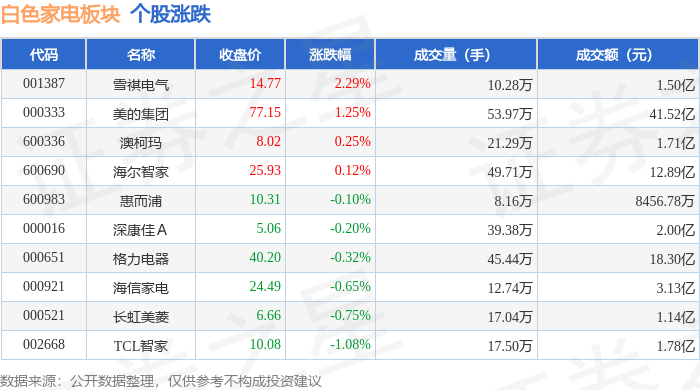
Core Viewpoint - The white goods sector experienced a slight increase of 0.59% on January 14, with Xueqi Electric leading the gains, while the overall Shanghai Composite Index fell by 0.31% [1] Group 1: Market Performance - The Shanghai Composite Index closed at 4126.09, down 0.31% [1] - The Shenzhen Component Index closed at 14248.6, up 0.56% [1] - The white goods sector's individual stock performance varied, with Xueqi Electric rising by 2.29% to a closing price of 14.77 [1] Group 2: Stock Details - Midea Group closed at 77.15, up 1.25%, with a trading volume of 539,700 shares and a transaction value of 4.152 billion yuan [1] - Gree Electric closed at 40.20, down 0.32%, with a trading volume of 454,400 shares and a transaction value of 1.830 billion yuan [1] - Haier Smart Home closed at 25.93, up 0.12%, with a trading volume of 497,100 shares and a transaction value of 1.289 billion yuan [1] Group 3: Capital Flow - The white goods sector saw a net inflow of 241 million yuan from main funds, while retail funds experienced a net outflow of 277 million yuan [1] - Retail investors contributed a net inflow of 35.78 million yuan to the sector [1] Group 4: Individual Stock Capital Flow - Midea Group had a net inflow of 25.17 million yuan from main funds, while retail funds saw a net outflow of 13.28 million yuan [2] - Xueqi Electric experienced a net inflow of 23.11 million yuan from main funds, but retail funds had a significant net outflow of 22.26 million yuan [2] - TCL Smart Home had a net inflow of 17.91 million yuan from main funds, while retail funds saw a net outflow of 22.50 million yuan [2]
家电行业2025年年报前瞻:黎明前夕,沉潜以待
Guolian Minsheng Securities· 2026-01-14 08:22
Investment Rating - The report maintains a "Recommend" rating for the home appliance industry [1] Core Insights - The industry is at a turning point, with expectations for improved performance in 2026 as domestic demand stabilizes and export orders recover [35] - The report highlights the resilience of leading companies in the white goods sector, with a focus on their ability to navigate through challenging market conditions [7][10] - The overall market dynamics indicate a potential for growth in emerging markets, alongside innovation and product expansion in domestic markets [35] Summary by Sections 1. White Goods - External sales are recovering steadily, while internal sales are expected to remain stable in Q4 2025. Leading companies are well-positioned to benefit from favorable demand and cost environments [7][10] - Q4 2025 internal sales for air conditioners, refrigerators, and washing machines are projected to decline by 31%, 11%, and 6% respectively, due to high base effects from the previous year [10] - External sales for refrigerators and washing machines are expected to show modest growth, with a 3% increase for refrigerators and a 9% increase for washing machines [10] 2. Black Goods - The report indicates that the color TV market is under pressure, with internal sales declining significantly due to high base effects from previous subsidies [15] - External sales remain relatively stable, with a slight decline of 2% expected in Q4 2025 [15][16] - Leading brands are expected to improve their profitability through product innovation and market share gains [15] 3. Cleaning Appliances - External sales continue to grow, while internal sales face challenges due to high base effects from previous subsidies [19] - The report notes a decline in retail sales for floor cleaning machines and washing machines, with internal sales dropping by 25% and 8% respectively [20] - The external market shows strong growth, particularly in Europe and Asia-Pacific, although competition remains intense [21] 4. Small Appliances - Domestic prices are rising, but external demand remains weak, with overall growth in retail sales expected to be between 0-10% [30] - The report highlights structural improvements in pricing and product upgrades, which may support profit margins in the domestic market [30] - External sales are under pressure due to overall weak demand in international markets [30] 5. Post-Cycle - The report indicates a downturn in demand for major kitchen appliances, with significant declines in retail sales across various categories [33] - The real estate market remains sluggish, impacting demand for kitchen appliances, and the report anticipates continued pressure on sales [33] - The upcoming subsidy policies are expected to have limited coverage, which may further affect market dynamics [33] 6. Industry Views and Investment Recommendations - The report suggests that the home appliance sector is poised for recovery in 2026, with expectations for improved fundamentals and potential surprises in export performance [35] - Recommended stocks include leading white goods manufacturers such as Midea Group, Haier Smart Home, Gree Electric, and Hisense Home Appliances, as well as TV manufacturers like Hisense Visual and TCL Electronics [35]

格力加快布局AI家电矩阵,全力构建全屋智能健康生态
Quan Jing Wang· 2026-01-14 03:22
Core Insights - The Chinese home appliance market is undergoing a significant transformation towards AI-driven products, moving from mere functionality to understanding and serving user needs [1][2] - The smart home market is projected to exceed 952.3 billion yuan, with AI penetration surpassing 50%, indicating a shift from "connected appliances" to "intelligent entities that understand users" [1][3] Industry Trends - The transition from "pseudo-intelligence" to "true AI" is reshaping the home appliance industry, with traditional products often failing to deliver genuine smart capabilities [2][3] - AI technology breakthroughs, particularly in large language models and multi-modal perception, are creating new opportunities for innovation in the home appliance sector [2][4] Market Dynamics - A report indicates that 83% of consumers are willing to pay a premium for effective health technologies, with health-related appliance searches increasing by 4.9 times from 2022 to 2025 [3][4] - Government policies are increasingly supporting the AI sector, promoting initiatives that encourage the development of smart appliances and enhancing supply in the market [3][4] Competitive Landscape - Gree Electric Appliances is positioning itself as a leader in the AI home appliance market with a focus on "AI + energy-saving + health" as its competitive edge [5][6] - The company aims to leverage its strong manufacturing capabilities and core technologies to create differentiated products that meet consumer demands for health and energy efficiency [5][6] Product Innovations - Gree's AI product lineup includes key categories such as air conditioners, washing machines, and water purifiers, designed to address clear user pain points related to health and comfort [8][9] - The AI Cool King air conditioner features dynamic energy-saving technology, achieving a 13.6% reduction in annual energy consumption compared to standard models, showcasing Gree's commitment to energy efficiency [10][11] Consumer Engagement - Gree's "Dong Mingzhu Health Home" stores provide immersive experiences for consumers, allowing them to interact with AI appliances and understand their benefits firsthand [18][19] - The company is capitalizing on the trend of upgrading existing appliances through policies that encourage consumers to replace older models with AI-enabled products [7][8] Future Outlook - The AI home appliance sector is expected to mature and scale significantly by 2026, driven by ongoing technological advancements and evolving consumer preferences [18][19] - Gree's strategy emphasizes a balance between self-developed technologies and ecosystem partnerships, positioning the company to capitalize on the growing demand for intelligent home solutions [19]
