GREE(000651)

Search documents
格力电器:公司在越南市场采取本地区域代理营销模式
Zheng Quan Ri Bao Wang· 2025-12-09 14:12
证券日报网讯12月9日,格力电器(000651)在互动平台回答投资者提问时表示,公司在越南市场采取 本地区域代理营销模式,与当地经销伙伴的合作关系已持续十余年。 ...

格力电器:年轻消费者普遍青睐简约的主流浅色系设计
Zheng Quan Ri Bao Wang· 2025-12-09 14:10
Core Insights - Gree Electric Appliances (000651) has identified a trend among young consumers favoring minimalist designs in light color schemes, indicating a shift in consumer preferences towards aesthetic and material quality [1] Company Insights - The company conducted research revealing that young consumers prefer products made from materials such as glass and acrylic, which are perceived as having a higher quality [1]
【行业深度】洞察2025:中国全屋智能行业竞争格局及市场份额(附市场竞争派系、区域分布、出海情况、研发能力对比)
Qian Zhan Wang· 2025-12-09 13:45
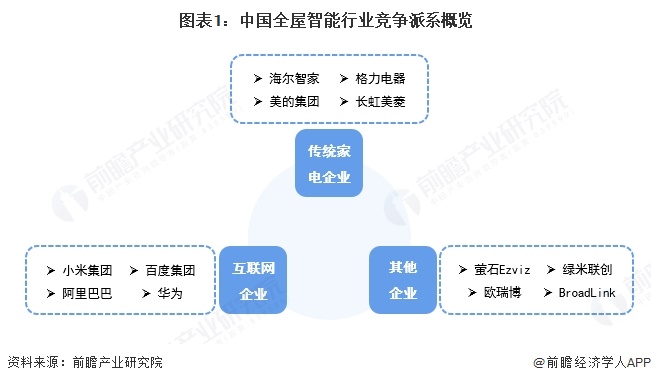
Core Insights - The article discusses the competitive landscape of China's whole-home smart industry, highlighting the key players and their strengths in the market. Group 1: Industry Overview - China's whole-home smart industry can be categorized into three competitive factions: traditional home appliance companies, internet companies, and other specialized firms [2][4]. - Major traditional home appliance companies include Haier Smart Home, Midea Group, and Gree Electric, which have strong supply chains and brand advantages [2]. - Internet companies like Xiaomi, Baidu, Alibaba, and Huawei possess significant technological and financial strengths [2]. Group 2: Competitive Landscape - The competitive landscape is diverse and layered, with Huawei focusing on high-end solutions, Xiaomi targeting the mass market, and traditional brands like Haier and Midea leveraging their appliance roots for comprehensive solutions [5]. - Companies such as UIOT and Aqara specialize in technical niches, while Tuya Smart empowers the industry with an open cloud platform [5]. Group 3: Company Profiles - **Huawei Harmony Smart Home**: Offers a wide range of smart ecosystem products with strong compatibility and stability, leveraging its communication technology [8]. - **Xiaomi Mi Home**: Focuses on a comprehensive ecosystem that includes mobile and smart home devices, known for high cost-performance [8]. - **Haier Smart Home**: Provides integrated smart home solutions with a strong global supply chain and localized service capabilities [8]. - **Gree Electric**: Primarily focuses on smart home products related to air conditioning, with a strong brand influence and product reliability [10]. - **Stone Technology**: Specializes in robotic vacuum cleaners with advanced technology and high user satisfaction [10]. Group 4: Market Dynamics - The industry shows a significant presence of registered companies in Anhui Province, with notable activity in Guangdong, Jiangsu, and Shandong [11]. - Companies like Stone Technology and Haier Smart Home have a high proportion of overseas business, indicating the importance of international markets [13]. - R&D investment varies significantly among companies, with Xiaomi leading with over 15 billion yuan in recent years [16]. Group 5: Competitive Threats and Customer Dynamics - The threat of new entrants is low due to high capital requirements and established ecosystems [18]. - The bargaining power of downstream customers is strong, with consumers being price-sensitive and B2B clients seeking cost reductions [18]. - The bargaining power of suppliers is moderately strong, particularly for core components like high-end chips and sensors [18]. Group 6: Overall Competition Status - The competition is intense and characterized by differentiation, with major players like Huawei and Xiaomi holding significant market shares [19]. - The focus of competition is on technological innovation, ecosystem compatibility, cost-effectiveness, and channel expansion [19].





周云杰与海尔智家的四年之困:难破2500亿市值魔咒?
Xin Lang Cai Jing· 2025-12-09 13:11
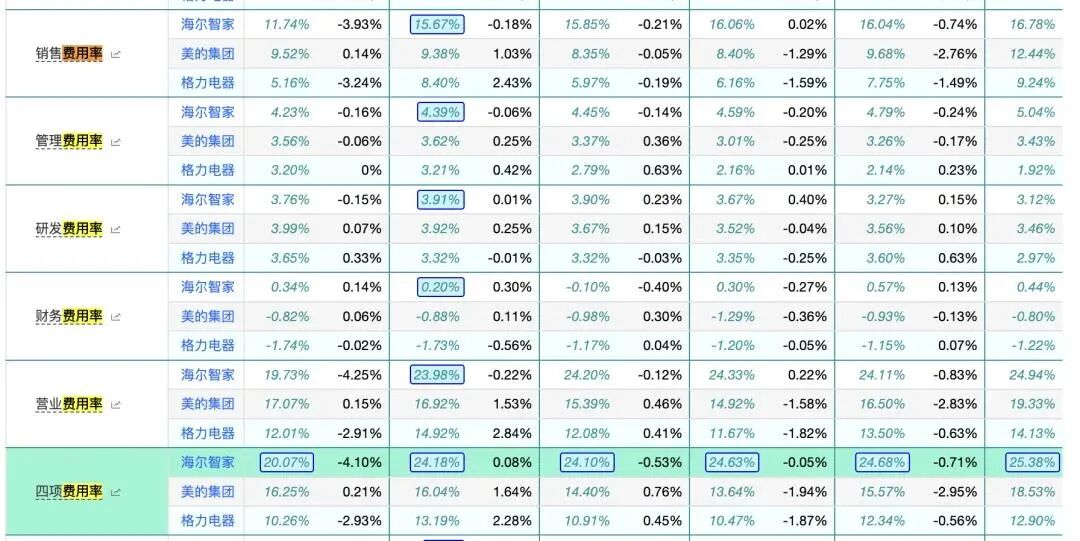
Core Viewpoint - Haier Smart Home has struggled to escape a low valuation trap, with its market capitalization hovering around 250 billion yuan for four years, while competitors like Midea have achieved significantly higher valuations through strategic narratives and business diversification [2][3][7]. Group 1: Market Perception and Valuation - Investors have two common misconceptions about Haier Smart Home: first, they incorrectly compare it directly with Midea, which has a market cap of approximately 600 billion yuan, leading to the belief that Midea has a dominant advantage in the home appliance market [4][5]. - The second misconception is regarding Haier's hidden assets, as many believe that Haier Smart Home does not represent the entire Haier Group, which has substantial off-balance-sheet assets. However, even when aggregating these assets, the total market value is only around 350 billion yuan [6]. - The core issue of Haier's valuation dilemma is the lack of narrative premium, as the market has grown weary of old stories and prefers companies that can present innovative technological narratives [7][8]. Group 2: Financial Performance and Efficiency - Under the leadership of Zhou Yunjie, Haier Smart Home's revenue increased from 227.5 billion yuan to over 280 billion yuan, and net profit rose from 11.8 billion yuan to 17.8 billion yuan, yet the market cap has remained stagnant [11]. - Haier Smart Home's current price-to-earnings (P/E) ratio is approximately 14 times, which is not low compared to Midea and Gree, but the company's profitability is hindered by high operational costs, leading to a low net profit margin of 6.9% compared to Midea's 9.5% [12][15]. - The company's high expense ratios, including a sales expense ratio of 11.7% and a management expense ratio of 4.2%, contribute to a total expense ratio that has reached 24.18%, significantly higher than Midea's 16.92% and Gree's 14.92% [16][18]. Group 3: Strategic Choices and Globalization - Haier's strategy over the past decade has focused on globalization and acquisitions, which has led to a complex organizational structure and high management costs, ultimately impacting profitability [19][20]. - The company has expanded its global footprint, with nearly 50% of its revenue coming from overseas markets, but the integration of acquired companies has proven challenging, leading to inefficiencies [20][21]. - Unlike Midea, which has focused on internal innovation and B2B transformation, Haier has faced difficulties in managing its expansive global operations, resulting in a scale trap where increased revenue does not translate to higher profits [22]. Group 4: External Market Pressures - Haier faces significant external pressures, including the waning of policy incentives that previously boosted the home appliance sector, with a reported 3.2% year-on-year decline in retail sales for the industry [23][24]. - The high-end segment, once a strong growth driver for Haier, has also shown signs of slowing, with sales growth for its premium brand, Casarte, declining from 14% in 2023 to 12% in 2024 [25]. - Additionally, growth in overseas markets has stagnated, with the Americas and Australia showing minimal growth rates of 2.4% and 1%, respectively, while other major markets are under significant pressure [26].
格力电器:目前公司已开发可用在人形机器人上的关节模组等核心零部件
Mei Ri Jing Ji Xin Wen· 2025-12-09 12:50
Group 1 - The company has made significant advancements in the research of core components and key technologies for industrial robots, including servo motors, servo drives, motion controllers, reducers, and robot dynamics [1] - The company has successfully developed a full range of robotic products, including six-axis robots, SCARA robots, welding robots, and collaborative robots, with payload capacities ranging from 3kg to 600kg [1] - The company is focusing on the development of core components for humanoid robots, such as joint modules, and will continue to monitor the development of the humanoid robot industry [1] Group 2 - An investor inquired about the company's plans to develop humanoid robots, especially in light of recent product launches by competitors like Midea [2] - The company is recognized for its advanced technology accumulation in industrial machinery, suggesting potential opportunities in the emerging humanoid robot market [2]
早报(12.09)| 芯片突发!特朗普终于松口;美联储降息大消息;谷歌首款AI眼镜将问世
Ge Long Hui· 2025-12-09 00:18
Group 1 - Trump announced that Nvidia is allowed to export H200 AI chips to "approved customers" in China, with the U.S. requiring a 25% revenue share from sales, applicable to companies like AMD as well [2] - The White House economic advisor Hassett stated that Trump will announce numerous positive economic messages and advocated for continued interest rate cuts by the Federal Reserve, emphasizing that the extent of cuts should depend on data [2] - Trump plans to introduce a "One Rule" executive order to streamline regulations for AI businesses, asserting that companies should not need separate approvals from all 50 states for operations [2] Group 2 - The Dow Jones fell by 0.45%, the Nasdaq decreased by 0.14%, and the S&P 500 dropped by 0.35%, with most large tech stocks declining [3][4] - Notable declines included Tesla down over 3%, Google down over 2%, and Amazon down over 1%, while Nvidia and Microsoft saw gains of over 1% [3][4] - The Nasdaq Golden Dragon China Index rose by 0.08%, with Baidu up over 3% and Xpeng up over 2%, while Netease fell over 2% [3] Group 3 - WTI crude oil futures fell by $1.20, nearly 2%, closing at $58.88 per barrel, while Brent crude oil futures dropped by $1.26, or 1.98%, to $62.49 per barrel [5][7] - Spot gold decreased by 0.13% to $4190.48 per ounce, and spot silver fell by 0.22% to $58.13 per ounce [5][7] Group 4 - OpenAI reported a 143% increase in global paid enterprise users, with over 100,000 companies using its AI products, and employees saving 40 to 60 minutes daily using AI [11] - The technology sector saw an 11-fold increase in AI usage, with rapid growth in international markets like Germany and Japan [11] Group 5 - Paramount announced a hostile takeover bid for Warner Bros. at $30 per share, totaling $108.4 billion, following Netflix's recent agreement to acquire part of Warner's core business [12] - Trump expressed his intention to be involved in the Netflix acquisition decision, citing concerns over market share [12] Group 6 - Apple’s hardware technology senior vice president denied rumors of leaving the company, while the iPhone 17 Pro series saw a price drop, with the Pro model reduced from 8999 yuan to 8699 yuan [13]






格力电器:未来,公司将继续加快公司环境电器、厨电冰洗等产品的市场推广
Zheng Quan Ri Bao Wang· 2025-12-08 13:50
证券日报网讯12月8日,格力电器(000651)在互动平台回答投资者提问时表示,目前公司智能家居服 务平台"格力+"APP已接入格力全系空调、环境电器、厨电冰洗等家电产品以及第三方光照、安全、娱 乐等智能产品,支持用户通过语音交互、房间分区管理等功能实现设备管理和便捷控制操作,满足全屋 智能需求。格力+APP已适配鸿蒙系统,并已与天猫、京东等主流生态平台达成合作,双向赋能构建稳 定可靠的万物互联技术底座。未来,公司将继续加快公司环境电器、厨电冰洗等产品的市场推广,持续 完善全屋智能生态布局。 ...
高股息精选概念下跌0.38%,10股主力资金净流出超亿元
Zheng Quan Shi Bao Wang· 2025-12-08 10:07
Group 1 - The high dividend selection concept index fell by 0.38%, ranking among the top declines in concept sectors, with notable declines in companies such as Siwei Control, Lianmei Holdings, and Ordos [1][2] - Among the high dividend selection concept stocks, 67 stocks saw price increases, with the top gainers being Dayuan Pump Industry, Luyan Pharmaceutical, and Jinheng Commercial Management, which rose by 4.22%, 4.04%, and 3.82% respectively [1][2] Group 2 - The high dividend selection concept experienced a net outflow of 1.304 billion yuan, with 136 stocks facing net outflows, and 10 stocks seeing outflows exceeding 100 million yuan [2] - China Pacific Insurance led the outflow with a net outflow of 275.19 million yuan, followed by China Mobile, Gree Electric, and Yanzhou Coal Mining with net outflows of 173.11 million yuan, 160.59 million yuan, and 144.70 million yuan respectively [2][3] - The top inflow stocks included 37 Interactive Entertainment, Ping An Insurance, and Pudong Development Bank, with net inflows of 130 million yuan, 116 million yuan, and 98.41 million yuan respectively [2][3] Group 3 - The concept sectors with the highest gains included Co-packaged Optics (CPO) at 4.72%, F5G concept at 4.30%, and Optical Fiber concept at 3.67% [2] - Conversely, sectors with the largest declines included Tianjin Free Trade Zone at -0.99%, Glyphosate at -0.86%, and Coal concept at -0.51% [2]



董明珠与孟羽童再度合体,格力冬测抗寒大考来了
Xin Lang Cai Jing· 2025-12-08 04:44
Group 1 - Gree Electric Appliances will conduct a "100-hour live extreme cold survival challenge" event in Fuyuan City, Heilongjiang from December 11 to 15 [1] - On December 14, Gree's Chairman Dong Mingzhu will be present at the event alongside Meng Yutong to demonstrate the heating capabilities of Gree air conditioners in extreme cold conditions [1]
现在的格力电器,到底是一只股票还是债券?
晚点LatePost· 2025-12-08 03:20
Core Viewpoint - Gree Electric Appliances is a leading company in the A-share market known for its substantial and consistent dividend payouts, which have become a core value label for the company. However, concerns about the sustainability of these dividends and the company's growth prospects are evident, as Gree faces challenges in revenue growth and strategic alignment [5][6][7]. Group 1: Dividend and Financial Performance - Gree's cumulative dividends have exceeded 170 billion yuan since its listing, while the company has only raised 5 billion yuan from the market, highlighting a significant disparity between dividends and capital raised [5]. - The company has maintained a high dividend payout ratio of over 50% in recent years, likening its dividends to a perpetual bond that provides fixed returns to shareholders [25][28]. - Despite a rolling PE ratio of approximately 7, significantly lower than competitors like Haier and Midea, Gree's stock price remains stable due to its consistent dividend policy [25][28]. Group 2: Revenue and Business Structure - Gree's revenue has stagnated around 200 billion yuan from 2018 to 2024, with a projected decline of about 7% year-on-year for 2025, indicating a passive development situation amid increasing market competition [7][22]. - The company's revenue is primarily derived from its manufacturing business, with a smaller portion from other business activities, which have fluctuated due to market conditions [10][11]. - The share of Gree's air conditioning business has decreased from 97.4% in 2011 to 86.6% in 2023, while the share of home appliances has seen minimal growth, reflecting challenges in diversifying its product offerings [13][15]. Group 3: Market Position and Competition - Gree's international business remains underdeveloped, with its market share not exceeding 20%, trailing behind competitors like Midea and Haier, primarily due to its conservative approach to overseas expansion [18][19]. - The company faces significant competition from both established players and emerging brands, complicating its efforts to regain market share and achieve growth in a challenging environment [50][51]. - Gree's channel reform efforts aim to streamline operations and improve profitability, but the effectiveness of these reforms in driving growth remains uncertain [51][60]. Group 4: Challenges and Strategic Outlook - Gree is currently navigating multiple internal and external challenges, including a prolonged inventory destocking cycle and declining demand in both domestic and international markets [22][48]. - The company's reliance on a high dividend payout may limit its ability to invest in growth initiatives, creating a paradox where maintaining dividends could hinder long-term strategic flexibility [60][61]. - The ongoing channel reforms are critical for Gree to adapt to market changes, but the complexity of its governance structure and the need for consensus among diverse stakeholders pose significant hurdles [59][61].