GREE(000651)

Search documents
格力朱磊再度“引战”小米:制造业要脚踏实地,不要口蜜腹剑
Guan Cha Zhe Wang· 2025-10-20 10:15
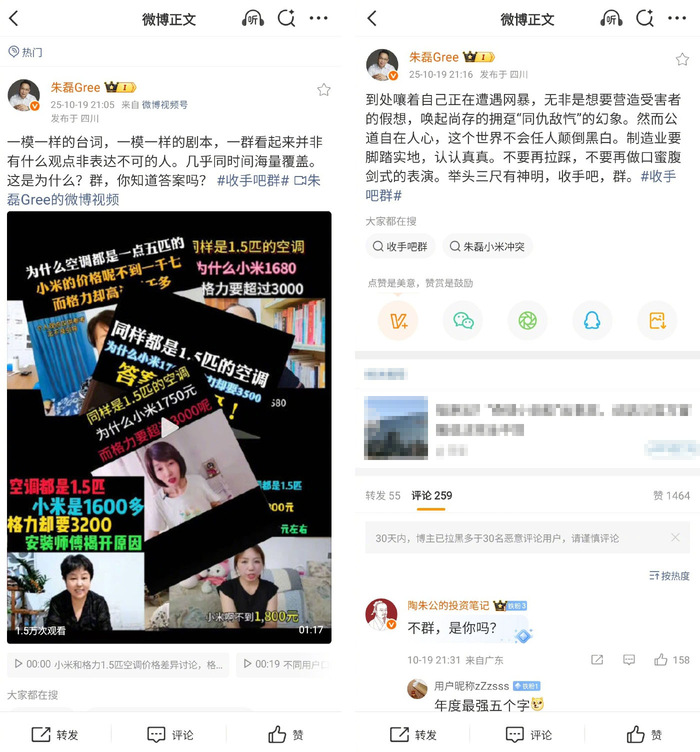
Core Viewpoint - Gree Electric's marketing director, Zhu Lei, has made comments on social media that appear to criticize Xiaomi, reigniting public interest in the ongoing brand rivalry between Gree and Xiaomi [1][2] Group 1: Social Media Comments - Zhu Lei's first Weibo post highlighted the price differences between Gree and Xiaomi's air conditioners, questioning why Xiaomi's 1.5 HP model is priced around 1,680 while Gree's exceeds 3,000 [1] - In his second post, Zhu Lei suggested that Xiaomi is attempting to portray itself as a victim to rally support, implying that the truth will prevail despite any attempts to distort it [2] Group 2: Historical Context - The rivalry between Gree and Xiaomi in the air conditioning market has a long history, including a notable "bet" between Gree's chairman, Dong Mingzhu, and Xiaomi's founder, Lei Jun, regarding Xiaomi's revenue surpassing Gree's within five years [2] - Tensions have escalated over product marketing and market share, with both companies frequently engaging in public disputes, including a recent argument over online sales data where Xiaomi's market share surpassed Gree's for the first time [2]



格力朱磊发博质疑 “汽车博主” 统一话术:称公关套路难敌良知
Xin Lang Ke Ji· 2025-10-20 09:33
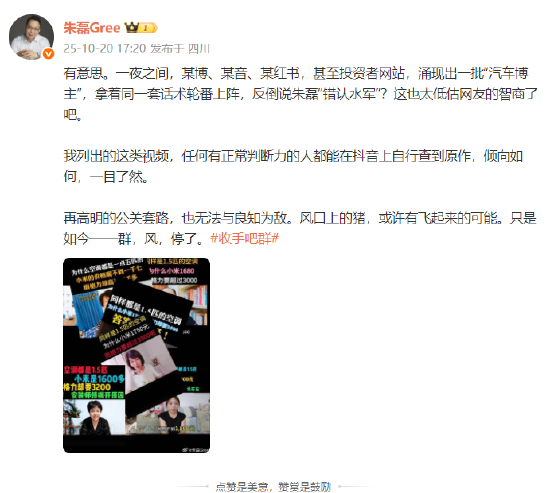
Core Viewpoint - The marketing director of Gree Electric Appliances, Zhu Lei, has raised concerns about the recent phenomenon of "car bloggers" on multiple platforms, accusing them of using the same narrative and questioning their credibility, suggesting that such behavior underestimates the intelligence of internet users [1]. Group 1 - Zhu Lei highlighted that the content he criticized can be easily found on Douyin, indicating that any reasonable person can verify the original source [1]. - He emphasized that no matter how sophisticated the public relations tactics are, they cannot compete with integrity, suggesting that the current market dynamics are shifting [1]. - Zhu Lei referenced a specific video questioning the price differences between Gree's and Xiaomi's 1.5-horsepower air conditioners, noting that Xiaomi's price is significantly lower at around 1,680 yuan compared to Gree's price exceeding 3,000 yuan [1][3].
白色家电板块10月20日涨0.46%,澳柯玛领涨,主力资金净流入3.07亿元
Zheng Xing Xing Ye Ri Bao· 2025-10-20 08:21
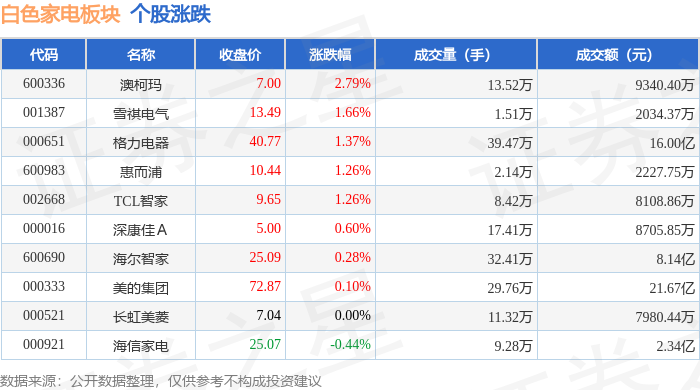
Market Overview - The white goods sector increased by 0.46% on October 20, with Aucma leading the gains [1] - The Shanghai Composite Index closed at 3863.89, up 0.63%, while the Shenzhen Component Index closed at 12813.21, up 0.98% [1] Stock Performance - Aucma (600336) closed at 7.00, up 2.79% with a trading volume of 135,200 shares and a turnover of 93.40 million yuan [1] - Gree Electric (000651) closed at 40.77, up 1.37% with a trading volume of 394,700 shares [1] - Haier Smart Home (600690) closed at 25.09, up 0.28% with a trading volume of 324,100 shares [1] - Midea Group (000333) closed at 72.87, up 0.10% with a trading volume of 297,600 shares [1] Capital Flow - The white goods sector saw a net inflow of 307 million yuan from institutional investors, while retail investors experienced a net outflow of 100 million yuan [1] - Gree Electric had a net inflow of 202 million yuan from institutional investors, but a net outflow of 45.90 million yuan from retail investors [2] - Haier Smart Home experienced a net inflow of 49.28 million yuan from institutional investors, with a net outflow of 54.37 million yuan from retail investors [2]


家电行业周报(25年第42周):9月小家电零售表现坚挺,双十一大促火热开启-20251020
Guoxin Securities· 2025-10-20 07:25
Investment Rating - The report maintains an "Outperform" rating for the home appliance industry [5][6]. Core Views - The home appliance sector is experiencing a mixed performance, with major appliances under pressure due to high base effects from last year, while small appliances continue to show growth. The upcoming Double Eleven shopping festival is expected to further boost sales in small appliances [1][12]. - The export value of home appliances in September saw a decline of 9.6%, with air conditioning exports particularly affected, while refrigerators and washing machines showed positive growth [3][40]. - The report highlights the resilience of the home appliance sector despite external challenges, with expectations for continued growth potential in overseas markets as companies expand their global presence [12][40]. Summary by Sections 1. Investment Rating - The home appliance industry is rated as "Outperform" [5]. 2. Market Performance - In September, retail sales of major appliances declined by approximately 20% due to high base effects, while small appliances like rice cookers and air fryers saw growth of 6.1% and 27.7% respectively [1][18]. - The Double Eleven shopping festival has been extended, allowing consumers more time to make purchases, which is expected to benefit sales [2][36]. 3. Export Performance - Home appliance exports fell by 9.6% in September, with air conditioning exports down 23.2%. However, washing machines and vacuum cleaners continued to grow by over 10% [3][40]. - The report notes that the actual overseas sales performance may be better than export figures suggest, as companies are diversifying their production and sales channels [40]. 4. Key Company Recommendations - Recommended companies include Midea Group, Gree Electric Appliances, Haier Smart Home, and TCL for white goods; Boss Electric for kitchen appliances; and Roborock and Ecovacs for small appliances [4][12][13].



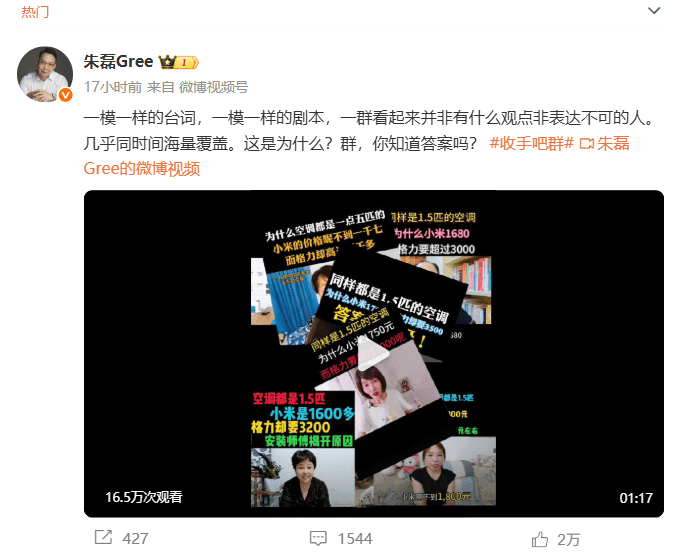
格力高管火力全开!水军视频碰瓷格力小米,雷军又躺枪?
Sou Hu Cai Jing· 2025-10-20 06:45
Core Viewpoint - The ongoing price competition between Gree and Xiaomi has escalated into a public dispute, with Gree's marketing director accusing Xiaomi of orchestrating negative campaigns against Gree, while Xiaomi's supporters defend their pricing strategy as a result of different business models [1][3][10]. Group 1: Price Dispute - Gree's marketing director, Zhu Lei, highlighted a significant price difference between Gree and Xiaomi's air conditioners, questioning the integrity of online reviews that favor Xiaomi [1][3]. - Zhu Lei's comments suggest a coordinated effort by Xiaomi to undermine Gree's reputation through social media, implying that Xiaomi is behind the negative narratives [1][4]. - The price difference is noted as 1300 yuan, with Xiaomi's 1.5 HP air conditioner priced at 1700 yuan compared to Gree's over 3000 yuan [10]. Group 2: Social Media Reactions - Following Zhu Lei's accusations, several content creators clarified that their videos were not intended to disparage Gree, but rather praised its technology and quality [4][6]. - The backlash against Zhu Lei's comments led to ridicule on social media, with users suggesting he misinterpreted the content of the videos he criticized [6][10]. - The incident reflects a broader sentiment among consumers who prioritize either affordability or perceived value in their purchasing decisions [10][11]. Group 3: Industry Dynamics - The conflict underscores the contrasting business models of Gree and Xiaomi, with Gree focusing on self-developed technology and offline service, while Xiaomi leverages online channels and cost-effective manufacturing [10]. - Zhu Lei's call for the manufacturing industry to avoid negative campaigning indicates a desire for a more constructive competitive environment [10].
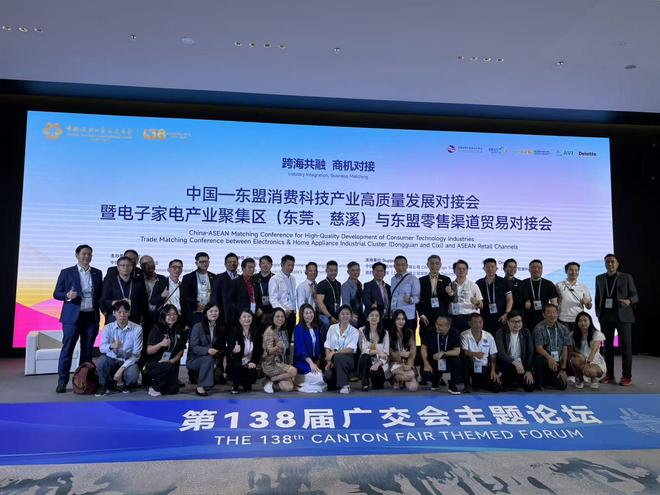
马来西亚、越南、泰国零售商广交会抛橄榄枝,万亿市场仍需规避误区
Di Yi Cai Jing Zi Xun· 2025-10-20 04:21
Core Insights - The Southeast Asian market is projected to become a trillion-dollar market, driven by a young population, high birth rates, and low household appliance penetration compared to China [3][5] - Chinese brands are increasingly dominating the Southeast Asian market, with their sales growing at an annual rate of 20%-30%, currently accounting for 30%-40% of the market share [5][8] - There is a strong desire among Southeast Asian retailers to collaborate with Chinese brands, particularly in the areas of smart home technology and energy-efficient products [5][6] Group 1: Market Potential - Southeast Asia's household appliance ownership is low, with less than 100 units per 100 households, indicating significant growth potential [3] - The market size for home appliances and consumer electronics in Southeast Asia is expected to reach nearly $100 billion in 2024 and could exceed $120 billion by 2030, with a compound annual growth rate of 4.56% projected to reach $150 billion by 2035 [3][5] Group 2: Chinese Brand Positioning - Chinese brands like Haier, Hisense, TCL, and Midea have rapidly developed in Malaysia, with their products now accounting for about 50% of local sales [5][6] - The competitive landscape in Southeast Asia is characterized by a "three-way split" among Chinese, Korean, and Japanese brands, with Chinese brands expected to further increase their market share [7][8] Group 3: Collaboration Opportunities - Southeast Asian retailers express a strong interest in collaborating with Chinese suppliers to expand into other overseas markets, emphasizing the need for understanding local market rules [5][6] - There is a call for Chinese companies to enhance their local presence and adapt their products to meet specific regional needs, such as cooling requirements for refrigerators and washing machine capacities [10][11] Group 4: Strategic Recommendations - Companies are advised to avoid misconceptions about the Southeast Asian market, recognizing the presence of established local and international competitors [10] - A focus on building strong local teams and partnerships with local distributors is essential for successful market penetration [10] - Companies should also be mindful of the diverse needs across the ten ASEAN countries, requiring tailored strategies for each market [10]


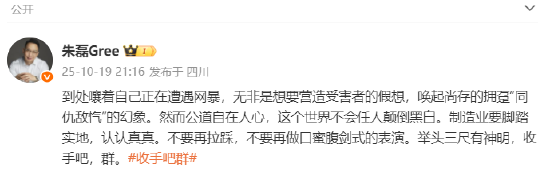
珠海朱磊:制造业要脚踏实地,不要再拉踩,不要再做口蜜腹剑式的表演
Xin Lang Ke Ji· 2025-10-20 02:12
Core Viewpoint - The statement from Gree Electric Appliances' marketing director suggests that claims of online harassment are attempts to create a victim narrative and rally support from followers, emphasizing the importance of integrity in the manufacturing industry [1]. Group 1 - The marketing director criticized the notion of victimhood as a tactic to gain sympathy and support from the public [1]. - There is a call for the manufacturing sector to focus on genuine efforts and avoid deceptive practices [1]. - The director highlighted the importance of accountability and integrity, suggesting that the truth will ultimately prevail [1].
广交会外国客商云集,中国家电全球竞争力提升
Di Yi Cai Jing· 2025-10-20 01:25
Group 1 - The 138th China Import and Export Fair (Canton Fair) has attracted a significant number of foreign buyers from Europe, the Middle East, Brazil, Japan, South Korea, and Australia, indicating a positive outlook for appliance exports in Q4 and next year [1][4] - Lek Electric, a leading Chinese vacuum cleaner exporter, is expanding its product categories, focusing on overseas markets for water purifiers and coffee machines, aiming to break through growth bottlenecks [1][3] - China's white goods export value reached $90.015 billion from January to August 2025, with a year-on-year growth of 3.83%, and export volume increased by 7.91% to 6.337 billion units [2] Group 2 - Lek Electric has relocated most of its U.S. exports to production facilities in Vietnam and Thailand, enhancing its ability to cope with tariff changes, with an annual production capacity of 6 million units [3] - The company is diversifying its product offerings, showcasing a wider range of kitchen appliances at the Canton Fair, and is actively exploring new markets [3][4] - The overall competitiveness of Chinese home appliance products has improved, with prices now comparable to South Korean brands in Europe [4][5] Group 3 - Skyworth's white goods business has seen a 40% year-on-year increase in both export volume and value, with expectations of a 50% growth next year due to targeted product development for local markets [5] - The company plans to establish production bases for large white goods in Southeast Asia, aiming to reduce the current production cost gap with China from 10-15% to 8-10% [5] - Gree Electric's overseas sales revenue increased by 10.41% year-on-year, although the company anticipates a period of adjustment in the export market due to inventory digestion [5]

中国消费者趋势发展研究第 60 期-China Consumer Mind Share, Issue #60
2025-10-19 15:58
Summary of Key Points from the Conference Call Industry Overview - The report analyzes brand mind-share in the Chinese consumer market using Baidu search data, which holds a nearly 70% market share in web searches in China. This analysis provides insights into consumer interest and potential market-share movements [1][2][3]. E-Commerce Sector - **Alibaba** regained the top position with a 4% quarter-over-quarter (QoQ) increase, attributed to online delivery initiatives and the launch of an open-source AI agent [2][14]. - **JD.com** fell to second place with a 10% QoQ decline in search hits [2][14]. - **Pinduoduo**, **Ctrip**, and **VIP.com** ranked third, fourth, and fifth, with respective increases of 1%, 7%, and 7% in search hits QoQ [2][14]. IP & Pop Toys - **Pop Mart** maintained its top position despite a 64% QoQ decline in search hits, influenced by a high base from the previous quarter [5]. - The overall sector saw a 48% QoQ decrease in hits but a 12% year-over-year (YoY) increase [5]. Apparel Sector - The sportswear segment experienced a 13% QoQ decline in hits, with **Arc'teryx** rising to first place (+30%) due to a controversial marketing campaign [3]. - **Nike** dropped to third place with a 26% decline in hits, while **Adidas** remained second with a 17% decline [3]. Restaurant & Food Retailers - Restaurant search hits were flat QoQ (-1%) and down 22% YoY. The rankings remained unchanged with **KFC** and **McDonald's** in the top two positions, both experiencing a 4% decline in hits [4]. - Freshly-made drinks saw an 8% QoQ decline and a 48% YoY decline, with **Mixue** rising to first place (+75% QoQ) due to collaborations and brand ambassador appointments [4]. Soft Drinks and Dairy - The soft drinks sector saw an 18% QoQ increase in hits, with **Wahaha** overtaking **Coca-Cola** to become the top brand (+101% QoQ) [11]. - Dairy products also experienced a 25% QoQ increase in hits, with **Wahaha** leading the category [11]. Home Appliances - The home appliance sector saw a 2% QoQ decline in hits, with **Midea** remaining the top brand (+7% QoQ) [10]. Luxury Goods - The luxury goods sector experienced a 9% QoQ decline in hits, with **Louis Vuitton**, **Chanel**, and **Dior** maintaining the top three positions [13]. Automotive Sector - The luxury automotive segment saw a 10% QoQ decline, while electric vehicles (EVs) experienced a 3% increase. **Audi** remained the top luxury auto brand with a 3% increase in hits [15]. Mobile Search Trends - Mobile search queries accounted for 70% of total search queries, indicating a stable trend in mobile penetration across various categories [16]. Brand Rankings - The top searched brands across various categories remained largely stable, with notable mentions including **Cartier** in jewelry, **Wuliangye** in spirits, and **Arc'teryx** in sportswear [8][17]. Conclusion - The analysis highlights the dynamic nature of the Chinese consumer market, with significant shifts in brand rankings and consumer preferences across various sectors. The data from Baidu searches serves as a valuable indicator of brand strength and market trends [1][2][3].




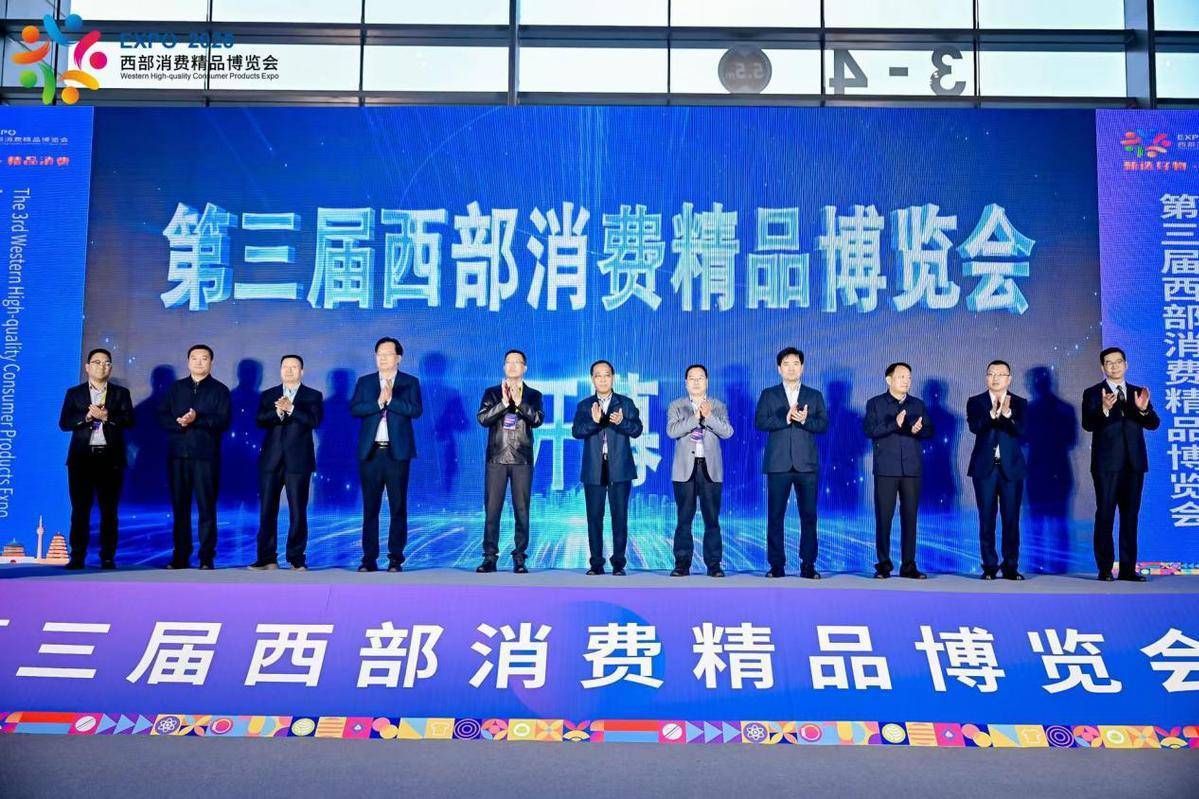
第三届西部消博会西安开幕 双会场赋能“消费+运动”新体验
Sou Hu Cai Jing· 2025-10-18 20:32
Core Insights - The third Western Consumer Expo opened in Xi'an, focusing on promoting high-quality consumption and regional economic collaboration [1][3] Group 1: Event Overview - The expo is themed "Select Good Products, Quality Consumption" and features a dual venue model, linking the main venue at Xi'an International Convention Center with the Xi'an International Marathon [3] - The event spans an exhibition area of 10,000 square meters, with over 200 participating companies showcasing more than a thousand products [6] Group 2: Economic and Industry Highlights - Key data on the "China First Release Economy" and "Xi'an First Release Economy" were presented, providing precise data support for consumption upgrades and industrial collaboration in the West [4] - The expo highlighted regional strengths, with companies like Zhongtian Bee Industry Group focusing on the bee industry, showcasing the diverse industrial endowments and competitive advantages of the Western regions [4] Group 3: Participating Companies and Products - Major industry leaders such as NIO, Xiaomi, Huawei, Gree, Siemens, DJI, and West Fen Liquor participated, covering sectors like home appliances, sports, retail, automotive, and energy [6] - The expo also included a "buy and refund" policy consultation point to promote the convenience of international consumer services in Xi'an [6] Group 4: Consumer Engagement and Benefits - The event features free gifts and lottery draws to enhance consumer engagement, aiming to provide diverse consumption benefits and promote resource sharing in the West [6]