WLY(000858)

Search documents
撒红包、促动销、争上桌……春节白酒动销战 行业已有底部信号
2 1 Shi Ji Jing Ji Bao Dao· 2026-02-25 08:35
Core Viewpoint - The Chinese liquor industry, particularly the baijiu segment, has shown resilience during the Spring Festival, with sales slightly better than expected despite previous concerns about consumer demand [1][4][18]. Group 1: Sales Performance - Baijiu sales during the Spring Festival are expected to decline by double digits year-on-year, but the decline is less severe than in the second half of the previous year, indicating potential bottom signals in the industry [1][18]. - Leading brands like Moutai and Wuliangye are projected to perform well, with Moutai expected to see double-digit growth and Wuliangye experiencing single to double-digit growth [1][2][13]. - The performance of high-end baijiu products remains strong, while mid-tier products are experiencing a downturn [2][16]. Group 2: Marketing Strategies - Baijiu companies have shifted their marketing focus to encourage consumer engagement through "open bottle" promotions and QR code scanning activities, which have become increasingly popular [3][10]. - Major brands have invested heavily in marketing during the Spring Festival, with significant promotional activities including cash prizes and high-value rewards to stimulate sales [3][11]. - Eight liquor brands participated in the Spring Festival Gala, maintaining high visibility and marketing efforts comparable to previous years [6][7][9]. Group 3: Consumer Trends - The consumption pattern shows a "two extremes" scenario, where high-end products perform well while mid-tier offerings lag behind [2][16]. - The demand for products priced below 300 yuan, especially around the 100 yuan mark, has seen positive growth due to favorable conditions such as extended holiday periods and good weather [16]. - The trend of "open bottle" promotions has been effective in driving consumer engagement and sales, with many brands reporting high participation rates in these activities [10][11]. Group 4: Market Outlook - Analysts suggest that the baijiu industry may stabilize this year, with expectations of a recovery in the second half of 2026, driven by improved pricing stability from leading brands [18]. - International institutions have shifted their outlook on the baijiu sector to a more neutral and positive stance, indicating potential for valuation recovery [18].



19只白酒股上涨 贵州茅台1491.66元/股收盘
Bei Jing Shang Bao· 2026-02-25 08:19
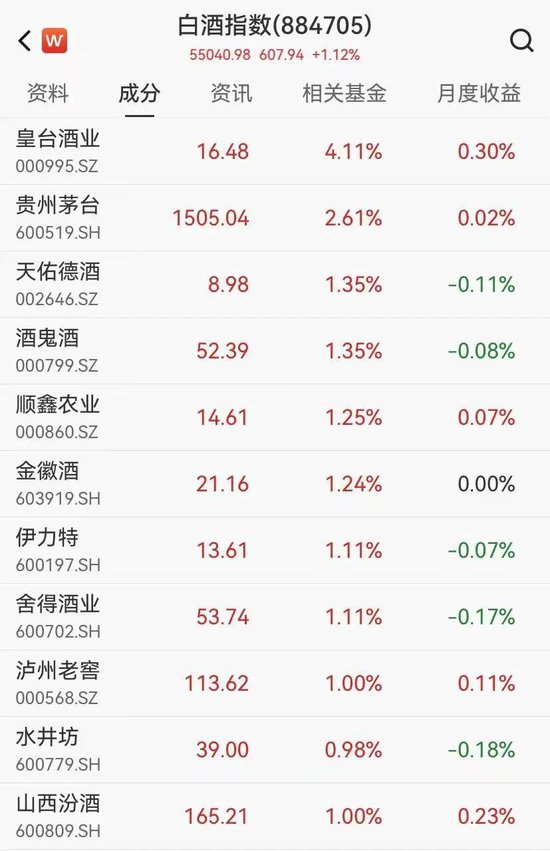
Group 1 - The core viewpoint of the article highlights the positive performance of the liquor sector, particularly the strong sales of premium brands during the 2026 Spring Festival, indicating a shift in consumer preferences towards well-known brands like Moutai and Wuliangye [1] - The Shanghai Composite Index closed at 4147.23 points, up 0.72%, while the liquor sector index closed at 2250.28 points, up 1.22%, with 19 liquor stocks rising [1] - Specific stock performances include Moutai closing at 1491.66 CNY per share, up 1.69%, Wuliangye at 105.17 CNY per share, up 0.01%, Shanxi Fenjiu at 163.92 CNY per share, up 0.21%, Luzhou Laojiao at 112.92 CNY per share, up 0.37%, and Yanghe at 54.00 CNY per share, up 0.15% [1] Group 2 - Citic Securities' report indicates that the 2026 Spring Festival continues the trend of the past 2-3 years, with a significant increase in brand recognition among consumers, leading to better sales for premium liquor brands compared to lower-tier brands [1] - The report notes that liquor sales are heavily concentrated during the Spring Festival peak season, with a notable release of demand before the festival and stable demand during the festival, particularly for products priced below 300 CNY [1] - A strong Spring Festival is viewed as the foundation for stable sales performance throughout 2026 [1]


动销“三管齐下”,加速去库存
3 6 Ke· 2026-02-25 08:17
Core Viewpoint - The 2026 Spring Festival is expected to be a significant period for the liquor industry, with a nine-day holiday and a focus on consumption recovery, although challenges such as inventory pressure and market differentiation persist [1][8]. Group 1: Spring Festival Impact on Liquor Sales - The Spring Festival is a critical sales period for the liquor industry, serving as a battleground for competition and a reflection of industry health [1]. - Major liquor brands are leveraging the CCTV Spring Festival Gala for brand exposure, with several companies sponsoring the event to enhance visibility [2][3]. - The sales peak for liquor during the Spring Festival is notably shorter in 2026, with a focus on the first half of February, compared to previous years [1][8]. Group 2: Strategies of Liquor Companies - Liquor companies are implementing a "three-pronged" approach to boost sales during the Spring Festival, including promotions, price control, and channel empowerment [5][6]. - High-end liquor brands like Moutai and Wuliangye are focusing on price stability and channel management to maintain brand value [6][7]. - Mid-tier and regional liquor companies are increasing promotional efforts to reduce inventory, with various campaigns launched to stimulate demand [7][8]. Group 3: Inventory Challenges - The liquor industry is still undergoing a prolonged inventory reduction phase, particularly affecting mid-tier and regional brands, which face significant inventory pressure [1][8]. - As of Q3 2025, the total inventory of 20 A-share liquor companies exceeded 170 billion, remaining above reasonable levels despite a 40% reduction from peak levels in 2023 [8]. - The average inventory turnover days are currently around 900 days, indicating a lengthy period required to clear existing stock [8][9]. Group 4: Market Performance and Valuation - The A-share liquor sector has experienced a valuation recovery, with major brands showing strong stock performance amid optimistic sales expectations for the Spring Festival [10][11]. - From early January to early February 2026, the China Securities White Liquor Index rose by 2.54%, with leading brands outperforming the average [11][12]. - Analysts predict a continued divergence in performance, with high-end brands expected to maintain growth while mid-tier and regional brands face ongoing challenges [12]. Group 5: AI Integration in the Liquor Industry - AI technology is increasingly being integrated into various aspects of the liquor industry, enhancing production, quality control, and marketing efforts [13][14]. - Companies like Luzhou Laojiao and Wuliangye are utilizing AI to optimize production processes and improve product quality, demonstrating the potential for increased efficiency and profitability [13][14]. - Despite the promising applications of AI, challenges such as data barriers and limited penetration in marketing and management remain [15][16].
五粮液入股四川三江汇海融资租赁公司 后者增资至约20.4亿
Xin Lang Cai Jing· 2026-02-25 07:35
新浪财经"酒价内参"重磅上线 知名白酒真实市场价尽在掌握 天眼查App显示,近日,四川三江汇海融资租赁有限公司发生工商变更,新增四川省宜宾五粮液集团有 限公司为股东,同时,注册资本由约12.7亿人民币增至约20.4亿人民币。 公开信息显示,该公司成立于2021年2月,法定代表人为岳育洁,经营范围为融资租赁业务,现由宜宾 发展控股集团有限公司及上述新增股东共同持股。 责任编辑:王翔 新浪财经"酒价内参"重磅上线 知名白酒真实市场价尽在掌握 天眼查App显示,近日,四川三江汇海融资租赁有限公司发生工商变更,新增四川省宜宾五粮液集团有 限公司为股东,同时,注册资本由约12.7亿人民币增至约20.4亿人民币。 公开信息显示,该公司成立于2021年2月,法定代表人为岳育洁,经营范围为融资租赁业务,现由宜宾 发展控股集团有限公司及上述新增股东共同持股。 责任编辑:王翔 ...
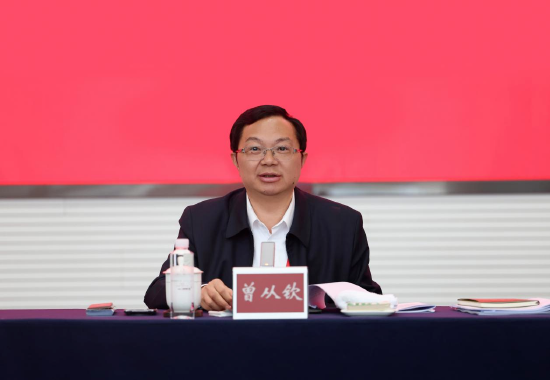
五粮液曾从钦:2026年开局酒业主业“基本盘”持续稳固,非酒产业“增长极”持续塑造
Xin Lang Cai Jing· 2026-02-25 07:01
新浪财经"酒价内参"重磅上线 知名白酒真实市场价尽在掌握 据五粮液集团公众号2月24日消息,五粮液集团(股份)公司召开2026年春节节后收心会。会议要求, 五粮液人要迅速收心拢神、凝心聚力,以"收心要快、目标要准、心态要稳、干劲要足"的工作态度,推 动企业实现"十五五"良好开局。 五粮液集团(股份)公司党委书记、董事长曾从钦表示,2026年是"十五五"规划的开局之年,是五粮液 推动高质量发展的关键一年,更是抢抓机遇、攻坚克难、实现突破的攻坚之年。当前,企业发展的外部 形势具备"强"的支撑:宏观调控加力提效,企业发展信心更强;产业政策精准赋能,酒业发展支撑更 足;产业布局持续调整,非酒发展方向更明。要全力抢抓企业发展"新机遇",坚定信心,用好用足政策 红利,努力把各方面的优势因素转化为企业稳健发展的实际成效。 曾从钦指出,2026年开局延续"稳"的态势,酒业主业"基本盘"持续稳固,非酒产业"增长极"持续塑造。 他要求,全体五粮液人务必坚持"干"字当头,全力以赴抓好一季度开局工作,为全年实现总目标打牢基 础:一是突出政治导向,不折不扣执行"第一议题"制度,抓实党建品牌提质强基行动,从严抓紧思想建 设;二是突出战略 ...

五粮液集团入股四川三江汇海融资租赁公司 后者增资至约20.4亿
Xin Lang Cai Jing· 2026-02-25 06:44
Core Viewpoint - Sichuan Sanjiang Huihai Financing Leasing Co., Ltd. has undergone a business change, adding Sichuan Yibin Wuliangye Group Co., Ltd. as a shareholder and increasing its registered capital by approximately 60% from about 1.27 billion RMB to about 2.04 billion RMB [1] Group 1 - The company was established in February 2021 and is legally represented by Yue Yujie [1] - The business scope of the company includes financing leasing services [1] - The current shareholders are Yibin Development Holding Group Co., Ltd. and the newly added shareholder [1]
茅台春节销量最高或增长20%,券商喊话:白酒业现底部信号
Xin Lang Cai Jing· 2026-02-25 06:00
Core Viewpoint - The overall sales of the liquor industry during the Spring Festival are expected to decline by double digits year-on-year, but the decline is narrowing compared to the second half of last year, indicating that the industry is showing bottom signals [1][21]. Group 1: Sales Performance - The top brands, such as Moutai and Wuliangye, continue to dominate key consumption scenarios during family reunions and festive banquets [1][21]. - Moutai's sales during the Spring Festival are reported to have significantly improved, with some brokerages estimating a growth of over 10%, and even up to 20% year-on-year [1][15][36]. - The performance of high-end liquor products remains strong, while mid-range products are experiencing a decline [3][39]. Group 2: Marketing Strategies - Major liquor brands have maintained high levels of marketing investment during the Spring Festival, with eight liquor brands appearing on the CCTV Spring Festival Gala [4][25]. - Brands like Wuliangye and Gujing Gongjiu have been actively involved in various promotional activities, including sponsoring special programs and integrating their products into popular shows [25][29]. - The use of QR code red envelope promotions has become a common strategy among brands to boost sales and gather consumer data [11][31]. Group 3: Market Trends - The market for liquor is showing signs of resilience, with expectations for stabilization in the industry due to the strong performance of leading brands [39][40]. - The price recovery of Moutai has addressed key consumer concerns regarding authenticity and pricing, leading to increased demand [36]. - The performance of lower-priced liquor products, especially those under 300 yuan, has been relatively stable, benefiting from favorable market conditions during the Spring Festival [16][37].
春节白酒消费:高端产品热度升高 年轻人喜欢“即买即用”
Xin Jing Bao· 2026-02-25 05:56
Core Insights - The Chinese liquor market, particularly high-end baijiu, has seen robust sales during the Spring Festival, with brands like Moutai and Wuliangye exceeding sales expectations and showing year-on-year growth [1][2][3] Group 1: Sales Performance - High-end baijiu sales have surged, with Moutai's sales increasing by over 15% during the Spring Festival, while Wuliangye has also seen a rise in sales, indicating a balanced supply-demand situation [2][3] - The average market price for Moutai has decreased significantly, with boutique Moutai dropping from over 3000 yuan to below 2300 yuan, making it more accessible for consumers [3] - The demand for high-end liquor is rising, while mid-range products are also showing resilience, with many consumers opting for baijiu priced around 100 yuan for gifting during the festive season [3][4] Group 2: Consumer Trends - The trend of "immediate consumption" is becoming prevalent, with younger consumers preferring to buy liquor for immediate use rather than stockpiling [1][6] - The shift towards online purchasing and instant retail is notable, with a reported 107% increase in sales of sauce-flavored baijiu during festive gatherings [6] - Smaller packaging options, such as 100ml bottles, are gaining popularity among younger consumers, reflecting a change in drinking habits [6] Group 3: Marketing Strategies - Liquor companies are innovating their marketing strategies, focusing on engaging younger consumers through more relatable and immersive advertising methods, such as product placements in popular events [5] - The emphasis on fun and diverse marketing approaches is aimed at meeting the evolving preferences of younger consumers [5][7] - Companies are urged to shift from traditional inventory management to consumer-centric marketing strategies that leverage digital tools and enhance customer experiences [7]
春节白酒消费:高端产品热度升高,年轻人喜欢“即买即用”
Bei Ke Cai Jing· 2026-02-25 05:48
春节是酒水消费传统旺季,马年春节期间,白酒动销稳健复苏。多家机构调研发现,白酒消费呈现"哑 铃形分化、头部向下挤压"等特点,多地渠道反馈茅台、五粮液动销超预期且同比增长。新京报记者春 节前夕走访北京市场也了解到,多家茅台门店1月、2月飞天茅台配额基本售罄,有的门店已提前使用3 月的产品配额。 同时,白酒消费逐步向"即饮""即时"场景倾斜。新京报记者在走访中了解到,部分80后、90后消费者春 节不会囤酒,"即买即饮"成为趋势。有酒商告诉新京报记者,"即买即饮"有助于提升白酒的开瓶率,这 也倒逼未来厂商必须全面发力消费端营销。 高端白酒动销超预期 马年春节,多地白酒市场出现消费热潮,高端产品走俏。春节前夕,新京报记者走访北京部分商超看 到,飞天茅台、五粮液、国窖1573等高端名酒热销,不少消费者为春节用酒备货,"春节用酒,我们会 倾向于喝好一点、喝少一点",消费者王先生告诉新京报记者。 招商证券2月24日发布的研报调研数据提到,多地渠道反馈茅台春节期间动销增长15%以上;五粮液春 节期间销量有所增长,目前阶段性供需达到平衡,经销商与社会库存得到消化,经销商库存在1个月左 右,与上年同期接近,"普五"批价在790- ...
马年春节酒类消费市场观察:理性回归筑根基,品质创新启新程
Xin Lang Cai Jing· 2026-02-25 05:43
Core Insights - The 2026 Year of the Horse Spring Festival marks a critical window for assessing the transformation of the liquor industry and understanding changes in consumer trends, characterized by "structural differentiation, rational upgrades, diverse scenarios, and quality supremacy" [2][13] Group 1: Consumer Behavior - The core of consumption has shifted towards rationality, with a consensus emerging around "drink less, drink well, and drink right," leading to a focus on quality and cost-effectiveness [4][15] - The opening rate has replaced channel inventory as the key indicator of brand health, with major liquor companies focusing on promoting actual consumption through targeted promotions [4][15] - Sales performance shows a clear "two-pole stability, mid-range pressure" pattern, with sales of light and staple liquors under 100 yuan increasing, while high-end liquors around 1,000 yuan remain strong, and mid-range products face a decline of 10%-20% in sales [4][15] Group 2: Product Categories and Scenarios - Traditional liquor categories maintain their foundation, while innovative categories are breaking through, creating a healthy ecosystem of "classic empowerment and innovative supplementation" [4][15] - The white liquor market remains dominant, with strong performances from brands like Moutai and Wuliangye, while the market is increasingly concentrating resources on leading brands and quality production areas [5][16] - Specialty liquors such as low-alcohol beverages and wines are gaining traction, appealing to younger consumers and adapting to various consumption scenarios [7][18] Group 3: Channel Evolution - The sales channels for liquor are evolving, with a deepening integration of online and offline strategies, shifting competition from inventory to efficiency and experience [8][19] - Online channels are seeing a rise in live-streaming e-commerce, focusing on brand building and cultural transmission, while instant retail is becoming a new growth driver [8][19] - Offline channels remain crucial for gift consumption, with products priced between 100-300 yuan being the main sales force, and experiential services enhancing consumer selection experiences [8][19] Group 4: Industry Trends - The liquor consumption market's performance during the Spring Festival outlines a future path where rational consumption becomes the norm, quality innovation is the core competitive edge, and channel efficiency and scenario adaptation are key to breakthroughs [9][20] - The industry is expected to focus on quality as a long-term direction, with a need for continuous improvement in brewing techniques and technological innovation [11][22] - The trend towards green and low-carbon practices is becoming essential, aligning with national strategies and rational consumption trends [11][22]