YCC(000878)

Search documents
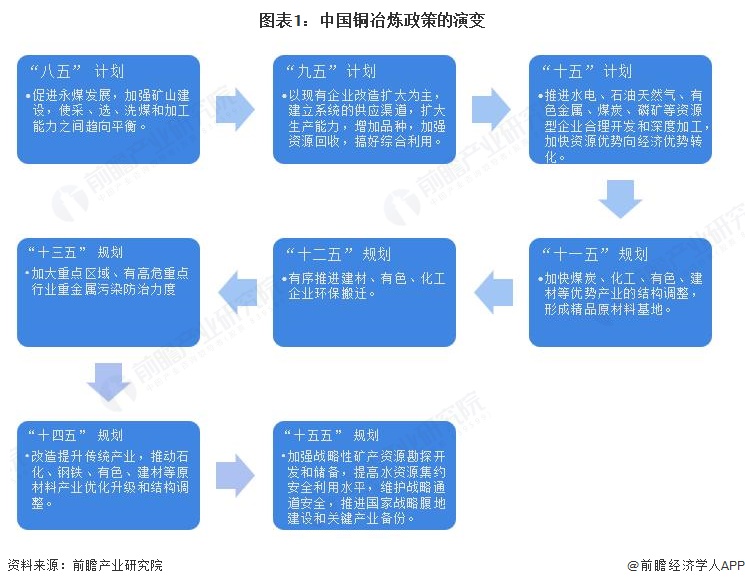
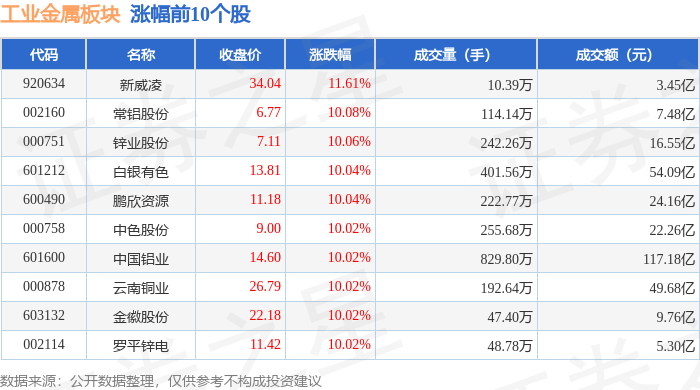
工业金属板块1月28日涨7.3%,新威凌领涨,主力资金净流入64.91亿元
Zheng Xing Xing Ye Ri Bao· 2026-01-28 08:56
Group 1 - The industrial metal sector experienced a significant increase of 7.3% on January 28, with Xinweiling leading the gains [1] - The Shanghai Composite Index closed at 4151.24, up by 0.27%, while the Shenzhen Component Index closed at 14342.9, up by 0.09% [1] - Key stocks in the industrial metal sector showed substantial price increases, with Xinweiling rising by 11.61% to a closing price of 34.04 [1] Group 2 - The industrial metal sector saw a net inflow of 6.491 billion yuan from main funds, while retail investors experienced a net outflow of 3.721 billion yuan [2] - The trading volume for Xinweiling reached 103,900 hands, contributing to a transaction amount of 345 million yuan [1] - The stock performance of various companies in the industrial metal sector included significant gains, with Chang Aluminum and Zinc Industry both increasing by over 10% [1][2] Group 3 - Major stocks such as China Aluminum and Yunnan Copper also reported notable net inflows from main funds, indicating strong institutional interest [3] - The data shows that retail investors were net sellers in the industrial metal sector, with significant outflows from stocks like Yunnan Copper and Zinc Industry [3] - The overall market sentiment in the industrial metal sector appears to be bullish, driven by institutional buying despite retail selling [2][3]


有色ETF鹏华(159880)收涨超7.3%,14只成分股今日涨停
Xin Lang Cai Jing· 2026-01-28 07:38
Group 1 - The core viewpoint of the news highlights a significant surge in the non-ferrous metal sector driven by rising risk aversion and expectations of interest rate cuts, with the Penghua Non-Ferrous ETF (159880) rising over 7.3% and 14 constituent stocks hitting the daily limit up [1] - Southwest Securities indicates that both precious metals and industrial copper sectors are showing positive expansion, with resource-advantaged companies continuously increasing reserves and production, and upcoming production from marine gold mining projects [1] - As of January 28, 2026, the Guozheng Non-Ferrous Metal Industry Index (399395) has surged by 6.31%, with significant gains in constituent stocks such as Silver Non-Ferrous (up 10.04%), China Aluminum (up 10.02%), and Yunnan Copper (up 10.02%) [1] Group 2 - As of December 31, 2025, the top ten weighted stocks in the Guozheng Non-Ferrous Metal Industry Index (399395) include Zijin Mining, Luoyang Molybdenum, Northern Rare Earth, and others, collectively accounting for 51.65% of the index [2] - The Penghua Non-Ferrous ETF (159880) closely tracks the Guozheng Non-Ferrous Metal Industry Index, which selects 50 securities from the non-ferrous metal industry based on size and liquidity, reflecting the overall performance of listed companies in this sector [1][2]





黄金领涨破5200美元,白银、钨、稀土同步爆发,有色金属ETF基金(516650)涨超5%!
Sou Hu Cai Jing· 2026-01-28 05:21
Group 1 - The core viewpoint of the articles highlights the strong performance of precious metals, particularly gold and silver, driven by geopolitical risks and central bank purchases [1][2] - As of January 28, the spot gold price surpassed $5200 per ounce, with major gold jewelry brands in China quoting prices above 1600 yuan per gram [1] - The global official gold reserves have surpassed U.S. Treasury securities for the first time in 30 years, indicating a shift in reserve asset preferences [1] Group 2 - In the copper market, Zambia's copper production is expected to grow by 8% to 890,346 tons by 2025, although it falls short of the 1 million tons target [2] - The London Metal Exchange copper price fell below $13,000, but long-term demand is supported by investments in AI data centers and China's State Grid [2] - The silver market has seen a year-to-date increase of over 55%, with a single-day jump of 8% on January 27 [2] Group 3 - The Precious Metals ETF (516650) closely tracks a series of sub-indices, selecting 50 large, liquid listed companies from related sectors, with top holdings including Shandong Gold and Zhongjin Gold [2]


强势拉升,涨停潮来了
Zhong Guo Ji Jin Bao· 2026-01-28 05:15
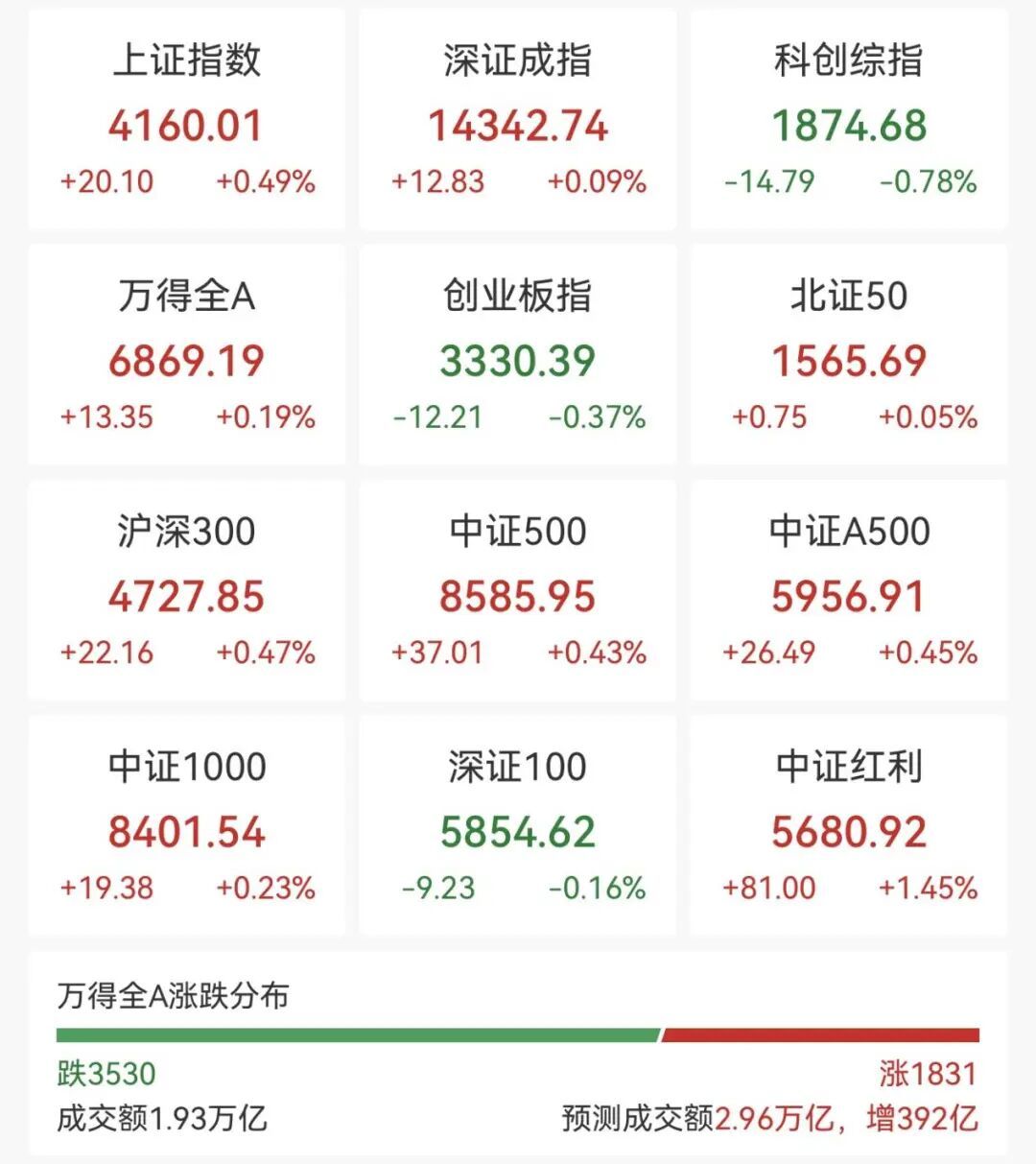
Market Overview - The three major indices showed mixed performance, with the Shanghai Composite Index rising by 0.49% to 4160.01, the Shenzhen Component Index increasing by 0.09% to 14342.74, and the ChiNext Index declining by 0.37% to 3330.39 [1][2]. Sector Performance - Precious metals, industrial metals, and petrochemicals sectors performed strongly, while solar energy, pharmaceuticals, and aerospace sectors experienced fluctuations [2]. - The basic metals sector saw significant gains, with copper and aluminum industries leading the rise, as multiple stocks hit the daily limit up [6]. Stock Highlights - Notable stocks included China National Offshore Oil Corporation, China Petroleum, and China Unicom, which showed strong performance [4]. - The aluminum futures market saw a rise of over 4%, with the main contract reported at 25345 yuan/ton [8]. Biotechnology Sector - The biotechnology sector faced declines, with several companies such as Zhijiang Biology and Baipusais losing over 9% [10][11]. Solar Energy Sector - The solar energy sector faced downward adjustments, with companies like High Measurement and Maiwei experiencing drops exceeding 6% [11].


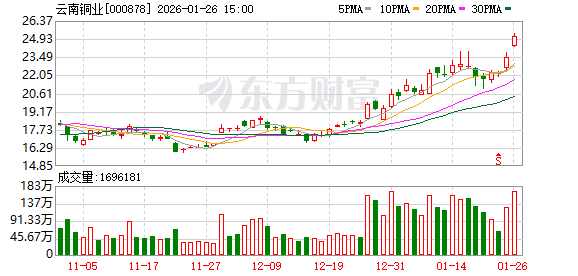
云南铜业:截至2026年1月20日股东人数为210385户
Zheng Quan Ri Bao· 2026-01-26 13:48
证券日报网讯 1月26日,云南铜业在互动平台回答投资者提问时表示,截至2026年1月20日,公司股东 人数为210385户。 (文章来源:证券日报) ...
云南铜业(000878) - 总经理工作规则
2026-01-23 11:31
第二条 总经理行使董事会授予的职权和国家法律、行政法 规、《公司章程》规定的其他职权,对董事会负责,向董事会和 董事长报告工作,接受董事会的监督管理。 公司设副总经理、财务总监,并根据需要设立其他高级管理 岗位,协助总经理工作。 第三条 经理层依照有关法律法规、《公司章程》和本规则 的规定行使职权。被授权的机构或个人,有权在职责权限范围内 做出相应决策和履行管理职责,同时承担相应的决策和管理责任。 云南铜业股份有限公司总经理工作规则 第一章 总 则 第一条 为完善云南铜业股份有限公司(以下简称公司)治 理,规范总经理的职责、权限和工作程序,根据《中华人民共和 国公司法》(以下简称《公司法》)、《中央企业董事会授权管理办 法》《中央企业经理层工作指引》《上市公司治理准则》等监管规 则、《云南铜业股份有限公司章程》(以下简称《公司章程》)和 《云南铜业股份有限公司董事会授权管理办法》(以下简称《公 司董事会授权管理办法》)等有关规定,制定本规则。 第四条 本规则遵循"规范决策、合理授权、科学高效、权 责统一"的原则,适用人员范围为总经理、副总经理、财务总监 和董事会秘书等人员。 第五条 根据《公司法》《公司章程》 ...
云南铜业(000878) - 第十届董事会第十次会议决议公告
2026-01-23 11:30
本公司及董事会全体成员保证信息披露的内容真实、准确、完整, 没有虚假记载、误导性陈述或重大遗漏。 云南铜业股份有限公司 第十届董事会第十次会议决议公告 云南铜业股份有限公司(以下简称云南铜业或公司)第 十届董事会第十次会议以通讯方式召开,会议通知于 2026 年 1 月 20 日以邮件方式发出,表决截止日期为 2026 年 1 月 23 日,会议应发出表决票 11 份,实际发出表决票 11 份,在 规定时间内收回有效表决票 11 份,会议符合《公司法》及 《公司章程》的规定。会议表决通过了如下决议: 证券代码:000878 证券简称:云南铜业 公告编号:2026-005 董事会审计与风险管理委员会已审议并一致同意上述 议案,同意将相关议案提交董事会审议。 三、以 11 票同意,0 票反对,0 票弃权,审议通过《云 南铜业股份有限公司关于修订<董事会授权管理办法>的议 案》; 一、以 11 票同意,0 票反对,0 票弃权,审议通过《云 南铜业股份有限公司关于开立募集资金专户及签署三方监 管协议的议案》; 公司通过发行股份的方式购买云南铜业(集团)有限公 司持有的凉山矿业股份有限公司 40%股份,并向中国铝业集 ...
上期所打出“组合拳” 金银品种风控紧急调整
经济观察报· 2026-01-23 11:19
Core Viewpoint - The Shanghai Futures Exchange (SHFE) has made significant adjustments to margin ratios and price limits for gold, silver, and other futures contracts in response to the extreme volatility in global commodity prices, particularly in early 2026 [2][3]. Group 1: Adjustments and Rationale - On January 22, 2026, SHFE adjusted the margin ratios and price limits for various futures contracts, which was seen as a quick response to the action plan released by Shanghai to enhance the linkage between spot and futures markets for non-ferrous metals [2][5]. - The adjustments aim to increase market liquidity and improve price discovery efficiency while strengthening risk management measures [3][5]. - The volatility in commodity prices has intensified, particularly for precious metals and some non-ferrous metals, leading to increased risk management pressures for market participants, especially those in the physical industry [3][10]. Group 2: Specific Changes in Margin and Price Limits - For gold futures contracts nearing delivery, the price limit was expanded to 16%, with margin ratios raised to 17% for hedging and 18% for speculative trading [5]. - Silver futures saw even larger adjustments, with price limits increased to 17% and margin ratios set at 18% for hedging and 19% for speculation [5]. - Non-ferrous metals like copper and aluminum had their price limits unified at 8%, with margin ratios adjusted to 9% for hedging and 10% for speculation [6]. Group 3: Market Implications and Future Outlook - The adjustments are viewed as a necessary measure to prevent extreme market conditions and ensure liquidity, especially for entities holding significant positions [11][12]. - The changes reflect a more mature market, allowing for greater price fluctuations to better reflect supply and demand dynamics [6][12]. - Future risk management may involve more dynamic and differentiated approaches, potentially including complex margin models that consider volatility and correlation [14][17]. Group 4: Industry Response and Innovations - Companies are evolving their risk management strategies, seeking more sophisticated tools beyond traditional futures hedging, such as options and customized risk management solutions [16]. - The Shanghai Clearing House is expanding its services to enhance transparency and reduce counterparty credit risk in the over-the-counter market [16]. - There is a growing expectation for the development of supply chain financial products that leverage the authoritative pricing and standardized warehouse receipt systems of the Shanghai futures market [16].

上期所打出“组合拳” 金银品种风控紧急调整
Jing Ji Guan Cha Wang· 2026-01-23 10:48
Core Viewpoint - The Shanghai Futures Exchange (SHFE) has made significant adjustments to margin ratios and price fluctuation limits for gold, silver, and other futures contracts, effective January 22, 2026, in response to recent market volatility and to enhance risk management and liquidity [2][4][10]. Margin and Price Fluctuation Adjustments - The SHFE has implemented differentiated adjustments for various contracts, increasing the price fluctuation limit for near-month gold futures to 16% and raising margin ratios to 17% for hedging and 18% for speculative trading [4][5]. - For silver futures, the fluctuation limit has been expanded to 17%, with margin ratios set at 18% for hedging and 19% for speculation [4]. - Copper and aluminum futures have a unified fluctuation limit of 8% and margin ratios of 9% for hedging and 10% for speculation [5]. Market Context and Implications - The adjustments are a response to significant price volatility in commodities, particularly precious and non-ferrous metals, with gold prices nearing historical highs and domestic copper prices frequently setting new records [2][10]. - Increased volatility has heightened risk management pressures for market participants, especially for companies in the physical supply chain [2][10]. Industry Perspectives - Analysts view the adjustments as a sign of market maturity, allowing for more accurate price reflection and reducing price distortion caused by narrow fluctuation limits [6]. - The changes are seen as a structured optimization of risk management parameters, aimed at preventing systemic risks and ensuring effective risk management for enterprises [6][9]. Operational Challenges for Enterprises - Companies like Yunnan Copper have expressed concerns about increased margin requirements leading to higher capital costs, while also recognizing the necessity of these measures to prevent larger market disruptions [8][9]. - The adjustments create a complex scenario for traders, balancing the need for additional capital against the benefits of increased price fluctuation space [8]. Future Trends in Risk Management - The SHFE's adjustments are anticipated to lead to more dynamic and differentiated risk management strategies, potentially incorporating more complex margin models in the future [11]. - There is a growing demand for innovative risk management tools among enterprises, moving beyond traditional hedging to include customized solutions like options and forward swaps [12][13].

重磅!2025年中国及31省市铜冶炼行业政策汇总及解读(全)完善绿色化发展体系
Qian Zhan Wang· 2026-01-23 06:22
Core Insights - The article discusses the development prospects and investment opportunities in the global and Chinese copper smelting industry, highlighting key policies and industry trends [1]. Policy Evolution - The evolution of copper smelting policies in China has transitioned from increasing production capacity and scale to optimizing structure and promoting green and efficient practices, as outlined in the "14th Five-Year Plan" [2]. - The "15th Five-Year Plan" emphasizes the exploration and development of strategic mineral resources, with copper being a key focus due to its high external dependence and importance to supply chain security [2]. National Policy Summary and Interpretation - A summary of key national policies related to the copper smelting industry indicates a focus on technological upgrades and energy efficiency improvements, with various policies introduced since 1985 aimed at modernizing smelting techniques [5][6]. - As of November 2025, several significant policies have been outlined, including energy-saving measures and the promotion of recycling and clean production standards [6][7]. Development Goals - By 2027, the copper industry aims to enhance supply chain resilience and security, with domestic copper resource growth targeted at 5%-10% and increased recycling rates [9][10]. - By 2035, the industry aspires to achieve world-leading levels in supply chain capabilities, technological innovation, and overall competitiveness [9][10]. Provincial Policy Summary and Interpretation - The copper smelting industry is increasingly concentrated in coastal and resource-rich regions, with provinces like Fujian and Guangxi emerging as new key players alongside traditional bases [10]. - Each province has tailored its policies to align with national directives, focusing on local needs and conditions to support the development of the copper smelting sector [10][12]. Specific Provincial Policies - Jiangxi's policy includes support for building national-level copper material clusters and promoting high-value recycling of copper [12]. - Anhui's initiatives focus on controlling blind expansion of copper smelting capacity and promoting low-carbon technologies [12]. - Shandong aims to enhance energy efficiency in copper smelting through technological upgrades and process improvements [12]. - Gansu's strategy includes developing a world-class copper new materials processing base and enhancing resource security through exploration [12][14].