Bank of Ningbo(002142)

Search documents
银行行业今日净流出资金7.64亿元,南京银行等8股净流出资金超5000万元
Zheng Quan Shi Bao Wang· 2025-06-24 09:13
Market Overview - The Shanghai Composite Index rose by 1.15% on June 24, with 29 out of 31 sectors experiencing gains, led by the power equipment and non-bank financial sectors, which increased by 2.85% and 2.68% respectively [1] - The banking sector saw a modest increase of 0.41% [1] - The sectors that declined included oil and petrochemicals, down by 2.10%, and coal, down by 0.22% [1] Capital Flow - The net inflow of capital in the two markets was 17.211 billion yuan, with 22 sectors experiencing net inflows [1] - The non-bank financial sector had the highest net inflow of 4.748 billion yuan, followed by the power equipment sector with a net inflow of 4.159 billion yuan [1] Banking Sector Analysis - The banking sector experienced a net outflow of 764 million yuan, with 42 stocks in the sector, of which 16 rose and 19 fell [2] - Among the stocks with net inflows, Ningbo Bank led with an inflow of 119 million yuan, followed by China Bank and China Merchants Bank with inflows of 85.295 million yuan and 59.446 million yuan respectively [2] - The stocks with the highest net outflows included Nanjing Bank, Minsheng Bank, and Bank of Communications, with outflows of 225 million yuan, 166 million yuan, and 166 million yuan respectively [2] Individual Stock Performance - The table of banking stocks shows various performance metrics, including daily price changes and turnover rates, highlighting the financial flows for each bank [3]






Labubu的热度与宁波银行已任职20年的董事长丨正经深度
Sou Hu Cai Jing· 2025-06-24 02:05
Core Viewpoint - Ningbo Bank's recent marketing strategy involving the launch of a toy called "LABOBO" has sparked significant controversy, primarily due to concerns over compliance with regulatory standards for deposit solicitation and potential copyright infringement [2][3][6]. Group 1: Marketing Strategy and Regulatory Concerns - The introduction of LABOBO, a toy resembling the popular Labubu, aims to attract depositors amidst increasing pressure on the bank's deposit growth [2][3]. - Other banks, such as Ping An Bank, have faced scrutiny for similar promotional activities that involve giving away toys in exchange for deposits, leading to regulatory warnings [3][6]. - Ningbo Bank's marketing initiative has drawn public attention, with mixed reactions regarding its legality and ethical implications [6][3]. Group 2: Financial Performance and Growth Challenges - Ningbo Bank experienced rapid growth prior to 2022, with total assets exceeding 2 trillion yuan and consistent annual growth rates of over 20% in revenue and net profit [7][8]. - However, since 2022, the bank has seen a decline in growth rates across key financial metrics, with total asset growth rates dropping to 17.39% in 2022 and further declining in subsequent quarters [7][8]. - The bank's reliance on net interest income, which constitutes 65% to 70% of total revenue, has made it vulnerable to the narrowing interest margin due to decreasing loan market rates [8][10]. Group 3: Operational Pressures and Employee Feedback - Employees at Ningbo Bank face significant pressure to meet aggressive sales targets, leading to complaints about excessive phone solicitation to customers [11][12]. - Reports indicate that employees are required to make a high volume of calls daily, with penalties for not meeting these targets, contributing to a stressful work environment [12][13]. - The bank's focus on traditional retail banking has become a burden as market conditions change, leading to a mismatch between employee expectations and operational realities [10][11]. Group 4: Leadership and Strategic Direction - Chairman Lu Huayu has led Ningbo Bank for 20 years, overseeing its transformation and growth, but faces challenges in adapting to a changing financial landscape [14][19]. - Under Lu's leadership, the bank has embraced digital transformation and focused on serving small and micro enterprises, which has been crucial for its growth [19][20]. - The bank's future direction may be influenced by regulatory pressures regarding leadership tenure, as Lu's long-term position raises questions about governance and innovation [20].


银行的“七宗罪”
雪球· 2025-06-22 02:16
Core Viewpoint - The article emphasizes that the banking industry has a strong business model despite common misconceptions, and it suggests that the current low valuations present significant investment opportunities [3][4][10]. Group 1: Misunderstandings about the Banking Industry - Misunderstanding 1: Banks are not a good business model. In reality, banks have historically been strong business models, with high profitability despite low valuations [3][4]. - Misunderstanding 2: Banks are overly affected by economic conditions. The article argues that banks manage bad debts over long cycles, and their performance is not as fragile as perceived [4][5]. - Misunderstanding 3: Declining interest rates and narrowing net interest margins (NIM) will hinder profit growth. The article states that while NIM is low, it is unlikely to decrease significantly further, and banks can still achieve profit growth [7][8]. Group 2: Current State of the Banking Sector - The current non-performing loan (NPL) ratio in China's banking sector is 1.8%, with a provision coverage ratio of 190%, indicating that the bad debt cycle is nearing its end [5][6]. - The article highlights that the banking sector has been managing bad debts effectively over the past decade, which has allowed for stable profit growth [5][6]. - The banking sector's NIM was reported at 2.06% in Q2, which is near historical lows, but the article suggests that this level is sustainable [7][8]. Group 3: Future Profitability and Valuation Potential - The article predicts that as bad debts are resolved and NIM stabilizes, banks will see a gradual increase in return on equity (ROE) and profit growth, potentially reaching 15%-20% ROE [10][11]. - It is suggested that the average price-to-book (PB) ratio for major banks could increase significantly, indicating substantial upside potential in valuations [12][13]. - The article argues that the banking sector is cyclical, and as the cycle turns positive, banks could experience significant valuation recovery, similar to past cycles [10][13]. Group 4: Investment Opportunities - The article posits that the current low interest in banks among institutional investors presents a unique opportunity for individual investors to capitalize on undervalued stocks [19][20]. - It emphasizes that while some banks like China Merchants Bank and Ping An are recognized as strong performers, there are opportunities across the entire banking sector, as many banks have yet to experience valuation recovery [22][24]. - The potential for significant price appreciation exists, as historical patterns show that banks can rapidly increase in value during recovery phases [17][18].


银行业,再次大降薪
商业洞察· 2025-06-21 09:39
Core Viewpoint - The banking industry is experiencing a significant salary reduction trend, particularly affecting high-level executives, with a notable increase in the number of banks reporting salary cuts and the extent of these reductions [2][3][5]. Group 1: Salary Reduction Trends - In 2023, 14 out of 42 listed banks in A-shares reported a decline in average salary, with the maximum drop reaching 13.59%. This number increased to 18 banks in 2024, with the maximum decline expanding to 15% [2]. - The total compensation for bank management decreased from 870 million yuan in 2023 to 700 million yuan in 2024, a drop of 19.5%. Meanwhile, the average salary for bank employees fell from 462,300 yuan to 444,900 yuan, a decrease of 2.68% [6][7]. Group 2: Executive Salary Cuts - A significant 78.5% of the management teams in listed banks saw their salaries decrease year-on-year in 2024. The average salary for executives in various banks has been notably impacted, with some banks experiencing drastic reductions [5][10]. - Specific banks like Everbright Bank and Zhejiang Commercial Bank saw executive salary reductions of 57.9% and 39.72%, respectively, indicating a trend where executive pay is being cut more severely than that of general employees [10]. Group 3: Factors Influencing Salary Changes - The primary driver of salary fluctuations in banks is the variable component of compensation, which is heavily influenced by the banks' revenue and profit conditions. The floating salary constitutes 65% of the total compensation, making it a critical factor [12][13]. - The banking sector is facing significant revenue pressures, with the average net interest margin dropping to 1.52% in 2024, a decline of 17 basis points from 2023. This has led to a 2.20% decrease in net interest income, marking two consecutive years of negative growth [14][15]. Group 4: Structural Adjustments and Policy Impacts - The banking industry is undergoing structural adjustments, with a focus on risk management and governance. Policies such as the "salary limit order" have imposed constraints on executive compensation, leading to a shift in how salaries are structured [16][17]. - The emphasis on "cost reduction and efficiency enhancement" has resulted in banks prioritizing compensation for frontline and value-creating positions, further contributing to the decline in executive salaries [18][17]. Group 5: Performance-Based Salary Recovery - The trend of "reverse salary recovery" has emerged, where banks reclaim performance bonuses from executives based on risk management failures. This practice aims to align compensation with long-term risk management rather than short-term performance [20][21]. - The total amount reclaimed through reverse salary recovery has approached 99 million yuan, indicating a significant shift in the banking industry's approach to executive compensation and risk management [20].




浙江13家城商行2024年对比分析
数说者· 2025-06-19 12:16
Core Viewpoint - The article provides a comprehensive analysis of the 13 urban commercial banks in Zhejiang Province, focusing on their shareholder structure, asset and liability conditions, operating income, profit situation, and asset quality. Shareholder Situation - Among the 13 urban commercial banks, Ningbo Bank and Hangzhou Bank are publicly listed on the A-share market. Zhejiang Tailong Commercial Bank and Zhejiang Chouzhou Commercial Bank have their top three shareholders primarily from private entities. Taizhou Bank's largest shareholder is China Merchants Bank [2][3]. Asset Situation - By the end of 2024, Ningbo Bank's total assets reached 3.13 trillion yuan, ranking first among urban commercial banks in Zhejiang, closely followed by Zhejiang Zheshang Bank at 3.33 trillion yuan. Hangzhou Bank's total assets were 2.11 trillion yuan, while Wenzhou Bank had 505.39 billion yuan, ranking third [4][6]. - The total assets of the other 10 banks were all below 500 billion yuan, with Ningbo Donghai Bank having the lowest at 19.12 billion yuan. All 13 banks showed positive growth in total assets compared to the end of 2023, with Ningbo Donghai Bank experiencing a significant increase of 37.19% [5][6]. Liability Situation - The ranking of liabilities among the 13 banks corresponds with their total assets, with growth rates generally aligning with asset growth [8][9]. - Core liabilities for these banks are primarily deposits, with Ningbo Donghai Bank having a deposit-to-liability ratio of 92.92%, and Taizhou Bank at 90.20%. The two publicly listed banks have deposit ratios below 65% [11]. Operating Income Situation - Ningbo Bank led with an operating income of 66.63 billion yuan in 2024, followed by Hangzhou Bank at 38.38 billion yuan. Three banks, including Tailong Bank, Taizhou Bank, and Chouzhou Bank, reported operating incomes exceeding 10 billion yuan [12][13]. - All 13 banks maintained positive growth in operating income, with Ningbo Donghai Bank showing the highest growth rate of 32.19% [13][14]. Profit Situation - Ningbo Bank achieved the highest net profit of 27.22 billion yuan in 2024, surpassing Zhejiang Zheshang Bank. Hangzhou Bank's net profit was 16.98 billion yuan [15][19]. - Other banks had net profits below 5 billion yuan, with Ningbo Donghai Bank reporting only 0.61 billion yuan [17][19]. Asset Quality and Other Situations - The overall asset quality of the 13 banks is good, with seven banks reporting non-performing loan (NPL) ratios below 1%. Both Ningbo Bank and Hangzhou Bank had NPL ratios of 0.76% [20][23]. - In terms of provision coverage ratio, Hangzhou Bank had the highest at 541.45%, while Min Tai Bank had the lowest at 134.27% [21][23]. - Tailong Bank reported the highest net interest margin at 3.71%, while Shaoxing Bank had the lowest at 1.23% [24].

让无形数据变有价资产推进数字金融 银行业积极“挖矿”
Zheng Quan Ri Bao· 2025-06-17 16:13
Core Viewpoint - Data is being recognized as the fifth production factor, significantly reshaping the balance sheets of commercial banks as they actively explore and incorporate data resources into their financial statements [1][2]. Group 1: Importance of Data Resource Integration - The integration of data resources into financial statements is crucial for commercial banks to accelerate digital transformation and enhance their ability to serve the real economy [1][2]. - The implementation of the "Interim Provisions on the Accounting Treatment of Corporate Data Resources" has provided a framework for converting data resources into data assets [2][3]. - The ongoing development of data resource integration is expected to accelerate as policies and evaluation methods improve [1][5]. Group 2: Current Practices and Examples - Several national joint-stock banks and city commercial banks have begun the process of integrating data resources into their financial statements, establishing standardized procedures for data inventory, rights confirmation, and valuation [3][4]. - For instance, as of the end of 2024, banks like Hengfeng Bank and China CITIC Bank reported data resource values of 1.01 million and 4.94 million respectively, while Everbright Bank's data resource scale exceeded 18 million [3][4]. Group 3: Challenges and Future Directions - Despite the initial steps taken, the scale of data resource integration in commercial banks remains limited compared to other industries, with the need for a unified and authoritative evaluation method being a significant challenge [5][8]. - The complexity of data resource valuation and the need for diverse assessment methods for different types of data are major hurdles in the integration process [9][8]. - The establishment of a comprehensive data asset valuation framework by the China Banking Association aims to address these challenges and facilitate the integration of data resources into financial statements [9][10]. Group 4: Collaborative Efforts for Advancement - Collaboration among government, industry associations, and enterprises is essential to advance the integration of data resources into financial statements [10][11]. - Recommendations include enhancing data lifecycle management, improving IT infrastructure, and fostering talent development to support data governance and accounting processes [10][11].




宁波银行深圳分行联合举办金融助企专题活动
Sou Hu Cai Jing· 2025-06-17 12:46
Group 1 - The event titled "AI Navigation: Cross-Border Intelligence Transformation - How Cross-Border E-Commerce Companies Can Capitalize on Non-U.S. Markets" was successfully held, focusing on enhancing "overseas efficiency" and "intelligent financial collaboration" [1] - Over 80 business guests attended the event, which aimed to assist companies in achieving low-cost and high-efficiency market layouts through various effective tools [1] - The event featured a presentation by Ningbo Bank's corporate platform department, introducing the "Bobo Zhiliao" platform that offers a one-stop cross-border solution, including over 20 services such as overseas customer acquisition, legal consulting, and tax planning [3] Group 2 - The event included discussions on AI-driven brand marketing innovation and how it can enhance premium capabilities, presented by Xnurta's General Manager [3] - A senior partner from Xunying Technology discussed the implementation of AI in human compliance management, emphasizing the importance of establishing a secure human resource framework for cross-border sellers [3] - The event facilitated in-depth discussions among participants regarding the practical applications of AI in cross-border e-commerce, overseas strategies, and tax compliance [3] Group 3 - The event served as a decision-making reference for companies facing complex economic environments, bridging cooperation between government, banks, and enterprises [4] - Ningbo Bank's Shenzhen branch plans to continue collaborating with business associations to launch a series of financial support activities, promoting innovation in the "technology + finance" service model [4] - The initiative aims to help companies shorten innovation cycles and overcome resource barriers, contributing to high-quality regional economic development [4]

宁波银行南京分行:心念地方发展,践行绿色金融
Jiang Nan Shi Bao· 2025-06-17 03:18
Core Viewpoint - Green development is a prominent aspect of China's modernization, with Ningbo Bank Nanjing Branch actively promoting ecological finance and supporting the "dual carbon" goals through various initiatives [1] Group 1: Ecological Protection and Economic Development - Ningbo Bank Nanjing Branch has engaged in over 20 public welfare initiatives, including "Chishan Lake Wetland Ecological Construction" and "Yangtze River Protection," with a total investment exceeding 10 million yuan [1] - The bank has established a volunteer team comprising employees and community members to foster an environmental protection atmosphere through activities like "Eco Hiking" and "Eco Marathon" [1] Group 2: Green Development and Financial Supply - The bank leverages digital technology to enhance green finance, creating value for the real economy through internet, cloud computing, and big data [1] - It has developed a product system focused on green finance and carbon neutrality, supporting industries encouraged by national policies, with green loan balances exceeding 5 billion yuan by the end of December 2024 [1]
宁波银行(002142) - 2025年6月13日投资者关系活动记录表
2025-06-13 07:54
Group 1: Loan Growth and Economic Support - The company aims to maintain high loan growth by expanding financial services to key sectors such as small and micro enterprises, manufacturing, and consumer spending, supported by government policies [2] - The focus on enhancing financial service quality is expected to contribute to steady loan scale growth [2] Group 2: Dividend Growth - The company has increased its cash dividend to 9 yuan per 10 shares (before tax) for the 2024 profit distribution, marking the second consecutive year of dividend growth [2] - Stable dividends are considered a crucial part of shareholder returns, with a commitment to balance dividends with internal capital growth [2] Group 3: Capital Supplementation Plan - The capital adequacy ratio was reported at 15.32% as of the end of 2024, indicating a strong position within the industry [2] - The company plans to issue up to 45 billion yuan in capital bonds to further strengthen its capital base [2] Group 4: Compliance and Communication - The company ensured that all communications during the investor relations activity adhered to disclosure regulations, with no significant undisclosed information leaked [2]
共探出海「新丝路」,中国·北非(埃及)双向投资沙龙成功举办
36氪· 2025-06-11 09:43
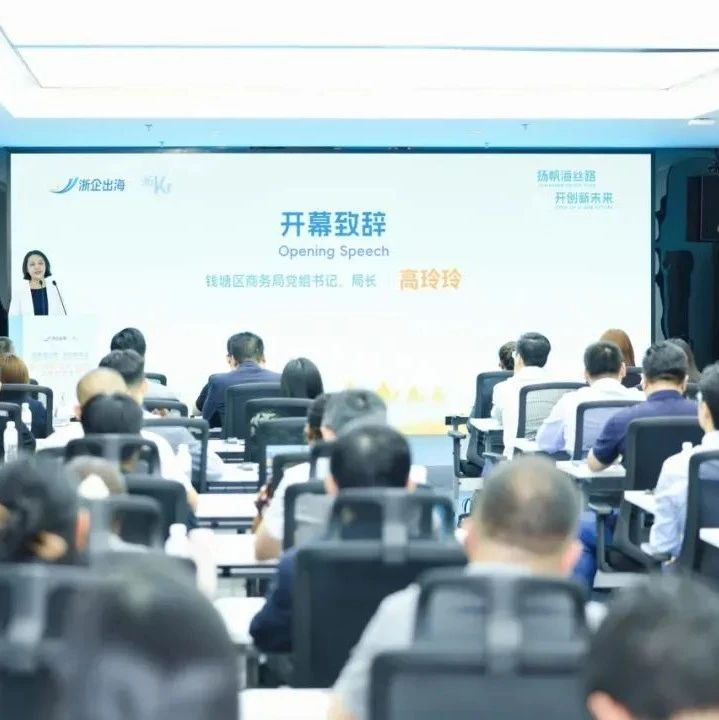
Core Viewpoint - The article discusses the opportunities and challenges for Chinese companies in expanding into the North African market, particularly Egypt, highlighting the importance of economic cooperation and investment strategies [3][4][9]. Group 1: Event Overview - The "2025 China-North Africa (Egypt) Bilateral Investment Salon" was successfully held in Hangzhou, focusing on investment opportunities in North Africa and key issues related to industrial cooperation and business establishment [4][6]. - The event featured representatives from various companies, including Geely Automobile and Ningbo Bank, who shared their experiences and engaged in discussions with over 50 outbound enterprises [6][19]. Group 2: Economic Insights - Eman Hussien, the Economic Counselor from the Egyptian Consulate in Shanghai, emphasized Egypt's "Vision 2030" as crucial for economic growth, with a projected GDP increase of 5% by the end of 2025 due to ongoing reforms and supportive government policies [8][9]. - Egypt is positioned at a significant economic transformation juncture, with emerging opportunities across various sectors, aiming to attract foreign investment through effective measures in trade and currency [9][11]. Group 3: Strategic Initiatives - The Qiantang District Business Bureau highlighted its role as a vital area for Zhejiang's high-quality development and the establishment of the BRICS Special Economic Zone China Cooperation Center, which aims to enhance trade cooperation and investment in digital and green sectors [11][13]. - The Hangzhou Free Trade Zone, established in September 2020, covers 37.51 square kilometers and focuses on creating a favorable business environment for trade and investment, particularly in the digital economy [15]. Group 4: Company Strategies - Geely Automobile has integrated Egypt into its global "system going out" strategy, with its factory in Egypt expected to achieve an annual production capacity of approximately 30,000 units within three years [19]. - Zhu Xufeng, Executive Deputy General Manager of Geely's Financial Center, indicated plans for localized assembly of more vehicle models in Egypt [19]. - Zhuo Yi Intelligent, recognized as a national-level specialized and innovative small giant, is targeting the North African market, leveraging its technological advantages in tethered drones [21]. - Ningbo Bank has launched a one-stop "Overseas Services" platform to support Chinese enterprises in their overseas investments, covering all phases from investment to expansion [23].