Yanghe(002304)

Search documents
低度酒品类狂欢下,却赚了个寂寞
3 6 Ke· 2025-12-30 04:00
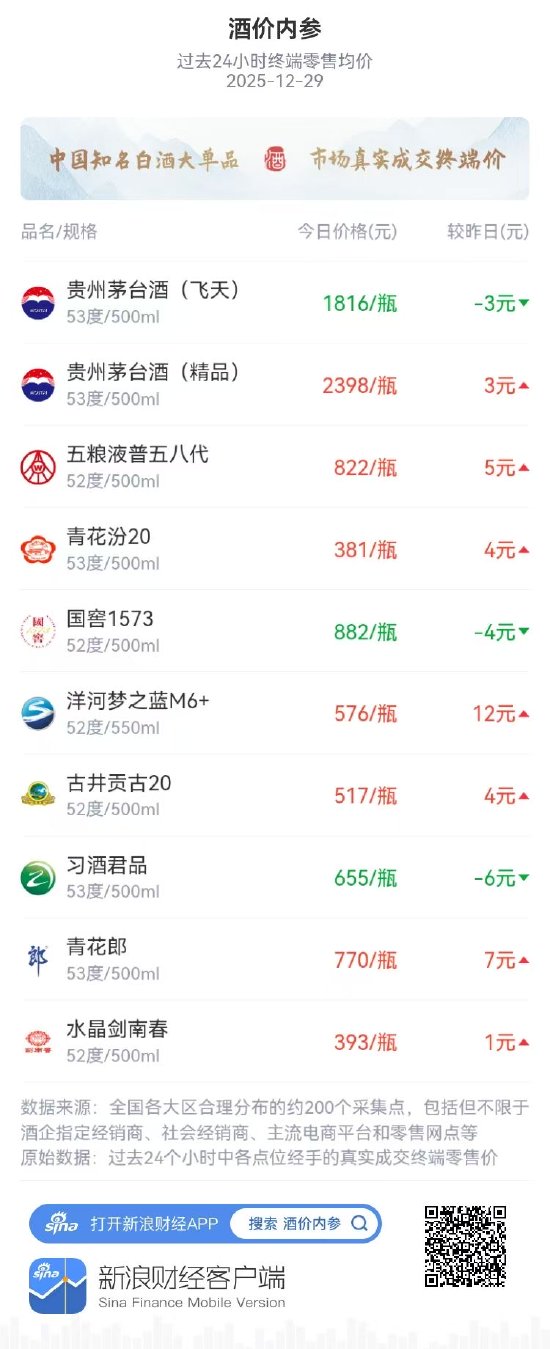
Core Insights - The low-alcohol beverage market in China has rapidly expanded, with market size projected to grow from 200 billion yuan in 2020 to over 570 billion yuan by 2024, and globally reaching 634.17 billion yuan in 2023, expected to exceed 740 billion yuan by 2025 [1][4][6] - The shift in consumer preferences from traditional high-alcohol beverages to low-alcohol options is driven by younger generations seeking healthier and more enjoyable drinking experiences [5][6][8] - The market is becoming increasingly competitive with new brands entering, including traditional liquor companies and retail chains launching their own low-alcohol products [5][9][12] Market Trends - The rise of low-alcohol beverages is characterized by a cultural shift from "drinking for social obligation" to "drinking for personal enjoyment," with 50% of consumption occurring at home and a 56% increase in outdoor activities like camping [5][6] - Young consumers aged 18-35 account for 68% of sales, with a significant portion being female [5][6] - Health concerns are a primary motivator for Gen Z consumers choosing low-alcohol options, as traditional high-alcohol spirits are viewed as outdated [6][8] Competitive Landscape - Established brands like RIO and emerging players such as Mei Jian and Bei Rui Tian Xin are competing for market share, with RIO facing challenges due to declining sales and brand fatigue [2][9][11] - Traditional liquor companies like Moutai and Wuliangye are diversifying into low-alcohol products, while retail chains like Hema and Haidilao are also launching their own offerings [5][9] - The market is characterized by a lack of standout brands, with many new entrants struggling to differentiate themselves in a crowded space [12] Consumer Behavior - Young consumers prefer low-alcohol products that are smooth and sweet, contrasting with the strong flavors of traditional spirits [8] - The use of social media has significantly increased the visibility and popularity of low-alcohol beverages, with discussions on platforms tripling in 2020 [4] - The trend towards low-alcohol beverages is not just a passing fad; it reflects a deeper cultural shift in drinking habits among younger generations [5][6]






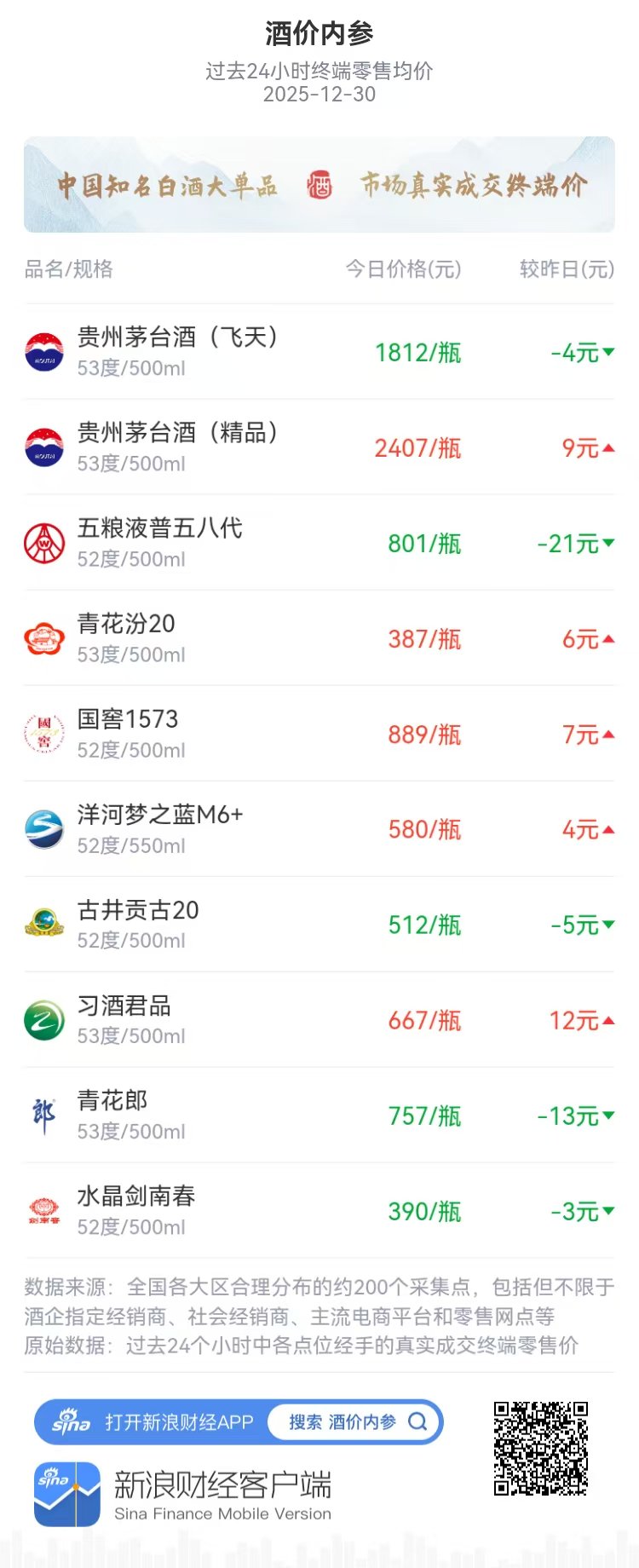
酒价内参12月30日价格发布,洋河梦之蓝M6+小涨4元
Xin Lang Cai Jing· 2025-12-30 02:10
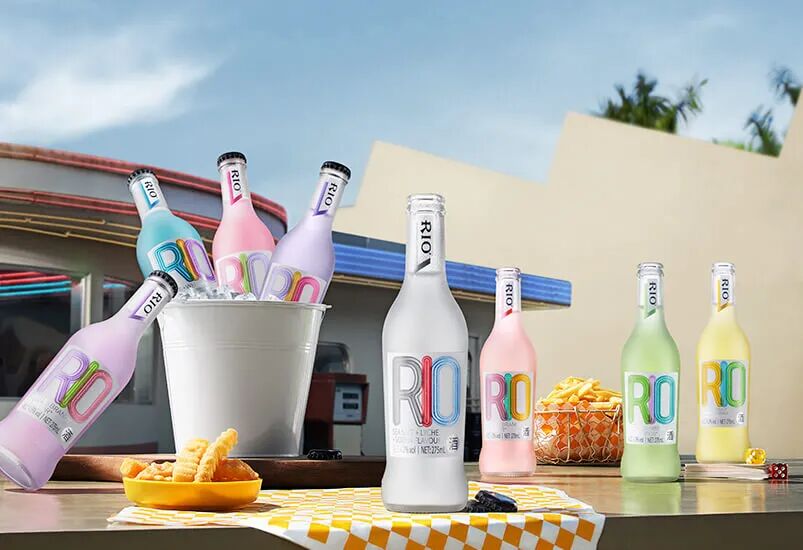
Core Viewpoint - The Chinese liquor market is experiencing a high-level consolidation with slight price adjustments, indicating a stable end to the year after significant fluctuations in mid-December [1] Price Trends - The average retail price of the top ten liquor products is 9,202 yuan, down 8 yuan from the previous day [1] - Notable price increases include: - Xijiu Junpin up 12 yuan/bottle - Guizhou Moutai (Premium) up 9 yuan/bottle, reaching 2,400 yuan/bottle - Guojiao 1573 up 7 yuan/bottle - Qinghua Fen 20 up 6 yuan/bottle - Yanghe Dream Blue M6+ up 4 yuan/bottle [1][3] - Significant price decreases include: - Wuliangye Pu 58th generation down 21 yuan/bottle, nearing the 800 yuan/bottle mark - Qinghua Lang down 13 yuan/bottle after a previous increase of 45 yuan/bottle over eight days - Gujing Gonggu 20 down 5 yuan/bottle - Feitian Moutai and Shuijing Jian'nan Chun down 4 yuan and 3 yuan/bottle respectively [1][4] Market Dynamics - The data is sourced from approximately 200 collection points across major regions, ensuring a comprehensive and objective representation of the liquor market [2] - Langjiu has announced a strategic push into Jiangsu, aiming to capture market share from Yanghe, which has seen a decline in influence [2] - The competition among major brands like Sichuan liquor, Guizhou liquor, and Anhui liquor in Jiangsu reflects a trend where smaller brands are losing market presence, necessitating larger brands to actively seek growth opportunities [2]
酒价内参12月30日价格发布,习酒君品上涨12元领涨
Xin Lang Cai Jing· 2025-12-30 01:17
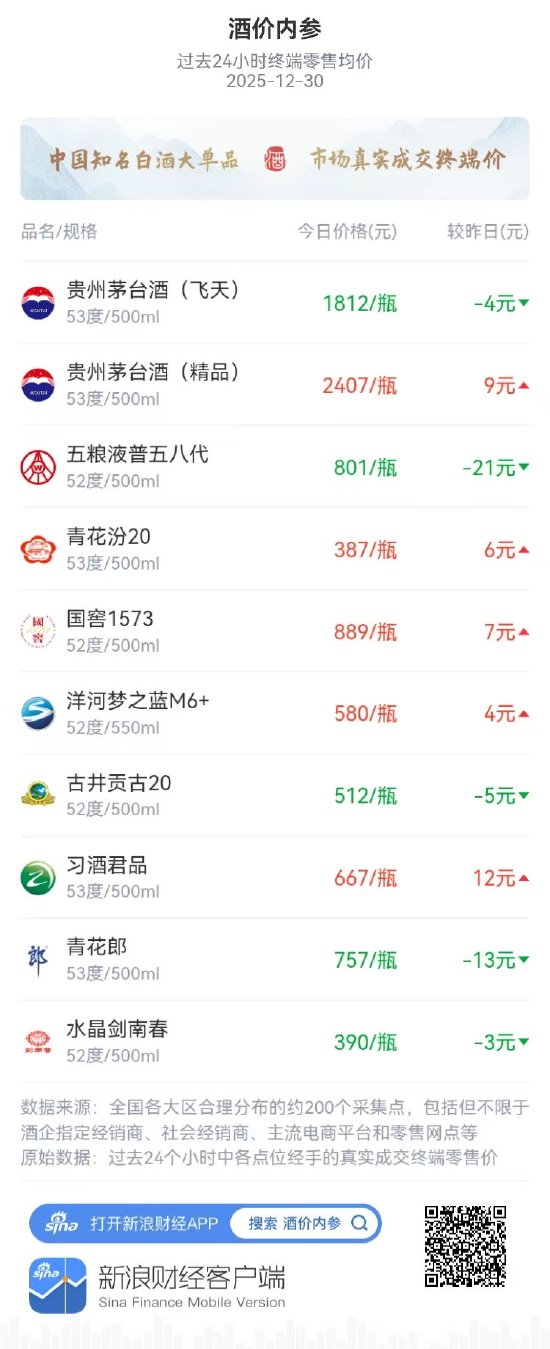
Core Insights - The core viewpoint of the article highlights the recent trends in the Chinese liquor market, particularly focusing on the retail prices of the top ten liquor products, which have shown a slight overall decline after a period of volatility [1][6]. Price Trends - The average retail price of the top ten liquor products is currently 9,202 yuan, down by 8 yuan from the previous day [1][6]. - The market is experiencing a mixed performance with significant fluctuations in individual product prices, reflecting typical year-end trading behaviors influenced by capital and sentiment [7]. Price Increases - Notable price increases include: - Xijiu Junpin, which rose by 12 yuan per bottle, leading the market after three consecutive declines [7]. - Guizhou Moutai (premium) increased by 9 yuan per bottle, marking its third consecutive rise, now priced above 2,400 yuan [7]. - Other increases include: - Guojiao 1573: up 7 yuan per bottle - Qinghua Fen 20: up 6 yuan per bottle - Yanghe Dream Blue M6+: up 4 yuan per bottle [7]. Price Decreases - Significant price declines include: - Wuliangye Pu 58th generation, which dropped by 21 yuan per bottle, nearing the 800 yuan threshold [7]. - Qinghua Lang fell by 13 yuan per bottle after a previous increase of 45 yuan over eight days [7]. - Other decreases include: - Gujing Gonggu 20: down 5 yuan per bottle - Feitian Moutai: down 4 yuan per bottle - Shuijing Jian Nan Chun: down 3 yuan per bottle [7]. Market Dynamics - The article discusses the competitive landscape in the liquor industry, particularly the strategic moves by Langjiu to penetrate the Jiangsu market, which has been traditionally dominated by Yanghe [8]. - The competition among major brands such as Sichuan liquor, Guizhou liquor, and Anhui liquor indicates a shrinking market for smaller enterprises, necessitating larger brands to capture market share from competitors [8].


酒价内参12月30日价格发布,青花汾20上涨6元
Xin Lang Cai Jing· 2025-12-30 01:17
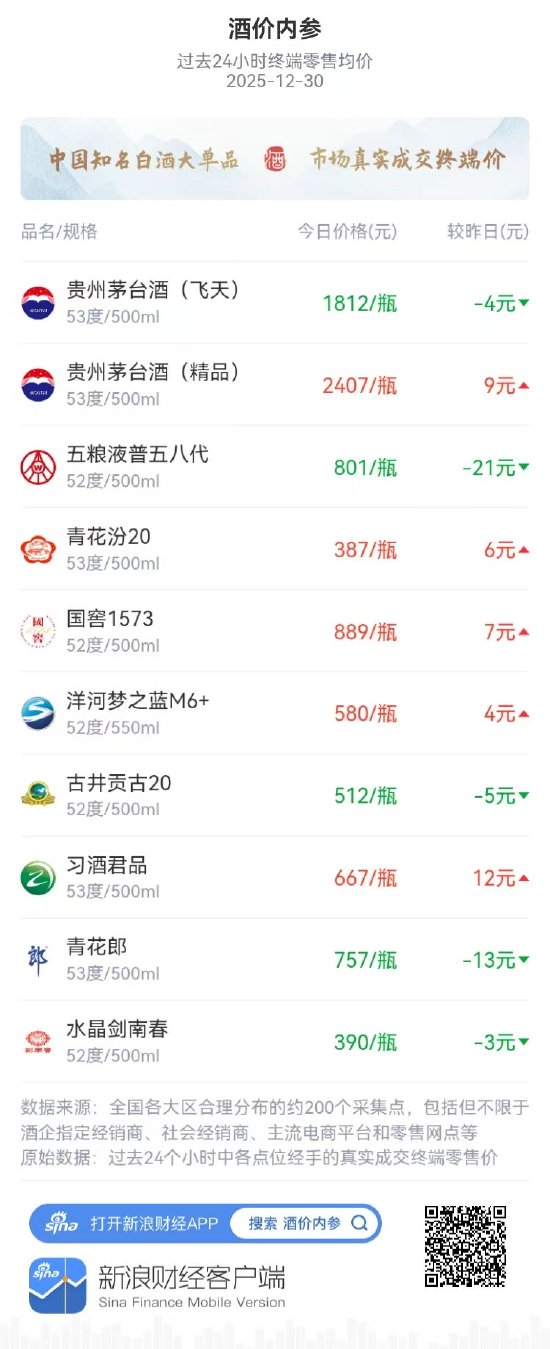
Core Insights - The core viewpoint of the article is that the Chinese liquor market, particularly for the top ten baijiu products, is experiencing a high-level consolidation with slight price adjustments, indicating a stable market as the year ends [1][6]. Price Trends - The average retail price for the top ten baijiu products is 9,202 yuan, down by 8 yuan from the previous day [1][6]. - Price fluctuations are noted, with some products increasing while others decrease, reflecting a typical year-end market behavior characterized by capital and emotional trading [7]. Product Performance - Notable price increases include: - Xijiu Junpin: up 12 yuan/bottle - Guizhou Moutai (Premium): up 9 yuan/bottle, reaching 2,400 yuan/bottle - Guojiao 1573: up 7 yuan/bottle - Qinghua Fen 20: up 6 yuan/bottle - Yanghe Dream Blue M6+: up 4 yuan/bottle [7][10]. - Significant price decreases include: - Wuliangye Pu 58th Generation: down 21 yuan/bottle, nearing the 800 yuan/bottle mark - Qinghua Lang: down 13 yuan/bottle - Gujing Gonggu 20: down 5 yuan/bottle - Feitian Moutai and Shuijing Jianan Chun: down 4 yuan and 3 yuan/bottle respectively [7][10]. Market Dynamics - The data for the "Liquor Price Reference" is sourced from approximately 200 collection points across major regions, including designated distributors and mainstream e-commerce platforms, aiming to provide objective and traceable market price data [2][6]. - In industry dynamics, Langjiu has announced a strategic focus on Jiangsu as a key development market, planning aggressive market penetration over the next three years, which may challenge Yanghe's traditional dominance in the region [3][8].
酒价内参12月30日价格发布 市场高位整理整体价格小幅回调
Xin Lang Cai Jing· 2025-12-30 01:12
Core Viewpoint - The Chinese liquor market is experiencing a high-level consolidation with slight price adjustments, indicating a stable end to the year after significant fluctuations in mid-December [1]. Price Trends - The overall retail price for the top ten liquor products is 9,202 yuan, down 8 yuan from the previous day [1]. - The market shows mixed performance with significant price changes among various products, reflecting typical year-end trading behaviors influenced by capital and sentiment [1]. Price Increases - Xijiu Junpin saw a price increase of 12 yuan per bottle, leading the market after three consecutive declines [1]. - Guizhou Moutai's premium product rose by 9 yuan per bottle, marking its third consecutive increase and surpassing 2,400 yuan per bottle [1]. - Other products with price increases include: - Guojiao 1573: up 7 yuan per bottle [1]. - Qinghua Fen 20: up 6 yuan per bottle [1]. - Yanghe Dream Blue M6+: up 4 yuan per bottle [1]. Price Decreases - Wuliangye Pu 58th generation experienced a notable decline of 21 yuan per bottle, barely maintaining the 800 yuan threshold [1]. - Qinghua Lang saw a decrease of 13 yuan per bottle after a previous increase of 45 yuan over eight days [1]. - Other products with price decreases include: - Gujing Gonggu 20: down 5 yuan per bottle [1]. - Feitian Moutai: down 4 yuan per bottle [3]. - Shuijing Jian'nan Chun: down 3 yuan per bottle [4].
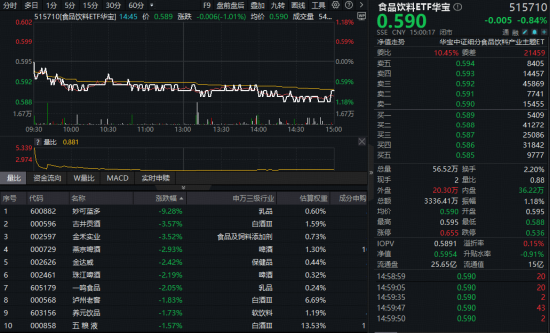
“茅五泸汾洋”重挫,食品饮料ETF华宝(515710)收跌0.84%!茅台董事长喊话“穿越周期”,配置时机渐显?
Xin Lang Cai Jing· 2025-12-29 14:18
Group 1: Market Performance - The food and beverage sector experienced a decline on December 29, with the Food and Beverage ETF Huabao (515710) opening lower and dropping over 1% during the day, ultimately closing down 0.84% [1][8] - Major consumer goods and some liquor stocks performed poorly, with Miaokelan falling by 9.28%, and both Gujing Gongjiu and Jinhai Industrial dropping over 3% [1][8] Group 2: Industry Insights - The chairman of Moutai Group announced at a conference that the primary marketing task for Moutai liquor in 2026 is to focus on consumer needs and promote market-oriented transformation [1][10] - The overall liquor industry is currently in a deep adjustment phase, facing challenges such as high channel inventory and slowing growth rates, but Moutai is optimistic about navigating these challenges [3][10] - The valuation of the food and beverage sector is at a historical low, with the PE ratio of the underlying index for the Food and Beverage ETF Huabao at 20.19, placing it in the 5.77% percentile of the last decade, indicating a potential opportunity for long-term investment [3][11] Group 3: Future Outlook - Analysts predict that the demand for liquor will remain subdued in 2025, continuing the trend of weak seasonal demand, which may lead to further declines in liquor prices [4][11] - The liquor sector is entering a more favorable configuration zone, with expectations that any improvement in supply and demand could act as a catalyst for recovery [5][11] - The Food and Beverage ETF Huabao is recommended for investors looking to allocate to core assets in the food and beverage sector, with a significant portion of its holdings in leading liquor stocks [5][12]

食品饮料行业周度更新:大众品需求边际回暖,餐供链板块周度领涨-20251229
Changjiang Securities· 2025-12-29 11:29
Investment Rating - The industry investment rating is "Positive" and is maintained [9] Core Viewpoints - The liquor sector is experiencing a phase of "supply optimization and weak demand recovery," with inventory destocking expected to continue in Q4. Short-term price recovery is anticipated due to Moutai's controlled supply, with attention on Spring Festival sales and inventory turnover [2][5] - Demand for mass consumer goods is expected to show marginal recovery, with January anticipated to see a strong start due to delayed Spring Festival stocking [2][5] - The latest recommended companies include Ganhe Weiye, Guoquan, Anqi Yeast, Babi Foods, Ligao Foods, Wancheng Group, Anjii Foods, Kuaijishan, Shanxi Fenjiu, Yanghe, and Guizhou Moutai [2][5] Summary by Sections Production Data - In November, the industry production data revealed that meat and soft drinks led the growth, with meat production increasing by 16.3% and soft drinks by 0.4%. Other categories, such as alcoholic beverages, continue to face downward pressure [4][16] - Non-alcoholic categories showed stable production growth, with notable increases in fresh and chilled meat production, driven by declining prices of core items like pork, stimulating demand [20] Market Review - Since the beginning of the year, the Food and Beverage (Yangtze) Index has decreased by 4.22%, underperforming compared to the CSI 300. The market has seen significant differentiation, particularly in Q2 and Q3, due to consumption scene restrictions and a trend towards cost-effective consumption preferences [6][28] - In the past week, the restaurant supply chain sector (including food and condiments) has outperformed, while the liquor sector (including beer and wine) has shown relatively weak performance [6][28] Industry Dynamics - Companies in the soft drink sector are focusing on core categories to enhance competitiveness, such as Yuanqi Forest divesting its dairy business to concentrate on tea and sparkling water. Cross-industry innovations are also being explored, with new products like rice whiskey targeting specific dining scenarios [7][34] - Digital transformation and employee incentives are driving channel changes, with integrated online and offline strategies becoming mainstream. Companies like Luckin Coffee and Three Squirrels are rapidly expanding into high-traffic areas [7][34]
18只白酒股下跌 贵州茅台1402.00元/股收盘
Bei Jing Shang Bao· 2025-12-29 09:48
Core Viewpoint - The recent performance of the liquor sector, particularly the leading companies, indicates a strategic shift towards inventory control and channel adjustments to ensure long-term health in the industry [1] Group 1: Market Performance - The Shanghai Composite Index closed at 3965.28 points, up 0.04% [1] - The liquor sector index closed at 2184.11 points, down 1.16%, with 18 liquor stocks declining [1] - Notable individual stock performances include: - Kweichow Moutai at 1402.00 CNY/share, down 0.86% [1] - Wuliangye at 108.06 CNY/share, down 1.57% [1] - Shanxi Fenjiu at 175.00 CNY/share, down 1.52% [1] - Luzhou Laojiao at 117.21 CNY/share, down 1.83% [1] - Yanghe Brewery at 61.47 CNY/share, down 1.06% [1] Group 2: Industry Insights - CITIC Securities reports that leading liquor companies are holding important meetings to express their commitment to adjustments, reforms, and channel rebalancing, which is beneficial for the industry's long-term health [1] - Since the fourth quarter of this year, major liquor companies have implemented measures such as controlling shipments, reducing burdens on distributors, and promoting sales to lower channel inventory [1] - Considering the stabilization of sales and various factors including the consumption scenarios during the Spring Festival, actual liquor sales during the 2026 Spring Festival are expected to remain stable [1]
从APEC国宴到韩国免税榜首,洋河拓展中国白酒的全球版图
Shen Zhen Shang Bao· 2025-12-29 04:31
Core Insights - The article highlights the challenges and strategies of Chinese baijiu brands, particularly Yanghe, in expanding into international markets, emphasizing the importance of breaking through established distribution channels and building brand trust through high-profile events like the APEC summit [1][2][4]. Group 1: Market Expansion and Performance - Chinese baijiu exports account for only 2.4% of the global spirits market, indicating significant room for growth [1]. - Yanghe achieved a 23% growth in sales in the Korean duty-free market, becoming the top seller despite an overall industry decline [1]. - The brand has expanded its market presence to 86 countries and regions across six continents, with continuous growth in overseas sales over the past three years [1]. Group 2: Building Brand Trust - Yanghe's strategy to enter high-end channels began with its participation in the APEC summit, where it was featured as the official banquet wine, establishing a strong trust signal [2][4]. - The brand has successfully positioned itself as a premium product, gaining recognition through its presence in Chinese embassies and international forums [4]. - Yanghe has participated in nearly 30 global wine exhibitions annually, receiving positive feedback from key political figures, which enhances its credibility [4][5]. Group 3: Cultural Engagement and Consumer Experience - Yanghe has launched the "Chinese Banquet" cultural IP in markets like Thailand and Singapore, integrating traditional craftsmanship and quality narratives to create engaging consumer experiences [6][8]. - The brand has established cultural exchange centers in various countries, hosting over 20 events annually to promote baijiu as part of local lifestyles [8]. - Yanghe's approach transforms static product displays into dynamic cultural events, facilitating deeper market penetration and consumer engagement [8]. Group 4: Strategic Channel Development - Yanghe focuses on the duty-free channel as a strategic high point for growth, leveraging its status as the APEC banquet wine to gain entry into premium retail spaces [9][10]. - The brand has opened image stores in international airports and is expanding its presence in duty-free markets across Europe and along the Belt and Road Initiative [11]. - Yanghe's success in the Korean market illustrates a replicable model for other Chinese brands aiming for high-end international expansion, emphasizing the need for a coherent commercial strategy [11].

酒价内参12月29日价格发布,青花汾20上涨4元
Xin Lang Cai Jing· 2025-12-29 01:25
Core Insights - The core viewpoint of the article is that the Chinese liquor market, particularly the top ten liquor products, has shown signs of price recovery after a brief decline, with an overall increase in retail prices observed on Monday [1][6]. Price Trends - The average retail price of the top ten liquor products has stabilized and rebounded, with a total price of 9,210 yuan for a bundled sale of one bottle from each product, reflecting an increase of 23 yuan from the previous day [1][6]. - The market is experiencing a general upward trend, with most brands seeing price increases. Notably, Yanghe Dream Blue M6+ saw a significant rebound of 12 yuan per bottle, leading the market [1][7]. - Other notable price increases include: - Qinghua Lang up 7 yuan per bottle, marking its eighth consecutive day of price increases [1][7]. - Wuliangye Pu 58th generation up 5 yuan per bottle [1][7]. - Qinghua Fen 20 up 4 yuan per bottle [1][7]. - Guizhou Moutai premium up 3 yuan per bottle [1][7]. - Gujing Gong 20 and Shuijing Jian Nan Chun each up 1 yuan per bottle [1][7]. - Conversely, some products have seen price declines, including: - Xijiu Junpin down 6 yuan per bottle, continuing a three-day downward trend [1][7]. - Guojiao 1573 down 4 yuan per bottle [1][7]. - Feitian Moutai down 3 yuan per bottle [1][7]. Data Collection Methodology - The daily data for "Liquor Price Reference" is sourced from approximately 200 collection points across various regions, including designated distributors, social distributors, mainstream e-commerce platforms, and retail outlets, ensuring a comprehensive and objective representation of the market [2][7]. Industry Developments - On December 28, Guizhou Moutai held a national distributor conference, where the new management team emphasized respect and openness towards distributors and outlined a development strategy for 2026 [2][7]. - Moutai acknowledged its shortcomings in marketization and consumer reach while asserting the broad market potential for Moutai liquor [2][7]. - The core plan for the upcoming year includes preventing price speculation, promoting market-driven pricing, and establishing a pyramid product system centered around the 500ml Feitian Moutai as the main product [2][7]. - Moutai aims to enhance online and offline integration, encouraging compliant distributors to expand online business while focusing on consumer-centric marketing transformation [2][7]. - The chairman, Chen Hua, redefined the relationship with distributors, promising not to let them incur losses while urging a shift from passive to proactive consumer service [2][7].