
SF Holding(002352)

Search documents
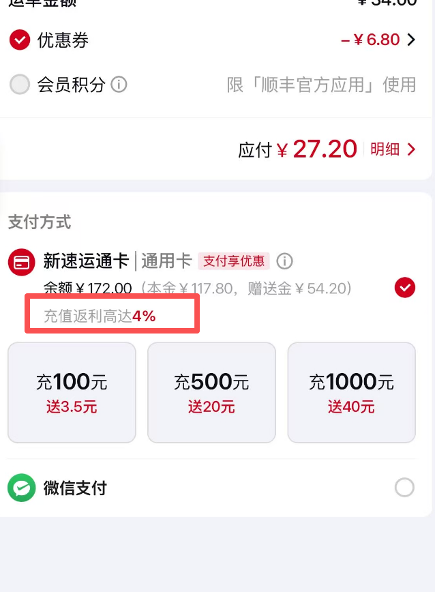
顺丰充值赠送金“陷阱”背后:预付卡沉淀资金是个“好生意”
Di Yi Cai Jing· 2025-12-28 05:56
Core Viewpoint - The express delivery industry is experiencing a price war, leading to pressure on company profitability, particularly for SF Holding, which has seen a significant decline in its gross profit margin and single-ticket revenue [2][10][12]. Group 1: Financial Performance - SF Holding's gross profit margin has decreased from 20% in 2017 to 13% in Q3 2024, with a net profit margin of 3.7% remaining stable year-on-year [11]. - In November 2024, the single-ticket revenue dropped to 13.47 yuan, nearly halving compared to 22.17 yuan in 2017 [12]. - For the first three quarters of 2025, SF Holding reported a total business volume of 12.15 billion tickets, a year-on-year increase of 28.3%, and revenue of 225.3 billion yuan, up 8.9% [11]. Group 2: Customer Experience and Issues - Users of SF Holding's "New Express Card" have reported difficulties in utilizing the promotional "gift money," which is often left unused due to complex rules [4][6]. - The rules for using the gift money require a 9:1 ratio with the principal amount, and specific conditions must be met for its use, leading to frustration among customers [7][8]. - A secondary market has emerged where intermediaries buy back unused gift money at a significant discount, indicating dissatisfaction with the redemption process [9]. Group 3: Market Position and Competition - The express delivery market is undergoing consolidation, with smaller companies exiting, leaving a few major players, including SF Holding, to compete [11]. - SF Holding's stock price has declined significantly, losing two-thirds of its value since its peak in 2021, reflecting market skepticism despite stable operational performance [3][15]. - The company faces ongoing pressure from competitors and changing market dynamics, particularly in the e-commerce return logistics sector [14].


交通运输产业行业研究:美国扣押委内瑞拉相关油轮,太平洋航运公告建造4 艘散货船
SINOLINK SECURITIES· 2025-12-28 05:36
Investment Rating - The report does not explicitly state an overall investment rating for the industry, but it recommends specific companies such as SF Express and China Southern Airlines based on their performance and market conditions [2][4]. Core Views - The express delivery sector shows a year-on-year growth of 5% in November, with some companies benefiting from price increases due to reduced competition. The total express delivery volume reached approximately 180.6 billion pieces, while revenue decreased by 3.7% to 137.65 billion yuan [2]. - In logistics, the chemical transportation prices remained stable, and the report recommends Haichen Co. for its focus on smart logistics and improved demand [3]. - The aviation sector experienced a slight increase in flight operations, with an average of 14,612 flights per day, reflecting a 1.79% year-on-year growth. The report anticipates profit elasticity for airlines due to supply constraints and rising ticket prices [4]. - The shipping sector indicates a mixed performance, with container shipping rates showing a slight increase, while dry bulk shipping rates have decreased. The report highlights the impact of geopolitical events on oil tanker operations [5]. - The road and rail sector shows stable performance, with highway freight traffic increasing by 2.02% week-on-week, and the Daqin Railway reported a 1.75% increase in freight volume [6][89]. Summary by Sections 1. Market Review - The transportation index rose by 1.3% during the week of December 20-26, underperforming the Shanghai Composite Index, which increased by 1.9%. The logistics sector had the highest gain at 5.5%, while the aviation sector saw a decline of 0.7% [1][13]. 2. Industry Fundamentals Tracking 2.1 Shipping and Ports - The report notes a slowdown in container shipping declines, with support from seasonal demand and long-term contracts. However, it warns of potential downward pressure on rates in January due to increased capacity [24]. - The export container shipping index (CCFI) was reported at 1,146.67 points, up 2.0% week-on-week but down 24.3% year-on-year [25]. 2.2 Aviation and Airports - The civil aviation sector saw a total passenger volume of 60.17 million in November, a 6% increase year-on-year, with domestic routes growing by 5% and international routes by 19% [58]. - The report highlights that airlines are expected to see significant profit increases in Q4 due to high load factors and rising ticket prices [58]. 2.3 Rail and Road - The report indicates that national railway passenger volume reached 331 million in November, a year-on-year increase of 8.94%, while freight volume was 460 million tons, up 1.16% [83]. - The highway freight traffic showed a slight increase, with a total of 55.44 million trucks passing through highways during the week of December 16-21 [89].

大湾区低空经济掘金千亿风口
2 1 Shi Ji Jing Ji Bao Dao· 2025-12-27 12:42
Core Viewpoint - The development of the low-altitude economy hinges on identifying real scene demands, with a focus on high-frequency, low-risk scenarios to drive regulatory and management improvements [1][2]. Low-altitude Logistics - Major tech companies like JD.com, Meituan, and SF Express are competing in the low-altitude logistics sector, showcasing their unmanned aerial vehicles (UAVs) [4]. - JD.com plans to achieve normalized operations for its drones and unmanned vehicles by 2025, with significant logistics improvements in the Greater Bay Area, including a 70% increase in transportation efficiency for medical supplies across the Pearl River [4][5]. - Meituan has launched 65 flight routes and completed 740,000 commercial orders by December, with a focus on instant delivery services [7]. - SF Express has established 1,400 flight routes and operates over 1,000 drones, with Shenzhen as its core logistics hub, achieving an annual flight volume of 250,000 [9]. Low-altitude Tourism - The low-altitude tourism market is transitioning from niche high-end experiences to mass consumption, with projections indicating a market size of 200 billion yuan by 2030 [11][14]. - The Ministry of Culture and Tourism and the Civil Aviation Administration of China have issued a plan to support the development of low-altitude tourism, encouraging the creation of unique routes and products [14]. - Guangzhou is leading in low-altitude tourism infrastructure, planning to establish 10 low-altitude takeoff and landing bases and 1,000 takeoff points by 2030 [14]. - EHang's EH216-S eVTOL has received full certification for commercial operations and has completed 80,000 safe flights across 16 cities, demonstrating the potential for profitability in low-altitude tourism [16].




顺丰、京东、美团打响“天空之战”,无人机重塑物流
Tai Mei Ti A P P· 2025-12-27 01:08
Core Insights - The rapid expansion of drone logistics routes reflects the explosive growth of the market, with projections estimating the low-altitude logistics market to reach between 1200 billion to 1500 billion yuan by 2025, and potentially climb to 4500 billion to 6050 billion yuan by 2035 [2] Group 1: Company Developments - SF Express has been a pioneer in drone logistics since 2012, receiving its first operational certificate in early 2024 and launching the first "air-ground collaborative" smart logistics center in February 2025 [4][5] - As of November 30, 2024, SF Express has opened over 600 drone routes nationwide, establishing a three-tier drone logistics system centered on "hub-grid-terminal" [7][8] - JD Logistics has been developing drone technology since 2015, focusing on remote area collection and creating efficient "air collection channels" during cherry harvest seasons, demonstrating significant time savings compared to traditional transport [8][9] - Meituan, which started its drone business in 2017, has launched multiple drone products and operates 65 routes across cities including Shenzhen, Shanghai, and Beijing, completing 740,000 commercial orders [10][11] Group 2: Market Dynamics - The core value of drones in logistics lies in achieving extreme efficiency and cost optimization, as evidenced by JD Logistics' use of drones to significantly reduce transportation time for perishable goods [11][12] - In emergency situations, drone delivery has shown to enhance delivery efficiency by over 50%, as demonstrated by the rapid transport of blood plasma to hospitals [12][13] - The implementation of drone logistics has proven to increase logistics efficiency by 60% and reduce costs by approximately 20% in specific applications, highlighting its economic viability [13] - Government support for the development of low-altitude logistics is evident in recent policy initiatives, including the 2025 government work report and local regulations promoting drone applications in various logistics scenarios [14][15]
五大物流巨头,谁将赢得行业终极之战?
Xin Lang Cai Jing· 2025-12-26 07:31
Core Viewpoint - The logistics industry is undergoing significant transformation driven by technological advancements and diverse consumer demands, impacting operational efficiency and overall economic vitality [1][6]. Group 1: Industry Overview - The logistics sector is described as a vital component of the economy, influencing both business operations and consumer experiences [1][6]. - Key elements of competition in the logistics industry include supply chain optimization, network layout improvement, service quality enhancement, and data technology application [1][6]. Group 2: Company Highlights - Yunda Holdings, led by Chairman Nie Tengyun, emphasizes technology-driven logistics, advancing digital supply chain construction and optimizing network structure to enhance sorting efficiency and delivery speed [3][10]. - ZTO Express, under Chairman Lai Meisong, reported a package volume of 9.57 billion in Q3 2025, a year-on-year increase of 9.8%, with adjusted net profit rising by 5.0% to RMB 2.51 billion and revenue reaching RMB 11.86 billion, up 11.1% [3][10]. - JD Group, led by Liu Qiangdong, achieved logistics revenue of RMB 55.1 billion in Q3 2025, a 24.1% year-on-year growth, with adjusted net profit of RMB 2.02 billion, driven by overseas business expansion [4][11]. - SF Holding, under Wang Wei, strengthened its position in the high-end logistics market, achieving revenue of RMB 225.26 billion in the first three quarters of 2025, a growth of 8.89%, and a net profit of RMB 8.31 billion, up 9.07% [4][11]. - Cainiao Group, led by CEO Wan Lin, made significant progress in building a global smart logistics network, achieving rapid cross-border transportation and precise delivery, with daily package volume in Latin America showing triple-digit growth [5][12].



快递行业业务量持续增长,“反内卷”利好单票价格回升,无人车打开新空间
Mei Ri Jing Ji Xin Wen· 2025-12-26 00:12
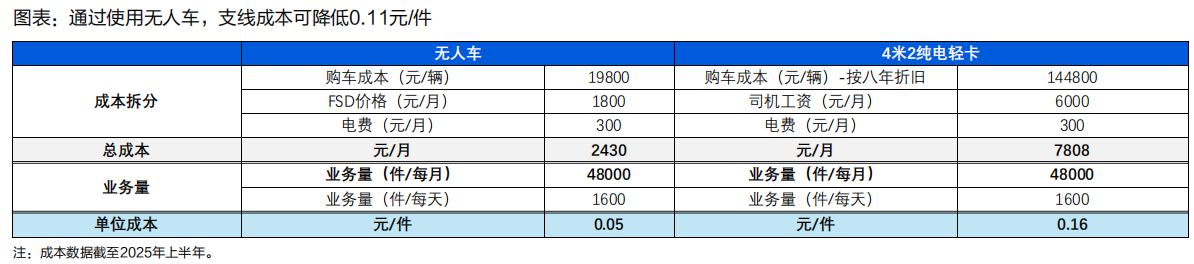
Core Insights - The express delivery industry in China is experiencing a shift towards "anti-involution," leading to an increase in per-package pricing and improved profitability for companies [1][3] - The demand for e-commerce logistics remains resilient, supported by robust internet infrastructure and diverse e-commerce platforms in China, which is the world's largest e-commerce market [1] - New e-commerce models such as live streaming and short video sales are rapidly developing, creating a symbiotic relationship between e-commerce and express delivery [1] Industry Growth Characteristics - The express delivery sector has entered a phase of moderate growth, with core drivers shifting from "penetration rate increase" to "structural growth," characterized by: 1. Package smallization due to increased repurchase frequency of affordable goods [2] 2. Rising demand for reverse logistics driven by higher e-commerce return rates [2] 3. Expansion of new models like live e-commerce and community group buying [2] Market Performance and Projections - In 2024, China's online retail sales of physical goods reached 13.08 trillion yuan, a year-on-year increase of 6.5%, maintaining its position as the largest online retail market globally [2] - The express delivery volume and revenue for 2024 were 174.5 billion packages and 1.4 trillion yuan, respectively, reflecting year-on-year growth of 21% and 13% [2] - By November 2025, the cumulative express delivery volume reached 180.74 billion packages, with a year-on-year growth of 14.9% [2] Pricing and Profitability Trends - In October 2025, the average revenue per package in the express delivery industry was 7.48 yuan, a decrease of 3.0% year-on-year, but the decline in revenue per package is slowing [3] - Major companies like Shentong and Yunda reported increases in per-package revenue of 7.4% and 4.5%, respectively, indicating the effectiveness of the "anti-involution" pricing policy [3] Industry Consolidation and Competitive Landscape - The concentration of the express delivery industry is increasing, with the market share of the top eight companies (CR8) reaching 87.0% by October 2025, up 0.1 percentage points from the previous period [3] - Leading companies are optimizing the competitive environment through the "anti-involution" policy, resulting in simultaneous increases in market share and profitability [3] Cost Structure and Efficiency Improvements - For SF Express, labor and transportation costs accounted for 84% of total per-package costs in 2024, with significant potential for cost reduction in the last-mile delivery segment [4] - The introduction of autonomous delivery vehicles could reduce transportation costs per package from 0.16 yuan to 0.05 yuan, representing a cost reduction of 69% [4][5] Investment Opportunities - Despite a recent adjustment in stock prices for express delivery companies, the continuous improvement in profitability presents significant investment opportunities [6] - For instance, SF Express's dynamic price-to-earnings ratio was 17.60 as of December 17, 2025, down from a peak of 121.04 yuan in 2021, indicating potential for recovery and growth [6]


顺丰速运苏南区总部在吴江启用
Xin Lang Cai Jing· 2025-12-25 21:26
Core Viewpoint - The establishment of SF Express's Suzhou South Headquarters marks a significant advancement in smart logistics, aiming to enhance regional economic growth and industrial collaboration in the Suzhou, Wuxi, and Changzhou areas [1] Group 1: Company Overview - SF Express's Suzhou South Headquarters is located in the Taihu New City Ring Enterprise Center and is a key operational hub for the company in the region [1] - The headquarters oversees the logistics network and customer service across Suzhou, Wuxi, and Changzhou, employing approximately 20,000 staff [1] Group 2: Logistics Network and Capacity - The logistics network in the region achieves 100% coverage across the three cities, supported by 9 intelligent modern logistics transfer centers [1] - The daily package processing capacity of the region reaches 4 million, effectively meeting the logistics demands of Suzhou, Wuxi, and Changzhou [1] Group 3: Strategic Goals - SF Express aims to implement a strategy focused on "technology-driven, data-enabled, green and low-carbon, and customer-centric" principles [1] - The company plans to deepen its digital supply chain capabilities and enhance localized service capabilities to contribute to the high-quality development of the Yangtze River Delta integration [1] - SF Express aspires to become a leader in regional smart logistics and supply chain innovation [1]
顺丰直营底盘稳固 全球物流布局剑指第二增长曲线
Mei Ri Jing Ji Xin Wen· 2025-12-25 14:53
Group 1 - The core viewpoint of the article highlights SF Holding's strong market position in high-end express delivery and its strategic focus on cross-border logistics to capture growth opportunities in international markets [1][2][3] Group 2 - SF Holding maintains a solid foundation in express delivery, achieving market shares of 64% in high-end express and 51% in mid-to-high-end economy segments by 2024, leading the industry [2] - The company serves over 2.35 million active monthly customers and 760 million individual members, leveraging its strong brand and service quality to establish long-term partnerships [2] - SF Holding's single ticket revenue for logistics reached 15.5 yuan and 13.8 yuan in 2024 and the first three quarters of 2025, significantly higher than competitors' 1.9 to 2.3 yuan per ticket, reflecting its brand premium [2] Group 3 - The global market presents vast opportunities, with SF Holding focusing on its "Asia Only, Global Coverage" strategy to provide high-efficiency logistics products and supply chain solutions [3] - The company is enhancing its global air network, customs clearance capabilities, and expanding overseas warehousing to improve cross-border fulfillment [3] - The Asian logistics market is projected to grow at an average annual rate of 5.1% from 2024 to 2029, with the global logistics market size estimated at approximately $11.8 trillion, indicating significant growth potential for SF Holding's supply chain and international business [3]
快递行业业务量持续增长 反内卷利好单票价格回升
Mei Ri Jing Ji Xin Wen· 2025-12-25 14:45
2025年,反内卷成为快递行业关键词,快递单票价格出现上涨。从数据上来看,电商快递行业需求仍然 保持韧性增长。此外,无人机、无人车等智能技术在快递行业的推广应用不断加快。随着盈利水平改 善,A股快递板块的投资机会值得重视。 业务量维持韧性增长 得益于我国完备的互联网基础设施建设、物流网络及多样化电商平台,我国拥有世界最大电商市场。近 年来,短视频和直播带货等新兴电商模式迅速发展。电商与快递是"火借风势,风助火威"的共生关系, 电商为快递提供了海量需求,快递则为电商的用户体验提供了核心保障,两者在相互成就中实现了共赢 发展。 2024年,在全面推进"消费品以旧换新"政策、电商平台创新性调整促销周期策略等因素的影响下,消费 市场潜能加速释放,带动相关商品销售保持增长,电商平台销售额表现亮眼。根据国家统计局公布的数 据,2024年全国实物商品网上零售额为130816亿元,同比增长6.5%,中国网购规模持续稳定增长,已 连续12年成为全球最大网络零售市场。同年,我国快递业务量和业务收入分别完成1745亿件和1.4万亿 元,同比分别增长21%和13%。 2025年以来,我国快递业务量持续保持较快增长态势。据国家邮政局数 ...
股票行情快报:顺丰控股(002352)12月25日主力资金净买入2305.78万元
Sou Hu Cai Jing· 2025-12-25 13:04
Core Viewpoint - SF Holding (002352) shows a steady increase in revenue and profit for the first three quarters of 2025, indicating a positive growth trend in its core logistics business despite a decline in quarterly net profit in Q3 2025 [2] Financial Performance - For the first three quarters of 2025, SF Holding reported a total revenue of 225.26 billion yuan, an increase of 8.89% year-on-year [2] - The net profit attributable to shareholders reached 8.31 billion yuan, up 9.07% year-on-year [2] - The net profit excluding non-recurring items was 6.78 billion yuan, showing a modest increase of 0.52% year-on-year [2] - In Q3 2025, the company achieved a single-quarter revenue of 78.40 billion yuan, reflecting an 8.21% year-on-year increase [2] - However, the net profit for Q3 2025 was 2.57 billion yuan, down 8.53% year-on-year, and the net profit excluding non-recurring items was 2.23 billion yuan, down 14.17% year-on-year [2] Debt and Profitability Metrics - The company's debt ratio stands at 49.99%, indicating a moderate level of leverage [2] - Investment income for the period was reported at 1.18 billion yuan, while financial expenses amounted to 1.33 billion yuan [2] - The gross profit margin is recorded at 12.96%, reflecting the company's operational efficiency [2] Market Activity - On December 25, 2025, SF Holding's stock closed at 38.28 yuan, with a slight increase of 0.24% [1] - The trading volume was 135,800 lots, with a total transaction value of 520 million yuan [1] - The net inflow of main funds was 23.06 million yuan, accounting for 4.43% of the total transaction value, while retail investors saw a net inflow of 38.17 million yuan, representing 7.33% of the total [1] Analyst Ratings - Over the past 90 days, 16 institutions have provided ratings for SF Holding, with 13 recommending a buy and 3 suggesting an increase in holdings [2] - The average target price set by institutions over the same period is 52.53 yuan [2]
