
Haige Communications(002465)

Search documents
海格通信:公司近期生产经营情况正常,内外部经营环境未发生重大变化
Xin Lang Cai Jing· 2026-01-13 10:30
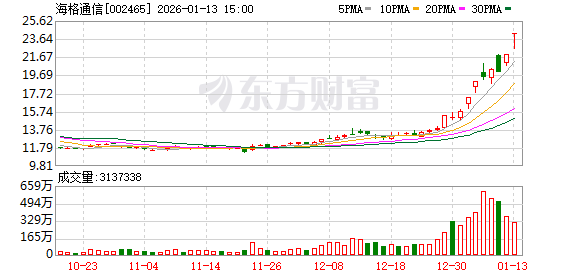
海格通信1月13日公告,公司股票连续两个交易日内(2026年1月12日、2026年1月13日)日收盘价格涨幅 偏离值累计超过20%,根据《深圳证券交易所交易规则》的相关规定,属于股票交易异常波动情形。经 核实,公司前期披露的信息不存在需要更正、补充之处;公司未发现近期公共传媒报道了可能或已经对 公司股票交易价格产生较大影响的未公开重大信息;公司近期生产经营情况正常,内外部经营环境未发 生重大变化;公司、控股股东和实际控制人不存在关于公司的应披露而未披露的重大事项,或处于筹划 阶段的重大事项;公司股票交易异常波动期间控股股东、实际控制人未买卖公司股票。 ...

【数据看盘】顶级游资扎堆海格通信 超30亿元资金激烈博弈航天电子
Xin Lang Cai Jing· 2026-01-13 09:53
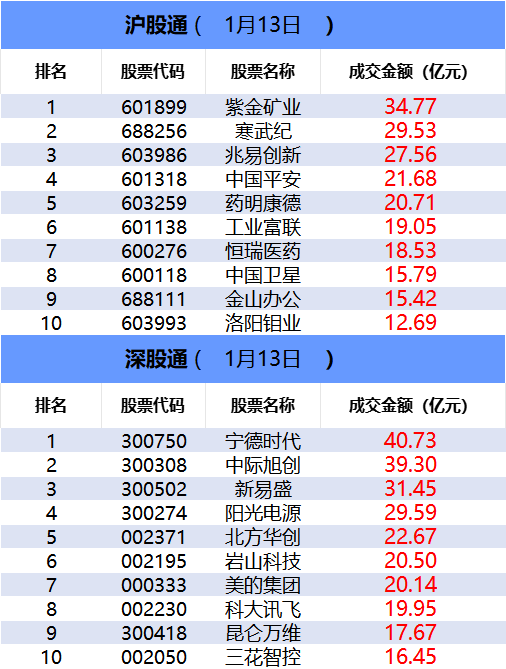
Group 1 - The total trading volume of the Shanghai and Shenzhen Stock Connect today reached 420.936 billion, with Zijin Mining and CATL leading in trading volume for the Shanghai and Shenzhen markets respectively [1] - The pharmaceutical sector saw the highest net inflow of funds, indicating strong investor interest [4][5] - The Sci-Tech 100 ETF (588220) experienced a significant trading volume increase of 211% compared to the previous trading day [9] Group 2 - In the top ten stocks traded on the Shanghai Stock Connect, Zijin Mining ranked first with a trading volume of 34.77 billion, followed by Cambricon Technologies and Zhaoyi Innovation [2] - On the Shenzhen Stock Connect, CATL topped the list with a trading volume of 40.73 billion, followed by Zhongji Xuchuang and Xinyi Technology [3] - The electronic sector faced the largest net outflow of funds, amounting to -367.84 billion, indicating a bearish sentiment [5][6] Group 3 - The top five stocks with the highest net inflow of funds included TBEA with 18.23 billion and Haige Communication with 17.39 billion, reflecting strong buying interest [6] - Conversely, the stocks with the highest net outflow included Goldwind Technology with -51.20 billion and Aerospace Electronics with -45.03 billion, suggesting significant selling pressure [7] - The trading volume of ETFs showed varied performance, with the Hong Kong Securities ETF leading at 119.688 billion, while the Sci-Tech 100 ETF had the highest growth rate [8][9] Group 4 - In the futures market, both the IH and IC contracts saw an increase in long positions, indicating a bullish outlook on the underlying stocks [10] - Institutional trading activity was notable, with significant purchases in AI application stocks, while Aerospace Electronics faced heavy selling from institutions [11][14]


主力动向:1月13日特大单净流出1035.54亿元
Zheng Quan Shi Bao Wang· 2026-01-13 09:48
两市全天特大单净流出1035.54亿元,其中46股特大单净流入超2亿元,海格通信特大单净流入26.56亿 元,特大单净流入资金居首。 特大单净流入资金排名 所属行业来看,上述特大单净流入资金居前个股中,医药生物、传媒、电力设备行业最为集中,上榜个 股分别有8只、8只、6只。(数据宝) | 代码 | 简称 | 收盘价(元) | 涨跌幅(%) | 特大单净流入(亿元) | 行业 | | --- | --- | --- | --- | --- | --- | | 002465 | 海格通信 | 24.20 | 10.00 | 26.56 | 国防军工 | | 600089 | 特变电工 | 27.37 | 10.01 | 26.06 | 电力设备 | | 300315 | 掌趣科技 | 6.86 | 14.91 | 10.53 | 传媒 | | 600588 | 用友网络 | 17.28 | 7.87 | 9.93 | 计算机 | | 603986 | 兆易创新 | 263.50 | 0.64 | 6.16 | 电子 | | 600170 | 上海建工 | 3.04 | 10.14 | 5.88 | 建筑装饰 | ...

海格通信龙虎榜数据(1月13日)
Zheng Quan Shi Bao Wang· 2026-01-13 09:13
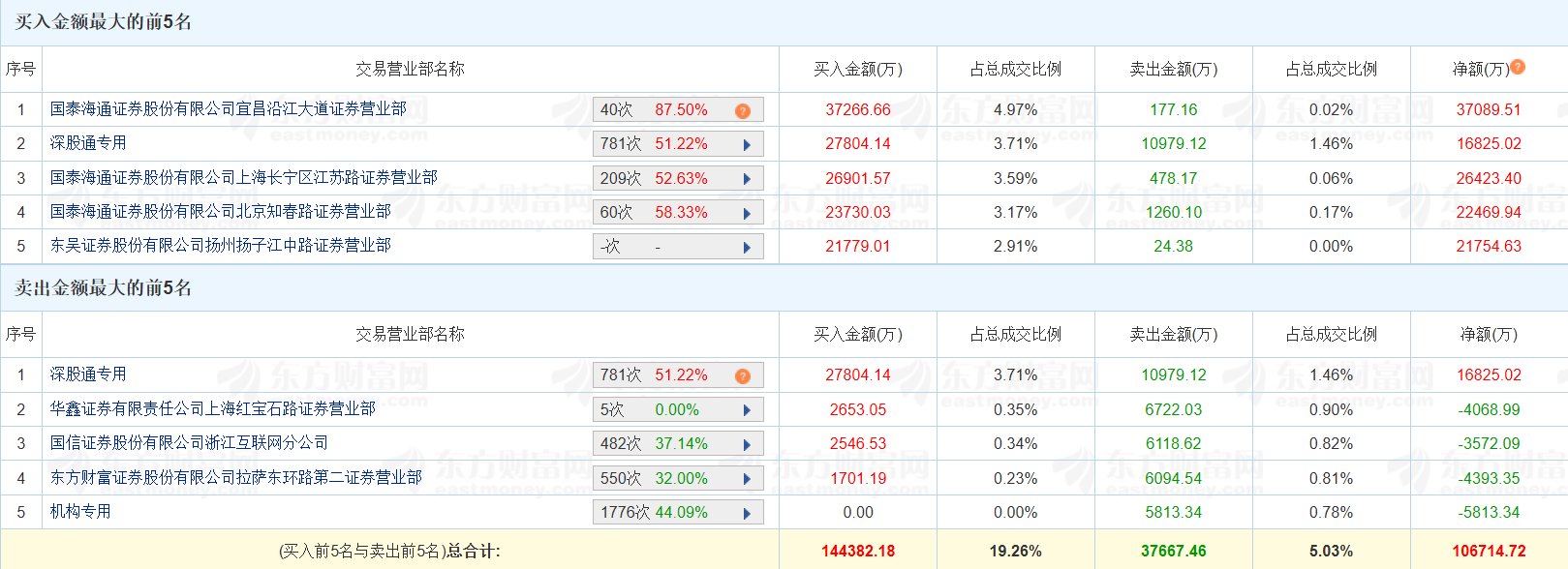
融资融券数据显示,该股最新(1月12日)两融余额为24.33亿元,其中,融资余额为24.03亿元,融券余 额为3034.24万元。近5日融资余额合计增加4.35亿元,增幅为22.12%,融券余额合计增加527.98万元, 增幅21.07%。(数据宝) 海格通信1月13日交易公开信息 | 买/ | 会员营业部名称 | 买入金额(万 | 卖出金额(万 | | --- | --- | --- | --- | | 卖 | | 元) | 元) | | 买一 | 国泰海通证券股份有限公司宜昌沿江大道证券营业部 | 37266.66 | 177.16 | | 买二 | 深股通专用 | 27804.14 | 10979.12 | | 买三 | 国泰海通证券股份有限公司上海长宁区江苏路证券营业 部 | 26901.57 | 478.17 | | 买四 | 国泰海通证券股份有限公司北京知春路证券营业部 | 23730.03 | 1260.10 | | 买五 | 东吴证券股份有限公司扬州扬子江中路证券营业部 | 21779.01 | 24.38 | | 卖一 | 深股通专用 | 27804.14 | 10979.12 | | 卖二 ...
龙虎榜 | 海格通信两连板,深股通净买入1.68亿元,消闲派净买入3.71亿元
Ge Long Hui A P P· 2026-01-13 08:58
| 序号 | 交易营业部名称 | | 买入金额(万) | 占总成交比例 | | --- | --- | --- | --- | --- | | 1 | 国泰海通证券股份有限公司宜昌沿江大道证券营业部 | 40次 87.50% 2 | 37266.66 | 4.97% | | 2 | 深股通专用 | 781次 51.22% | 27804.14 | 3.71% | | 3 | 国泰海通证券股份有限公司上海长宁区江苏路证券营业部 | 209次 52.63% | 26901.57 | 3.59% | | 4 | 国泰海通证券股份有限公司北京知春路证券营业部 | 60次 58.33% | 23730.03 | 3.17% | | 5 | 东吴证券股份有限公司扬州扬子江中路证券营业部 | 次 A ---- | 21779.01 | 2.91% | | 序号 | 交易营业部名称 | | | 买入金额(万) | 占总成交比例 | | --- | --- | --- | --- | --- | --- | | | 深股通专用 | 781次 51.22% | 2 | 27804.14 | 3.71% | | 2 | 华鑫证券有 ...
226.97亿元主力资金今日撤离国防军工板块
Zheng Quan Shi Bao Wang· 2026-01-13 08:53
Market Overview - The Shanghai Composite Index fell by 0.64% on January 13, with six industries experiencing gains, led by the oil and petrochemical sector at 1.62% and the pharmaceutical and biotechnology sector at 1.21% [1] - The defense and military industry had the largest decline, dropping by 5.50%, followed by the electronics sector, which fell by 3.30% [1] Capital Flow Analysis - The net outflow of capital from the two markets reached 162.74 billion yuan, with only four industries seeing net inflows [1] - The pharmaceutical and biotechnology sector had the highest net inflow of 4.348 billion yuan, while the oil and petrochemical sector saw a net inflow of 586 million yuan [1] - The electronics industry experienced the largest net outflow, totaling 37.010 billion yuan, followed by the computer industry with a net outflow of 23.107 billion yuan [1] Defense and Military Industry Performance - The defense and military industry had 138 stocks, with only 11 stocks rising and one hitting the daily limit, while 126 stocks fell, including 20 that hit the daily limit [2] - The top stock for net capital inflow in this sector was Haige Communication, with a net inflow of 2.067 billion yuan, followed by Inner Mongolia First Machinery Group and Hongdu Aviation with net inflows of 191 million yuan and 93.939 million yuan, respectively [2] - A total of 44 stocks in the defense and military sector saw net outflows exceeding 100 million yuan, with the largest outflows from Aerospace Electronics, Aerospace Development, and Raytheon Defense, amounting to 4.706 billion yuan, 2.107 billion yuan, and 1.910 billion yuan, respectively [2] Top Gainers and Losers in Defense and Military Sector - The top gainers in the defense and military sector included Haige Communication (10.00% increase), Inner Mongolia First Machinery Group (4.30% increase), and Hongdu Aviation (2.39% increase) [3] - The top losers included Aerospace Electronics (-10.01% decrease), Aerospace Development (-10.00% decrease), and Raytheon Defense (-9.99% decrease) [4]


海格通信今日涨10.00% 消闲派席位净买入3.71亿元
Xin Lang Cai Jing· 2026-01-13 08:49
海格通信今日涨10.00%,成交额74.96亿元,换手率12.66%,盘后龙虎榜数据显示,深股通专用席位买 入2.78亿元并卖出1.10亿元,有1家机构专用席位净卖出5813.34万元。消闲派席位净买入3.71亿元,国泰 海通上海江苏路净买入2.64亿元,国泰海通北京知春路净买入2.25亿元。 ...
主力资金流入前20:特变电工流入18.46亿元、海格通信流入16.61亿元
Jin Rong Jie· 2026-01-13 07:25
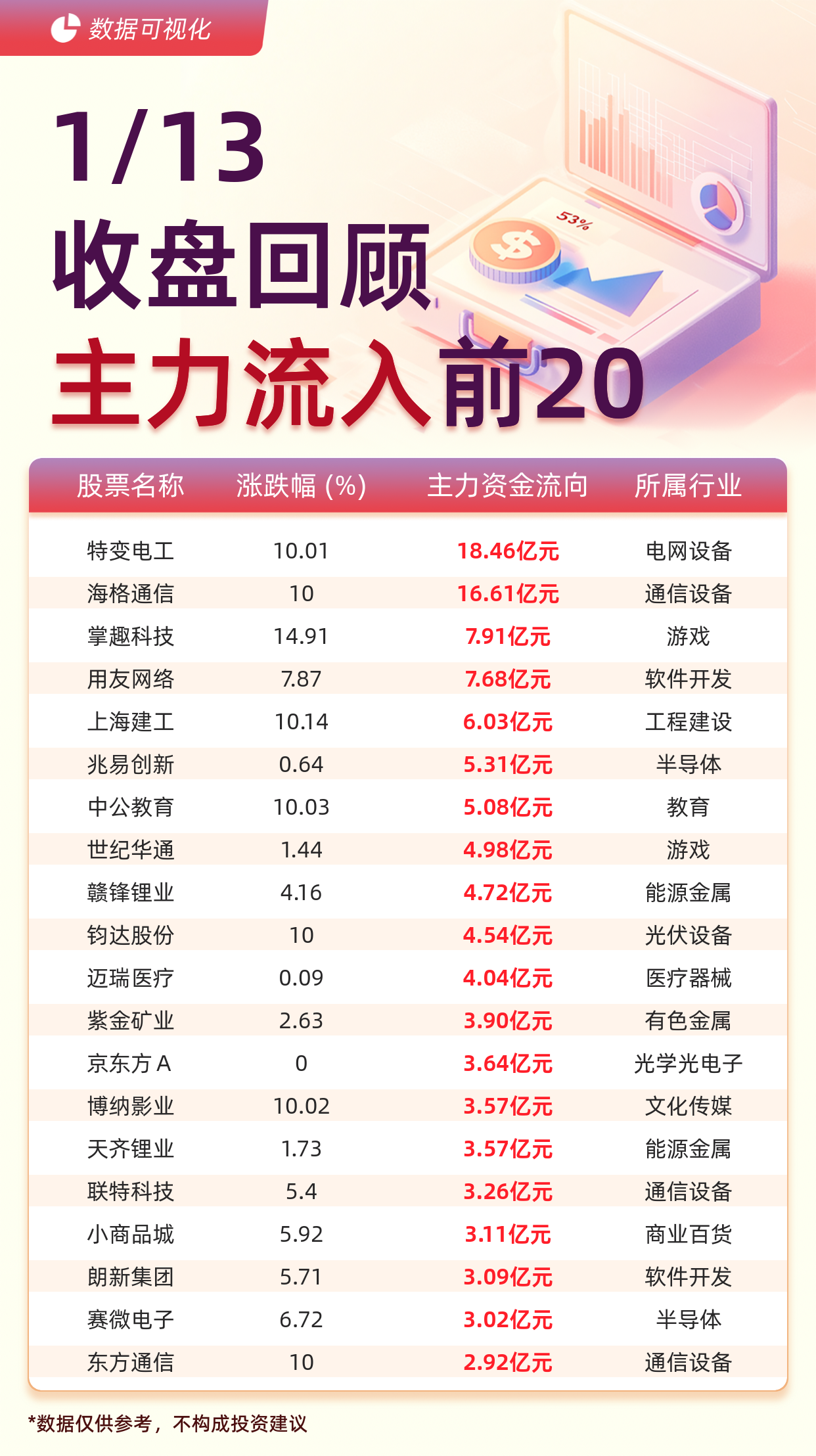
Core Viewpoint - The data indicates significant capital inflows into various stocks, highlighting investor interest in specific sectors such as power equipment, communication devices, and gaming [1][2][3] Group 1: Stock Performance and Capital Inflows - TBEA (特变电工) saw a capital inflow of 1.846 billion, with a price increase of 10.01% [2] - Haige Communication (海格通信) experienced a capital inflow of 1.661 billion, with a price increase of 10% [2] - ZQ Game (掌趣科技) had a capital inflow of 0.791 billion, with a notable price increase of 14.91% [2] - Yonyou Network (用友网络) attracted 0.768 billion in capital, with a price increase of 7.87% [2] - Shanghai Construction (上海建工) received 0.603 billion, with a price increase of 10.14% [2] Group 2: Sector Analysis - The power equipment sector, represented by TBEA, shows strong investor confidence with significant capital inflows [2] - The communication device sector, including Haige Communication and Lian Te Technology (联特科技), also reflects positive investor sentiment [2][3] - The gaming industry, represented by ZQ Game and Century Huaman (世纪华通), demonstrates robust growth potential with substantial capital inflows [2][3] - The education sector, represented by Zhonggong Education (中公教育), shows a healthy capital inflow of 0.508 billion, indicating investor interest [2] - The energy metal sector, represented by Ganfeng Lithium (赣锋锂业) and Tianqi Lithium (天齐锂业), continues to attract investment, reflecting ongoing demand in the market [2][3]



商业航天:战略定位升级,核心环节突破
Changjiang Securities· 2026-01-13 06:13
- The report primarily focuses on the commercial aerospace industry, highlighting its strategic importance and the development of its ecosystem, including satellite manufacturing, rocket launches, and downstream applications[9][15][28] - The "Guozheng Commercial Satellite Communication Industry Index" (980018.CNI) is introduced as a quantitative model reflecting the performance of A-share companies in the satellite communication industry, covering the entire value chain from satellite manufacturing to communication services[10][61][80] - The index's construction methodology emphasizes its focus on the aerospace and electronics sectors, with a concentrated weight distribution in core industry segments such as aerospace equipment, communication devices, and semiconductors[10][61][66] - The "Satellite ETF (159206)" is a passive index fund designed to closely track the performance of the Guozheng Satellite Communication Index, employing a full replication strategy to minimize tracking error and deviation[11][83] - The ETF's performance metrics include an annualized tracking error target of less than 2% and a daily tracking deviation of less than 0.2%, with a fund size of 117.69 billion yuan as of January 9, 2026[11][83] - The Guozheng Satellite Communication Index has demonstrated superior returns compared to broader market indices, with a year-to-date return of 18.96% and a one-year return of 122.94% as of January 9, 2026[80][81] - The index's constituent stocks include leading companies in aerospace equipment, electronic manufacturing, and semiconductor design, reflecting a balanced mix of large-cap leaders and growth-oriented mid-cap firms[67][68][70]



军工对话通信-商业逻辑如何实现闭环
2026-01-13 01:10
Summary of Key Points from the Conference Call Industry Overview - The conference call discusses the satellite communication industry, particularly the relationship between ground operators and satellite operators in China and abroad. The development of overseas satellite networks is driven by insufficient ground network coverage and high prices, which contrasts with the domestic operators' responsibilities to provide services in remote areas [1][2]. Core Insights and Arguments - **Collaboration Over Competition**: The future relationship between ground operators and satellite operators is expected to be collaborative rather than competitive. This is exemplified by the partnership between T-Mobile and SpaceX, where frequency authorization allows for mutual benefits [3][4]. - **Market Transformation Timeline**: The transition to satellite services in remote areas is anticipated to occur around 2030, with potential market impacts beginning as early as 2027-2028. This shift is influenced by the National Development and Reform Commission's (NDRC) inclusion of profit in the assessment of ground operators [4]. - **User Density and Market Potential**: Approximately 25% of China's population lives in areas where ground communication is economically unfeasible. This demographic is likely to be served by satellite networks in the future, leading to a significant market opportunity [5][6]. - **Market Size Estimation**: If satellite network penetration reaches 25%, it could correspond to a market size exceeding 200 billion yuan, with the overall market potential estimated to exceed 500 billion yuan, potentially reaching a trillion yuan level in the future [6]. Important but Overlooked Content - **Quantitative Analysis of Market Space**: The analysis emphasizes the SaaS business model, where increased user numbers lead to reduced costs, making profitability achievable. The model considers factors such as base station costs, operational expenses, and average revenue per user (ARPU) [5][6]. - **Key Companies to Watch**: In the network construction phase, companies with anti-deflation attributes such as Taikang Technology, Wuhan Institute of Communication, and Fenghuo Communication are highlighted. In the application phase, HaiGe Communication is noted for its strong partnerships with China Mobile and China Star Network, positioning it as a key player in the commercial space [7]. Conclusion - The satellite communication industry is poised for significant growth driven by collaboration between ground and satellite operators, with substantial market opportunities in underserved regions. Key players in both the network construction and application phases are positioned to benefit from this evolving landscape.
