
Inovance(300124)

Search documents
大湾区ETF平安(512970)开盘涨1.73%,重仓股中国平安跌0.02%,立讯精密涨1.45%
Xin Lang Cai Jing· 2026-03-26 01:32
Group 1 - The Dawan District ETF Ping An (512970) opened with a gain of 1.73%, priced at 1.472 yuan [1][2] - Major holdings of the ETF include China Ping An, Luxshare Precision, BYD, and others, with mixed performance among these stocks [1] - The ETF's performance benchmark is the CSI Guangdong-Hong Kong-Macao Greater Bay Area Development Theme Index, managed by Ping An Fund Management Co., Ltd. [2] Group 2 - Since its establishment on September 23, 2019, the ETF has achieved a return of 44.66%, while the return over the past month has been -5.61% [2] - A MACD golden cross signal has formed, indicating potential upward momentum for certain stocks [3]



油价暴涨,能源替代逻辑增强,新能源车ETF华夏(515030)逆市上涨,比亚迪涨超8%
Sou Hu Cai Jing· 2026-03-23 02:27
Group 1 - A-shares experienced significant adjustments on March 23, while the new energy sector saw an increase, with the New Energy Vehicle ETF (515030) rising by 1.10% and achieving a trading volume of 4.57 billion yuan by 10:01 AM [1] - The rise in international oil prices, with Brent crude reaching $104.41 per barrel and WTI at $98.09 per barrel, is attributed to the ongoing Middle East tensions, leading to increased domestic fuel prices and a growth in energy substitution logic [1] - Citic Securities reports that the prolonged conflict between the US and Iran, along with the "blockade" of the Strait of Hormuz, is driving oil prices higher, which enhances the competitiveness of pure electric and low-emission hybrid vehicles globally, potentially benefiting Chinese automakers [1] Group 2 - The New Energy Vehicle ETF (515030) is currently the largest in the market, tracking the CSI New Energy Vehicle Index (399976) and including stocks from companies involved in lithium batteries, charging stations, and new energy vehicles [1] - The top ten constituent stocks of the ETF include industry leaders such as BYD, CATL, and Huichuan Technology, with battery-related stocks accounting for 46% of the weight in the Shenwan secondary industry classification [1]



从新能源车到具身机器人,卧龙电驱再遇老对手汇川技术
晚点LatePost· 2026-03-20 08:16
Core Viewpoint - The article discusses the growth logic and investment value of Wolong Electric Drive, emphasizing its challenges in entering the new energy vehicle (NEV) market and its strategic shift towards emerging applications like embodied robotics and low-altitude economy [4][6][11]. Industry Overview - Electric drive systems convert electrical energy into mechanical energy and are widely used in traditional industries, NEVs, and emerging applications [4]. - The electric drive system industry is characterized by low barriers to entry and moderate profit margins, with significant growth potential in high-tech applications [6][14]. Company Performance - Wolong Electric Drive derives approximately 90% of its revenue from traditional sectors, with less than 5% from the NEV market, leading to stagnant market value [7][19]. - From 2019 to 2024, Wolong's revenue is projected to grow at a CAGR of 6.5%, while net profit is expected to decline at a CAGR of -3%, indicating a deteriorating profit structure [7][21]. Strategic Shifts - Following its failure to penetrate the NEV market, Wolong is now focusing on emerging applications, particularly embodied robotics, to secure future growth [11][24]. - The company has initiated partnerships with leading firms in the robotics sector, such as Yushutech and Zhiyuan Robotics, to enhance its position in the market [25][27]. Competitive Landscape - Wolong faces competition from companies like Inovance Technology, which is also targeting the embodied robotics market and has a more favorable profit structure [32][33]. - The industry is still in its early stages, allowing for multiple players to coexist, but Wolong must continue to invest in R&D to maintain its competitive edge [33][34]. Financial Strategy - Wolong has submitted an IPO application in Hong Kong to raise funds for its strategic initiatives in emerging markets, aiming to leverage its current high valuation [11][31].



机械行业2026春季策略报告:顺周期盈利修复,逢低布局成长主线-20260319
Shanghai Aijian Securities· 2026-03-19 09:51
Group 1 - The mechanical equipment sector is expected to outperform the market, driven by a combination of cyclical recovery and growth potential, with engineering machinery and rail transit equipment showing significant profit recovery and low valuations [3][10] - The commercial aerospace sector is anticipated to reach a critical turning point in 2026, with advancements in reusable rocket technology and an increase in launch frequency, leading to a projected 197% year-on-year growth in payload quality [3][4] - The humanoid robotics industry is transitioning towards large-scale production, with significant cost reductions and improved capabilities expected, particularly with the launch of the Optimus V3 model [3][4] Group 2 - The semiconductor equipment sector is poised for growth due to increased demand from storage expansion and advanced packaging upgrades, with key players expected to benefit from ongoing capital expenditure recovery [3][4] - The PCB equipment market is experiencing a shift towards high-end products, driven by the penetration of AI servers and HPC architectures, leading to increased demand for new capacity and upgrades of existing production lines [3][4] - The controllable nuclear fusion sector is advancing with the construction of experimental devices and the bidding for key equipment, with high-temperature superconducting materials expected to become a core beneficiary of technological evolution [3][4] Group 3 - The mechanical equipment sector has shown a significant recovery in profitability, with 17 out of 19 sub-industries reporting improved net profit margins, indicating a broad-based recovery [12][33] - The sector's valuation has rebounded to a historically high level, with the current PE ratio at 35.42, reflecting a strong market preference for growth-oriented manufacturing assets [13][26] - The demand side remains weak but is stabilizing, with high-tech manufacturing and equipment manufacturing showing better performance compared to traditional sectors, indicating a gradual recovery in the overall manufacturing landscape [34][38]


GTC 2026点评:GTC 2026发布了一个完整的机器人训练流水线
GUOTAI HAITONG SECURITIES· 2026-03-19 08:19
Investment Rating - The report assigns an "Overweight" rating for the industry, indicating a projected performance that exceeds the Shanghai and Shenzhen 300 Index by more than 15% [11]. Core Insights - In 2026, NVIDIA's advancements in embodied intelligence have transitioned from technical exploration to engineering implementation and ecosystem development, focusing on software models, simulation infrastructure, hardware deployment, and collaborative ecosystems [2][4]. - The humanoid robot industry is entering the "engineering implementation" phase, with significant investment opportunities identified in both beta (software and embodied models) and alpha (hardware) categories [4]. Summary by Relevant Sections Investment Recommendations - The report suggests focusing on: 1. Beta opportunities in embodied models and software, recommending companies such as Hangcha Group, UBTECH, and Woan Robotics. 2. Alpha opportunities in hardware, including: - Force/Torque sensors: Anpeilong - Encoders: Yapu Co., Ltd., Shuo Beid - Visual sensors: Aoptical, Orbbec - IMU: Joyson Electronics, Huayi Technology - Power devices: Innodisk - MCU and hollow cup: Fengcai Technology - Dexterous hands: Zhaowei Electric - Linear joints: Hengli Hydraulic, Zhejiang Rongtai, Zhenyu Technology - Rotary joints: Lide Harmonic, Shuanghuan Transmission, Minshi Group, Keda Li [4][5]. NVIDIA's Ecosystem Development - NVIDIA is building a "CUDA ecosystem" for robotics, utilizing Cosmos (data generation), Isaac (simulation training), and GROOT (robotic foundational models) to attract developers and accelerate commercialization [4]. - The GROOT N1.7 model has been released, enhancing robotic operational capabilities and introducing reasoning modules, with the upcoming GROOT N2 aimed at achieving world-model-level physical understanding [4]. Robotics Training and Infrastructure - The report highlights the release of Isaac Lab 3.0, which features a new Newton physics engine and enhanced support for complex dexterous operation scenarios [4]. - The DGX™-AI training server platform integrates multiple high-end GPUs and is optimized for AI training, capable of forming GPU clusters to enhance training scale [4].





全球人形机器人产业周报(二):GTC催化,量产预期仍是核心锚点
Shanghai Aijian Securities· 2026-03-17 07:25
Investment Rating - The report assigns an "Outperform" rating for the humanoid robotics industry, indicating a positive outlook compared to the broader market [2]. Core Insights - The humanoid robotics index experienced a decline of 1.37% during the week of March 9 to March 13, 2026, maintaining a volatile market pattern. The current price-to-earnings (PE) ratio is at a 23.81% percentile over the past three months [2]. - Key companies in the humanoid robotics sector, such as Bozhong Precision Engineering (+38.28%), Shuangyi Technology (+26.27%), and Yuhuan CNC (+23.63%), showed significant gains, while Huapei Power (-23.42%) and Hengfeng Tools (-17.09%) faced notable declines [2][14]. - In China, several humanoid robotics companies are accelerating their listings in Hong Kong, enhancing their global presence and competitive edge. For instance, AISTON and Zhaowei Electromechanical both listed on March 9, 2026, as part of their strategy to strengthen their industry influence [2]. - Globally, leading manufacturers are focusing on model capabilities and dexterous operations, with complex task execution and mass production capabilities being key industry focal points. The upcoming NVIDIA GTC 2026 is expected to highlight advancements in robotics and AI [2]. Summary by Sections Industry Overview - The humanoid robotics industry is currently in a phase of technological validation and industrial introduction, with short-term pricing driven by technological advancements and event catalysts. Long-term variables include mass production pace and application scenario implementation [2]. Investment Recommendations - The report recommends investing in companies like Huichuan Technology (300124) and Sanhua Intelligent Control (002050), while suggesting to keep an eye on Hengli Hydraulic (601100). The focus should be on companies with core component capabilities and those that can integrate algorithms and control systems effectively [2]. Market Trends - The humanoid robotics sector is witnessing a surge in activities, including the completion of the first practice test for the humanoid robot half marathon in Beijing, which introduced autonomous navigation teams [2][19]. - The report emphasizes the importance of the upcoming NVIDIA GTC 2026, which is expected to showcase significant technological advancements in robotics and AI, potentially enhancing market expectations for the humanoid robotics sector [2][19].




全球人形机器人产业周报(二):GTC催化,量产预期仍是核心锚点-20260317
Shanghai Aijian Securities· 2026-03-17 06:42
Investment Rating - The report rates the humanoid robotics industry as "Outperform the Market" [2] Core Insights - The humanoid robotics index experienced a decline of 1.37% during the week of March 9 to March 13, 2026, maintaining a volatile pattern. The current PE ratio is at a 23.81% percentile over the past three months [2] - Key companies in the humanoid robotics sector are accelerating their listings in Hong Kong, enhancing their global presence and supply chain influence [2] - The upcoming NVIDIA GTC 2026 conference is expected to be a significant catalyst for advancements in robotics and AI, focusing on industrial-grade embodied intelligence and foundational models [2] Summary by Sections Industry Overview - The humanoid robotics industry is in a transitional phase from engineering to mass production, with technological advancements and event-driven catalysts influencing short-term pricing [2][19] - The report highlights the importance of production rhythm and application scenarios for long-term growth [2] Market Performance - The humanoid robotics index has shown fluctuations, with notable gains from companies like Bozhong Precision (+38.28%) and Shuangyi Technology (+26.27%), while companies like Huapei Power (-23.42%) and Hengfeng Tools (-17.09%) faced significant declines [2][14] - The report emphasizes the need to monitor the production and iteration progress of leading humanoid robotics manufacturers [2] Investment Recommendations - The report recommends investing in companies with core component capabilities that can enhance value through collaboration with complete machine manufacturers, such as reducers, screws, motors, sensors, and control systems [2] - It also suggests focusing on platform-type manufacturers with integrated algorithm and control system capabilities, as their market leadership is expected to become more evident with the advancement of industrialization [2]



机器人电机:受益技术迭代与产业化
HTSC· 2026-03-16 02:30
Investment Rating - The report maintains an "Overweight" rating for the mechanical equipment and power equipment sectors [6] Core Insights - The humanoid robot motor industry is experiencing rapid development driven by technological iterations and industrialization, with motors expected to benefit significantly from the mass production of humanoid robots [1][3] - The global market for humanoid robot motors is projected to reach 91.76 billion yuan by 2030, with a compound annual growth rate (CAGR) of 119.9% from 2026 to 2030 [3][13] - The report emphasizes that domestic motor companies are on par with international counterparts in terms of R&D capabilities and technological strength, with a focus on the advantages of domestic firms in responsiveness and cost control [4][16] Summary by Sections Humanoid Robot Motors - The humanoid robot motor market is expected to grow significantly, with annual production projected to increase from 238,000 units in 2026 to 11.765 million units by 2030 [3][13] - Key motor types for humanoid robots include: 1. **Frame-less Torque Motors**: Currently the mainstream choice for joint drives due to their compact size and high torque output [14][44] 2. **Axial Flux Motors**: Suitable for high torque density applications, particularly in large rotational joints [14][48] 3. **Harmonic Field Motors**: Utilize magnetic field modulation for enhanced performance [53][56] 4. **Hollow Cup Motors**: Feature a design that eliminates the iron core, resulting in reduced weight and size [58] 5. **Brushless Slotless Motors**: Offer cost advantages with simpler structures [14] 6. **Micro Frame-less Motors**: Highly integrated designs for compact applications [14] Market Dynamics - The report highlights a divergence in technology routes for joint motors and dexterous hand motors, each with distinct advantages [2] - The global humanoid robot motor market is expected to reach 39.2 billion yuan in 2026, growing to 91.76 billion yuan by 2030 [3][13] - The report argues that the barriers to mass production for humanoid robot motors are high, favoring leading companies with strong R&D and supply chain capabilities [4][15] Investment Recommendations - The report recommends focusing on companies with comprehensive product matrices and deep industry collaborations, including: - **Weichuang Electric**: Complete product matrix in humanoid robot motors [5] - **Leisai Intelligent**: High precision control technology for industrial applications [5] - **Huichuan Technology**: Leading in industrial automation [5] - **Xinjie Electric**: Strategic partnerships in frame-less motor technology [5] - Other notable companies include Mingzhi Electric and Zhaowei Electromechanical, along with domestic firms like Buke Co., Dechang Electric Holdings, and others [5]




近期10大储能新品盘点
行家说储能· 2026-03-11 10:42
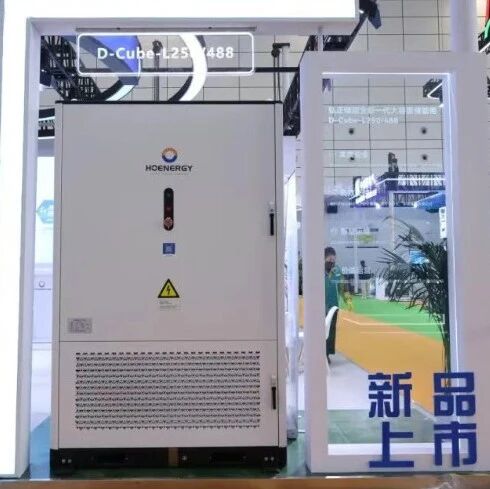
Core Insights - The article highlights the rapid development and introduction of new energy storage products by various companies, indicating a trend towards larger capacity batteries and diversified applications in the energy storage sector [2]. Group 1: Product Innovations - Large capacity battery cells are accelerating penetration from large storage to commercial storage, with companies like Hongzheng Energy launching a 250kW/488kWh smart energy storage cabinet equipped with a 587Ah battery cell [2][7]. - The PCS (Power Conversion System) is evolving towards higher power and diversified applications, exemplified by Yilankao's commercial hybrid inverter HMiWay and Huichuan Technology's all-time AC/DC integrated PCS [2][4][14]. - Balcony energy storage solutions are quietly entering the domestic market, with companies like Sig New Energy introducing a hanging storage solution suitable for small-scale photovoltaic projects [2][24]. Group 2: Specific Product Launches - Yilankao's HMiWay series integrates multiple functionalities, supports up to 1.2MW, and is designed for easy installation and high efficiency [6][4]. - Hongzheng Energy's 250kW/488kWh smart energy storage cabinet features advanced battery management and intelligent operation systems for enhanced efficiency [9][7]. - Yueneng Technology's Ocean 200L-257kWh liquid-cooled energy storage system is designed for various applications, emphasizing safety and efficiency [12][10]. - Huichuan Technology's InoLynx PCS boasts a high efficiency of 99.3% and supports various battery specifications, catering to large-scale energy storage needs [14][14]. - BYD's integrated storage and charging solution addresses grid stability issues while supporting high-power charging capabilities [21][23]. - Sig New Energy's expandable balcony storage system offers a modular design with a capacity of up to 18kWh, suitable for residential applications [24][24]. - Aowei Technology's mobile energy storage vehicle combines high capacity and fast charging, suitable for emergency power supply and various operational scenarios [25][27]. - NanoMalaysia's sodium-ion battery prototype achieves an energy density exceeding 300 Wh/kg, showcasing advancements in battery technology [28][29].


汇川技术(300124) - 关于投资设立产业投资基金的进展公告(二)
2026-03-11 10:00
证券代码:300124 证券简称:汇川技术 公告编号:2026-005 深圳市汇川技术股份有限公司 关于投资设立产业投资基金的进展公告(二) 本公司及董事会全体成员保证公告内容与信息披露义务人提供 的信息一致。 一、产业投资基金基本情况 深圳市汇川技术股份有限公司(以下简称"公司"或"汇川技术")于 2025 年 8 月 22 日召开第六届董事会第十一次会议审议通过了《关于与关联方共同投 资设立产业投资基金的议案》,同意汇川技术与关联方南通泽涌产业投资有限公 司、公司职工董事兼副总裁兼董事会秘书宋君恩先生及其他有限合伙人共同投资 设立总规模不超过人民币 160,000 万元的产业投资基金(以下简称"基金"),其 中汇川技术作为有限合伙人认缴出资不超过人民币 30,000 万元。2026 年 2 月, 产业投资基金各合伙人已完成合伙协议的签署,首期募集资金 70,100 万元。 上述内容详见公司于 2025 年 8 月 26 日、2026 年 2 月 4 日刊登在巨潮资讯 网上的《关于与关联方共同投资设立产业投资基金的提示性公告》及《关于投资 设立产业投资基金的进展公告(一)》。 二、产业投资基金进展情况 1. ...