
EOPTOLINK(300502)

Search documents
A股2025年,多个新纪录!
天天基金网· 2025-12-31 08:25
Core Viewpoint - The A-share market in 2025 experienced significant growth, with major indices showing varying performance, and sectors like commercial aerospace, AI, and low-altitude economy being particularly active [2][3]. Market Performance - The Shanghai Composite Index, Shenzhen Component Index, and ChiNext Index recorded cumulative increases of 18.41%, 29.87%, and 49.57% respectively, with maximum gains from their 2025 lows reaching 32.67%, 51.40%, and 89.67% [3]. - As of December 31, 2025, the total market capitalization of A-shares reached 118.88 trillion yuan, an increase of 25.26 trillion yuan from the beginning of the year [3]. Trading Volume - The total trading volume for A-shares in 2025 exceeded 410 trillion yuan, with a daily average of 1.73 trillion yuan, both figures setting historical records [5][4]. Stock Performance - A total of 20 stocks in the A-share market had trading volumes exceeding 1 trillion yuan, with Zhongji Xuchuang leading at 2.52 trillion yuan, followed by Dongfang Caifu and Xinyisheng [8][10]. - In 2025, 540 stocks saw price increases of over 100%, with 127 stocks rising more than 200%, and 10 stocks increasing over 500% [17]. Sector Performance - The technology and non-ferrous metals sectors led the market, with increases of 94.73% and 84.75% respectively, while only the food and beverage and coal sectors experienced declines [13][14]. - The market exhibited a structural differentiation, with significant performance disparities among sectors, driven by a shift in investment logic towards hard technology, particularly AI [15]. Financing and Investment - The margin financing balance reached a historical high of 25,552.84 billion yuan, with an increase of 6,843.80 billion yuan throughout 2025, indicating strong inflows of incremental capital [11]. - The number of stocks with a market capitalization exceeding 100 billion yuan reached 176, marking a historical high and reflecting a trend towards market maturity and concentration of capital in high-quality assets [20]. ETF and Dividend Trends - The total scale of domestic ETFs reached 6.03 trillion yuan by December 30, 2025, indicating rapid growth in this investment vehicle [24]. - The total cash dividends distributed by A-share companies reached 2.63 trillion yuan, a record high, with several major banks and companies leading in dividend payouts [27].





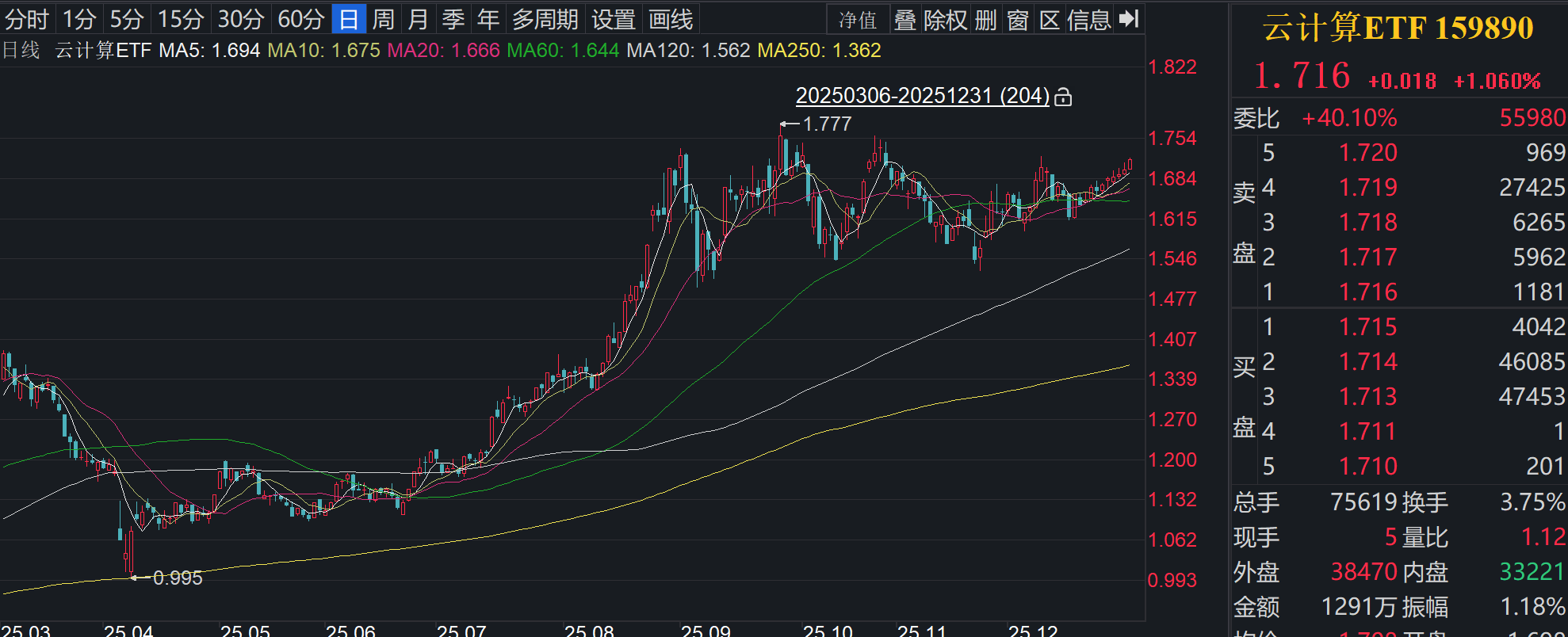
AI算力方向强势收官2025!云计算ETF(159890)午后上攻强势冲击6连阳
Sou Hu Cai Jing· 2025-12-31 06:27
Core Viewpoint - The AI computing power sector is experiencing significant growth, driven by government initiatives and increasing demand for domestic AI chips, particularly the H200 chip, which is set to be delivered to Chinese customers soon [3][4][5]. Group 1: Market Performance - On the last trading day of 2025, AI computing stocks saw a strong afternoon rally, with the cloud computing ETF (159890) rising over 1% and achieving a six-day winning streak [1]. - Notable stock performances included a rise of 11.46% for Yidian Tianxia, over 8% for Hand Information, and more than 4% for companies like Zhongke Xingtai and Wanxing Technology [1]. Group 2: Policy and Industry Developments - A key government official announced the implementation of the "AI+" initiative, which aims to create extensive application scenarios for AI computing power chips, leading to rapid growth in demand and innovation within the sector [3]. - The conditional opening of the H200 chip to China is seen as a positive development, with major tech companies like Alibaba and ByteDance planning significant purchases to enhance their AI capabilities [4]. Group 3: Domestic Chip Strategy - Domestic companies are adopting varied strategies in response to the H200 chip's availability, with Alibaba and ByteDance pursuing large-scale purchases, while Baidu focuses on self-developed Kunlun AI chips to reduce reliance on external suppliers [4]. - Tencent is exploring indirect methods to acquire advanced computing power, aiming to secure over $1.2 billion in usage rights for the latest B200/B300 chips [4]. Group 4: Growth Projections - According to IDC and Inspur, China's intelligent computing power is projected to reach 1,037.3 EFLOPS by 2025, with a compound annual growth rate of 46.2% from 2023 to 2028 [6]. - The general computing power in China is expected to grow to 85.8 EFLOPS by 2025, with a compound annual growth rate of 18.8% during the same period [6]. Group 5: Investment Opportunities - The current landscape of the AI computing market presents numerous opportunities for investment, with a focus on domestic chip development and technological innovation [5][6]. - The cloud computing ETF (159890) tracks a diverse range of companies involved in AI infrastructure and applications, indicating a comprehensive approach to the AI computing era [6].


A股CPO概念普跌,光库科技跌超5%
Ge Long Hui· 2025-12-31 05:30
Group 1 - The CPO concept in the A-share market experienced a widespread decline, with several companies showing significant drops in their stock prices [1] - Guangku Technology fell over 5%, while Taicheng Light, Cambridge Technology, and Tianfu Communication dropped more than 4% [1] - Dekeli, Zhongfu Circuit, Founder Technology, Zhongji Xuchuang, Jingwang Electronics, and Xinyi Sheng all saw declines exceeding 3% [1]





三花智控获融资资金买入近23亿元丨资金流向日报
2 1 Shi Ji Jing Ji Bao Dao· 2025-12-31 02:44
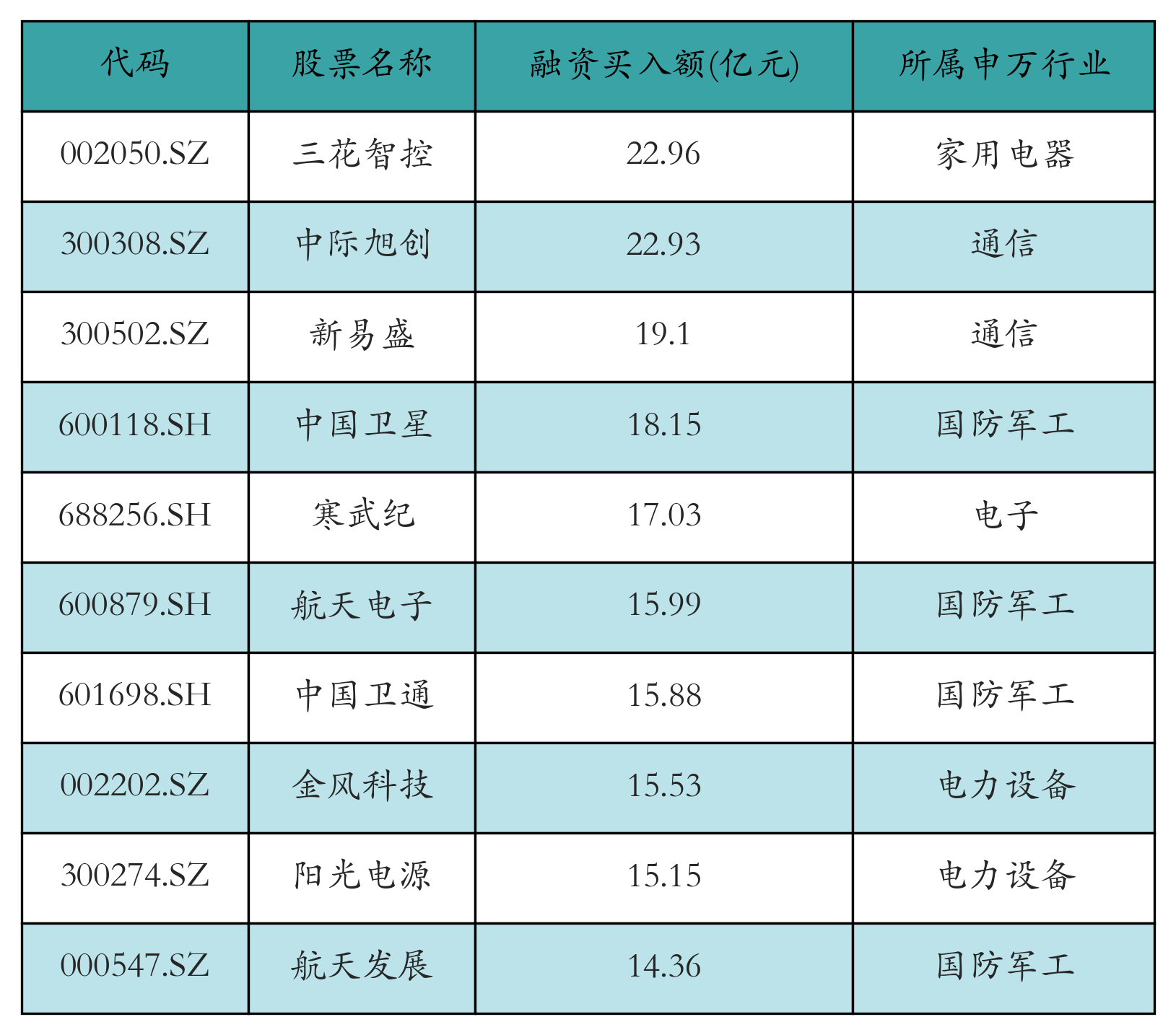
Market Overview - The Shanghai Composite Index closed at 3965.12 points with minimal fluctuation, reaching a high of 3979.99 points during the day [1] - The Shenzhen Component Index increased by 0.49%, closing at 13604.07 points, with a peak of 13645.56 points [1] - The ChiNext Index rose by 0.63%, ending at 3242.9 points, with a maximum of 3251.13 points [1] Margin Trading and Securities Lending - The total margin trading and securities lending balance in the Shanghai and Shenzhen markets was 25,472.93 billion yuan, with a financing balance of 25,305.34 billion yuan and a securities lending balance of 167.59 billion yuan [2] - The margin trading and securities lending balance increased by 35.72 billion yuan compared to the previous trading day [2] - The Shanghai market's margin trading balance was 12,895.04 billion yuan, up by 42.41 billion yuan from the previous day, while the Shenzhen market's balance was 12,577.89 billion yuan, down by 6.69 billion yuan [2] Top Margin Buying Stocks - The top three stocks by margin buying amount were: - Sanhua Intelligent Controls (22.96 billion yuan) [3] - Zhongji Xuchuang (22.93 billion yuan) [3] - Xinyisheng (19.1 billion yuan) [3] Fund Issuance - Three new funds were launched yesterday, including: - Shanzheng Asset Management Digital Economy Selected Stock Initiation C [4] - Huabao SSE Sci-Tech Innovation Board Chip ETF [4] - Shanzheng Asset Management Digital Economy Selected Stock Initiation A [4] Top Net Buying on Dragon and Tiger List - The top ten net buying amounts on the Dragon and Tiger list were: - Sanhua Intelligent Controls (1,149,607.6 thousand yuan) [6] - Aerospace Development (686,865.3 thousand yuan) [6] - Shanzigao Technology (616,061.6 thousand yuan) [6]


融资客看好10股 买入占成交比例超三成
Zheng Quan Shi Bao Wang· 2025-12-31 02:42
Group 1 - The article highlights the behavior of margin traders, indicating that investors are looking for investment opportunities through their activities [1] - On December 30, a total of 3,757 stocks received margin buying funds, with the top three stocks being Sanhua Intelligent Controls at 2.296 billion, Zhongji Xuchuang at 2.293 billion, and Xinyi Sheng at 1.910 billion [1] - Among the stocks with significant margin buying, 10 stocks had a margin buying amount that exceeded 30% of their total trading volume [1] Group 2 - The top stocks by margin buying amount and their respective trading volumes and percentages are detailed, with notable mentions including Qingtang City at 24.35 million and Daya Shengxiang at 12.86 million [2] - The data shows that the margin buying percentage for several stocks is high, with Qingtang City at 43.09%, Daya Shengxiang at 40.80%, and Guangming Meat Industry at 35.66% [1][2] - The article provides a comprehensive table listing various stocks, their margin buying amounts, total trading amounts, margin buying percentages, and daily price changes [1][2]


谁能在低位挖掘大牛股?券商金股,年度排名出炉!
券商中国· 2025-12-31 02:12
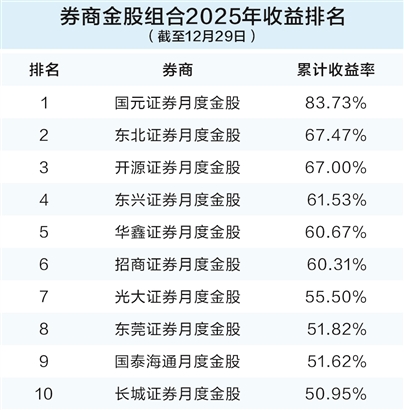
Core Viewpoint - The article highlights the impressive performance of brokerage firms' recommended stocks, with 10 firms achieving over 50% returns in 2025, showcasing their ability to identify and recommend high-performing stocks early in the market cycle [1][4]. Brokerage Performance - As of December 29, 2025, 10 brokerage firms reported stock portfolios with returns exceeding 50%, with Guoyuan Securities leading at 83.73%, followed by Northeast Securities at 67.47% and Kaiyuan Securities at 67% [4][5]. - Other firms such as Dongxing Securities, Huaxin Securities, and China Merchants Securities also reported returns above 60%, while Everbright Securities, Dongguan Securities, Guotai Junan, and Great Wall Securities had returns over 50% [4][5]. Investment Strategies - Successful brokerage firms have focused on early identification of high-growth stocks and consistent recommendations, which has contributed to their exceptional performance [7]. - For instance, Kaiyuan Securities recommended Xinyi Technology at a low point in May, leading to a 440% increase by September [7][8]. - Guoyuan Securities concentrated its recommendations in sectors like media, pharmaceuticals, and machinery, achieving significant gains with stocks like Giant Network and JiBit [8]. Popular Stocks - Tencent Holdings emerged as the most recommended stock, being featured by nearly 7 brokerage firms monthly throughout 2025, indicating its status as a favored investment choice [2][10]. - The most popular stocks varied by quarter, with large tech companies dominating in Q1, consumer firms in Q2, financial stocks in Q3, and tech stocks again in Q4 [10]. Monthly Stock Performance - The article provides a summary of the most popular A-share stocks each month, noting that less than 40% of these stocks increased in value during the month they were recommended, highlighting the volatility and unpredictability of stock performance [10][11].


年度行情收官 10家券商金股组合收益率亮眼超过50%
Zheng Quan Shi Bao· 2025-12-31 01:28
Core Insights - The report highlights the performance of stock recommendations from various brokerages, with 10 brokerages achieving over 50% returns in 2025, showcasing their ability to identify and recommend stocks early in the market cycle [2][3]. Group 1: Brokerage Performance - The highest cumulative return was achieved by Guoyuan Securities at 83.73%, followed by Northeast Securities and Kaiyuan Securities with returns of 67.47% and 67% respectively [2]. - Other brokerages such as Dongxing Securities, Huaxin Securities, and China Merchants Securities also reported returns exceeding 60%, while Everbright Securities, Dongguan Securities, Guotai Junan, and Changcheng Securities had returns above 50% [2]. Group 2: Stock Selection Strategy - The success of these brokerages is attributed to their strategy of identifying stocks at low points and consistently recommending them, which has led to significant gains [4][5]. - For instance, Kaiyuan Securities recommended Xinyisheng for four consecutive months, resulting in a total increase of 440% from May to August [6]. Group 3: Popular Stocks - Tencent Holdings emerged as the most recommended stock, being favored by around seven brokerages each month, making it the most popular stock of the year [7]. - The report indicates that the most popular stocks varied throughout the year, with technology stocks dominating in the first quarter, consumer stocks in the second, financial stocks in the third, and a return to technology stocks in the fourth quarter [7].



年度行情今日收官 十家券商金股组合收益率超百分之五十
Zheng Quan Shi Bao· 2025-12-30 18:19
Core Insights - The article highlights the performance of brokerage firms' recommended stocks, known as "golden stocks," which have achieved over 50% returns in 2025, with some firms excelling by identifying and recommending stocks early in their upward trends [1][3]. Group 1: Performance of Golden Stocks - As of December 29, 2025, 10 brokerage firms' golden stock portfolios recorded returns exceeding 50%, with the highest being 83.73% from Guoyuan Securities [3]. - Other notable performers include Northeast Securities and Kaiyuan Securities, with returns of 67.47% and 67%, respectively [3]. - The golden stock strategy has become a mature business for many brokerage firms, showcasing their research capabilities and market insights [3]. Group 2: Strategies for Success - Early identification of stocks at low prices and consistent recommendations have been key strategies for achieving high returns [4]. - For instance, Kaiyuan Securities recommended Xinyisheng for four consecutive months, resulting in a total increase of 440% from May to August [5]. - Guoyuan Securities focused on sectors like media, pharmaceuticals, and machinery, with significant monthly gains from stocks like Giant Network and JiBit [4]. Group 3: Popularity of Tencent - Tencent Holdings emerged as the most recommended stock, being favored by around seven brokerage firms monthly, making it the top "golden stock" of the year [2][6]. - The popularity of stocks varies by quarter, with technology stocks dominating in the first quarter, consumer stocks in the second, financial stocks in the third, and a return to technology stocks in the fourth quarter [6]. Group 4: Market Trends and Recommendations - The article notes that not all popular stocks achieve high success rates, with less than 40% of the most recommended A-share stocks showing gains in the same month they were recommended [7].


重仓AI算力!冠军基金斩获240%收益,破17年公募纪录
2 1 Shi Ji Jing Ji Bao Dao· 2025-12-30 14:33
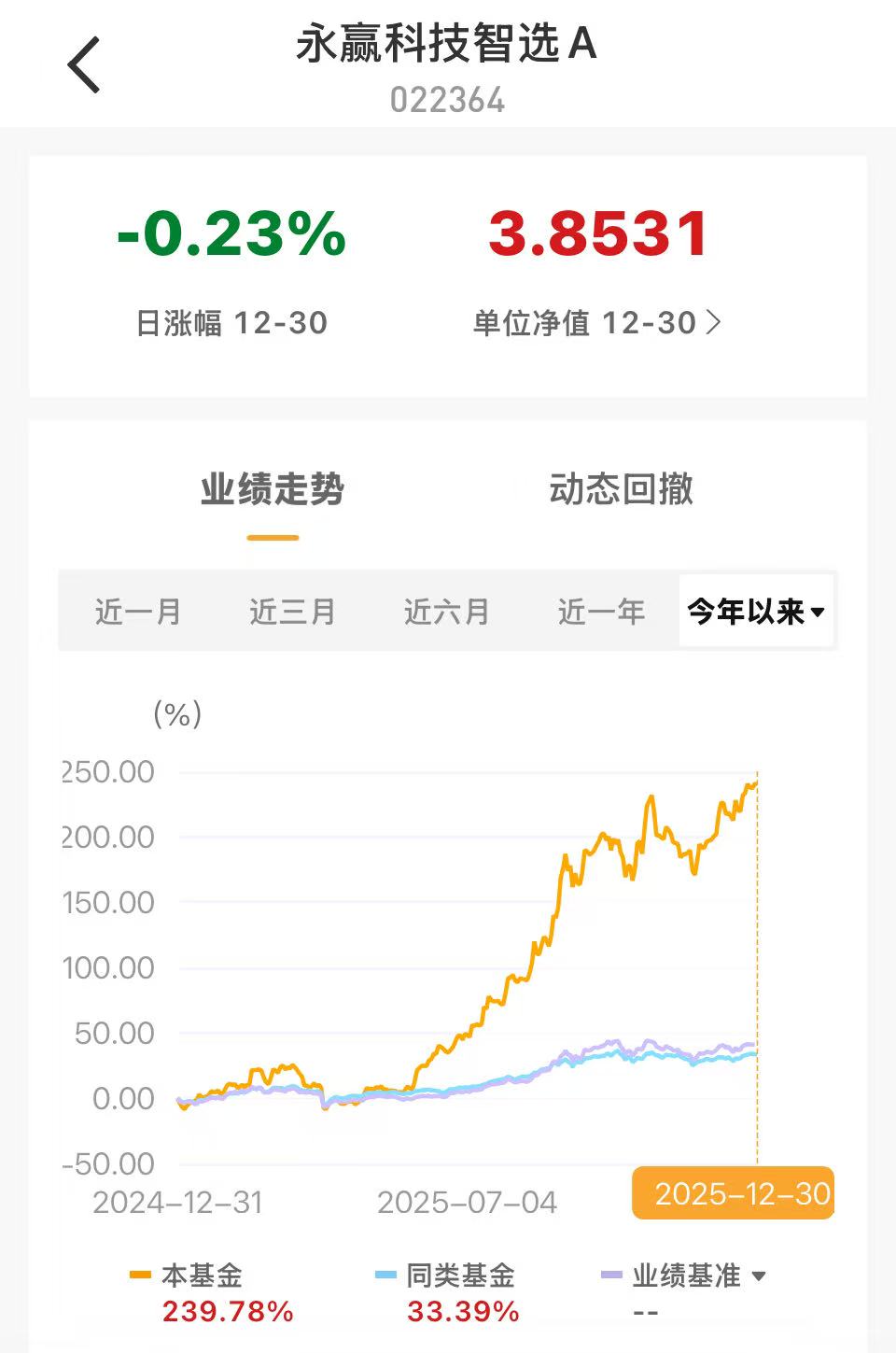
Core Insights - The fund managed by Ren Jie, Yongying Technology Smart A, achieved an impressive year-to-date return of 239.78% as of December 30, 2025, securing the annual fund champion title ahead of its competitors [1][3][7] - This performance surpassed the previous record of 226.24% held by legendary fund manager Wang Yawei for 17 years, setting a new historical record [1][7] - Ren Jie, a relatively new fund manager who began managing public funds in late October 2024, successfully transitioned from a researcher to a fund manager overseeing over 10 billion yuan [1][12] Performance Metrics - As of December 30, 2025, Yongying Technology Smart A recorded a maximum drawdown of 27.04% and an annualized volatility of 47.42% [3] - In comparison, the average return for equity mixed funds during the same period was approximately 33%, with an average maximum drawdown of about 15% and an average annualized volatility of around 23% [6] Fund Characteristics - Yongying Technology Smart A was established on October 30, 2024, with an initial scale of approximately 10.32 million yuan, of which about 98% was subscribed by Yongying Fund and company employees [6] - By the end of the third quarter of 2025, the fund's scale surged to 11.52 billion yuan, achieving over a thousand-fold growth in just one year [6] Investment Strategy - The fund's significant performance was attributed to a strategic shift towards the "overseas computing power industry chain" in the second quarter of 2025, which was a key differentiating decision compared to many tech funds that were still focused on domestic developments [8][10] - Ren Jie emphasized the importance of capturing "changes" in the market, focusing on both performance changes validated by high-frequency data and valuation changes driven by market dynamics [14][21] Stock Selection and Concentration - The fund's holdings were heavily concentrated in leading stocks within the optical communication and PCB sectors, which demonstrated substantial performance, with many stocks rising over 75% in the latter half of 2025 [10] - The top ten holdings as of the end of the third quarter included companies like Xin Yi Sheng, Zhong Ji Xu Chuang, and Tian Fu Communication, all of which are key players in the overseas computing power industry chain [10] Market Context and Future Considerations - The fund's extreme performance is seen as a result of deep industry research, precise sector shifts, and favorable market conditions, but it also faces challenges related to high concentration, volatility, and limited capacity [20][21] - The phenomenon of "champion curse" suggests that funds with extreme high returns often experience significant drawdowns in subsequent years, raising questions about the sustainability of such performance [20]


11只个股成交超百亿:航天发展42%换手率成交216亿元,商业航天、CPO、新能源交易火热
Jin Rong Jie· 2025-12-30 10:11
| 代码 | 股票名称 | 成交额(亿元) | 换手率 | 涨跌幅 | 所属热门题材 | | --- | --- | --- | --- | --- | --- | | 000547.SZ | 航天发展 | 216.2 | 42.53% | -3.13% | 商业航天、军工信息化、 卫星通信 | | 600118.SH | 中国卫星 | 198.7 | 18.69% | -1.91% | 商业航天、卫星制造 | | 300308.SZ | 中际旭创 | 164.6 | 2.36% | 2.27% | CPO概念、光模块、AI算 力、800G/1.6T | | 002202.SZ | 金风科技 | 144.4 | 20.37% | -6.74% | 风电设备、新能源、储 | | | | | | | 能、氢能源 | | 002050.SZ | 三花智控 | 141.3 | 7.63% | 9.99% | 新能源汽车热管理、人形 机器人、特斯拉链 | | 600879.SH | 航天电子 | 132.7 | 20.42% | 0.52% | 航天电子信息、无人系 统、卫星导航 | | 688256.SH | 寒武纪 ...

