
ASML Holding(ASML)

Search documents
Wells Fargo Raises ASML (ASML) Price Target to $1,140 After Earnings Beat
Yahoo Finance· 2025-10-21 21:20
ASML Holding N.V. (NASDAQ:ASML) is one of the AI Stocks Making Moves on Wall Street. On October 16, Wells Fargo raised its price target on the stock to $1,140.00 from $1,105.00 while maintaining an “Overweight” rating. The price target raise follows ASML’s quarterly earnings beat and raised outlook. According to the firm, ASML delivered a relatively clean Q3 print, with bookings that were largely in line and extreme ultraviolet (EUV) lithography system orders at their highest levels since Q4 2023. The fi ...

ASML Stock, Another Chip Play, Near Highs On Robust Relative Strength
Investors· 2025-10-21 14:07
Group 1 - The article highlights the focus on AI data centers and all-renewable electricity as a key target for a member of the Mag 7 [1] - It mentions that ASML Holding, Emcor Group, and ASE Technology are among the stocks listed for their relative strength at new highs [1] - Emcor Group is noted as being in a buy zone, indicating a potential investment opportunity [4] Group 2 - The stock market is experiencing fluctuations, with the Dow Jones dipping after a volatile day, while Advanced Micro Devices shows significant gains [4] - ASML stock is rising due to strong orders and a positive outlook for 2026, suggesting robust demand in the semiconductor sector [4] - The article indicates that the Q3 earnings season is expected to accelerate, which may impact stock performance across various sectors [4]
特讯!光刻机博弈惊现转折点:仓库里的沉默与稀土的反击
Sou Hu Cai Jing· 2025-10-21 09:51
Core Insights - The article discusses the impact of U.S. export controls on ASML and the semiconductor industry, highlighting the challenges and adaptations faced by companies in the sector [1][3][4]. Group 1: ASML and Export Controls - ASML's Arizona factory is required to use 30% domestic components, leading to a significant drop in equipment precision and technology levels [1]. - Despite strict export controls, ASML's sales to China increased, with a record 46% revenue share in Q3 2023 [3]. - New Dutch regulations allow for some flexibility in exporting DUV lithography machines, creating a gray area for continued supply to China [3]. Group 2: Industry Adaptations - German company Zeiss is expanding production lines in Southeast Asia while ensuring supply continuity [4]. - KMWE has established a manufacturing base in Suzhou, becoming the first core component supplier to set up operations in China [4]. - Traditional suppliers like Philips and NXP are experiencing profit declines due to shrinking orders, prompting a reevaluation of their strategies in the face of geopolitical tensions [4]. Group 3: China's Response and Self-Reliance - Shanghai Micro Electronics has begun mass production of 28nm lithography machines, priced at a quarter of imported equipment, providing a viable alternative for local chip manufacturing [6]. - Chinese companies are optimizing architectures on mature processes, as demonstrated by Huawei's Ascend 910B and Tsinghua Unigroup's products, indicating strong market demand for functional chips [6]. - China's rare earth export controls have significantly reduced exports to the U.S., impacting materials critical for lithography systems [6]. Group 4: Cross-Border Operations and Strategies - TSMC's Amsterdam facility faces challenges, yet its Suzhou plant has received key equipment through special channels, illustrating a dual operational strategy [8]. - New developments in Malaysia and Suzhou are aimed at circumventing trade restrictions while reshaping the global semiconductor landscape [8]. - ASML's CEO emphasized that physical laws apply equally in China and the West, highlighting the ongoing competition for technological leadership [8]. Group 5: Market Trends and Innovations - China's self-sufficiency in chips is projected to reach 35% by 2024, with a 22% decrease in imported equipment costs, indicating a shift towards domestic production [9]. - Companies are adapting their technology strategies in response to potential supply disruptions, fostering a culture of "forced innovation" [11]. - The ongoing competition in lithography technology underscores the resilience of innovation against political barriers, suggesting that technological advancement will continue despite geopolitical challenges [11].

Great News for ASML Investors
The Motley Fool· 2025-10-21 09:00
Management still thinks the semiconductor industry will be a trillion-dollar market by 2030.In this video, Motley Fool contributor Jason Hall breaks down ASML's (ASML 1.27%) latest results and why management is so optimistic about the next five years and beyond.*Stock prices used were from the afternoon of Oct. 17, 2025. The video was published on Oct. 20, 2025. ...
ASML老板突然改口,中国稀土反制击中要害!光刻机战争迎意外转折
Sou Hu Cai Jing· 2025-10-21 08:04
Core Viewpoint - ASML's CEO expressed concerns over China's potential abandonment of its lithography machines and the implementation of rare earth countermeasures, highlighting the intense technological competition between the US and China [1] Group 1: ASML's Concerns - ASML's anxiety stems from recent US regulations that expanded sanctions to subsidiaries controlled by Chinese companies, leading to the freezing of assets of a Chinese semiconductor firm [3] - The Dutch government, feeling supported by the US, took aggressive actions against Chinese investments, underestimating China's ability to retaliate swiftly and effectively [3] Group 2: Impact of Rare Earth Regulations - China announced strict export controls on five types of medium and heavy rare earths, affecting the entire supply chain from mining to manufacturing [3] - ASML's lithography machines require over 10 kilograms of rare earth magnets, with over 90% of these materials sourced from China, leading to a potential production drop of 15-20 machines per month and a loss of up to €3.2 billion annually [5] Group 3: China's Advancements in Lithography Technology - By Q3 2025, China is projected to become ASML's largest customer, with a 42% share of equipment deliveries, despite being blocked from acquiring advanced EUV lithography machines [7] - Chinese companies are making significant strides in developing their own lithography technologies, with local equipment coverage expected to rise from 15% in 2022 to 35% by 2025 [7] Group 4: ASML's Historical Context and Challenges - ASML has been a key player in US-led technology restrictions against China, facing a dilemma between adhering to US regulations and maintaining access to the Chinese market [12] - The company's sales to China peaked at 49% in early 2024 but are expected to drop to 25% by 2025 due to ongoing sanctions, resulting in a projected revenue loss of €2 billion [12] Group 5: Future Dynamics and Industry Implications - The Dutch government has shown signs of softening its stance, seeking negotiations with China, while the automotive industry in Germany expresses significant concern over reliance on Chinese rare earths [14] - The ongoing semiconductor industry struggle reflects a broader battle for control over supply chains, emphasizing the need for cooperation rather than confrontation to ensure sustainable development [15]

ASML CEO:中国正尝试弃用光刻机,还可能掐住光刻机命脉
Xin Lang Cai Jing· 2025-10-21 07:15
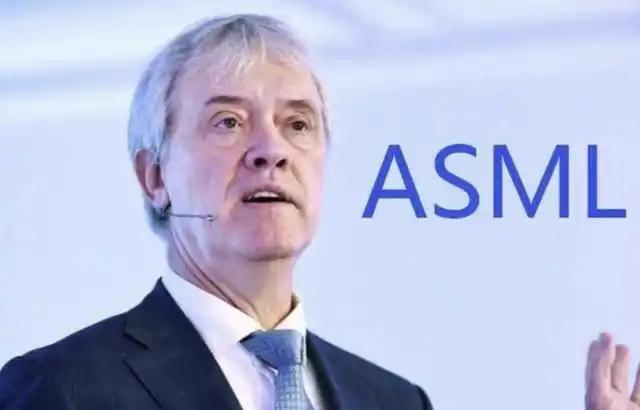
Core Viewpoint - ASML's CEO's remarks about China's potential abandonment of its lithography machines and possible rare earth countermeasures highlight the deep-seated contradictions in the global semiconductor supply chain amid the US-China tech rivalry [1][3][9] Group 1: ASML's Dependency and Market Dynamics - ASML has a significant dependency on the Chinese market, with China becoming its largest customer by Q3 2025, accounting for 42% of equipment delivery [3] - The reliance on ASML's technology is characterized by a passive nature, as Chinese companies face restrictions on accessing advanced chip manufacturing technologies due to US-led sanctions [3][5] - The ongoing technological blockade has forced China to pursue self-reliance in lithography technology, with companies like Shanghai Micro Electronics and North China Innovation making strides in this field [3][7] Group 2: Rare Earth Supply Chain and Strategic Responses - ASML's concerns regarding China's rare earth export controls reveal the interdependent nature of the global supply chain, where China's measures are seen as a response to unilateral sanctions [5][9] - Historically, China has provided stable rare earth supplies to global tech firms, including ASML, but the US's dual standards in technology sanctions and resource demands have disrupted this balance [5][9] - China's rare earth controls signal a commitment to maintaining fairness in the supply chain, indicating that the consequences of escalating technology blockades will affect all participants, including ASML [5][9] Group 3: Implications of US-China Tech Decoupling - ASML's anxiety reflects the broader repercussions of the US's tech decoupling strategy, which inadvertently encourages Chinese innovation and the emergence of domestic semiconductor firms [7][9] - The sanctions imposed by the US have led to the rise of Chinese semiconductor equipment companies, which are beginning to penetrate markets previously dominated by foreign firms [7][9] - The situation illustrates that attempts to isolate China may ultimately result in a loss of market share for foreign companies, as local firms develop differentiated technologies [7][9] Group 4: Future of the Semiconductor Industry - The ongoing struggle over lithography technology and rare earth resources transcends individual corporate interests, impacting the future trajectory of the global semiconductor industry [9][11] - China's push for self-reliance in semiconductor technology is not about severing global ties but rather about finding space for survival and growth amid restrictions [9][11] - A sustainable future for the global semiconductor industry hinges on open collaboration rather than closed confrontation, emphasizing the need for shared technological advancements and equitable negotiations [11]
中国一纸矿物质审批,为何能让ASML光刻机产线告急?全球芯片命门浮现
Sou Hu Cai Jing· 2025-10-21 05:49
Core Insights - The Chinese Ministry of Commerce has implemented export controls on foreign items and related technologies containing Chinese mineral components, effective from October 9, 2025, under the principle of "long-arm jurisdiction" [1][3]. Policy and Regulations - The export control applies to products containing 0.1% or more of Chinese heavy mineral components or utilizing Chinese mineral technology, requiring approval from Chinese authorities [3]. - Export applications for military users or those related to the development of weapons of mass destruction will be directly rejected [3]. Impact on Semiconductor Industry - China holds a dominant position in the mineral sector, with 37% of global mineral reserves and over 70% of the refining and separation processes, particularly controlling 87% of the global smelting capacity for high-purity heavy minerals used in lithography machines [5]. - ASML is facing an unprecedented supply chain crisis due to the new regulations, with internal assessments indicating a potential 30% decrease in EUV lithography machine capacity if mineral supply disruptions continue [5][7]. - The delivery cycle for each EUV lithography machine is expected to extend from 24 months to 36 months, impacting major semiconductor manufacturers like TSMC, Samsung, and Intel, which are in critical phases of building next-generation chip factories [7]. Defense Industry Consequences - The U.S. defense industry is also affected, with Lockheed Martin's F-35 radar sensitivity declining by 23% due to a lack of neodymium magnets, and Boeing's MQ-25 drone project facing risks due to shortages of mineral permanent magnet motors [9]. - A significant 78% of guided systems in existing U.S. weapon stockpiles are reported to be facing mineral supply crises [9]. Global Supply Chain Repercussions - The export controls have led to a 60% reduction in global EUV lithography mirror coating capacity, with China being the sole producer of high-purity gadolinium gallium garnet crystals necessary for precise temperature control in lithography machines [11]. - Companies attempting to bypass Chinese minerals face challenges, with alternative materials resulting in a 40% cost increase and a 30% performance decline [9]. Strategic Responses - The Chinese semiconductor industry is exploring unique strategies to overcome external technology blockades, such as the "non-lithography compensation" strategy proposed by New Kai Lai, which aims to optimize DUV lithography processes to achieve EUV-like precision [11][13]. - Domestic development of EUV photoresists and auxiliary materials has seen significant progress, with over 30% of key photoresists achieving domestic production rates [13]. Industry Restructuring - The global semiconductor supply chain is undergoing deep restructuring due to China's mineral controls, with the EU aiming for an 80% self-sufficiency rate in minerals by 2030 and the U.S. Department of Defense investing $90 billion to build a domestic mineral supply chain [15]. - The shift from "efficiency-first" to "security-first" in supply chains poses challenges to ASML's global production model [15]. Technological Challenges - Attempts by Japanese companies to replace critical minerals have shown significant performance degradation, with experiments indicating a 47% performance drop in gallium-based magnets after 3000 hours of operation [17]. - China's dual-review mechanism for export controls requires comprehensive data tracing from mines to finished products for any foreign products using Chinese minerals, increasing supply chain transparency challenges for ASML [17].
怕稀土卡脖子?ASML突然对我们放出王炸,美国表示:防线崩了
Sou Hu Cai Jing· 2025-10-21 04:59
2025年,地缘因素加剧,美国更新规则,荷兰调整框架,将控制扩展到维护服务和旧型号,增加了操作难度。但中国市场规模占全球近半,供应商难以忽视 经济现实。 2025年以来,面对外部压力,荷兰企业一系列举动引发国际关注,外媒纷纷报道称此举打破原有格局,事情已然升级。 早在2019年,美国启动出口管制,禁止ASML向中国出售极紫外线光刻系统,这种设备专用于5纳米以下工艺,波长仅13.5纳米,能大幅提升晶体管密度。 2023年,荷兰跟进,针对浸没式深紫外线机型设置许可要求,中国采购面临延误。 ASML供应商KMWE于2023年5月在苏州设立小型工厂,占地500平方米,雇佣20名工程师,专注3D打印金属部件和关键模块生产。这种本地化布局不同于 以往整机出口模式,减少跨国许可依赖,确保中国已安装设备及时升级。 全球半导体产业链正处于关键转折点,荷兰作为光刻机技术高地,其企业动态直接牵动各国科技布局。ASML作为行业龙头,长期主导高端设备供应,而其 供应商体系则支撑着整个生产链条。 相比早期禁令直接阻断交付,现在通过部件本土组装,缩短供应链周期,提升效率。KMWE工厂营收贡献达总收入11%,达到1.9亿欧元,显示出市场吸引 ...
荷兰经济部长:安世半导体已上升至最高层级讨论!
是说芯语· 2025-10-21 04:47
Core Viewpoint - The recent statements from Dutch Economic Affairs Minister Karremans indicate a significant shift in the Netherlands' approach to semiconductor trade with China, emphasizing the need for cooperation to resolve issues related to chip supply for Chinese automotive manufacturers [1][3]. Group 1: Dutch Semiconductor Industry - The Dutch semiconductor industry employs 120,000 people, with 20% of these jobs linked to trade with China, highlighting the sector's dependence on the Chinese market [1]. - ASML, a key player in the industry, is projected to derive 28% of its revenue from China in 2024, with nearly 90% of this revenue coming from DUV lithography machines [1]. Group 2: Global Supply Chain Dynamics - The unique position of Nexperia in the semiconductor market makes it a "must-have" in the automotive electronics sector, as its products, while not cutting-edge, are irreplaceable in the short term [3]. - A hardline stance from either side could lead to a "lose-lose" situation, resulting in asset losses for Chinese companies and supply chain disruptions for Dutch and European industries [3]. Group 3: Diplomatic and Trade Relations - The Chinese Ministry of Commerce has emphasized the importance of the Netherlands maintaining an independent stance and respecting market principles to protect the rights of Chinese investors [3]. - There is a call for the Netherlands to move away from politically motivated thinking influenced by the U.S. and to resolve differences through negotiation [3].

芯片股集体爆发,美股全线大涨!发生了什么?
Zheng Quan Shi Bao· 2025-10-20 22:41
Market Overview - US stock market indices opened strong, with the Nasdaq rising over 1% and large tech stocks, including Apple, reaching all-time highs [1][2] - The Philadelphia Semiconductor Index surged over 2%, also hitting a historical peak, driven by positive market sentiment due to easing trade tensions and the resolution of regional bank crises [1][3] Technology Sector - Major tech stocks experienced significant gains, with Apple rising over 3% and achieving a historical high, supported by strong early sales of the iPhone 17 series, which outperformed the iPhone 16 series by 14% [2] - Other tech giants like Meta, Tesla, Google, Microsoft, and Amazon also saw notable increases, contributing to the overall positive sentiment in the tech sector [3] Semiconductor Industry - The semiconductor sector saw a collective rise, with Micron Technology and ON Semiconductor both increasing over 6%, and AMD and ARM rising over 4% [3] - Morgan Stanley highlighted strong demand for server and storage solutions, indicating concerns about product supply for 2026, suggesting a tight supply environment in the coming quarters [3] AI Stocks - Goldman Sachs reported that AI stocks are not in a bubble, citing a lower expected price-to-earnings ratio of 27 for the top seven S&P 500 companies compared to 52 during the internet bubble [8] - The report also noted a projected 19% increase in US household investments in stocks by 2026, alongside resilient consumer behavior [8] Economic Factors - The anticipation of a 25 basis point interest rate cut by the Federal Reserve during the upcoming meeting on October 28-29 is contributing to the bullish market sentiment [1][8] - Concerns about the labor market's true condition persist, with economists indicating uncertainty due to the lack of recent employment data [8]




