Broadcom(AVGO)

Search documents
但斌“晒单”引热议:海外基金三年赚138%,国内基金一年收益仅15%?
凤凰网财经· 2025-11-24 12:47
Core Viewpoint - The article discusses the performance and investment strategy of Dongfang Hongwan Investment, led by Chairman Dan Bin, highlighting the contrasting short-term and long-term returns of its funds, particularly in the context of AI investments and market dynamics [2][5][8]. Group 1: Investment Performance - As of October 2025, Dongfang Hongwan's overseas fund achieved a three-year return of 138.98%, ranking third among 9,970 global hedge funds, while its one-year return was 26.63% [2][5]. - The one-year return of 26.63% slightly exceeds the average of 24.32% for domestic subjective long-only strategies but falls significantly short of the top 5% return of 82.48% [2][5]. - Domestic products under Dongfang Hongwan have reported returns around 15%, which is notably lower than the 24.32% average for similar funds [6]. Group 2: Investment Strategy - The fund's investment strategy is heavily focused on AI, with significant holdings in companies like Nvidia, Google, Meta, and Microsoft, indicating a strong commitment to the AI sector [3][4]. - Dan Bin's recent investments include increasing positions in Alibaba and new investments in semiconductor companies like Astera Labs and Broadcom, reflecting a comprehensive approach to the AI supply chain [3][4]. - The emphasis on long-term value investment is evident, as Dan Bin stated that short-term volatility does not alter the commitment to growing alongside great companies [5][8]. Group 3: Market Dynamics and Investor Sentiment - The article notes a divergence in performance perceptions, with some investors expressing concerns over the short-term results of Dan Bin's funds, questioning whether he has been "over-mythologized" [6][7]. - Market analysts suggest that the performance differences stem from the inherent nature of value investing versus short-term speculation, especially in a market characterized by structural bull trends [7][8]. - The ongoing debate highlights the choice between chasing short-term gains versus investing in long-term growth, with Dan Bin's strategy leaning towards the latter [8].




美国AI算力新基建是“泡沫”吗?
3 6 Ke· 2025-11-24 09:19
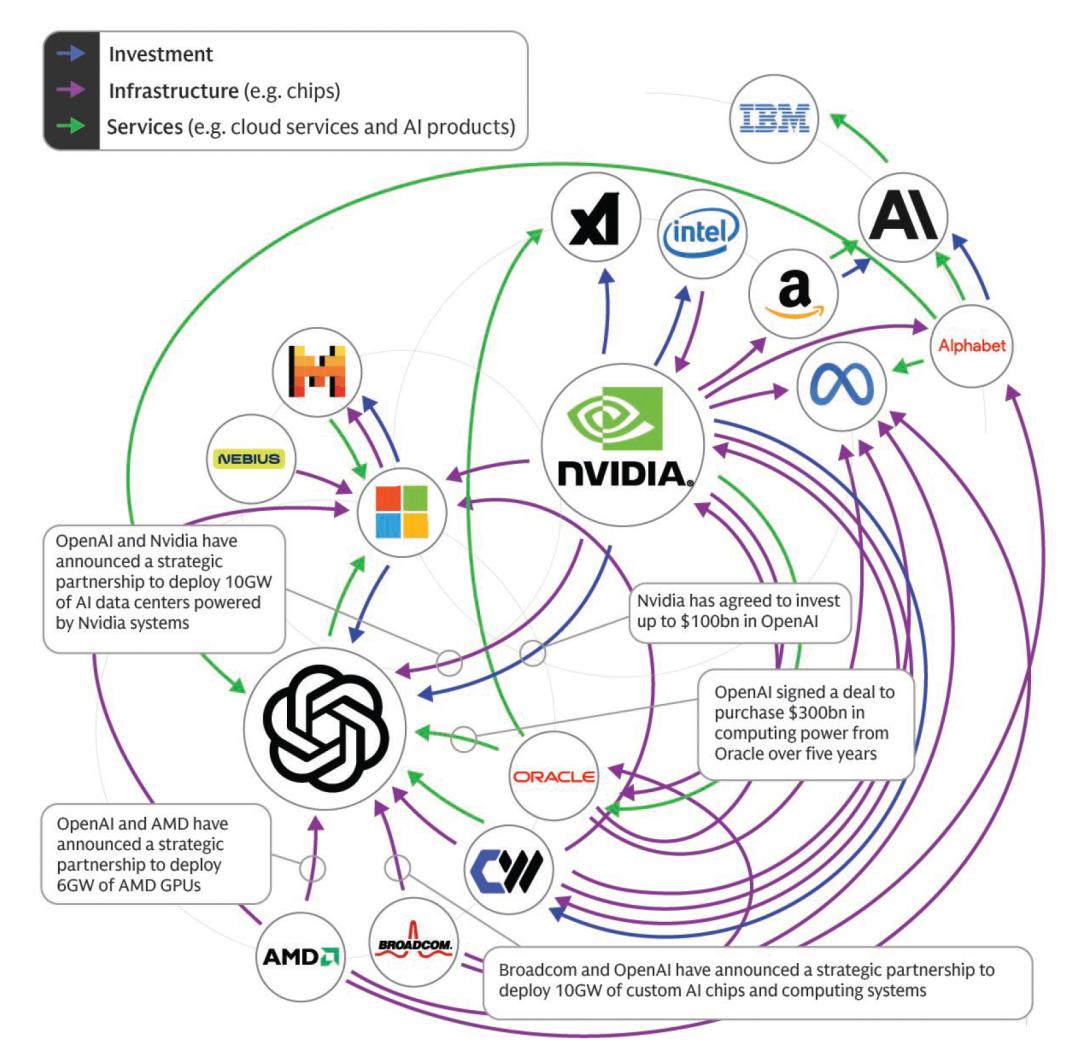
Core Insights - The current investment in AI infrastructure in the U.S. is seen as a proactive measure in anticipation of the advancements in general artificial intelligence, although there are signs of a potential bubble in the market [1][3][27] - Major data center projects in the U.S. have surpassed a total installed capacity of 45 GW, with an expected investment exceeding $2.5 trillion, raising concerns about a possible systemic downturn if these investments do not yield expected returns [2][4][5] - Companies like OpenAI and Anthropic are experiencing significant revenue growth, with OpenAI projected to exceed $20 billion in annual revenue by the end of the year, a fivefold increase from the previous year [3][8][10] Investment Trends - In Q3, cloud computing revenues for Amazon, Microsoft, and Google reached $33 billion, $30.9 billion, and $15.2 billion respectively, driven by AI, with year-on-year growth rates of 20%, 28%, and 34% [4][11] - OpenAI plans to invest approximately $1.4 trillion in building its computing infrastructure over the next eight years, indicating a strong demand for computational power [8][18] - The total cash and equivalents of major tech companies involved in AI infrastructure exceed $200 billion, providing a solid financial foundation for these investments [19] Market Dynamics - The demand for AI capabilities is expected to grow, with the number of global AI users reaching around 1 billion, indicating significant potential for further expansion [7] - The AI sector is facing scrutiny regarding the sustainability of its growth and the sources of its funding, with concerns about reliance on debt financing [5][20][21] - Historical comparisons suggest that while there are signs of a bubble, the current valuations are still within a reasonable range supported by strong performance metrics [23][25] Future Outlook - The AI investment wave may experience short-term valuation corrections, but the long-term direction is deemed valid, as technological advancements often come with cycles of overheating and correction [27] - The construction of data centers is aligned with the U.S. reindustrialization strategy, which aims to bolster domestic manufacturing and infrastructure [17] - Analysts predict that the total spending on AI data centers and chips could reach $2.9 trillion by 2028, with a significant portion expected to be financed through debt [20]



股票市场概览:资讯日报:纽约联储行长鸽派言论提振市场情绪-20251124
Guoxin Securities Hongkong· 2025-11-24 06:39
Market Overview - The Hang Seng Index closed at 25,220, down 2.38% for the day and 5.09% for the week, but up 25.72% year-to-date[3] - The Hang Seng Technology Index fell 3.21% to 5,395, with a year-to-date increase of 20.76%[3] - The Hang Seng China Enterprises Index decreased by 2.45% to 8,920, with a year-to-date rise of 22.36%[3] - The Shanghai Composite Index dropped 2.45% to 3,835, with a year-to-date increase of 14.41%[3] Sector Performance - The lithium battery sector saw significant declines, with Ganfeng Lithium down over 12% and Tianqi Lithium down over 11%[9] - Semiconductor stocks also performed poorly, with Innolux down over 8% and SMIC and Hua Hong Semiconductor both down over 6%[9] - Xiaomi-related stocks rose against the trend, driven by the launch of Xiaomi's enhanced smart driving system[9] U.S. Market Insights - On November 21, U.S. markets saw all major indices rise, with the Dow Jones gaining approximately 1.1%[9] - The probability of a 25 basis point rate cut by the Federal Reserve in December increased from under 40% to over 70% following dovish comments from New York Fed President Williams[9] - Notable movements in large tech stocks included Google up 3.53% and Nvidia down 0.96%[9] Japanese Market Trends - The Nikkei 225 index fell 2.4%, with a cumulative decline of 3.5% over the past week[13] - Japanese semiconductor stocks faced significant drops, with Tokyo Electron down 7.14% and Advantest down 12.10%[13] - The Japanese government announced a $135 billion economic stimulus plan, adding pressure to the yen and government bonds[13]



千问App公测一周,下载量已突破1000万次,科创人工智能ETF华夏(589010)午后V型反转,福昕软件领涨超8%
Mei Ri Jing Ji Xin Wen· 2025-11-24 06:17
Group 1 - The core viewpoint of the news highlights the strong performance of the Sci-Tech Innovation Artificial Intelligence ETF (589010), which saw a 0.86% increase and demonstrated a significant recovery after an early dip, indicating a repairing market trend [1] - Among the main constituent stocks, 26 out of 30 rose, with notable gains from FuXing Software exceeding 8% and leading AI application companies like HaiTian RuiSheng and HeHe Information rising over 7%, showcasing a significant improvement in the sector's profitability [1] - The trading volume reached nearly 60 million yuan during the session, reflecting sustained trading enthusiasm in the market [1] Group 2 - Alibaba's AI assistant, Qianwen App, achieved over 10 million downloads within a week of its public testing, surpassing competitors like ChatGPT, Sora, and DeepSeek, marking it as the fastest-growing AI application to date [1] - Open-source securities noted that AI innovation is continuously evolving, with advancements in model capabilities and reduced usage costs, highlighting the emergence of Chinese open-source models like DeepSeek and Qwen gaining global recognition [1] - The global capital expenditure for cloud service providers (CSP) is experiencing strong growth, with companies like Nvidia and Broadcom seeing sustained high growth in their AI chip businesses, and OpenAI significantly increasing its future capital expenditure plans for computing power, indicating robust demand for AI computing resources [1] Group 3 - The Sci-Tech Innovation Artificial Intelligence ETF closely tracks the Shanghai Stock Exchange Sci-Tech Innovation Board AI Index, covering high-quality enterprises across the entire industry chain, benefiting from high R&D investment and policy support [2] - The ETF's design allows for a 20% price fluctuation range, coupled with the elasticity of small and mid-cap stocks, enabling it to capture the "singularity moment" in the AI industry [2]


CPO找到了杀手级应用
半导体行业观察· 2025-11-24 01:34
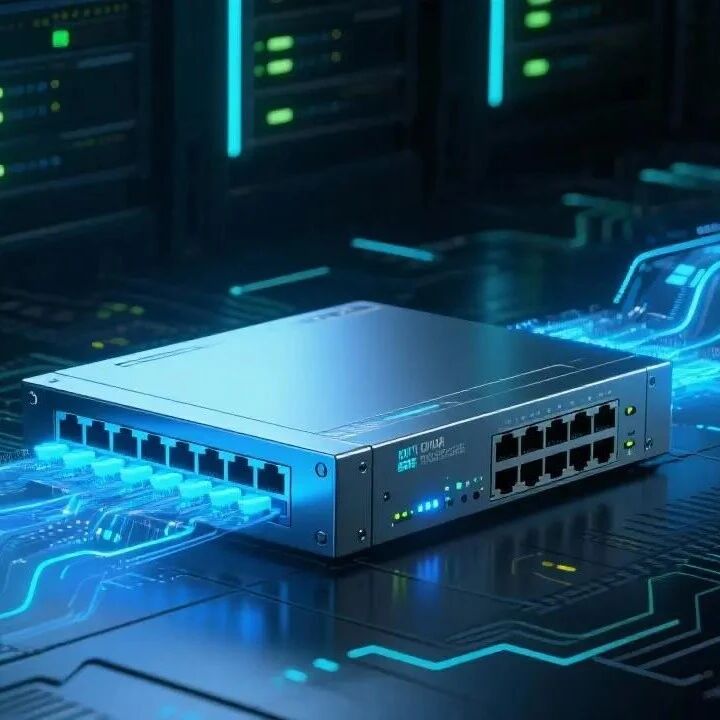
Core Insights - The article discusses the challenges and advancements in power supply for data center operators, particularly in relation to the deployment of GPU servers driven by the growth of artificial intelligence [1] - Co-packaged optics (CPO) technology is highlighted as a key innovation, with NVIDIA and Broadcom leading the way in its adoption [1][5] Group 1: CPO Technology and Adoption - NVIDIA's Quantum-X Photonics CPO switch will be adopted by GPU cluster operators Lambda and CoreWeave, as well as the Texas Advanced Computing Center (TACC) [1] - CPO switches are expected to see explosive growth by 2026, driven by the need for high-speed connections in AI networks, with NVIDIA planning to achieve 1.6 Tbps port speeds with its next-generation ConnectX-9 network cards [2][5] - The integration of optical components into the switch itself reduces the need for numerous power-consuming pluggable transceivers, significantly decreasing the number from nearly 500,000 to about 128,000 for a cluster with 128,000 GPUs [2] Group 2: Reliability and Performance - One of the main barriers to CPO adoption has been concerns over reliability; a failure in a photon chip could result in the loss of multiple ports, unlike traditional switches where only one port may be affected [3] - Early tests by Broadcom and Meta indicate that CPO technology can reduce latency and improve reliability, with Meta reporting 1 million hours of jitter-free operation at 400 Gbps [3][4] - NVIDIA claims its photonic network platform has improved resilience by 10 times, allowing applications to run longer without interruption [4] Group 3: Current State and Future Developments - NVIDIA's CPO switches, including Spectrum-X and Quantum-X, feature full liquid cooling and high bandwidth capabilities, with plans for deployment by TACC, Lambda, and CoreWeave [5][6] - Broadcom is also advancing in this space, showcasing its latest generation Davisson CPO platform with a 102.4 Tbps Tomahawk 6 switch ASIC [6] - Other companies, such as Ayar Labs and Lightmatter, are exploring optical I/O integration into accelerators, with Lightmatter developing a silicon photonic intermediary layer for chip-to-chip communication [8][9]
This OpenAI Researcher-Turned-Hedge Fund Manager Is Long Intel and Short Nvidia, TSMC, and Broadcom. Is a Changing of the Guard on the Horizon?
Yahoo Finance· 2025-11-23 18:00
Core Insights - Leopold Aschenbrenner, a former OpenAI researcher, founded a hedge fund named Situational Awareness in 2024, focusing on artificial general intelligence (AGI) trends [3][7][20] - The fund's investment strategy has raised eyebrows, particularly its short positions on major AI companies like Nvidia, TSMC, and Broadcom, despite Aschenbrenner's previous bullish stance on AI [4][6][8][11] Investment Strategy - Situational Awareness maintained a significant long position in Intel, accounting for 16.41% of the portfolio, while simultaneously shorting Nvidia, TSMC, and Broadcom [12][10] - The fund's short positions included put options on Nvidia (6.95% of the portfolio), Broadcom (1.77%), and TSMC (1.76%), indicating a strategic shift in Aschenbrenner's outlook on these companies [10][11] Market Context - The hedge fund's moves come amid uncertainty regarding the sustainability of the AI boom, with investors closely monitoring major technology companies [5] - Aschenbrenner's predictions suggest a rapid advancement towards AGI by 2027, with significant growth in AI training clusters expected, which could impact the semiconductor industry [7][9] Company-Specific Insights - Aschenbrenner's shift from a bullish to a bearish position on Broadcom occurred within a short timeframe, indicating a potential reevaluation of the company's prospects [11] - The decision to maintain a long position in Intel may be influenced by the recent leadership change with Lip-Bu Tan as CEO, as well as expectations surrounding Intel's new 18A node technology [13][14] Future Outlook - The hedge fund's contrarian bets and Aschenbrenner's status as an AGI thought leader suggest that Situational Awareness will be a fund to watch for investors interested in AI trends [16]


Prediction: These Stocks Will Join the $3 Trillion Club in 3 Years
The Motley Fool· 2025-11-22 16:00
Core Viewpoint - The $3 trillion market cap club is expected to expand, with several companies potentially joining within the next three years, including Amazon, Broadcom, Meta Platforms, Taiwan Semiconductor, and Tesla [1][2]. Company Summaries - **Amazon**: Currently valued at $2.54 trillion, it requires an 18% increase to reach the $3 trillion mark, which is deemed achievable by 2026 [3][4]. - **Broadcom**: With a market cap of $1.62 trillion, it needs an 85% increase, translating to a compounded annual growth rate (CAGR) of 21%. Recent revenue growth of 22% and a significant 63% growth in its AI division suggest it could reach the target by 2028 [5][6][8]. - **Meta Platforms**: Currently valued at $1.54 trillion, it requires a 95% increase. Despite challenges related to high capital expenditures for AI, it achieved a 26% revenue growth in Q3, which is above the necessary CAGR of 23% to reach $3 trillion by 2028 [9][8]. - **Taiwan Semiconductor**: Valued at $1.48 trillion, it needs a 103% increase. It is the fastest-growing company on the list, with a remarkable 41% revenue growth in Q3, positioning it well to achieve the $3 trillion valuation [10]. - **Tesla**: Currently valued at $1.35 trillion, it requires a 122% increase. Its valuation is heavily influenced by market sentiment, making its future uncertain, but it could potentially reach the $3 trillion mark depending on developments like the rollout of robotaxis [12][13].

Suze Orman’s Take on Dividend Investing Might Surprise You
Yahoo Finance· 2025-11-22 14:57
Core Insights - Suze Orman emphasizes the importance of dividend stocks as a reliable source of passive income, particularly for retirees seeking predictable income streams [2][5][6] - Orman advocates for a balanced investment strategy, suggesting that dividends should not constitute an entire portfolio but rather serve as a stabilizing tool alongside growth investments in sectors like technology and AI [4][6][7][8] Dividend Stocks - Companies like Pfizer and Whirlpool are highlighted as strong dividend stocks, with Whirlpool offering a notable dividend yield of 5.32% as of November 2025, driven by consistent demand for home appliances [1] - Orman identifies high-yield dividend stocks such as Microsoft, NVIDIA, Meta, and Broadcom as not only reliable for dividends but also as long-term growth performers [7] Investment Strategy - Orman's investment strategy includes dollar-cost averaging during volatile market periods to capitalize on lower share prices and secure higher future yields [9] - Diversification is a key principle in Orman's approach, recommending a mix of individual dividend stocks and dividend ETFs to mitigate risks associated with any single company [10][12] Risk Management - Orman warns about the implications of dividend cuts, viewing them as significant red flags that may necessitate selling to protect future income [11]
这条芯片赛道,大火
半导体行业观察· 2025-11-22 03:09
Core Viewpoint - The article highlights the rapid growth and significance of ASIC (Application Specific Integrated Circuit) in the semiconductor industry, particularly driven by the increasing demand for AI computing power. Unlike general-purpose GPUs, ASICs are tailored for specific applications, leading to superior performance and efficiency in AI tasks [1][4][11]. Group 1: ASIC Development and Market Dynamics - ASIC emerged in the 1980s as a response to the need for customized chips that could meet specific product requirements, breaking away from the traditional model of generic chip production [1][2]. - The introduction of TSMC and the evolution of EDA tools in the 1990s allowed system manufacturers to design chips independently, leading to the customer-owned tools (COT) model, which enhanced supply chain flexibility [3]. - The success of Google's TPU in 2016 marked a turning point, establishing ASIC as a critical component in AI infrastructure, with major tech companies recognizing the need for customized chips to optimize efficiency and cost [4][5]. Group 2: Advantages of ASIC - ASICs offer extreme performance optimization by focusing resources on specific tasks, such as matrix multiplication and convolution operations, which are essential for AI computations [7][8]. - The energy efficiency of ASICs is a significant advantage, especially in AI applications where power consumption is critical. ASICs can minimize static power loss by eliminating unnecessary components [9][10]. - The compact design of ASICs allows for powerful functionalities to be integrated into small form factors, which is increasingly important in modern devices like smartphones and IoT applications [10][11]. Group 3: Market Leaders and Financial Performance - Broadcom and Marvell have emerged as dominant players in the ASIC market, with Broadcom reporting AI business revenues exceeding $4.4 billion, a 46% year-over-year increase, and Marvell's data center revenue reaching $1.441 billion, a 76% increase [12][14]. - The combined market share of Broadcom and Marvell exceeds 60%, with Broadcom holding 55-60% and Marvell 13-15%, primarily serving top-tier cloud service providers [12][13]. - Marvell predicts that global data center capital expenditures will surpass $1 trillion by 2028, with ASIC market size expected to reach $55.4 billion, growing at a CAGR of 53% from 2023 to 2028 [14][15]. Group 4: Emerging Competitors and Strategic Moves - Traditional semiconductor companies like Intel and Qualcomm are pivoting towards ASIC markets, with Intel focusing on custom chip services and Qualcomm acquiring Alphawave to enhance its SerDes capabilities [22][24]. - MediaTek is also making strides in the ASIC space, securing contracts with major tech firms like Google and Meta for custom chip designs [29][31]. - Taiwanese companies such as Wistron and Chipone are capitalizing on the ASIC trend, leveraging their relationships with TSMC and their technical expertise to secure significant market positions [32][34]. Group 5: Future Outlook and Challenges - The ASIC market is expected to continue growing, driven by the increasing complexity of AI models and the need for efficient computing solutions [16][17]. - However, challenges remain, including the need for advanced IP design capabilities and the ability to manage complex system integrations as AI applications evolve [17][20]. - Domestic Chinese firms are also positioning themselves to capture market share in the ASIC space, despite facing challenges in IP accumulation compared to international giants [39][41].

美股收盘:美联储“鸽声”提振市场,三大指数集体反弹
财联社· 2025-11-21 23:49
Market Overview - The three major indices collectively rose, with the Dow Jones showing the largest increase of approximately 1.1% [1] - As of the close, the Dow Jones index rose by 1.08% to 46,245.41 points, the S&P 500 index increased by 0.98% to 6,602.99 points, and the Nasdaq index climbed by 0.88% to 22,273.08 points [3] - Despite the Friday rebound, it was insufficient to offset the significant declines earlier in the week, with the Nasdaq down 2.74%, the S&P 500 down 1.95%, and the Dow down 1.91% for the week [5] Federal Reserve Insights - New York Fed President Williams indicated that monetary policy remains slightly tight, suggesting potential adjustments to the federal funds rate target range to align closer to neutral [5] - His dovish remarks signaled to investors that the Fed may consider a rate cut in the December meeting, with futures indicating over a 70% probability of a 25 basis point cut [7] Company News - Google aims to double its computing power every six months, targeting a 1000-fold increase in capacity over the next 4 to 5 years, emphasizing the importance of AI infrastructure in the competitive landscape [10] - Eli Lilly's market capitalization surpassed $1 trillion, making it the first pharmaceutical company to achieve this milestone, with its stock price rising by 1.57% [11][12] - Amazon CEO Jassy plans to sell nearly 20,000 shares of company stock, valued at approximately $4.2992 million, with the sale expected around November 21, 2025 [13] - Nokia announced a $4 billion investment to expand its R&D and manufacturing capabilities in the U.S., with approximately $3.5 billion allocated for R&D and $500 million for capital expenditures in states like Texas, New Jersey, and Pennsylvania [14]