
BABA(BABA)

Search documents
零一万物发布万智2.5企业级多智能体,智元机器人与MiniMax达成合作 | 蓝媒GPT
Sou Hu Cai Jing· 2026-01-05 15:58
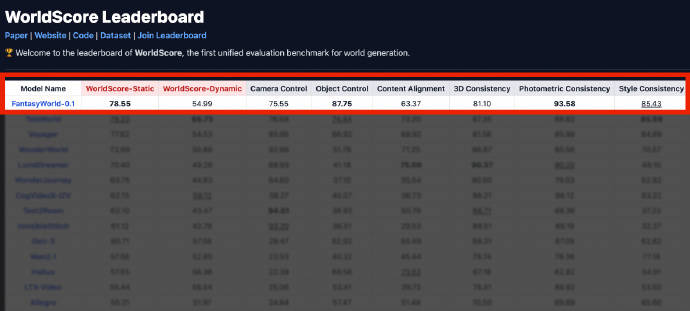
Group 1 - Zero One Everything launched "Wanzhi 2.5 Enterprise Multi-Agent," showcasing advancements in enterprise AI transformation and demonstrating how multi-agents can streamline complex workflows previously requiring large teams [1] - The launch includes insights from industry experts and showcases practical applications like "Alternative Marketing Department" and "Alternative HR" [1] Group 2 - ByteDance's "Doubao" AI glasses are set to enter the shipping phase, developed in collaboration with Longqi Technology [2] - Zhiyuan Robotics partnered with MiniMax to enhance voice interaction capabilities in their robots, offering personalized voice synthesis and expanding entertainment applications [3] Group 3 - Tencent initiated an "AI Application and Online Tools Mini Program Growth Plan," providing comprehensive support including cloud development resources and AI computing power from January 1, 2026, to December 31, 2026 [4] - Tencent's AI workbench, ima, introduced a "Generate PPT" feature, allowing users to create slides using personal knowledge bases [5] Group 4 - NetEase Youdao upgraded its AI learning hardware "Youdao AI Answer Pen Space X" to include the first domestic AI "video Q&A" feature, transitioning from static text to dynamic video explanations [6] Group 5 - Alibaba's Amap achieved top scores in the WorldScore evaluation, indicating significant advancements in AI technology for understanding and simulating real-world dynamics, with plans to launch new applications benefiting local businesses [7]




跨境电商运营:2025东南亚市场AI赋能电子商务发展趋势报告
Sou Hu Cai Jing· 2026-01-05 14:53
Core Insights - The Southeast Asian e-commerce market is projected to reach a GMV of $159 billion in 2024 and $191.2 billion by 2029, driven by a population of over 650 million, a high percentage of young consumers, and rapid mobile internet adoption [1][4][7] - AI technology is deeply integrated into the e-commerce value chain, enhancing product recommendations, customer service, supply chain management, and content generation, thereby improving operational efficiency and user experience [1][4][7] - Emotional wellness consumption is emerging as a new trend, with 56.3% of young consumers willing to pay for emotional value, leading to diverse consumption forms that cater to different emotional needs [1][4] Group 1: Southeast Asia E-commerce Market Overview - The region's economy remains resilient, with a GDP of approximately $3.97 trillion and a growth rate of about 4.6% in 2024, supported by a large consumer market and a growing middle class [10][15] - E-commerce in Southeast Asia is characterized by a diverse cultural background and consumer behavior, making it a strategic area for global e-commerce companies [7][10] - Major e-commerce platforms like Shopee, Lazada, and TikTok Shop are shaping the competitive landscape, leveraging mobile-first strategies and social commerce [1][4][37] Group 2: AI-Driven Transformation in E-commerce - AI-powered recommendation systems enhance user experience by analyzing shopping habits and preferences, significantly increasing conversion rates [8][44] - AI in customer service allows for 24/7 support, reducing reliance on human agents and operational costs, thus improving overall customer satisfaction [8][9] - AI optimizes supply chain and logistics management, improving inventory control and delivery efficiency, which is crucial for maintaining competitive advantage [9][10] Group 3: Consumer Behavior and Trends - Online shopping is becoming increasingly popular, with the e-commerce GMV reaching $159 billion, as consumers prefer the convenience of online shopping over traditional retail [28][29] - Mobile e-commerce dominates the market, driven by high smartphone penetration and a young consumer base that favors mobile shopping [29][30] - Social commerce is on the rise, with platforms like Facebook and Instagram serving as key channels for product discovery and purchase [30][32] Group 4: Country-Specific Insights - Malaysia's e-commerce market is mature, with a high internet penetration rate of nearly 98%, supported by robust mobile payment and logistics infrastructure [22][23] - Indonesia, with a rapidly growing middle class, faces challenges in logistics due to its geographical distribution, but shows significant potential for e-commerce growth [23][24] - Thailand's e-commerce is bolstered by its tourism sector, with a strong demand for travel-related products and services, while social media plays a crucial role in driving sales [24][25] - The Philippines is one of the fastest-growing e-commerce markets, with a projected GMV of $21 billion in 2024, driven by a young population and high social media engagement [25][26]


下载量一度超亚马逊后,速卖通宣布与小米国际达成出海战略合作
Guan Cha Zhe Wang· 2026-01-05 13:50
Core Insights - Xiaomi International has entered a strategic partnership with AliExpress, a cross-border e-commerce platform under Alibaba, to join the "Super Brand Going Abroad Plan" [1] - The collaboration will focus on localized user operations and brand building in key overseas markets, particularly in mobile phones and televisions [1] - Xiaomi's growth has been significant under this plan, with AliExpress becoming a primary platform for Xiaomi's international expansion [1] Group 1 - The partnership is seen as a crucial step for AliExpress in competing for top brands in the overseas market [1] - Xiaomi's senior vice president highlighted that the company will continue to increase investments in AliExpress, aiming for sustained growth by 2026 [1] - Xiaomi's recent achievements on AliExpress include the POCO F8 series generating $2 million in sales during the 2025 Black Friday event, making it the top new product on the platform [1] Group 2 - Over the past year, AliExpress has focused on brand expansion, becoming a primary platform for many well-known brands [2] - During the 2025 overseas Double 11 and Black Friday events, over 300 brands achieved daily sales on AliExpress that were more than double those on Amazon, with the number of million-dollar brands increasing by 80% year-on-year [2] - The partnership between Xiaomi and AliExpress represents a shift in the competitive landscape of international markets, moving from a "selling model" to a "deep cultivation model" where platforms and brands collaborate to build ecosystems [2]


阿里巴巴物理AI继续迈大步,高德布局世界模型和具身智能
Sou Hu Cai Jing· 2026-01-05 13:35
Core Insights - Alibaba's Gaode has officially entered the world model technology space and plans to launch a new product application based on this model [1] - The model has achieved top scores in multiple metrics on the WorldScore benchmark, which is the first open-source evaluation for multi-modal world generation models [1] Group 1: Company Developments - Gaode has established an embodied business unit and is actively recruiting for various positions, including product experts and algorithm engineers [2] - The new department is exploring the development of product forms such as robots and robotic dogs [2] Group 2: Strategic Alignment - Gaode's shift towards spatial intelligence aligns with Alibaba Group's strategic direction towards "physical AI," emphasizing the transformative potential of generative AI in the physical world [3] - Alibaba's CEO has highlighted that the greatest value of generative AI lies in its ability to change the physical world, suggesting that all movable objects could become intelligent robots in the future [3] - Gaode's world model capabilities are expected to integrate deeply with other Alibaba units, such as Quark's terminal perception and DingTalk's collaborative scheduling, to serve a broader range of physical intelligent scenarios [3]
10倍增速AI套壳应用,藏住2026细分赛道赚钱机会丨2025年12月AI产品榜
36氪· 2026-01-05 13:35
Core Insights - The article presents the 17th edition of the AI Product Rankings, focusing on the current state of AI applications as of December 2025, analyzing them through the lenses of scale, growth, and structure [9]. Global Rankings - ChatGPT remains the dominant AI application globally with 884.96 million MAU, showing a month-over-month growth of 14.1% [11][48]. - The top five AI applications in the global rankings also include four Chinese products: Doubao, Quark, Baidu Wangpan, and DeepSeek, with Doubao having 163.16 million MAU [12][48]. - Despite the high number of Chinese applications, ChatGPT's MAU is approximately five times that of Doubao, indicating a lack of a comparable "super entry" in the Chinese market [13][14]. Domestic Rankings - In the domestic market, the top five applications are Doubao (163.16 million MAU), Quark (147.84 million MAU), Baidu Wangpan (142.06 million MAU), DeepSeek (131.48 million MAU), and Tencent Yuanbao (84.38 million MAU) [15][36]. - The commonality among these top applications is their origin from major tech companies, highlighting the importance of established platforms in capturing high-frequency usage scenarios [16][17]. Growth Rankings - The most notable growth in global MAU was seen in xMate, which increased by 44 times, followed by Music AI with a 16-fold increase [18][19]. - In the domestic market, DeepSeek achieved a remarkable 89.53% growth in MAU, indicating its strong structural significance [23]. International Expansion - ByteDance's Doubao AI assistant, now rebranded as Dola, reached 53.63 million MAU with a growth of 4.72% [25][39]. - Many products in the international market focus on specific use cases, achieving significant breakthroughs in areas like video generation and efficiency tools [25][26]. User Behavior Insights - Two critical questions determine the sustainability of AI products: whether users are experimenting or forming habits, and whether growth is driven by marketing or the product itself [28]. - Products that consistently appear in both new user download rankings and MAU growth rankings are likely to have found product-market fit (PMF) [28]. Subscription Revenue Rankings - The subscription revenue rankings indicate that ChatGPT leads with an annualized revenue of $198.48 million, followed by Grok and Claude with $4.71 million and $2.98 million respectively [46][47].



Here’s Why SGA Global Growth Strategy Acquired a Position in Alibaba (BABA)
Yahoo Finance· 2026-01-05 12:48
Core Insights - SGA's Global Growth Strategy experienced a portfolio return of -2.3% (Gross) and -2.5% (Net) in Q3, underperforming against the MSCI ACWI's 7.6% and MSCI ACWI Growth's 9.0% returns, primarily due to a lack of alignment with current market trends favoring AI [1] - The investment objective of SGA is to focus on high-quality growth businesses that are expected to achieve consistent mid-teens earnings growth, along with stable revenue and cash flow [1] Company Highlights - Alibaba Group Holding Limited (NYSE:BABA) was highlighted as a key stock in SGA's Q3 2025 investor letter, with a one-month return of -1.51% and a significant 82.11% increase in value over the past 52 weeks [2] - As of January 2, 2026, Alibaba's stock closed at $155.74 per share, with a market capitalization of $371.601 billion [2] - SGA initiated a position in Alibaba during the quarter, noting the company's organizational transformation that has enhanced its pricing power, growth visibility, and management execution [3] - Alibaba's mission aligns with China's national agenda to pursue AI leadership and transition to a consumption-driven economy, indicating its strategic importance in the current market landscape [3]
1688遨虾凭什么让跨境生意更简单?
Xin Lang Cai Jing· 2026-01-05 11:45
鞭牛士 文章的开始我们先来思考一个问题,要成为一个盈利的跨境商家,需要满足什么条件? 在过去很长一段时间里,这个问题的答案是一长串令人望而生畏的清单:你需要精通外语;你需要懂得复杂的物流;你还需要一支庞大的运营团队,来应 对不同国家、不同电商平台繁琐的规则和素材制作。 除此之外,你还需要具备极强的前瞻性,在夏天就要预判大洋彼岸半年后的冬天会流行什么颜色的羽绒服。 这些技术或者人力门槛,在内贸与外贸之间筑起了一道"叹息之墙"。数据显示,中国内贸电商卖家数量超过一千万,而真正活跃的跨境商家仅有一百多 万,两者相差十倍。 然而,阿里1688近日发布的AI智能体遨虾(海外名AlphaShop),似乎正在试图推倒这堵墙。 官方宣称该智能体能够做到用户只需发起对话,或上传产品图片、输入商品链接,即可一键启动从市场调研到工厂对接的全流程。 除下单和付款需用户确认外,其余环节均可由AI自动完成。 带着"遨虾究竟是营销噱头还是真生产力"以及"如何跨越复杂的跨境链路"等好奇,我们与1688遨虾相关产品负责人进行了交流。 遨虾来消除不确定性 跨境生意最难的是什么?是"时空错位"带来的极高不确定性。 在国内做电商,抖音上哪个款式火了 ...

港股投资策略报告:“年关”已过,港股新一轮攻势有望启动-20260105
INDUSTRIAL SECURITIES· 2026-01-05 11:29
Group 1 - Since late November, the Hong Kong stock market has weakened due to a slowdown in southbound capital inflows as the year-end approaches, leading to a decline in market risk appetite [3][14] - The three main concerns affecting the market include foreign capital reducing positions before the Christmas holiday, hedge funds shorting due to uncertainties, and worries about new regulations on mainland public funds potentially increasing selling pressure on Hong Kong stocks [3][14] Group 2 - With the new year, a new round of upward momentum in the Hong Kong stock market is expected, driven by seasonal inflows from insurance funds and the long-term allocation logic from the switch to IFRS9 accounting standards for non-listed insurance companies [5][31] - The market sentiment has dropped to a low point, significantly improving the risk-reward ratio, with signs of short covering in major tech stocks [6][18] - The proportion of short positions in leading internet stocks has shown signs of decline, indicating a potential rebound in stock prices as they reach attractive valuation levels [6][19] Group 3 - The expectation of RMB appreciation is expected to enhance the attractiveness of RMB assets, driving foreign capital inflows into Hong Kong stocks [7][42] - Historical data shows that during previous RMB appreciation cycles, the Hong Kong stock market has consistently performed well, particularly in the information technology sector [7][43] - The RMB is projected to appreciate against the USD, potentially returning to the "6" range, which could further incentivize foreign investment in Chinese equities [7][47] Group 4 - Investment recommendations suggest a bullish stance on Hong Kong stocks, particularly led by the Hang Seng Technology Index, with expectations of continued market growth driven by earnings and liquidity [52] - Key investment opportunities include leading internet companies in the AI sector, which are expected to benefit from both domestic and foreign capital inflows [53][54] - High dividend assets are highlighted as strategic investments in a low-interest-rate environment, with a current dividend yield of 6.70% for the Hang Seng High Dividend Yield Index [58][60] - New consumption trends are emerging, focusing on traditional service consumption transformation, Z-generation spending habits, and high-end consumption recovery [61][64]


Alibaba to launch AI-powered interior showcase tool for restaurants
Yahoo Finance· 2026-01-05 11:02
Core Viewpoint - Alibaba is launching an AI-powered feature through Amap to help restaurants showcase their interiors, aiming to compete with Meituan in the food delivery and local services market [1][3]. Group 1: New AI Feature - The new service will allow restaurants to create 3D views of their premises by uploading existing photos or short videos, reducing the time and cost of producing promotional visuals [2]. - The system is based on Alibaba's visual "Wan" model, and initial access may be provided to a limited number of businesses at no cost [2]. Group 2: Market Competition - Alibaba is looking to increase its market share in meal delivery and has been using incentives and subsidies to support consumer services amid competition with Meituan and JD.com [3]. - The competitive pressure has affected profit margins and attracted regulatory scrutiny [3]. Group 3: Regulatory Environment - In July 2025, China's State Administration for Market Regulation (SAMR) held discussions with major online food delivery platforms, including Alibaba's Ele.me, to address price competition in the sector [4]. - The regulator emphasized the need for more rational competition among these companies [4]. Group 4: Strategic Alignment - The Amap project aligns with CEO Eddie Wu's goal of integrating AI across Alibaba's operations, similar to initiatives by other tech giants like Google and Tencent [5].
消息称阿里用 AI 应对“外卖大战”:商家只需上传照片就能完成门店 3D 建模
Xin Lang Cai Jing· 2026-01-05 10:38
IT之家 1 月 5 日消息,今天早间,据彭博社报道,阿里 巴巴集团正在上线一项面向餐饮商家的 AI 服务,帮助 餐厅以更直观的方式呈现店内环境。此举被视为阿里在 中国餐饮和本地生活赛道中,与美团展开竞争的一项新 举措。 据知情人士透露,高德地图即将支持餐厅通过上传照片 或视频,自动生成 3D 店内展示内容,降低商家在宣传 和营销方面的成本。这项技术基于通义万相视觉模型, 计划初期向部分商家免费开放。 据知情人士透露,高德地图即将支持餐厅通过上传照片或视频,自动生成 3D 店内展示内容,降低商家 在宣传和营销方面的成本。这项技术基于通义万相视觉模型,计划初期向部分商家免费开放。 报道提到,高德地图的这一动作,体现了阿里巴巴试图切入美团长期占据主导地位的领域。美团目前在 外卖、用户评价和餐厅预订等本地服务市场保持领先,阿里则希望依托 AI 能力及更充裕的资金资源, 在外卖等曾经失利的业务上逐步收复阵地。 IT之家从报道中获悉,2025 年,阿里承诺向核心线上业务投入数百亿元人民币的补贴和激励,与美团 及京东展开正面竞争。报道认为,高德地图 AI 餐厅服务的推出,与阿里巴巴首席执行官吴泳铭推动 AI 全面融入业务 ...