Bank of America(BAC)

Search documents
5月全球投资十大主线
一瑜中的· 2025-06-06 10:34
Core Viewpoint - The article discusses the performance of global asset classes in May, highlighting that global stocks outperformed commodities, the renminbi, and the dollar, while global bonds showed a decline [2]. Group 1: Global Asset Performance - In May, global stocks returned 5.72%, followed by commodities at 1.26%, the renminbi at 1.00%, the dollar at -0.14%, and global bonds at -0.36% [2]. - The "Big and Beautiful Act" in the U.S. may exacerbate long-term debt risks, with projections indicating that the debt-to-GDP ratio could soar to 134%-149% by 2035 if the act is implemented [4][10]. - The probability of a U.S. economic recession is rising, leading to defensive sectors outperforming cyclical sectors, with defensive sectors showing a year-to-date valuation increase of 10.7% compared to cyclical sectors [5][13]. Group 2: Market Dynamics - Emerging markets are outperforming developed markets, driven by a weaker dollar, which reduces the holding costs of emerging market assets and alleviates debt pressures [6][15]. - Global fund managers have increased their allocation to European stocks, reaching the highest level since October 2017, with net overweights rising from 22% to 35% [6][18]. - U.S. trade policy uncertainty is identified as a significant risk for U.S. stocks, with a close correlation observed between the Bloomberg U.S. Trade Policy Uncertainty Index and the S&P 500 Index [6][22]. Group 3: Currency and Bond Market Insights - The implied volatility of the USD/HKD risk reversal options has dropped to historically low levels, indicating a dominant bearish sentiment towards the HKD [7][25]. - The forward P/E ratio premium of the "Seven Giants" in the U.S. stock market has decreased to historical lows, suggesting a reset in the valuation advantage of tech giants [8][28]. - The Japanese yen's traditional safe-haven status has weakened, leading to significant depreciation in May, while other Asian currencies benefited from tariff pauses [8][31]. Group 4: Recent Developments in Currencies - Following the U.S.-China tariff suspension agreement, the onshore renminbi exchange rate broke through the central bank's midpoint, reaching a new high for the year [9][32]. - The New Taiwan Dollar experienced significant appreciation, surpassing the 30 mark against the U.S. dollar, attributed to foreign capital inflows and global risk sentiment rebound [9][37].



美银:今年现金类资产资金流入有望达到史上第三高位
news flash· 2025-06-06 09:01
Core Insights - The report from Bank of America indicates that cash asset inflows are expected to reach the third highest level in history this year [1] - Cash assets saw the largest weekly inflow since January, amounting to nearly $95 billion [1] - Year-to-date, cash asset inflows have totaled $972 billion, while gold inflows have reached $75 billion [1] Investment Trends - Global investors are diversifying their allocations due to ongoing uncertainties in U.S. trade policies, leading to a trend of reducing U.S. asset holdings [1] - European and emerging markets are experiencing continued inflows of funds [1] - Emerging market equities and bonds saw inflows of nearly $5 billion, marking the strongest performance in eight weeks [1] Market Performance - The U.S. stock market experienced an outflow of $7.5 billion [1] - European stock markets recorded an inflow of $2.6 billion, marking the eighth consecutive week of net inflows [1]
Is Most-Watched Stock Bank of America Corporation (BAC) Worth Betting on Now?
ZACKS· 2025-06-05 14:06
Core Viewpoint - Bank of America (BAC) has been trending recently, with its stock performance influenced by earnings estimates and revenue growth projections [1][2]. Earnings Estimate Revisions - For the current quarter, Bank of America is expected to report earnings of $0.90 per share, reflecting an increase of +8.4% year-over-year, with a consensus estimate change of +0.3% over the last 30 days [5]. - The consensus earnings estimate for the current fiscal year stands at $3.68, indicating a year-over-year change of +12.2%, with a +0.4% change over the last month [5]. - For the next fiscal year, the consensus earnings estimate is $4.24, representing a +15.3% change from the previous year, with no change in the estimate over the past month [6]. - The Zacks Rank for Bank of America is 3 (Hold), indicating a neutral outlook based on recent earnings estimate revisions [7]. Projected Revenue Growth - The consensus sales estimate for the current quarter is $26.72 billion, showing a year-over-year increase of +5.3% [11]. - For the current fiscal year, the revenue estimates are $107.99 billion, and for the next fiscal year, $114.07 billion, indicating changes of +6% and +5.6%, respectively [11]. Last Reported Results and Surprise History - In the last reported quarter, Bank of America achieved revenues of $27.37 billion, a +6% increase year-over-year, with an EPS of $0.90 compared to $0.83 a year ago [12]. - The company exceeded the Zacks Consensus Estimate for revenues by +1.89% and for EPS by +11.11% [12]. - Bank of America has consistently beaten consensus EPS and revenue estimates in the last four quarters [13]. Valuation - Bank of America is graded F in the Zacks Value Style Score, indicating it is trading at a premium compared to its peers [17].

美国银行:地缘政治不确定性将继续支撑金价 年底或达到4000美元
news flash· 2025-06-05 11:14
美国银行:地缘政治不确定性将继续支撑金价 年底或达到4000美元 金十数据6月5日讯,美国银行预计,到今年年底或2026年初,黄金价格将达到4000美元。该行分析师表 示,贸易引发的地缘政治不确定性将继续支撑金属,对美国政府财政状况的担忧日益加剧,可能催化下 一轮上涨。"到目前为止,贸易争端主要通过扰乱供应链和削弱信心来影响经济。"美国银行全球大宗商 品和衍生品研究主管弗朗西斯科·布兰奇表示,黄金目前似乎正在调整,但长期前景仍然看涨。"从更长 期来看,也许到下半年或2026年,金价将突破每盎司4000美元,但由于近几个月的一些极端不确定性似 乎正在消退,金价在经历调整,这个阶段可能会持续几个月。" ...
美国银行:工业需求将助力白银起飞 目标看向40美元
news flash· 2025-06-05 11:06
Core Viewpoint - Bank of America predicts that silver prices will reach $40 by the end of this year or early 2026, driven by industrial demand and a shift in the market dynamics of silver [1] Group 1: Industrial Demand - Industrial demand for silver is expected to hit a record high in 2024, contributing to a structural deficit in the silver market for the fourth consecutive year [1] - The growth in the green energy sector, particularly solar energy, is anticipated to significantly boost industrial demand for silver [1] Group 2: Market Dynamics - Historically, silver's value has been driven by its precious metal characteristics, but the industrial aspect is becoming increasingly important [1] - Concerns over tariffs and supply chain disruptions have posed challenges, yet strong industrial demand is expected to persist into 2025 [1] Group 3: Future Outlook - Silver is recognized as the best conductor of electricity, which will play a crucial role in investments related to solar panels and electrification [1] - A more stable industrial activity environment is projected to enhance silver's market performance [1]
金十整理:机构前瞻欧洲央行利率决议——宽松周期尾声渐进,欧央行将何时“收手”?
news flash· 2025-06-05 07:57
Group 1 - Goldman Sachs expects a 25 basis point rate cut, maintaining GDP forecasts for this year while lowering next year's GDP forecast and significantly reducing inflation predictions [1] - UBS anticipates a 25 basis point rate cut, with the last cut expected in July, bringing rates down to 1.75%, and a potential rate hike by the end of 2026 to address inflation risks [1] - Bank of America predicts a 25 basis point rate cut, noting that the market has already priced in the recent ECB rate cut, which is unlikely to have a significant impact on the euro [1] Group 2 - Nomura Securities forecasts a 25 basis point rate cut, with further cuts expected in July and September until rates reach 1.50%, while adjusting GDP and inflation predictions [1][2] - Deutsche Bank expects a 25 basis point rate cut, suggesting that the terminal rate for the easing cycle should remain at 1.50%, with a potential rate hike to 1.75% by the end of 2026 [2] - Pacific Investment Management Company anticipates a 25 basis point rate cut, indicating that the ECB is entering the final phase of its easing cycle, with current market pricing around 1.7% appearing reasonable [3]


BAC's Push to Expand Financial Centers: A Catalyst for Growth?
ZACKS· 2025-06-04 14:00
Core Insights - Bank of America (BAC) is aggressively expanding its financial center network to strengthen customer relationships and enter new markets, despite 90% of client interactions occurring digitally [1][2] Expansion Plans - BAC serves nearly 250 million individuals across over 200 markets, covering approximately 82% of the U.S. population, and plans to open 40 new financial centers this year and an additional 110 by 2027, aiming for a total of 3,651 centers by March 31, 2025 [2][10] - Since 2016, BAC has invested over $5 billion in its financial center network, adding 471 centers and renovating over 3,000 centers, with plans for 500 more renovations by 2027 [3][10] Digital Initiatives - The success of BAC's digital offerings, such as the Zelle money transfer system and the Erica digital assistant, is expected to enhance cross-selling opportunities for products like mortgages, auto loans, and credit cards [4] Financial Performance - The expansion of financial centers is projected to positively impact BAC's net interest income (NII), with an expected increase of 6-7% this year due to robust loan demand and higher interest rates [5][10] - BAC's shares have increased by 5.6% over the past three months, compared to 5.8% for JPMorgan and 2% for Wells Fargo [8] Valuation Metrics - BAC's price-to-tangible book (P/TB) ratio stands at 1.68X, which is lower than the industry average and less expensive compared to JPMorgan (2.82X) and Wells Fargo (1.90X) [11] - The Zacks Consensus Estimate indicates year-over-year earnings growth of 12.2% for 2025 and 15.3% for 2026, with recent estimates for 2025 showing a slight upward adjustment [14]
安联CIO:一旦第899条款全面实施,美股将暴跌10%,美元大跌5%
华尔街见闻· 2025-06-04 11:01
Core Viewpoint - The implementation of Clause 899 could lead to significant market turmoil, potentially resulting in a 10% stock market sell-off, a 5% drop in the dollar, and a 50 basis point increase in U.S. Treasury yields [2]. Group 1: Overview of Clause 899 - Clause 899, part of the "One Big Beautiful Bill Act," aims to impose retaliatory taxes on foreign individuals and companies from countries deemed to have "unfair" tax policies against U.S. entities [3]. - Unlike similar provisions, Clause 899 pre-defines certain tax types considered "unfair," such as Digital Services Tax (DST) and the OECD's global minimum tax framework [4][5]. Group 2: Tax Implications - The clause could raise the statutory tax rate on U.S.-sourced income from interest, dividends, rents, and royalties by up to 20 percentage points for countries identified as "discriminatory," increasing by 5 percentage points annually [6]. - It may also modify existing BEAT rules, which target companies attempting to reduce U.S. tax liabilities through payments to foreign entities [6]. Group 3: Market Impact - The potential for accelerated capital outflows is significant, as foreign investors may withdraw from U.S. assets, including approximately $31 trillion in long-term securities [8]. - The Joint Committee on Taxation (JCT) estimates that while Clause 899 could generate $116.3 billion in revenue over the next decade, it may ultimately reduce annual tax revenue by $12.9 billion in 2033 and 2034 [8]. Group 4: Legislative Outlook - There is uncertainty regarding the passage of Clause 899 in the Senate, as it may face challenges related to the delegation of tax authority and jurisdictional issues [10]. - Despite procedural concerns, reports indicate that the clause is a priority for the Trump administration, increasing its likelihood of being included in the final legislation [11].

神秘的899条款--详解特朗普“大漂亮”法案隐藏的“资本税”
Hua Er Jie Jian Wen· 2025-06-04 00:48
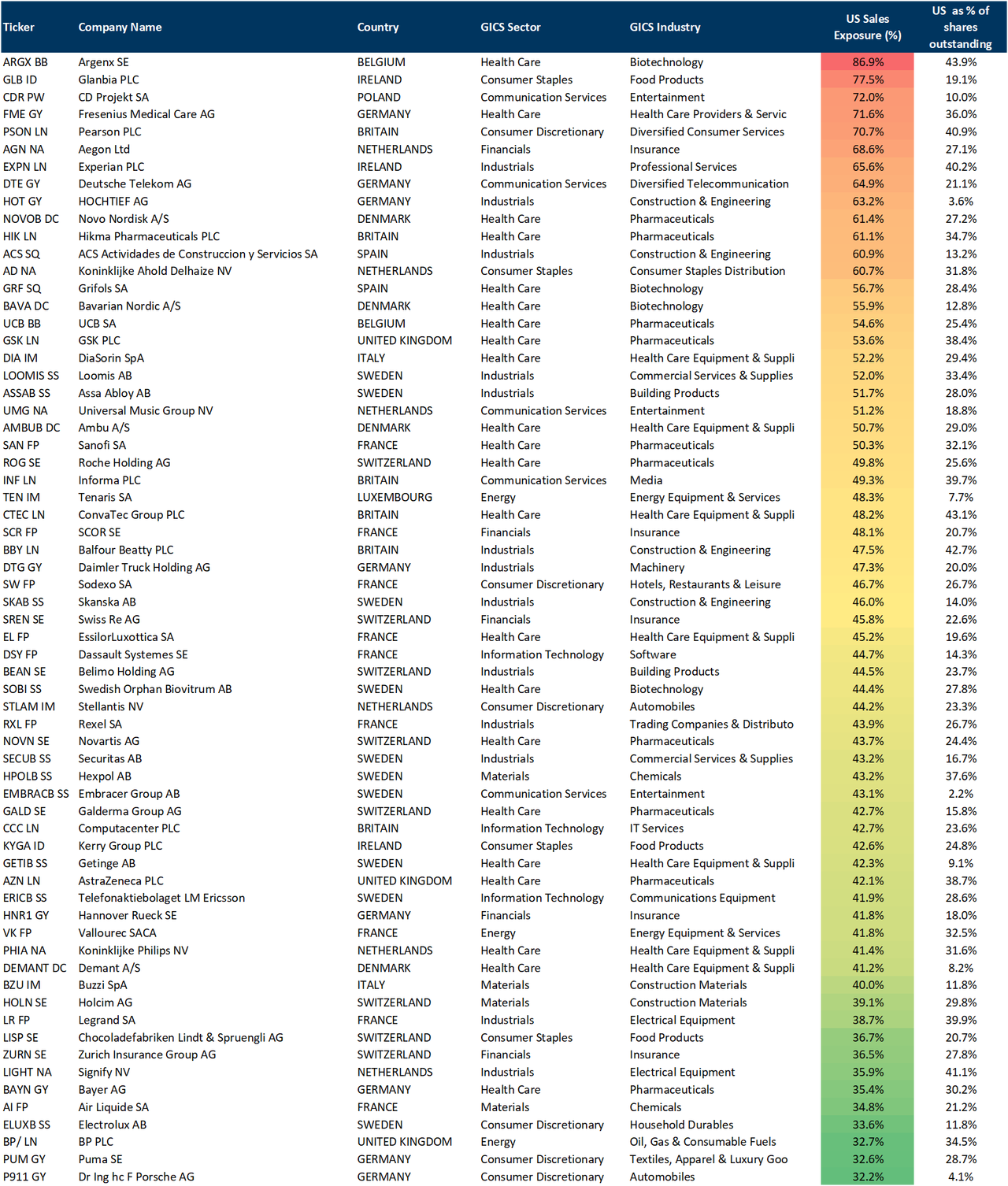
Group 1: Core Insights - The "mysterious 899 clause" in U.S. tax law may escalate trade tensions into a capital war, imposing punitive tax burdens of up to 20% on foreign investors, particularly targeting countries like the EU that do not comply with U.S. trade demands [1][3] - Major Wall Street institutions warn that this clause could fundamentally alter the tax treatment of foreign capital in the U.S., being described as a "nuclear option" by the Trump administration [1][3] Group 2: Details of the 899 Clause - The 899 clause, officially known as "Enforcement Measures Against Unfair Foreign Taxes," is part of the recently passed "One Big Beautiful Bill Act" [2] - It aims to impose retaliatory taxes on non-U.S. individuals, companies, and governments from countries deemed to impose "unfair/discriminatory" taxes on U.S. entities [3] Group 3: Definition of "Discriminatory" Taxes - "Discriminatory" taxes include Digital Services Taxes (DST), Digital Profit Taxes (DPT), and low-tax profit rules under the OECD's global minimum tax framework [4] - The U.S. opposes the OECD framework, arguing it disproportionately affects American companies with significant global influence [4] Group 4: Tax Implications - The 899 clause could raise the statutory tax rate on U.S.-sourced income from interest, dividends, rents, and royalties by up to 20 percentage points for countries considered "discriminatory," increasing by 5 percentage points annually [5] - Investment portfolio interest may be exempt, but non-U.S. financial institutions relying on treaty-based exemptions could still be affected [6] Group 5: Revenue Projections - The 899 clause is expected to generate approximately $120 billion in tax revenue over ten years, equating to an annual increase of $12 billion, which is relatively minor compared to the overall U.S. tax landscape [7] Group 6: Impact on U.S. Deficit - The clause may influence foreign demand for U.S. assets, potentially helping to reduce the current account deficit, although rising yields could offset some revenue gains [8] Group 7: Legislative Uncertainty - There is uncertainty regarding the passage of the 899 clause in the Senate due to potential jurisdictional issues and the delegation of tax powers to the executive branch [9] Group 8: Affected Companies - Goldman Sachs has begun assessing the risk exposure of EU companies to the 899 clause, creating a "GS EU 899 Clause Basket" that includes firms with significant U.S. sales [10] - The basket consists of companies with an average U.S. sales exposure of about 48%, while excluding those with high U.S. ownership [10] Group 9: Market Performance and Valuation - Despite better earnings expectations for the GS EU 899 Clause Basket compared to the GS Domestic Quality Basket, its performance has weakened since early May, with current valuations still above historical ranges [12] - High trading congestion and negative earnings momentum for the GS EU 899 Basket suggest continued pressure on performance [14]
Earnings Growth & Price Strength Make Bank of America (BAC) a Stock to Watch
ZACKS· 2025-06-03 14:30
Core Insights - The Zacks Focus List is a curated portfolio of 50 stocks designed to help investors kickstart their investing journey and is expected to outperform the market over the next 12 months [3][4] Performance Summary - In 2020, the Focus List gained 13.85% on an annualized basis, while the S&P 500 returned 9.38% [5] - Cumulatively, the Focus List has returned 2,519.23% from February 1, 1996, to March 31, 2021, compared to the S&P 500's return of 854.95% during the same period [5] Methodology - The selection for the Focus List relies on earnings estimate revisions, which are determined by brokerage analysts assessing a company's growth and profitability expectations [6] - Stocks with upward earnings estimate revisions are more likely to see further upward changes in the future, indicating potential for price momentum [7][10] Zacks Rank - The Zacks Rank is a proprietary stock-rating model that uses changes in quarterly earnings expectations to help investors build a winning portfolio [8] - Stocks in the Focus List are primarily selected from 1 (Strong Buy) or 2 (Buy) ranked companies, indicating a bullish earnings consensus among analysts [9] Company Spotlight: Bank of America - Bank of America Corporation, headquartered in Charlotte, NC, has total assets of $3.35 trillion as of March 31, 2025, and offers a wide range of banking and non-banking financial services [12] - Bank of America was added to the Focus List on January 9, 2017, at $22.68 per share, and has since increased by 94.36% to $44.08 [13] - For fiscal 2025, the Zacks Consensus Estimate for Bank of America has increased by $0.01 to $3.68, with expected earnings growth of 12.2% for the current fiscal year [13]