
Bank of America(BAC)

Search documents
银行业智能化转型:AI智能体的变革力量与未来展望 | 金融与科技
清华金融评论· 2025-06-11 10:51
Core Viewpoint - The development of AI agents is transforming the banking industry, enhancing operational efficiency and creating new growth opportunities, despite facing multiple challenges in deployment [2][3][9]. Group 1: AI Agent Overview - AI agents are intelligent entities capable of perceiving their environment, making decisions, and taking actions to achieve specific goals, marking a shift from basic functions to complex task execution [5][6]. - The architecture of AI agents typically includes four core modules: perception, decision-making, execution, and learning, each serving distinct functions [6]. Group 2: Applications in Banking - AI agents are being integrated into various banking functions, including customer service, wealth management, risk management, and operational efficiency [10][12][13]. - Examples include intelligent customer service agents like "工小智" and "招小宝" in China, and "Erica" in the US, which enhance customer interaction and operational efficiency [10][12]. Group 3: Implementation Challenges - Banks face challenges such as data privacy and security requirements, algorithmic bias, integration with existing IT infrastructure, and regulatory compliance [3][15][16]. - The need for a gradual and phased approach to implementing AI agents is emphasized to manage risks effectively while maximizing benefits [22][24]. Group 4: Strategic Development Path - The strategic implementation of AI agents in banks is proposed in four phases: focusing on cost reduction and efficiency, enhancing risk management, improving research capabilities, and driving business growth [22][24]. - Each phase aims to build foundational capabilities that support the overall transformation and innovation within the banking sector [22][24]. Group 5: Future Trends - Future developments in AI agents will include multi-modal interactions, deeper integration of generative AI, and the establishment of collaborative networks among different agents [26][27]. - The focus will also be on building trustworthy and responsible AI frameworks to ensure sustainable application and user trust [27].




Visa, Street Soccer USA and Bank of America Join Forces to Expand Access to Soccer in Communities Across the United States
Prnewswire· 2025-06-10 22:00
Core Insights - Visa, Street Soccer USA, and Bank of America have launched an initiative to expand access to soccer in the U.S., focusing on community engagement and youth development [1][2] - The initiative includes the creation of Visa Street Soccer Parks in six cities, designed to foster community ties and provide facilities for various activities beyond soccer [2][5] - The parks will serve as local hubs for sport, learning, and engagement, offering year-round activities such as youth leagues, academic support, and job readiness training [5] Company Insights - Visa is a leader in digital payments, facilitating transactions globally and emphasizing the importance of inclusive economies [6] - Street Soccer USA is a non-profit organization that uses soccer to address social issues and empower underserved communities, serving tens of thousands of youth annually [7] - Bank of America is a major financial institution providing a wide range of banking and financial services, with a strong focus on consumer convenience and support for small businesses [9] Project Details - The first Visa Street Soccer Park opened in San Francisco in June 2025, with additional parks planned for Denver, Kansas City, New York City, Nashville, and Atlanta by the end of 2025 [8] - Each park will feature professional-grade fields, learning centers, and facilities for community events, aiming to create vibrant centers for engagement [2][5] - The initiative is positioned to leverage the growing interest in soccer in the U.S. leading up to significant events in 2026 [4]


BofA Clients Embrace New $10 Million Limit in U.S. Real-Time Payments
Prnewswire· 2025-06-10 13:10
Core Insights - Bank of America has seen a significant increase in the use of real-time payments (RTP) among its corporate clients, particularly after the transaction limit was raised, with transactions over $1 million now making up more than half of the total value of U.S. real-time payments processed by the bank [2] Group 1: Real-Time Payments Adoption - The increase in transaction limits has opened up new use cases for RTP, including real estate transactions and corporate activities [1] - The instant nature of RTP is beneficial for optimizing working capital and cash flow, with features such as convenience, transparency, and resiliency being highly valued by customers [3] - Companies are exploring new applications for RTP, such as just-in-time supplier payments and account-to-account money movement [4] Group 2: Bank of America Overview - Bank of America serves 94% of the Fortune 500 and 73% of the Global Fortune 500, providing a wide range of payment capabilities beyond RTP, including commercial cards and transactional FX solutions [5] - The bank operates approximately 3,700 retail financial centers and 15,000 ATMs, serving around 69 million consumer and small business clients [6] - Bank of America is a global leader in wealth management and corporate investment banking, with operations in over 35 countries [6] Group 3: RTP Network Features - The RTP network operates 24/7, ensuring immediate settlement of payments regardless of the time of day [8] - Originators of payments have transparency regarding the transaction status, while recipients receive payments within seconds [8] - RTP utilizes ISO 20022, allowing for detailed remittance information to be included with payments [8]

银行“花式”揽储将遭整治,2025年底前违规业务有序退出
Huan Qiu Wang· 2025-06-10 03:15
Core Viewpoint - Recent regulatory measures have been implemented to restrict banks' deposit solicitation practices, which have become increasingly aggressive due to declining deposit rates and heightened competition for attracting deposits [1][3]. Group 1: Regulatory Measures - Local regulatory authorities have introduced comprehensive prohibitions on various deposit solicitation methods, requiring banks to phase out non-compliant practices by the end of 2025 [1][3]. - Specific banned practices include manual interest supplementation and the issuance of interest rate coupons, which have been used by some banks to covertly enhance deposit rates for select clients [3]. - The regulations also prohibit the distribution of physical gifts and partnerships with internet platforms for promotional benefits, mandating an immediate halt to such activities and the removal of related promotional materials [3]. Group 2: Market Context - The decline in market interest rates and loan rates has compressed banks' asset-side yield, necessitating a stable liability side to maintain profitability [3]. - As traditional deposit solicitation methods lose their appeal due to falling deposit rates, funds are increasingly flowing into wealth management products and mutual funds, making it more challenging for banks, particularly smaller ones, to attract deposits [3]. - The regulatory crackdown aims to close loopholes in the rules and reduce the phenomenon of banks artificially inflating costs, thereby mitigating the accumulation of systemic risks [3].

发好用好管好信用卡
Jing Ji Ri Bao· 2025-06-09 21:48
作为信用卡的发行主体,银行也需要合理管理信用卡业务。当前信用卡业务已进入存量竞争阶段,为了 让信用卡更好地助力扩内需、促消费,银行需要不断优化授信政策,利用大数据、人工智能等技术提高 风险评估的准确性和效率。并且积极向持卡人普及信用卡的正确使用方法和相关知识,引导他们理性消 费。此外,还应根据市场需求和持卡人的反馈,不断推出新产品和服务,以满足不同客户群体的需求。 然而,也有消费者对信用卡存在误解,认为它是吞钱的黑洞。之所以会出现这种偏见,是因为在实际生 活中,一些持卡人由于缺乏正确的消费观念和财务规划意识,过度依赖信用卡透支消费,背负了远超其 偿还能力的大额贷款。甚至陷入"以贷还贷""以卡养卡"的境况,导致资金紧张、还款压力倍增,而且逾 期还款等不良用卡行为还会影响持卡人的个人信用记录。当听说身边有人陷入欠债无力偿还、被利息压 垮的困境后,不了解信用卡的人难免会对其产生误解。 该怎么把好东西用好?这就需要我们树立起科学的信用卡使用观念。一方面,信用卡预支的金钱是一笔 需要偿还的信用贷款,而不是免费赠予。因此,在申请信用卡之前,应多考虑考虑自己的实际需求和还 款能力,不要盲目追求高额度,也不要为了贪图小礼品而 ...
6月9日早间新闻精选
news flash· 2025-06-09 00:17
Group 1 - The Chinese government is enhancing its focus on state-owned enterprises, directing capital towards key industries related to national security and public services [2] - The Shanghai Stock Exchange is promoting higher dividend payouts and increased frequency of dividends among listed companies to enhance investment value [1] - The Ministry of Industry and Information Technology is pushing for the integration of artificial intelligence in manufacturing to accelerate smart upgrades in key industries [1] Group 2 - Vanke A announced that Shenzhen Metro Group plans to provide a loan of up to 3 billion yuan to the company [2] - Longi Green Energy's shareholder HHLR plans to reduce its stake by up to 0.5% [3] - BlueFocus Communication Group is planning to issue H-shares and list on the Hong Kong Stock Exchange [2][3]


支持以旧换新 银行业大有可为
Zheng Quan Ri Bao· 2025-06-08 15:12
Core Viewpoint - The article discusses the role of banks in supporting the implementation of the 2025 policy for large-scale equipment updates and the trade-in of consumer goods, emphasizing the importance of innovative consumer credit products and enhanced service delivery to facilitate consumer upgrades and improve living standards [1][2]. Group 1: Consumer Credit Innovations - Banks can innovate consumer credit products specifically for trade-in businesses, such as long-term, low-interest auto loans to ease the financial burden on consumers upgrading their vehicles [1]. - For home appliances and digital products, banks can develop short-term, small-amount consumer credit products to enable quick funding for new purchases, accelerating the replacement cycle of household goods [1]. Group 2: Service Optimization - Banks have significant potential to optimize service processes by leveraging financial technology, utilizing big data analysis and AI risk control to quickly assess consumer credit status and reduce loan approval times to mere hours [1]. - Online and offline service channels should be enhanced, with mobile banking apps and dedicated in-branch services for trade-in financing, providing consumers with comprehensive support for loan applications and management [2]. Group 3: Risk Management and Resource Recovery - Banks need to strengthen risk management by rigorously assessing the creditworthiness of loan applicants using multi-dimensional credit evaluation models, considering income levels, credit history, and debt situations [2]. - Active participation in resource recovery system construction is essential, with banks providing financing support to recycling companies to improve resource recovery efficiency and promote a circular economy [2].
全球债市“暴风前夕”:交易员每日上报风险,备战下一轮冲击
智通财经网· 2025-06-06 11:26
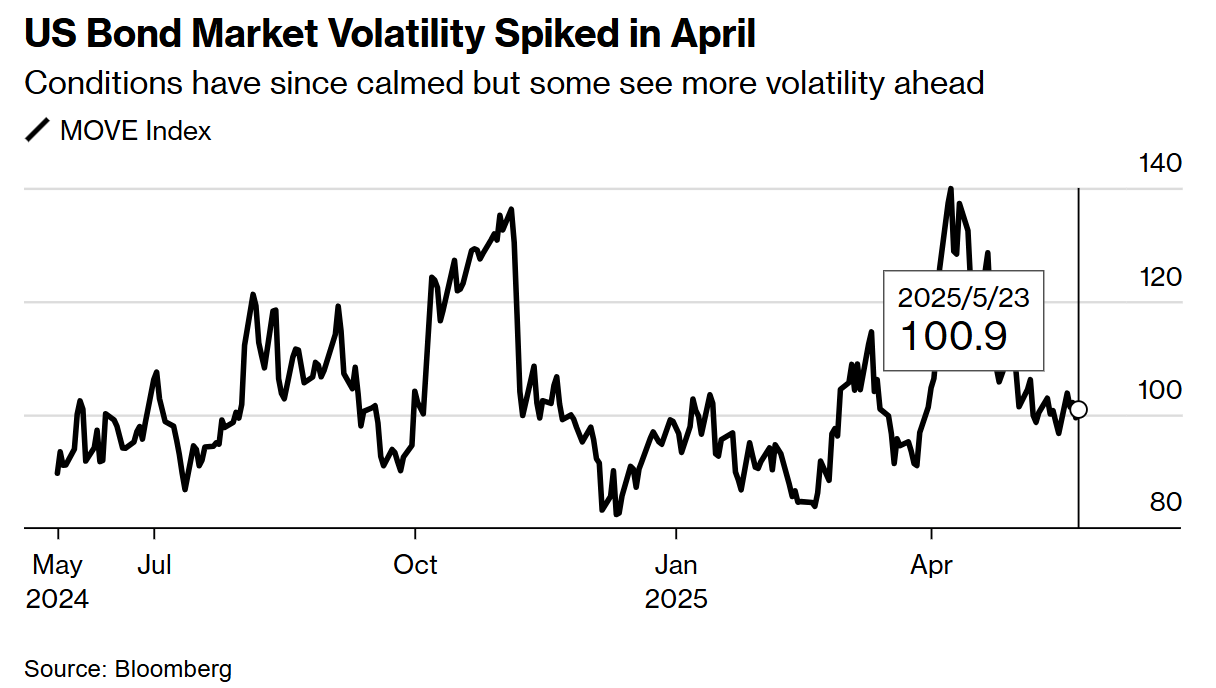
Core Viewpoint - The market turbulence following President Trump's announcement of increased tariffs appears to have subsided, but the risk departments of major global banks remain cautious, implementing measures to mitigate potential losses while potentially sacrificing profits [1]. Group 1: Market Reactions and Strategies - Major banks like Bank of America, NatWest Markets, and Dutch Bank are taking precautionary measures such as daily risk inquiries, stress testing portfolios, and reducing swap positions to lower the risk of significant losses [1]. - Despite the recent calm in the markets, there are concerns about a potential new shock comparable to the one in April, particularly with the upcoming deadline for raising the U.S. federal debt ceiling and the expiration of Trump's tariff exemptions [1]. Group 2: Bond Market Dynamics - The volatility in the U.S. bond market surged to a two-year high in April, with both U.S. Treasuries and equities experiencing significant sell-offs, indicating a breakdown of the safe-haven role of U.S. bonds during stress periods [6][7]. - There are signs of a rebound in demand for longer-term bonds, as weak U.S. economic data has recently pushed up Treasury prices, while Japan's 30-year bond auction results were better than expected [5]. Group 3: Risk Management Practices - The uncertainty in the market has led to a reduction in positions by trading departments, with a focus on managing risks associated with potential volatility spikes, particularly in light of upcoming employment data [5][6]. - Risk management techniques such as scenario analysis and Value at Risk (VaR) are being employed to assess potential losses, but predicting market conditions remains challenging due to the unpredictable nature of current events [6].

5月全球投资十大主线
一瑜中的· 2025-06-06 10:34
Core Viewpoint - The article discusses the performance of global asset classes in May, highlighting that global stocks outperformed commodities, the renminbi, and the dollar, while global bonds showed a decline [2]. Group 1: Global Asset Performance - In May, global stocks returned 5.72%, followed by commodities at 1.26%, the renminbi at 1.00%, the dollar at -0.14%, and global bonds at -0.36% [2]. - The "Big and Beautiful Act" in the U.S. may exacerbate long-term debt risks, with projections indicating that the debt-to-GDP ratio could soar to 134%-149% by 2035 if the act is implemented [4][10]. - The probability of a U.S. economic recession is rising, leading to defensive sectors outperforming cyclical sectors, with defensive sectors showing a year-to-date valuation increase of 10.7% compared to cyclical sectors [5][13]. Group 2: Market Dynamics - Emerging markets are outperforming developed markets, driven by a weaker dollar, which reduces the holding costs of emerging market assets and alleviates debt pressures [6][15]. - Global fund managers have increased their allocation to European stocks, reaching the highest level since October 2017, with net overweights rising from 22% to 35% [6][18]. - U.S. trade policy uncertainty is identified as a significant risk for U.S. stocks, with a close correlation observed between the Bloomberg U.S. Trade Policy Uncertainty Index and the S&P 500 Index [6][22]. Group 3: Currency and Bond Market Insights - The implied volatility of the USD/HKD risk reversal options has dropped to historically low levels, indicating a dominant bearish sentiment towards the HKD [7][25]. - The forward P/E ratio premium of the "Seven Giants" in the U.S. stock market has decreased to historical lows, suggesting a reset in the valuation advantage of tech giants [8][28]. - The Japanese yen's traditional safe-haven status has weakened, leading to significant depreciation in May, while other Asian currencies benefited from tariff pauses [8][31]. Group 4: Recent Developments in Currencies - Following the U.S.-China tariff suspension agreement, the onshore renminbi exchange rate broke through the central bank's midpoint, reaching a new high for the year [9][32]. - The New Taiwan Dollar experienced significant appreciation, surpassing the 30 mark against the U.S. dollar, attributed to foreign capital inflows and global risk sentiment rebound [9][37].


美银:今年现金类资产资金流入有望达到史上第三高位
news flash· 2025-06-06 09:01
Core Insights - The report from Bank of America indicates that cash asset inflows are expected to reach the third highest level in history this year [1] - Cash assets saw the largest weekly inflow since January, amounting to nearly $95 billion [1] - Year-to-date, cash asset inflows have totaled $972 billion, while gold inflows have reached $75 billion [1] Investment Trends - Global investors are diversifying their allocations due to ongoing uncertainties in U.S. trade policies, leading to a trend of reducing U.S. asset holdings [1] - European and emerging markets are experiencing continued inflows of funds [1] - Emerging market equities and bonds saw inflows of nearly $5 billion, marking the strongest performance in eight weeks [1] Market Performance - The U.S. stock market experienced an outflow of $7.5 billion [1] - European stock markets recorded an inflow of $2.6 billion, marking the eighth consecutive week of net inflows [1]