BEKE(BEKE)

Search documents
增收不增利,贝壳依然难
3 6 Ke· 2025-11-12 12:14
Core Insights - The real estate industry is undergoing a deep adjustment, and the real estate service sector is also noteworthy. Beike's Q3 2025 financial report shows revenue and total transaction volume growth, but a decline in net profit and gross margin, indicating cyclical challenges faced by the company [1][5][19] - Beike's traditional core business is under pressure, with new home transaction volume (GTV) down 13.7%, which was previously a significant profit driver [1][5][7] - To regain investor confidence amid performance pressures, Beike has initiated a share buyback program, spending $280 million in Q3, a 38.3% increase year-on-year, marking a two-year quarterly high [1][5][19] Financial Performance - In Q3 2025, Beike reported net revenue of 23.1 billion yuan, a 2.1% year-on-year increase, while net profit fell by 36.1% to 747 million yuan [5][7] - The real estate transaction business, which constitutes about 55% of Beike's revenue, is struggling, with both new and existing home transactions underperforming [5][7][8] - New home transaction GTV was 196.3 billion yuan, down 13.7%, with corresponding net revenue decreasing by 14.1% to 6.6 billion yuan. Existing home transaction GTV increased by 5.8% to 505.6 billion yuan, but net revenue fell by 3.6% to 6 billion yuan [7][8] Business Transformation - Beike is accelerating its transformation towards home decoration services to reduce reliance on new home transactions, forming a collaborative development structure with four core businesses: second-hand homes, new homes, rentals, and home decoration [3][4][12] - The company is adopting a "B+" light operation model to penetrate lower-tier cities, with plans to expand to over 30 cities by year-end [10][19] - Non-real estate transaction business revenue reached a record high of 45% of total revenue, with rental services showing significant growth, up 45.3% year-on-year to 5.7 billion yuan [13][15] Challenges and Competition - The home decoration and rental markets are highly competitive and fragmented, with Beike facing challenges in maintaining profitability amid rising costs and market saturation [16][18] - The rental business's expansion has led to a 38.8% increase in costs, while the home decoration sector also faces issues related to industry fragmentation and consumer trust [16][18] - Beike's efforts to leverage AI technology for operational efficiency are ongoing, with AI applications already implemented across various business lines, but the effectiveness of these initiatives remains to be fully realized [19][21] Future Outlook - The company's ability to balance short-term cost pressures with long-term technology investments will be crucial for its recovery and growth [21][22] - Beike's share buyback program aims to stabilize market confidence, but sustainable profitability improvements are essential for long-term investor trust [19][22]


研报掘金丨中金:维持贝壳“跑赢行业”评级 看好公司的竞争力及发展前景
Ge Long Hui· 2025-11-12 07:03
Core Viewpoint - The report from CICC indicates that Beike's revenue for the third quarter increased by 2.1% year-on-year to 23.1 billion yuan, meeting market expectations; the adjusted net profit was 1.29 billion yuan, exceeding market expectations, primarily due to effective cost control [1] Financial Performance - Beike's third-quarter revenue reached 23.1 billion yuan, reflecting a year-on-year growth of 2.1% [1] - The adjusted net profit for the third quarter was 1.29 billion yuan, surpassing market expectations [1] Share Buyback - As of the end of the third quarter, the company's cumulative share repurchase amounted to approximately 675 million USD [1] Market Outlook - CICC maintains a positive outlook on Beike's one-stop residential service platform's competitiveness and development prospects, sustaining an "outperform industry" rating and a target price of 25 USD [1] - The company is expected to benefit from cost reduction and efficiency improvement, along with medium to long-term profit elasticity from its main and new businesses [1]
贝壳三季度利润承压 非房交易收入占比升至45%
Zhong Guo Jing Ying Bao· 2025-11-12 07:00
Core Viewpoint - In Q3 2025, the real estate market continues to undergo deep adjustments as policy effects weaken, with Beike's net revenue increasing by 2.1% year-on-year to 23.1 billion yuan, driven by a significant rise in rental service income despite declines in new and second-hand housing revenues [2] Financial Performance - Beike reported a net profit of 747 million yuan in Q3, a decrease of 36.1% year-on-year, while adjusted net profit fell by 27.8% to 1.286 billion yuan [3] - The total transaction volume on Beike's platform remained flat year-on-year at 736.7 billion yuan, with the existing home business GTV reaching 505.6 billion yuan, up 5.8%, but revenue down 3.6% to approximately 6 billion yuan [4] - New home business GTV in Q3 was 196.3 billion yuan, down 13.7%, with revenue decreasing by 14.1% to 6.6 billion yuan, attributed to a sluggish new home market [4] Business Segments - The number of active stores on Beike's platform reached 59,012, a year-on-year increase of 25.9%, while the number of active agents grew by 11.4% to 471,501 [4] - Non-real estate transaction revenue reached a record high, accounting for 45% of total revenue, with home decoration and rental services contributing significantly [7] - Rental business revenue increased by 45.3% year-on-year to 5.7 billion yuan, with a profit margin improvement of 4.3 percentage points to 8.7% [7][8] Strategic Initiatives - Beike's CEO highlighted ongoing efforts in organizational restructuring, process reengineering, and technological innovation to enhance business efficiency and customer experience [5] - The company is expanding its AI capabilities in core business scenarios, with the AI assistant "Laike" covering 414,000 agents by the end of Q3 [5] - Beike is exploring new market opportunities in lower-tier cities with its "B+" product and has launched a new business, "Beihome," focusing on data-driven customer needs [5][6]
贝壳三季度净收入增长2.1%至231亿元 存量房业务GTV同比提升5.8%
Xin Lang Cai Jing· 2025-11-12 06:52
Core Insights - Beike (NYSE: BEKE; HKEX: 2423) continues its stable and upward development trajectory despite industry cycles, as evidenced by its Q3 2025 performance [1][2] Financial Performance - In Q3 2025, Beike reported a total transaction volume (GTV) of 736.7 billion RMB and net revenue of 23.1 billion RMB, reflecting a year-on-year growth of 2.1% [1][2] - The operating profit for Q3 was 608 million RMB, with adjusted operating profit at 1.173 billion RMB, and net profit at 747 million RMB, with adjusted net profit at 1.286 billion RMB [2] - Beike's Q3 net revenue and adjusted net profit exceeded Bloomberg consensus estimates by approximately 140 million RMB and 61 million RMB, respectively [2] Strategic Initiatives - The "One Body, Three Wings" strategy, which includes real estate brokerage, home decoration, and rental services, has become a key growth driver for Beike [3][4] - The company aims to enhance customer experience and operational efficiency through organizational upgrades and technological innovations [2][4] Shareholder Returns - In Q3 2025, Beike repurchased shares worth 281 million USD, marking the highest quarterly buyback in nearly two years, with a total repurchase amount of approximately 675 million USD for the year [3] - The total cash and cash equivalents held by Beike as of September 30, 2025, amounted to 55.7 billion RMB (7.8 billion USD), indicating a strong financial position [3] Business Structure and Growth - Non-real estate transaction businesses accounted for 45% of Beike's net revenue in Q3, with home decoration and rental services achieving profitability at the city level [1][5] - The home decoration business generated 4.3 billion RMB in net revenue, while the rental service revenue reached 5.7 billion RMB, reflecting a year-on-year growth of 45.3% [5] - The operational efficiency improved, with operating expenses decreasing by 1.8% year-on-year and 6.7% quarter-on-quarter [5]
大行评级丨美银:上调贝壳目标价至20美元 重申“买入”评级
Ge Long Hui· 2025-11-12 06:09
Core Viewpoint - Bank of America Securities reports that Beike's Q3 revenue reached 23.1 billion yuan, a year-on-year increase of 2%, aligning with market consensus; adjusted net profit was 1.3 billion yuan, exceeding expectations; both home renovation and rental businesses have begun to generate significant profits [1] Summary by Category - **Financial Performance** - Q3 revenue of Beike was 23.1 billion yuan, representing a 2% year-on-year growth [1] - Adjusted net profit for Q3 was 1.3 billion yuan, which was better than expected [1] - **Business Segments** - Home renovation and rental businesses are showing significant profitability [1] - **Market Outlook** - Due to better-than-expected Q3 performance and an upward revision of Q4 forecasts, Bank of America raised its target price for Beike's US stock from $19 to $20, maintaining a "Buy" rating [1] - The target price for Beike's Hong Kong stock was increased from 49 HKD to 52 HKD [1]
股市面面观丨三季度净利润下滑36% 贝壳欲用AI撬动未来增长
Zhong Guo Jin Rong Xin Xi Wang· 2025-11-12 05:10
Core Viewpoint - Beike Holdings, known as "China's first residential service platform stock," reported mixed signals in its Q3 2025 earnings, showing stable total transaction volume but significant declines in net profit [2][3] Group 1: Financial Performance - In Q3 2025, Beike's total transaction volume reached 736.7 billion yuan, remaining flat year-on-year, while net revenue was 23.1 billion yuan, a slight increase of 2.1% [2] - The company's net profit fell to 747 million yuan, a decline of 36.1% year-on-year, with adjusted net profit decreasing by 27.8% to 1.286 billion yuan [2] - The real estate market showed a divergence in performance between the existing and new housing markets, with existing housing transactions contributing 68.63% to total transaction volume [3] Group 2: Business Segment Analysis - Existing housing transactions grew by 5.8% year-on-year to 505.6 billion yuan, but net revenue from this segment decreased by 3.6% to 6 billion yuan [3] - New housing transactions saw a significant decline, with total transaction volume dropping by 13.7% to 196.3 billion yuan and net revenue decreasing by 14.1% to 6.6 billion yuan [5] - The decline in new housing transactions was attributed to a drop in both platform cooperative agents and the Lianjia brand's contributions [5] Group 3: Strategic Initiatives - Beike is focusing on capital operations to stabilize market confidence, having repurchased shares worth 281 million USD in Q3, marking the highest quarterly buyback in nearly two years [2][8] - The company aims to leverage AI and technology to enhance operational efficiency and drive growth, with initiatives in property transactions, home decoration, and rental services [6][7] - Analysts express optimism about Beike's long-term growth potential despite short-term pressures, highlighting its leading position in the real estate intermediary sector [9]

华泰证券今日早参-20251112
HTSC· 2025-11-12 01:26
Macro Insights - The central bank emphasizes the need to improve the transmission mechanism of monetary policy, indicating that monetary policy is expected to remain accommodative in the short term, but further interest rate cuts are unlikely before the end of next year [2][3][5] - The central bank's cautious outlook on global economic growth reflects concerns over a cooling labor market and potential structural challenges due to the AI wave, which has led to increased unemployment in certain sectors [3][5] Fixed Income - The focus on amortized cost bond funds is rising as they enter a concentrated opening period, with significant implications for the bond market due to the influx of funds and asset adjustments [5][6] - The report highlights that the new loan interest rate decline is narrowing, and there is a need to maintain a reasonable interest rate spread to support bank profitability [7] Power Equipment and New Energy - The new standard for electric meters is expected to boost the industry, with significant price increases observed in recent tenders, indicating a recovery in profitability for companies in this sector [8] - The global power shortage continues to drive demand for power grid investments, presenting opportunities for Chinese companies to benefit from overseas demand [8] Consumer Discretionary - Several overseas luxury brands have reported a recovery in their China business, with notable growth in sales for companies like LVMH and Estée Lauder, suggesting a gradual recovery in consumer spending in mainland China [10][19] - The report indicates that the high-end consumer market is likely to benefit from improved economic conditions and increased penetration of fragrance products [10] Chemical and Petrochemical - The report notes that the price gap for raw materials remains at a historical low, with expectations for improved profitability in the chemical sector as supply-side adjustments accelerate [9] - The long-term outlook for the chemical industry is positive, driven by demand growth from emerging markets and the exit of high-energy-consuming facilities in developed regions [9] Technology and Electronics - The investment summit highlighted a new acceleration in global computing power construction, driven by expanding demand for AI applications and innovative financing models [12] - The report emphasizes the importance of AI in reshaping the technology landscape, with significant implications for various sectors [12] Automotive and Technology - The investment summit focused on advancements in L4 autonomous driving, showcasing various applications and the acceleration of commercialization in this field [17] - The report indicates that the automotive sector is poised for growth as technology continues to evolve and regulatory challenges are addressed [17] Key Companies - Ying Tong Holdings is positioned to benefit from the recovery in high-end consumer demand, with a target price set at HKD 2.86, reflecting a strong growth outlook [19][24] - Kasei Biotech is recognized as a leading player in the biomanufacturing sector, with a target price of CNY 64.90, supported by its innovative product offerings and market expansion strategies [20][24]




人们总想住得更好,房产下半场壮阔依然
虎嗅APP· 2025-11-11 15:17
Core Viewpoint - The real estate market in China has shifted from a focus on availability to a focus on quality, with consumers now prioritizing desirable living experiences over mere transactions [2][4]. Financial Performance - In Q3, the company reported a net income of 23.1 billion yuan, a year-on-year increase of 2.1%, with a total transaction volume (GTV) of 736.7 billion yuan [2]. - Adjusted net profit reached 1.286 billion yuan, indicating steady profit quality [2]. - Revenue from home decoration and rental services has risen to 45%, marking a historical high [2]. Market Strategy - The company has transitioned from focusing on new transactions to deepening existing inventory and enhancing service efficiency [4][10]. - The platform has expanded its active stores to 59,000 and active agents to 471,500, enhancing service network depth and breadth [5]. - The GTV for existing homes reached 505.64 billion yuan, a year-on-year increase of 5.8%, outperforming the overall second-hand housing market [5]. Technological Innovation - The AI assistant "Lai Ke" has been implemented across 414,000 agents, improving matching efficiency by quickly identifying client needs and generating detailed reports [6]. - The "Tenant Separation" mechanism trialed in Shanghai has improved the rate of property turnover from 2.6% to over 3% [6]. Service Assurance - The company has established a comprehensive service guarantee matrix with 35 commitments, including a four-layer protection system for transaction security [7]. - The risk of financial loss in transactions is minimized to 0.006%, equivalent to a one in 100,000 chance [7]. Diversified Living Services - The company has adopted a "one body, three wings" strategy, integrating property transactions, home decoration, rental services, and the "Beihome" initiative to meet evolving consumer demands [9][10]. - Home decoration revenue reached 4.3 billion yuan in Q3, with a profit margin of 32%, reflecting a 0.8 percentage point increase year-on-year [11]. - Rental income grew by 45.3% year-on-year to 5.73 billion yuan, with over 660,000 managed properties [11]. Consumer-Centric Approach - The "Beihome" initiative aims to align property development with consumer needs, shifting the focus from developer-led to user-driven design [12]. - By the end of October 2025, 17 projects have been launched in major cities, addressing various consumer segments [13]. Conclusion - The company's transformation from a property transaction firm to a comprehensive living service provider is evident, focusing on long-term value creation rather than quick sales [14][15].

家装资金存管与消费者权益保护学术研讨会在京举行,筑牢消费安全新防线
Huan Qiu Wang· 2025-11-11 13:37
Core Viewpoint - The article discusses the introduction of an innovative "funds custody" model in the home decoration industry, aimed at enhancing consumer rights protection and building a trustworthy consumption environment, in response to government policies promoting high-quality service consumption [1][3]. Group 1: Background and Purpose - The academic seminar on "Home Decoration Funds Custody and Consumer Rights Protection" was held to explore the legal basis, practical paths, and industry value of the funds custody model [1]. - The seminar aimed to gather insights from academia and industry to provide theoretical support and practical guidance for creating a trustworthy home decoration consumption environment [1]. Group 2: Industry Challenges - The traditional "pay first, inspect later" model in home decoration creates conflicts between consumers' payment obligations and their rights to inspect, leading to issues such as fund loss, unfinished projects, and high costs of rights protection [3][5]. - Consumers face significant risks under the current model, which suppresses their willingness to spend on home decoration [3]. Group 3: Innovative Solutions - Leading company Beike has introduced a "pay after inspection" funds custody model by involving commercial banks as independent custodians, addressing the core contradictions in the industry [3][4]. - The funds custody model allows consumers to deposit their renovation funds into a jointly managed account with the renovation company and the bank, ensuring that funds are released only after consumers confirm the completion of specific project milestones [4][5]. Group 4: Benefits of the Funds Custody Model - This model fundamentally changes the flow of funds and risk distribution in home decoration transactions, granting consumers substantial inspection rights at critical fulfillment points [5]. - The model generates interest on the unallocated funds during the custody period, benefiting consumers and enhancing their control over the payment process [5]. - The funds custody mechanism is seen as a comprehensive credit solution that improves consumer rights protection and fosters trust in the industry [7][8]. Group 5: Market Impact and Future Prospects - The funds custody mechanism has been implemented in 33 cities across China, providing safety guarantees for approximately 30 billion yuan and receiving positive feedback from over 20,000 households [5][8]. - Experts at the seminar praised the funds custody model as a significant breakthrough in credit construction within the home decoration sector, promoting a shift towards refined, standardized, and credit-based services [7][10]. - The model aligns with national policies aimed at boosting consumption and is expected to evolve into a foundational practice across the industry, enhancing transparency and fairness in consumer transactions [12][13].

千言万语,不如一张回购的股票
3 6 Ke· 2025-11-11 11:30
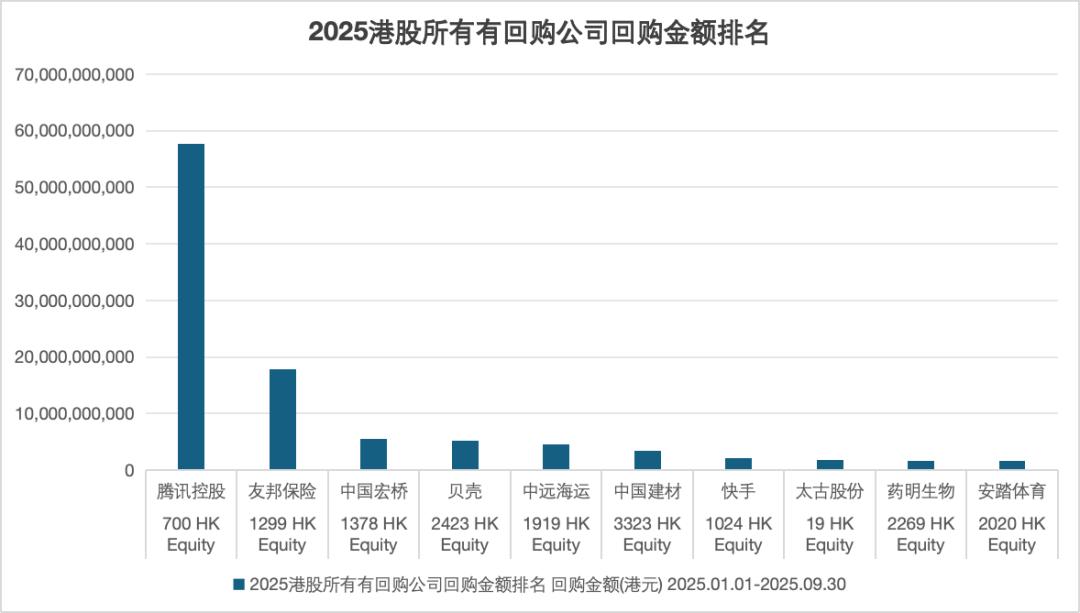
Core Insights - The article discusses the significance of stock buybacks as a method for companies to return value to shareholders, highlighting examples from Berkshire Hathaway's investments in American Express and Apple, which have benefited from substantial buybacks over the years [1][2][3] - It emphasizes the trend of companies adopting buybacks as a regular practice to enhance shareholder equity, particularly in the context of the U.S. stock market and its recovery post-2008 financial crisis [3][11] Group 1: Stock Buybacks and Their Impact - Stock buybacks have become a mainstream method for companies to distribute profits to shareholders, with projections indicating that the total buyback amount for major U.S. companies could exceed $1.1 trillion in 2025 [3] - Berkshire Hathaway's investment in American Express saw its ownership stake increase from 11.2% to 22% due to the company's consistent buyback strategy [1] - Apple has engaged in nearly $700 billion in buybacks over the past decade, significantly boosting shareholder returns through dividends and stock price appreciation [2][15] Group 2: Chinese Market Context - The Chinese market is undergoing a value reassessment, with regulatory bodies encouraging companies to adopt buyback strategies to protect and reward investors [3] - Companies like Tencent and Beike have initiated substantial buyback programs, with Beike reporting a 38.3% increase in buyback amounts year-over-year, reaching $280 million in Q3 2022 [5][10] - Beike's buyback strategy is seen as a signal of confidence in its long-term value, despite challenges in the real estate sector [5][10] Group 3: Market Sentiment and Company Performance - The article discusses how buybacks can serve as a "trust vote" from companies to shareholders, especially during market downturns, helping to stabilize stock prices and restore confidence [8][9] - Tencent's buyback efforts, amounting to approximately HKD 187.6 billion from 2022 to 2024, have contributed to a recovery in its market valuation, demonstrating the effectiveness of this strategy [9][10] - The performance of companies like Beike and Tencent during challenging market conditions illustrates the importance of maintaining shareholder trust through proactive financial strategies [10][20] Group 4: Future Outlook and Strategic Shifts - Companies are increasingly viewing buybacks as a regular tool for enhancing shareholder value, as seen with Nvidia's announcement of a $25 billion buyback plan amid its significant stock price increase [11][12] - The article highlights the cyclical nature of industries, suggesting that companies with strong fundamentals can leverage buybacks to emerge stronger during market recoveries [20][21] - Beike's strategic pivot towards a technology-driven service platform reflects a broader trend among companies to adapt to changing market dynamics while maintaining core business strengths [17][20]