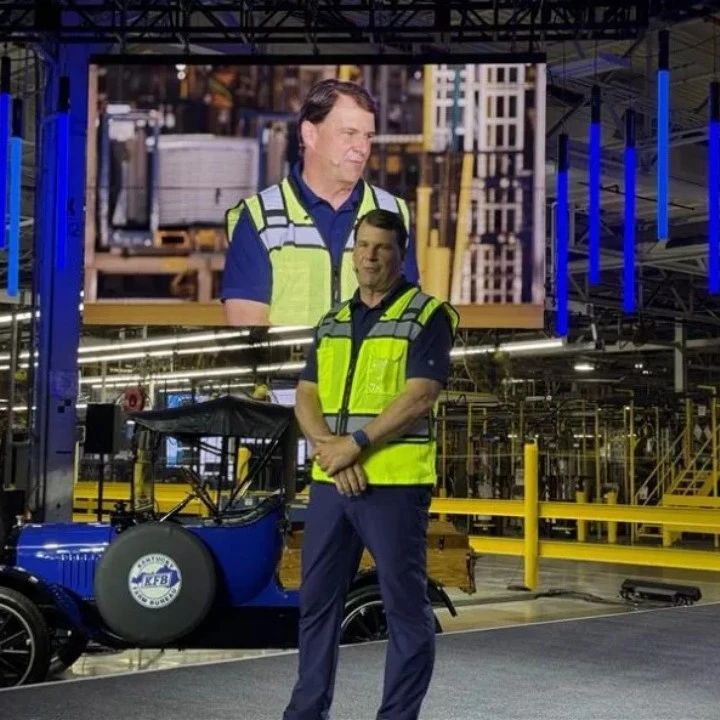
Ford Motor(F)

Search documents
砸下50亿美元,福特谋翻盘
Zhong Guo Qi Che Bao Wang· 2025-08-15 00:48
Core Viewpoint - Ford is shifting its strategy to focus on affordable electric vehicles (EVs) due to significant losses in its EV business, planning to launch a new series of budget EVs by 2027, including a mid-size electric pickup truck with a target starting price of around $30,000 [2][3][5]. Group 1: Financial Performance and Strategy - Ford's EV division has faced substantial losses since its independent operation in 2022, with projected losses of nearly $5.1 billion in 2024, an increase from $4.7 billion in 2023, and a forecast of continued losses of $5 to $5.5 billion in 2025 [3]. - The company reported a loss of $2.2 billion in the first half of the year for its EV division [3]. - To counteract these losses, Ford is investing a total of $5 billion to revamp its manufacturing capabilities and establish a new battery factory [5]. Group 2: New Product Development - Ford is introducing a new Universal EV Platform aimed at producing a range of affordable models, which will reduce parts by 20%, fasteners by 25%, and assembly time by 15% [3]. - The first product from this platform will be a mid-size four-door electric pickup truck, with assembly taking place at Ford's Louisville, Kentucky plant, which will undergo a $2 billion expansion [3][5]. Group 3: Battery Production and Supply Chain - Ford plans to invest $3 billion in a new battery factory in Michigan, set to produce low-cost lithium iron phosphate batteries starting in 2026, supported by technology from CATL [5]. - The battery factory project was initially delayed due to political opposition but is now fully owned by Ford, qualifying for U.S. government subsidies for battery production [5]. Group 4: Market Context and Competition - Ford's CEO, Jim Farley, emphasized the need to compete with Chinese manufacturers like BYD and emerging startups, as well as large tech companies entering the automotive space [5]. - The company is scaling back on large EV models, which have been the primary source of losses, including the cancellation of a planned three-row electric SUV and delays in the next-generation F-150 Lightning and E-Transit electric vans until 2028 [5]. Group 5: Regulatory and Market Dynamics - The expiration of the electric vehicle tax credit in the U.S. is expected to impact EV demand, alongside relaxed emission regulations and reduced funding for charging infrastructure [8]. - Other companies, including startups and Tesla, are also moving towards lower-priced electric vehicle models in response to market conditions [8][9].


成本冲击 跨国车企遭遇业绩压力
Zhong Guo Zheng Quan Bao· 2025-08-14 20:17
Core Insights - Major international automakers are facing significant profit declines in the first half of 2025, with only Toyota, Volkswagen, and Hyundai expected to exceed $5 billion in net profit [1] - Several automakers, including Stellantis, Nissan, Renault, Ford, and Volvo, reported losses in the second quarter or first half of the year [1] Group 1: Financial Performance - Volkswagen Group's revenue for the first half of 2025 was €158.4 billion, remaining stable year-on-year, but operating profit fell by approximately 33% to €6.7 billion, with net profit down over 38% to €4.477 billion [2] - Mercedes-Benz reported second-quarter revenue of €33.153 billion, a decline of 9.8% from €36.743 billion the previous year, with net profit dropping 68.7% to €0.957 billion [2] - BMW's revenue decreased by 8% to €67.685 billion, with net profit down 29% to €4.015 billion, although the company maintained its full-year financial outlook [3] Group 2: Impact of Tariffs and Costs - The increase in U.S. tariffs on electric vehicles and components has significantly impacted Volkswagen's profits, with an estimated loss of €1.3 billion due to tariff adjustments [2][4] - Ford reported tariff costs of $800 million in the second quarter, while General Motors faced $1.1 billion in tariff expenses [4] - Tesla indicated that tariffs have added $200 million in costs, with high tariffs on raw materials like steel and aluminum further increasing production costs for U.S. automakers [5]


稀土库存全面告急,美企破防了,美媒:中国再不批准谈判等于作废
Sou Hu Cai Jing· 2025-08-14 10:18
Group 1 - The core issue of the renewed US-China trade tensions is centered around rare earth elements, with China controlling approximately 70% of global mining and 90% of refining capabilities [1][3] - The US is facing immense pressure from its companies due to tight inventories of rare earth materials, with many firms only having 40 to 60 days of supply left [3][4] - A significant turning point occurred on April 4, 2024, when China announced new export regulations for seven critical rare earth elements, which heightened global supply chain tensions [3][4] Group 2 - On May 10, 2024, the US and China reached a preliminary agreement to mutually lower some tariffs, but no substantial concessions regarding rare earth exports were made [4][6] - By June 2024, US rare earth inventories were nearly depleted, leading to production halts in major companies like General Motors and Ford due to a lack of essential components [8][10] - The US's dependence on rare earths is critical, especially in defense and energy sectors, with a report indicating that a sudden supply disruption would severely impact these industries [3][8] Group 3 - The US has been tightening restrictions on China's semiconductor industry, which has led to retaliatory measures from China regarding rare earth exports [10][12] - As of June 2024, China approved more export licenses for rare earths, particularly for US electronic companies, but prices remained high and supply chains continued to face pressure [10][12] - The ongoing trade friction is expected to persist unless the US demonstrates genuine willingness to negotiate and ease restrictions on Chinese companies [12][14]



加征关税难解“美国制造”之困(环球热点)
Ren Min Ri Bao Hai Wai Ban· 2025-08-13 21:50
Group 1 - The average trade-weighted tariff rate imposed by the U.S. on all products has risen significantly to 20.11% as of August 7, up from 2.44% at the beginning of the year [1] - The U.S. government aims to bring manufacturing back to the country through its tariff policy, claiming it will reduce trade deficits and create jobs [1][5] - Evidence suggests that while tariffs may force some industries to adjust in the short term, they are not a long-term solution to the challenges facing U.S. manufacturing [1][5] Group 2 - Ford Motor Company is expected to suffer a profit loss of approximately $2 billion due to tariffs, despite being a potential beneficiary of the tariff policy [3][4] - General Motors reported a loss of $1.1 billion in the second quarter due to tariffs, while Stellantis estimated a loss of $350 million [2][3] - The combined profit loss for the U.S. automotive industry due to tariffs is projected to reach $7 billion by 2025 [2] Group 3 - The tariff policy has led to a misallocation of resources, pushing them towards low-end manufacturing sectors that have lost comparative advantages, resulting in decreased overall production efficiency [4][7] - The tariffs are causing a rise in manufacturing costs by 2% to 4.5%, leading to stagnant income, layoffs, and potential factory closures [7] - The structural issues within U.S. manufacturing, such as labor shortages and aging infrastructure, are exacerbated by the tariff policy, making it difficult for the industry to recover [9][10] Group 4 - The U.S. manufacturing sector's recovery is hindered by the long-term negative impacts of the tariff policy, which may lead to persistent inflation and slowed job growth [6][8] - The disparity between foreign direct investment intentions and actual investments indicates that promised investments may not materialize, undermining the effectiveness of the tariff policy [8][9] - The structural problems in U.S. manufacturing, including a shift towards service industries and a lack of skilled labor, complicate the goal of revitalizing domestic manufacturing through tariffs [10]

福特依赖中国技术,美国EV逆风来袭
3 6 Ke· 2025-08-13 05:32
Core Viewpoint - The American automotive industry is at a crossroads, facing challenges from Chinese companies and global emerging players, as expressed by Ford CEO Jim Farley [2] Group 1: Ford's Strategy and Investments - Ford announced plans to adopt Chinese battery technology to develop electric vehicles (EVs) priced at $30,000, amid a challenging market environment due to policy shifts under the Trump administration [2] - The company has experienced three consecutive years of losses in its large vehicle EV business and is making comprehensive adjustments to its new low-cost EV platform, with a total investment of $5 billion for new vehicle development and battery factory construction [2] - Ford will invest $3 billion in a factory in Michigan to produce low-cost lithium iron phosphate (LFP) batteries with support from Chinese battery giant CATL, which are approximately 30% cheaper than cobalt-based batteries [3] Group 2: Market Dynamics and Policy Impact - The Biden administration aimed to cultivate the EV industry in the U.S. with a target of 50% EV sales by 2030, but the Trump administration's policies have led to a contraction in the EV market [4][5] - Major automotive companies are adjusting their EV strategies in the U.S., with some halting or delaying EV development due to market conditions and policy changes [6] - The market for hybrid vehicles (HV) is growing, with HV sales projected to exceed EV sales in early 2025, presenting a favorable scenario for Japanese companies lagging in EV development [5][6] Group 3: Challenges for Japanese Automakers - Japanese automakers are facing challenges due to U.S. tariffs affecting the import of key components for HVs, prompting them to consider localizing production to avoid tariffs [7]
国际产业新闻早知道:中美关税“休战期”再延长90天,百川发布开源大模型Baichuan-M2
Chan Ye Xin Xi Wang· 2025-08-13 05:31
Trade Relations - The US and China have agreed to extend the suspension of 24% tariffs for another 90 days starting from August 12, 2025, while retaining a 10% tariff on certain goods [4][5] - Brazil will provide 300 billion Brazilian Reais (approximately 55.5 billion USD) in credit to support exporters affected by US tariffs [13][14] Automotive Industry - In July, China's automobile sales reached 2.593 million units, a year-on-year increase of 14.7% [81] - Ford plans to invest 5 billion USD in electric vehicles, focusing on low-cost models [83] - Tesla has launched the Model 3 with a range of 830 kilometers, priced starting at 269,500 CNY [84] Artificial Intelligence - South Korea has selected five consortiums to develop a national foundational AI model, aiming for self-sufficiency in the AI industry [20][21] - Baichuan has released the open-source medical enhancement model Baichuan-M2, outperforming other models in the market [23][24] - Zhipu AI has launched the open-source visual reasoning model GLM-4.5V, which has achieved state-of-the-art performance in various tasks [25][26] Semiconductor Industry - Vietnam aims to achieve self-sufficiency in semiconductor chip production by 2027 [46] - SK Hynix predicts a 30% annual growth rate in the AI storage chip market by 2030 [55][60] - DeepX, an AI chip startup, is preparing for a new round of financing ahead of its IPO, focusing on low-power, cost-effective solutions [68][70] Space and Aerospace - SpaceX successfully completed its 100th launch in 2025, deploying 24 Amazon "Kuiper" satellites [87][88] - The "Vulcan" rocket, developed by United Launch Alliance, is set to conduct its first military space mission, marking a significant step in competing with SpaceX [90][91] Energy and Mining - Peninsula Energy's uranium processing plant in Wyoming has received state approval, allowing for the commencement of commercial production [100][101] - Aclara Resources has launched a rare earth separation pilot plant in collaboration with Virginia Tech, aiming to strengthen the domestic supply chain for critical minerals [102][103]




福特将投资约50亿美元布局电动车
Bei Jing Shang Bao· 2025-08-13 04:09
Group 1 - Ford plans to invest approximately $5 billion to upgrade the Louisville assembly plant [1] - The investment will also support the production of next-generation square lithium iron phosphate (LFP) batteries at the BlueOval battery industrial park in Michigan [1] - This initiative aims to launch a new all-electric pickup truck model [1]
福特平价电动车计划或采用宁德时代电池技术
Guan Cha Zhe Wang· 2025-08-13 03:53
Core Viewpoint - Ford Motor Company announced a $5 billion investment in the U.S., with $2 billion allocated for a complete overhaul of its Louisville, Kentucky plant to produce affordable electric vehicles, starting with a mid-size electric pickup priced around $30,000 [1][3] Group 1: Investment and Production Plans - The investment includes $3 billion for a battery factory in Michigan, which will produce low-cost lithium iron phosphate batteries using technology from CATL [1][3] - The new electric platform will reduce the number of vehicle parts by 20% and assembly time by 15%, marking a fundamental reform compared to the historical "Model T" [3] Group 2: Market Strategy and Challenges - Due to changes in environmental regulations and the elimination of purchase subsidies under the Trump administration, the U.S. electric vehicle market is expected to shrink, prompting automakers to adopt low-cost strategies and explore overseas markets [3] - Ford's previous focus on large electric vehicles faced challenges with high costs and poor sales, leading to a strategic shift in 2024 towards developing affordable electric vehicles [3] Group 3: Competitive Landscape - Currently, no automaker in the U.S. offers electric vehicles priced below $30,000, positioning Ford to fill this market gap with its new offerings [3]

福特依赖中国技术,美国EV逆风来袭
日经中文网· 2025-08-13 02:54
Core Viewpoint - The American automotive industry is at a crossroads, facing challenges from Chinese companies and global emerging players, as expressed by Ford CEO Jim Farley [2] Group 1: Ford's Strategy and Financials - Ford has reported continuous losses in its EV business for three years, prompting a comprehensive redesign of its new low-cost EV platform, with a planned investment of $5 billion for new vehicle development and battery factory construction [4] - The company plans to invest $3 billion in a factory in Michigan to produce low-cost lithium iron phosphate (LFP) batteries, which are approximately 30% cheaper than cobalt-based batteries [5] - Ford's strategy includes reducing the development and production of large EVs, potentially shifting some production to Europe and other regions [5] Group 2: Market Dynamics and Policy Changes - The Biden administration aimed to boost the EV industry in the U.S. with a target of 50% EV sales by 2030, but the Trump administration's policies have reversed this direction, leading to a contraction in the U.S. EV market [6] - The market share of EVs in new car sales is projected to remain low, with only about 8% expected in 2024, while hybrid vehicles (HV) are gaining traction, accounting for approximately 14% of new car sales in early 2025 [8] - Major automakers, including Toyota, Honda, and General Motors, are adjusting their EV strategies in response to market conditions and policy changes, with some halting or delaying EV projects [7] Group 3: Competitive Landscape - Chinese companies, particularly CATL, are gaining a competitive edge in battery technology, which is crucial for reducing EV costs [5] - The shift in U.S. automotive policy is prompting Japanese automakers to reconsider their supply chains and production strategies to avoid tariffs and align with new regulations [8]
3万美元电皮卡,福特在美国打“价格战”
汽车商业评论· 2025-08-13 01:50
Core Viewpoint - Ford is planning to engage in a "price war" in the U.S. by investing $2 billion in a Kentucky plant to produce a low-cost electric pickup truck starting at around $30,000 in 2027, while overhauling its manufacturing system to improve efficiency and reduce costs [4][11][12]. Group 1: Manufacturing Innovations - Ford is transitioning from a traditional assembly line to a "three-branched" assembly system, which will reduce the number of parts by approximately 20% and cut costs associated with cooling hoses and fasteners by 50% and 25% respectively [7][8]. - The new assembly method integrates large components and pre-assembled modules, allowing for a more efficient production process [7][8]. - The company plans to produce LFP batteries at its BlueOval Battery Park in Michigan, with a projected capacity of about 20 GWh, creating around 1,700 local jobs [7][8]. Group 2: Financial Context - Ford's electric vehicle and software division reported an EBIT loss of $1.3 billion in Q2 2025, an increase of $179 million year-over-year, prompting a strategic shift towards lower-cost electric vehicles [11][12]. - The company is postponing the production of its next-generation electric models and reallocating resources to focus on a unified low-cost platform [11][12]. - Legislative changes in the U.S. regarding electric vehicle tax credits are influencing Ford's strategy to produce more affordable electric vehicles [12][13]. Group 3: Industry Trends - Ford's move towards low-cost electric vehicles reflects a broader trend among U.S. automakers, with companies like Volvo and Volkswagen also adjusting their strategies to focus on more profitable segments [14][16]. - The automotive industry is experiencing a restructuring of product offerings, with traditional manufacturers prioritizing hybrid and SUV models over electric sedans [14][16]. - The competitive landscape indicates that companies that can effectively integrate cost, efficiency, and scale will be better positioned for future success in the electric vehicle market [16][19].