
Alphabet(GOOGL)

Search documents
Liberty Global Strikes Five-Year Google Cloud Deal To Deploy Gemini AI Across Europe - Alphabet (NASDAQ:GOOG), Alphabet (NASDAQ:GOOGL)
Benzinga· 2026-02-03 08:25
The partnership will see the deployment of Google’s Gemini AI models and other cloud tools across Liberty Global’s European operations. The company, which serves around 80 million fixed and mobile connections across Europe, said the deal will enhance consumer offerings, including AI-driven search and discovery on Liberty Global’s Horizon TV platform, along with automated customer-service solutions.The agreement also includes the provision of more Google products, such as Pixel phones, watches, and smart-hom ...


002238,午后直线涨停
Shang Hai Zheng Quan Bao· 2026-02-03 08:22
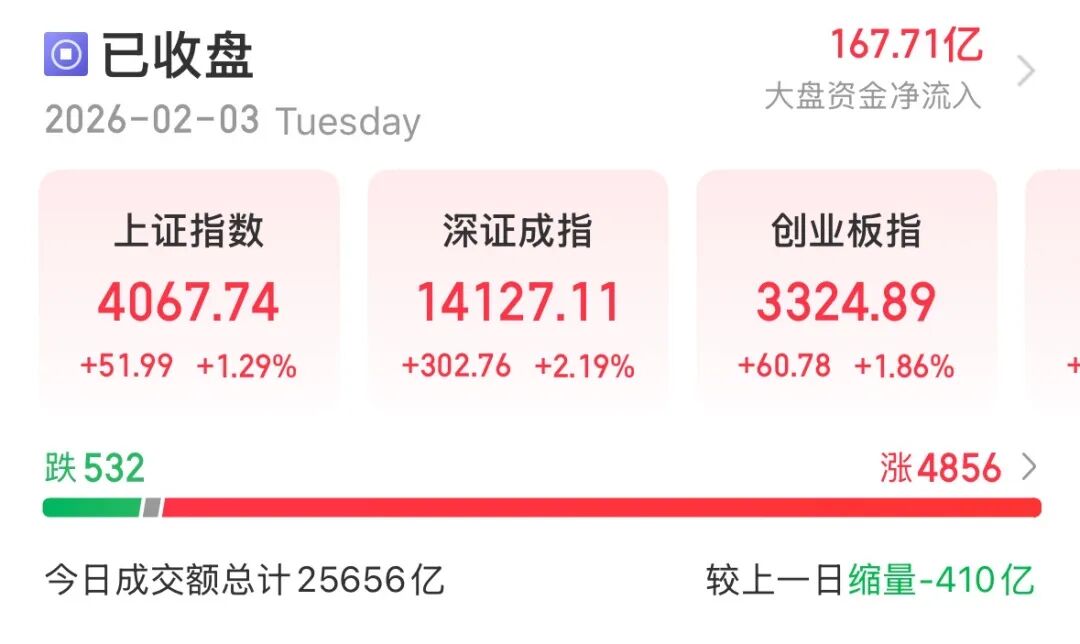
Market Overview - The A-share market experienced a significant upward trend on February 3, with the Shanghai Composite Index closing at 4067.74 points, up 1.29%. The Shenzhen Component rose by 2.19%, the ChiNext Index increased by 1.86%, the Sci-Tech Innovation Index gained 2.44%, and the Northbound 50 Index surged by 3.27%. The total trading volume across the Shanghai and Shenzhen markets reached 25,656 billion yuan [1]. Sector Performance - Over 4,800 stocks in the market saw gains, with the photovoltaic industry chain showing strong performance, particularly in the space photovoltaic sector, where companies like Aotewei and Zerun New Energy hit the daily limit with a 20% increase [3]. - The commercial aerospace sector rebounded, with stocks such as Jieli Suojin and Aerospace Development also reaching the daily limit [3]. - The chemical sector remained active, with Wanfeng shares achieving a four-day limit increase [3]. - The precious metals concept saw localized activity, with Hunan Gold hitting the daily limit [4][5]. Precious Metals Market - The precious metals market saw a sharp rebound, with Hunan Gold achieving a remarkable 7-day, 6-limit increase. Other notable performers included Xiaocheng Technology, which rose over 18%, and Zijin Mining, which increased by over 6% [5]. - On February 3, gold prices surged, with spot gold rising over 5% to surpass $4,900 per ounce, while silver also maintained an upward trend, increasing over 8% to break through $86 per ounce [6]. - According to China Galaxy Securities, the recent decline in precious metal prices can be viewed as a market-driven cooling following a period of rapid price increases, rather than a panic exit of funds. This price correction is seen as a normal phenomenon that helps release overheated market sentiment [6]. - Guotai Junan Securities indicated that the recent significant drop in precious metal prices is a technical adjustment to the irrational increases seen since the beginning of the year, rather than the end of a long-term upward trend for gold. The decline in speculative sentiment and leverage levels is expected to support a healthier upward trend for gold in the near term [6]. Computing Power Leasing Sector - The computing power leasing sector showed continued strength, with Tianwei Vision experiencing a direct limit increase [7][8]. - Other companies in this sector, such as Wangsu Technology and Capital Online, saw increases of over 10% [8]. - The CPO concept also performed actively, with Robotech hitting a 20% limit increase, and companies like Juguang Technology, Dekeli, and Tianfu Communication rising over 10% [8]. - According to Dongwu Securities, major overseas cloud providers have begun raising prices for their services, marking the first increase in years. This trend is expected to influence domestic cloud providers to follow suit, creating investment opportunities in the AI cloud industry as demand increases [8].





Alphabet-Backed Waymo's Valuation Touches $126 Billion After Latest Fundraise To Fuel Robotaxi Expansion - Amazon.com (NASDAQ:AMZN), Alphabet (NASDAQ:GOOGL)
Benzinga· 2026-02-03 07:48
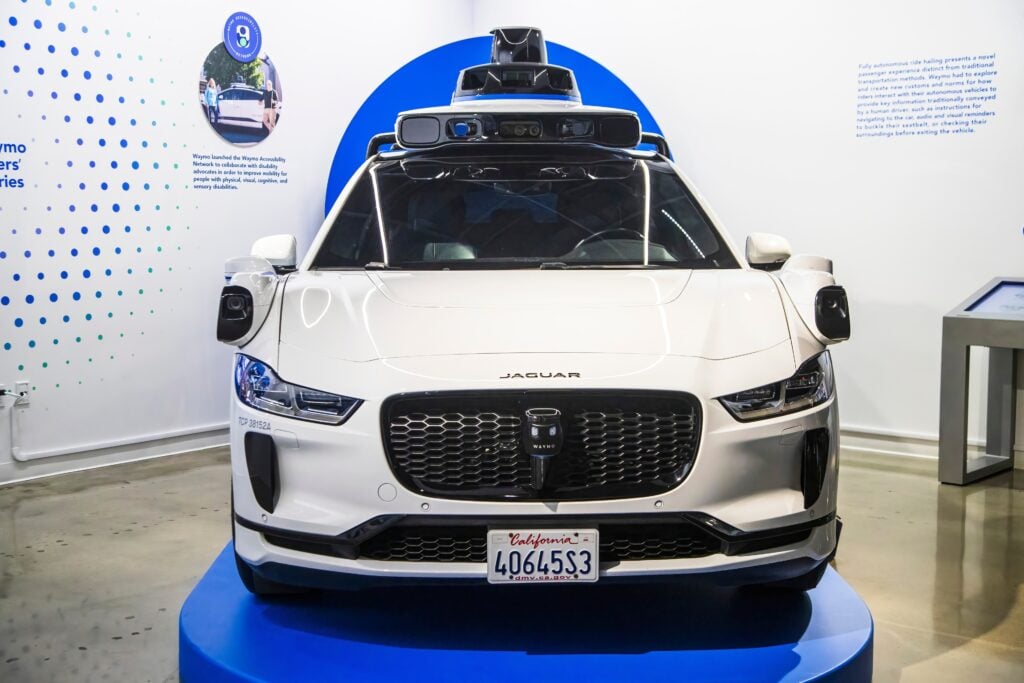
Core Insights - Waymo, Alphabet Inc's self-driving car unit, has raised $16 billion in a new funding round, valuing the company at approximately $126 billion, indicating increasing investor confidence in commercial autonomous vehicle services [1][3] Funding Details - The funding round was led by Dragoneer Investment Group, DST Global, and Sequoia Capital, with participation from Mubadala Capital, Andreessen Horowitz, T. Rowe Price, and other institutional investors, while Alphabet remains the majority shareholder [2] Business Expansion - This funding round is one of the largest private investments in the autonomous vehicle sector, tripling Waymo's valuation from around $45 billion in 2024 [3] - Waymo's autonomous ride-hailing service operates driverless "robotaxis" in six major U.S. metropolitan areas, providing approximately 15 million paid rides in 2025, nearly three times the volume from the previous year, and currently logs about 400,000 weekly rides [3] - The company plans to utilize the capital to expand its fleet and operations into over 20 new cities in 2026, including its first international markets, aiming to extend beyond its current U.S. presence [4]
谷歌斥巨资力图在人工智能能源竞赛中占据领先地位
Xin Lang Cai Jing· 2026-02-03 07:46
谷歌计划斥资 47.5 亿美元,以解决人工智能竞赛中一个棘手的难题,为规模日益庞大的数据中心舰队 找到足够的电力供应。 该公司即将完成对风电和太阳能开发商Intersect的收购,此举将使其成为唯一一家拥有电力公司的科技 巨头。这可能使其在竞争对手中占据显著优势,因为电力管理部门更青睐那些准备自建发电设施的科技 公司,而特朗普政府也正施压要求他们避免将电力成本转嫁给消费者。 此次收购是谷歌一系列战略布局中的最新一步,旨在构建一套从源头到应用的完整策略,以获取海量电 力资源。在竞争对手中,谷歌率先达成协议,开发专为持续运行而设计的先进核电和地热电站;率先尝 试在电网负荷高峰期降低数据中心的电力消耗;而通过收购 Intersect,Alphabet(谷歌母公司)将成为 首家将自建电力设施纳入业务体系,为谷歌数据中心供电的企业。 "我认为,从全球范围来看,能源系统已不再能满足人工智能的需求," 谷歌全球数据中心能源主管阿 曼达・彼得森・科里奥表示,"我们正努力主动思考解决方案。" 随着监管机构和立法者对电力供应短缺的担忧日益加剧,此次收购有望帮助谷歌更顺利地推进数据中心 的建设工作。科技公司希望建设数据中心的速度, ...

国证国际港股晨报-20260203
国投证券(香港)· 2026-02-03 06:58
港股晨报 2026 年 2 月 3 日 国投证券(香港)有限公司 • 研究部 1. 国投证券国际视点:美股反弹逼近新高,制造业 PMI 强 势重返扩张 昨日,港股三大指数持续下行。截至收盘,恒生指数跌 2.23%,国企指数跌 2.54%, 恒生科技指数跌 3.36%。南向资金北水方面,港股通交易净流入 19.07 亿港元。 港股通 10 大成交活跃股中,北水净买入最多的是腾讯控股 700.HK、小米集团 1810.HK、中国人寿 2628.HK;净卖出最多的是华虹半导体 1347.HK、紫金矿业 2899.HK、阿里巴巴 9988.HK。 板块方面,黄金、有色金属、铜矿等板块集体回调。山东黄金 1787.HK 跌 12.56%, 赤峰黄金 6693.HK 跌 12.18%,灵宝黄金 3330.HK 跌 8.7%,招金矿业 1818.HK 跌 8.29%,中国黄金国际 2099.HK 跌 7.94%,紫金黄金国际 2259.HK 跌 7.87%。 国际贵金属市场延续上周五的剧烈抛售行情,黄金与白银跌势进一步加深,带 动相关板块股价下挫。 建材水泥股和煤炭股也遭遇下跌,西部水泥 2233.HK 跌 15.47%, ...

台积电2nm产能已被预订一空,科创半导体ETF(588170)和半导体设备ETF华夏(562590)直线拉升
Mei Ri Jing Ji Xin Wen· 2026-02-03 06:57
规模方面,科创半导体ETF近2周规模增长10.89亿元,实现显著增长,新增规模位居可比基金1/3; 半导体设备ETF华夏最新规模达27.75亿元。 流动性方面,科创半导体ETF盘中换手5.25%,成交4.31亿元;半导体设备ETF华夏盘中换手 3.68%,成交1.04亿元。 资金净流入方面,科创半导体ETF近4天获得连续资金净流入,最高单日获得3.43亿元净流入,合 计"吸金"6.16亿元,日均净流入达1.54亿元;半导体设备ETF华夏最新资金净流出5419.15万元。拉长时 间看,近10个交易日内有8日资金净流入,合计"吸金"2.08亿元,日均净流入达2081.40万元。 消息面上,台积电的2nm产能已被全球科技巨头的订单全部预订完毕。其中,AMD计划于2026年 开始生产基于2nm工艺的CPU,而谷歌和AWS据称分别计划于2027年第三季度和第四季度采用该工艺。 此外,英伟达计划于2028年推出其"Feynman AI"GPU,预计将采用台积电的A16工艺,该工艺采用背面 供电设计。 截至2026年2月3日 10:20,上证科创板半导体材料设备主题指数强势上涨1.96%,成分股欧莱新材 上涨7.67%,兴 ...


前沿观察 | 美国推出“金库计划”,拟投120亿美元储备关键矿产
Sou Hu Cai Jing· 2026-02-03 06:49
美国推出"金库计划",拟投120亿美元储备关键矿产 【Rigzone网 2月2日报道】 编者按:近日,美国政府联合私营部门启动了一项规模达120亿美元的关键矿产储备计划(代号"金库计 划")。该计划旨在通过建立国家战略储备,应对供应链波动风险。关键矿产是新能源汽车、半导体、 国防工业等领域的重要基础材料,其全球供应链格局正处于动态调整中。本文将编译外媒报道,供行业 参考。 美国总统唐纳德・特朗普计划投入120亿美元启动资金,建立战略性关键矿产储备库,旨在帮助制造商 抵御供应链冲击,削减美国对中国稀土及其他金属的依赖。 该项目名为"金库计划"(Project Vault),拟整合16.7亿美元私人资本与美国进出口银行提供的100亿美 元贷款,为汽车制造商、科技企业及其他生产厂商采购储备关键矿产。 该项目是美国对工业经济关键矿产储备作出的重大承诺,覆盖汽车、航空航天及能源等核心领域,凸显 出特朗普政府推动美国供应链摆脱对中国依赖的决心——中国目前是全球关键矿产的主要供应国和加工 国。 截至目前,已有十余家企业参与该项目,包括通用汽车、波音、康宁、谷歌等。哈特里合伙公司、北美 创胜集团、摩科瑞能源集团这三家大宗商品 ...



How to find cheap flights anywhere
MoneySense· 2026-02-03 05:49
Flight Cost Management Strategies - The article provides tips for finding cheaper flights, emphasizing the importance of using technology and strategic planning to reduce travel costs [5][6][10]. Technology Utilization - Google Flights is highlighted as a primary tool for booking flights, offering features like price alerts and a price grid for alternative dates [6][11]. - An AI feature in Google Flights allows users to describe their ideal trip, helping to find suitable destinations and flights, although it is still in beta [7]. - The Hopper app is recommended for its ability to advise on the best time to book flights and offers a "Price Freeze" option to hold fares for a specified period [8][9]. Booking Timing - The optimal booking window for domestic flights is one to three months in advance, while international flights should be booked three to six months ahead [10][11]. - Booking on Sundays is suggested to yield the best savings according to Expedia's 2025 Air Hacks Report [11]. Travel Timing - Avoiding peak travel periods can lead to significant savings, with midweek flights generally being cheaper than weekend flights [12][13]. - A specific example shows that a direct flight from Toronto to Cancún during peak times can cost $2,052, while shifting the travel dates can reduce the fare to $1,373 [13]. Flight Options - Opting for flights with layovers can be a cost-effective strategy, as direct flights are often more expensive [14].

暴跌24%是错杀?谷歌Genie 3引发游戏股崩盘,高盛、德银都认为市场反应过度了
美股IPO· 2026-02-03 05:04
Core Viewpoint - The release of Google's Genie 3 has led to significant stock sell-offs in the gaming and advertising technology sectors, with companies like Unity, Roblox, and AppLovin experiencing declines of 17% to 24% in a single day. However, analysts from Goldman Sachs and Deutsche Bank argue that the market's reaction is an overreaction, as Genie 3 is primarily a development efficiency tool rather than a disruptor of business models [1][3]. Market Reaction - Following the announcement of Genie 3, the market interpreted it as a threat to traditional game engines and developers, leading to a sharp sell-off. This reaction was characterized as a "shoot first, ask later" approach, lacking rational pricing adjustments based on fundamental changes [5][6]. Analysis of Genie 3 - Genie 3 is officially positioned as a tool that can generate interactive 3D world models based on text or image prompts. However, this capability has been oversimplified by the market to suggest that it can create playable game worlds with a single sentence [4][5]. Misunderstanding of Value Creation - Goldman Sachs emphasizes the distinction between content generation and the creation of commercially successful games. The long-term value of games relies on structured systems, continuous content updates, and effective customer acquisition and retention mechanisms, which Genie 3 does not fully address [6][7]. Industry Structure Perspective - Deutsche Bank argues that the market has overlooked a critical fact: as content generation becomes easier, the truly scarce resources will be IP, user scale, and mature distribution and monetization systems, rather than the content itself [9][10]. Pricing Mismatches - The recent stock price declines reflect three mismatches: 1. A temporal mismatch, as the market assumed a mature state for Genie 3 while it is still in early validation [11] 2. A mismatch in pricing targets, as the sell-off affected companies with established platforms and cash flows rather than low-value content producers [12] 3. A mismatch in profit models, as the core valuation of gaming companies is based on stable cash flows from long-term operations, not short-term content generation efficiency [13]. Investment Implications - Both Goldman Sachs and Deutsche Bank maintain that the recent stock price fluctuations should be viewed as a correction following an overheated AI narrative, rather than a signal of systemic deterioration in the gaming industry. They suggest that the risk-reward structure for some companies has improved significantly post-sell-off [15].



美国自动驾驶公司Waymo完成新一轮融资 投后估值达1260亿美元
Xin Lang Cai Jing· 2026-02-03 04:21
彭博此前报道称,Alphabet将以130亿美元参与这一轮投资。Waymo在2月2日的公告中确认,其母公司 Alphabet参与了此次融资,但未透露具体出资条款。 Alphabet公司旗下自动驾驶公司Waymo表示,以1260亿美元的估值募集了160亿美元资金,新一轮融资 反映其迅速崛起为无人驾驶出租车服务领域的先行者。 Waymo 2月2日公告,本轮融资由新投资者红杉资本、DST Global和Dragoneer Investment Group领投。最 新估值为包含本次募集资金额的投后估值。 Waymo在自动驾驶网约车领域已建立明显的商业领先优势,目前在美国约六个城市运营着完全无人驾 驶、并向乘客收费的出行服务。该公司计划今年在美国国内加快扩张并进军英国。 彭博行业研究估计,Waymo的单车成本大约为特斯拉无人驾驶车辆的两到三倍,这一因素目前制约了 其车队规模的扩张。编辑/陈佳靖 ...