
Goldman Sachs(GS)

Search documents
高盛:黄金价格预测上调至5400美元/盎司
Zheng Quan Shi Bao· 2026-01-22 08:29
高盛最新发布的研报中提到,将2026年12月的黄金价格预测上调至5400美元/盎司(此前为4900美元/盎 司),判断主要假设私人部门投资者为对冲全球政策风险进行多元化配置,且在2026年不会抛售其黄金 持仓,从而有效抬升了价格预测的起点。 高盛研究团队预测,到2026年底,金价将较1月当月至今均价上涨17%(或较现货价格上涨13%)。支 撑因素主要包括:2026年央行购金月均将达到60吨,因为新兴市场央行可能继续将黄金作为其储备结构 性多元化选择;随着美联储在2026年将基金利率下调50个基点,西方市场黄金ETF持仓将上升;预计全 球宏观政策风险的对冲头寸将保持稳定,因为财政可持续性等风险在2026年可能不会完全化解。 此外,高盛研究团队提示称,若市场对全球财政/货币政策长期路径的感知风险大幅降低,并导致宏观 政策对冲头寸被平仓,则将构成金价下行风险。 责任编辑:刘万里 SF014 高盛最新发布的研报中提到,将2026年12月的黄金价格预测上调至5400美元/盎司(此前为4900美元/盎 司),判断主要假设私人部门投资者为对冲全球政策风险进行多元化配置,且在2026年不会抛售其黄金 持仓,从而有效抬升了价格 ...

黄金牛市未完?高盛上调年底金价预测至5400美元
智通财经网· 2026-01-22 07:12
高盛分析师Daan Struyven和Lina Thomas在1月21日的一份报告中写道,高盛上调的前提是,那些将黄金 作为对冲宏观政策风险工具的私人投资者将在今年年底前继续持有这些仓位。 分析师表示,与以往针对特定事件(例如2024年11月美国大选)的对冲策略不同,针对诸如财政可持续性 等预期风险而采取的仓位可能不会在今年完全消除,因此更具"粘性"。 过去12个月,黄金价格上涨超过70%,在持续到今年年初的强劲涨势中屡创新高。随着全球力量格局发 生剧烈变化,以及特朗普再次抨击美联储,动摇了人们对美联储独立性的信心,资本正涌向避险资产。 智通财经APP获悉,高盛将年底黄金价格预测上调超过10%,反映出再各大央行和交易所交易基金 (ETF)需求强劲的基础上,私人部门对黄金的投资日益多元化。高盛将2026年12月的黄金价格目标从之 前的每盎司4900美元上调至5400美元。 与此同时,自2025年初以来,西方ETF持有的黄金数量已增加约500吨,超过了仅基于美国降息预期得 出的预测。高盛预计美联储将在2026年进一步放松货币政策50个基点。 高盛表示,随着市场对主要经济体长期货币和财政政策走向的担忧加剧,与所谓" ...
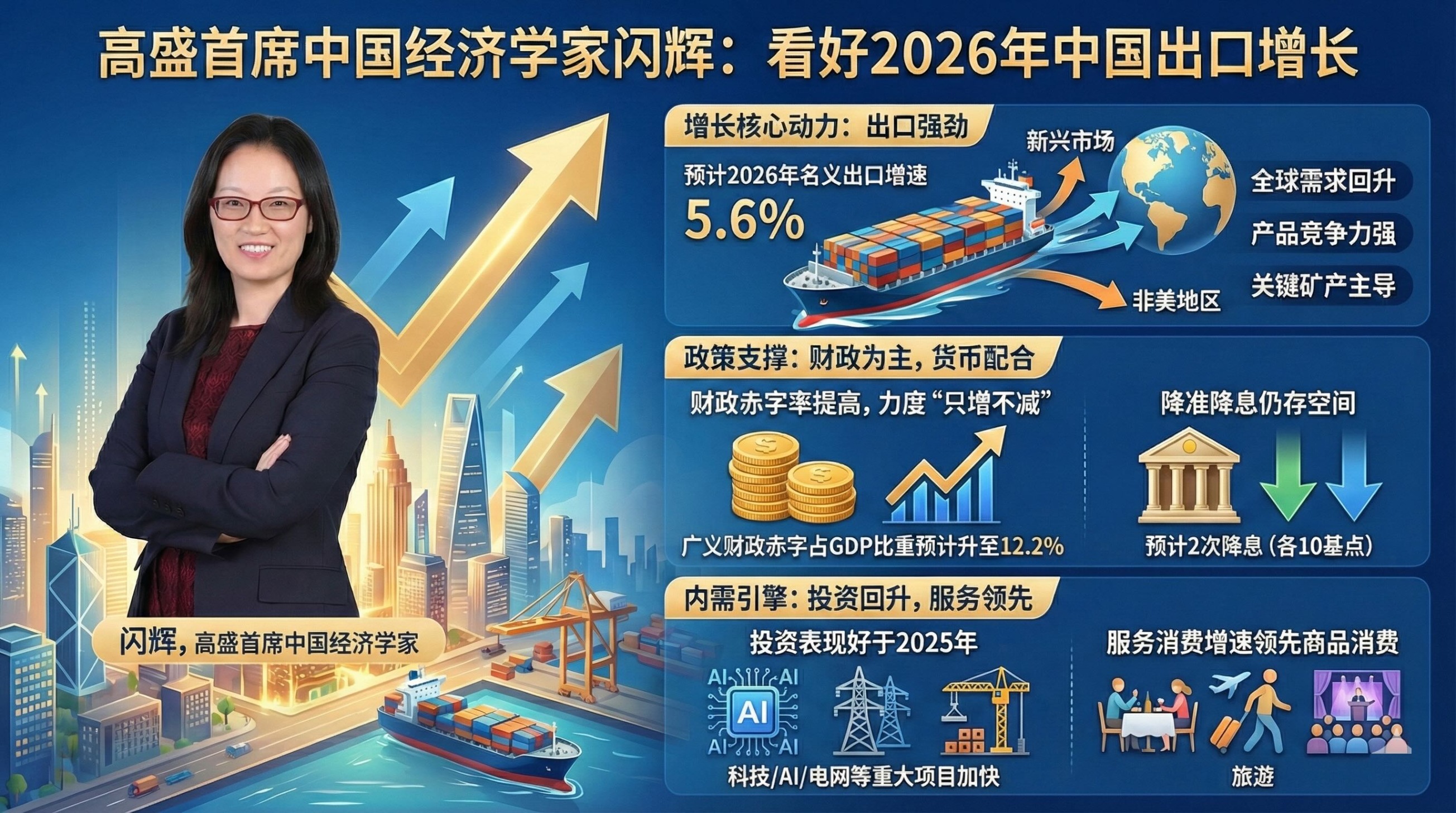
高盛首席中国经济学家闪辉:看好2026年中国出口增长
Zhong Guo Jing Ying Bao· 2026-01-22 06:48
Monetary Policy - The People's Bank of China is expected to implement two interest rate cuts in 2026, each by 10 basis points, with room for further reductions in reserve requirements and interest rates [3][4] - The average reserve requirement ratio for financial institutions is currently 6.3%, indicating potential for a reduction [3] Fiscal Policy - The fiscal deficit rate is projected to increase from 11% of GDP in 2025 to 12.2% in 2026, with overall spending expected to increase in key areas [3][4] - The Ministry of Finance emphasizes that the total scale of fiscal deficits, debt, and expenditures will be maintained at necessary levels to ensure spending does not decrease [4] Economic Growth - China's exports are anticipated to remain strong in 2026, driven by global economic growth, expansion into emerging markets, and China's competitive product strength [5] - In 2025, China's total foreign trade reached 45.47 trillion yuan, a 3.8% increase year-on-year, maintaining its position as the world's largest goods trader [4][5] Investment Outlook - Investment performance in 2026 is expected to improve compared to 2025, with significant projects in technology, AI, and power grids likely to accelerate [5] Consumer Trends - Consumption is expected to show structural differentiation, with service consumption growth outpacing that of goods consumption in 2026 [6]

高盛上调2026年底金价目标至5400美元
Sou Hu Cai Jing· 2026-01-22 06:38
高盛表示,此次调价的核心逻辑在于私人部门为对冲全球宏观与政策不确定性而进行的黄金多元化配置 正在兑现,且相关"对冲持仓"在2026年可能保持稳定。(第一财经记者 葛唯尔) 高盛在周三发布的最新研报中,将2026年12月的黄金目标价从先前的4900美元/盎司上调至5400美元/盎 司。 (本文来自第一财经) ...
5400美元!高盛大幅上调黄金目标价:富豪们正跑步入场,与央行争夺“有限实物储备”
Hua Er Jie Jian Wen· 2026-01-22 06:03
Core Viewpoint - The rules of the gold market have changed, with private sector investors entering the market to hedge against global policy risks, leading to a significant upward revision of gold price targets by Goldman Sachs from $4,900 to $5,400 per ounce for the year [1] Group 1: Market Dynamics - The competition for physical gold is intensifying as central banks and private capital vie for limited supplies, accelerating the upward trend in gold prices [2] - In 2023 and 2024, gold prices are expected to rise by 15% and 26% respectively, primarily driven by panic buying from central banks following the freezing of Russian reserves [2] - By 2025, gold prices are projected to surge by 67%, as central banks are no longer the sole major buyers, leading to increased competition with private investors [2] Group 2: Investment Behavior - Analysts note a significant increase in physical gold purchases by high-net-worth families and a surge in bullish options buying, contributing to the upward pressure on gold prices [4] - The gap between actual gold prices and Goldman Sachs' traditional model predictions has widened since 2025, indicating a shift in buying behavior [4] - The demand for new hedging tools against global macro policy risks has surged, reflecting a change in investor sentiment [4] Group 3: Price Projections - Goldman Sachs forecasts a 17% increase in gold prices by the end of 2026, with emerging market central banks' diversification contributing 14 percentage points to this growth [5] - The average monthly gold purchases by central banks are expected to remain high at 60 tons, significantly above the pre-2022 average of 17 tons [5] - A return of funds to Western ETFs, driven by anticipated Fed rate cuts, is expected to contribute an additional 3 percentage points to gold price increases [5] Group 4: Signals for Reversal - Despite the upward price target revision, the risk distribution for gold prices remains skewed towards the upside, with potential for increased private sector allocation [7] - Two key signals for a potential reversal in gold prices include a decline in central bank gold purchases to pre-2022 levels and a shift in Fed policy from rate cuts to rate hikes [7] - The lack of elasticity in gold supply means that high prices alone cannot resolve supply issues, and demand collapse would be necessary for a price reversal [7]
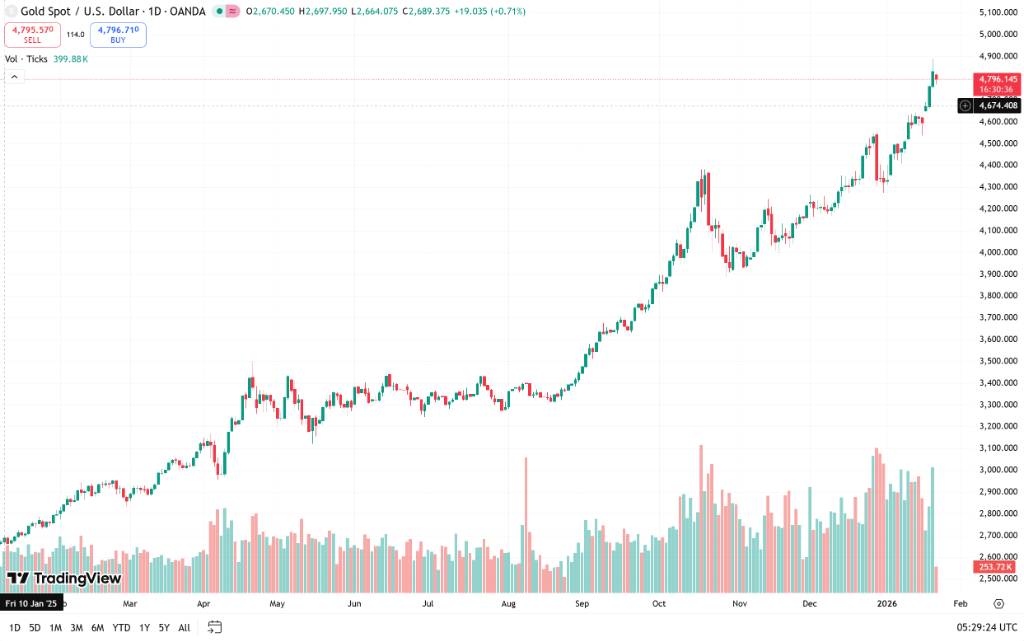
黄金首破4800美元创历史新高!高盛二度上调目标价至5400美元
Huan Qiu Wang· 2026-01-22 06:02
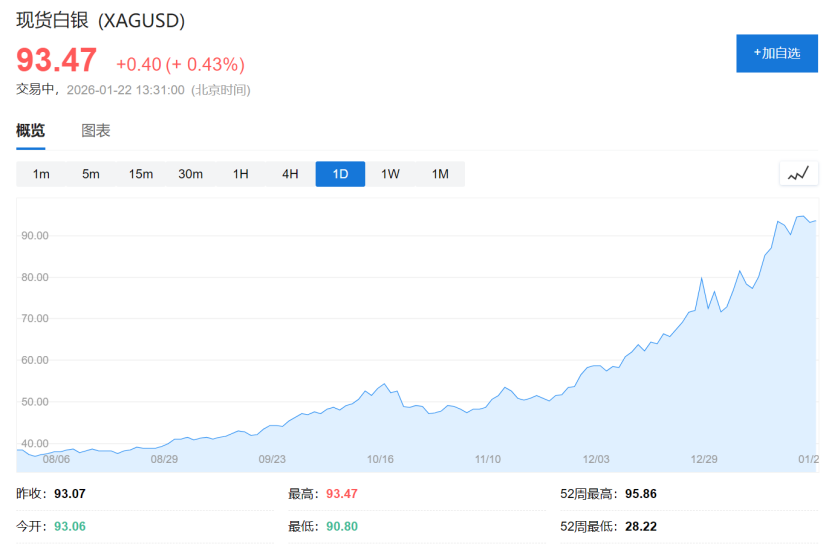
【环球网财经综合报道】1月22日,国际贵金属市场在周二凌晨迎来剧烈波动,黄金价格在地缘政治紧张局势和美联 储货币政策不确定性的双重推动下,首次突破每盎司4800美元大关,创下历史新高;而白银价格则在触及历史高位后 回落,呈现宽幅震荡格局。 黄金狂飙突破 4800 美元,避险需求成核心驱动力 据《环球邮报》报道,全球地缘政治形势推动下,黄金价格首次突破每盎司4800美元,铂金创纪录高位,钯金微跌, 白银价格一度触及历史高点。 分析称,白银期货合约的推出以及贵金属市场供需结构的变化是导致价格剧烈波动的原因之一。 尽管短期出现回调,但机构对白银后市依然乐观。ANZ商品策略师Soni Kumari表示:"考虑到我们看到的价格动力, 白银涨至三位数看起来是可能的。"不过她也提醒投资者,价格不会单向移动,未来可能会出现价格修正,且市场波 动性可能更高。 高盛一月内两度上调目标价,看涨情绪高涨 市场分析人士指出,全球地缘政治形势的复杂变化是推动金价飙升的主要原因。RJO Futures高级市场策略师Bob Haberkorn表示:"市场存在一些担心错过这波交易的风险(FOMO),鉴于全球地缘政治形势,目前黄金和白银价格 的 ...
5400美元/盎司,高盛上调黄金今年底目标价
2 1 Shi Ji Jing Ji Bao Dao· 2026-01-22 05:19
1月22日,高盛将黄金今年底目标价从每盎司4900美元上调至5400美元,理由是私人部门投资者和中央 银行对黄金的需求不断增长。高盛分析师在报告中指出,预计各国央行今年每月将购买60吨黄金,同时 随着美联储降息,黄金ETF的持有量也将增加。高盛分析师称,各国央行已开始通过传统的ETF,与私 人部门投资者争夺有限的黄金。 (文章来源:21世纪经济报道) ...
Goldman Sachs raises 2026-end gold price forecast to $5,400/oz
Reuters· 2026-01-22 04:39
Goldman Sachs has raised its end-2026 gold price forecast to $5,400 per ounce from $4,900/oz earlier, noting private-sector and emerging market central banks' diversification into gold. ...
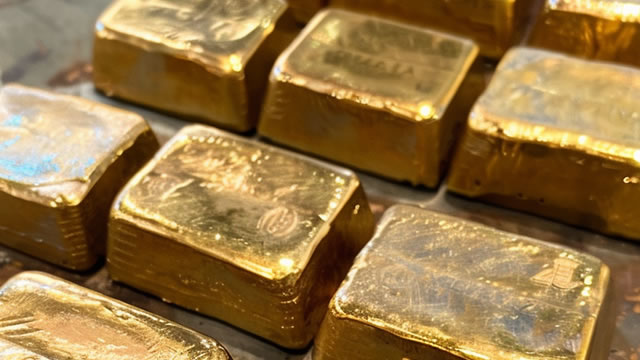
高盛将2026年12月黄金价格预期上调500美元,至每盎司5400美元
Xin Hua Cai Jing· 2026-01-22 04:14
Group 1 - Goldman Sachs raised its gold price forecast for December 2026 by $500 to $5,400 per ounce [1]
高盛上调年底金价目标至5400美元 央行需求持续增强
Sou Hu Cai Jing· 2026-01-22 04:03
报告表示,其假设私营部门多元化投资方会继续持有黄金,他们的购买行为能够抵消全球政策风险,从 而推动了价格预测的上行幅度。这些投资者在2026年不会抛售手中的黄金,这实际上提高了价格预测的 起始点。工行标准银行高级大宗商品策略师Julia Du认为,黄金价格将上涨至每盎司7,150美元。 分析师Daan Struyven等人在报告中写道,将2026年12月的目标价从此前的每盎司4,900美元上调,预计 各国央行今年每月将购买60吨黄金,同时随着美联储降息,ETF黄金持仓将继续扩大。他们表示,各国 央行"已开始通过传统ETF投资方式,与私营部门投资者争夺有限的实物黄金供应"。 来源:金十数据 1月22日,高盛集团将其年底金价预测上调至每盎司5,400美元,理由是来自私人投资者和各国央行的需 求持续增强。 ...