JD(JD)

Search documents
驰援香港 互联网公司纷纷出手
Mei Ri Shang Bao· 2025-11-27 23:31
Group 1 - Major fire incident occurred in Hong Kong's Tai Po district, leading to significant casualties and damages, prompting various internet companies to provide assistance [1] - Alibaba Group initiated a donation of 20 million HKD, while Ant Group and AlipayHK contributed 10 million HKD to support fire rescue and subsequent relief efforts [1] - Didi announced a donation of 10 million HKD for emergency rescue and humanitarian aid, and will continue to provide support based on the progress of disaster relief [1] Group 2 - Tencent Charity Foundation launched an initial donation of 10 million HKD for urgent relief, transitional housing, and emotional support for affected residents [2] - Pinduoduo also initiated a donation of 10 million HKD for emergency relief and community recovery efforts [2] - Meituan's Keeta platform donated 5 million HKD and provided free mobile charging stations to support rescue efforts and community recovery [2]



想留在牌桌上,大厂们必须要“卷”AI TO C | 马上评
Tai Mei Ti A P P· 2025-11-27 23:25
Core Insights - Alibaba's CEO Wu Yongming emphasized the dual strategy of "AI to C" and "AI to B" as core directions for the company, signaling a shift towards consumer-facing AI applications in the competitive landscape of internet giants [1][3] - The launch of the "Qianwen" app represents a significant move in this new battle for user engagement and market share, as companies seek to control the next generation of digital interaction [1][10] Group 1: Strategic Focus - Alibaba's AI strategy includes becoming a leading full-stack AI service provider in the "AI to B" sector while developing AI-native applications for consumers in the "AI to C" sector, leveraging its ecosystem advantages [3][4] - The timing of this push into AI to C is critical, as large model technologies have matured, providing a solid foundation for high-quality consumer applications [3][4] - The competitive landscape in e-commerce is intensifying, with rivals like Pinduoduo and Douyin posing significant challenges to Alibaba's market dominance, necessitating new traffic sources [3][10] Group 2: Market Dynamics - The AI-native applications are reshaping traffic distribution rules, with the ability to control the new generation of AI entry points becoming crucial for future e-commerce positioning [4][5] - The future online ecosystem will center around AI-native applications that serve as both traffic distribution points and value transmission hubs, akin to the roles of browsers and search engines in the past [5][6] - The transition from traditional interaction methods to conversational interfaces represents a fundamental shift in user engagement, with AI-driven chatbots emerging as key entry points [5][6] Group 3: Competitive Landscape - The AI to C battlefield is characterized by a bifurcated structure, with native AI companies on one side and traditional tech giants like Google, Microsoft, and Alibaba on the other, all vying for high-frequency user interactions [7][8] - ByteDance is leveraging its extensive content ecosystem and user behavior data to enhance its AI capabilities, creating a feedback loop that optimizes user experience and engagement [8][9] - Other companies like Tencent and Baidu are also navigating their strategies, with Tencent embedding AI into its WeChat ecosystem while Baidu struggles with a lack of diverse user scenarios [11][13] Group 4: Future Outlook - The competition for AI entry points is ultimately a contest for control over user scenarios, with companies needing to integrate AI deeply into everyday life to establish user habits and barriers to entry [12][17] - The success of AI strategies will depend on the ability to create a "scene-data-model" closed loop, ensuring continuous user feedback and model optimization [17][18] - The future landscape may see a few dominant AI applications emerging as primary entry points, while traditional platforms adapt to maintain relevance in a rapidly evolving digital environment [18][19]



多家大厂驰援香港;豆包语音对话功能更新,可说4种方言|未来商业早参
Mei Ri Jing Ji Xin Wen· 2025-11-27 23:18
Group 1 - Alibaba Group initiated a donation of 20 million HKD for fire relief efforts in Hong Kong, while ByteDance, Didi, and Jitu each donated 10 million HKD [1] - SF Express also launched an emergency response mechanism, contributing 20 million HKD, and JD.com provided immediate delivery of rescue supplies to the affected area [1] - The collective response from these companies highlights the social responsibility and collaborative value of private enterprises in enhancing overall disaster relief efficiency [1] Group 2 - Doubao updated its voice interaction feature to support four local dialects: Cantonese, Sichuanese, Northeastern, and Shaanxi dialects [2] - This update utilizes dialect migration technology and allows for flexible switching based on user intent, reflecting a shift in AI voice interaction towards more localized and differentiated capabilities [2] - The enhancement addresses diverse user needs and promotes the evolution of AI voice technology from basic interaction to more sophisticated engagement [2] Group 3 - AI infrastructure company Wunwen Xinqiong completed nearly 500 million RMB in A+ round financing, led by Zhuhai Technology Group and Foton Capital [3] - The financing will strengthen the company's technological barriers and support its scale expansion in a highly concentrated AI infrastructure market [3] - The industry competition is shifting from pure computing power supply to efficient adaptation of intelligent systems, intensifying the technological and ecological competition within the sector [3]

大厂Q3财报陆续出炉 各家有喜有忧
Mei Ri Shang Bao· 2025-11-27 23:09
Core Insights - Alibaba's Q2 FY2026 financial report shows revenue growth but a significant decline in profit, primarily due to increased marketing investments in instant retail and technology [2][3] - The company's revenue reached 247.8 billion RMB, a 5% year-on-year increase, while operating profit plummeted by 85% to 5.4 billion RMB [2] - Alibaba's cloud business emerged as a key growth driver, with revenue of 39.8 billion RMB, reflecting a 34% year-on-year increase, supported by strong AI product sales [3] Alibaba's Financial Performance - Revenue for Q2 FY2026 was reported at 247.8 billion RMB, marking a 5% increase compared to the previous year [2] - Operating profit decreased to 5.4 billion RMB, down 85% year-on-year, attributed to reduced adjusted EBITA [2] - Adjusted EBITA fell by 78% to 9.1 billion RMB, influenced by investments in instant retail and user experience [2] Marketing and Investment Strategy - Alibaba's marketing and sales expenses surged to 66.5 billion RMB, more than doubling from the previous year [2] - The CEO indicated that the company is in an investment phase to build AI technology and infrastructure, aiming for long-term strategic value [2] - The high investment in flash sales during July and August was a significant factor in the financial losses reported [2] Cloud Business Highlights - The cloud segment reported revenue of 39.8 billion RMB, with a 34% year-on-year growth [3] - AI-related product revenue has seen triple-digit year-on-year growth for nine consecutive quarters, becoming a crucial driver for cloud business growth [3] - The proportion of AI revenue in external commercial income from the cloud business is increasing [3] Competitors' Performance - JD.com also reported revenue growth but a decline in profit, with Q3 revenue at 299.1 billion RMB, a 14.9% increase, while net profit fell by 54.7% to 5.3 billion RMB [4] - Didi's Q3 performance showed a 13.8% increase in order volume, reaching 4.685 billion orders, with a GTV growth of 14.8% to 115.8 billion RMB [5] - Pinduoduo's Q3 revenue was 108.3 billion RMB, a 9% increase, with adjusted net profit rising by 14% to 31.4 billion RMB [5]
遇见小面今起招股;快乐猴超市加速拓店;宗馥莉卸任娃哈哈董事长
Sou Hu Cai Jing· 2025-11-27 21:42
Group 1: JD Discount Supermarket - JD Discount Supermarket in Shuyang opened on November 26, attracting nearly 50,000 visitors on its first day. The store features a two-level design with an area of approximately 5,000 square meters and over 200 free parking spaces [7] - The fresh produce section became a consumer hotspot, with durians priced at 18.9 yuan per pound and fresh eggs at 9.9 yuan per tray, leading to significant sales, including over 4 tons of durians sold in one day [7] - The store's opening signifies JD's complete coverage of Suqian, leveraging supply chain advantages to offer "everyday low prices" [7] Group 2: Happy Monkey Supermarket - Meituan's hard discount supermarket brand "Happy Monkey" opened its third store in northern China on November 28, accelerating its national expansion to six stores [10] - The new store emphasizes "good products at low prices," offering tested vegetables and fruits, fresh pork, and self-branded products [10] - Happy Monkey's rapid market capture is attributed to supply chain optimization and high-cost performance strategies, focusing on community core business districts [10] Group 3: Sam's Club Controversy - Sam's Club faced criticism for introducing two products from Xueji Fried Goods, with some consumers questioning the frequency of common product introductions in a membership-based store [11] - A staff member clarified that the products were priced lower than at Xueji's stores and were conveniently packaged for transport [11] Group 4: Alibaba's Cross-Border AI Tool - Alibaba's 1688 platform launched a cross-border e-commerce AI tool named "Ao Xia," which provides one-stop supply chain services for small and medium-sized businesses [11] - The tool enhances product selection efficiency to the top 20% of human buyers and boasts an 80% inquiry task resolution rate [11] Group 5: Tehai International Q3 Performance - Tehai International reported a 7.8% year-on-year revenue increase to $214 million in Q3 2025, with same-store sales up 2.3% to $182 million [12] - However, operating profit fell by 15.4% to $12.6 million, with a profit margin of 5.9%, primarily due to increased foreign exchange losses [12] Group 6: Hema Fresh Store Expansion - Hema Fresh signed a contract to open its first store in Shunde, Foshan, expanding its presence in Guangdong [14] Group 7: Wahaha Leadership Change - Zong Fuli has stepped down as chairman of Wahaha, with Xu Simin taking over the role, while Zong retains a 29.40% stake in the company [16] Group 8: JD Express Service Upgrade - JD Express upgraded its one-stop ski equipment delivery service in response to the early start of the ice and snow season, offering customized packaging and free storage for seven days [16] Group 9: Taobao Double 12 Festival - The 2025 Taobao Double 12 Festival's promotional rules were released, with the event scheduled from December 8 to December 12, featuring official discounts [17] Group 10: Cainiao's Black Friday Performance - Cainiao's overseas warehouses experienced a three-digit percentage increase in daily shipping volume during Black Friday, with order processing capacity nearly tripling [18] Group 11: Fuling Mustard's Market Strategy - Fuling Mustard plans to expand its product matrix and channels while continuing to develop overseas markets to drive overall sales [20] Group 12: Encountering Small Noodles IPO - Guangzhou Encountering Small Noodles began its IPO process, planning to list on the Hong Kong Stock Exchange on December 5, with a share price range of 5.64 to 7.04 HKD [21] Group 13: China Resources' Emergency Relief - China Resources initiated an emergency relief plan to support the Dapu community in Hong Kong, providing over 5,000 essential supplies to residents affected by recent disasters [22]
本地生活服务竞争转向价值深耕
Jing Ji Ri Bao· 2025-11-27 21:10
Core Insights - JD Group has launched a series of initiatives including an independent JD Takeout app, JD Review, and JD True Ranking, indicating its intention to reshape the local lifestyle market and shift competition from price subsidies to user value [2][3] - The industry is transitioning into a phase of stock competition, with low online penetration in local lifestyle services, suggesting significant potential for digital transformation [2][3] Group 1: Competitive Landscape - The competition logic is being restructured, with platforms focusing on user experience rather than price wars, emphasizing who understands and serves users better [2][3] - Companies are moving from single-point competition to building open and symbiotic ecological platforms, relying on overall resilience and innovation for success [3] Group 2: Technological and Trust Factors - Technology, including AI and big data, is deeply integrated into the service chain, enabling personalized services through precise demand analysis, becoming a key competitive differentiator [3] - The value of trust systems is becoming prominent, with real reviews and transparent processes replacing traffic exposure as the basis for user decision-making [3] Group 3: Industry Evolution - JD's approach acts as a catalyst for the industry, moving away from subsidy-driven growth towards a focus on service quality, ultimately benefiting consumers and quality merchants [3][4] - The shift towards a value-oriented competition is guiding the local lifestyle sector from "wild growth" to "meticulous cultivation," with a focus on user value and building a win-win ecosystem [4]
支援香港大埔救灾,阿里、滴滴、腾讯、字节、小米、京东等大厂捐款捐物



YOUNG财经 漾财经· 2025-11-27 14:26
Group 1 - Major tech companies including Alibaba, JD.com, Didi, Tencent, ByteDance, and Xiaomi have made significant donations to support disaster relief efforts in Hong Kong following a severe fire incident in Tai Po [2][3][4][5]. - The Ma Yun Public Welfare Foundation donated 30 million HKD to assist affected families and individuals, while Alibaba Group initiated a donation of 20 million HKD for rescue and recovery efforts [2]. - Didi contributed 10 million HKD for emergency rescue and humanitarian aid, and is actively coordinating with local authorities to ensure public safety during the crisis [2][5]. Group 2 - Tencent Charity Foundation announced an initial donation of 10 million HKD for urgent relief, transitional housing, and emotional support for affected residents [2][5]. - Lenovo Hong Kong also donated 10 million HKD to support emergency rescue, medical assistance, and subsequent recovery efforts for the affected community [4]. - Xiaomi Foundation pledged 10 million HKD for immediate disaster relief, alongside contributions from BYD and NetEase, each donating 10 million HKD, and Anta Group and 361° Group contributing a total of 30 million HKD and 15 million HKD respectively [5]. Group 3 - JD.com quickly mobilized resources, delivering essential supplies such as bottled water and instant noodles to the disaster site, with logistics support from its extensive supply chain network [5]. - Alibaba's logistics arm, Cainiao, is actively dispatching emergency supplies like food and bedding to the affected areas [6].

fudi会员商店与京东战略携手,共创“分钟级送达”消费生态
Sou Hu Cai Jing· 2025-11-27 13:10
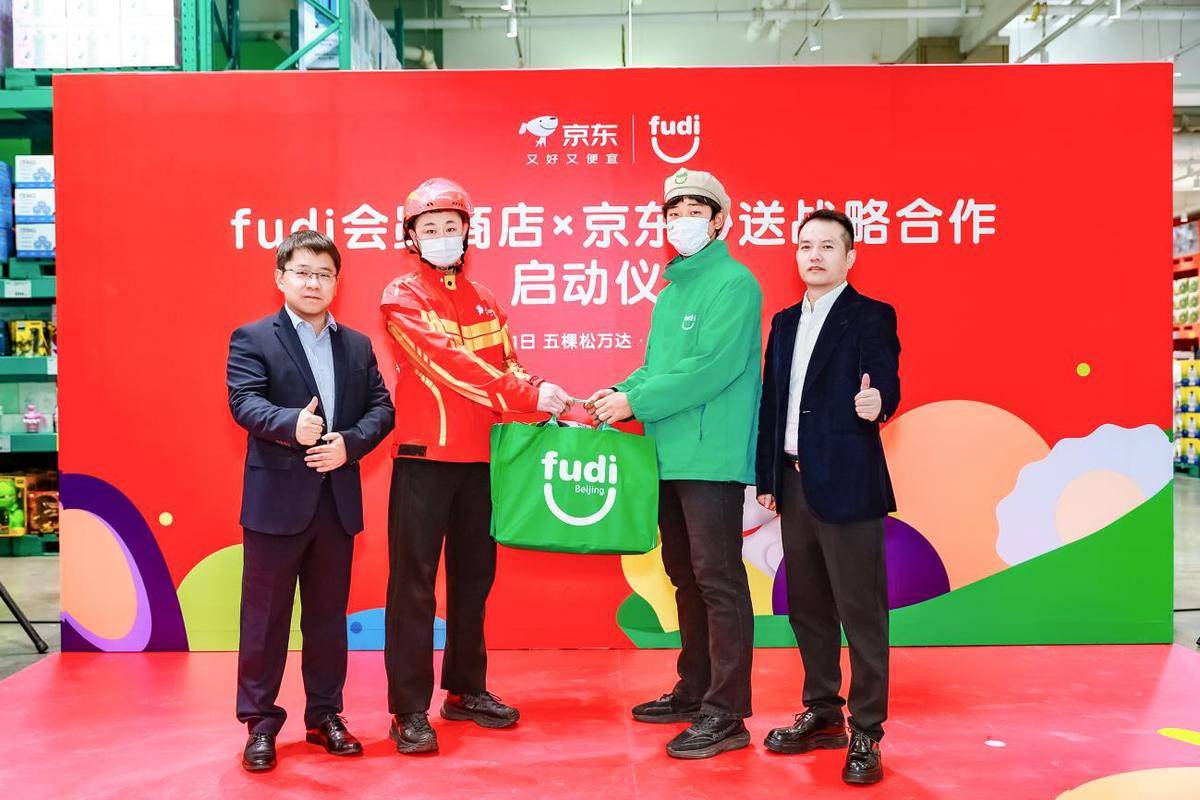
11月21日,中国本土仓储式会员制零售品牌fudi与京东达成战略合作,正式入驻京东秒送平台。此次合作是fudi首次向第三方即时零售平台开放其核心商品 与会员体系,通过"会员级品质"与"分钟级送达"的深度融合,旨在为消费者打造"30分钟新鲜生活圈"。 (左1:京东即时零售运营负责人肖杰;右1:北京尧地农业科技发展有限公司董事长王兴水) 此次战略合作为fudi带来全方位的价值提升。fudi通过向京东开放会员体系,实现了双方资源的深度融合。基于京东的大数据分析能力,fudi得以更精准地洞 察消费趋势,从而高效触达潜力会员。此举将助力fudi在现有超200万注册会员及20万付费会员的基础上,实现高品质会员规模的显著增长,并通过数据打 通推动会员服务的个性化升级。 预计自11月26日起,用户可在京东App首页搜索"fudi",直接访问其京东秒送店铺,享受门店周边5至7千米"新鲜商品分钟级送达"的购物体验。 多维赋能,依托京东实现fudi会员价值跃迁 创新实践,重塑即时零售服务新范式 以北京市场的成功实践为起点,fudi将通过京东覆盖全国的物流网络与数字化能力,快速推进全国化布局。fudi计划进一步扩充线上商品种类,并依 ...
硝烟过后,谁才是外卖大战赢家
Di Yi Cai Jing· 2025-11-27 12:34
Core Insights - The report reveals the troubling reality of the food delivery industry, highlighting that while order volumes have increased, actual revenue for merchants has decreased due to aggressive subsidy wars [1][3][10] - The competition among major players in the food delivery market has led to a significant decline in profits for many restaurants, as they struggle to balance between participating in subsidies and maintaining profitability [4][10] Group 1: Industry Dynamics - A study covering over 40,000 merchants indicates that during the peak of subsidy wars, daily order volumes increased by an average of 7%, but actual revenue dropped by approximately 4%, leading to an average profit decline of 8.9% [1][3] - The phenomenon of "substitution effect" is evident, where food delivery is replacing dine-in services, resulting in a decline of over 10% in both order volumes and actual revenue for dine-in services [4][10] - Merchants not participating in subsidies are also affected, as customers shift towards competitors offering subsidies, creating a dilemma for them [4][10] Group 2: Competitive Landscape - The food delivery war began in February 2025 when JD.com announced its entry into the market with a "0 commission" policy, leading to a series of aggressive subsidy initiatives from major players like Meituan and Alibaba [5][6] - By July 2025, Meituan reported a daily order volume exceeding 1.2 billion, while Alibaba's Taobao Flash Purchase reached 80 million orders, showcasing the scale of competition and the financial stakes involved [5][6] - Despite the intense competition, regulatory scrutiny has increased, with the market regulator intervening to address the ongoing subsidy wars [6][10] Group 3: Strategic Implications - The competition is not merely about food delivery but reflects a broader strategy among giants to capture higher-frequency consumer engagement and enhance user activity on their platforms [7][8] - JD.com aims to leverage its supply chain capabilities to support the entire food service industry, while Alibaba focuses on creating synergistic effects within its ecosystem to enhance user experience [13][10] - Meituan is committed to maintaining its delivery network and has initiated plans to support merchants financially, indicating a shift towards a more sustainable business model [9][10] Group 4: Future Outlook - The ongoing battle suggests a shift from zero-sum competition to a more complex ecosystem where companies must innovate beyond subsidies to create sustainable value [12][14] - The industry's future will depend on the ability of these companies to build healthier, more equitable ecosystems that balance efficiency with fairness and short-term gains with long-term value [12][14]
支援香港大埔救灾,阿里、京东、滴滴、腾讯、联想等大厂捐款捐物
2 1 Shi Ji Jing Ji Bao Dao· 2025-11-27 12:14
Core Points - Major internet companies including Alibaba, JD.com, Didi, Tencent, ByteDance, and Lenovo have made significant donations to support fire relief efforts in Hong Kong following a severe fire incident in Tai Po [1][2][3] Group 1: Donations and Contributions - Alibaba Group has initiated a donation of 20 million HKD for fire relief, including 30 million HKD from the Jack Ma Foundation for affected families [1] - Didi has pledged 10 million HKD for emergency rescue and humanitarian aid, with plans for ongoing support [1] - Tencent Charity Foundation has committed 10 million HKD for urgent relief efforts, including transitional housing and emotional support for affected residents [1] - ByteDance and Lenovo each donated 10 million HKD to assist with emergency rescue and community recovery efforts [1] - Xiaomi Foundation has also contributed 10 million HKD for the fire relief [2] - BYD and NetEase each donated 10 million HKD, while Anta Group and 361° Group collectively contributed 30 million HKD and 15 million HKD respectively [2] Group 2: Logistics and Support - JD.com has mobilized its logistics network to deliver essential supplies such as water and food to the disaster area, with the first batch dispatched on the night of the fire [2] - JD Logistics has activated emergency plans to ensure timely delivery of bedding, hygiene products, and other necessities from its warehouses [2] - Didi's public welfare rescue team is collaborating with local rescue teams to participate in post-disaster support efforts [2] - Alibaba's logistics arm, Cainiao, is coordinating the delivery of food and emergency supplies to the affected areas [3]