
LI AUTO(LI)

Search documents
中国电动汽车_2025 年独家调研,中国与国际车企电动汽车技术差距对比-China EV_ Proprietary survey 2025, Part 3. 10-year anniversary, Bonus edition – China vs. International OEMs‘ EV technology gap
2025-11-10 03:35
Summary of Key Points from the Conference Call Industry Overview - **Industry**: Chinese Electric Vehicle (EV) Market - **Focus**: Comparison between Chinese OEMs and international OEMs regarding EV technology and consumer preferences Core Insights 1. **Shift in Consumer Preferences**: Over the past decade, Chinese consumers have transitioned from favoring German and Japanese internal combustion engine (ICE) vehicles to embracing Chinese EVs, prioritizing value over brand loyalty [2][16][17] 2. **Value Definition**: Current consumer preference for Chinese brands is driven by perceived value for money, which includes build quality, energy efficiency, and advanced technologies like ADAS and smart cockpit systems [2][17] 3. **Upgrade Aspirations**: Chinese consumers are increasingly willing to raise their car budgets to purchase the best vehicle they can afford, with a strong focus on advanced EV technologies [3][18] 4. **Technology Adoption**: Chinese consumers have been early adopters of intelligent driving technologies, with a notable gap in product offerings from foreign OEMs due to their underestimation of the EV trend [4][20] 5. **Perceived Technological Leadership**: A survey indicates that Chinese OEMs are perceived to be five years ahead of Western peers in EV technology, particularly in battery technology and speed to market [5][6] 6. **Government Support**: The success of Chinese OEMs is attributed to strong government support, market competition, and a corporate culture that emphasizes agility and hard work [5][6] 7. **Competitive Landscape**: The competitive gap between Chinese and Western OEMs may be wider than perceived, with Western OEMs needing to focus on cost reduction and organizational restructuring to catch up [6] Market Projections 1. **Sales Growth**: China's auto sales in the first half of 2025 have exceeded expectations, with forecasts indicating an 8% growth in industry wholesale volumes, reaching approximately 29.5 million units [8] 2. **EV Sales Growth**: The long-term outlook for EVs remains strong, with expected sales growth of around 30% in 2025, driving EV penetration to 57% [9] Investment Implications 1. **Cautious Sector Outlook**: Despite positive trends, the sector is viewed cautiously due to potential pricing pressures and intense competition within the domestic market [8][9] 2. **Company Ratings**: BYD and Xiaomi are rated as Outperform, while XPeng, Li Auto, and NIO are rated as Market-Perform [9] Valuation Comparisons - A detailed valuation comps table shows various metrics for companies like BYD, XPeng, and NIO, indicating their market cap, EV/EBITDA, and P/E ratios, which reflect the competitive positioning of these companies in the market [10] Additional Insights 1. **Brand Building Challenges**: While Chinese OEMs are agile in technology adoption, they face challenges in building strong brands, which are essential for maintaining price premiums as technology commoditizes [4][21] 2. **Consumer Behavior**: The shorter history of car ownership in China makes vehicle purchases more discretionary, emphasizing lifestyle choices over necessity [19] This summary encapsulates the key points discussed in the conference call, highlighting the evolving landscape of the Chinese EV market and the implications for both consumers and investors.


汽车:零部件、整车AGI投资机会
Tianfeng Securities· 2025-11-10 00:11
Investment Rating - The industry investment rating is maintained at "Outperform" [2] Core Insights - The report highlights the significant growth in the penetration rate of L2 and above assisted driving in China, which increased from 3.3% in 2019 to 63.6% by July 2025 [10] - The report emphasizes the importance of AI and robotics in the automotive sector, particularly focusing on Tesla's advancements in autonomous driving and robotaxi services [3][9] - The report identifies key investment opportunities in the automotive sector, particularly in companies with strong positions in intelligent driving and robotics [5] Summary by Sections Section: Autonomous Driving - The report notes that L2-level NOA penetration has reached a high level, while L3-level autonomous driving is still in the early stages, presenting a favorable investment window [4] - The penetration rate of L3/L4 autonomous driving is expected to see significant growth, with new models from companies like Huawei, Li Auto, and XPeng leading the charge [15] Section: Company Recommendations - Recommended companies in the parts sector include "Nexteer" and "Bertel" for their advantages in specific segments [5] - In the complete vehicle sector, "XPeng Motors," "Li Auto," and "Seres" are recommended for their rapid progress in smart technology [5] Section: Financial Projections - XPeng Motors is projected to achieve revenues of 935.9 billion, 1402.2 billion, and 1695.8 billion yuan for the years 2025, 2026, and 2027, respectively, with year-on-year growth rates of 129%, 50%, and 21% [32][33] - Seres is expected to generate revenues of 1796.6 billion, 2179.6 billion, and 2459.9 billion yuan for the years 2025, 2026, and 2027, with corresponding year-on-year growth rates of 23.75%, 21.32%, and 12.86% [60][61]


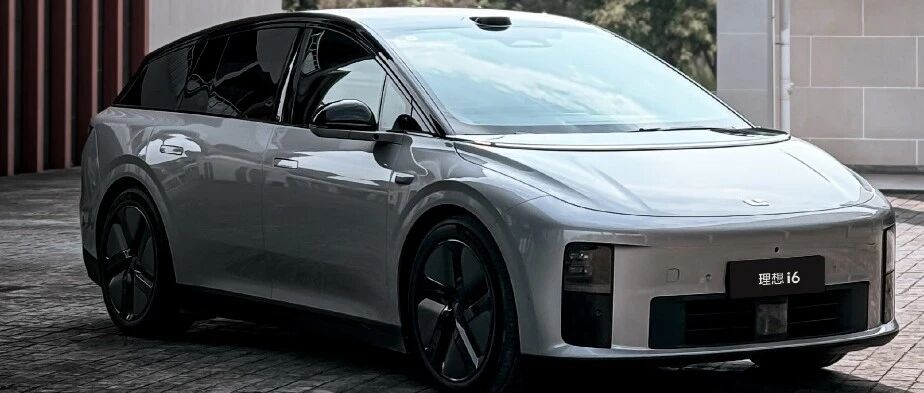
“中文AI三大顶会”已有两家报导了理想近期AI进展
理想TOP2· 2025-11-09 14:59
Core Insights - The article discusses the rising prominence of Li Auto in the autonomous driving sector, particularly its recent advancements presented at the ICCV 2025 conference, where it introduced a new paradigm for autonomous driving that integrates world models with reinforcement learning [1][2][4]. Group 1: Company Developments - Li Auto's research and development in autonomous driving began in 2021, evolving from initial BEV solutions to more advanced systems [5]. - The company has significantly invested in AI, with nearly half of its R&D budget allocated to this area, indicating a strong commitment to integrating AI into its vehicle technology [2]. - Li Auto's recent presentation at ICCV 2025 highlighted its innovative approach, which combines synthetic data to address rare scenarios, leading to a notable improvement in human takeover mileage (MPI) [2][4]. Group 2: Industry Reception - The reception of Li Auto's advancements has been overwhelmingly positive, with many industry observers praising its research and development efforts, positioning it as a model for Chinese automotive companies [2][4]. - Articles from major Chinese AI platforms like Quantum Bit and Machine Heart have garnered significant attention, with one article achieving over 39,000 reads, reflecting the growing interest in Li Auto's developments [1][2]. Group 3: Competitive Landscape - Li Auto is recognized as a leading player in the Chinese autonomous driving space, with a notable presence in discussions surrounding AI and autonomous vehicle technology [22]. - The company aims to differentiate itself not just as an automotive manufacturer but as a competitive AI entity, aligning its goals with broader AI advancements and the five stages of AI development as defined by OpenAI [18][19].

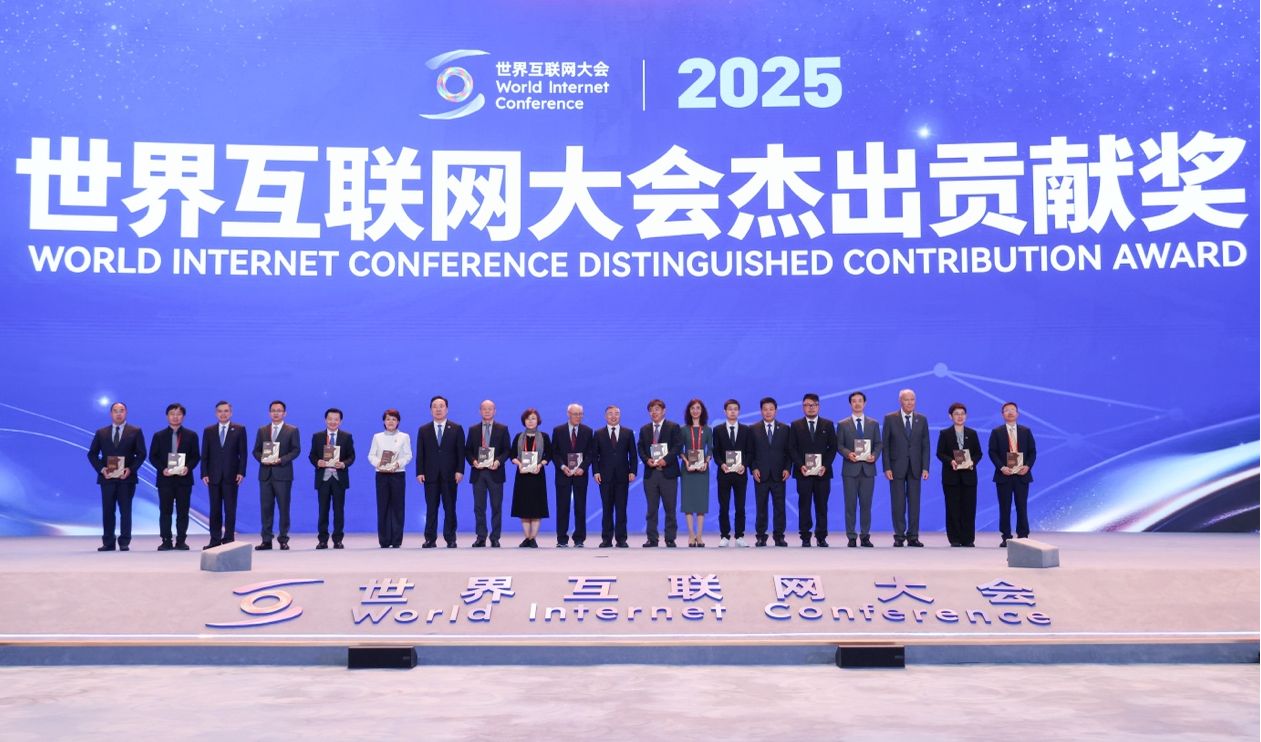
世界互联网大会杰出贡献奖名单揭晓,3家企业连续两年获奖
Bei Ke Cai Jing· 2025-11-09 10:36
Core Points - The 2025 World Internet Conference in Wuzhen announced the "Outstanding Contribution Award" winners, recognizing 5 individuals and 14 companies for their contributions to the internet [1][2]. Group 1: Award Winners - The awarded individuals include Robert Kahn, Vint Cerf, Jun Murai, Latifah Cohen, and Qian Hualin, each recognized for their significant contributions to internet technology and development [1]. - The awarded companies are categorized into three types: "Social Contribution," "Innovative Breakthrough," and "Growth Potential" [2][3]. Group 2: Company Categories - Companies recognized in the "Social Contribution" category include Tencent, Lenovo, Qiangna Technology, AgriPredict Solutions, and Arm [3]. - Companies in the "Innovative Breakthrough" category include China Mobile Research Institute, ZTE Corporation, Anheng Information, and Pakistan Mobile Communications [3]. - Companies in the "Growth Potential" category include Li Auto, Yushu Technology, Tianzu Zhixin, Ant Group's Antimi, and Tianyi Cloud [3]. Group 3: Changes from Previous Year - Notable changes from the 2024 awards include Tencent moving from "Innovative Breakthrough" to "Social Contribution," ZTE changing from "Social Contribution" to "Innovative Breakthrough," and Ant Group's Antimi receiving the "Growth Potential" award instead of Ant Group itself [5]. Group 4: Company Statements - Tencent's senior vice president emphasized that "Tech for Good" is ingrained in the company's ethos, focusing on innovation and positive impact [6]. - Ant Group's vice president highlighted the importance of addressing security challenges in data flow during the AI era, indicating a commitment to enhancing technology for large-scale data applications [6].





电力设备及新能源周报20251109:储能需求高增,六氟磷酸锂价格持续上涨-20251109
Minsheng Securities· 2025-11-09 08:58
Investment Rating - The report maintains a "Buy" rating for key companies in the electric power equipment and new energy sectors, including Ningde Times, Kodali, and others [5][6]. Core Insights - The electric power equipment and new energy sector saw a weekly increase of 4.98%, outperforming the Shanghai Composite Index, with notable rises in nuclear power (10.94%), solar energy (7.70%), and energy storage (2.84%) [1]. - Demand for energy storage is significantly increasing, with the price of lithium hexafluorophosphate continuing to rise, exceeding 120,000 yuan/ton, doubling since the end of September [12]. - The domestic energy storage market completed 10GW/29.4GWh of bidding work in October 2025, with strong demand in regions like Inner Mongolia and Gansu [3][35]. Summary by Sections New Energy Vehicles - Tianqi Materials signed long-term contracts for 159,500 tons of electrolyte with Guoxuan High-Tech and Zhongchuang Innovation, bringing the total contracted electrolyte volume to over 3 million tons [2][12]. - The electrolyte market saw a 40% year-on-year increase in shipments for the first three quarters of 2025, with Q3 shipments up 32% [12]. New Energy Generation - The production of polysilicon is expected to decline by over 10% in November, with a projected output of 134,000 tons in October [3][33]. - The domestic component production is expected to be less than 44.5GW in November, with potential for price rebounds and profit recovery [34]. Electric Power Equipment and Automation - The State Grid's five batches of bidding for transmission and transformation equipment totaled 10.559 billion yuan, with significant contracts across various equipment types [4]. - Key companies to watch include Ningde Times, Kodali, and others [4]. Investment Recommendations - The report highlights three main investment themes: 1. Long-term competitive landscape improvements in battery and separator segments, recommending companies like Ningde Times and Enjie [29]. 2. The impact of 4680 technology iterations on the supply chain, focusing on companies involved in high-nickel cathodes and silicon-based anodes [29]. 3. New technologies leading to high elasticity, with a focus on solid-state battery companies [29].




理想汽车又成立电池公司
起点锂电· 2025-11-09 08:42
Group 1 - Jiangsu Ideal Automotive Battery Co., Ltd. was established on November 5, with a registered capital of 70 million RMB, focusing on battery manufacturing, sales, and electric vehicle charging infrastructure operations [3] - Ideal has previously formed joint ventures in electric drive and silicon carbide chip sectors, indicating a strategic collaboration trend in the electric vehicle industry [4] - The joint venture model of "automaker + battery manufacturer" is becoming a mature strategy in the new energy vehicle supply chain, ensuring supply chain security and reducing costs [4] Group 2 - Joint ventures allow automakers to participate in battery production and profit distribution, addressing the fragmented profit distribution within the automotive industry [4] - Over the past five years, industry profits have increasingly concentrated in the battery segment, which accounted for a significant portion of industry profits in the first half of this year [4]
京津冀携手筑起新能源汽车“配套圈”
Bei Jing Ri Bao Ke Hu Duan· 2025-11-08 23:48
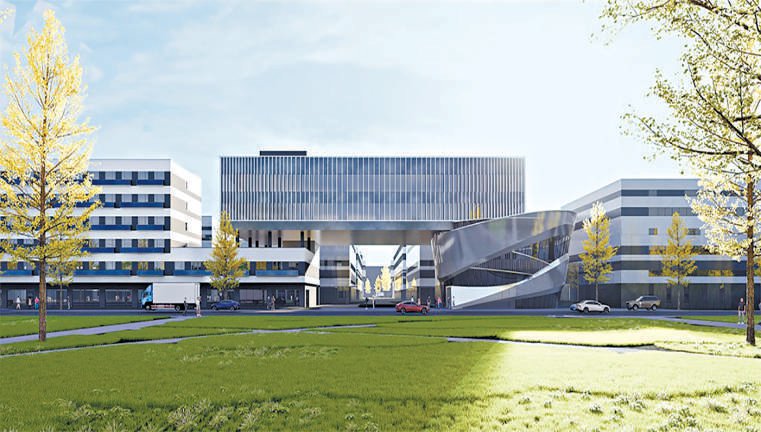
Core Insights - The Beijing-Tianjin-Hebei Intelligent Connected New Energy Vehicle Technology Ecological Park (Shunyi) has received approval for the automotive core component standard factory project, aimed at accelerating the development of an industrial cluster and enhancing collaboration among local automotive enterprises [3][4] Group 1: Project Overview - The project covers a total construction area of over 80,000 square meters, including standardized factories and supporting facilities, providing specialized production space for automotive core component companies [3] - The ecological park is planned to occupy over 8,000 acres, divided into three zones: Shunyi in Beijing, Wuqing in Tianjin, and Langfang in Hebei [3][4] - The Shunyi zone will focus on automotive electronics, smart vehicles, and quality upgrades, aiming to create a high-efficiency, green, and intelligent operational environment [3] Group 2: Development Phases - The project is divided into three phases: - Phase 1 focuses on production services and intelligent driving systems, expected to be operational by June 2026 [4] - Phase 2 will include electric motor control systems and smart cockpit development, anticipated to be completed by December 2027 [4] - The expansion area will target new material systems and smart automotive computing platforms, aiming for completion by the end of the 14th Five-Year Plan [4] Group 3: Industry Impact - The ecological park is expected to enhance the scale of the automotive component industry, attracting high-tech and high-value-added enterprises, thereby improving the self-sufficiency of core components [4] - Once completed, the park will create a "30-minute supply circle" with local automotive production bases and a "2 to 3-hour supply circle" with Tianjin and Hebei, promoting deep integration across the industry chain [4] Group 4: Recent Developments - Two significant projects have recently been signed to establish operations in the ecological park: Shanghai Tongyu Automotive Technology and Beijing Wanjitech, both focusing on intelligent chassis and laser radar technologies [6] - Shanghai Tongyu plans to invest 500 million yuan to build its northern headquarters and establish multiple intelligent production lines [6] - The addition of these companies is expected to strengthen the critical links in the park's industrial chain and foster a collaborative innovation ecosystem [6]

ICCV涌现自动驾驶新范式:统一世界模型VLA,用训练闭环迈向L4
量子位· 2025-11-08 04:10
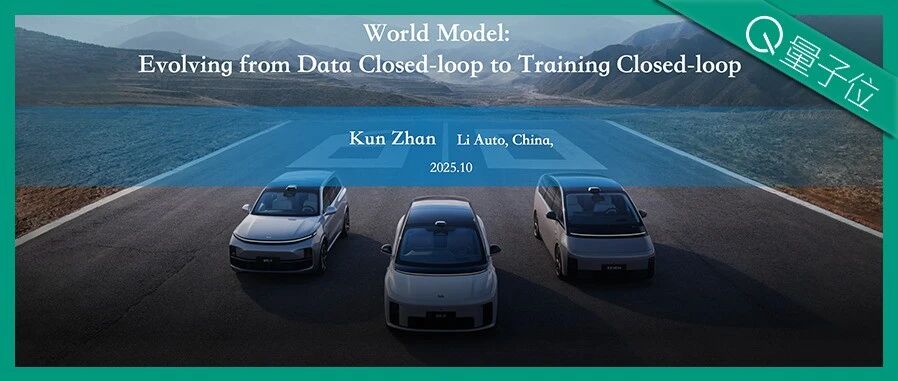
Core Viewpoint - The article discusses the shift in the autonomous driving industry from a data-driven approach to a training-driven approach, emphasizing the importance of world models and reinforcement learning in achieving Level 4 (L4) autonomy [2][4][6]. Group 1: Transition from Data Loop to Training Loop - The current data loop is insufficient for advancing autonomous driving technology, necessitating a shift to a training loop that allows for continuous model iteration through environmental feedback [4][11]. - Ideal's approach involves building a world model training environment in the cloud, which integrates prior knowledge and driving capabilities into the vehicle's VLA model [11][30]. - The world model encompasses environment construction, agent modeling, feedback mechanisms, and various scenario simulations, which are crucial for the training loop [13][31]. Group 2: Simulation and Evaluation Techniques - Ideal employs a combination of reconstruction and generation techniques for simulation, allowing for both stable and dynamic outputs [14][15][16]. - The Hierarchy UGP model, developed in collaboration with academic institutions, achieves state-of-the-art results in large-scale dynamic scene reconstruction [21][19]. - The focus on synthetic data generation enhances the diversity and complexity of training scenarios, improving model performance [25][24]. Group 3: Reinforcement Learning and Challenges - The reinforcement learning world engine enables models to explore training environments and receive feedback, with five key factors influencing its effectiveness [25][27]. - The simulation of interactions between multiple agents poses significant challenges, with Ideal exploring self-play and reward function adjustments to enhance sample diversity [27][29]. Group 4: Commercialization and Technological Advancements - Ideal has successfully established a profitable business model, which supports its ongoing research and development efforts, with over 10 billion yuan invested in the self-developed Star Ring OS [32][33]. - The Star Ring OS enhances vehicle performance by streamlining communication between different control systems, significantly reducing braking distances [35][36]. - The open-source initiative of the Star Ring OS is expected to benefit the entire industry, reducing development costs for other automakers [39][40]. Group 5: Industry Position and Future Outlook - Ideal is positioning itself as a leading player in the AI-driven automotive sector, with a focus on becoming a "space robotics company" [48][50]. - The company has established a research-production closed loop, allowing for rapid application of research findings to production, exemplified by the DriveVLM project [52]. - The article concludes that while many companies are investing in AI and robotics, few have achieved the comprehensive capabilities demonstrated by Ideal and Tesla [53].
江苏理想汽车电池有限公司成立
Zheng Quan Ri Bao Zhi Sheng· 2025-11-08 04:08
Core Insights - Jiangsu Ideal Automotive Battery Co., Ltd. has been established with a registered capital of 70 million yuan, focusing on battery manufacturing, sales, new energy technology research and development, and electric vehicle charging infrastructure operations [1] Company Structure - The new company is wholly owned by Shandong Ideal Automotive Battery Co., Ltd., which is jointly held by Beijing Ideal Automotive Co., Ltd. and Xinwangda Power Technology Co., Ltd. [1]

汽车突破性前沿科技创新成果:理想汽车辅助驾驶安全能力
Zhong Guo Jin Rong Xin Xi Wang· 2025-11-08 04:08
Core Viewpoint - The 2025 Automotive Technology and Equipment Development Forum highlighted the innovative achievements in automotive technology, with Li Auto's advancements in driver assistance safety capabilities being a key focus, emphasizing the principle of "safety is not dependent on vehicle configuration" [1] Group 1: Technological Innovations - Li Auto's AD4.0 platform integrates laser radar with perception algorithms, establishing a safety capability system that exceeds industry standards [4] - The platform features Automatic Emergency Braking (AEB) for 360° monitoring and intervention, capable of identifying risks in various scenarios, including low visibility conditions [4] - The platform also includes Automatic Emergency Steering (AES), which allows the vehicle to actively navigate around obstacles, enhancing traditional braking capabilities [4] Group 2: Core Design Philosophy and Technical Advantages - The system's response time has been optimized from 400-500ms to 200ms, significantly improving emergency response [7] - A comprehensive risk assessment model has been developed, moving beyond traditional methods to create a unified perception network for complex traffic scenarios [7] - Collision prediction has improved through machine learning models, enhancing adaptability and decision-making in unexpected situations [7] Group 3: Industry Impact and Leadership - Li Auto's upgrades reflect a deep application of new productive forces in the automotive industry, promoting safety equity through technological innovation [8] - The company aims to redefine safety standards for next-generation smart vehicles, showcasing the transition from "Chinese manufacturing" to "Chinese intelligence" [8] - Li Auto's approach to standardizing laser radar across all models exemplifies a shift in driver assistance safety from being a luxury feature to a universal standard [9]
