LI AUTO(LI)

Search documents
2025年度汽车技术与装备创新成果洞察
Zhong Guo Jin Rong Xin Xi Wang· 2025-11-08 03:53
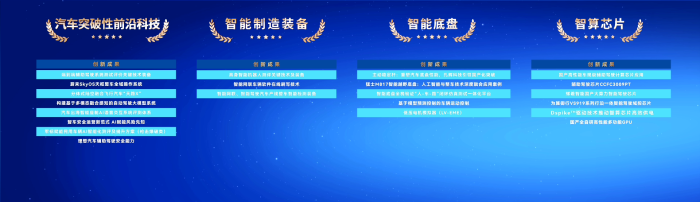
Core Insights - The 2025 Automotive Technology and Equipment Development Forum showcased 22 innovative achievements in four key areas: breakthrough automotive technologies, intelligent manufacturing equipment, intelligent chassis, and intelligent computing chips, highlighting China's core technological breakthroughs and industrial chain upgrades in the smart transformation of the automotive industry [1][7]. Breakthrough Automotive Technologies - Multiple achievements have made systematic breakthroughs, including the development of an end-to-end driver assistance system testing and evaluation technology by the China Automotive Research Institute (Jiangsu), which covers a vast array of scenarios [3]. - NIO Inc. launched SkyOS, China's first full-domain operating system for vehicles, achieving a comprehensive technological breakthrough applied in multiple mass-produced models [3]. - Tianlu Flying Car Technology Co., Ltd. introduced the "Tianlu X," a split-type land-air integrated flying car that complies with road regulations and possesses pure electric vertical take-off and landing capabilities [3]. - Jiushi (Suzhou) Intelligent Technology Co., Ltd. developed an L4-level multi-modal fusion perception autonomous driving system, enabling commercial operations for unmanned delivery across over 300 cities [3]. - Ideal Auto (Beijing Chehejia Information Technology Co., Ltd.) plans to equip all models with laser radar by 2025, enhancing active safety standards for family travel [3]. Intelligent Manufacturing Equipment - Key advancements in detection and production line technologies were made, such as the development of embodied intelligent robot testing equipment by Chongqing Kairui Robot Technology Co., Ltd., serving over 300 enterprises [4]. - Dongfeng Motor Corporation's Mingshi Automotive Technology Company developed online software flashing technology for intelligent connected vehicles, improving production efficiency and software consistency [4]. - China FAW Group Corporation independently developed an intelligent detection equipment system for production lines, integrating AI large models and digital twin technologies for full-process intelligent detection [4]. Intelligent Chassis - Localized and intelligent solutions became core breakthroughs, with Zhejiang Konghui Automotive Technology Co., Ltd. overcoming limitations of single torsional stiffness in active stabilizers, significantly enhancing vehicle stability and comfort [5]. - Dongfeng Motor Group's Mingshi Automotive Technology Company integrated AI and chassis control technologies in the M817 intelligent off-road chassis for all-terrain adaptability [5]. - The China Automotive Engineering Research Institute developed a "human-vehicle-road" closed-loop simulation testing platform for multi-dimensional verification of intelligent chassis from components to complete vehicles [5]. Intelligent Computing Chips - Domestic high-performance computing chips have achieved multi-scenario applications, such as the Huashan A1000 chip from Hezhima Intelligent Technology Co., Ltd., which supports L2+ level driver assistance functions [6]. - Suzhou Guoxin Technology Co., Ltd. innovatively integrated NPU and quantum-safe modules in the CCFC3009PT chip for comprehensive intelligent upgrades [6]. - Beijing Huixi Intelligent Information Technology Co., Ltd. launched the R1 chip, filling the gap in the domestic high-performance combined driver assistance chip market [6]. - Shanghai Weijing Technology Co., Ltd. introduced the VS919 series integrated control chip, breaking traditional external MCU designs for multi-scenario intelligent driving applications [6]. Summary of Innovations - The innovative achievements presented this year demonstrate significant progress in key technological areas within China's automotive industry, paving the way for a smarter, safer, and more efficient future, and establishing a solid foundation for China's continued leadership in global automotive competition [7][8].



李想分享i6操控好是如何实现的?
理想TOP2· 2025-11-08 03:44
Core Viewpoint - The article discusses the design and engineering principles behind the handling and comfort of the Li Auto i6, emphasizing the importance of physical attributes and user experience in vehicle performance [1][3][4]. Summary by Sections Vehicle Dynamics - Vehicle handling and comfort are determined by four main physical attributes: weight, wheelbase, center of gravity, and suspension structure [4][5]. - The tuning process involves a trade-off between "bouncing" and "swaying," where a stiffer suspension enhances handling but sacrifices comfort, while a softer suspension improves comfort but can lead to motion sickness [5][6]. Design Philosophy - The company aims to use rational quantitative data to address subjective user experiences, ensuring that the i6 provides enjoyable driving dynamics within a safe operational range [6][8]. - The i6 is designed to enhance "bouncing" to improve driving pleasure, particularly in the context of a mid-range SUV [5][7]. Hardware and Safety - The i6 features high-end hardware, including a front double-wishbone and rear multi-link suspension, which are typically found in luxury SUVs, contributing to its performance and safety [7][8]. - The vehicle's chassis performance is rated at 90% of its potential to maintain a safety buffer, reducing accident rates [2][8]. Control Systems - The company has developed its own control systems for the vehicle, integrating ESP, steering, and braking to enhance drivability, even for novice drivers [2][9]. - The i6 allows for adjustable performance settings, enabling users to experience driving pleasure without pushing the vehicle to its limits [9][10]. Emotional Experience - The i6 simulates the emotional excitement of driving a supercar without requiring extreme speeds, providing a unique driving experience [10][11]. - The development of the vehicle's chassis is a meticulous process, relying on the expertise of engineers and product managers to ensure high-quality performance [11][12]. Industry Context - The advancement of the Chinese automotive industry has enabled Li Auto to achieve significant self-research capabilities in chassis and software, enhancing the value proposition for consumers [13][14]. - The article highlights the positive feedback loop between improved product quality and rising consumer expectations, benefiting both users and manufacturers [14].
懵了,4月以来最惨!美联储,降息大消息
中国基金报· 2025-11-08 01:27
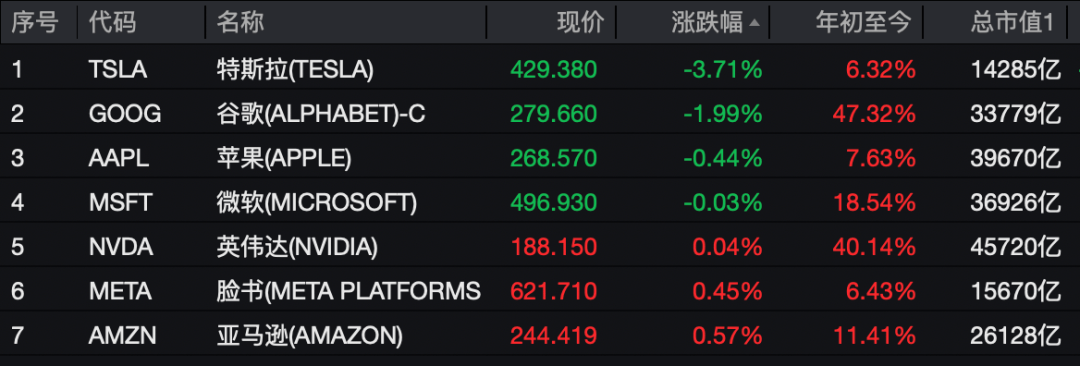
Market Overview - The U.S. stock market indices experienced significant declines this week, marking the worst week since early April, with the Nasdaq down 3.04%, the Dow Jones down 1.21%, and the S&P 500 down 1.63% [4] - The technology sector's pullback heavily impacted the Nasdaq, with the Wande American Technology Seven Giants Index falling 0.56% and Tesla dropping 3.71% [5][6] Government Shutdown Impact - The U.S. government shutdown has entered its 39th day, causing a vacuum of official data releases and escalating tensions between Democrats and Republicans, which has further impacted market sentiment [15][19] - The ongoing shutdown is projected to result in significant economic losses, with estimates suggesting a loss of $11 billion after six weeks and $14 billion after eight weeks [18] Federal Reserve Interest Rate Debate - Internal debates within the Federal Reserve regarding a potential interest rate cut in December have intensified, with a 66.5% probability of a 25 basis point cut and a 33.5% chance of maintaining current rates [22] - Fed officials express differing views on the necessity of a rate cut, with some advocating for a more aggressive approach to address economic pressures [21][22] Gold and Commodity Markets - Gold prices have shown volatility, currently trading around $4000 per ounce, with a slight weekly decline of 0.06% [11] - The oil market has also experienced fluctuations, with West Texas Intermediate crude oil closing at $59.84 per barrel, down 1.87% for the week, despite OPEC+ efforts to curb production [13]






懵了,4月以来最惨!美联储,降息大消息
Sou Hu Cai Jing· 2025-11-08 00:51
Market Performance - The three major US stock indices experienced a cumulative decline this week, marking the worst week since early April, with the Nasdaq down 3.04%, the Dow down 1.21%, and the S&P 500 down 1.63% [3][2] - Technology stocks dragged down the Nasdaq, with the US Technology Seven Index falling 0.56% and Tesla dropping 3.71% [3][4] Gold Market - Gold prices showed volatility, rebounding to $4000 per ounce on November 7, with a cumulative decline of 0.06% for the week [7][6] - The gold market remains under pressure due to the strong US dollar and the ongoing government shutdown [6][7] Government Shutdown Impact - The US government shutdown has entered its 39th day, with negotiations between Democrats and Republicans stalled, leading to significant economic impacts [10][12] - The Congressional Budget Office estimates that if the shutdown lasts six weeks, economic losses could reach $11 billion, and $14 billion if it lasts eight weeks [12] Federal Reserve Interest Rate Debate - Internal debates within the Federal Reserve regarding a potential interest rate cut in December have intensified, with a 66.5% probability of a 25 basis point cut and a 33.5% chance of maintaining current rates [17][16] - Fed officials express differing views on the necessity of a rate cut, with some advocating for a more aggressive approach due to rising credit market pressures [16][13]


【汽车】10月车市整体延续强劲表现,蔚来单月销量突破4万辆——特斯拉与新势力10月销量跟踪报告(倪昱婧/邢萍)
光大证券研究· 2025-11-08 00:05
Core Viewpoint - The article highlights the strong sales performance of various electric vehicle manufacturers, particularly Xiaopeng and NIO, while also discussing the delivery timelines and promotional strategies of these companies [3][4]. Group 1: Sales Performance - Xiaopeng's delivery volume increased by 75.7% year-on-year and 1.0% month-on-month to 42,013 units [3] - NIO's delivery volume rose by 92.6% year-on-year and 16.3% month-on-month to 40,397 units, with the NIO brand showing a year-on-year decline of 19.1% but a month-on-month increase of 27.3% [3] - Li Auto's delivery volume decreased by 38.2% year-on-year and 6.4% month-on-month to 31,767 units [3] Group 2: Delivery Timelines and Promotions - Tesla maintains a delivery cycle of 4-6 weeks for the domestic Model 3 and extends the delivery cycle for the refreshed Model Y to 2-5 weeks [4] - Li Auto's delivery cycles for models L6 and L9 have shortened, while the i6 has extended to 16-19 weeks [4] - NIO's delivery cycles for various models remain stable, with the new ES8's cycle shortened to 22-23 weeks [4] - Xiaopeng's delivery cycles for several models remain stable, with the P7's cycle shortened to 1-5 weeks [4] - Xiaomi's delivery volume continues to exceed 40,000 units, with reduced delivery cycles for models SU7 and YU7 [4] - Huawei's Hongmeng Zhixing saw a year-on-year increase of 63.8% and a month-on-month increase of 28.9% to 68,000 units [4] Group 3: Market Outlook - The company anticipates a peak season in Q4 2025, potentially leading to record-high orders by year-end, particularly focusing on model cycles [5] - Tesla's humanoid robot, Optimus V3, is expected to be officially released in Q1 2026, which may keep the related supply chain in market focus [5]
KLÉPIERRE: INFORMATION REGARDING THE TOTAL VOTING RIGHTS AND SHARES OF KLÉPIERRE SA AS OF OCTOBER 31, 2025
Globenewswire· 2025-11-07 16:45
Core Insights - Klépierre SA, a leading European shopping mall operator, reported a total of 286,861,172 shares and 286,336,128 exercisable voting rights as of October 31, 2025 [2][5]. Company Overview - Klépierre is focused exclusively on continental Europe, with a portfolio valued at €20.6 billion as of June 30, 2025, comprising large shopping centers across more than 10 countries [3]. - The company attracts over 700 million visitors annually to its shopping centers [3]. - Klépierre is listed on Euronext Paris and is part of the CAC Next 20 and EPRA Euro Zone Indexes, as well as various ethical indexes, highlighting its commitment to sustainable development and climate change initiatives [3].

纳斯达克中国金龙指数盘初跌1.35%


Xin Lang Cai Jing· 2025-11-07 14:42
Core Viewpoint - The Nasdaq Golden Dragon China Index experienced a decline of 1.35%, indicating a negative trend among popular Chinese concept stocks in early trading [1] Group 1: Stock Performance - Xpeng Motors saw a drop of over 5% [1] - Bilibili and Alibaba both fell by more than 3% [1] - JD.com decreased by over 2% [1] - Li Auto and Baidu each declined by more than 1% [1]
10元每升的「致命」冷却液,让理想痛失20亿
3 6 Ke· 2025-11-07 11:49
Core Viewpoint - The recall of 11,411 units of the Li Auto MEGA electric vehicle is expected to cost the company around 2 billion yuan due to a fire incident caused by inadequate corrosion resistance of the coolant used in the vehicle's cooling system [2][3]. Group 1: Incident Overview - A fire incident involving a Li Auto MEGA occurred in Shanghai, leading to significant consumer panic regarding electric vehicle safety [2]. - The company announced a recall for the 2024 MEGA models produced between February 18, 2024, and December 27, 2024, to replace the coolant and address potential battery overheating issues [2][3]. Group 2: Technical Details - The coolant used in the 2024 MEGA is a low-conductivity type, which was intended to meet insulation design requirements but has shown insufficient corrosion resistance compared to traditional coolants [3][7]. - The low-conductivity coolant is a newer solution, costing approximately 10 yuan per liter, and is designed to prevent issues like foaming and stratification that can occur with traditional coolants [8][9]. Group 3: Industry Implications - The incident raises concerns about the validation processes for coolant and cooling system components within the automotive industry, particularly for new energy vehicles [11][12]. - The rapid corrosion of the cooling plates in the MEGA, which typically should last over a decade, has prompted scrutiny of both the vehicle manufacturer and the battery supplier regarding their testing and validation protocols [10][16]. Group 4: Future Considerations - Following the incident, Li Auto has established a dedicated materials laboratory to enhance research in basic materials, fluids, and chemicals, indicating a shift in focus towards the underlying material science in automotive safety [23]. - Other companies using the same battery technology, such as Xiaomi Auto, are also conducting urgent reviews of their cooling systems to prevent similar issues [20].
10元每升的「致命」冷却液,让理想痛失20亿
36氪· 2025-11-07 10:18
Core Viewpoint - The article discusses the recall of 11,411 units of the Li Auto MEGA electric vehicle due to a fire incident caused by insufficient corrosion resistance of the coolant, leading to potential battery thermal runaway and significant financial implications for the company [4][5][6][7]. Group 1: Incident Overview - A fire incident involving a Li Auto MEGA occurred in Shanghai, raising consumer concerns about the safety of electric vehicles [4][5]. - The company announced a recall for vehicles produced between February 18, 2024, and December 27, 2024, to replace the coolant and affected components [6][7]. - The estimated cost of the recall is projected to reach approximately 2 billion yuan [7]. Group 2: Technical Analysis - The coolant used in the 2024 MEGA is a low-conductivity type, which was intended to meet insulation design requirements but has shown inadequate corrosion resistance compared to traditional coolants [7][13][14]. - The article highlights that the corrosion of the coolant system components, particularly the aluminum cooling plates, occurred within just over a year of the vehicle's launch, which is unusual for the industry [19][26]. - The transition to low-conductivity coolant is part of a broader trend in the industry, but it has raised concerns about the verification processes for coolant materials and their compatibility with vehicle components [21][22][23]. Group 3: Industry Implications - The incident has prompted other manufacturers using the same battery technology, such as Xiaomi, to conduct urgent reviews of their coolant systems [33]. - The article emphasizes the need for improved testing and validation processes for coolant materials, as the current practices may overlook critical compatibility issues [22][24]. - The recall and its implications serve as a reminder of the importance of safety and quality assurance in the rapidly evolving electric vehicle market [38].

华纬科技:公司客户包括比亚迪、吉利等
Zheng Quan Ri Bao Zhi Sheng· 2025-11-07 09:10
Core Viewpoint - Huawei Technology has confirmed its client base includes major automotive companies, indicating a strong market presence and ongoing capacity expansion [1]. Group 1: Client Base - The company serves a diverse range of clients, including BYD, Geely, Great Wall, Changan, Hongqi, BAIC, SAIC, Chery, JAC, Li Auto, NIO, Xpeng, Lynk & Co, Stellantis, Seres, Volkswagen, Dongfeng Nissan, FAW Dongji, Nanyang Xijian, Wandu, Jingxi Zhixing, Ruili Group, Wan'an Technology, Fastech, ZF, Hande, Knorr, Bendix, among others [1]. Group 2: Capacity Expansion - New production capacity is gradually being released, suggesting potential for increased output and revenue growth in the near future [1].