LI AUTO(LI)

Search documents
汽车早报|理想汽车首个海外零售中心开业 Stellantis将在美国投资130亿美元
Xin Lang Cai Jing· 2025-10-15 00:37
Group 1: Automotive Market Trends - The total number of vehicles for trade-in is expected to exceed 12 million, driven by effective government policies that have significantly stimulated consumer activity in the automotive market, leading to new car sales worth approximately 1.7 trillion yuan [1] - In September, passenger car sales reached 2.859 million units, marking a year-on-year increase of 13.2%, with production and sales for the first nine months of the year showing growth of 13.9% and 13.7% respectively [1] - By 2025, China's automotive exports are projected to exceed 6.5 million units, with cumulative sales of new energy vehicles expected to surpass 16 million units [1] Group 2: Company Developments - Shandong Li Auto Battery Co., Ltd. was established with a registered capital of 300 million yuan, focusing on battery manufacturing and electric vehicle charging infrastructure [2] - Seres has increased its registered capital from approximately 1.509 billion yuan to about 1.633 billion yuan, reflecting an increase of around 8% [3] - The pre-sale price for the Alpha T5 extended-range version has been announced at 123,800 yuan, featuring a pure electric range of 215 km and a combined range of 1,215 km [4] - Xpeng Motors reported cumulative deliveries of 80,000 units for the P7+ model [5] Group 3: Sales Performance - Honda's terminal vehicle sales in China for September were 54,544 units, a year-on-year decline of 12.85%, with cumulative sales for the first nine months down 20.43% [6] - Nissan's sales in China for September reached 61,552 units, slightly up from 61,395 units in the same month last year [7] Group 4: Regulatory and Market Changes - The State Administration for Market Regulation has unconditionally approved Mitsubishi Motors' acquisition of shares in GAC Mitsubishi Motors Sales Co., Ltd. [8] - General Motors announced a $1.6 billion charge due to adjustments in electric vehicle production, anticipating a slowdown in EV adoption following recent government policy changes [9] - The average transaction price for new cars in the U.S. has surpassed $50,000 for the first time, reaching $50,080 in September, reflecting a 2.1% month-on-month increase and a 3.6% year-on-year increase [9] - Stellantis plans to invest $13 billion in the U.S. over the next four years to expand its business, marking the largest single investment in the U.S. since the company began operations there [9]




8点1氪:“国考”报考年龄放宽至38周岁以下;陈震透露劳斯莱斯事故原因;苹果客服回应“大量iPhone 17系列新机无法激活”
36氪· 2025-10-15 00:12
Group 1 - The announcement of the 2026 national civil service examination confirms that the age limit for applicants has been raised from 35 to 38 years old, with a total recruitment plan of 38,100 positions [3] - The adjustment in age requirements is explained as a response to the gradual implementation of delayed retirement age policies [3] - The incident involving a Rolls-Royce accident was attributed to the use of assisted driving, highlighting the importance of understanding the capabilities of different brands' assisted driving systems [3] Group 2 - JD.com clarified that its upcoming car launch does not involve direct manufacturing, as it collaborates with CATL and GAC Group to provide consumer insights and exclusive sales [4] - The popular bakery brand 85°C has closed multiple stores in cities like Hangzhou, Shanghai, and Nanjing, linked to financial struggles faced by its parent company [7] - The Chinese government is set to implement a digital process for registering new domestic cars, eliminating the need for physical visits to vehicle management offices starting November 1 [10] Group 3 - The third quarter results for JPMorgan Chase showed a net profit of $14.4 billion, a 12% increase year-on-year, with net revenue rising by 9% to $47.1 billion [21] - The third quarter net profit for Xiaogoods City reached 1.766 billion yuan, marking a 101% year-on-year growth, with total revenue for the first three quarters at 13.061 billion yuan, up 23.07% [21] - The cycling economy is experiencing significant growth, with the number of bicycle-related enterprises in China reaching approximately 4.68 million, showing a continuous increase over the past decade [22]


经纬江苏——方寸球衣上的制造密码
Zhong Guo Zheng Quan Bao· 2025-10-15 00:00
Core Insights - The evolution of sports jerseys in Jiangsu reflects the province's industrial transformation, showcasing a shift from traditional to high-tech materials and indicating a broader economic narrative of innovation and regional balance [2][4][6]. Industry and Company Developments - The transition from cotton to synthetic materials in sports jerseys illustrates a history of material science innovation, with polyester and nylon becoming mainstream, enhancing performance and comfort [4][5]. - Jiangsu's textile industry has evolved into a high-tech sector, capable of meeting international demands with rapid production timelines, highlighting the strength of its complete industrial chain [4][8]. - The introduction of smart fabrics, such as those developed by China Petrochemical's Yizheng Chemical Fiber, demonstrates advancements in textile technology, allowing for dynamic adjustments to temperature and humidity [5][6]. - The development of new materials is a strategic focus in Jiangsu, with significant investments in advanced materials like nanomaterials and green building materials, indicating a robust growth trajectory [7][8]. - The successful launch of the Changtai Yangtze River Bridge, utilizing high-strength materials from CITIC Pacific Special Steel, exemplifies Jiangsu's capabilities in producing high-performance materials for major infrastructure projects [8]. Regional Economic Balance - The performance of Jiangsu's football teams and their jerseys symbolizes the province's economic structure, with Suzhou leading in innovation, Nantong focusing on marine engineering, and Xuzhou emerging as a new industrial force [10][15][16]. - Jiangsu's economic strategy emphasizes systemic and collaborative development across regions, with Suzhou, Suzhong, and Subei each playing distinct roles in the overall economic landscape [10][12][13]. - The province's advanced manufacturing clusters, such as those in the automotive and semiconductor industries, showcase the benefits of regional collaboration and supply chain integration, enhancing competitiveness [18][20][21]. Innovation and Collaboration - Jiangsu's industrial ecosystem is characterized by deep integration of innovation and supply chains, fostering a dynamic environment for technological advancements and efficient production [19][21]. - The collaboration between traditional and emerging industries in Jiangsu is revitalizing sectors like textiles, demonstrating the potential for innovation through cross-industry partnerships [20][21]. - The establishment of innovation hubs, such as the Suzhou-Suqian industrial park, reflects a commitment to fostering research and development alongside manufacturing, enhancing the province's competitive edge [20][21].

经纬江苏
Zhong Guo Zheng Quan Bao· 2025-10-14 20:17
Core Insights - The evolution of sports jerseys in Jiangsu reflects the province's industrial transformation, showcasing advancements in material technology and the integration of various industries [1][2][4] Group 1: Industrial Evolution - The transition from cotton to synthetic materials in sports jerseys illustrates a history of material innovation, with polyester and nylon becoming mainstream [1][2] - Jiangsu's textile industry has evolved into a high-tech sector, with companies like Jiangsu Dongdu Textile Group completing international orders faster due to a complete industrial chain [2] - New materials, such as smart polyester fibers that adjust to environmental conditions, highlight the rise of advanced materials in Jiangsu [2][3] Group 2: Regional Economic Development - The 13 teams in the "Su Super" league symbolize the balanced economic development across Jiangsu, with each region playing a distinct role [4][5] - Southern Jiangsu acts as a "forward" with high-quality breakthroughs, while Central Jiangsu serves as a "midfield engine" for growth, and Northern Jiangsu emerges as a new force in industrial development [6][7] - The region's industrial clusters, such as the advanced manufacturing clusters in Suzhou and the medical high-tech zone in Taizhou, demonstrate the strategic importance of regional collaboration [5][6] Group 3: Supply Chain and Innovation - Jiangsu's industries benefit from deep collaboration between innovation and supply chains, creating a robust industrial network [8][9] - The automotive sector in Jiangsu, particularly in electric vehicles, showcases a successful model of local supply chain integration, with significant contributions from local manufacturers [8][9] - Traditional industries are revitalizing through partnerships with high-tech firms, leading to a new era of innovation and efficiency [9][10]
北京智能汽车为何“更聪明”
Bei Jing Qing Nian Bao· 2025-10-14 17:32
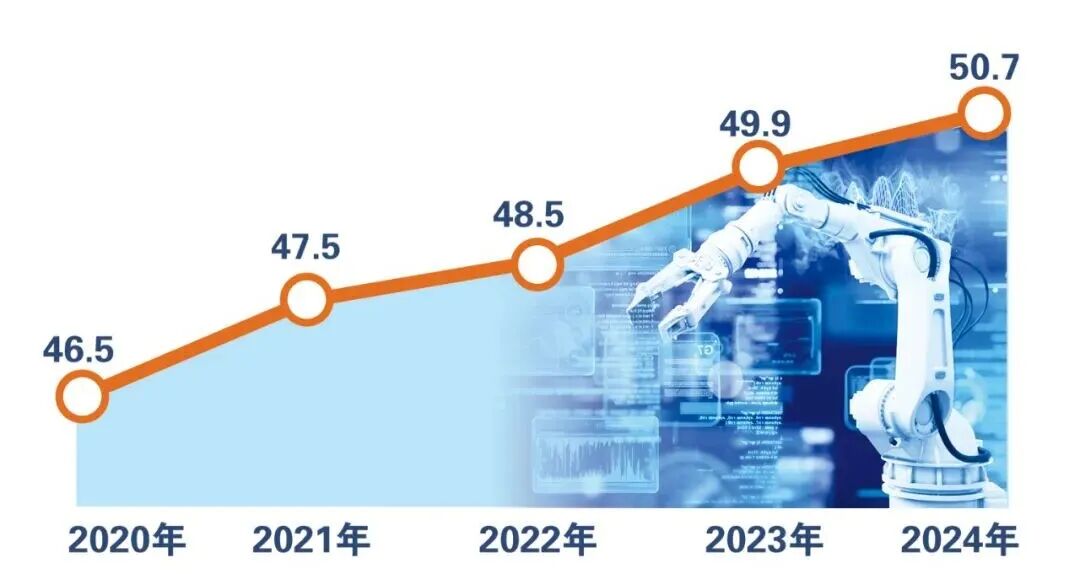
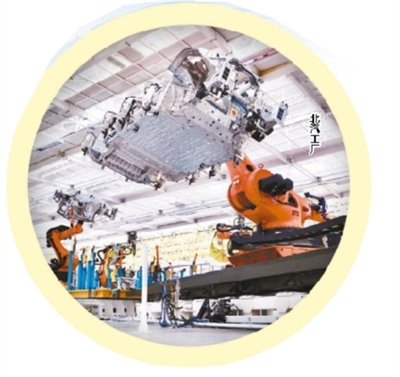
Core Viewpoint - Beijing is positioning itself as a leading hub for intelligent connected vehicles, leveraging its policy advantages, technological advancements, and industrial cluster to accelerate the development of the smart and connected vehicle industry [7][9]. Group 1: Policy and Standards - Beijing has established itself as a pilot city for intelligent connected vehicles, with the recent release of four local standards in the autonomous driving sector, focusing on closed testing and vehicle-road-cloud integration [7]. - The city aims to create a globally leading institutional innovation hub by prioritizing standard-setting to gain a voice in industry development [7]. - The implementation of the "Beijing Autonomous Driving Vehicle Regulations" marks a significant step in legalizing L3 and above autonomous vehicles for personal use, expanding the scope beyond commercial applications [7][9]. Group 2: Technological Infrastructure - The Beijing Economic-Technological Development Area has achieved 600 square kilometers of intelligent connected road coverage, with over 1,000 vehicle-mounted units deployed and more than 33 million kilometers of testing mileage [7][8]. - The cloud control platform processes approximately 420 terabytes of data daily, integrating over 1,100 test vehicles and covering more than 1,600 intersections [8]. - The city has developed a comprehensive urban-level experimental platform encompassing "vehicle, road, cloud, network, and map" systems, enhancing the testing and operational capabilities of autonomous vehicles [8]. Group 3: Industry Development - Beijing's automotive industry is a key pillar of its economy, with a projected automotive industry output value exceeding 700 billion yuan by 2025, and an 80% penetration rate for intelligent connected vehicles (L2 and above) [7]. - The city has seen a significant increase in electric vehicle production, with July's output reaching 52,000 units, a year-on-year increase of 140% [9]. - Over 120 intelligent connected vehicle companies are now based in Beijing, with notable growth in firms like WeRide and Pony.ai, which have reported record revenues and expanded operations [8][9]. Group 4: Application and Innovation - Autonomous driving services are being scaled up, with companies like Baidu and Pony.ai conducting regular operations in multiple cities, including Beijing [9]. - The upcoming World Intelligent Connected Vehicle Conference will showcase advancements in technology, applications, safety, and data, focusing on the transition from pilot projects to large-scale applications [9]. - The integration of smart technologies in manufacturing processes is enhancing production efficiency for companies like Xiaomi and Li Auto, contributing to the overall growth of the sector [9].
理想汽车电池公司正式成立
DT新材料· 2025-10-14 16:04
Core Viewpoint - The establishment of Shandong Ideal Automotive Battery Co., Ltd. marks a significant collaboration between Ideal Auto and Xiwanda Power, focusing on the production and sales of lithium-ion batteries for electric vehicles, with a registered capital of 300 million RMB [2][3]. Company Overview - Shandong Ideal Automotive Battery Co., Ltd. was officially established on October 13, with a registered capital of 300 million RMB, and its business scope includes battery manufacturing, sales, and research in emerging energy technologies [2]. - The joint venture is owned equally by Xiwanda Power and Beijing Ideal Auto, each holding a 50% stake [2]. Industry Context - The trend of car manufacturers partnering with battery manufacturers is not new, with several major collaborations established between leading automotive companies and battery producers from 2017 to 2023 [4]. - Future prospects indicate that more battery companies may form joint ventures with automotive manufacturers, including international collaborations [5]. Research and Development - Ideal Auto has taken a leading role in the design of battery products, processes, and materials in its collaboration with Xiwanda, referring to it as self-developed batteries [3]. - The R&D team for Ideal Battery consists of approximately 200 members, with regular project reviews conducted by Ideal Auto's president [3].
智能驾驶&座舱行业展望
2025-10-14 14:44
Industry and Company Analysis Summary Industry Overview - The smart driving and cockpit industry is experiencing significant collaboration among domestic OEMs, including BYD, Geely, Chery, FAW, Dongfeng, Changan, BAIC, SAIC, and GAC, with China Automotive Intelligent Technology (Tianjin) Co., Ltd. for research and user experience evaluation of intelligent connected vehicles [1][3] - The evaluation system for smart driving performance is based on N-CAP and CICAP standards, combined with consumer subjective evaluations, providing objective and scientific improvement suggestions for automakers [1] Key Companies and Their Performance - **Huawei**: Leading in L3 level autonomous driving with an aggressive strategy. Their ADS system has version differences, with high-end models like the Aito M8/M9 using ADS 4.0, while the M7 uses a downgraded version. Full features require additional payment, but the downgraded version is sufficient for low traffic cities and highways [1][8] - **Xpeng Motors**: Shows slightly lower stability compared to Huawei but performs well in certain scenarios [6] - **Li Auto**: Has a conservative but stable strategy, closely matching Huawei and Xpeng in overall performance [7] - **NIO and Xiaomi**: Positioned in the third tier, with NIO showing limited progress and Xiaomi needing algorithm optimization for better urban performance [7] Technological Developments - **Qualcomm 8,397 Chip**: Expected to be adopted by Li Auto and Xiaomi in 2026, with some traditional manufacturers potentially following suit due to issues with NVIDIA's Sora development [4][15] - **L2 Mandatory Standards**: Implementation is expected to increase compliance costs for automakers by 15%-20%, particularly affecting Xiaomi due to recent accident scenarios [4][17] User Experience Evaluation - The user experience evaluation for smart driving includes fixed-route tests in urban and highway environments, assessing various scenarios such as tunnels and complex intersections. The results are based on both professional evaluations and actual user feedback, ensuring a comprehensive analysis [5][10] Smart Cockpit Interaction - The evaluation of smart cockpit human-machine interaction focuses on usability, safety, creativity, and emotional engagement. New force car companies like NIO, Xpeng, and Li Auto excel in this area, while traditional manufacturers like BYD and Geely are catching up [12][13] - Huawei's HarmonyOS cockpit system is competitive but lacks customization features, leading to product homogenization [13] Future Trends - The future of smart cockpits will focus on five dimensions: visual, auditory, tactile, physiological monitoring, and optoelectronic applications. Key developments include DMS and OMS becoming mandatory standards, enhanced auditory quality, and more natural human-machine dialogue [19] - Touch interaction technology will rely on advancements in holographic technology, which could enable more complex gesture controls [20] Emerging Technologies Impacting Supply Chain - Technologies such as HUD and AR HUD, electronic rearview mirror systems, and smart seating are expected to significantly impact the automotive supply chain. These innovations will drive demand for related components and systems [22][25] Conclusion - The smart driving and cockpit industry is rapidly evolving, with significant advancements in technology and user experience evaluation. Key players like Huawei, Xpeng, and Li Auto are leading the charge, while regulatory changes are reshaping compliance costs and testing requirements. The future will see a focus on enhanced interaction and emerging technologies that will further transform the automotive landscape [1][4][19]
汽车行业重点公司三季报业绩前瞻
2025-10-14 14:44
Summary of Key Points from the Automotive Industry Conference Call Industry Overview - The automotive industry is experiencing a slowdown in overall growth, with key companies showing a sequential sales growth of 7.29%, surpassing the industry average of 5.6% [2][8] - The performance of new energy vehicle manufacturers is notably stronger compared to traditional automakers [8] Company Performance and Expectations BYD - BYD's Q3 profit is expected to be between 8 billion to 8.5 billion yuan, a significant increase from 6.6 billion yuan in Q2, despite a year-on-year sales decline of 1.82% [1][3][4] - The increase in profit is attributed to higher per-vehicle profit and reduced end-user promotions [4] Geely - Geely's Q3 sales are projected to grow by 7.89%, with an expected profit of approximately 4.3 billion yuan, reflecting a year-on-year increase of 75% and a sequential increase of about 20% [1][5] - The growth is driven by the "anti-involution" effect and contributions from high-value models such as the Xingyao 8, M9, and Lynk & Co 900 [5] Great Wall Motors - Great Wall Motors achieved Q3 sales of 353,600 units, a sequential increase of 13%, with exports being a key growth driver [1][6] - Expected revenue is around 60 billion yuan, with profits estimated between 4.2 billion to 4.5 billion yuan, benefiting from improved gross margins [6] Changan Automobile - Changan's Q3 sales reached 77,100 units, with a sequential growth of 9.4% [1][7] - The expected revenue is around 44 billion yuan, with profits estimated between 1.5 billion to 1.8 billion yuan, aided by reduced losses in the new energy sector [7] New Energy Vehicle Manufacturers - Leap Motor: Sales of 174,000 units, with a sequential growth of nearly 30%, expected revenue of around 18 billion yuan, and achieving breakeven or slight profit [1][9] - Li Auto: Sales of 93,000 units, with expected profits of 300 to 500 million yuan [1][9] - Xpeng Motors: Sales of 116,000 units, expected revenue of around 21 billion yuan, but still facing losses of 400 to 500 million yuan [1][9] Traditional Automakers - SAIC Motor: Q3 revenue around 165 billion yuan, a year-on-year increase of 39%, with expected profits of 3.5 to 4 billion yuan [10] - BAIC BluePark: Q3 revenue around 6 billion yuan, but slightly higher losses compared to Q2 [10] - GAC Group: Q3 revenue increased by 10% year-on-year, but still in a loss position [10] Component Manufacturers - The automotive electronics sector is expected to perform well in 2025, benefiting from lower procurement costs and reduced pricing pressure from automakers [11] - Companies like Desay SV, Huayang Group, and Jingwei Hirain are expected to exceed expectations in Q3, with Desay SV's profit projected at around 700 million yuan, a year-on-year increase of over 20% [11][12] - Other component manufacturers such as Wemaise and Newray Ford are also expected to show strong performance, with Wemaise's year-on-year growth estimated to exceed 100% [13] Key Takeaways - The automotive industry is gradually recovering, with various companies implementing proactive measures to address market competition and challenges [8] - Geely, Great Wall, and Leap Motor are highlighted as the most likely to exceed expectations in the automotive sector [15] - In the component sector, companies like Jingwei Hirain, Wemaise, and Fuyao Glass are expected to outperform market expectations [16]



美股异动 | 热门中概股普跌 阿里巴巴(BABA.US)跌超3%
智通财经网· 2025-10-14 14:29
Core Viewpoint - The Nasdaq China Golden Dragon Index experienced a significant decline of 2.69%, with major Chinese concept stocks also falling, attributed to escalating Sino-U.S. trade tensions [1] Market Performance - Major Chinese concept stocks such as 房多多 (DUO.US) fell over 5%, while 阿里巴巴 (BABA.US), 小鹏汽车 (XPEV.US), and 理想汽车 (LI.US) dropped more than 3%, and 好未来 (TAL.US) decreased over 2% [1] - The Hang Seng Index declined by 1.73%, and the Shanghai Composite Index fell by 0.62% [1] Analysis and Outlook - Analysts from 东方证券 noted that the impact of the current trade war is somewhat weaker than expected, but there remains potential for fluctuations in the future [1] - The outlook suggests that while the upward recovery may be delayed, the overall upward trend in the market is unlikely to change [1]


理想/欣旺达合资公司正式落地
起点锂电· 2025-10-14 10:24
Core Insights - The article discusses the collaboration between Li Auto and Aisin Wanda, focusing on the establishment of a joint venture for battery production and the development of an open-source vehicle operating system called Star Ring OS [2][3][10]. Group 1: Joint Venture and Collaborations - Li Auto and Aisin Wanda have formed a joint venture named Shandong Li Xiang Auto Battery Co., Ltd., with a registered capital of 300 million yuan, where both companies hold a 50% stake [3][4]. - The joint venture aims to focus on battery manufacturing, sales, and the development of new energy technologies, including electric vehicle charging infrastructure [4][3]. - Aisin Wanda's involvement in the Star Ring OS project will enhance the integration of supply chain and vehicle capabilities, promoting a more open and sustainable automotive software ecosystem [2][10]. Group 2: Market Position and Performance - Aisin Wanda ranks among the top 10 domestic power battery manufacturers, with a reported battery installation volume of 10.21 GWh in the first seven months of 2025, reflecting a year-on-year growth of 40.2% [5][11]. - The company's revenue for the first half of 2025 reached 26.985 billion yuan, a 12.82% increase year-on-year, with the power segment showing a 22.63% growth in revenue [11]. - The battery project with Li Auto is seen as a significant step in Aisin Wanda's strategy, following a similar partnership with Geely, which also focused on battery production in Shandong [4][5]. Group 3: Industry Trends and Future Outlook - The establishment of the joint venture is expected to adjust the current supply chain dynamics in the battery industry, particularly for Li Auto, which currently sources batteries from multiple suppliers, including CATL and Aisin Wanda [8][10]. - The overall battery installation volume in China for the first seven months of 2025 reached 343.52 GWh, with Aisin Wanda's contribution being significant [5][9]. - The collaboration is anticipated to enhance the competitive landscape of the electric vehicle market, as Li Auto aims to introduce self-developed battery products by 2026 [2][10].