LI AUTO(LI)

Search documents
王健林首次赎回一座万达广场,此前已出售超80座;东方甄选将开首家旗舰店;张雪峰回应被禁言停播;知情人士否认王腾加入魅族丨邦早报
创业邦· 2025-12-04 00:18
Group 1 - Wang Jianlin's Wanda Group has made a rare "redemption" move by regaining control of a Wanda Plaza after selling over 80 plazas previously, indicating a strategic shift in management and ownership [3][5] - The management team of the company underwent a complete overhaul, with key positions being filled by new executives from Shanghai Wanda Ruichi Enterprise Management Co., Ltd., which is fully owned by Wanda [5] - Oriental Selection is expanding its offline presence by opening its first flagship store in Beijing, aiming to enhance its retail strategy after facing challenges in the past two years [5] Group 2 - Prada Group has completed the acquisition of Versace for €1.25 billion (approximately ¥102.78 billion), marking a significant consolidation in the luxury fashion sector [10] - TikTok plans to invest over 200 billion Brazilian Reais (approximately $377 million) to build a data center in Brazil, which will be its first project in Latin America [21] - JD.com has acquired approximately 59.8% of the shares in German retail giant CECONOMY, increasing its total stake to 85.2%, pending regulatory approval [23]




陆家嘴财经早餐2025年12月4日星期四
Wind万得· 2025-12-04 00:14
Group 1 - China's self-developed reusable launch vehicle Zhuque-3 successfully completed its maiden flight, marking a new milestone in the country's commercial space industry, with predictions that the industry could reach a scale of 7-10 trillion yuan by 2030 [2] - The U.S. ADP employment report for November showed a decrease of 32,000 private sector jobs, the largest drop in two and a half years, leading to increased expectations for a Federal Reserve rate cut [2] Group 2 - The Chinese government is promoting new urbanization as a key driver for expanding domestic demand and upgrading industries, emphasizing the need for urban renewal and addressing the urban-rural dual structure [3] - The Chinese Ministry of Commerce reported that the trade-in program for consumer goods has generated over 2.5 trillion yuan in sales, benefiting over 360 million people [3] Group 3 - The A-share market experienced a decline, with the Shanghai Composite Index down 0.51% and the Shenzhen Component down 0.78%, while the coal sector saw gains [5] - The Hong Kong Hang Seng Index fell 1.28%, with significant net buying from southbound funds, particularly in Alibaba [5] Group 4 - New active equity funds have shown signs of building positions, with over 80% of newly established funds experiencing net value fluctuations, while the consensus is to focus on AI applications for future allocations [6] - Morgan Stanley upgraded its rating on the Chinese stock market to "overweight," citing a higher risk of significant gains compared to losses [6] Group 5 - The Chinese government has initiated a parenting subsidy program for families with children under three years old, with over 30 million applications submitted and approved [4] - Cambodia will implement a visa-free policy for Chinese citizens from June to October 2026, allowing for multiple entries [4] Group 6 - The cultural and tourism sector in China is set to integrate with the civil aviation industry through a new action plan aimed at enhancing domestic travel accessibility and developing low-altitude tourism [9] - The Chinese passenger car market saw retail sales of 2.263 million units in November, a year-on-year decline of 7%, while the new energy vehicle market grew by 7% [9] Group 7 - The China Internet Finance Association is enhancing self-regulation for financial applications and mini-programs, aiming to mitigate risks associated with digital financial channels [10] - Binance appointed co-founder He Yi as co-CEO to expand its global business and strengthen compliance efforts [10] Group 8 - The U.S. stock market saw slight gains, with the Dow Jones up 0.86%, while the tech sector faced declines, particularly in Chinese concept stocks [15] - European stock indices showed mixed results, with the French market benefiting from consumer sector resilience [15] Group 9 - The domestic bond market experienced narrow fluctuations, with most interest rates rising, while the central bank conducted a reverse repurchase operation [17] - The U.S. Treasury yields collectively fell, indicating a shift in investor sentiment [17] Group 10 - International precious metals futures generally rose, supported by expectations of a Federal Reserve rate cut and positive economic data from Europe [18] - Crude oil prices increased amid ongoing geopolitical tensions, particularly related to the Russia-Ukraine conflict [18]






Peruvian Supreme Court Mandates Full Company Ownership of Disputed Claims
Globenewswire· 2025-12-03 21:35
Core Viewpoint - American Lithium Corp. has achieved a significant legal victory regarding its mining concessions in Peru, which enhances the company's operational stability and paves the way for advancing its critical minerals projects [1][2][5]. Legal Developments - The Sixth Permanent Court of Lima issued Resolution No. 24, consolidating the legal security of 32 mining concessions held by Macusani Yellowcake S.A.C., a subsidiary of American Lithium [1][2]. - The court's final judgment restores the validity and ownership of these concessions, following the dismissal of appeals by co-defendants INGEMMET and the Ministry of Energy and Mines [2][4]. Compliance and Enforcement - INGEMMET is mandated to issue a new administrative resolution reflecting the court's judgment within 30 days, with penalties for non-compliance [3]. - The court requires INGEMMET to identify the official responsible for compliance, holding the highest institutional authority accountable for any failure to act [3]. Project Implications - The ruling provides a framework of full legal stability for the Falchani and Macusani projects, essential for current and future investments [4][5]. - With the restoration of concession titles, the company can proceed with technical work, permitting processes, and strategic development across its critical minerals assets [5]. Company Overview - American Lithium is focused on developing two major lithium projects and the largest undeveloped uranium project in Latin America, including the TLC claystone lithium project in Nevada and the Falchani hard-rock lithium project in Peru [6]. - The company has completed preliminary economic assessments for all projects, indicating significant expansion potential and strong community support [6].


车企跨界抢占智能穿戴入口,理想发布首款AI眼镜,起售1999元
Hua Er Jie Jian Wen· 2025-12-03 18:56
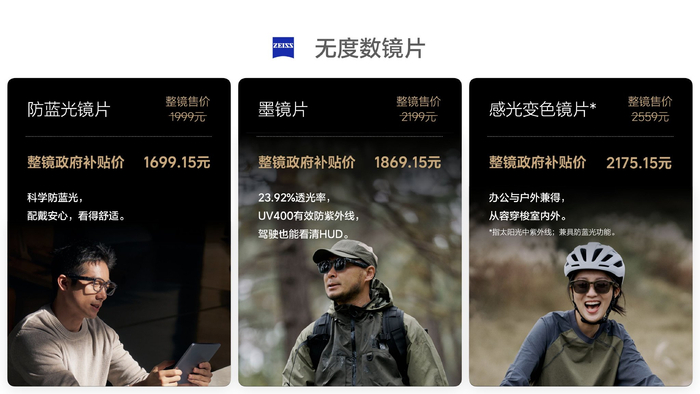
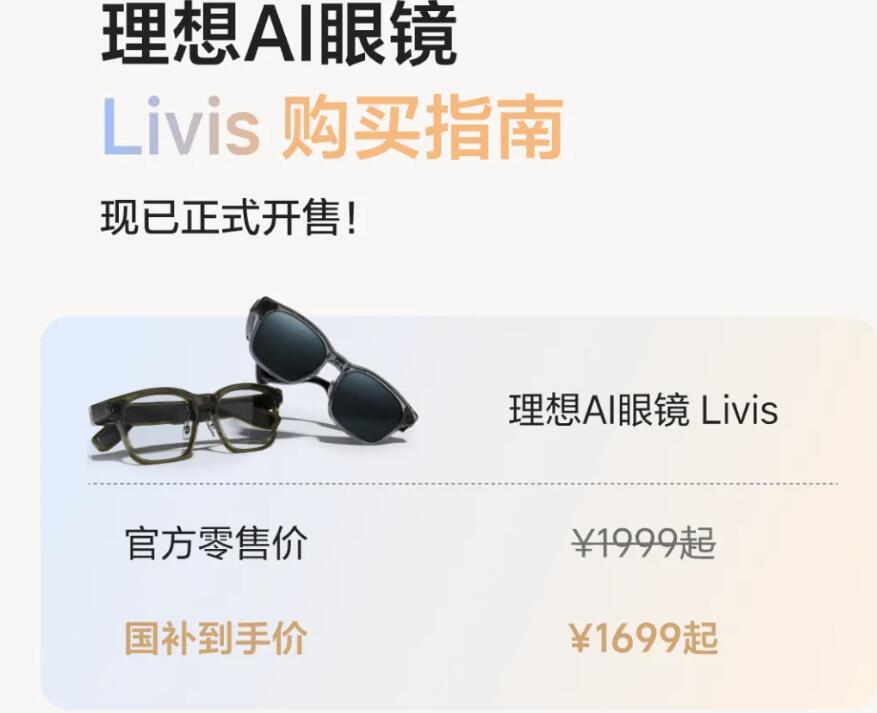
Core Viewpoint - Li Auto has officially launched its first AI glasses, Livis, marking its entry into the AI eyewear market, with a starting price of 1999 yuan, reduced to 1699 yuan after subsidies, indicating a strategic move to expand into smart wearable devices and seek new user engagement points [1][3]. Product Overview - The Livis AI glasses weigh only 36 grams and have a battery life of 18.8 hours, featuring Zeiss lenses, which signifies the automotive industry's shift towards smart wearable technology [1][3]. - Li Auto positions the AI glasses as "wearable robots," part of a broader embodied intelligence strategy, where the glasses and vehicles are on an equal footing within a complete ecosystem [4]. Technical Features - The Livis glasses are equipped with Li Auto's self-developed MindGPT-4o multimodal model and the upgraded "Li Auto Classmate" AI assistant, which has already served nearly 1.5 million car owners [3]. - The glasses feature a 12-megapixel camera with a 105° ultra-wide-angle lens and EIS electronic stabilization, focusing on image recording and voice interaction rather than optical display modules [4]. - The product utilizes Li Auto's Livis OS embedded operating system and WearLink Realtime Audio communication system, achieving a question wake-up speed of 300ms and an end-to-end execution response time of 800ms [10]. Market Context - The launch of Livis coincides with a rapid growth phase in the domestic AI eyewear market, with CINNO Research projecting a 186% year-on-year increase in sales for the consumer-grade AI/AR market by Q3 2025 [3]. - Despite the high product completion, Li Auto faces challenges in brand recognition within the AI eyewear sector, competing against established players like Xiaomi and Alibaba, which have larger user bases [13]. Strategic Implications - The automotive industry is experiencing challenges due to long repurchase cycles and low repurchase rates, prompting companies like Li Auto to seek new avenues for brand exposure and user retention [3]. - The AI glasses are designed to offload complex tasks such as map navigation and AR interactions to the vehicle's computing power, creating a division of labor between lightweight interaction through the glasses and deep computation via the car [11].
决战端侧:AI应用加速“硬”着陆
Shang Hai Zheng Quan Bao· 2025-12-03 18:45
Core Insights - The focus of AI development is shifting towards terminal applications, with companies like Li Auto, Alibaba, and ByteDance launching AI glasses, indicating a competitive landscape for the next generation of interactive devices [1][2] - The AI end-side market is expected to grow significantly, with predictions that by 2027, over 70% of new intelligent terminals and applications will be widely adopted in key sectors [2] - The integration of AI models with hardware is seen as a crucial path for commercialization, as hardware provides a clear monetization channel for AI capabilities [3][4] Group 1: Industry Dynamics - Major tech companies are accelerating their investments in AI end-side applications, with notable collaborations such as OpenAI partnering with Foxconn for next-gen AI infrastructure [2] - The AI end-side market is projected to be one of the fastest-growing tech sectors globally, with a potential market size increase from hundreds of billions to trillions [2] - AI glasses are viewed as revolutionary devices that can capture over 80% of human sensory input, marking a significant shift in human-computer interaction [2] Group 2: Supply Chain and Innovation - The AI hardware sector is heavily reliant on the mature supply chain of consumer electronics, with companies like Alibaba forming alliances to create an ecosystem for AI glasses [6][7] - There is a growing demand for components such as sensors and processors, leading to increased orders for companies involved in the AI supply chain [6][7] - New technologies like bone conduction and optical waveguides are emerging as opportunities within the AI hardware space, with companies actively developing innovative products [7] Group 3: Challenges and Considerations - The AI end-side industry faces challenges such as matching market demand, overcoming manufacturing bottlenecks, and building user trust [8] - The quest for a "killer application" remains a pressing question, with the need for improved ecosystem support and further advancements in AI technology [8] - Ethical considerations, data security, and privacy protection are critical issues that need to be addressed for the long-term development of the AI industry [8]

美股异动 | 热门中概股普跌 理想汽车(LI.US)跌近4%
Zhi Tong Cai Jing· 2025-12-03 15:52
Group 1 - The Nasdaq Golden Dragon Index fell by 1%, indicating a decline in popular Chinese concept stocks [1] - Li Auto (LI.US) dropped nearly 4%, while XPeng Motors (XPEV.US) and Niu Technologies (NIU.US) fell over 3% [1] - Alibaba (BABA.US) experienced a decline of nearly 2% [1]


美股异动 | 新能源车股多数走低 特斯拉(TSLA.US)涨超2.8%
智通财经网· 2025-12-03 15:41
智通财经APP获悉,周三,新能源车股多数走低,截至发稿,小鹏汽车(XPEV.US)、理想汽车(LI.US)跌 超3%,蔚来(NIO.US)跌超4%,Rivian Automotive(RIVN.US)跌0.41%;特斯拉(TSLA.US)涨超2.8%。 ...


理想汽车开始卖AI眼镜了
第一财经· 2025-12-03 15:06
Core Viewpoint - Li Auto has officially launched its first AI smart glasses, Livis, priced from 1999 yuan, marking the first product from its newly established "wearable robotics" department [3][4]. Group 1: Product Development and Vision - The AI glasses will undergo phased iterations, starting with optimizing weight and battery life, followed by a display version developed in collaboration with Zeiss, ultimately aiming for a standalone device [3][4]. - Li Auto's CEO, Li Xiang, has expressed the company's vision to connect the physical and digital worlds, aspiring to become a leading AI enterprise globally [3][4]. - The company envisions various forms of "robots," including L4 autonomous vehicles as "car robots," upgraded smart cockpits as "intelligent space entities," and AI glasses as "wearable robots" [3][4]. Group 2: Investment and Research - Since 2020, Li Auto has been planning its roadmap for chips, operating systems, and AI, confirming the feasibility of the AI glasses project last year [4]. - The company is significantly increasing its investment in AI, with an expected R&D expenditure of 12 billion yuan for the year, over 6 billion yuan of which will be allocated to AI-related fields [5]. Group 3: Market Context and Competition - The AI glasses lack an optical display system and integrate functions of traditional glasses, cameras, and Bluetooth headsets, differing from AR/VR glasses by not producing virtual images [5]. - The global sales of AI smart glasses are currently low, with only 2.34 million units sold in total, compared to 2.25 million units of Meta's Ray-Ban [5]. - The competitive landscape is evolving, with a "hundred glasses war" emerging, but Li Auto focuses on core functionalities like weight, battery life, and responsiveness rather than competing on numerous low-frequency features [5][6]. Group 4: Future Predictions - The company predicts that the "iPhone moment" for AI glasses will occur around 2027-2028, coinciding with advancements in L4 autonomous driving and enhanced contextual understanding capabilities [6].

理想汽车开始卖AI眼镜了,但高管预测产品爆发要两年后
Di Yi Cai Jing Zi Xun· 2025-12-03 14:53
Core Insights - Li Auto officially launched its first AI smart glasses, Livis, priced from 1999 yuan, marking the first product from its newly established "Wearable Robotics" division [1] - The company aims to connect the physical and digital worlds, aspiring to become a leading global AI enterprise [1][2] - Li Auto plans to enhance the AI glasses in phases, starting with weight and battery life optimization, followed by a display version developed in collaboration with Zeiss, ultimately creating a standalone device [1][2] Company Strategy - The company has completed its roadmap for chips, operating systems, and AI since 2020, with significant investments in self-developed chips and foundational models [2] - Li Auto is increasing its investment in AI, with an expected annual R&D expenditure of 12 billion yuan, over 6 billion yuan of which will be allocated to AI [2] - The CEO revealed plans to deliver an AI system equipped with self-developed M100 chips by 2026, redefining products as "embodied intelligent" robots [2] Market Context - The AI glasses integrate traditional eyewear, camera, and Bluetooth headset functionalities, differing from AR/VR glasses by not producing virtual images [2] - The global sales of Meta's Ray-Ban are projected to reach 2.25 million units in 2024, while the total sales of AI smart glasses across the industry are only 2.34 million units, indicating a competitive landscape [2] - The company is focused on core functionalities such as weight, battery life, response speed, and intelligence, aiming for simplicity and elegance in design [3] Future Outlook - The company predicts that the "iPhone moment" for AI glasses will occur around 2027-2028, coinciding with advancements in L4 autonomous driving and contextual understanding capabilities [3] - Current model capabilities are improving but not exponentially, relying heavily on sufficient contextual and environmental data [3]
理想发布AI眼镜Livis:在跨界背后,是AI进入日常的野心
Guan Cha Zhe Wang· 2025-12-03 14:51
Core Viewpoint - The article discusses Li Auto's launch of its AI glasses, Livis, priced at 1999 yuan, highlighting the company's shift from solely automotive innovation to broader AI applications in consumer electronics [1][3]. Group 1: Product Features and Differentiation - Livis is positioned as a "Li Auto-style product" focusing on user experience, despite being a lower-priced AI glasses product [3][5]. - Key features of Livis include lightweight design at 36g, long battery life of 18.8 hours, and a charging case that extends usage to four days [9][7]. - Livis operates on a proprietary system, Livis OS, which enhances voice interaction speed to 300ms for wake-up and 800ms for execution [9][12]. Group 2: Integration with Li Auto Ecosystem - Livis integrates with Li Auto's vehicle ecosystem, allowing users to control car functions such as air conditioning and seat adjustments through the glasses [12][15]. - The glasses can also provide a first-person view for vehicle summons, although this feature is currently limited by regulatory constraints [15][19]. Group 3: AI Capabilities and Future Vision - Livis incorporates Li Auto's multi-modal AI model, Mind-GPT, enhancing the voice assistant's capabilities for tasks like transcription and personalized responses [9][11]. - The company aims to transition from a smart car manufacturer to an AI technology company, indicating a broader vision for AI integration beyond automotive applications [18][19].