
Luckin Coffee(LKNCY)

Search documents
茶酒融合:“微醺经济”的双向奔赴
Nan Fang Nong Cun Bao· 2025-11-05 15:12
Core Viewpoint - The integration of tea and alcohol is emerging as a significant trend in the beverage industry, driven by the demand for "micro-drunk" experiences among younger consumers, leading to innovative product offerings and cross-industry collaborations [5][6][46]. Group 1: Industry Trends - The Guizhou Provincial Department of Commerce has issued a draft guideline to promote the transition from "selling alcohol" to "selling lifestyle," emphasizing the integration of alcohol and tea products to expand cross-industry consumption markets [2][3]. - The trend of alcohol and tea fusion is not new, with both alcohol and tea companies seeking growth opportunities through innovative product combinations [5][6]. - The younger demographic is increasingly becoming the main consumer group for alcohol, prompting companies to innovate beyond traditional high-alcohol products to attract this audience [8][49]. Group 2: Product Innovations - Major alcohol brands are launching lower-alcohol or non-alcoholic products to cater to younger consumers, with examples including Moutai's introduction of over ten youth-oriented products at a recent trade fair [12][18]. - The collaboration between Luckin Coffee and Moutai to launch the "Sauce Aroma Latte" achieved remarkable sales, with over 5.42 million cups sold on the first day, generating over 100 million yuan in revenue [28][30]. - New tea drinks incorporating alcohol, such as "Drunken Steps" by Tea Baidao and "Lychee Ice Brew" by Grandpa's Tea, have also gained popularity, indicating a growing acceptance of alcohol-infused beverages [32][39]. Group 3: Market Dynamics - The market for low-alcohol beverages is expanding, with data showing that fruit wine accounts for 38% of instant retail channels, growing at 72% annually, while tea and alcohol combinations account for 25%, growing at 65% [54][55]. - Health consciousness among consumers is influencing the beverage market, with a significant percentage of consumers expressing concerns about the health impacts of traditional tea drinks, leading to a demand for healthier options [60][61]. - The fusion of tea and alcohol is seen as a strategic move to address the challenges faced by both industries, allowing them to meet consumer demands for "micro-drunk" experiences while ensuring health considerations are met [63].








星巴克中国业务重新出发,成败几何?
日经中文网· 2025-11-05 02:54
Core Viewpoint - Starbucks is selling 60% of its Chinese business to local investment fund Boyu Capital amid increasing competition from domestic brands like Luckin Coffee, aiming to restructure its operations in China with a new joint venture valued at $4 billion [1][3]. Group 1: Starbucks' Market Position - Starbucks opened its first store in China in 1999, promoting coffee culture in a market where coffee was not yet popular [4][5]. - Starbucks was once the leading coffee chain in China but has now fallen to third place in terms of store count, with approximately 7,828 stores compared to Luckin Coffee's 26,117 and Koole's over 13,000 [6][8]. Group 2: Competitive Landscape - The rise of consumer price sensitivity has led to increased competition from local brands like Luckin Coffee, which offers lower prices (e.g., Starbucks' Americano starts at 27 yuan, while Luckin's can be as low as 14 yuan with coupons) [5][8]. - Consumers are increasingly viewing Starbucks as a luxury brand, leading to a shift towards more affordable local coffee chains [5][8]. Group 3: Future Plans and Strategies - Boyu Capital plans to leverage its experience to enhance Starbucks' brand image and expand into untapped markets, aiming to increase the number of stores in China from 8,000 to 20,000 [3]. - Starbucks has initiated strategies to attract customers, such as lowering prices on tea beverages and allowing students to use stores as study spaces, providing free power and water [10].

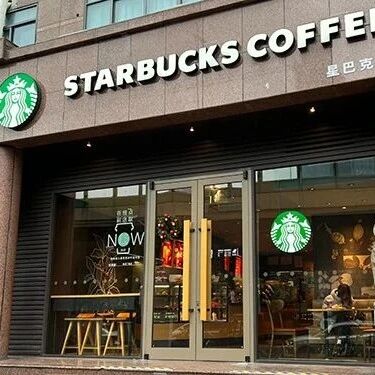
星巴克、必胜客,加码下沉市场丨消费参考
2 1 Shi Ji Jing Ji Bao Dao· 2025-11-05 01:39
Group 1: Starbucks and Strategic Partnerships - Starbucks has announced a strategic partnership with Boyu Capital to establish a joint venture for its retail operations in China, with Boyu holding up to 60% equity and Starbucks retaining 40% [1][20] - The joint venture is based on an enterprise value of approximately $4 billion, and Starbucks expects its retail business in China to exceed $13 billion [1][20] - The new joint venture will be headquartered in Shanghai and aims to expand the number of Starbucks stores in China from 8,000 to 20,000 [1][20] Group 2: Market Trends and Performance - The trend of international restaurant brands, including Starbucks and Pizza Hut, focusing on lower-tier cities is becoming increasingly significant due to better revenue prospects in these markets [3] - Starbucks has reported that new stores opened in the last two years have contributed to same-store sales growth above average, with many of these new locations in lower-tier markets [3] - Yum China reported a 4% year-over-year revenue growth to $3.2 billion in Q3 2025, with KFC and Pizza Hut also showing positive revenue trends [3] Group 3: Consumer Behavior and Pricing - There is a noted decline in average transaction value for Starbucks, Pizza Hut, and KFC, which may benefit their expansion into lower-tier markets [5] - The overall dining market in major cities like Beijing and Shanghai is contracting, prompting brands to seek growth in less saturated markets [4]



中产最爱的咖啡「易主」,价格会降吗?|深氪
36氪· 2025-11-04 13:14
Core Viewpoint - The acquisition of Starbucks China by Boyu Capital for a valuation of $13 billion marks the largest merger in the consumer sector in nearly a decade, highlighting the challenges Starbucks faces in the Chinese market and the strategic shift needed to regain competitiveness [6][7][8]. Group 1: Acquisition Details - The deal involved Boyu acquiring a 60% stake in Starbucks China, with the valuation split into $4 billion for the joint venture and the remainder attributed to brand value [11]. - The acquisition process was lengthy, involving over 30 top investment institutions and multiple rounds of negotiations, reflecting the high stakes and interest in the deal [7][10]. - Boyu Capital's strategy includes leveraging its real estate resources to enhance Starbucks' property portfolio and proposing significant store expansion plans [12]. Group 2: Market Position and Challenges - Starbucks China has seen a decline in market position, with its operating profit margin dropping from a peak of 28% in 2013 to around 12-13% currently [55]. - The company has struggled to adapt to the competitive landscape, particularly against rivals like Luckin Coffee, which has aggressively pursued a lower price point strategy [39][44]. - The high operational costs, including supply chain expenses that are 1.5-2 times higher than competitors, have hindered Starbucks' ability to lower prices [52][53]. Group 3: Strategic Shifts and Future Directions - Following the acquisition, there is a consensus that Starbucks needs to focus on cost reduction, price adjustments, and expansion into smaller cities to regain market share [69]. - The company plans to increase its store count in China to 20,000, particularly targeting smaller cities and emerging regions, indicating a shift in strategy post-acquisition [69]. - The need for product innovation and faster adaptation to market trends has been highlighted, as Starbucks has lagged behind competitors in introducing new offerings [60][61].

Starbucks sells 60% of China unit to Boyu at $4 billion value
Fortune· 2025-11-04 09:50
Core Viewpoint - Starbucks Corp. has agreed to sell a majority stake in its China business to Boyu Capital at a $4 billion enterprise value to improve its performance in the country [1][2]. Group 1: Partnership and Investment - Boyu Capital will acquire up to a 60% interest in Starbucks' retail operations in China through a new joint venture, while Starbucks retains 40% and continues to license the brand [1]. - The deal concludes Starbucks' search for a partner to navigate its future in China, where it operates approximately 8,000 stores [2]. - Boyu Capital is negotiating a loan of around $1.4 billion to support its investment in Starbucks' China business [5]. Group 2: Market Challenges - Starbucks has faced challenges in China, losing market share to local competitors like Luckin Coffee, which offers significantly lower prices [3][4]. - The coffee chain's expansion has been limited due to intense competition and changing consumer preferences, particularly post-COVID [4]. Group 3: Strategic Changes - Starbucks is implementing strategies to attract customers, including opening free "study rooms," expanding its drink menu, and reducing prices [10]. - Recent efforts have led to a return to growth in comparable sales over the past two quarters [11]. Group 4: Future Outlook - Starbucks CEO Brian Niccol expressed a vision to grow the number of Starbucks locations in China from 8,000 to over 20,000 [9]. - The total value of Starbucks' China retail business is expected to exceed $13 billion, including licensing value [12].
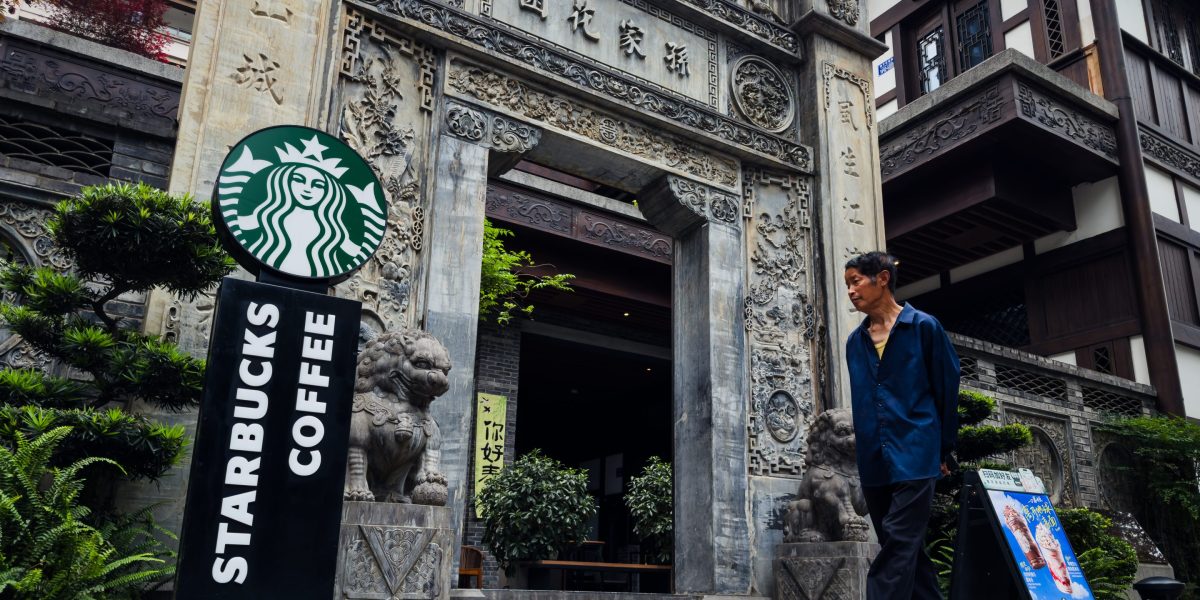
星巴克中国易主 博裕投资拿下60%股权
Xi Niu Cai Jing· 2025-11-04 06:52
Core Insights - Starbucks has entered a strategic partnership with Chinese alternative asset management firm Boyu Capital, marking the first time in 26 years that Starbucks has relinquished control of its business in China [1][3] - The joint venture will operate Starbucks' retail business in China, with Boyu Capital holding up to 60% equity and Starbucks retaining 40% while continuing to license its brand and intellectual property [1][3] Financial Overview - The transaction is based on an enterprise value of approximately $4 billion, excluding cash and debt, with Starbucks estimating the total value of its retail business in China to exceed $13 billion [3] - This valuation includes proceeds from the equity sale, the value of the remaining 40% stake, and expected licensing revenues over the next decade [3] Market Expansion Plans - The new joint venture will be headquartered in Shanghai and will manage the existing 8,000 stores, with plans to expand the store count to 20,000 [3] - The partnership aims to leverage local expertise to accelerate expansion into smaller cities and emerging regions in China [3] Competitive Landscape - Starbucks' performance in China is showing signs of recovery, with projected revenue of $3.105 billion for fiscal year 2025, reflecting a year-on-year increase of 5% [3] - However, the company faces significant competition from Luckin Coffee, which operates over 24,000 stores [3]

Starbucks to sell 60% China business to Boyu Capital for $4 billion amid competition from local brands. Details here
MINT· 2025-11-04 01:14
Core Insights - Starbucks Corp. has agreed to sell a 60% stake in its China business to Boyu Capital for $4 billion to enhance its operations in the country [1][2] - The partnership aims to navigate challenges posed by local competitors and changing consumer preferences in China [2][3] Company Strategy - Starbucks has approximately 8,000 stores in China and aims to grow this number to over 20,000 in the future [5] - The company has faced increased competition from domestic brands like Luckin Coffee, which offers lower-priced alternatives [3] - Recent strategies include launching free "study rooms" and expanding the menu to include more local preferences, such as sugar-free options and teas [7] Financial Performance - In the fourth quarter, comparable store sales in China increased by 2%, marking the first positive growth in over a year [5] - The estimated total value of Starbucks' retail operations in China is projected to exceed $13 billion [5] - Starbucks shares saw a slight increase of less than 1% in after-hours trading, but the stock has fallen approximately 11% this year [6] Investment Background - Boyu Capital, established in 2011, focuses on private equity investments across various sectors, including consumer and retail [4] - The decision to partner with Boyu Capital follows a competitive bidding process where five potential suitors were considered [3]

Luckin Coffee to Announce Third Quarter 2025 Financial Results on November 17, 2025
Globenewswire· 2025-11-03 12:00
Core Points - Luckin Coffee Inc. will release its third quarter 2025 financial results on November 17, 2025, before the U.S. market opens [1] - A conference call will be held on the same day at 8:00 am Eastern Time to discuss the financial results and answer questions [1] - The company has established a technology-driven retail network to provide high-quality coffee and products [2] Financial Results Announcement - The financial results will be available before the U.S. market opens on November 17, 2025 [1] - A conference call will take place at 8:00 am Eastern Time on the same day [1] - Participants can access the call through various toll-free numbers provided for different regions [1] Company Overview - Luckin Coffee was founded in 2017 and is based in China [2] - The company aims to build a world-class coffee brand and integrate into customers' daily lives [2] - It utilizes proprietary technologies to enhance convenience and affordability for its customers [2]
咖饮品类发展报告2025:下沉市场成必争地
3 6 Ke· 2025-11-03 06:19
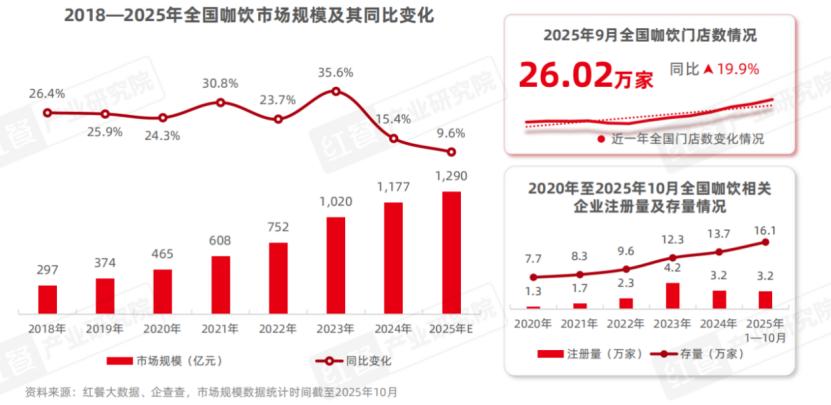
Core Insights - The coffee beverage market in China is expected to reach nearly 130 billion yuan by 2025, driven by increasing consumer acceptance and local product trends [1][2] - Despite market growth, coffee brands face challenges such as high costs, price pressures, product homogenization, and intensified competition from fast-food chains and convenience stores [1][2] Market Overview - The coffee market is experiencing steady growth, with independent brand stores accounting for over 60% of the total [2][6] - By September 2025, the number of coffee stores in China is projected to exceed 260,000, marking a 19.9% year-on-year increase [2] - The market is entering a deeper competitive phase, with a significant number of new coffee-related enterprises registered [2] Regional Distribution - The top three regions for coffee store numbers are East China (35.9%), South China (23.2%), and Southwest China (14.4%) [4] - Regions with less than 10% market share, such as Central and Northern China, are experiencing rapid growth, with store numbers increasing by over 20% year-on-year [4] Brand Dynamics - Independent brands are projected to account for 60.5% of coffee stores by 2025, while chain brands will make up nearly 40% [6] - Major chain brands like Luckin Coffee and Kudi Coffee are rapidly expanding, with store counts reaching 26,000 and 13,000 respectively [8] Product Segmentation - The coffee beverage category can be divided into commercial coffee and specialty coffee, with specialty coffee stores making up nearly 30% of the total [11] - Specialty coffee brands are facing challenges from low-priced commercial brands and rising operational costs [11] Consumer Trends - The coffee market is seeing a shift towards product diversification, with brands increasingly launching tea products to attract consumers [15][16] - Downstream markets, particularly in third-tier cities, are becoming strategic battlegrounds for coffee brands, with significant growth potential [18] Pricing and Competition - The average consumer spending on coffee has decreased from 41 yuan in September 2023 to 26 yuan in September 2025, driven by price wars among brands [20] - The proportion of coffee stores with average spending below 15 yuan has increased from 29.8% to 36.9% [20] Conclusion - The coffee beverage sector is experiencing growth alongside challenges such as high costs and price competition, with future opportunities in the release of consumer potential in lower-tier markets and advancements in local supply chains [22]
2.9元咖啡“杀疯了”!低价咖啡挑战库迪和瑞幸,还能撑多久?
Mei Ri Jing Ji Xin Wen· 2025-11-02 22:50
Core Insights - The coffee market in China is experiencing a significant price drop, with prices for coffee reaching as low as 1.9 yuan per cup through promotions and discounts, indicating a shift towards making coffee a daily staple rather than a luxury item [1][3][4] Price Trends - Luckin Coffee and Kudi previously set a price point of 9.9 yuan per cup, but new entrants like TAIJUAN COFFEE are offering prices as low as 2.9 yuan for freshly brewed coffee [1][2] - The trend of low-priced coffee is gaining traction, with some consumers able to purchase coffee for as little as 0.99 yuan per cup through group buying [2][3] Market Dynamics - The coffee market is becoming increasingly competitive, with brands like Kudi and Luckin facing pressure from new low-cost competitors, leading to a potential crisis for their established pricing strategies [1][4] - The cost of coffee production is rising due to global supply chain issues, making it difficult for brands to sustain low prices without incurring losses [4][5] Consumer Behavior - Consumers are increasingly viewing coffee as an affordable daily necessity, with reports of individuals consuming multiple cups a day at low prices [3][4] - The perception of coffee as a high-end product is diminishing, as evidenced by consumers finding low-priced options cheaper than traditional breakfast items [2][3] Supply Chain Considerations - The domestic coffee bean roasting capacity is expected to increase starting in 2024, with more companies investing in local coffee production, which may help stabilize prices in the future [6] - Brands that can streamline their supply chains or leverage local sourcing may have a competitive advantage in maintaining lower prices [5][6]