
Luckin Coffee(LKNCY)

Search documents
“硬刚”瑞幸、库迪,一杯现磨咖啡只要2.9元,业内人士:9.9元/杯仅留微利!消解“高端象征”,消费者:比煎饼果子还便宜
Mei Ri Jing Ji Xin Wen· 2025-11-01 15:04
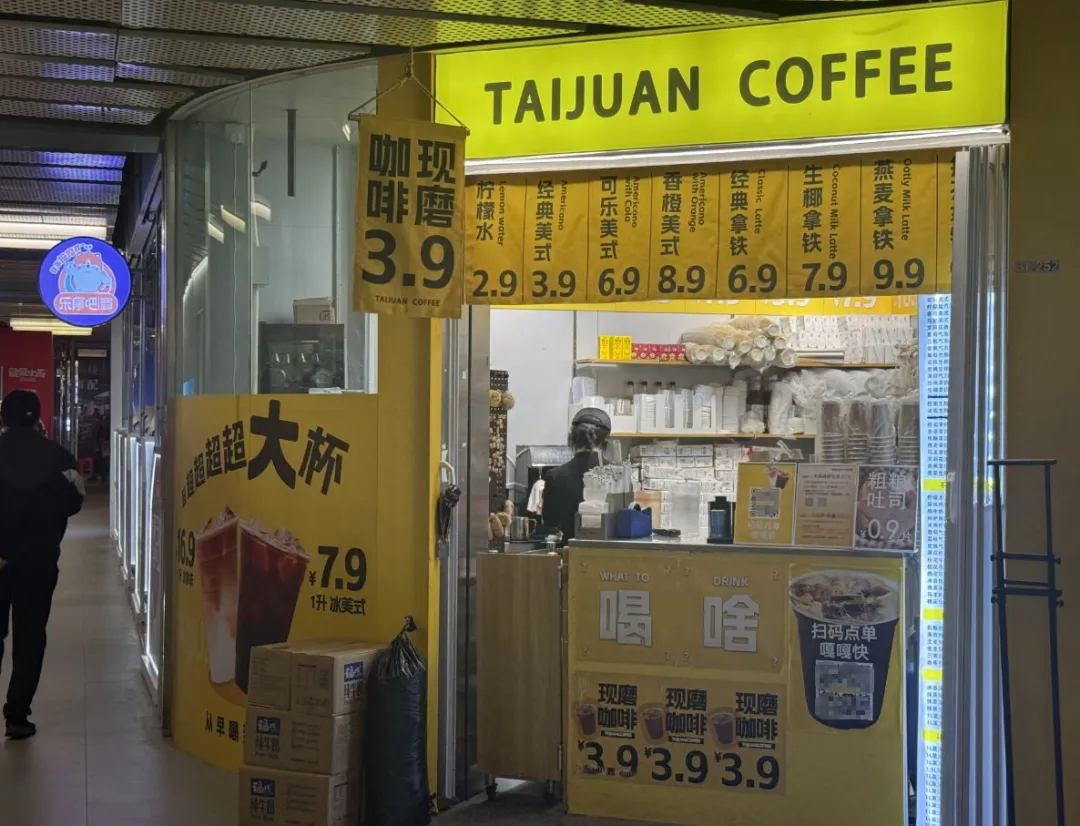
Core Insights - The coffee market in China is experiencing a significant price drop, with prices for a cup of coffee falling to as low as 2.9 yuan, driven by aggressive promotional strategies from brands like Gu Ming and TAIJUAN COFFEE [1][3][4] Price Trends - Luckin Coffee and Kudi previously set a price point of 9.9 yuan per cup, but the competition has intensified, leading to prices as low as 1.9 yuan for delivery and 2.9 yuan in-store [1][3][4] - Gu Ming launched a two-week promotion offering coffee at 2.9 yuan, distributing 2 million coupons, which quickly gained popularity on social media [6][4] - TAIJUAN COFFEE opened in Shanghai with prices starting at 3.9 yuan for American coffee, indicating a shift towards lower pricing strategies in the market [6][4] Market Dynamics - The concept of coffee is shifting from a luxury item to a daily staple, with consumers now prioritizing price over brand prestige [4][7] - The competitive landscape is changing, with brands like Gu Ming and TAIJUAN COFFEE challenging established players like Luckin and Kudi, which previously dominated the 9.9 yuan price segment [9][11] Supply Chain and Sustainability - The current low prices are unsustainable without platform subsidies, as rising global coffee bean costs and other operational expenses make it difficult for brands to maintain profitability at these price points [11][12] - The future stability of coffee prices may rely on improved supply chain efficiencies and local sourcing of coffee beans, as seen with brands like Luckin and Starbucks [12][11] Consumer Behavior - Consumers are increasingly drawn to low-priced coffee options, with some reporting that a cup of coffee is now cheaper than traditional breakfast items [4][7] - The trend indicates a broader acceptance of coffee as an everyday beverage among the working population, further driving demand for affordable options [7][9]



《咖饮品类发展报告2025》发布:咖饮品牌密集推出茶饮产品,下沉市场成必争地
3 6 Ke· 2025-10-31 12:28
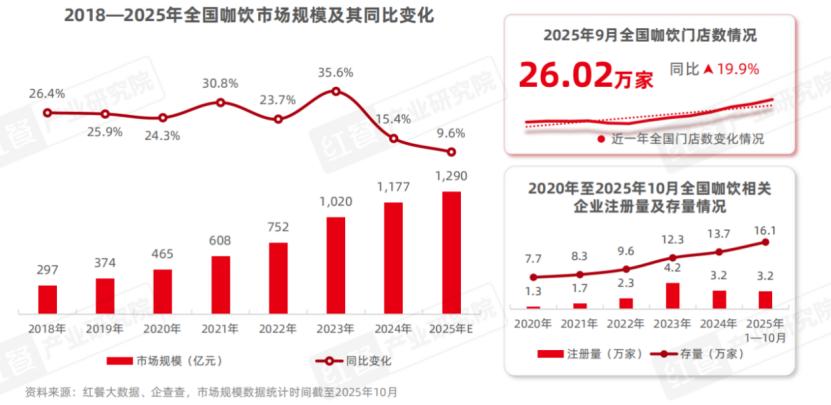
Core Insights - The coffee beverage market in China is expected to reach nearly 130 billion yuan by 2025, driven by increasing consumer acceptance and local product trends [1][2] - Despite market growth, coffee brands face challenges such as high costs, price pressures, and severe product homogenization, leading to decreased consumer loyalty [1][2] - The competitive landscape is intensifying with fast-food chains, tea brands, and convenience stores entering the coffee market [1] Market Growth and Brand Dynamics - The coffee market continues to grow, with the number of coffee shops exceeding 260,000 by September 2025, marking a 19.9% year-on-year increase [2] - Independent coffee shops account for over 60.5% of the total coffee shop count, indicating a strong presence of non-chain brands [6] - Major chain brands like Luckin Coffee and Kudi Coffee are rapidly expanding, with store counts reaching 26,000 and 13,000 respectively [8] Regional Distribution - Eastern, Southern, and Southwestern China lead in coffee shop numbers, accounting for 35.9%, 23.2%, and 14.4% respectively [4] - Regions with less than 10% market share, such as Central and Northern China, are experiencing rapid growth, with all showing over 20% year-on-year increases [4] Consumer Trends and Product Offerings - The coffee beverage segment is diversifying, with a significant increase in ready-to-drink options and a growing trend towards tea products [15][16] - The average consumer spending on coffee has decreased from 41 yuan in September 2023 to 26 yuan in September 2025, influenced by price wars and competition from delivery platforms [20] Challenges for Specialty Coffee Brands - Specialty coffee brands face challenges from low-cost competition and rising operational costs, leading to a constrained profit margin [11] - Strategies to counter these challenges include launching affordable sub-brands, utilizing small store models, and expanding product offerings beyond coffee [12] Strategic Focus on Lower-Tier Markets - Lower-tier cities are becoming critical for coffee brands, with significant growth in store numbers in these areas [18] - Brands like Luckin Coffee and Rong Xiao Qiao are heavily investing in these markets, with a high percentage of their stores located in third-tier cities and below [18] Conclusion - The coffee beverage sector is experiencing growth alongside challenges such as high costs and intense competition, with opportunities emerging from lower-tier markets and supply chain localization [22]
瑞幸咖啡蝉联《第一财经》杂志“金字招牌”,连续五年位居咖啡品类第一
Cai Fu Zai Xian· 2025-10-31 10:07
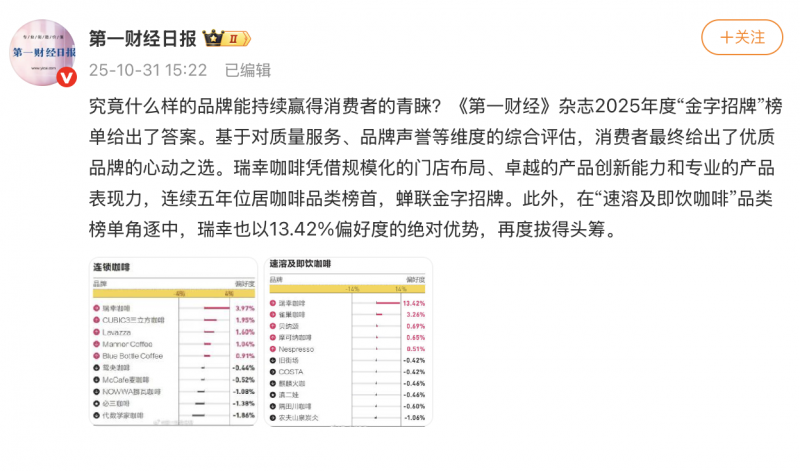
Core Insights - Luckin Coffee has been awarded the "Golden Signboard" honor by Caixin magazine for three consecutive years, highlighting its strong market position and brand recognition in the competitive coffee sector [1][3] - In the instant and ready-to-drink coffee category, Luckin Coffee leads with a preference rate of 13.42%, significantly ahead of the second place at 3.26%, demonstrating its dominance in consumer preference [1][2] Company Performance - As of the end of Q2 2025, Luckin Coffee has expanded its store count to over 26,000, indicating a robust growth strategy and market penetration [5] - The company has also made strides in international expansion, opening its first stores in New York in June 2025, marking a significant step in its global strategy [5] - Luckin Coffee has accumulated over 380 million transaction customers, setting a new record for user scale, which reflects its successful customer engagement and retention strategies [5] Brand Recognition - The "Golden Signboard" award is based on consumer preference surveys and requires brands to rank first in their category for three consecutive years, underscoring the high level of consumer trust and satisfaction with Luckin Coffee [3] - The recognition serves as a testament to Luckin Coffee's market satisfaction and brand reputation, reinforcing its position as a leading player in the Chinese coffee market [3]
48小时卖30万杯!“冬天第一杯热奶茶”杀疯了
东京烘焙职业人· 2025-10-29 08:32
Core Insights - The article highlights the surge in demand for hot beverages as temperatures drop, with significant sales figures reported for various popular drinks [4][6][10]. Group 1: Market Trends - The topic "First Cup of Milk Tea in Winter" has garnered over 20 million views on Xiaohongshu, indicating a strong consumer interest in hot drinks [6]. - Major brands like Cha Bai Dao and Xi Tea have reported impressive sales, with Cha Bai Dao's "Super Thick Taro" selling nearly 200,000 cups on its first day and Xi Tea's "Snowy Yak Milk" selling out in multiple locations within 10 days [10][12]. - The trend of hot drink consumption is reflected in increased order volumes at physical stores, with some locations reporting that over half of the orders are for hot beverages [8][9]. Group 2: Product Innovations - Many brands are reintroducing popular products from previous years, such as Cha Bai Dao's "Super Thick Taro" and Xi Tea's "Snowy Yak Milk," which have proven to be successful in driving sales [14][17]. - New flavor combinations are emerging, with brands experimenting with unconventional ingredients like sweet soy sauce and salted egg yolk, pushing the boundaries of traditional sweet beverages [21][23]. - Seasonal ingredients like pumpkin, sweet potato, and rice are becoming popular in beverage menus, with pumpkin being particularly prominent [24][26]. Group 3: Consumer Preferences - The article notes a shift towards using familiar, homey ingredients in drinks, which resonate well with consumers and provide a sense of nostalgia [29]. - Hot fruit teas made with ingredients like pear and orange are gaining popularity, offering a refreshing option during the colder months [30][32]. - Brands are encouraged to innovate while maintaining a balance between classic flavors and new combinations to attract a broader customer base [19][35].


2025年中国品牌在东南亚市场的崛起报告-增长机遇及对区域竞争者的影响
Sou Hu Cai Jing· 2025-10-23 13:47
Core Insights - The report highlights the rise of Chinese brands in the Southeast Asian market, driven by a young population, digital economy growth, and strategic investments [1][9][12] - By 2024, China's exports to Southeast Asia are projected to reach $587 billion, marking a 12% year-on-year increase, with ASEAN6 countries contributing significantly to this growth [1][9][31] Trade Evolution - The historical trade relationship between China and Southeast Asia has been strengthened by the Belt and Road Initiative, enhancing infrastructure connectivity and economic ties [19][24] - The ASEAN6 countries, which include Indonesia, Malaysia, the Philippines, Singapore, Thailand, and Vietnam, account for 95% of the region's GDP, making them attractive markets for Chinese brands [1][25] Market Opportunities - Southeast Asia's demographic advantage, with over 6.5 billion people and a median age of 31, presents significant growth potential for Chinese brands [14][52] - The region's digital economy is rapidly expanding, with a notable shift towards e-commerce and fintech, driven by a young, tech-savvy consumer base [12][52] Industry Focus - Chinese brands have established leadership in sectors such as electronics and electric vehicles, with companies like BYD and Xiaomi holding over 25% market share [2][15] - The home appliance sector has seen brands like Haier and Midea increase their market share from 9% in 2015 to 25% in 2024 through localization and premium positioning [2][15] Competitive Landscape - The competitive landscape in Southeast Asia is being reshaped as Chinese brands leverage innovation, efficiency, and localization strategies to challenge traditional competitors [3][10] - Existing companies must adapt quickly to the digital capabilities and pricing strategies of Chinese competitors to maintain market share [10][14] E-commerce and Cross-border Trade - The rise of cross-border e-commerce, facilitated by platforms like Lazada and Shopee, has transformed consumer behavior in Southeast Asia, allowing Chinese brands to penetrate the market effectively [46][47] - Despite progress, e-commerce penetration remains low in key markets like Malaysia, Thailand, and Vietnam, indicating untapped opportunities for growth [47][52]





西贝危机后,茶饮仍未走出信任生死局
3 6 Ke· 2025-10-23 04:13
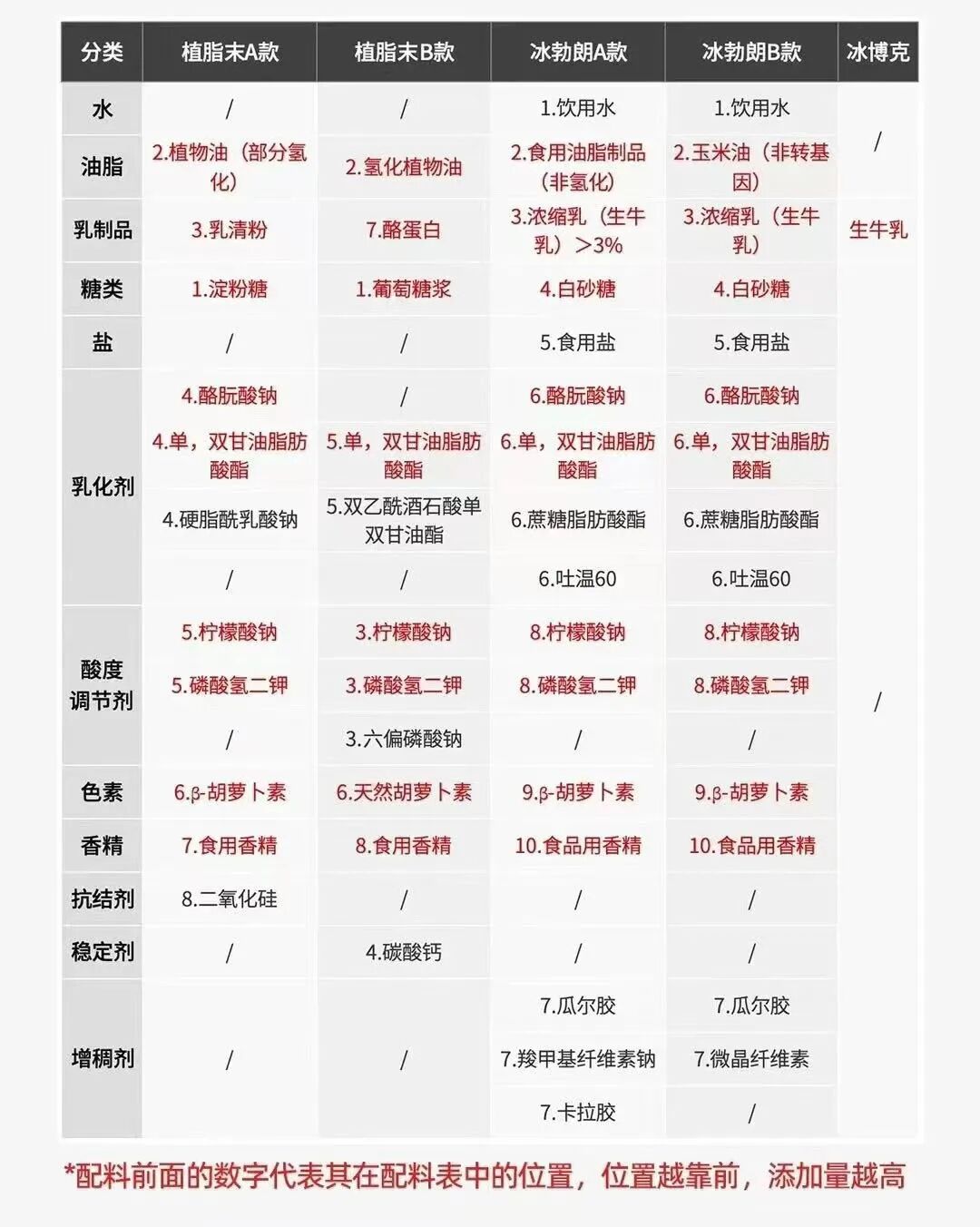
Group 1: Core Insights - The incident involving Xibei highlights the challenges faced by the Chinese restaurant industry, particularly regarding consumer trust in pre-packaged food products [1] - Following the backlash, Xibei experienced a significant drop in daily revenue exceeding 1 million yuan, with a nearly 70% decrease in foot traffic at its largest Beijing location [1] - The public discourse surrounding the incident reflects a broader issue of unclear definitions and lack of standards within the Chinese dining sector, revealing a gap between industry standards and public knowledge [1] Group 2: Tea Beverage Industry Challenges - The tea beverage industry is facing a trust crisis, exacerbated by the "Ice Bolang incident," where a blogger's findings on ingredient transparency ignited consumer skepticism about health claims made by brands [2] - Consumers are increasingly questioning the authenticity of ingredients used in tea beverages, particularly regarding the use of non-hydrogenated base milk and the presence of additives [4] - The discussion around tea beverage ingredients has surged, with related keywords seeing over 200% annual growth in discussions across social media platforms from 2021 to 2025 [4] Group 3: Industry Response and Trends - Major tea brands are beginning to adopt transparency in ingredient sourcing, with over 90% of surveyed consumers expressing concern over the use of non-natural ingredients like plant-based creamers [8] - The tea beverage market is witnessing a shift towards quality and health, with brands like Heytea focusing on unique ingredients and health attributes in their new product lines [14] - Competitors from other sectors, such as dairy and coffee, are encroaching on the tea beverage market, prompting existing brands to rethink their strategies and product offerings [11][12]
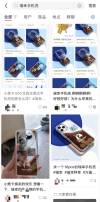
瑞幸推出“冰美式手机壳”引关注,员工称目前仅限内部兑换,二手平台均价约35元
Yang Zi Wan Bao Wang· 2025-10-20 14:35
Core Insights - Luckin Coffee has recently launched a new product, a "Iced Americano Phone Case," which has garnered significant attention on social media [1][4] - The phone case features a transparent design with flowing brown "coffee liquid" and faux "ice cubes," branded with the Luckin logo and a label reading "Yegashef Americano" [1] - Currently, the phone case is not available for public sale and can only be redeemed by internal employees using a "Xiao Ran Card" [1][4] Group 1 - Consumers have shown interest in the phone case despite its limited availability, with many sellers listing it on second-hand platforms like Xianyu [6][7] - The average selling price on these platforms ranges from 30 to 40 yuan, with an average price of approximately 35 yuan [6][7] - The phone case is compatible with mainstream phone models from brands like Apple and Huawei, and some listings have received over 200 inquiries [7][9]
招银国际焦点股份-20251020
Zhao Yin Guo Ji· 2025-10-20 09:02
Group 1: Stock Recommendations - 吉利汽车 (Geely Auto) has a target price of HKD 32.00, with a current market value of USD 24.8 billion and a PE ratio of 19.01[5] - 零跑汽车 (Leap Motor) is rated as a buy with a target price of HKD 80.00, showing a potential upside of 35%[5] - 极兔速递 (J&T Express) has a target price of HKD 58.00, with a market value of USD 11.7 million and a PE ratio of 11.7[5] Group 2: Performance Overview - The basket of 25 stocks listed in the previous report had an average return of -3.9%, compared to the MSCI China Index return of -3.6%[10] - Out of the 25 stocks, 11 stocks outperformed the benchmark index[10] - The report includes a total of 25 long positions, indicating a diverse investment strategy[10]


寻找超预期标的和反转标的
SINOLINK SECURITIES· 2025-10-19 11:27
Investment Rating - The report suggests a focus on finding outperforming and reversal stocks in the market [2][11]. Core Views - The report indicates that Hong Kong internet stocks and overseas Chinese assets are unlikely to see significant short-term gains due to static valuations amid international conditions and upcoming quarterly reports. Major players like Alibaba may face short-term profit-taking, while companies with solid fundamentals like Tencent and PDD are recommended for continued investment [3][17]. - The cryptocurrency market is under short-term pressure with no new narratives, leading to retail sentiment-driven declines. The report suggests a cautious approach to virtual assets [3][17]. - The report expresses optimism regarding the policy landscape for cross-border internet brokerages, suggesting that investors should look for opportunities to increase positions [3][17]. - The report highlights potential outperformers in sectors such as outdoor sports wearables, leading coffee brands, overseas e-commerce platforms, and certain consumer goods, particularly in light of expected positive quarterly results [3][17]. Industry Situation Tracking Education - The education index decreased by 0.93%, underperforming the Shanghai Composite Index but outperforming other indices. Notable stock movements include 51talk up by 34.11% and Yuhua Education down by 11.48% [12][18]. Luxury Goods and Gambling - The luxury goods index rose by 3.92%, while the gambling index fell by 3.22%. LVMH reported a 10.93% increase in stock price, indicating a recovery in domestic consumption in China [22][31]. Coffee and Tea - The coffee sector remains robust with potential for increased per capita consumption, while the tea sector faces challenges due to increased competition and regulatory changes [12][33]. E-commerce - The e-commerce sector is experiencing pressure, with the Hang Seng Internet Technology Index down by 8.04%. Key players like Alibaba and Pinduoduo showed positive movements, indicating resilience amid competition [36][40]. Streaming Platforms - The media index fell by 8.3%, with major streaming platforms like Tencent Music and iQIYI experiencing declines. The report suggests continued monitoring of these platforms for potential recovery [44][45]. Virtual Assets and Internet Brokerages - The global cryptocurrency market capitalization decreased by 2.2%, with Bitcoin and Ethereum prices falling by 6.0% and 14.0% respectively. The report highlights the performance of brokerage firms like Tiger Brokers and Futu Holdings, which showed positive growth [47][49].


Carlyle and Boyu emerge as frontrunners to buy Starbucks China
Yahoo Finance· 2025-10-17 11:07
Core Insights - Carlyle and Boyu Capital are leading bidders for a majority stake in Starbucks' operations in mainland China, with the business valued at $4 billion excluding royalties [1][2] - Starbucks is reviewing offers from five bidders, with a decision expected by the end of October 2025 [2] - The total transaction value, including partner investment and future royalties, is projected to exceed $10 billion [3] Group 1: Bidding Process - Five companies submitted binding proposals in early October 2025 [1] - Bidders may form a consortium, with Starbucks potentially retaining up to 49% ownership [4] - The evaluation criteria for bidders include their ability to improve the supply chain and maintain local partnerships, which may favor Chinese firms [4] Group 2: Financial Performance - Starbucks' China division has faced challenges from lower-priced competitors like Luckin Coffee, leading to price reductions on some beverages [2] - For Q3 FY25, Starbucks reported net earnings of $558.3 million, a 47% decline compared to the same period in FY24 [5] - As of June 2025, Starbucks operated 7,828 stores in mainland China, while Luckin Coffee had approximately 26,000 outlets [5] Group 3: Market Context - The divestment comes amid declining revenue for Starbucks in China, attributed to weaker same-store sales [4] - The interest in the sale process reflects confidence in the long-term growth potential of Starbucks in the Chinese market [3]
