Luckin Coffee(LKNCY)

Search documents
Luckin Coffee Announces Second Quarter 2025 Financial Results
Globenewswire· 2025-07-30 11:00
Net Revenues Increased by 47.1% Year-over-Year to RMB12.4 Billion GAAP Operating Income Increased by 61.8% Year-over-Year to RMB1.7 Billion Same-Store Sales Growth for Self-Operated Stores Accelerated to 13.4% BEIJING, July 30, 2025 (GLOBE NEWSWIRE) -- Luckin Coffee Inc. ("Luckin Coffee" or the "Company") (OTC: LKNCY) today announced its unaudited financial results for the three months ended June 30, 2025. SECOND QUARTER 2025 HIGHLIGHTS Dr. Jinyi Guo, Co-founder and CEO of Luckin Coffee, said, "Our focused ...

Luckin Coffee(LKNCY) - 2025 Q2 - Quarterly Results
2025-07-29 16:00
Luckin Coffee Announces Second Quarter 2025 Financial Results Same-Store Sales Growth for Self-Operated Stores Accelerated to 13.4% GAAP Operating Income Increased by 61.8% Year-over-Year to RMB1.7 Billion Net Revenues Increased by 47.1% Year-over-Year to RMB12.4 Billion unaudited financial results for the three months ended June 30, 2025. BEIJING, July 30, 2025 (GLOBE NEWSWIRE) — Luckin Coffee Inc. ("Luckin Coffee" or the "Company") (OTC: LKNCY) today announced its 1 SECOND QUARTER 2025 HIGHLIGHTS with agi ...
从抽象婚礼到品牌星辰:茶咖联名怎么玩出长期力?
3 6 Ke· 2025-07-29 09:40
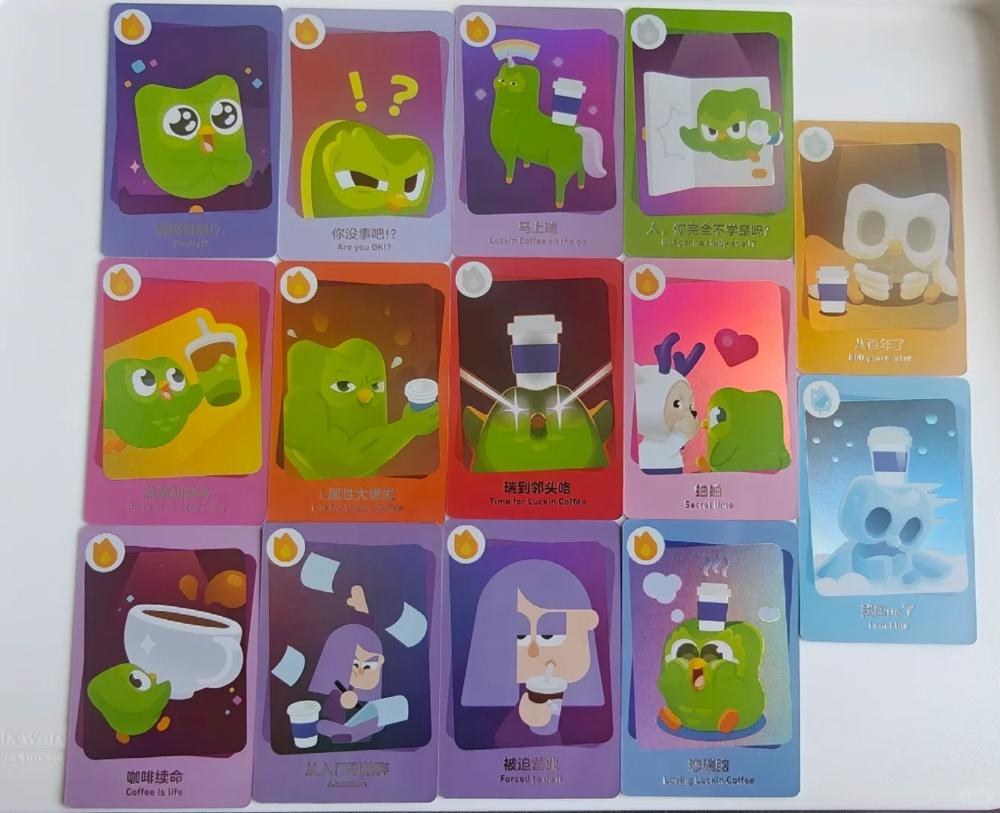
Core Insights - The enthusiasm for collaborative marketing among tea and coffee brands is declining, with consumers expressing fatigue over repetitive and superficial collaborations [2][3][4] - Brands are now compelled to rethink their strategies, focusing on creating lasting IPs that resonate with their brand identity rather than relying solely on trendy collaborations [3][14] Group 1: Collaborative Marketing Trends - In the past year, over 270 collaborations occurred among 27 notable tea and coffee brands, surpassing the previous year's 250 collaborations by 33 brands [2] - Many collaborations are criticized for lacking substance, often resulting in mere cosmetic changes without genuine innovation, leading to consumer disinterest [2][3] - The effectiveness of collaborations is diminishing as they become routine, prompting brands to seek more creative and engaging approaches [3][4] Group 2: Successful Case Studies - The collaboration between Luckin Coffee and Duolingo was highlighted as a successful example, featuring an immersive narrative that engaged consumers beyond just product offerings [5][6][9] - This collaboration generated significant social media buzz, with millions of exposures and nearly 900,000 cups sold in the first week [5][6] - The success was attributed to creative storytelling, user participation, and cultural resonance, demonstrating that effective collaborations require more than just brand logos [5][9] Group 3: Strategic Shifts in Branding - Some leading brands, like Heytea, are adopting a "zero collaboration" strategy, focusing on developing their own star products instead of following the trend [3][10] - Other brands are opting for a "less is more" approach, carefully selecting high-synergy collaborations that resonate deeply with their target audience [10][12] - The emphasis is shifting towards building proprietary IPs that can foster long-term consumer relationships and brand loyalty [14][15] Group 4: Building Proprietary IPs - Brands like Mixue Ice City are successfully creating their own IPs, such as the "Snow King," which has become a cultural phenomenon and significantly boosted brand visibility [15][16] - The development of proprietary IPs allows brands to establish emotional connections with consumers, providing long-term value beyond transient collaborations [16][27] - The focus on cultural value and emotional engagement is becoming essential for brands to differentiate themselves in a crowded market [27][28]

瑞幸咖啡:竞逐全球咖啡市场的标杆
SINOLINK SECURITIES· 2025-07-28 12:36
Investment Rating - The report assigns a "Buy" rating to the company with a target price of 285.77 RMB per ADS, corresponding to 40.01 USD per ADS based on a FY2026 PE of 18X [4]. Core Views - The company has a strong market position with over 24,097 stores as of Q1 2025, focusing on a self-pickup model at an affordable price range of 10-15 RMB [2]. - The company is expected to see significant growth in non-GAAP net profit, projected at 43.42 billion RMB for FY2025, 56.05 billion RMB for FY2026, and 73.12 billion RMB for FY2027, reflecting year-on-year growth rates of +32.1%, +29.1%, and +30.5% respectively [4]. - The coffee market in China is anticipated to grow at a CAGR of 21.6% from 2023 to 2027, indicating substantial potential for the company [49]. Summary by Sections Company Overview - The company operates a self-pickup model and has established itself as a leading player in the coffee market with strong capabilities across products, channels, brands, and supply chains [2]. Investment Logic - The company is positioned to benefit from the growing coffee consumption trend in China, with significant room for growth compared to more mature markets like the US and Japan [49]. Profit Forecast, Valuation, and Rating - The company’s revenue is projected to grow from 24.9 billion RMB in 2023 to 67.9 billion RMB by 2027, with a compound annual growth rate (CAGR) of 20.1% [8]. - The report highlights a healthy growth trajectory in both direct and franchise operations, with direct store numbers expected to increase significantly [70]. Strategic Store Opening - The company has entered a positive same-store sales growth cycle with a Q1 2025 same-store sales growth (SSSG) of +8.1% [15]. - The company has maintained a rapid store opening pace, with a net increase of 1,757 stores in Q1 2025 [32]. Competitive Positioning - The company leads the industry in terms of store count and market share, with a GMV market share of 21.8% as of 2023 [29]. - The company has a robust supply chain and digital capabilities, enhancing operational efficiency and product innovation [46]. Market Potential - The coffee market in China is still in a growth phase, with significant potential for increased per capita consumption [49]. - The company is exploring international markets, having entered regions like Singapore, Malaysia, and the US, with a focus on competitive pricing [56]. Financial Projections - The company expects to achieve substantial revenue growth driven by both direct and franchise operations, with total revenue projected to reach 46.95 billion RMB in FY2025 [70]. - The report anticipates a decrease in fulfillment costs as the number of stores increases, contributing to improved profitability [73].
瑞幸美国首店在纽约开业,美媒惊呼“反攻星巴克”
Hua Er Jie Jian Wen· 2025-07-28 03:45
Core Viewpoint - Luckin Coffee has officially entered the U.S. market, posing a strong challenge to Starbucks, which is currently facing declining same-store sales for five consecutive quarters [1][6]. Group 1: Market Entry and Competition - Luckin Coffee has opened its first two stores in Manhattan, with one located less than 200 feet from a Starbucks, directly competing with the global coffee giant [1]. - Luckin has surpassed Starbucks to become the largest coffee chain in China, leveraging a mobile app-driven and low-price business model [1][4]. - Starbucks is experiencing a decline in market share in China, dropping from over 40% in 2017 to an estimated 14% by 2024 due to the rise of Luckin and other local competitors [5]. Group 2: Business Model and Strategy - Luckin Coffee's core competitive advantages include a technology-driven mobile app and a low-price strategy, with new users in New York able to purchase drinks for as low as $1.99 [2]. - The app features gamification elements, quick order fulfillment, and a short wait time of 3-5 minutes for recent orders, catering to fast-paced urban consumers [2]. - In contrast, Starbucks has faced challenges with its mobile order management, leading to complaints about crowded pickup areas and long wait times for in-store orders [2][3]. Group 3: Financial Performance and Future Outlook - Starbucks reported revenues of $36.2 billion for fiscal year 2024, while Luckin recorded $4.7 billion [7]. - Analysts suggest that if Luckin can increase sales and gradually reduce discounts, it may achieve profitability at the store level in the U.S. within the next 12 to 18 months [5]. - Luckin's second U.S. store is numbered 00002, indicating the company's ambition for further expansion in the U.S. market [5]. Group 4: Starbucks' Response - In response to increased competition, Starbucks has lowered prices on over 20 drink categories, with an average reduction of $0.70 per grande drink [6]. - New product offerings, including sugar-free options, are aimed at expanding Starbucks' customer base and increasing sales, particularly during afternoon and evening hours [6].

传媒互联网产业行业周报:海外中国资产财报季开启-20250727
SINOLINK SECURITIES· 2025-07-27 09:59
Investment Rating - The report maintains an optimistic outlook on the Hong Kong stock market, particularly in sectors such as stablecoins, new consumption, and innovative pharmaceuticals [3][10]. Core Views - The overseas Chinese asset earnings season has begun, with a significant increase in risk appetite for Hong Kong and US-listed Chinese stocks, as active funds seek undervalued stocks with low price-to-book ratios [3][10]. - There is a sustained bullish outlook on virtual assets, including stablecoins, with traditional virtual asset exchanges expected to enter the traditional capital markets through IPOs, reverse mergers, and acquisitions [3][10]. - The potential risks for overseas Chinese assets remain, particularly concerning US-China tariff issues, necessitating close monitoring of global tariff negotiations [3][10]. Industry Situation Tracking Education - The Chinese education index fell by 0.82% during the period from July 21 to July 25, underperforming compared to major indices [11][21]. - Notable stock performances include Oriental Selection rising by 13.67% and New Oriental falling by 10.03% [11][21]. Luxury Goods - The S&P Global Luxury Goods Index increased by 2.75%, while the MSCI European Luxury Goods and Apparel Index rose by 2.52% during the same period [22][25]. - Key luxury stocks showed mixed results, with Samsonite up by 3.16% and Prada down by 1.94% [22][25]. Coffee and Tea - The Hang Seng Non-Essential Consumer Index rose by 1.30%, outperforming the Hang Seng Index [27][30]. - Notable stock performances include Haidilao up by 4.31% and various tea brands experiencing declines [27][30]. E-commerce - The Hang Seng Internet Technology Index increased by 1.86%, with Pinduoduo rising by 8.67% and Alibaba declining by 0.17% [30][31]. - The competitive landscape remains intense, with significant investments in logistics and marketing by leading platforms [30][31]. Streaming Platforms - The Hang Seng Media Index fell by 1.2%, underperforming compared to other indices [35][39]. - Key stocks like iQIYI and Tencent Music experienced varied performance, with iQIYI up by 2.04% and Tencent Music down by 4.45% [35][39]. Virtual Assets & Internet Brokers - As of July 25, the global cryptocurrency market cap reached $393.75 billion, with Bitcoin and Ethereum prices at $117,482 and $3,765, respectively [41][42]. - The report highlights the ongoing development of regulatory frameworks for virtual assets, with significant movements in the market [41][42]. Automotive Services - The Hang Seng Composite Index rose by 2.45%, with notable performances from companies like Zhongsheng Holdings up by 17.27% [49][50]. - The automotive service sector is witnessing growth, with new partnerships and service offerings emerging [49][50].



The Chinese Coffee Chain That's Muscling In on Starbucks's Turf
WSJ· 2025-07-26 01:00
Core Insights - Luckin Coffee, China's largest coffee chain, has strategically chosen to open its first U.S. store in New York City, located less than 200 feet from a Starbucks, indicating a competitive market entry strategy [1] - The company offers a variety of coffee drinks, including flat whites and raspberry cold brews, emphasizing speed and convenience through its mobile app, which features enticing coupons [1] Company Strategy - Luckin Coffee's decision to open near a major competitor like Starbucks highlights its aggressive market positioning and intent to capture market share in the U.S. coffee industry [1] - The use of a mobile app for ordering and promotions suggests a focus on technology and customer engagement, aiming to attract a tech-savvy consumer base [1] Product Offering - The range of coffee drinks available at Luckin includes both traditional options like flat whites and innovative choices such as raspberry cold brews, catering to diverse consumer preferences [1]


借文化东风,出海正当时 中金公司2025 “解码新消费”
中金· 2025-07-25 00:52
Investment Rating - The report indicates a positive investment outlook for Chinese consumer brands expanding overseas, particularly in Southeast Asia, with a focus on Singapore as a strategic market entry point [1][13]. Core Insights - China's cultural soft power has significantly improved, ranking second globally from 2020 to 2025, surpassing Japan, the UK, and Germany, creating favorable conditions for Chinese brands to expand internationally [1][3]. - The tourism industry is a key driver for cultural exchange, with a projected 96% year-on-year increase in inbound tourists to China in 2024, enhancing the international visibility of Chinese brands [1][3]. - Successful overseas expansion requires brands to adapt to local market demands, as demonstrated by Haidilao's localized menu offerings in Singapore [1][2][4]. - Strong supply chain management is crucial for maintaining competitive pricing and product quality, as seen with brands like Mixue Ice City and Luckin Coffee [1][5]. - Singapore's favorable business environment, including tax incentives and a high percentage of Chinese residents, positions it as a gateway to Southeast Asia and beyond [1][13]. Summary by Sections Cultural Influence - The rise of China's cultural soft power is a significant factor in the successful internationalization of consumer brands, with food and entertainment serving as effective cultural ambassadors [3][17]. - The increase in inbound tourism to China is expected to bolster the recognition and acceptance of Chinese brands abroad [3]. Market Entry Strategies - Brands must prioritize location selection and adapt their strategies based on local market analysis, including understanding transportation networks to identify key commercial areas [1][14]. - Localized product offerings and strong supply chain capabilities are essential for success in foreign markets [5][11]. Case Studies - Haidilao's success in Singapore, with 22 outlets and monthly sales exceeding 2.5 million SGD at peak times, exemplifies effective localization and service excellence [2]. - Mixue Ice City has expanded to 31 stores in Singapore, leveraging its supply chain and appealing to young consumers [2]. - Luckin Coffee's unique positioning by blending tea and coffee cultures has resonated well with the younger demographic in Singapore [2]. Strategic Considerations - Brands should view international expansion as a long-term strategy, focusing on building a global supply chain and cultivating a team with international perspectives [18]. - The potential for overseas markets to serve as blue oceans for brand growth and risk diversification is significant, as evidenced by successful cases in various sectors [17].


学习遇见 IP,教育行业的下一个爆点在哪里?
3 6 Ke· 2025-07-24 03:05
Core Insights - The collaboration between Luckin Coffee and Duolingo represents a significant shift in the education industry, indicating that "education + IP" is becoming a new paradigm for growth beyond traditional boundaries [1][2][4] - This partnership highlights a deep understanding of user psychology, where modern learners seek emotional resonance, identity recognition, and immersive experiences rather than just knowledge acquisition [1][2][4] Group 1: Cross-Industry Collaboration - The "marriage announcement" between Luckin Coffee and Duolingo created a viral sensation, with the limited edition "Pee Pee Cup" selling out within two hours, showcasing the power of cross-industry collaborations [2][3] - The partnership is not merely a marketing stunt but signifies a transformation in the education sector towards experiential learning, where IP becomes a central asset in user engagement [2][4] Group 2: Emotional and Identity Connection - The emotional value of IP allows brands to evolve from mere symbols to entities that can engage in dialogue with users, alleviating feelings of isolation in learning [4][5] - IP serves as a means of self-expression for learners, fostering a sense of belonging within specific communities, thus transforming learning into a social capital and identity marker [5][6] Group 3: Integration into Daily Life - The influence of IP extends beyond digital platforms, integrating into users' daily lives through various touchpoints, creating a comprehensive "educational consumption ecosystem" [6][7] - Successful educational IP requires ongoing investment to build a cohesive narrative and interactive system, making it a core component of brand value rather than a mere accessory [7][8] Group 4: Future Potential of Educational IP - The emergence of educational IP as a driving force for industry transformation indicates that it is no longer just a marketing tool but a critical element for long-term success [7][8] - For educational brands to amplify their reach and expand boundaries, they must seek partnerships that align with their values and user demographics, creating synergistic effects that enhance consumer experiences [8]

2025 AI主战场,连锁门店“变形记”
3 6 Ke· 2025-07-23 12:11
Core Insights - The article emphasizes that AI must be effectively implemented in business operations to have a future, highlighting the shift of AI applications from traditional sectors to retail chains, particularly fast-food and beverage outlets [1][3]. Group 1: AI Implementation in Retail - Fast-food chains like McDonald's and KFC are leading the AI competition, with innovations such as KFC's "Car Speed Pickup 2.0" and McDonald's conversational AI "P.AI" enhancing customer experience [1][3]. - Chinese snack chain, Juewei Duck Neck, has introduced three AI systems to engage both store managers and consumers, while beverage brands like Luckin Coffee and Starbucks are also integrating AI for operational efficiency [3][4]. - AI is being utilized in various operational aspects of retail, including food safety monitoring, personalized marketing, and customer service enhancements, significantly improving quality control and customer satisfaction [4][6]. Group 2: Challenges and Opportunities - Retail chains face intense competition and pressure to innovate due to changing consumer habits and declining foot traffic, necessitating the adoption of AI to survive and thrive in a low-margin environment [9][11]. - The integration of AI in retail is driven by the need for improved efficiency in supply chain management and customer engagement, as traditional methods are no longer sufficient [11][13]. - The successful implementation of AI relies on the foundational data infrastructure that many retail brands have developed over the years, allowing them to leverage AI capabilities effectively [13][14]. Group 3: Future of AI in Retail - The shift towards AI in retail is characterized by a lower barrier to entry for smaller businesses, thanks to cloud-based AI services that simplify the integration process [16][19]. - Retail chains are becoming the primary battleground for AI applications, as they generate vast amounts of data that can enhance AI algorithms and improve customer interactions [17][19]. - The focus on practical applications of AI in retail emphasizes the importance of understanding business needs and ensuring that AI solutions are user-friendly and effective in addressing real-world challenges [20][21].