Mercedes-Benz(MBGYY)

Search documents
梅赛德斯-奔驰长轴距GLC SUV城市越野试驾之旅济南站启动
Qi Lu Wan Bao· 2025-09-19 13:03
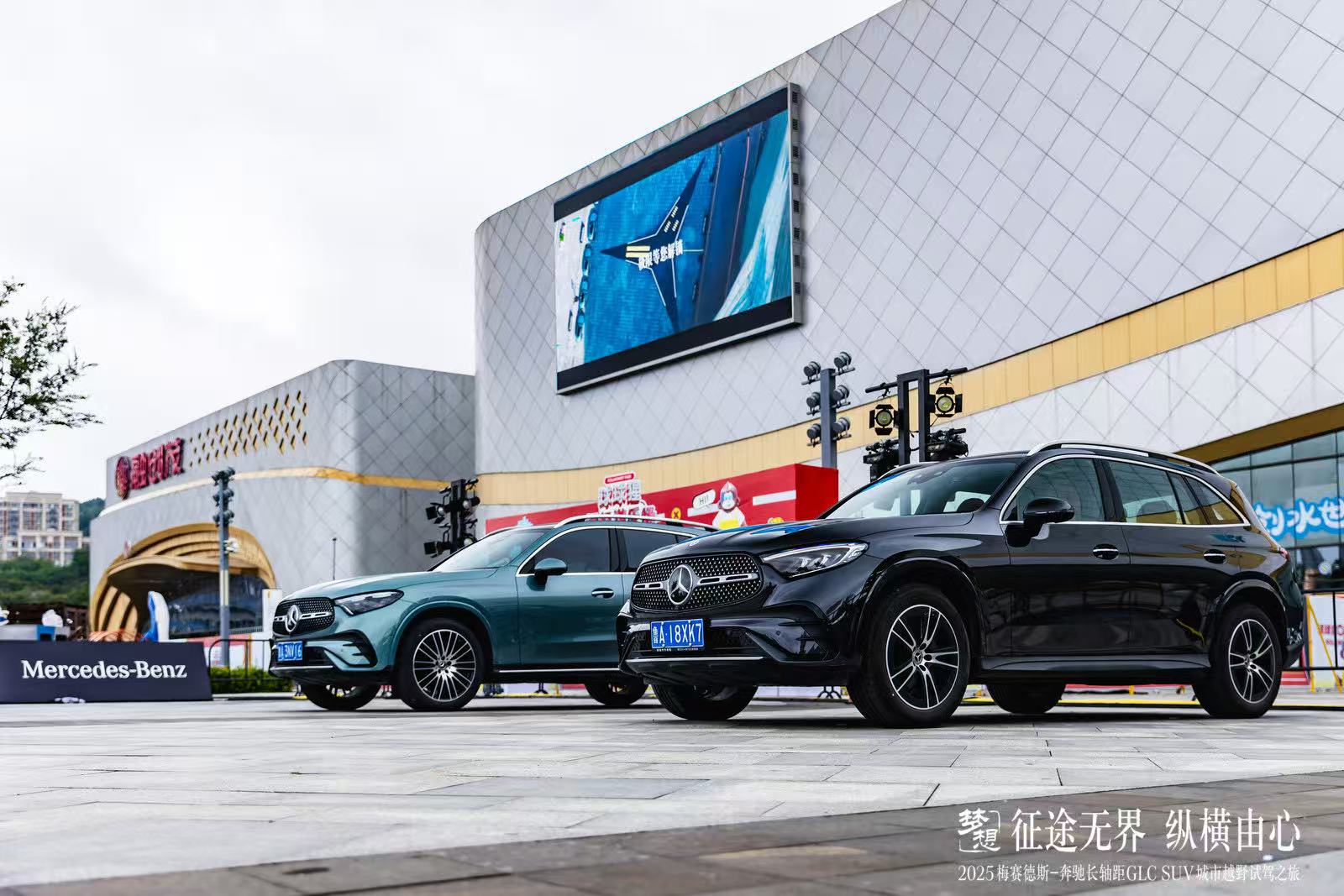
城市中的「越野剧场」,繁华都市上演性能大片 9月19-21日,2025梅赛德斯-奔驰长轴距GLC SUV城市越野试驾之旅济南站活动,在融创乐园前广场举行。 电动化时代,豪华中型SUV市场的竞争愈发激烈,消费者对车辆的期待早已超越基础的代步需求,向着性能、质感与品牌价值的更高维度迈进。梅赛德斯- 奔驰长轴距GLCSUV始终以标杆之姿引领细分市场,而针对北区消费者对全地形适应性与豪华驾乘质感的高度关注,"2025梅赛德斯-奔驰长轴距GLCSUV城 市越野试驾之旅"济南站活动于融创乐园前广场澎湃启幕,用沉浸式体验为济南地区消费者带来一场突破城市边界的越野奇遇。 独特的城市越野展具试驾,还原野外颠簸的台阶路、交叉轴、滚轴路依次排开。在专业教练指导下,台阶路考验通过性,交叉轴测试四驱实力,滚轴路模拟 颠簸路面,GLC都能轻松拿捏。 双试驾路线,全天候驾驭 当加速的轰鸣变得日渐隐匿,当豪华SUV越来越偏向城市通勤,梅赛德斯-奔驰长轴距GLCSUV城市越野试驾之旅用这场试驾告诉大家:真正的豪华是对驾 驶场景的真实演绎,那就是它既能陪你日常穿梭,也能随时带你无界越野。 越野挑战体验:直面三大试炼,实时越野路面影像系统呈现车底 ...

都市车间|百年积淀,东方破局——BBA的中国反击答卷
Qi Lu Wan Bao· 2025-09-18 02:32
Core Viewpoint - The traditional luxury car giants BBA (Benz, BMW, Audi) are launching a counterattack in 2025 against the backdrop of the global electric vehicle wave, focusing on technological innovation and localization strategies to reclaim market share and redefine luxury [1][5]. Group 1: Technological Advancements - Audi's collaboration with Huawei has led to significant improvements in intelligent driving capabilities, with the Q6L e-tron featuring Huawei's smart driving system and the A5L fuel vehicle incorporating Huawei's ADS 2.0 [2]. - BMW is integrating the HarmonyOS ecosystem to enhance AI voice interaction, making its smart cockpit more attuned to Chinese users [2]. - Mercedes-Benz is partnering with local autonomous driving company Momenta to accelerate the commercialization of advanced driving technologies [2]. - BMW's sixth-generation cylindrical battery will have a 20% increase in energy density and is set to be produced in Shenyang by 2026; Mercedes-Benz is developing solid-state batteries with an expected 80% increase in range; Audi's PPE platform supports 800V fast charging, allowing for a 370 km charge in just 10 minutes [2]. Group 2: Product Strategy - Mercedes-Benz has launched the pure electric CLA with L2++ autonomous driving and an 800V platform targeting the 500,000 yuan market, while the ultra-luxury "pure electric G-Class" is priced at 2.17 million yuan [3]. - BMW is discontinuing inefficient fuel vehicles like the 1 Series to focus resources on electrification, with new generation models integrating AI and smart voice interaction set to be trial-produced in Shenyang by 2026 [3]. - Audi is expanding its market presence through partnerships to establish 10 lightweight outlets, resulting in a 40% increase in order volume, and the A5L Sportback with Huawei's smart driving is priced at 235,900 yuan [3]. Group 3: Localization Strategy - China, as the largest automotive market, is the core battleground for BBA's counterattack, with increased R&D investments and localized strategies [4]. - Mercedes-Benz's Shanghai R&D center focuses on developing the MB.OS system tailored for the Chinese market; BMW's local team leads the digital experience for new generation models; Audi's "oil-electric co-prosperity" strategy integrates its century-old manufacturing heritage with Huawei's smart technology [4]. Group 4: Market Dynamics - Despite initial successes, the competition remains fierce, with new entrants like Li Auto and NIO challenging traditional luxury brands through intelligent features and competitive pricing [5]. - BBA's counterattack is characterized by a blend of traditional manufacturing and emerging technologies, with collaborations yielding strong synergies [5]. - The parallel strategy of fuel and electric vehicles allows BBA to maintain market presence while exploring future opportunities, indicating a potential pivotal moment in reshaping the luxury car industry [5]. Group 5: Future Outlook - The luxury car market may enter a new era of "new and old integration," where traditional giants innovate while new players grow, collectively shaping the industry's future [6].
德国的世界第一,正在批量阵亡
投资界· 2025-09-17 08:21
Core Viewpoint - The article discusses the concept of "invisible champions," which refers to small and medium-sized enterprises that dominate niche markets but remain largely unknown to the general public. These companies focus on high-quality, specialized products and do not seek to expand their visibility or go public [4][9]. Group 1: Definition and Characteristics of Invisible Champions - The term "invisible champion" was introduced by German scholar Hermann Simon in 1990, describing companies that hold a leading position in a niche market with strong technical and product capabilities [9][10]. - Invisible champions typically exhibit unique characteristics: they are often rooted in small towns, have low employee turnover, and focus on highly specialized products that are difficult to replicate [9][10]. - According to Simon's criteria, invisible champions are defined as being among the top three in their niche globally, having annual revenues not exceeding 5 billion euros, and being relatively unknown to the public [10]. Group 2: The Landscape of Invisible Champions in Germany - Germany is home to nearly half of the world's invisible champions, with around 3,000 such companies globally, while China has fewer than 100 [10]. - The article highlights examples of German invisible champions, such as Wanzl, which dominates the global market for shopping carts with over 50% market share, and Körber, a leader in high-speed cigarette manufacturing machines [13][14]. - The strength of Germany's manufacturing sector is attributed to its high-value, technology-intensive industries, which have been cultivated over decades [15][17]. Group 3: Current Challenges Facing Invisible Champions - Recently, many German invisible champions, particularly in the automotive sector, have faced significant challenges, including bankruptcies and layoffs among major manufacturers [20][24]. - Factors contributing to these challenges include rising costs due to geopolitical tensions, such as the Ukraine conflict, and a shrinking labor force as the baby boomer generation retires [26][27]. - The rise of China's automotive industry has also impacted German suppliers, as Chinese companies increasingly opt for local suppliers with competitive pricing and quality [26][27].



从20家企业看固态电池“量产”最新进展
高工锂电· 2025-09-16 10:55
Core Viewpoint - The solid-state battery industry is advancing with significant developments in both domestic and international markets, but challenges remain in mass production and commercialization due to material stability, process maturity, and cost competitiveness [2][4][11]. Group 1: Domestic Developments - EVE Energy's "Longquan No. 2" solid-state battery line has successfully produced a 10Ah cell with an energy density of 300Wh/kg and a volume energy density of 700Wh/L, targeting high-end applications like humanoid robots and AI [4][5]. - Guoxuan High-Tech's "Jinshi Battery" is in trial production with a yield rate of 90%, achieving an energy density of 350Wh/kg, enabling a single charge range of up to 1000 kilometers [7]. - Honeycomb Energy plans to start mass production of its first-generation semi-solid-state battery by November, aiming to supply BMW's next-generation MINI models [3][8]. Group 2: International Innovations - QuantumScape demonstrated its solid-state lithium-metal battery in an electric motorcycle at the Munich Auto Show, achieving an energy density of 844Wh/L and fast charging capabilities [11]. - Rimac showcased a next-generation solid-state battery that can charge from 10% to 80% in just 6.5 minutes, even in low temperatures, while being significantly lighter than current mainstream batteries [12]. - Mercedes-Benz's solid-state battery in the EQS test vehicle achieved a real-world range of 1205 kilometers, surpassing the lithium-ion version's range of approximately 774 kilometers [14]. Group 3: Equipment and Manufacturing Advances - Various companies are developing flexible production equipment that can accommodate both solid-state and liquid batteries, enhancing production efficiency and reducing costs [16][18][26]. - Li Yuan Heng has delivered its first complete line for sulfide solid-state batteries, marking a significant breakthrough in solid-state battery manufacturing [21]. - Nako Nor's dry film forming technology significantly reduces energy consumption and costs while improving the density of battery electrodes [25][26].



IAA Mobility 2025: Volkswagen, BMW, Mercedes, BYD & XPeng Shine
ZACKS· 2025-09-15 16:11
Core Insights - The IAA Mobility 2025 event in Munich showcased the rapid transformation of the auto industry driven by electrification and digitalization [1][10] - Major players like Volkswagen, BMW, Mercedes-Benz, BYD, and XPeng presented their latest electric vehicle (EV) models and technologies [2][10] Volkswagen - Volkswagen introduced the ID. Polo and ID. Cross, transitioning well-known combustion-engine models to electric versions, with the ID. Polo set to launch in 2026 [3][4] - The ID. Cross, an all-electric compact SUV, is also expected to arrive by the end of 2026 [3] BMW - BMW debuted the iX3, the first vehicle from its Neue Klasse lineup, featuring a WLTP range of up to 805 km and charging power of 400 kW [5][6] - The iX3 aims to combine driving pleasure with advanced electric technology, alongside showcasing a broader portfolio including MINI and BMW M [6] Mercedes-Benz - Mercedes-Benz unveiled the GLC EV, which features a 94-kWh battery and a range of up to 713 km, equipped with advanced digital features including the MBUX Hyperscreen [7][8] - The GLC EV builds on the success of its combustion-engine predecessor while embracing electric technology [8] BYD - BYD launched the SEAL 6 DM-i Touring, its first station wagon for Europe, emphasizing its strength in plug-in hybrids with electric ranges of up to 105 km [9][10] - The company plans to establish a local production facility for all-electric vehicles in Europe within three years, starting with a plant in Hungary [11] XPeng - XPeng showcased the Next P7 sedan and highlighted its focus on high-performance electric cars with AI-driven systems, alongside futuristic displays including humanoid robots and flying vehicles [13][14] - The company will open its first European R&D center in Munich to enhance technology development for European customers [14] Industry Trends - The event underscored the importance of battery innovation and AI systems in the ongoing transformation of the auto industry [10][15] - The competition between established brands and new entrants is expected to accelerate the shift towards electrification and reshape transportation [15]

今日新闻丨奔驰固态电池上车,纯电续航1342公里!小鹏G7增程版、岚图泰山、零跑Lafa5等新车登录工信部!
电动车公社· 2025-09-11 15:51
Core Viewpoint - The article highlights the significant achievement of Mercedes-Benz in successfully testing a solid-state battery vehicle, the EQS, which completed a range of 1342 kilometers, setting a new record for electric vehicle range [1][4]. Group 1: Mercedes-Benz Solid-State Battery - The Mercedes-Benz EQS equipped with a solid-state battery has completed a range test, traveling 1205 kilometers from Germany to Sweden, with a remaining range of 137 kilometers, totaling 1342 kilometers [1][4]. - This achievement marks a major breakthrough for solid-state batteries in real-world driving conditions, indicating progress towards mass production [4]. - Mercedes-Benz aims to mass-produce this solid-state battery technology within five years, prompting domestic competitors to accelerate their efforts in this area [4]. Group 2: New Vehicle Registrations - Several new models, including the XPeng G7 extended range version, Lantu Taisan, and Leap Lafa5, have been registered with the Ministry of Industry and Information Technology [3][5]. - The XPeng G7 extended range version features dimensions of 4918/1925/1655 mm and a wheelbase of 2890 mm, with a weight of 2245/2255 kg, showing a length increase of 26 mm compared to the pure electric version [7]. - The Lantu Taisan has dimensions of 5230/2025/1817 mm and a wheelbase of 3120 mm, equipped with a 1.5T hybrid powertrain and a battery from CATL or Honeycomb Energy [11]. - The Leap Lafa5 is powered by a single motor with a maximum power of 160 kW and a top speed of 170 km/h, with battery supply from multiple vendors [14]. - The iCar V27 features a 1.5T range extender engine with a power output of 115 kW, paired with lithium iron phosphate batteries from suppliers like Guoxuan High-Tech or CATL [18]. - The Geely Galaxy Starship 7 electric version has dimensions of 4750/1905/1680 mm and a weight of 1712/1750 kg, with design adjustments including a closed grille and an EV badge [21][22].



专访丨“更中国化”,在产业变革中把握主动——访梅赛德斯-奔驰集团董事会主席康林松
Xin Hua Wang· 2025-09-11 08:50
Core Viewpoint - Mercedes-Benz emphasizes the importance of deepening its roots in China and adopting a "more Chinese" approach as a strategic choice to navigate the global automotive industry's transformation [1][2] Group 1: Localization and Innovation - Mercedes-Benz has committed to long-term investment in technology and innovation, integrating cost advantages from the Chinese supply chain into its R&D system [1] - China is not only a key market for Mercedes-Benz but also a crucial base for global R&D and innovation, with significant local initiatives such as the establishment of Beijing Benz and the expansion of R&D centers in Beijing and Shanghai [1] - The company aims to develop innovative products and technologies in collaboration with Chinese partners, catering to local customer needs while also benefiting global markets [1] Group 2: Customer-Centric Approach - Chinese customers are open-minded and eager to try new technologies, which drives Mercedes-Benz's innovation, particularly in digital experiences and smart cockpit features [1] - The new electric GLC SUV, launched at the Munich Auto Show, will feature tailored driving assistance and digital experiences specifically designed for Chinese customers [1] Group 3: Balancing Long-term and Short-term Strategies - Mercedes-Benz maintains a long-term strategy while being cautious in short-term decision-making to avoid resource waste and protect brand value [2] - The next three years are expected to be a period of intensive new product launches for Mercedes-Benz globally, reflecting its commitment to innovation [2] - The company recognizes the value of Chinese talent and innovation, which has significantly contributed to its development and future direction [2]
尴尬!德国车展上,奔驰车在总理默茨面前出“故障”
Huan Qiu Shi Bao· 2025-09-10 22:45
Core Viewpoint - The German automotive industry is seeking breakthroughs at the International Motor Show, with a focus on electric vehicle transformation, as emphasized by Chancellor Merz during his speech [1] Group 1: Industry Challenges and Responses - German automotive manufacturers are currently facing difficulties and are using the auto show to launch a series of new models [1] - Chancellor Merz highlighted the importance of the automotive industry for the German economy, stating that without its support, the economic situation would worsen [1] Group 2: Event Highlights - During the event, a malfunction occurred when Mercedes-Benz Group's chairman, Kallenius, attempted to showcase a new electric vehicle, which failed to open its storage compartment [1] - Opel's CEO, Schuster, also faced challenges in opening the storage compartment of his vehicle but eventually succeeded after several attempts [1]
梅赛德斯-奔驰(中国)汽车销售有限公司、北京奔驰汽车有限公司召回部分进口和国产汽车
Jing Ji Guan Cha Wang· 2025-09-10 09:26
经济观察网 据市场监管总局网站消息,日前,梅赛德斯-奔驰(中国)汽车销售有限公司、北京奔驰汽 车有限公司根据《缺陷汽车产品召回管理条例》和《缺陷汽车产品召回管理条例实施办法》的要求,向 国家市场监督管理总局备案了召回计划。 一、召回编号S2025M0137V:自即日起,召回生产日期从2022年10月20日至2025年5月20日期间的部分 进口GLC和EQE级汽车,共计302辆。 本次召回范围内的部分车辆,由于高压动力电池高压汇流排的固定螺栓可能未正确拧紧,导致偶发动力 传输中断,增加车辆发生碰撞的风险,存在安全隐患。 北京奔驰汽车有限公司将通过梅赛德斯-奔驰授权经销商,为召回范围内的车辆免费更换高压动力电 池,以消除安全隐患。 梅赛德斯-奔驰(中国)汽车销售有限公司、北京奔驰汽车有限公司将通过挂号信等方式,通知有关车 主此次召回事宜。用户可以通过座机或手机拨打服务热线:400-818-1188咨询。此外,也可登录市场监 管总局召回中心网站www.samrdprc.org.cn,关注微信公众号(SAMRDPRC),了解更多信息,反映缺 陷线索。 本次召回范围内的部分车辆,由于转向联轴器的连接螺栓可能未按正确扭矩 ...
高通骁龙座舱平台赋能全新梅赛德斯-奔驰纯电车型,打造智能、直观的AI驱动体验
Huan Qiu Wang· 2025-09-09 10:42
【环球网科技综合报道】9月8日,在2025年德国国际汽车及智慧出行博览会(IAA Mobility 2025)上,高通技术公 司和梅赛德斯-奔驰公司(Mercedes-Benz AG)进一步强化了双方致力于打造无缝连接与智能驾乘体验的承诺。立足 于涵盖多代骁龙®数字底盘™解决方案的长期合作关系,双方将继续通过骁龙数字底盘解决方案,把先进的数字化 功能融入梅赛德斯-奔驰下一代车型中。今年早些时候全球首发的梅赛德斯-奔驰纯电CLA,以及全新梅赛德斯-奔驰 纯电GLC,均实现了由骁龙数字底盘解决方案支持的先进数字座舱和连接体验,而该平台正是软件定义汽车 (SDV)的基础性平台。 随着汽车行业积极拥抱数字化转型,高通技术公司和梅赛德斯-奔驰公司始终处于行业前沿,基于对未来出行的共同 愿景,在现有和未来的梅赛德斯-奔驰产品阵容中持续推动创新。这一创新的核心在于将高通技术公司先进的骁龙® 座舱平台和骁龙®汽车5G调制解调器及射频解决方案集成至梅赛德斯-奔驰的MBUX系统。与前代相比,这些平台的 性能大幅提升,支持可扩展的数字化特性,在整个汽车生命周期内实现更高的灵活性、个性化、便利性和持续创 新。 在IAA Mobili ...