
Mercedes-Benz(MBGYY)

Search documents
欧洲汽车业喊话欧盟:中国脱碳模式全球最先进,照搬他们思路又有何不可?
Guan Cha Zhe Wang· 2025-09-04 11:44
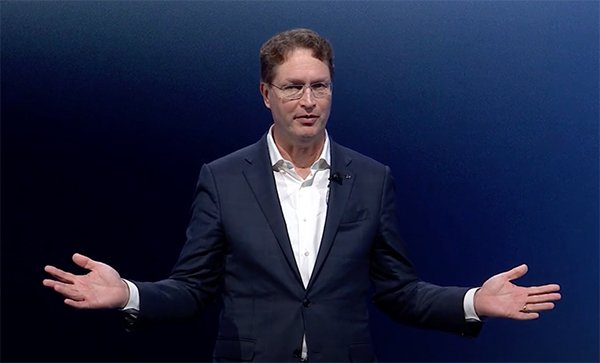
Group 1 - European automotive industry leaders are urging the EU to adopt advanced Chinese practices in emission reduction policies, particularly by including hybrid vehicles in support measures [1][2] - The President of the European Automobile Manufacturers Association (ACEA) and CEO of Mercedes-Benz, Ola Kaellenius, emphasized that China's success in decarbonization is due to its open technology approach without strict deadlines or bans [1][4] - There is a division within the European automotive sector regarding the EU's 2035 ban on new fossil fuel vehicles, with some manufacturers supporting the regulation while others, including Mercedes-Benz, call for a reassessment [2][5] Group 2 - The ACEA and the European Association of Automotive Suppliers (CLEPA) have expressed that achieving rigid zero-emission targets is no longer feasible under current conditions [2][5] - Mercedes-Benz has invested billions in electrification but requires further investment in charging infrastructure and supply chains, similar to China's strategy [4][5] - The EU has recently relaxed its 2025 emissions targets for car manufacturers, allowing for a more gradual approach to compliance [5] Group 3 - In the first half of the year, electric vehicle sales for Mercedes-Benz accounted for only 8% of total sales, significantly lower than competitors like BMW and Renault [5] - Despite the EU's push for electric vehicles, the profitability of electric cars remains lower than that of fossil fuel vehicles, increasing pressure on European automakers [5][6] - Chinese automakers are expanding their presence in Europe, with brands like BYD and NIO showcasing their latest models at the Munich International Motor Show [6][7] Group 4 - China's carbon emissions have decreased by approximately 1.6% year-on-year in the first quarter, indicating progress in its decarbonization efforts [7][8] - China has become the world's largest investor in clean energy, with significant advancements in renewable energy technology deployment [7][8] - The Chinese government has set ambitious targets for carbon peak and neutrality, aiming for a 65% reduction in carbon intensity by 2030 compared to 2005 levels [7][8]


雷诺任命梅赛德斯-奔驰前高管Katrin Adt为达契亚品牌CEO
Cai Jing Wang· 2025-09-03 07:19
日期,雷诺集团宣布,梅赛德斯-奔驰前高管Katrin Adt出任达契亚品牌CEO,接替即将离职的Denis Le Vot。根据新的组织架构,Adt将向雷诺首席增长官Fabrice Cambolive汇报工作。(中国汽车报) ...
梅赛德斯-奔驰出售全部日产汽车股份,套现478.7亿日元
Sou Hu Cai Jing· 2025-08-27 07:52
Core Points - Mercedes-Benz confirmed the sale of its entire stake in Nissan for 47.87 billion yen, approximately 2.324 billion yuan [1] - The shares were sold at a price of 341.3 yen per share, totaling 140.1 million shares, and the sale is part of a strategy to "clean up the investment portfolio" [1] - The Nissan shares had been transferred to pension assets since 2016 and were not considered a strategic investment [1] Company and Industry Summary - As of the end of March this year, Mercedes-Benz held a 3.77% stake in Nissan [3] - The sale occurred after Nissan and its largest shareholder, Renault, modified their cooperation agreement, reducing Renault's shareholding requirement from 15% to 10% [3] - Nissan declined to comment on the sale at the time of reporting [3]

梅赛德斯-奔驰出售3.46亿美元日产汽车股份
Ge Long Hui A P P· 2025-08-25 10:08
Group 1 - Mercedes-Benz is selling Nissan shares valued at $346 million at a price range of $345.0 to $337.5 per share [1]
创近5年新低!奔驰7月国内销量暴跌超40%
Xi Niu Cai Jing· 2025-08-20 05:20
Core Viewpoint - Mercedes-Benz is facing significant challenges in the Chinese market, with a notable decline in sales and increasing competition from domestic brands, highlighting the need for accelerated transformation in electric and intelligent vehicle offerings [2][4][5] Group 1: Sales Performance - In July, Mercedes-Benz's retail sales in China were only 26,653 units, a month-on-month decline of over 40%, marking a five-year low and falling below the 27,000-unit threshold for the first time [2] - Compared to the worst sales figures in the past three years of 36,000 units, July's sales were down by over 9,000 units, with competitors BMW and Audi significantly outperforming Mercedes-Benz, selling 40,190 and 37,600 units respectively [2] Group 2: Market Challenges - The decline in sales is attributed to both internal and external factors, including the rise of domestic brands like Wuling, Li Auto, and Zeekr, which have captured market share in the 300,000 yuan and above segment [4] - Mercedes-Benz's slow progress in electric and intelligent vehicle technology has further exacerbated the situation, as competitors like Audi have partnered with Huawei to enhance their offerings [4] Group 3: Financial Performance - For the first half of the year, Mercedes-Benz reported a revenue of 66.377 billion euros, a year-on-year decline of 8.6%, and a net profit of 2.688 billion euros, down 55.8% year-on-year [4] - In the Chinese market, total sales for the first half were 293,200 units, reflecting a year-on-year decrease of 14%, with a 19% decline in the second quarter [4] Group 4: Strategic Implications - The current predicament of Mercedes-Benz serves as a microcosm of the challenges faced by traditional luxury car manufacturers amid the automotive industry's transformation [5] - Without accelerating the transition to electric and intelligent vehicles and improving product and service quality, Mercedes-Benz risks relying solely on brand prestige, which could lead to significant challenges in both the Chinese and global markets [5]
德国车企比惨,巨头加速关厂、裁员
21世纪经济报道· 2025-08-13 14:16
Core Viewpoint - The German automotive industry, represented by the "Big Three" (Mercedes-Benz, Volkswagen, and BMW), is facing significant challenges due to a sharp decline in profits and ongoing tariff issues with the U.S. market, which could lead to long-term structural changes in production and employment [1][3]. Group 1: Financial Performance - Mercedes-Benz reported a net profit drop of over 50% year-on-year for the first half of the year, with the CEO stating that the current situation is more challenging than ever [1]. - Volkswagen's after-tax profit decreased by 38.3% year-on-year, and the company has revised its full-year performance expectations downward three times within six months [1]. - BMW experienced a 29% year-on-year decline in after-tax net profit, indicating that while it is less affected than its peers, it still faces significant pressure [1]. Group 2: Tariff Impact - The German automotive sector is projected to see a combined cash flow reduction of approximately €10 billion due to U.S. tariff policies [1]. - Despite a recent trade agreement reducing the tariff on EU car exports to the U.S. from 27.5% to 15%, the current tariff level remains significantly higher than the pre-Trump administration rate of 2.5% [3]. - The direct impact of tariffs is evident in sales and revenue, but the long-term implications include potential supply chain restructuring and job losses in Germany if production shifts to the U.S. [1]. Group 3: Market Dynamics - In 2022, Germany exported approximately 447,000 cars to the U.S., which accounted for less than 6% of total U.S. car imports, but the value of these exports was significant, reaching $24.8 billion [4]. - The luxury segment dominates German car exports to the U.S., which helps mitigate the impact of the 15% tariff due to higher profit margins [4][5]. - Companies like Audi and Porsche, which lack U.S. manufacturing facilities, are more vulnerable to tariff impacts, with Audi recently lowering its revenue expectations and profit margins [5][6]. Group 4: Strategic Responses - In response to tariffs, German automakers are planning to increase investments in U.S. manufacturing, with companies like BMW and Volkswagen already having established production bases in the U.S. [8]. - However, the shift to U.S. production comes with challenges, including increased costs from tariffs on imported components, which could raise overall manufacturing expenses by $107.7 billion for U.S. automakers [9]. - The pressure to invest in the U.S. may lead to reduced production capacity in Europe, with significant job cuts announced by major companies, including Audi and Volkswagen, which could affect up to 70,000 jobs in Germany [9][10]. Group 5: Electric Vehicle Transition - The push for electric vehicle development may be hindered by the current tariff environment, as German automakers may focus more on traditional fuel vehicles to maintain competitiveness in the U.S. market [10]. - The U.S. government's emphasis on traditional energy vehicles and the reduction of electric vehicle subsidies complicate the transition for German manufacturers, potentially delaying their shift towards electric mobility [10].
电厂 | 奔驰,为什么成为造车新势力PPT对比中的“老演员”
Xin Lang Cai Jing· 2025-08-13 12:25
Group 1 - The article discusses the competitive landscape in the automotive industry, particularly how new energy vehicle brands frequently compare their products to established luxury brands like Mercedes-Benz, often claiming superiority in various aspects [1][3][4] - Mercedes-Benz has been a consistent benchmark in product comparisons, especially in terms of chassis performance and cabin comfort, indicating its strong market presence and reputation [1][3] - The article highlights a recent event where Mercedes-Benz showcased its innovations in seating and chassis control, marking 20 years of localized research and production in China [5][8] Group 2 - Mercedes-Benz emphasizes its commitment to developing high-quality automotive seats, which undergo a rigorous four-year development process involving feasibility studies, design, and extensive testing [7][10][13] - The company maintains strict safety standards for its seating systems, which are designed to meet global market requirements, ensuring that they exceed local standards [8][10] - The article details the complexity of Mercedes-Benz's seat systems, which include over 1,000 precision parts and undergo more than 2,000 specialized tests to ensure comfort and safety [7][10][11] Group 3 - The chassis development process at Mercedes-Benz is described as a comprehensive system engineering task, focusing on vibration absorption and stability, with a strong emphasis on customer comfort [14][16] - The company has established over 130 vehicle metrics and more than 1,000 component metrics to evaluate chassis performance across five key dimensions: ride comfort, safety, handling, sportiness, and precision [16][19] - Mercedes-Benz utilizes advanced simulation technologies and extensive real-world testing to validate the performance of its vehicles under various conditions, ensuring reliability before market release [18][19][24]
利润集体大幅下滑,BBA上半年交出最“惨”财报
Jing Ji Guan Cha Bao· 2025-08-10 05:12
Core Insights - The German luxury car brands "BBA" (Mercedes-Benz, BMW, Audi) reported significant profit declines in the first half of 2025, with Mercedes-Benz's net profit dropping by 55.8%, Audi's by 37.5%, and BMW's by 29% [2][3][4] - The brands are facing dual challenges from U.S. tariffs and declining sales in the Chinese market, exacerbated by fierce competition from local luxury brands and an overall price war in China [2][3][4] Financial Performance - Mercedes-Benz's revenue fell to €66.377 billion, down 8.6%, with net profit dropping from €6.087 billion to €2.688 billion [3] - BMW's sales revenue decreased to €67 billion, also down 8%, with a net profit of €4 billion, a 29% decline [3] - Audi's revenue increased by 5.3% to €32.57 billion, but net profit fell to €1.346 billion, a 37.5% drop [3] Impact of U.S. Tariffs - The U.S. government's 25% punitive tariffs on EU-imported cars have significantly impacted BBA's profits, with Audi reporting losses exceeding €600 million due to tariffs and transformation costs [3][4] - Mercedes-Benz estimated a loss of €362 million due to the tariffs, which affected its core automotive business profit margin [3][4] Sales Decline in China - BBA's sales in China have been declining, with Mercedes-Benz's sales down 14% to 293,200 units, Audi's down 10.2% to 287,600 units, and BMW's down 15.5% to 318,000 units [4][5] - The shift towards electric and smart vehicles in China has intensified competition, with local brands gaining market share [4][5] Electric Vehicle Sales - Mercedes-Benz's electric vehicle sales fell by 14% to 87,300 units, while Audi's in China dropped by 23.5% to 7,897 units [5] - BMW's electric vehicle sales increased by 18.5% to 318,900 units globally, but it still lacks competitive products in the Chinese market [5] Adjusted Performance Expectations - Both Mercedes-Benz and Audi have lowered their full-year performance expectations due to ongoing challenges, with Audi revising its revenue forecast down to €65-70 billion [5][6] - Mercedes-Benz anticipates a return on sales of 4%-6%, down from an initial forecast of 6%-8% [5][6] Strategic Responses - BBA is increasing local production in the U.S. to mitigate tariff impacts, with Audi planning a $4.6 billion investment in a new factory [6] - In China, BBA is focusing on deep localization of technology, products, and supply chains to strengthen its market position [6][7] Product Development and Partnerships - BBA is accelerating the launch of new products, especially electric vehicles, with BMW planning to introduce over 10 new models in China by 2025 [7] - Collaborations with local suppliers for smart technology are being prioritized, with BMW partnering with Huawei and Audi also collaborating with the tech giant [7][8] Market Outlook - The luxury car market is facing a new competitive landscape, with BBA needing to adapt to the challenges posed by local brands and changing consumer preferences [9] - The era of high double-digit growth for all brands is perceived to be over, necessitating strategic adjustments for sustained development [9]
暴跌69%,豪车天塌了!
商业洞察· 2025-08-09 09:24
Core Viewpoint - The BBA (Benz, BMW, Audi) luxury car manufacturers are facing significant challenges in the electric vehicle era, with their sales and profits plummeting, indicating a shift in consumer preferences towards domestic electric vehicles [4][5][6]. Group 1: BBA Financial Performance - BMW's net profit fell by nearly 30%, while Audi's profit dropped by 37.5%, and Mercedes-Benz's Q2 net profit plummeted by 69% [4][5][11]. - Mercedes-Benz's Q2 net profit decreased from €3 billion to €957 million, a drop of 68.7%, and its sales in China fell by 19% [11][12]. - Audi's operating profit fell by 45.2% to €1.087 billion, and its net profit dropped by 37.5% to €1.346 billion, with a 6% decline in vehicle deliveries [17][18]. Group 2: Market Dynamics - In the first half of the year, domestic car sales in China reached 9.27 million units, a 25% increase, contrasting sharply with the decline in BBA sales [8][34]. - Mercedes-Benz's electric vehicle sales in China fell by 66%, with its market share in the pure electric vehicle segment dropping to 0.16% [13][12]. - Audi's electric vehicle sales also declined by 23.5%, indicating a broader trend of decreasing demand for traditional luxury vehicles [18]. Group 3: Strategic Shifts - BBA manufacturers are struggling to adapt to the electric vehicle market, with Audi retracting its plans for full electrification due to poor sales performance [18][28]. - The luxury car market is witnessing a significant transformation, with domestic brands rapidly gaining market share and consumer trust, while BBA brands are losing their premium status [32][36]. - The shift in consumer preferences towards more affordable and technologically advanced domestic electric vehicles is evident, as BBA brands are unable to compete effectively [37].
国际观察丨欧美贸易协议难解德国汽车业困境
Xin Hua She· 2025-08-06 13:46
新华社柏林8月6日电 题:欧美贸易协议难解德国汽车业困境 新华社记者李函林 今年4月以来,美国政府挥舞关税大棒,大幅提高自欧盟进口汽车关税,重创欧洲汽车产业,导致 德国主要车企集体陷入利润暴跌的"寒冬"。 欧美日前达成新协议,欧盟输美汽车关税从25%降至15%。分析人士指出,该协议或将暂时避免欧 美之间爆发全面贸易战,但德国制造业的困境远未解除,仍然高企的出口成本与政策反复所带来的不确 定性,正在持续削弱车企信心。 关税冲击车企业绩 宝马、梅赛德斯-奔驰、大众等德国主要车企近日公布的财报显示,2025年上半年,企业利润普遍 大幅下滑。多家企业明确指出,美国高关税政策是造成其财务承压的重要因素。 宝马财报显示,2025年上半年,该集团收入同比下降8.2%,净利润下滑29%。公司指出,高关税是 其核心业务利润率下降的主要因素之一。梅赛德斯-奔驰上半年净利润从去年同期的约61亿欧元"腰 斩"至约27亿欧元。 大众集团2025年上半年销售收入同比下降0.3%,旗下保时捷汽车业绩也受到显著影响。保时捷公 司表示,上半年因关税额外支出约4亿欧元。 与此同时,德国车企现金流状况持续恶化。英国《金融时报》报道,受美国关税政策 ...