
NIO(NIO)

Search documents
蔚来取得电池负极及电化学装置专利
Jin Rong Jie· 2025-12-31 00:37
Group 1 - The core point of the article is that NIO Battery Technology (Anhui) Co., Ltd. has obtained a patent for a battery anode and an electrochemical device that includes this anode, with the patent granted under announcement number CN115663109B and the application date being November 2022 [1] - NIO Battery Technology (Anhui) Co., Ltd. was established in 2022 and is located in Hefei City, primarily engaged in the manufacturing of electrical machinery and equipment [1] - The company has a registered capital of 2 billion RMB and has participated in one bidding project, holds 775 patent pieces of information, and possesses one administrative license according to data analysis from Tianyancha [1]

Stock Market Today, Dec. 30: Nio Rallies on Upbeat Q4 Sales Outlook
The Motley Fool· 2025-12-30 22:11
Core Viewpoint - Nio's stock price increased by 3.00% following a positive sales outlook of $4.3 billion and the extension of China's electric vehicle subsidies, indicating strong investor confidence in the company's future performance [1][5]. Company Performance - Nio's current stock price is $5.50, with a market capitalization of $11 billion. The stock has shown a 10.00% increase over the past five days, and trading volume reached 78 million shares, significantly above the three-month average of 53 million shares [2]. - The company projected fourth-quarter vehicle sales to exceed 30 billion yuan (approximately $4.3 billion), which has reassured investors after a disappointing Q3 revenue report [6]. Industry Context - The Chinese government has extended trade-in subsidies for electric vehicles, offering consumers up to $2,850 towards a qualifying new vehicle, which is expected to boost demand in the EV market [5]. - Nio's performance is being compared to competitors in the premium EV sector, with Tesla's stock declining by 1.13% and Li Auto's stock increasing by 0.64% on the same day [4].

走车企 看中国汽车产业的“三个三千万”(深度观察)
Ren Min Ri Bao· 2025-12-30 22:04
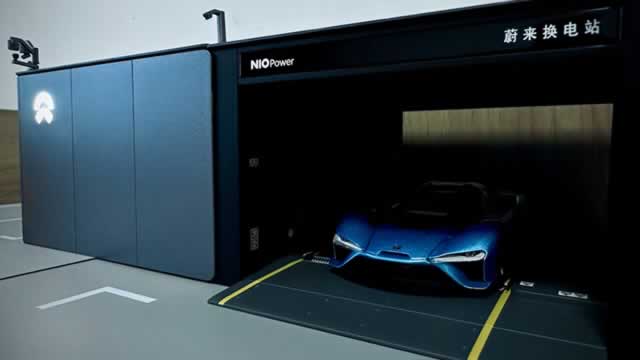
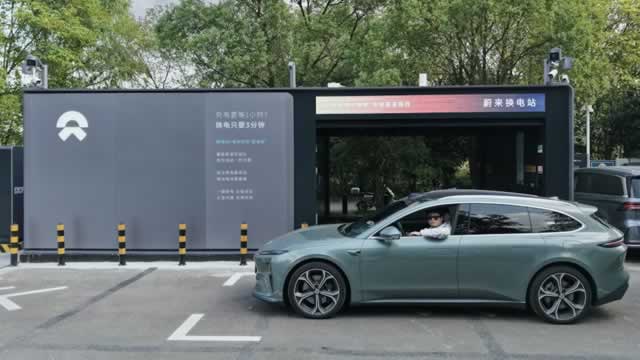
Core Insights - The automotive industry in China is experiencing significant growth, with three major milestones of 30 million vehicles produced by FAW-Volkswagen, Changan Automobile, and overall industry production, highlighting the strength of Chinese manufacturing and market vitality [1][2][7]. Group 1: Changan Automobile - Changan Automobile achieved the production of its 30 millionth vehicle in December 2025, marking a rapid growth from 20 million to 30 million in just 4.5 years [2][3]. - The company emphasizes core technology research and development, establishing a global R&D network and applying for over 14,000 patents in the last three years [3][4]. - Changan has developed a multi-brand matrix to cater to diverse consumer needs, aiming for over 1 million sales in new energy vehicles by 2025 [4][5]. Group 2: FAW-Volkswagen - FAW-Volkswagen has produced over 30 million vehicles since its establishment 34 years ago, generating over 5.5 trillion yuan in revenue and creating over 500,000 jobs [7][8]. - The company is transitioning to a "Joint Venture 2.0 Era," focusing on independent research and development, with 155 innovation projects launched in 2025 [8][9]. - FAW-Volkswagen is collaborating with Huawei on advanced driving assistance systems, showcasing a shift from technology importation to independent development [9][10]. Group 3: NIO - NIO has seen significant demand for its high-end ES8 model, achieving over 40,000 deliveries within 100 days of launch [11][12]. - The company has invested nearly 70 billion yuan in R&D, developing a comprehensive technology stack and applying for over 9,900 patents [12][13]. - NIO is innovating in business models and user engagement, establishing over 8,400 charging and battery swap stations across China [13][14].

New China Subsidies Are Lifting the Bull Case for Nio Stock Today. What the Data Tells Us for 2026.
Yahoo Finance· 2025-12-30 21:29
Core Viewpoint - Nio's stock experienced a significant increase following the announcement of a consumer trade-in subsidy program by the Chinese government, aimed at stimulating the economy and promoting electric vehicle adoption [1][3]. Group 1: Government Initiatives - The Chinese government plans to offer consumer trade-in subsidies worth up to $8.92 billion next year to counter deflationary pressures and economic softness [1]. - The National Development and Reform Commission (NDRC) stated that the program will help optimize the implementation of new economic and social organizations [1]. Group 2: Company Performance - Nio shares have been in a downtrend, declining over 30% from their year-to-date high on October 2 [2]. - The company is expected to achieve over $4 billion in vehicle sales for the fourth quarter, a significant increase from last year's $2.7 billion [5]. Group 3: Market Sentiment and Valuation - The recent stimulus package is seen as bullish for Nio, as it directly incentivizes consumers to upgrade to new vehicles, including electric vehicles [3]. - Nio's price-sales (P/S) ratio is approximately 1.18x, making it more attractively valued compared to larger U.S. rivals like Tesla and Rivian [6]. - Options data indicates a positive outlook for Nio, with contracts suggesting the stock could trade above $7 within the next five months [5]. Group 4: Future Outlook - Analysts on Wall Street predict further upside for Nio stock in the calendar year 2026 [8]. - The company's expansion into both premium SUVs and affordable EVs, along with investments in battery-swapping technology, positions it favorably in the market [6].
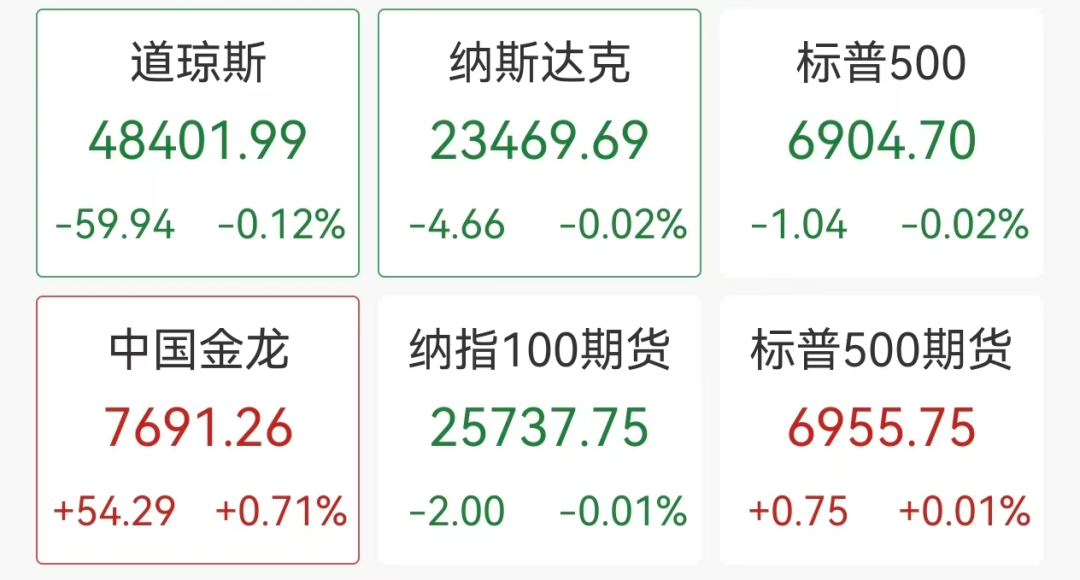
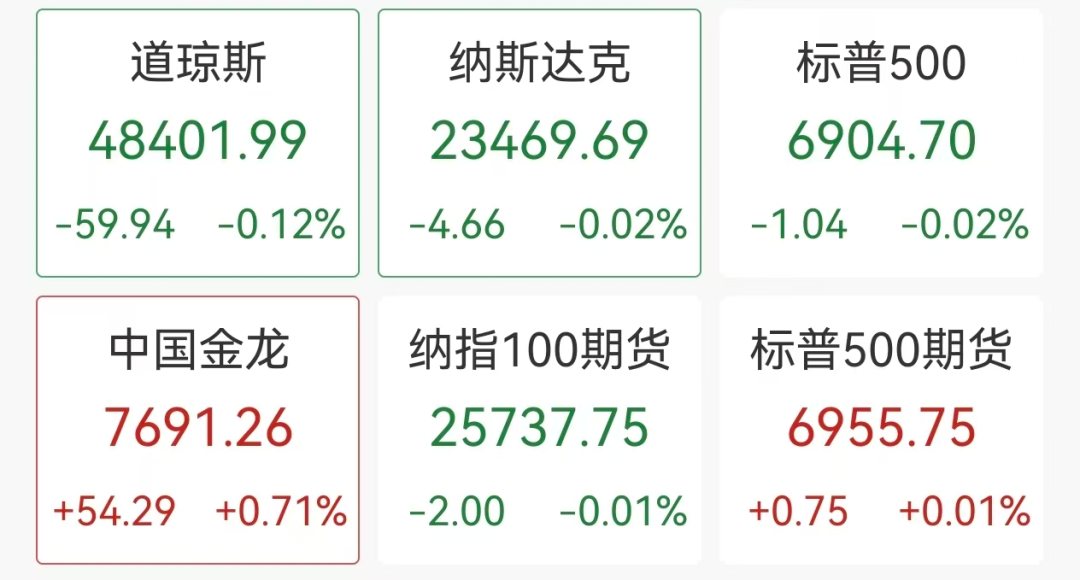
纳斯达克中国金龙指数收跌0.26%,百度涨超4%
Mei Ri Jing Ji Xin Wen· 2025-12-30 21:19
Group 1 - The Nasdaq China Golden Dragon Index opened high but closed down by 0.26% on December 31 [1] - Baidu saw an increase of over 4% [1] - NIO experienced a rise of over 3% [1] - NetEase rose nearly 1% [1] - JD.com declined by nearly 2% [1] - Kingsoft Cloud fell by nearly 1% [1]



Nio stock rallies on strong Q4 outlook, China subsidy extension, Europe deliveries
Invezz· 2025-12-30 20:35
The market value of Nio shares increased during the first week of the month because investors analyzed positive fourth-quarter projections and Chinese government backing, and European market developme... ...
贵金属深夜集体反弹 白银期货涨近8% 中概股普涨 蔚来涨近7% 百度涨超5%
2 1 Shi Ji Jing Ji Bao Dao· 2025-12-30 15:47
北京时间12月30日晚,美股三大指数小幅低开,冲高后转跌,中概股普涨。昨日跳水的贵金属集体反弹。 美股多只黄金股上涨,截至22:40左右,金田、哈莫尼黄金、泛美白银涨超3%。 部分科技股走势亮眼,Meta、英特尔一度涨约2%。 纳斯达克中国金龙指数一度涨超1%。其中蔚来涨近7%,小鹏涨超5%;百度涨近6%,其港股今日收涨近9%。消息面上,据智通财经报道,美国网约车平 台Uber和Lyft宣布,已与百度达成合作,计划于2026年在英国推出无人驾驶出租车(Robotaxi)试点项目。 | 名称 | 现价 | 涨跌幅 | | --- | --- | --- | | 蔚来 | 5.710 | 6.93% | | 百度集团 | 134.130 | 5.77% | | 小鹏汽车 | 21.555 | 5.15% | | 中国苏轩堂药业 | 1.530 | 4.08% | | 禾赛科技 | 23.270 | 3.51% | | 迅雷 | 7.400 | 3.06% | | 小赢科技 | 5.915 | 3.04% | | 嘉银科技 | 6.000 | 2.92% | | MICROALGO | 5.180 | 2.78% ...
贵金属深夜集体反弹,白银期货涨近8%,中概股普涨,蔚来涨近7%,百度涨超5%
2 1 Shi Ji Jing Ji Bao Dao· 2025-12-30 15:41
Group 1: Stock Market Performance - Several gold stocks in the US market saw significant increases, with Kintan, Harmony Gold, and Pan American Silver rising over 3% [2] - Notable performance in tech stocks, with Meta and Intel both rising approximately 2% [2] - The Nasdaq Golden Dragon China Index rose over 1%, with NIO increasing nearly 7%, XPeng up over 5%, and Baidu rising nearly 6% [2] Group 2: Precious Metals Market - After a significant drop, the precious metals market rebounded, with COMEX silver rising nearly 8% and spot silver increasing over 4% [5] - Gold prices reached up to $4,400, while platinum and palladium rose approximately 5% and 2%, respectively [5] - Year-to-date, gold has seen an increase of over 66%, marking its best performance since 1979 [7] Group 3: Future Price Predictions - UBS has raised its gold price forecast for the first three quarters of 2026 to $5,000 per ounce, with potential increases to $5,400 in case of political or economic turmoil [10] - CITIC Securities has warned of potential volatility in silver prices, suggesting caution due to historical high volatility indices [10]
蔚来美股开盘飙升逾7%!全新ES8四万台交付速度刷新行业纪录
智通财经网· 2025-12-30 15:30
智通财经APP获悉,12月30日,蔚来(NIO.US)美股开盘阶段大幅拉升,涨幅超过7%。此轮市场积极反 应,紧随其旗舰车型全新ES8达成重要交付里程碑。 值得注意的是,该品类销量自今年9月首次超越增程式、传统燃油及插电混动同类车型后,已连续三个 月稳居各动力形式销量榜首。用户购买偏好与市场销售数据的双重印证,标志着以纯电驱动的大型三排 座SUV正迎来高速增长的"黄金时代"。 12月29日,全新ES8正式交付第四万台,自今年9月21日开启交付至今,仅用100天即实现此目标,创下 中国汽车市场40万元以上价位车型达成四万台交付的最快纪录。全新ES8持续刷新的交付速度,有力印 证了蔚来"双旗舰大三排SUV"产品策略的市场竞争力。根据规划,2026年蔚来还将推出三款全新大型车 型,形成旗下共计五款大车同步销售的产品矩阵。 这一业绩也与宏观市场趋势高度吻合。根据根据中汽协与乘联会最新发布的零售数据,2025年11月,纯 电动大三排SUV细分市场单月销量攀升至46,209台,环比增长16%,创下历史新高。 ...
美股异动丨中概新能源车股齐涨,两部门发布关于明年实施“两新”政策的通知
Xin Lang Cai Jing· 2025-12-30 15:01
格隆汇12月30日|中概新能源车股齐涨,蔚来涨超7%,小鹏汽车涨5.5%,理想汽车涨近2%。 消息面上,国家发展改革委、财政部发布关于2026年实施大规模设备更新和消费品以旧换新政策的通 知。支持汽车报废更新。个人消费者报废登记在本人名下的乘用车,并购买纳入《减免车辆购置税的新 能源汽车车型目录》的新能源乘用车或2.0升及以下排量燃油乘用车的,给予汽车报废更新补贴支持, 购买新能源乘用车补贴车价的12%(最高不超过2万元)、购买2.0升及以下排量燃油乘用车补贴车价的 10%(最高不超过1.5万元)。 支持汽车置换更新。个人消费者转让登记在本人名下的乘用车,并购买纳入《减免车辆购置税的新能源 汽车车型目录》的新能源乘用车或2.0升及以下排量燃油乘用车的,给予汽车置换更新补贴支持,购买 新能源乘用车补贴车价的8%(最高不超过1.5万元)、购买2.0升及以下排量燃油乘用车补贴车价的6% (最高不超过1.3万元)。(格隆汇) ...

