
NTES(NTES)

Search documents
GLOB vs. NTES: Which Stock Should Value Investors Buy Now?
ZACKS· 2025-07-29 16:40
Core Insights - Investors are evaluating the value opportunities presented by Globant (GLOB) and NetEase (NTES) in the Internet - Software and Services sector [1] Valuation Metrics - Both GLOB and NTES have a Zacks Rank of 2 (Buy), indicating a positive earnings outlook due to favorable analyst estimate revisions [3] - GLOB has a forward P/E ratio of 15.21, while NTES has a forward P/E of 15.47, suggesting GLOB may be slightly more attractive based on this metric [5] - GLOB's PEG ratio is 2.51, compared to NTES's PEG ratio of 4.11, indicating GLOB is better positioned in terms of expected earnings growth [5] - GLOB's P/B ratio is 1.94, while NTES has a P/B of 4.1, further supporting GLOB's valuation advantage [6] - GLOB has a Value grade of B, while NTES has a Value grade of C, highlighting GLOB as the superior value option based on these metrics [6]



单日新高!外资疯狂涌入!
Zhong Guo Ji Jin Bao· 2025-07-29 12:03
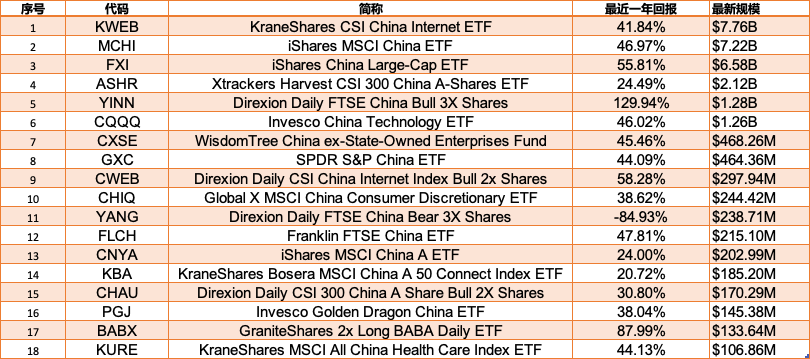
Group 1 - Overseas passive funds are accelerating their return to the Chinese stock market, with some Chinese stock ETFs experiencing significant net inflows recently [1][2] - The largest Chinese stock ETF listed in the US, KWEB, saw a net inflow of $876 million (approximately 6.29 billion RMB) from July 17 to July 25, marking a five-month high for single-day net inflows [2][3] - Other ETFs, such as MCHI and FXI, also reported substantial net inflows, with MCHI achieving a single-day net inflow of $201 million (approximately 1.46 billion RMB) on July 25, the highest for the year [3][4] Group 2 - The CQQQ ETF focused on Chinese technology stocks recorded a net inflow of $7.23 million (approximately 52 million RMB) in the past month, with a notable single-day inflow of $4.84 million (approximately 35 million RMB) on June 27 [5] - Active management funds are also increasing their positions in internet technology stocks, reflecting a preference for high-tech ETFs amid the return of passive funds [7][10] - Notable active funds, such as FSSA China Growth I and Fidelity's China Focus Fund, have increased their holdings in major Chinese tech companies like Tencent and Alibaba [8][10][11] Group 3 - Goldman Sachs has raised its 12-month target for the MSCI China Index from 85 to 90, indicating an estimated 11% upside potential for the index [14] - The interest in Chinese stocks among international investors has reached a high point, driven by factors such as diversification needs beyond the US market and the emergence of AI applications in China [14][15] - Participation of foreign cornerstone investors in Hong Kong IPOs has reached a five-year high, reflecting a strategic rebalancing of investment portfolios [15]




单日新高!外资疯狂涌入!
中国基金报· 2025-07-29 11:57
Core Viewpoint - There is a significant inflow of overseas passive funds back into the Chinese stock market, particularly through ETFs, indicating renewed interest from international investors [2][4][14]. Group 1: ETF Inflows - The largest Chinese stock ETF listed in the US, KWEB, saw a net inflow of $876 million (approximately 6.29 billion RMB) from July 17 to July 25, with a single-day inflow peak of $264 million on July 17, marking a five-month high [4][5]. - Other ETFs also experienced substantial inflows, such as MCHI with $154 million and $201 million on July 24 and 25 respectively, and FXI with $76.9 million on June 17, reversing a long trend of outflows [5][6]. - CQQQ, a technology-focused ETF, recorded a net inflow of $72.3 million in the past month, with a notable single-day inflow of $48.4 million on June 27 [5]. Group 2: Performance of ETFs - KWEB has shown a one-year return of 41.84% with a current size of $7.76 billion, while MCHI has a return of 46.97% and a size of $7.22 billion [6]. - FXI has the highest one-year return at 55.81% with a size of $6.58 billion, indicating strong performance among these ETFs [6]. - The technology-focused CQQQ has a one-year return of 46.02% and a size of $1.26 billion, reflecting the growing interest in tech stocks [6]. Group 3: Active Fund Management - Some overseas active management funds are also increasing their positions in internet technology stocks, with notable examples including FSSA China Growth I and Fidelity's China Focus Fund, which have sizes of $2.7 billion and $2.5 billion respectively [8][10]. - These funds have shown strong performance, with Fidelity's fund reaching a five-year high in net value [10][12]. Group 4: Market Sentiment and Future Outlook - Goldman Sachs has raised its 12-month target for the MSCI China Index from 85 to 90, suggesting an 11% upside potential, and maintains an overweight stance on Chinese stocks [14]. - The renewed interest in Chinese stocks is driven by diversification needs beyond the US market, expectations of a stronger RMB, and the emergence of AI applications in China [14].


中国股市已实现“夏季突破”,高盛认为未来应“轻指数、重个股”
华尔街见闻· 2025-07-29 10:43
Group 1 - The core viewpoint of the article is that after a period of consolidation, the Chinese stock market has achieved a "summer breakthrough," with the MSCI China Index reaching a four-year high and the CSI 300 Index hitting a year-to-date peak. However, Goldman Sachs warns that the valuation of A-shares is no longer low, indicating that the easy profit phase from simply betting on indices may be over [1][2]. - Key factors driving the recent A-share rally include improved Sino-U.S. relations, strong Q2 economic data, policy interventions targeting key industries, a recovery in the Hong Kong IPO market, and record inflows from the "southbound trading" [1]. - Goldman Sachs has raised its 12-month target for the MSCI China Index to 90 points, suggesting an 11% potential return, but emphasizes the need for investors to focus more on stock selection (Alpha) rather than broad market gains (Beta) due to the 25% increase in the market year-to-date [1][2]. Group 2 - The report emphasizes a preference for "Alpha over Beta," suggesting that investors should focus on individual stocks rather than indices. This is due to the sensitivity of the market to risks following a significant valuation recovery, with the MSCI China Index's forward P/E ratio reaching 12.7 times, indicating a return to a normalized state [2][3]. - Historically, August and September are typically weak months for A-shares, with average/median returns of -1% and -5% respectively over the past decade, making index investments potentially more volatile during this period [3]. - Structural opportunities in the market allow for selective stock picking to generate excess returns (Alpha). Goldman Sachs believes that both A-shares and H-shares offer unique value propositions, leading to specific industry allocation adjustments [4]. Group 3 - Goldman Sachs has upgraded its positions in the insurance and materials sectors, converting bank stock positions to insurance stocks due to their relative valuation attractiveness and potential indirect benefits from a rising stock market. The materials sector has also been raised to "overweight" to capitalize on opportunities arising from "de-involution" policies [5]. - Conversely, Goldman Sachs has downgraded the banking sector and placed the real estate sector at a "neutral" rating, reflecting a shift in focus towards more promising sectors [6]. - Two major investment themes highlighted by Goldman Sachs include the "Prominent 10," a group of ten private sector leaders in China expected to enhance their market dominance, and the "shareholder return" theme, which has shown a total return of 44% over the past two years, outperforming the MSCI China and CSI 300 indices by 12 and 34 percentage points respectively [7].


张碧晨VS汪苏泷? 网易云卷入《年轮》版权战,“反复横跳”惹怒粉丝
Xin Lang Cai Jing· 2025-07-29 08:56
Core Viewpoint - The controversy surrounding the original singer label for Zhang Bicheng's songs on NetEase Cloud Music highlights issues of copyright and platform management in the music industry [2][3][4]. Group 1: Incident Overview - NetEase Cloud Music initially removed the original singer label for three songs by Zhang Bicheng, including the popular track "Year Wheel," while maintaining the label for the version by Wang Sulong [2][3]. - The platform later restored the original singer labels after clarifying that the removal was due to a system display issue [3]. - Legal experts indicated that if the copyright holder retracts the performance authorization, the performer cannot continue to perform the song unless specified in the contract [3][5]. Group 2: Background and Reactions - The dispute originated from comments made by online singer "Wang Zai Xiao Qiao," who stated that "Year Wheel" was created by Wang Sulong but originally sung by Zhang Bicheng [4]. - Zhang Bicheng's studio asserted that she was the only original singer of "Year Wheel," which was first released in June 2015, while Wang Sulong's version followed shortly after [4]. - Wang Sulong's team announced the retraction of authorization for "Year Wheel" due to the ongoing controversy, while Zhang Bicheng's studio stated they would no longer perform the song out of respect [4]. Group 3: Financial Context - NetEase Cloud Music is facing increasing financial pressure, with a reported revenue of 1.858 billion yuan in Q1 2025, down 8.4% from 2.029 billion yuan in the same period last year [10]. - The company's gross profit also decreased by 11%, contrasting with Tencent Music's growth in revenue and profit during the same quarter [10]. - The series of operational missteps raises concerns about NetEase Cloud Music's ability to deliver satisfactory financial results by the end of the year [10].

网易游戏被玩家连投诉 致歉私自涨价但没回应删号警告
Zhong Guo Jing Ji Wang· 2025-07-29 06:57
Core Viewpoint - The recent changes in the user agreement and pricing strategy of NetEase's game "World Beyond" have led to significant player backlash, resulting in thousands of complaints and potential reputational damage for the company [1][2]. Group 1: Pricing Controversy - The game "World Beyond" increased its card draw price from 300 diamonds to 400 diamonds without prior notification to players, leading to complaints about potential violations of consumer rights [1][2]. - Players expressed dissatisfaction with the new pricing structure, particularly regarding the guaranteed draw mechanism that could yield lower-value cards despite higher costs [1]. Group 2: Account Deletion Policy - A controversial clause in the user agreement states that accounts will be deleted if players do not log in for over 365 days, which has sparked outrage among the gaming community [1]. - The company has not clearly defined what constitutes a "reasonable period" for players to log in before account deletion occurs [1]. Group 3: Complaint Statistics - The consumer protection platform "Xiaofei Bao" reported receiving 3,251 valid complaints regarding "World Beyond" within just two days, with total claims exceeding 5.78 million yuan [1]. - The complaints reflect a growing discontent among players, with many stating they will not spend any more money on the game [1]. Group 4: Company Response - In response to the pricing issue, the official Weibo account of "World Beyond" acknowledged the lack of timely communication regarding the price changes and offered compensation to players [2]. - As of the latest updates, NetEase has not provided further clarification on the account deletion policy despite multiple inquiries from media outlets [2].
金十图示:2025年07月29日(周二)中国科技互联网公司市值排名TOP 50一览


news flash· 2025-07-29 02:54
Group 1 - The article presents the market capitalization rankings of the top 50 Chinese technology and internet companies as of July 29, 2025 [1] - Alibaba leads the list with a market capitalization of 2,913.7 billion [3] - Xiaomi and Pinduoduo follow, with market capitalizations of 1,823.48 billion and 1,657.58 billion respectively [3] Group 2 - Meituan ranks sixth with a market capitalization of 990.12 billion [3] - Semiconductor Manufacturing International Corporation (SMIC) is in eighth place with a market cap of 530.08 billion [4] - JD.com and Kuaishou rank tenth and eleventh, with market capitalizations of 478.87 billion and 388.76 billion respectively [4] Group 3 - The list includes various companies from different sectors, such as Baidu at 307.33 billion and NIO at 109.38 billion [4][5] - The rankings reflect the competitive landscape of the Chinese tech industry, showcasing the significant market presence of these companies [1] - The data is calculated based on the market capitalization in USD, converted using the day's exchange rate [6]

QuestMobile2025 中国移动互联网半年大报告:产业韧性增长已现,一二梯队格局成型但核心玩家战火再燃!
QuestMobile· 2025-07-29 02:00
Core Insights - The article highlights the robust growth of China's mobile internet sector, with a total of 1.267 billion monthly active users as of June 2025, reflecting a year-on-year increase of 2.5% [3][11]. - User engagement metrics show an increase in average daily usage time to 7.97 hours and frequency of use to 117.9 times per day, representing growth of 7.8% and 2.6% respectively [3][13]. - The competitive landscape among top internet companies is intensifying, with significant user growth for JD and Douyin at 13% and 12% year-on-year, while Pinduoduo and Baidu show minimal growth [3][18]. Group 1: Mobile Internet Growth - The overall economic environment in China is stabilizing, with digital economy policies boosting consumer confidence and market activity [9][15]. - The mobile internet user base continues to grow steadily, maintaining an increase of over 2% in the first half of 2025 [11]. - The increase in user engagement is primarily driven by younger and elderly demographics, with a notable shift of users towards first-tier cities [15][17]. Group 2: AI Applications - The AI application market is experiencing fierce competition, with 66.7% of the top 30 AI applications coming from the leading internet companies [4][22]. - The growth of AI applications is evident across various sectors, with significant user increases in AI native apps and plugins [4][26]. - The AI search engine segment has shown the largest growth, indicating a shift in user preferences towards AI-integrated solutions [4][32]. Group 3: Advertising and Marketing - The online advertising market in China surpassed 200 billion yuan in the second quarter of 2025, with a year-on-year growth rate of 6.8% [45][53]. - Brands are increasingly investing in marketing to enhance brand image, with a notable rise in advertising expenditure among beauty brands [59][61]. - The "618" shopping festival remains a critical marketing period, significantly impacting advertising spend and consumer engagement [57][63]. Group 4: Industry Insights - The short video industry continues to consolidate around platforms like Douyin and Kuaishou, with Douyin reaching 900 million users [76][78]. - The online travel sector has seen a 4.4% year-on-year increase in user numbers, reaching 156 million users by June 2025 [107][109]. - The integration of technology in the travel sector is enhancing user experiences, with AI and AR applications becoming more prevalent [111][113]. Group 5: Consumer Behavior Trends - The trend of "lightweight travel" is growing, with consumers favoring immediate purchase options and personalized experiences [116][118]. - The rise of "pet-friendly" services in the travel industry reflects changing consumer preferences, particularly among younger demographics [120][122]. - The demand for experiential consumption is driving innovation in the hospitality sector, with hotels offering unique service combinations [114][116].


工业AI迈向“知行合一”具身智能重构制造边界
Zhong Guo Zheng Quan Bao· 2025-07-28 21:05
Core Insights - The article highlights the transition of industrial AI from cognitive capabilities to autonomous execution, exemplified by the operation of unmanned excavators at the 2025 World Artificial Intelligence Conference (WAIC) [1][2][3] Group 1: Industrial AI Development - Industrial AI is undergoing a significant transformation, showcasing high autonomy and efficiency in complex tasks, such as loading operations in harsh environments [1][2] - The emergence of "Lingju," a model developed by NetEase for unmanned excavators, demonstrates the shift towards end-to-end integrated models that enhance performance and adaptability [2][4] - The collaboration of multiple intelligent agents in industrial settings is redefining production efficiency and flexibility, reducing operation times from hours to minutes [3][5] Group 2: Technological Innovation and Ecosystem - The rise of industrial AI in China is supported by self-innovated foundational technologies, emphasizing the importance of security and stability in the supply chain [3][4] - NetEase's "Lingju" is built on a domestically developed framework, ensuring technological safety and supply chain reliability [4] - Initiatives like the "2027 Industry Collaboration Plan" aim to achieve unmanned operations in over 30 mines by 2027, showcasing a commitment to technological diffusion and ecosystem collaboration [4][5] Group 3: Future of Industrial AI - The concept of a "universal team" of industrial AI agents is emerging, with each agent specializing in different tasks while collaborating to solve complex challenges [5] - The potential for industrial AI to expand into various sectors, including agriculture and smart manufacturing, indicates a redefinition of traditional industry boundaries [5] - The deep integration of AI with the real economy is seen as a key pathway for developing new productive forces [5]
国产单机游戏迎快速发展期:3A大作与低成本游戏齐头并进
Zheng Quan Ri Bao· 2025-07-28 16:45
Core Insights - The Chinese gaming industry is experiencing a surge in the development and release of domestic single-player games, with notable titles gaining significant attention and positive reception from players [1][2][3] - Major gaming companies like Tencent and NetEase are increasingly investing in high-quality single-player games, recognizing the commercial potential highlighted by the success of titles like "Black Myth: Wukong" [3][4] - Government policies are becoming more favorable, with an increase in the issuance of game licenses and supportive measures for the gaming industry, creating a conducive environment for growth [4][5] Group 1: Game Releases and Market Trends - In July, several domestic single-player games received positive feedback, including "Shadow of the Blade Zero," which is seen as a potential successor to "Black Myth: Wukong" [1] - The game "Crowd of the Crow" achieved a 99% approval rating on Steam shortly after its demo release, indicating strong market interest [1] - "The Game of Sultan" surpassed 1 million copies sold, generating over 68 million yuan in revenue, showcasing the financial viability of domestic titles [1] Group 2: Industry Dynamics - The gaming landscape is expanding, with more companies targeting the single-player game segment and aiming to create high-quality products [2] - Tencent's investment in "Shadow of the Blade Zero" reflects its commitment to domestic game development, as it is the only Chinese title among eight games announced at a recent event [2][3] - The success of "Black Myth: Wukong," which is projected to sell 28 million copies and generate approximately 9 billion yuan in revenue, has encouraged other companies to explore the single-player market [3] Group 3: Policy Support and Future Opportunities - As of July 2023, 884 domestic online game licenses have been issued this year, maintaining a steady approval rate of over 100 games per month [4] - Recent policy changes have relaxed restrictions on game content, allowing previously difficult themes to gain approval, which could lead to a broader range of game offerings [4] - Local governments are implementing subsidy policies to attract gaming companies, enhancing the industry's growth potential and creating a favorable business environment [4][5]