
Starbucks(SBUX)

Search documents
Luckin, China's largest coffee chain, launches in NYC as it takes on Starbucks in home region
New York Post· 2025-06-30 18:25
Core Viewpoint - Luckin Coffee, China's largest coffee chain, has opened its first locations in the United States, specifically in New York City, after successfully competing against Starbucks in Asia [1][5]. Group 1: Store Launch and Promotions - Luckin Coffee opened its first US locations on Monday, including two in New York City [1][5]. - The company is promoting its new storefronts with special deals, such as offering free tote bags to the first 100 customers and 99-cent drinks for a limited time [2][11]. Group 2: Product Offerings and Pricing Strategy - Luckin Coffee offers a diverse menu that includes coffee, matcha, lattes, and fruity drinks, along with pastries like banana yogurt loaf and sausage, egg, and cheese croissant [3]. - The chain's pricing strategy is competitive, with drinks in China priced approximately 30% lower than those at Starbucks [3]. Group 3: Company Background and Growth - Founded in Xiamen, China in 2017, Luckin Coffee rapidly expanded to surpass Starbucks in the number of storefronts by 2019, currently operating around 22,000 locations in China and additional stores in Singapore [4]. - Despite facing a significant scandal in 2020 involving accounting fraud, which led to a $180 million fine and a $175 million settlement, the company has continued to grow, doubling its number of stores and increasing revenue by 87% in 2023, outperforming Starbucks in China [7][9]. Group 4: Competitive Landscape - Recent reports indicated that Starbucks was exploring a partial sale of its Chinese business, although the company has since denied these claims [10].



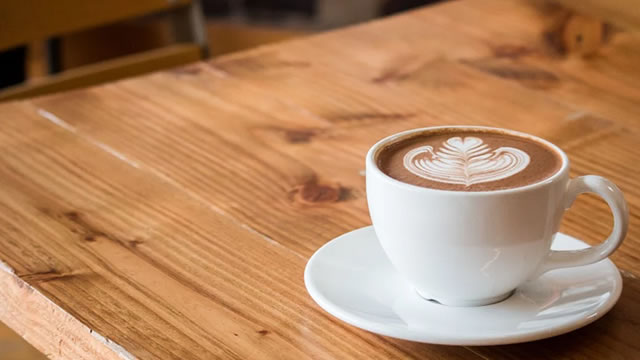
LV巨轮直冲对面星巴克海妖logo、开业请大师烧香?围观上海滩「风水大战」成打工人新乐子
3 6 Ke· 2025-06-30 08:16
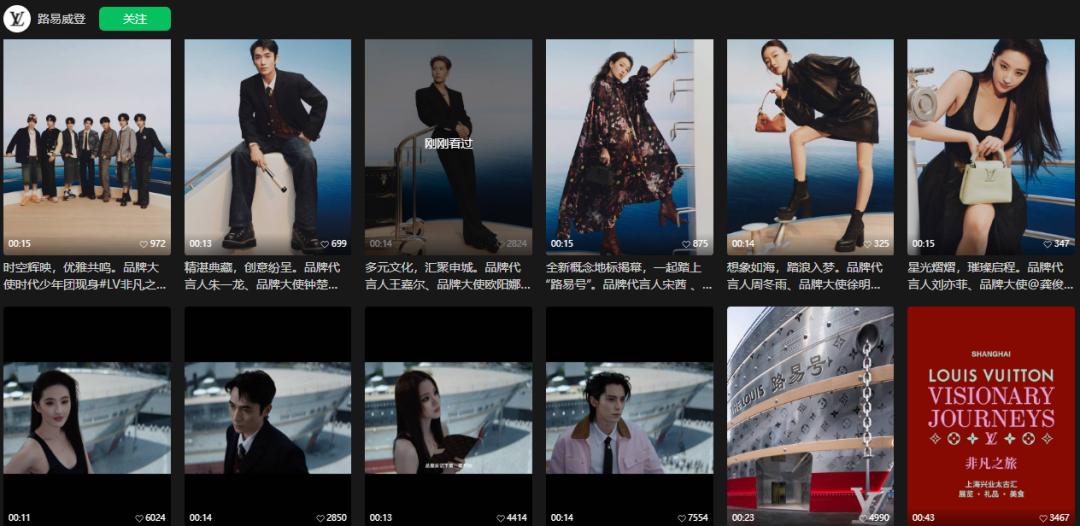
Core Viewpoint - The opening of Louis Vuitton's flagship store "Louis Ship" in Shanghai has sparked a unique public interest due to its architectural design and its perceived feng shui implications, particularly its alignment with the nearby Starbucks [1][4][6]. Group 1: Louis Vuitton's "Louis Ship" - The "Louis Ship" measures 114.5 meters in length, 30 meters in height, and has a total area of 1,600 square meters, featuring three levels dedicated to exhibitions, a boutique, and a café [7][10]. - The store is expected to remain in Shanghai's Jing'an District for at least two years, attracting significant public attention and foot traffic since its unveiling [7][12]. Group 2: Starbucks' Response - Starbucks' flagship store, which opened in 2017, is the largest in the world at 2,700 square meters and features an immersive coffee experience [14]. - In response to the feng shui debate, Starbucks engaged in promotional activities and social media campaigns to leverage the increased attention, including a "Happy Creation" event [21][23]. Group 3: Feng Shui Debate - The pointed bow of the "Louis Ship" is said to create a "sharp angle kill" effect directed at Starbucks, which has led to discussions about the potential negative impacts of such feng shui [4][14][16]. - Starbucks' logo, featuring the Siren from Greek mythology, is humorously positioned as a protective figure against the "Louis Ship," adding to the narrative of competition between the two brands [18][21]. Group 4: Public Engagement and Marketing - The opening of the "Louis Ship" led to a surge in visitors at Starbucks, with reports of long queues and increased customer traffic, suggesting a mutually beneficial outcome for both brands [23][24]. - Social media engagement included a photo editing competition where users creatively altered images of the "Louis Ship" and Starbucks, further enhancing brand visibility [24][25].
咖啡为何在济南越来越“香”?
Qi Lu Wan Bao· 2025-06-30 06:23
Core Insights - The coffee market in Jinan is rapidly expanding, with a significant increase in the number of coffee-related businesses and a growing consumer base [1][2][4] Group 1: Market Expansion - Jinan has seen the addition of 201 new coffee-related enterprises in 2023, marking a 51.3% increase compared to the same period last year [1] - The coffee market in Jinan is projected to grow at an annual rate of 15%, with a complete industry chain established from equipment sales to skill training [2][4] - The city is becoming a major coffee material and equipment shopping center in Northern China, with a transaction volume expected to exceed 100 million yuan in 2024, growing at an average rate of 25% [2] Group 2: Business Performance - Coffee shops in Jinan report varying sales, with peak weekend sales reaching over 100 cups, while weekday sales average around 60-70 cups [3] - Major chains like Luckin Coffee have a strong presence, with some stores selling 700-800 cups daily and achieving a net profit margin of 40%-45% [3] Group 3: Market Potential - Despite rapid growth, Jinan's coffee market still has significant room for development compared to cities like Hangzhou [4][5] - The low entry barrier for starting a coffee business, with initial costs ranging from 20,000 to 150,000 yuan, is attracting many entrepreneurs [5] - The rise of local brands is enhancing Jinan's influence in the national coffee market, with a diverse market structure expected to emerge [5]
上海三甲医院咖啡馆,和医院一样忙碌
Hu Xiu· 2025-06-30 02:20
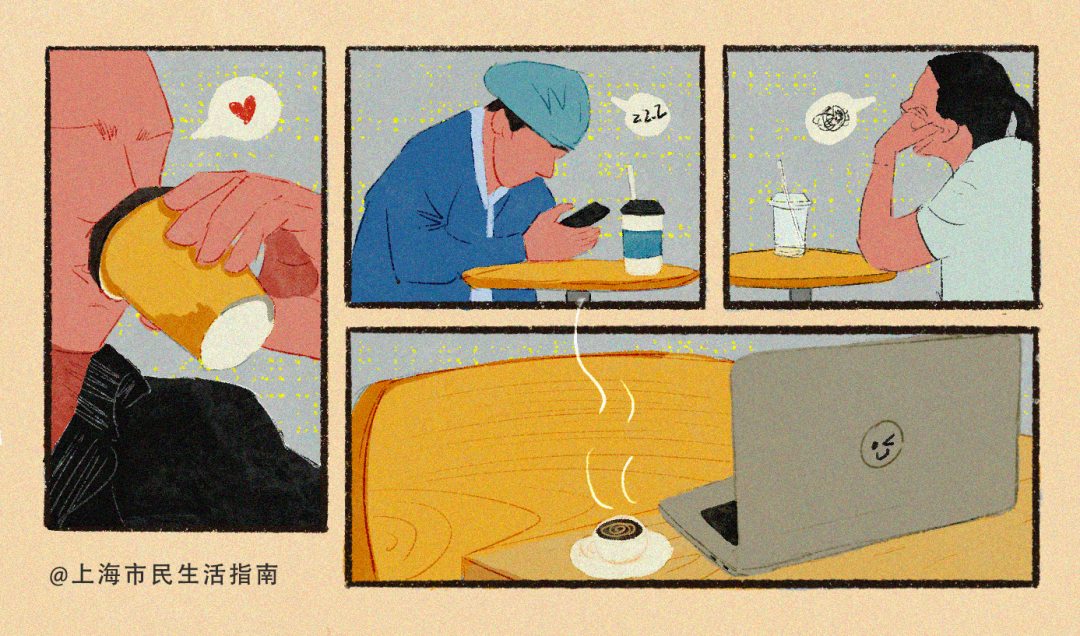
Group 1 - The article discusses the role of coffee shops in Shanghai's major hospitals, highlighting their popularity among patients and medical staff as a place to wait and relax [5][23][43] - The coffee shop at Huashan Hospital, COSTA, is frequently visited by both patients and healthcare professionals, indicating a high demand for such services within hospital environments [5][15][34] - The prices at the hospital coffee shop are comparable to those outside, making it an attractive option for visitors who are waiting for appointments or accompanying patients [11][18][24] Group 2 - The article notes that hospital coffee shops serve not only patients but also medical staff, who often rely on coffee to stay alert during long shifts [15][34] - Various food options are available in the hospital, including a food court that offers affordable meal choices, further enhancing the convenience for visitors [24][36] - The presence of coffee shops and food courts in hospitals reflects a growing trend in the healthcare industry to provide amenities that improve the overall experience for patients and their families [23][43]
从平凡到非凡:与明日巨头共同成长 ——读《大钱:如何选择成长股》
Shang Hai Zheng Quan Bao· 2025-06-29 19:13
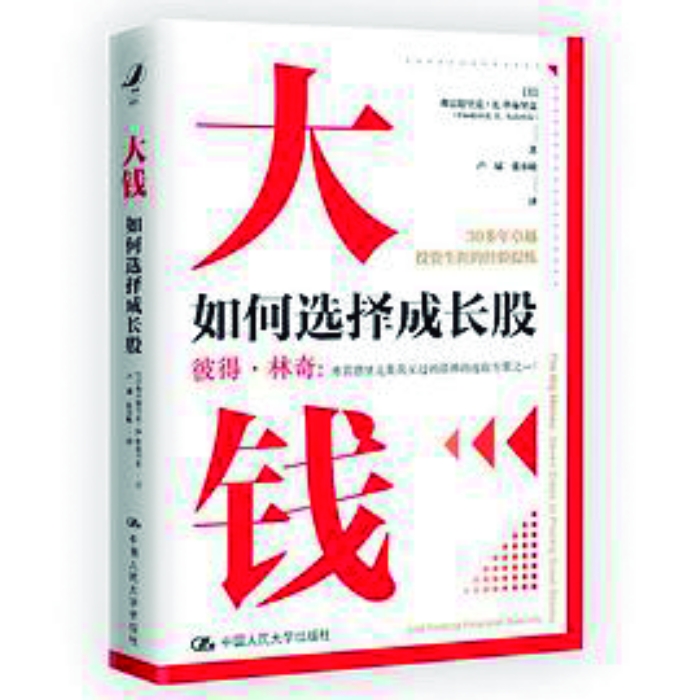
Core Investment Philosophy - The core investment philosophy of Frederick R. Kobrick emphasizes long-term holding of exceptional companies, as illustrated by the story of Anne Johnson discovering her father's investments in Walmart, Home Depot, and Microsoft, which grew to over $2.8 million from an initial investment of $3,000 [4][5]. Identifying Potential Growth Companies - Kobrick argues that investors often chase flashy stories while overlooking true opportunities hidden in the ordinary, highlighting the example of Starbucks, which turned a $10,000 investment in 1975 into over $15 million [6][7]. Business Model Analysis - The focus should be on the business model rather than just the product, with Kobrick using McDonald's as a prime example of a successful business model that ensures consistency across locations [8][9]. Leadership Evaluation - Exceptional companies are often led by outstanding leaders, and Kobrick places significant importance on assessing management quality, as it can differentiate between mediocre investments and extraordinary returns [10][11]. Strategic Vision and Assumptions - Investors must cultivate the ability to foresee a company's strategic trajectory over the long term, as demonstrated by Kodak's failure due to incorrect assumptions about its market position [13][14]. Long-Term Holding Strategy - The key to wealth creation lies in identifying and holding onto companies with replicable success models, as illustrated by the contrasting fates of technology companies over the past decades [18][19]. Market Volatility and Understanding - Market volatility is not the real risk; rather, the true risk stems from a lack of understanding of the invested companies, as evidenced by the contrasting responses to Apple's stock during the 2008 financial crisis [20][21].




星巴克中国要卖了?回应来了
Sou Hu Cai Jing· 2025-06-29 10:49
Core Viewpoint - Starbucks is reportedly considering the full sale of its China business, although the company maintains that it sees significant growth opportunities in the market and is focused on revitalizing its operations there [1][3]. Group 1: Sale Considerations - Reports indicate that Starbucks is exploring various options for its China business, including the possibility of selling a stake, with interest from multiple potential investors, including local private equity firms [3][4]. - KKR, FountainVest Partners, and PAG are among the private equity firms interested in acquiring a stake in Starbucks China, alongside local companies like China Resources Group and Meituan [3][4]. - Hillhouse Capital is preparing to acquire Starbucks China, with the deal estimated to be valued between $5 billion and $6 billion, equivalent to approximately 35.855 billion to 43.026 billion RMB, and expected to continue until 2026 [3][4]. Group 2: Investor Interest and Market Dynamics - There is significant interest from various investment institutions in acquiring Starbucks China, as confirmed by Starbucks' global CEO, who noted the strong interest from investors in the brand's potential [5]. - The focus of the market is whether Starbucks will fully sell its China business or retain a portion of the equity, with indications that the company is not currently considering a complete sale [5][6]. - The potential for rapid expansion in the number of stores from 8,000 to 20,000 is seen as a key attraction for investors, reflecting the growth potential in the coffee market [5]. Group 3: Strategic Partnerships - The involvement of experienced private equity firms like Hillhouse and Carlyle, which have a track record in the Asian consumer sector, could provide strategic advantages for Starbucks China [4]. - The experience of these firms in brand operation and regional synergy is expected to enhance the value of Starbucks' operations in China [4]. - The case of McDonald's China, which saw rapid expansion after being acquired by a consortium led by CITIC, serves as a reference point for Starbucks' potential strategy in finding strong local partners for growth [6].
中国创业者的信心从哪里来?首先是9亿人的刚需升级机会
创业家· 2025-06-29 10:09
Core Viewpoint - The article emphasizes the structural opportunities in China's consumer market, particularly focusing on the 900 million people in lower-tier cities as the main consumer base for future growth [5][12]. Group 1: Market Dynamics - The consumer landscape in China has shifted, with the previous focus on high-end brands in first-tier cities evolving to include a broader range of products catering to lower-tier markets [5][6]. - The connection between high-tier and low-tier markets has been established, allowing for a more integrated consumer experience [7]. - The article highlights the emergence of new business models based on China's new infrastructure and production relationships, which enhance efficiency in information flow and supply chains [11][12]. Group 2: Consumer Segmentation - The consumer market is segmented into three layers: the affluent class, the middle class under economic pressure, and the 900 million people in lower-tier cities who represent the main market [9]. - The affluent class consumes globally, while the middle class faces challenges due to economic adjustments, and the lower-tier market shows potential for growth as purchasing power is released [9][12]. Group 3: Investment Opportunities - The article identifies two structural opportunities in the consumer market: the rise of new national brands and the development of new nationwide chains [13]. - The "启承消费时钟" (Qicheng Consumption Clock) is introduced, categorizing consumer goods into four phases: essential needs, optional purchases, alternatives, and upgrades, reflecting the changing economic conditions [12][13]. - The growth of discount brands and alternative products is noted, with examples such as "鸣鸣很忙" in the snack sector, indicating a shift towards more affordable options [13].

降价换增长,星巴克加码“非咖”市场
东京烘焙职业人· 2025-06-27 09:48
Core Viewpoint - Starbucks has implemented a significant price reduction on non-coffee beverages for the first time in its 26-year history in China, aiming to capture the afternoon tea market and respond to intense competition in the coffee sector [5][6][23]. Group 1: Pricing Strategy - Starting June 10, Starbucks China reduced prices on several non-coffee beverages by 2-6 yuan, with many products now priced in the 20 yuan range, the lowest being 23 yuan [3][5]. - This price reduction is part of a broader strategy to attract consumers during the afternoon tea segment, which aligns with the company's "morning coffee, afternoon non-coffee" consumption pattern [8][10]. Group 2: Market Context - The coffee market in China has seen explosive growth over the past decade, with the total number of coffee shops expected to exceed 200,000 by 2024, but competition has intensified, leading to a high closure rate of stores [6][8]. - Starbucks faced a decline in same-store sales and overall revenue, with a reported revenue of 21.06 billion yuan in the 2024 fiscal year, down 1.4% year-on-year, and a 6% decline in same-store sales in the first quarter of the 2025 fiscal year [8][12]. Group 3: Strategic Goals - The price reduction aims to achieve three main objectives: activate the afternoon tea consumption scene, penetrate lower-tier markets, and stimulate the existing member base of 140 million users [10][11][12]. - By lowering prices, Starbucks hopes to attract younger consumers and those in lower-tier markets who prefer sweeter beverages, thereby lowering the barrier for first-time customers [10][11]. Group 4: Competitive Advantages - Starbucks leverages its customizable experience as a competitive barrier, allowing consumers to create unique beverage combinations, which enhances brand engagement and social sharing [17][18]. - The company has also focused on local IP collaborations and unique store designs to resonate with younger consumers, enhancing the cultural experience associated with its products [17][18]. Group 5: Challenges Ahead - The price reduction may compress profit margins and increase operational costs, as non-coffee beverages require more complex preparation and service standards compared to standard coffee [20][21]. - Starbucks must also overcome consumer perceptions that associate the brand primarily with coffee and business settings, requiring time to cultivate new consumption habits for non-coffee products [21][23]. Group 6: Future Outlook - The combination of price cuts and new product launches tied to popular IPs is expected to drive traffic and sales in the short term, particularly during the summer season [25][29]. - However, for long-term success in the non-coffee market, Starbucks needs to address challenges related to agile innovation and pricing strategies to maintain brand value while appealing to price-sensitive consumers [27][28][29].
估值超359亿元,星巴克中国回应收购:正在评估增长的最佳方式;市场份额缩水至14%
Sou Hu Cai Jing· 2025-06-26 02:53
Core Viewpoint - Starbucks China is facing significant operational challenges and is exploring potential strategic changes, including the possibility of selling a minority stake in its business, amid interest from major investment firms [2][3][4]. Group 1: Potential Acquisition Interest - Major investment firms, including Hillhouse Capital, Carlyle Group, and CITIC Capital's Xincheng Capital, have shown interest in acquiring Starbucks China's business, with an initial valuation estimated between $5 billion to $6 billion (approximately RMB 35.9 billion to RMB 43 billion) [2][3]. - Goldman Sachs is acting as the exclusive financial advisor for this potential transaction, which is expected to continue until 2026 [3]. Group 2: Performance Challenges - Starbucks China's market share has significantly declined from 34% in 2019 to 14% in 2024, indicating a loss of competitive position in the Chinese coffee market [7][8]. - Despite expanding its store network, Starbucks' revenue in China has decreased from a peak of $3.7 billion in fiscal year 2021 to $3 billion in fiscal year 2024, with signs of stabilization in fiscal year 2025 but ongoing pressure [8]. Group 3: Strategic Responses - In response to competitive pressures from local brands like Luckin Coffee and Koolearn Coffee, Starbucks has reduced prices on over 20 beverage items by an average of RMB 5, aiming to capture the growing non-coffee beverage market in China [9]. - The company is also considering operational adjustments, such as optimizing store structures and potentially closing underperforming locations, while exploring a smaller store model and relaxing franchise policies [10].
星巴克中国值50-60亿美元吗?遭瑞幸库迪及新式茶饮围剿 2024财年营收、同店销售额下滑
Xin Lang Zheng Quan· 2025-06-25 09:10
Core Viewpoint - Starbucks China is facing significant challenges in the competitive landscape, with declining performance metrics and increasing pressure from local coffee brands and new tea beverage companies, raising questions about its valuation of $5-6 billion [1][6]. Group 1: Market Dynamics - Since 2019, local coffee brands like Luckin Coffee and Kudi have rapidly gained market share through aggressive pricing strategies and innovative marketing, leading to increased competition for Starbucks China [2][5]. - The ready-to-drink tea market is also saturated, prompting leading tea brands to expand into coffee, further intensifying competition in the coffee sector [2][5]. Group 2: Pricing and Product Innovation - Starbucks China has implemented significant price reductions, averaging a decrease of 5 yuan on several popular products, marking its first large-scale price adjustment in over 20 years [3][4]. - Despite these price cuts, Starbucks still struggles to compete on price, with local brands offering lower-priced options, such as Luckin Coffee's promotions at 6 yuan [3][5]. Group 3: Financial Performance - For the fiscal year 2024, Starbucks China's revenue declined by 1.4% to $2.958 billion, marking its first negative growth in recent years [4][6]. - Same-store sales fell by 8%, with average transaction value also decreasing by 8%, indicating a challenging sales environment [5][6]. Group 4: Competitive Positioning - As of March 2025, Starbucks China had 7,758 stores, while Luckin Coffee had expanded to 24,097 stores, highlighting a significant gap in market presence [7]. - Starbucks' market share has dropped from a peak of 60% to approximately 14%, while Luckin Coffee leads with a 35% market share [7][8]. Group 5: Valuation Comparison - Luckin Coffee's total revenue for 2024 was $4.724 billion, with a market capitalization of $10 billion, resulting in a P/S ratio of 2.1 [8]. - If Starbucks China is valued at $5-6 billion, it would correspond to a P/S ratio of 1.7-2.03, which is lower than Luckin's, reflecting its weaker growth prospects and market performance [8].