
TRIP.COM(TCOM)

Search documents
花旗:携程集团-S(09961)第四季业绩健康 收入胜预期但经营利润率略逊
智通财经网· 2026-02-26 07:46
该行认为集团第四季业绩表现健康,当中收入显著好过预期,因携程国际平台在旺季表现强劲,以及主 要由广告和信用解决方案组成的其他收入优于预期。 智通财经APP获悉,花旗发布研报称,携程集团-S(09961)去年第四季收入同比增长21%至154亿元人民 币(下同),较该行及市场预期高3%。毛利率为79%,对比去年第三季为81.7%,而该行预期为78.5%。非 公认会计准则经营利润率20.7%,非公认会计准则盈利为34.8亿元,胜市场预期的32亿元。该行目前予 携程(TCOM.US) 美股目标价82美元及"买入"评级。 ...

携程发布2025年财报:全年服务入境游客约2000万人次
Zheng Quan Ri Bao Wang· 2026-02-26 07:41
Core Insights - Ctrip Group reported a significant growth in its international OTA platform, with total bookings increasing by approximately 60% year-on-year for the entire year of 2025, serving around 20 million inbound travelers [1] Group 1: Inbound Tourism Growth - Inbound tourism has become a strong growth engine for the company, with an investment of 1 billion yuan to support the inbound tourism ecosystem [1] - Nearly 70,000 hotels, attractions, and travel agencies have received inbound orders from overseas platforms for the first time [1] - The platform has enabled over 6,000 scenic spots to open to the international market for the first time, with 63,000 new ticket types available for foreign visitors [1] - 95% of ticket types for major domestic attractions now support foreign bookings [1] Group 2: AI Technology and Service Enhancement - The self-developed AI translation engine "Smart Translation Future" produced 6 billion words annually, enhancing global service capabilities [1] - The AI itinerary product has been iterated using self-developed models, resulting in a 400% year-on-year increase in inbound travel itinerary products [1] Group 3: Domestic Demand and Employment - The company generated over 10 billion yuan in additional tourism revenue, creating more than 50,000 new jobs [1] - A total of approximately 2.9 billion yuan was invested in user welfare and care, handling 350 million inquiries with a global SOS rescue success rate of 98% [1]
携程集团-S盘中跌超4% 去年四季度净利润43亿元 总裁、董事双双辞职
Zhi Tong Cai Jing· 2026-02-26 07:33
Core Viewpoint - Ctrip Group's stock experienced a decline following the announcement of its Q4 2025 financial results, which showed mixed performance indicators and significant management changes [1] Financial Performance - For Q4 2025, Ctrip Group reported a net operating revenue of 15.4 billion yuan, representing a year-on-year increase of 21% but a quarter-on-quarter decrease of 16% [1] - The net profit for Q4 2025 was 4.3 billion yuan, compared to 2.2 billion yuan in the same quarter of 2024, but down from 19.9 billion yuan in the previous quarter [1] Management Changes - Ctrip Group announced several board changes effective from February 25, 2026, including the resignation of Fan Min as the company's director and president, and the resignation of Ji Qi as a director [1] - New independent directors Wu Yihong and Xiao Yang have been appointed [1] Regulatory Investigation - In January 2026, Ctrip Group received a notification from the State Administration for Market Regulation regarding an investigation initiated under the Anti-Monopoly Law of the People's Republic of China [1] - The company is cooperating fully with the investigation and will maintain active communication with regulatory authorities regarding compliance matters [1] - Ctrip Group stated that it cannot predict the status or outcome of the investigation at this time, but its business operations remain normal [1]
两位联合创始人辞任董事 携程公告:反垄断调查仍在进行
Jin Rong Jie· 2026-02-26 07:23
Group 1 - Ctrip Group announced that it is under investigation by the State Administration for Market Regulation (SAMR) for potential violations of the Anti-Monopoly Law, with the investigation initiated in January 2026 [1][3] - The company is cooperating fully with the SAMR and will maintain active communication regarding compliance matters, although it cannot predict the progress or outcome of the investigation [1][3] - Business operations remain normal during the investigation period [1] Group 2 - Ctrip Group disclosed significant personnel changes in its board of directors, with co-founders Fan Min and Ji Qi resigning from their positions [3] - New independent directors Wu Yihong and Xiao Yang have been appointed, and Li Jipei has been added as a member of the board's compensation committee [3] - The board changes are aimed at enhancing governance structure and strengthening the board's expertise in risk supervision and long-term strategy [3]


港股异动 | 携程集团-S(09961)盘中跌超4% 去年四季度净利润43亿元 总裁、董事双双辞职
智通财经网· 2026-02-26 07:12
Core Viewpoint - Ctrip Group's stock experienced a decline following the release of its Q4 2025 financial results, which showed mixed performance indicators and ongoing regulatory scrutiny [1] Financial Performance - For Q4 2025, Ctrip Group reported a net operating revenue of 15.4 billion yuan, representing a year-on-year increase of 21% but a quarter-on-quarter decrease of 16% [1] - The net profit for Q4 2025 was 4.3 billion yuan, compared to 2.2 billion yuan in the same quarter of 2024, but down from 19.9 billion yuan in the previous quarter [1] Corporate Governance - Ctrip Group announced several board changes effective February 25, 2026, including the resignation of Fan Min as the company's director and president, and Qi Ji as a director [1] - New independent directors Wu Yihong and Xiao Yang have been appointed [1] Regulatory Environment - In January 2026, Ctrip Group received a notification from the State Administration for Market Regulation regarding an investigation initiated under the Anti-Monopoly Law of the People's Republic of China [1] - The company is cooperating fully with the investigation and will maintain active communication with regulatory authorities regarding compliance matters [1] - Ctrip Group stated that it cannot predict the status or outcome of the investigation at this time, but its business operations remain normal [1]
携程集团总裁、董事,双双辞职
盐财经· 2026-02-26 07:07
本文转载自财联社 值班编辑 | 江江 视觉 | 顾芗 2月26日,携程集团公布2025年第四季度及全年未经审计的财务业绩,同时公布一系列董事变动,范敏 辞任公司董事兼总裁职务,季琦辞任公司董事职务。任命吴亦泓及萧杨为新任独立董事。 公告显示,2025年第四季度,携程集团净营业收入为154亿元,主要得益于旅游需求的韧性,净利润为 43亿元。净营业收入环比下降16%,主要归因于季节性因素。 2025年全年,携程集团净营业收入为624亿元,同比上升17%。净利润为334亿元,相比2024年净利润为 172亿元人民币。同比增加主要由于2025年全年包含在其他(支出)╱收入中的投资利得199亿元人民币 (28亿美元),相比2024年为11亿元。 此外,携程还公布了一系列董事变动,变动自2026年2月25日起生效。 公告显示,范敏已辞任公司董事兼总裁职务,季琦已辞任公司董事职务。与此同时,公司宣布任命吴亦 泓及萧杨为新任独立董事。 星标关注《盐财经》 洞察趋势,睿智人生 /// 大家都在看 /// 点 在看 把盐撒给更多的人 ...

携程总裁辞职
Xin Lang Cai Jing· 2026-02-26 06:43
Group 1 - Ctrip Group announced its unaudited financial performance for Q4 2025 and the entire year, along with changes in its board of directors [1] - Fan Min has resigned from the positions of director and president, while Ji Qi has stepped down as a director [1] - Wu Yihong and Xiao Yang have been appointed as new independent directors [1] Group 2 - Ctrip received a notification from the State Administration for Market Regulation regarding an investigation initiated under the Anti-Monopoly Law of the People's Republic of China [3] - The investigation is ongoing, and the company is fully cooperating with the regulatory authority [3] - Ctrip's business operations remain normal despite the investigation [3]
携程集团总裁、董事,双双辞职
YOUNG财经 漾财经· 2026-02-26 06:15
Core Viewpoint - Ctrip Group reported strong financial performance for Q4 2025 and the full year, despite facing an ongoing antitrust investigation by the State Administration for Market Regulation (SAMR) [2][4]. Financial Performance - In Q4 2025, Ctrip's net operating revenue reached 15.4 billion yuan, a year-on-year increase of 21%, driven by resilient travel demand. However, there was a quarter-on-quarter decline of 16% due to seasonal factors [2]. - For the full year 2025, Ctrip's net operating revenue was 62.4 billion yuan, up 17% year-on-year. The net profit for the year was 33.4 billion yuan, significantly higher than 17.2 billion yuan in 2024, largely due to investment gains of 19.9 billion yuan (approximately 2.8 billion USD) included in other income, compared to 1.1 billion yuan in 2024 [2]. International Travel and Market Expansion - In 2025, the international OTA platform saw a total booking growth of approximately 60%, serving around 20 million inbound travelers. Ctrip invested 1 billion yuan to support the inbound travel ecosystem, enabling nearly 70,000 hotels, attractions, and travel agencies to receive inbound orders from overseas platforms [3]. - The platform facilitated over 6,000 scenic spots to open to the international market for the first time, adding 63,000 new ticket types available for foreign visitors, with 95% of ticket types for major domestic attractions now supporting foreign bookings [3]. Management Changes - On February 26, 2026, Ctrip announced significant changes in its board of directors, with Fan Min resigning as president and director, and Ji Qi resigning as a director. Wu Yihong and Xiao Yang were appointed as new independent directors [4]. - The company is cooperating fully with the SAMR regarding the ongoing antitrust investigation and will maintain active communication with regulatory authorities, although it cannot predict the status or outcome of the investigation at this time [4].
回馈母校!今天,季琦学长向交大捐赠1亿元!
Xin Lang Cai Jing· 2026-02-26 05:33
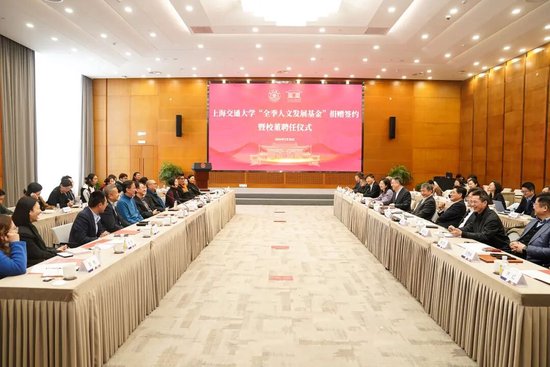
Core Viewpoint - The establishment of the "Quanjing Cultural Development Fund" with a donation of 100 million RMB by alumni Ji Qi aims to enhance the cultural and humanistic development of Shanghai Jiao Tong University, marking the 130th anniversary of the institution [1][17][29]. Group 1: Donation and Fund Purpose - Ji Qi, founder of Huazhu Group and an alumnus of Shanghai Jiao Tong University, donated 100 million RMB to support various school initiatives [17][29]. - The fund will serve as a bridge connecting technology and humanities, allowing more students to cultivate a warm heart alongside their technical education [29]. Group 2: Ceremony and Attendees - The donation signing ceremony took place at the Minhang campus, attended by university officials and notable guests from various sectors [3][19]. - The event was hosted by Hu Weiwei, with Ji Qi and university leaders signing the donation agreement and presenting a certificate of appreciation [3][19][21]. Group 3: Ji Qi's Background and Philosophy - Ji Qi is recognized as a leading figure in continuous entrepreneurship in China, having founded three publicly listed companies: Ctrip, Home Inn, and Huazhu [8][24]. - His educational journey at Shanghai Jiao Tong University significantly shaped his life, instilling both professional knowledge and humanistic training [10][26]. Group 4: Future Aspirations - The fund aims to invite world-class masters from various fields to engage with students, fostering a dialogue that ignites intellectual curiosity and cultural appreciation [13][29]. - Ji Qi expressed a desire for future generations to have opportunities to reflect on humanistic values, similar to his own experiences during his studies [10][26].

携程集团2025年净收入624亿元
Bei Jing Shang Bao· 2026-02-26 04:26
Core Insights - Ctrip Group reported its unaudited financial performance for Q4 and the full year of 2025, showing a net revenue of 62.4 billion yuan for the year, a 17% increase year-on-year [1] - The operating profit for 2025 was 15.8 billion yuan, reflecting an 11% year-on-year growth [1] - The net profit attributable to Ctrip's shareholders, excluding investment income, was 13.4 billion yuan [1] Financial Performance - In Q4 2025, Ctrip achieved a net revenue of 15.4 billion yuan, marking a 21% year-on-year increase, driven by strong travel demand during the winter holiday period [1] - For the full year 2025, the revenue breakdown by business segment includes: - Hotel booking revenue of 26.1 billion yuan, up 21% year-on-year [1] - Transportation ticketing revenue of 22.5 billion yuan, up 11% year-on-year [1] - Vacation travel revenue of 4.7 billion yuan, up 8% year-on-year [1] - Business travel management revenue of 2.8 billion yuan, up 13% year-on-year [1] International Growth - Ctrip's international OTA platform bookings grew approximately 60% year-on-year, serving around 20 million inbound travelers throughout the year [1] - Inbound tourism became a significant growth driver, with Ctrip investing 1 billion yuan to support the inbound tourism ecosystem [1] - Nearly 70,000 hotels, attractions, and travel agencies received inbound orders from overseas platforms for the first time, and over 6,000 scenic spots opened to the international market [1]