
TRIP.COM(TCOM)

Search documents
携程的变与不变
3 6 Ke· 2026-02-26 08:49
Core Insights - Ctrip Group reported a net revenue of 62.4 billion yuan and a net profit of 13.4 billion yuan for the year, indicating a shift in strategy from linear growth to value reconstruction across the entire cultural tourism industry [2] - The competitive landscape has evolved from merely sharing market share to collaboratively expanding the market and benefiting a broader range of ecosystem participants [3] Industry Transformation - The online travel industry is transitioning from a focus on simple supply-demand matching to enhancing the quality and efficiency of supply, particularly for small and medium-sized hotels and local attractions [4] - Ctrip's strategy has shifted towards driving value across the entire industry chain, focusing on digital infrastructure in lower-tier markets and empowering small businesses through operational support and advanced technology [4][5] Empowerment of Small Businesses - Ctrip has partnered with over 130 attractions for investment and operational cooperation, implementing smart ticketing systems and dynamic pricing strategies to enhance visitor experiences [5] - The platform is helping local attractions transition from relying solely on ticket sales to creating comprehensive consumer experiences that include dining and accommodation [6][7] Economic Impact - The empowerment initiatives have led to the creation of over 50,000 new jobs, with more than half located in second-tier and lower-tier cities, indicating a positive impact on local economies [11] - The shift towards smaller group travel has resulted in a significant increase in consumer spending, with average spending on small group products rising by 80% [11][12] Technological Advancements - Ctrip is investing heavily in technology, including a self-developed language model that translates product information into 25 languages, facilitating international tourism [14][15] - The platform's technological investments also include a 2.9 billion yuan allocation for service guarantees, enhancing trust and safety for both consumers and small businesses [16] Strategic Shift - The core value of Ctrip is evolving from transaction volume to ecological value, emphasizing the importance of providing substantial services and support to small businesses [18] - The future success of the platform will be measured not just by financial metrics but by its ability to enhance the competitiveness and vitality of small businesses and unlock the economic and cultural value of previously underutilized tourism resources [18]


携程2025年营收624亿元,国际业务贡献四成收入
Nan Fang Du Shi Bao· 2026-02-26 08:33
Core Insights - Ctrip Group reported a 17% year-on-year increase in net operating revenue for 2025, reaching 62.4 billion RMB, with a net profit of 33.29 billion RMB, a 95% increase, largely due to investment gains of 19.9 billion RMB [1][5] - The company announced significant board changes, including the resignation of co-founder and president Fan Min, and the appointment of new independent directors Wu Yihong and Xiao Yang, effective February 25, 2026 [1] Financial Performance - In Q4 2025, Ctrip's net operating revenue was 15.4 billion RMB, a 21% increase year-on-year but a 16% decrease quarter-on-quarter due to seasonal factors [5] - The core OTA business transaction volume for 2025 was 1.1 trillion RMB, with accommodation and air ticketing contributing approximately 280 billion RMB (25%) and 550 billion RMB (50%) respectively [6] Market Dynamics - Ctrip's international OTA platform bookings grew by about 60% year-on-year, contributing 40% to total revenue, up from 35% the previous year [6] - The company served approximately 20 million inbound travelers in 2025, with a growth rate close to 100% [6] Strategic Initiatives - Ctrip plans to invest over 1 billion RMB to boost the inbound tourism market, focusing on platform enhancements and partnerships to promote Chinese tourist destinations [6] - The company aims to double the number of inbound tourists by 2026 [6] AI Integration - Ctrip's CEO Liang Jianzhang emphasized the importance of AI in enhancing operational efficiency and user experience, stating that AI will be a core pillar of the company's long-term strategy [7] - The company is developing specialized AI models tailored for the complexities of the travel industry, aiming to integrate AI deeply into various operational aspects [7]
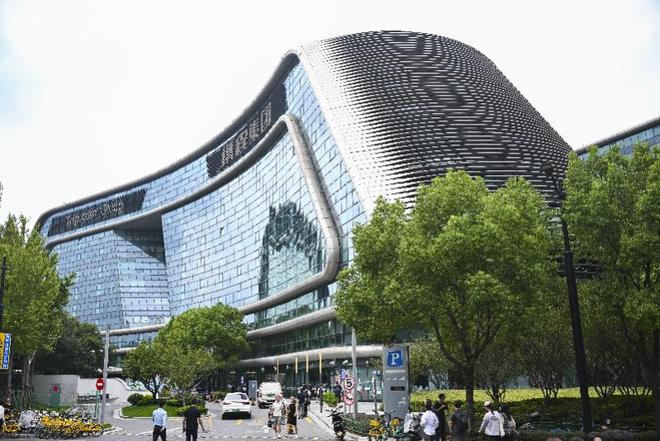
他向上海交通大学捐资1亿元!从工科少年到人文筑梦者,连续创立三家上市公司
Mei Ri Jing Ji Xin Wen· 2026-02-26 08:19
Core Viewpoint - The article highlights the donation of 100 million RMB by alumni Ji Qi to Shanghai Jiao Tong University, aimed at supporting various development initiatives of the institution during its 130th anniversary celebration [1] Group 1: Donation Details - Ji Qi, founder of Huazhu Group and an alumnus of Shanghai Jiao Tong University, donated 100 million RMB to establish the "Quan Ji Humanities Development Fund" [1] - The donation agreement was signed in the presence of university officials, including the Party Secretary Yang Zhenbin and President Ding Kuiling [1] Group 2: Alumni Background - Ji Qi is recognized as a benchmark figure in China's entrepreneurial landscape, having founded three publicly listed companies: Ctrip, Home Inn, and Huazhu [1] - Ji Qi reflected on his seven years at Shanghai Jiao Tong University as a crucial period in his life, emphasizing the importance of both professional knowledge and humanistic training [1] Group 3: Vision for Future - Ji Qi expressed a desire to bring world-class masters into the campus during the AI era, providing students with opportunities to appreciate humanistic spirit, similar to his own experiences [1]

携程2025年财报:投入10亿元“搭桥”,让全球游客走进来,让中国商家赢出去
Mei Ri Jing Ji Xin Wen· 2026-02-26 08:17
Core Insights - Ctrip reported an unusual financial performance for 2025, with total revenue of 62.4 billion yuan and a net profit of 13.4 billion yuan, resulting in a net profit margin of only 1.2% based on transaction volume [1] - The company invested 1 billion yuan to boost inbound tourism, successfully enabling nearly 70,000 Chinese merchants to receive inbound tourism orders for the first time [1][3] Group 1: Inbound Tourism Strategy - Ctrip's strategy focuses on enhancing the visibility of Chinese merchants to foreign tourists, addressing the challenge of "existence" for lesser-known attractions and hotels [3] - The company has partnered with various merchants, such as the Tianmen Mountain scenic area, to implement comprehensive inbound tourism solutions, resulting in significant increases in foreign visitor numbers [4] - Ctrip's marketing efforts included organizing overseas promotional campaigns and utilizing social media to enhance the global presence of Chinese attractions [4][10] Group 2: Technology and Communication - Ctrip has leveraged AI technology to improve communication with foreign tourists, producing 6 billion vocabulary outputs in 25 languages, which standardizes product information and reduces decision-making concerns for customers [6][7] - The deployment of multilingual smart ticket machines at various scenic spots has significantly reduced the average ticket purchasing time for foreign visitors [8] - The company has also established a professional customer service team to handle inquiries in multiple languages, further enhancing the customer experience [7] Group 3: Customer Engagement and Repeat Business - Ctrip's initiatives have not only attracted new customers but also transformed them into brand advocates, as seen with the high satisfaction rates at the "TASTE OF CHINA" restaurant [10][12] - The company has facilitated a cycle of experience leading to word-of-mouth promotion, which is crucial for sustaining inbound tourism growth [13] - Ctrip aims to double the inbound tourist reception in 2026 and enhance the service capabilities of local merchants to better accommodate international visitors [14]
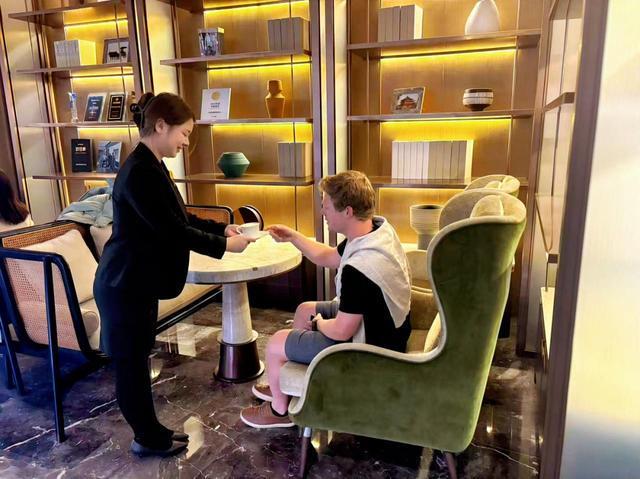
携程2025年营收624亿元 两位联合创始人辞任董事
Guo Ji Jin Rong Bao· 2026-02-26 08:10
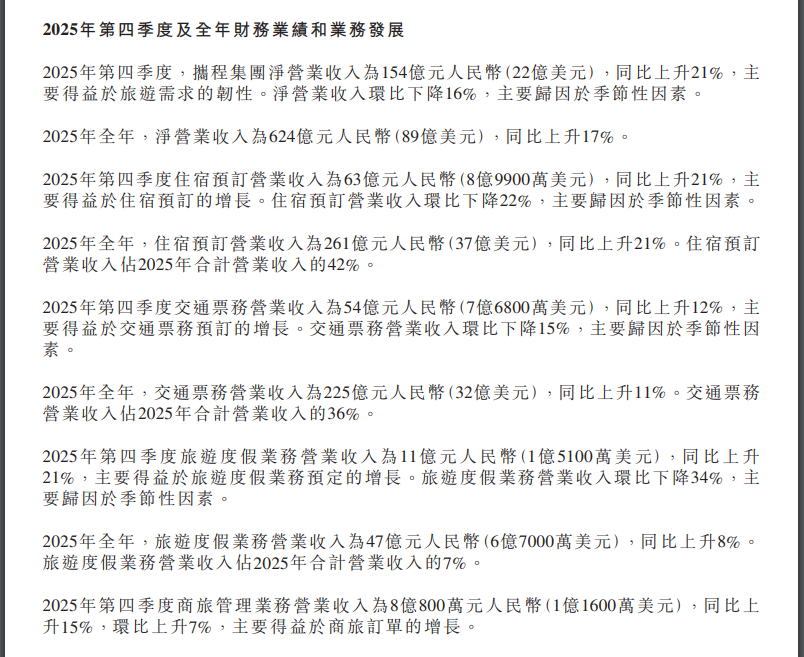
Core Insights - In Q4 2025, Ctrip Group reported a net revenue of 15.4 billion RMB, a year-on-year increase of 21%, but a quarter-on-quarter decrease of 16% due to seasonal factors [1] - For the full year 2025, the net revenue reached 62.4 billion RMB, reflecting a 17% year-on-year growth [1] Revenue Breakdown - In Q4 2025, revenue from accommodation bookings was 6.3 billion RMB, up 21% year-on-year; transportation ticketing revenue was 5.4 billion RMB, up 12% year-on-year; and vacation business revenue was 1.1 billion RMB, up 21% year-on-year [1] - The business travel management segment generated 808 million RMB in Q4 2025, a 15% year-on-year increase and a 7% quarter-on-quarter increase, driven by growth in business travel orders [1] - For the full year 2025, accommodation bookings accounted for 42% of total revenue at 26.1 billion RMB, transportation ticketing accounted for 36% at 22.5 billion RMB, vacation business accounted for 7% at 4.7 billion RMB, and business travel management accounted for 5% at 2.8 billion RMB [1] Cost and Expenses - In Q4 2025, operating costs were 3.2 billion RMB, a 23% year-on-year increase and a 4% quarter-on-quarter decrease, aligning with the trend of net revenue [1] - For the full year, operating costs totaled 12.1 billion RMB, a 21% year-on-year increase, representing 19% of net revenue [1] Marketing and Sales Expenses - In Q4 2025, sales and marketing expenses were 4.4 billion RMB, a 30% year-on-year increase and a 5% quarter-on-quarter increase, accounting for 29% of net revenue for the quarter [2] - For the full year, sales and marketing expenses reached 14.9 billion RMB, a 25% year-on-year increase, representing 24% of net revenue [2] Profitability - In Q4 2025, the net profit attributable to Ctrip Group shareholders was 4.3 billion RMB, while the full year net profit was 33.3 billion RMB, nearly a 95% increase compared to 17.1 billion RMB in 2024, primarily due to investment gains of 19.9 billion RMB, a 17-fold increase from 1.1 billion RMB in 2024 [4] Cash Position - As of December 31, 2025, Ctrip Group had cash and cash equivalents, restricted cash, short-term investments, and held-to-maturity deposits and financial products totaling 105.8 billion RMB [4] Management Changes - Ctrip Group announced several board changes, with Fan Min resigning as director and president, and Ji Qi resigning as a director, effective February 25, 2026 [4] - Wu Yihong and Xiao Yang were appointed as new independent directors [4][5]
携程集团总裁、董事双双辞职
2 1 Shi Ji Jing Ji Bao Dao· 2026-02-26 08:08
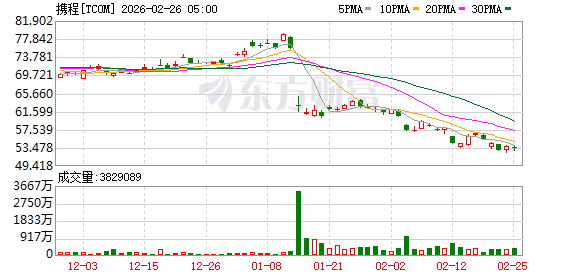
Financial Performance - In Q4 2025, Ctrip Group reported a net operating revenue of 15.4 billion yuan, a year-on-year increase of 21%, driven by resilient travel demand, with a net profit of 4.3 billion yuan. However, there was a quarter-on-quarter decline of 16% due to seasonal factors [1]. - For the full year 2025, Ctrip Group's net operating revenue reached 62.4 billion yuan, up 17% year-on-year, with a net profit of 33.4 billion yuan, compared to 17.2 billion yuan in 2024. The increase was primarily attributed to investment gains of 19.9 billion yuan (2.8 billion USD) included in other income/expenses, compared to 1.1 billion yuan in 2024 [1]. Board Changes - Ctrip announced significant board changes effective February 25, 2026, with Fan Min resigning as a director and president, and Qi Ji resigning as a director. Wu Yihong and Xiao Yang were appointed as new independent directors [3][4]. - Fan Min co-founded Ctrip in 1999 and has held various executive roles, including COO and president since 2013. Qi Ji is a co-founder and has served as CEO and independent director [4]. Stock Performance - As of 15:47, Ctrip's Hong Kong stock fell over 3%, trading at 401.2 HKD per share, with a market capitalization of 286.3 billion HKD, reflecting a cumulative decline of over 27% year-to-date. In contrast, its US stock rose over 1% in pre-market trading [6].
携程2025年营收624亿元,两位联合创始人辞任董事
Guo Ji Jin Rong Bao· 2026-02-26 08:08
Core Viewpoint - Ctrip Group reported its financial performance for Q4 and the full year of 2025, showing significant revenue growth year-on-year but seasonal declines in Q4 revenue [1][3]. Revenue Performance - In Q4 2025, Ctrip's net operating revenue was 15.4 billion RMB, a year-on-year increase of 21% but a quarter-on-quarter decrease of 16% due to seasonal factors [1]. - For the full year 2025, net operating revenue reached 62.4 billion RMB, reflecting a year-on-year growth of 17% [1]. Revenue Structure - Revenue sources include accommodation bookings, transportation ticketing, vacation services, business travel management, and others [3]. - In Q4 2025: - Accommodation bookings generated 6.3 billion RMB, up 21% year-on-year [3]. - Transportation ticketing revenue was 5.4 billion RMB, up 12% year-on-year [3]. - Vacation services revenue was 1.1 billion RMB, up 21% year-on-year [3]. - Business travel management revenue was 808 million RMB, up 15% year-on-year and up 7% quarter-on-quarter [3]. - For the full year 2025: - Accommodation bookings accounted for 42% of total revenue at 26.1 billion RMB, up 21% year-on-year [3]. - Transportation ticketing represented 36% of total revenue at 22.5 billion RMB, up 11% year-on-year [3]. - Vacation services made up 7% of total revenue at 4.7 billion RMB, up 8% year-on-year [3]. - Business travel management contributed 5% of total revenue at 2.8 billion RMB, up 13% year-on-year [3]. Cost and Profitability - In Q4 2025, Ctrip's operating costs were 3.2 billion RMB, a year-on-year increase of 23% but a quarter-on-quarter decrease of 4% [3]. - For the full year, operating costs totaled 12.1 billion RMB, a year-on-year increase of 21%, representing 19% of net operating revenue [3]. - Q4 2025 sales and marketing expenses were 4.4 billion RMB, up 30% year-on-year and 5% quarter-on-quarter, accounting for 29% of net revenue [4]. - For the full year, sales and marketing expenses reached 14.9 billion RMB, up 25% year-on-year, representing 24% of net operating revenue [4]. - Net profit attributable to Ctrip's shareholders for Q4 2025 was 4.3 billion RMB, while the full year net profit was 33.3 billion RMB, nearly a 95% increase compared to 17.1 billion RMB in 2024, primarily due to investment gains of 19.9 billion RMB [4]. Leadership Changes - Ctrip announced significant board changes, with Fan Min resigning as director and president, and Ji Qi resigning as a director, effective February 25, 2026 [5]. - New independent directors Wu Yihong and Xiao Yang were appointed [5][6].
招银国际:26年春节消费景气度符合预期 品类分化持续
Zhi Tong Cai Jing· 2026-02-26 08:01
Group 1: Tourism and Travel - The tourism sector shows resilience with long-distance travel and family-oriented trips as key trends, with 596 million domestic trips taken during the 2026 Spring Festival, generating a total expenditure of 803.48 billion yuan, reflecting a year-on-year increase of 5.7% in daily travel volume and 5.5% in daily spending [2] - Long-distance travel orders accounted for 59.6% of bookings, with an average travel duration of 6.4 days, an increase of 0.5 days year-on-year [2] - Domestic travel orders on the Fliggy platform increased by 80% year-on-year, with average booking amounts rising by approximately 10% [2] Group 2: Offline Consumption - Key retail and catering enterprises saw a daily sales increase of 5.7% compared to the same period in 2025, with a 1.6 percentage point acceleration from the previous year's growth rate [3] - Foot traffic and sales in 78 key pedestrian streets increased by 6.7% and 7.5% year-on-year, respectively, showing an acceleration compared to the 2025 National Day holiday [3] Group 3: Online Consumption - The performance of beauty and skincare brands during the Spring Festival was mixed, with total sales on Douyin ranging from 250 million to 378 million yuan, reflecting a year-on-year growth of about 12%, but a daily sales figure that remained nearly flat [4] - Notable brand performances included a 114.3% increase for Maogeping, driven by category expansion, and a 58.6% increase for Proya, attributed to strong brand performance [4] Group 4: Jewelry Sector - The jewelry sector experienced a decline in sales, with total sales dropping to a range of 260 million to 309 million yuan, a year-on-year decrease of 8.5%, primarily due to high sales bases from the previous year and fluctuating gold prices [5] - Brands like Chow Tai Fook and Luk Fook achieved good growth rates of 100% and 66.7%, respectively, while mass-market brands saw significant declines [5] Group 5: Investment Recommendations - The company maintains a positive outlook on service-oriented and emotional consumption, particularly in travel and beauty sectors, recommending attention to companies like Trip.com and Tongcheng [6] - In the beauty sector, companies with superior category matrix layouts, such as Ying Tong Holdings, are highlighted for potential investment [6]


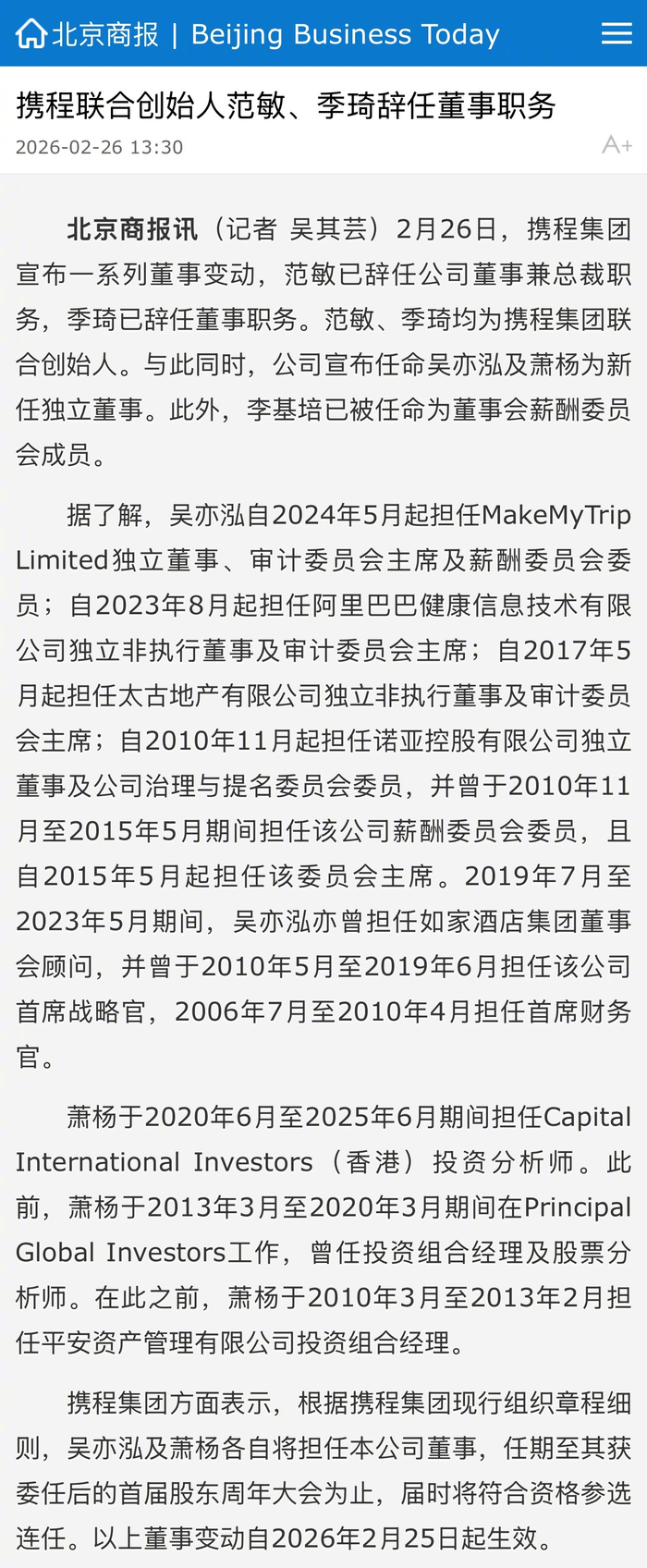
携程联合创始人范敏季琦辞任董事,吴亦泓萧杨接任
Bei Jing Shang Bao· 2026-02-26 07:52
#携程宣布一系列董事变动# 【携程联合创始人范敏、季琦辞任董事职务】2月26日,携程集团宣布一系 列董事变动,范敏已辞任公司董事兼总裁职务,季琦已辞任董事职务。范敏、季琦均为携程集团联合创 始人。与此同时,公司宣布任命吴亦泓及萧杨为新任独立董事。此外,李基培已被任命为董事会薪酬委 员会成员。(北京商报记者 吴其芸) 2023年5月期间,吴亦泓亦曾担任如家酒店集团董事 会顾问,并曾于2010年5月至2019年6月担任该公司 首席战略官,2006年7月至2010年4月担任首席财务 官。 萧杨于2020年6月至2025年6月期间担任Capital International Investors(香港)投资分析师。此 前,萧杨于2013年3月至2020年3月期间在Principal Global Investors工作,曾任投资组合经理及股票分 析师。在此之前,萧杨于2010年3月至2013年2月担 任平安资产管理有限公司投资组合经理。 携程集团方面表示,根据携程集团现行组织章程细 则,吴亦泓及萧杨各自将担任本公司董事,任期至其获 委任后的首届股东周年大会为止,届时将符合资格参选 连任。以上董事变动自2026年2月2 ...
花旗:携程集团-S第四季业绩健康 收入胜预期但经营利润率略逊
Zhi Tong Cai Jing· 2026-02-26 07:47
花旗发布研报称,携程集团-S(09961)去年第四季收入同比增长21%至154亿元人民币(下同),较该行及 市场预期高3%。毛利率为79%,对比去年第三季为81.7%,而该行预期为78.5%。非公认会计准则经营 利润率20.7%,非公认会计准则盈利为34.8亿元,胜市场预期的32亿元。该行目前予携程(TCOM.US)美 股目标价82美元及"买入"评级。 该行认为集团第四季业绩表现健康,当中收入显著好过预期,因携程国际平台在旺季表现强劲,以及主 要由广告和信用解决方案组成的其他收入优于预期。 ...