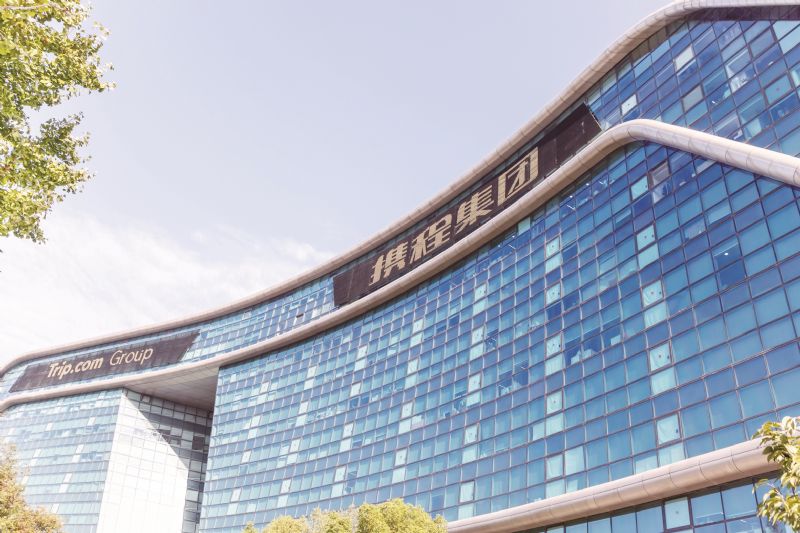
TRIP.COM(TCOM)

Search documents
港股异动 | 携程集团-S(09961)低开近15% 涉嫌垄断被市场监管总局立案调查
智通财经网· 2026-01-15 01:31
Core Viewpoint - Ctrip Group's stock price dropped nearly 15% following the announcement of an antitrust investigation by the State Administration for Market Regulation regarding alleged abuse of market dominance [1] Group 1: Company Response - Ctrip stated it will actively cooperate with regulatory investigations and implement regulatory requirements while maintaining normal business operations [1] - The company emphasized its commitment to providing quality services to users and partners [1] Group 2: Market Position - According to a report by CMB International, Ctrip and Qunar together hold nearly 70% of the GMV market share, with Ctrip's main brand alone accounting for 56% [1] Group 3: Legal Context - Article 57 of China's Antitrust Law stipulates that operators abusing market dominance may face administrative penalties, including fines ranging from 1% to 10% of the previous year's sales [1] - The specific nature of Ctrip's alleged behavior is currently unclear, but potential penalties could include administrative fines and confiscation of illegal gains if found guilty [1]

恒生指数低开0.1%,携程集团大跌近15%
Hua Er Jie Jian Wen· 2026-01-15 01:23
市场有风险,投资需谨慎。本文不构成个人投资建议,也未考虑到个别用户特殊的投资目标、财务状况或需要。用户应考虑本文中的任何 意见、观点或结论是否符合其特定状况。据此投资,责任自负。 风险提示及免责条款 香港恒生指数开盘跌0.1%,恒生科技指数跌0.55%。携程集团大跌近15%。昨日消息,市场监管总局依 法对携程集团有限公司立案调查。阿里巴巴开盘微跌0.06%。阿里巴巴10:00将召开千问APP发布会,见 证AI如何"开启办事时代"。 ...

智谱CEO谈DeepSeek冲击;携程回应涉嫌垄断被立案调查
Sou Hu Cai Jing· 2026-01-15 01:17
Group 1 - The Chinese government has extended the personal income tax refund policy for residents purchasing new homes until December 31, 2027, which aims to support the housing market [2] - The policy allows for a full refund of paid personal income tax if the new home purchase amount is greater than or equal to the selling price of the current home [2] - If the new home purchase amount is less than the selling price, the refund will be proportional to the new purchase amount [2] Group 2 - OpenAI has signed a three-year agreement with Cerebras to procure up to 750 megawatts of computing power, with the total deal exceeding $10 billion [6][7] - Cerebras specializes in AI chips designed for inference tasks, integrating vast computing power and memory into a single chip [6] - This partnership may significantly increase Cerebras' valuation, with reports indicating a potential $22 billion valuation for a new funding round [7] Group 3 - Wang Xiaochuan stated that the future growth of medical AI will primarily occur outside of hospitals, emphasizing the technology's role in enhancing patient services rather than replacing doctors [8][9] - This perspective has sparked industry discussions on leveraging AI to improve patient experiences and healthcare quality [9] Group 4 - Ctrip is under investigation by the State Administration for Market Regulation for alleged monopolistic practices [11] - The company has stated it will cooperate with the investigation while continuing to operate its business normally [11] - In response to Ctrip's situation, a competitor, Zhaomi Technology, announced plans to launch a product aimed at countering Ctrip's market dominance [11] Group 5 - ByteDance is developing a new generation of AI headphones, which will be manufactured by GoerTek [5] - The company currently has no plans to launch the next generation of headphones publicly [5] Group 6 - Huawei is projected to reclaim the top position in the Chinese smartphone market by 2025, with a total shipment volume of approximately 285 million units, reflecting a year-on-year decline of 0.6% [22]




金融界财经早餐:财政部重磅!推进财政金融协同促内需一揽子政策;沪深北交易所融资保证金比例上调;换房退税政策再延两年;8天翻倍AI大牛股停牌核查(1月15日)
Jin Rong Jie· 2026-01-15 01:09
Company and Industry Highlights - Easy Point World announced a stock trading suspension starting January 15, 2026, due to significant price fluctuations, with a stock price increase exceeding 100% over the past nine trading days [8] - Sunflower received a notice from the China Securities Regulatory Commission regarding an investigation into information disclosure violations, but stated that normal operations would not be significantly affected [8] - Five Minerals Development plans a major asset swap and cash purchase of assets from Five Minerals Holdings, with the transaction expected to constitute a significant asset restructuring [8] - Unigroup Guowei intends to acquire 100% equity of Ruineng Semiconductor through a share issuance and cash payment, while also raising supporting funds from specific investors [9] - International Medicine announced that its controlling shareholder pledged 75 million shares for financing, representing 12.17% of the shares held by the shareholder and 3.35% of the total share capital [9] - WuXi AppTec proposed a conditional cash acquisition offer for Dongyao Pharmaceutical at a price of HKD 4.00 per share, representing a premium of approximately 114.67% over the average closing price [10] - Ctrip Group is under investigation by the State Administration for Market Regulation for suspected monopolistic behavior, and the company has stated it will cooperate with the investigation [10] - Alibaba is set to hold a product launch event for its Qianwen APP on January 15, 2026, showcasing new AI capabilities [11]

早报 | 贺娇龙意外坠马重伤离世;携程回应被立案调查;美国对特定半导体等加征25%关税;棋圣聂卫平病逝
虎嗅APP· 2026-01-15 00:29
Group 1 - The U.S. will suspend visa processing for applicants from 75 countries to combat potential public burden [2][3] - The U.S. White House announced a 25% tariff on certain imported semiconductors and related equipment starting January 15 [4] - California's Attorney General has launched an investigation into Elon Musk's xAI for generating non-consensual explicit images, marking a significant legal challenge for the company [5] Group 2 - The U.S. President indicated a wait-and-see approach regarding the situation in Iran, which led to a short-term drop in international oil prices by 5% [6][7] - The Venezuelan President Maduro's social media account was updated after 11 days of being "kidnapped," sparking protests in Venezuela [8][9] Group 3 - The Chinese government has extended the personal income tax refund policy for home purchases until December 31, 2027, aimed at stabilizing the real estate market [14] - Zhejiang Province has implemented an AI-based supervision system to detect corruption in bidding processes, successfully identifying irregularities in a local project [15] Group 4 - OpenAI has signed a three-year agreement with Cerebras to procure up to 750 megawatts of computing power, with the total deal exceeding $10 billion [17][18] - Ctrip is under investigation by the State Administration for Market Regulation for suspected monopolistic behavior [19][20] Group 5 - Beijing's medical insurance bureau announced that starting January 1, 2026, prenatal check-up costs for retirees will be reimbursable, addressing actual needs rather than encouraging late-age childbirth [22] - Alivata's vice president stated that a recent car accident was due to human error, not vehicle malfunction [23][24] Group 6 - The company Lao Gan Ma responded to consumer concerns about changes in product taste, asserting that their ingredients and recipes have not changed [27] - Shanxi Bank is auctioning approximately 416 million shares due to the negative reputation of a shareholder, aiming to optimize its equity structure [28][29]

牛市早报|沪深北交易所提高融资保证金比例,去年进出口总值创历史新高
Sou Hu Cai Jing· 2026-01-15 00:12
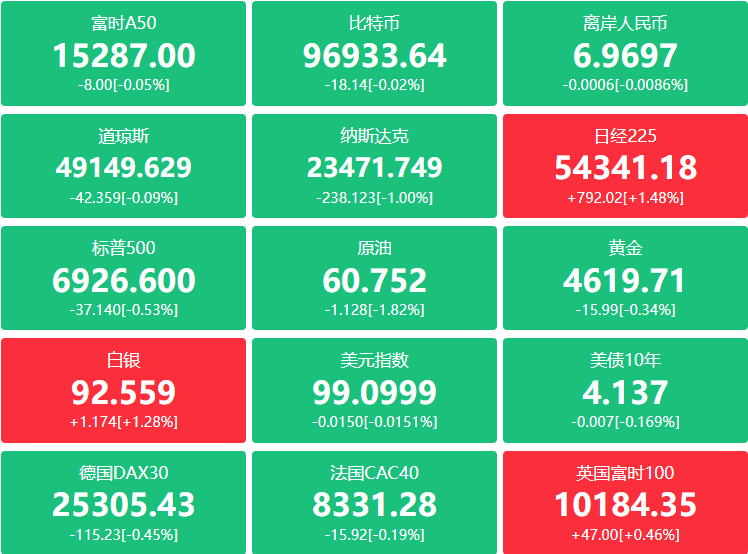
Market Data - As of January 14, the Shanghai Composite Index fell by 0.31% to 4126.09 points, while the STAR 50 Index rose by 2.13% to 1500.91 points [1] - The New York stock market saw declines on January 14, with the Dow Jones Industrial Average down 42.36 points (0.09%) to 49149.63 points, the S&P 500 down 37.14 points (0.53%) to 6926.60 points, and the Nasdaq down 238.12 points (1.00%) to 23471.75 points [1] - International oil prices increased on January 14, with light crude oil futures for February rising by $0.87 to $62.02 per barrel (1.42% increase) and Brent crude for March rising by $1.05 to $66.52 per barrel (1.6% increase) [1] Economic News - China's total foreign trade value for December 2025 reached $601.42 billion, a year-on-year increase of 6.2%, with exports at $357.78 billion (6.6% increase) and imports at $243.64 billion (5.7% increase) [2] - For the entire year of 2025, China's foreign trade value was $6.35 trillion, a 3.2% increase year-on-year, with exports at $3.77 trillion (5.5% increase) and imports at $2.58 trillion (no change) [2] - The Ministry of Finance and other departments announced a tax refund policy for individuals selling their homes and purchasing new ones within a year, effective from January 1, 2026, to December 31, 2027 [3] - The People's Bank of China announced a reverse repurchase operation of 900 billion yuan to maintain liquidity in the banking system, scheduled for January 15 [4] - The Ministry of Industry and Information Technology held a meeting to regulate competition in the new energy vehicle industry, emphasizing innovation and quality while resisting price wars [4] - The Shanghai Stock Exchange announced an increase in the minimum margin ratio for margin trading from 80% to 100%, aimed at reducing leverage and protecting investor rights [5] - In 2025, China's automobile production and sales both exceeded 34 million units, with new energy vehicles accounting for over 50% of domestic sales [7] Industry Developments - The National Medical Products Administration announced the results of a centralized procurement for high-value medical consumables, with 202 companies winning bids for 440 products [8] - A joint action plan for high-level autonomous driving in Shanghai aims for large-scale implementation by 2027, focusing on innovation and international competitiveness in the smart connected vehicle industry [8] - Ctrip Group is under investigation for alleged monopolistic practices by the State Administration for Market Regulation, with the company cooperating with the investigation [8] - The Zhejiang Securities Regulatory Bureau is investigating Sunflower Health Technology Co., Ltd. for misleading statements in its restructuring plan [8]
【8点见】创造历史!中国U23男足首进亚洲杯淘汰赛
Yang Shi Wang· 2026-01-15 00:11
Group 1 - China's customs authority projects that the country's goods trade imports and exports will exceed 45 trillion yuan by 2025, marking the ninth consecutive year of growth [2] - China's automobile production and sales have reached a historical high, maintaining its position as the world's largest market for 17 consecutive years [5] - The Ministry of Finance and other departments will continue to implement personal income tax policies supporting residents in purchasing new housing [5] Group 2 - Over 11,000 designated medical institutions will be able to purchase new drugs listed in the 2025 medical insurance catalog [5] - The State Administration for Market Regulation has initiated an investigation into Ctrip Group [5] - The Education Supervision Bureau's deputy director has been placed under investigation [5]

纳指收跌1%,甲骨文、博通跌超4%
Mei Ri Jing Ji Xin Wen· 2026-01-15 00:10
Market Overview - The three major U.S. stock indices closed lower, with the Dow Jones down 0.08%, the Nasdaq down 1.00%, and the S&P 500 down 0.53% [2] - Technology stocks experienced widespread declines, with Oracle and Broadcom falling over 4%, and Amazon, Microsoft, and Meta dropping over 2% [2] - Notably, Intel saw a contrary increase, rising over 3% [2] Chinese Stocks Performance - The Nasdaq Golden Dragon China Index decreased by 0.23%, with significant declines in several Chinese companies [2] - Ctrip fell over 17%, Pinduoduo dropped nearly 4%, and electric vehicle manufacturers such as Li Auto, NIO, and Xpeng, along with Bawang Tea, all declined over 2% [2] - In contrast, Bilibili experienced a rise of over 6% [2]


8点1氪丨携程回应因涉嫌垄断行为被立案调查;茶颜悦色没喝就“消失”半杯,内部人士回应;老干妈回应“味道变了”
3 6 Ke· 2026-01-15 00:06
Group 1 - Coca-Cola has abandoned the plan to sell Costa Coffee due to the private equity buyer's offer not meeting expectations, marking another setback for the company during its ownership of the struggling UK coffee chain [5] - In 2025, China's automotive industry is projected to produce and sell 34.53 million and 34.40 million vehicles respectively, representing year-on-year growth of 10.4% and 9.4%, maintaining its position as the world's largest automotive market for 17 consecutive years [6] - Ctrip has received a notification from the State Administration for Market Regulation regarding an investigation into alleged monopolistic behavior, and the company will cooperate fully with the regulatory authorities [1] Group 2 - JD Logistics plans to offer a cash option to Debon shareholders worth approximately RMB 3.797 billion as part of a proposal to withdraw Debon's shares from the Shanghai Stock Exchange [4] - Audi's global vehicle deliveries in 2025 are expected to be around 1.623 million units, a decrease of 2.9% compared to the previous year [8] - Baoneng Group's chairman has filed a complaint against local authorities regarding alleged illegal actions in a case involving Qoros Auto, claiming that the assets involved are significantly undervalued [9] Group 3 - Tesla has implemented new rules for its supercharging stations, including a more user-friendly fee structure for overstaying and an extended grace period for drivers [10] - Amazon plans to appeal a reduced antitrust fine in Italy, arguing that the accusations of market dominance are unfounded [10] - The U.S. government announced a 25% tariff on certain imported semiconductors and related products, effective from January 15 [18]

携程集团遭反垄断调查毛利率高达81% 市占率56%被指“携流量以令商家”
Chang Jiang Shang Bao· 2026-01-15 00:02
Core Viewpoint - Ctrip Group is under investigation for alleged monopolistic practices, including abuse of market dominance, as announced by the State Administration for Market Regulation on January 14 [2][3]. Group 1: Investigation Details - The investigation is based on prior checks and is conducted under the Anti-Monopoly Law of the People's Republic of China [2][3]. - Ctrip has faced multiple inquiries from local regulatory bodies prior to the investigation, with accusations of practices such as "forcing merchants to choose" and price manipulation [4][5]. - Ctrip's official response indicates cooperation with regulatory authorities and a commitment to maintaining normal business operations [3]. Group 2: Market Position and Performance - Ctrip holds a dominant position in the OTA industry, with a projected market share of 56% in China's OTA market for 2024, significantly ahead of competitors [8]. - The company has experienced substantial revenue growth, with net revenues of 200.39 billion, 445.10 billion, and 532.94 billion yuan from 2022 to 2024, and 470.11 billion yuan in the first three quarters of 2025 [9]. - The net profit attributable to Ctrip was 14.03 billion, 99.18 billion, and 170.67 billion yuan for the same periods, with a gross margin of 81% in 2025 [9][10]. Group 3: Pricing Practices - Ctrip's "Price Adjustment Assistant" has been criticized for unilaterally modifying hotel room prices, leading to complaints from merchants about forced price reductions [6][7]. - The system is designed to ensure competitive pricing but has been described as a "one-sided coercion" by hotel operators [6]. - Complaints from users about fluctuating hotel prices during peak seasons have also surfaced, indicating potential issues with pricing transparency [8].