
Toyota(TM)

Search documents
混动与本土化,丰田“两手抓”
Zhong Guo Qi Che Bao Wang· 2025-05-15 01:19
Core Insights - Toyota, as the largest automotive manufacturer in Japan and globally, is increasing its investment in the U.S. market to enhance localization rates in response to rising automotive tariffs [2][5][10] Group 1: Investment and Localization - Toyota plans to invest an additional $88 million in a factory in West Virginia, bringing total investment in that facility to over $2.8 billion [2] - The company has invested $25 billion in U.S. manufacturing since 2018 and $28.5 billion to develop its local supplier network [4] - Currently, Toyota's localization rate in the U.S. is approximately 55%, with about 1.3 million of the 2.33 million vehicles sold in 2023 produced locally [4][5] Group 2: Market Position and Sales - In 2024, Toyota's sales in the U.S. increased by 3.7% to 2.33 million vehicles, closely trailing General Motors' 2.69 million vehicles [3][4] - The RAV4 became the best-selling vehicle in the U.S. in 2024, with sales reaching 475,200 units, a 9% increase year-over-year [6][7] Group 3: Electrification Strategy - Toyota aims for electric and hybrid vehicles to account for 50% of its U.S. sales by 2030, with a current focus on hybrid models [7][8] - In 2024, sales of electrified vehicles (mostly hybrids) reached 1.006 million units, representing 43.15% of total sales [7] Group 4: Tariff Impact and Future Plans - Due to the impact of U.S. automotive tariffs, Toyota is considering producing the next-generation RAV4 primarily in the U.S. to avoid increased import costs [6][9] - The company is also expanding its Kentucky plant with a $1.2 billion investment to increase production capacity for the RAV4 and accommodate hybrid models [9] Group 5: Trade Negotiations - Toyota is closely monitoring U.S.-Japan trade negotiations regarding automotive tariffs, as these tariffs significantly affect its operations and costs [10] - The Japanese government is advocating for the removal of tariffs, emphasizing the importance of the automotive industry to Japan's economy [10]


Tim Lamb Group Facilitates Sale of Toyota of Warren in Warren, OH to Rafih Auto Group
GlobeNewswire News Room· 2025-05-14 18:03
Core Insights - The Tim Lamb Group has successfully sold Toyota of Warren to Rafih Auto Group, marking the 120th dealership sold in Ohio by the firm [1][5] - This acquisition represents Rafih Auto Group's first Toyota dealership in the United States and their initial transaction with the Tim Lamb Group [3] Company Overview - The Tim Lamb Group is the largest auto dealership sales and acquisitions firm in North America, having been established in 2006 [6] - The firm handles billions of dollars in transactions annually through its fifteen regional directors, serving multiple dealer operators across the United States and Canada [6] Transaction Details - The sale of Toyota of Warren was personally brokered by Tim Lamb, President and Director of the Northeast Region, and closed on April 28, 2025 [1][5] - The dealership is located at 2657 Niles-Cortland Rd. SE in Warren, Ohio, and will continue to operate under the same name [2] Facility Information - The newly acquired facility spans over 25,000 square feet and includes a showroom, parts and service center, and 18 service stalls [4] - Toyota of Warren is committed to providing superior customer service using certified OEM Toyota parts and advanced service technology [4] Client Relationship - The sellers, Jim Whetstone Auto Group, have had a long-standing relationship with Tim Lamb, having purchased their first dealership through him in 2007 [3] - The acquisition ensures that current employees of Toyota of Warren will be retained, maintaining continuity for customers and staff [5]

Toyota Debuts Stylish, Powerful 2026 C-HR Battery Electric Vehicle
Prnewswire· 2025-05-14 11:00
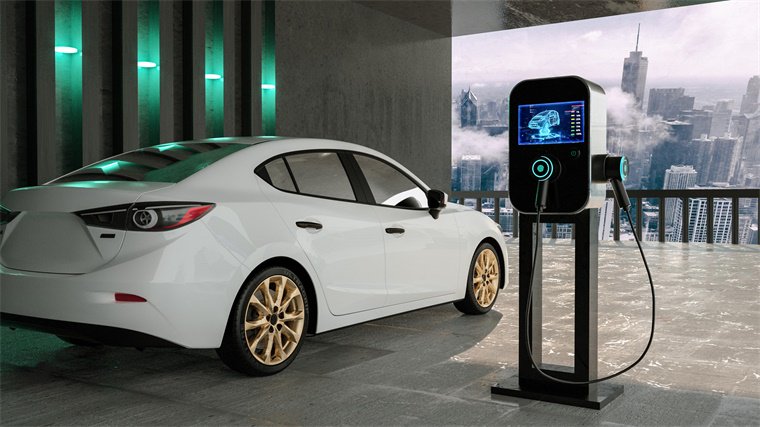
The 2026 C-HR BEV brings cutting-edge style and high-tech features. It will be powered by a 74.7 kW battery and have a manufacturer-estimated all-electric range rating of 290 miles*. It will come equipped with a North American Charging System (NACS) port, giving it access to thousands of DC charging stations nationwide. It will also be capable of charging on Level One and Level Two AC power sources. Steering wheel- mounted paddle shifters that control regenerative braking power are also standard. When activ ...

5月14日电,日经225指数收盘跌0.14%,丰田汽车跌超3%。
news flash· 2025-05-14 06:32
智通财经5月14日电,日经225指数收盘跌0.14%,丰田汽车跌超3%。 ...
日本三大车商4月在华新车销量出炉:丰田销量增20.8%,本田暴跌40.8%【附新能源汽车行业市场分析】
Qian Zhan Wang· 2025-05-14 03:28
Group 1: Sales Performance of Japanese Automakers - In April, Toyota's new car sales in China increased by 20.8% year-on-year, reaching 142,800 units, marking three consecutive months of growth, driven by its focus on hybrid and electric vehicles [2] - In contrast, Honda's sales in China fell by 40.8% to 43,689 units, while Nissan's sales decreased by 15.7% to 46,295 units, with Honda experiencing a 15-month consecutive decline and Nissan a 13-month decline [2] - Nissan plans to cut 21,000 jobs, which is 15% of its total workforce, and will close three factories, acknowledging that management errors, particularly in electric vehicle strategy, contributed to its current challenges [2] Group 2: Global Electric Vehicle Market Trends - The global electric vehicle transition is an unstoppable trend, with traditional automakers in Europe, such as Volkswagen and Mercedes-Benz, accelerating their electrification efforts to secure a competitive position [3] - Tesla leads the U.S. market, driving technological advancements in electric vehicles and expanding its global presence, setting a benchmark for the industry [3] - In China, BYD is recognized as a leading electric vehicle manufacturer, with significant advancements in technology and product offerings [5] Group 3: Market Share and Industry Position - In 2022, China's market share of new energy vehicles reached 24.4%, the highest globally, followed by Europe at 17.3%, while India and Japan lag behind [7] - BYD's chairman emphasized that China's new energy vehicle sector is approximately 3 to 5 years ahead globally in terms of technology and product development, advocating for open innovation and international collaboration [9] - The challenges faced by Japanese automakers in the electrification transition serve as a warning for the global automotive industry, highlighting the need for timely strategic adjustments and increased investment in new energy and smart technologies [9]


Toyota reveals new name, upgraded tech for its sole U.S. EV
CNBC· 2025-05-13 11:00
Core Insights - Toyota Motor has unveiled a redesigned version of its all-electric vehicle in the U.S., now named "bZ," simplifying the previous name "bZ4X" to enhance customer understanding and potentially distance from the earlier model [1] - The previous model, bZ4X, received negative reviews and faced a recall due to safety issues, prompting Toyota to address these concerns in the new model [2] Group 1: Model Updates - The 2026 model-year bZ features a 25% increase in electric vehicle range [2] - The new model boasts up to a 50% improvement in horsepower and enhanced fast-charging capabilities [2] Group 2: Market Positioning - The name change to "bZ" is part of Toyota's strategy to simplify branding and improve market perception following the criticisms of the bZ4X [1][2]

选中国还是美国?石破茂刚直言“非常遗憾”,日本爆出重大丑闻
Sou Hu Cai Jing· 2025-05-13 10:38
Group 1: Trade Negotiations and Tariffs - Japanese Prime Minister Kishida expressed regret over the US imposing a 25% tariff on key automotive parts and is urging the US to reconsider these measures [1] - The US is demanding Japan to "level the trade deficit," which includes conditions such as importing American cars, exempting tariffs, and increasing imports of beef, rice, and seafood [1][3] - Kishida emphasized that Japan will not comply with US demands that link security issues with tariff negotiations [1][3] Group 2: Impact on the Automotive Industry - The automotive industry is a crucial pillar of the Japanese economy, with significant exports to the US [3] - Toyota is expected to face a burden exceeding 1 trillion yen due to tariffs, while other companies like Honda and Nissan are also projected to incur impacts in the hundreds of billions of yen [3] - Kishida indicated that Japan will consider all options to respond to US tariff policies, hinting at a potential strong response to protect the domestic automotive industry [3] Group 3: Japan's Economic Position - Japan holds over 1 trillion USD in US Treasury bonds, raising questions about whether it might leverage this in trade negotiations [3] - Japan's Finance Minister stated that the country does not intend to use the sale of US Treasury bonds as a negotiating tool in trade discussions [3] Group 4: Political Context - Recent allegations of illegal political donations against Kishida could destabilize his position, especially in light of his strong stance in US tariff negotiations [8] - There are speculations that the US might influence Japanese domestic politics in response to Kishida's firm approach towards trade negotiations [8]

关税引发震荡!回暖有望?
Zhong Guo Qi Che Bao Wang· 2025-05-13 09:40
2025年4月《中国汽车报》汽车市值研究组继续对全球汽车类上市公司月度市值变化进行全面跟踪、梳理和比较分析。并基于2024年全年的数据积累基础 上,对全球汽车类上市公司的年度市值表现进行总结,并对2025年市值变化趋势进行预判。为读者提供更丰富、更详实、更客观、更多元、多维度的市值 变化数据分析。 2025年4月,全球汽车类上市公司的统计范围依然涵盖国际和国内上市的主流整车、零部件企业,以及主要新创公司和国内汽车经销商集团,统计在内的 上市企业数量共计130家。 全球汽车类上市公司市值TOP20 市值环比以涨为主 排位持续波动 | | | | 2025年4月全球汽车类上市公司市值TOP20 | | | | --- | --- | --- | --- | --- | --- | | 排序 | 公司名称 | 4月市值 (单位:亿元) | 环比 | 同比 | 较上月排位变化 | | 1 | 特斯拉 | 65327.50 | 4.04% | 57.83% | 持平 | | 2 | 丰田 | 22059.52 | 9.90% | -20.85% | 持平 | | 3 | 小米集团 | 12186.20 | 9.34% ...





为什么你以为的改善,其实根本没有降本?
3 6 Ke· 2025-05-13 02:52
Core Insights - The article emphasizes the distinction between "labor-saving" and "man-saving" in the context of Toyota Production System (TPS), highlighting that these terms have specific meanings and implications for operational efficiency [1][4][5] - It warns against common misconceptions that equate making work easier with improving efficiency, or reducing personnel with actual labor savings [3][6][8] Group 1: Misunderstandings in Improvement Terminology - A prevalent misunderstanding in corporate improvement initiatives is the belief that reducing the number of workers directly correlates with labor savings, which is not necessarily true [3][4] - The article illustrates that simply making work easier does not equate to increased productivity if the number of workers remains unchanged [7][8] - It stresses that true labor savings occur only when the number of workers required for a task is genuinely reduced, allowing for reallocation of human resources to more valuable tasks [7][9] Group 2: Transitioning from Labor-Saving to Man-Saving - The article outlines that "labor-saving" is merely the first step towards achieving true flexibility in production, which involves reducing the number of workers based on demand fluctuations [9][10] - It introduces the concept of Just-In-Time production, which aims to produce at a pace that matches sales demand, thereby optimizing labor usage [9][10] - The goal is to create a production line that can flexibly adjust the number of workers based on order volume, thus avoiding waste and ensuring efficiency [10][12] Group 3: Implementing Flexible Production Systems - To achieve "man-saving," companies must establish standardized operations, train multi-skilled employees, optimize equipment layout, and foster a culture of continuous improvement [12][13] - The article emphasizes that the objective of "man-saving" is not merely to cut labor costs but to create a responsive and efficient production system centered around customer demand [12][13] - Continuous improvement and adaptability are crucial for companies to avoid inefficiencies and remain competitive in a rapidly changing market [12][13]