
TSMC(TSM)

Search documents
飙涨208%!芯片,重大利好!
券商中国· 2026-01-08 12:47
业绩太炸裂! 今日(1月8日),全球芯片巨头三星电子最新披露的业绩显示,2025年第四季度的营业利润高达20万亿韩元 (约合人民币965亿元),同比大幅飙涨208%,高于市场预期。分析指出,这一业绩主要受益于AI热潮下的存 储芯片涨价潮。 另外,台积电也传来利好催化。据最新消息,台积电3nm制程持续供不应求,有业内人士透露,台积电今年除 调高3nm报价外,已暂时停止3nm新案启动。摩根大通、野村证券均在最新发布的报告中,大幅上调了台积电 的目标价。 四季度营利飙涨2 0 8% 1月8日,三星电子发布了2025年第四季度初步业绩,其中显示,公司2025年第四季度的营业利润高达20万亿韩 元,较上年同期大幅增长208%,高于LSEG SmartEstimate预计的18万亿韩元。这将是三星有史以来最高的季度 营业利润。 初步业绩报告显示,三星电子第四季度销售额同比增长23%,至93万亿韩元。这是三星单季销售额连续两个季 度突破80万亿韩元,2025年第三季度的销售额为86万亿韩元。 有分析指出,三星电子炸裂的业绩背后是,供应紧张和AI驱动的需求激增推高了传统存储芯片的价格。 里昂证券韩国区研究主管Sanjeev ...


The Smartest Artificial Intelligence (AI) Stock to Buy With $1,000 Right Now
Yahoo Finance· 2026-01-08 12:35
Group 1 - The article discusses the uncertainty surrounding the potential bursting of the artificial intelligence (AI) bubble and suggests investing in stocks that can benefit from AI while having a long growth runway [1] - Taiwan Semiconductor Manufacturing (TSM) is highlighted as a smart investment choice for those looking to invest in AI, as it produces crucial products for AI development and has a diverse product range [2][4] - TSM operates the largest semiconductor foundry, producing 85% of global semiconductor prototypes, and serves major clients like Nvidia and Microsoft, providing broad exposure to the AI trend [4] Group 2 - The company also manufactures semiconductors for various applications, including smartphones and autonomous vehicles, ensuring it remains relevant regardless of the AI trend [5] - TSM has a reasonable price-to-earnings (P/E) ratio of 33, making it an attractive entry point for investors seeking long-term opportunities [5] - Despite being a strong candidate for investment, TSM was not included in a list of the top 10 stocks recommended by the Motley Fool Stock Advisor, which suggests there may be other stocks with higher potential returns [6][7]
How To Find Options Trades This Earnings Season
Yahoo Finance· 2026-01-08 12:00
Group 1 - Earnings season is approaching with major companies like Taiwan Semiconductor, JP Morgan Chase, Wells Fargo, Bank of America, Goldman Sachs, and Delta Airlines set to report [1] - Earnings season can increase option premiums, but not all setups are advisable to pursue [1] Group 2 - It is essential to focus on a limited number of trades where risk and reward are favorable [2] - Implied volatility (IV) typically rises before earnings, but using IV Rank to filter stocks with high premiums is crucial [3] - A recommended IV Rank is above 50%, ideally 70% or higher, indicating that options are overpriced relative to the past year [3] Group 3 - Liquidity is vital for trading options, especially during earnings, as it allows for quick adjustments [5] - Tickers should be screened for tight bid/ask spreads (preferably under $0.20), open interest above 500 contracts on near-term strikes, and total call option volume over 5,000 contracts [8] Group 4 - There is no universal strategy for earnings trades; the choice depends on expected moves, volatility crush, and directional bias [9] - The best trades are structured outside the expected move range [10] Group 5 - For a neutral bias with high IV, consider strategies like iron condors or straddles to sell premium and benefit from post-earnings volatility collapse [11] - For a bullish bias with high IV, selling put spreads or naked puts just outside the expected move can be effective [11] - For a bearish bias with high IV, using call credit spreads or bearish calendars is advisable, while being cautious of crowded long setups that may lead to significant downward moves [11]


Why Taiwan Semiconductor Is A Money-Making Machine In 2026
Benzinga· 2026-01-08 11:23
Core Viewpoint - Taiwan Semiconductor Manufacturing Co. is enhancing its leadership in advanced chipmaking with the launch of its 2-nanometer process, while Wall Street becomes increasingly optimistic about the company's AI-driven earnings potential [1]. Group 1: 2nm Production and Customer Demand - Taiwan Semiconductor has commenced production of its 2nm "N2" process, utilizing nanosheet transistors, also known as gate-all-around (GAA) technology [2]. - Major chip designers such as Nvidia, Apple, AMD, and Qualcomm, along with hyperscalers like Microsoft, Amazon, and Google, are expected to drive early demand for the 2nm process [3]. Group 2: Competitive Landscape - Analysts indicate that Taiwan Semiconductor's consistent execution and timely delivery of capacity are setting it apart from competitors like Samsung and Intel, with the gap between them widening [5]. - While Intel's 18A process may attract additional foundry customers, Taiwan Semiconductor is expected to maintain its edge through incremental upgrades across future nodes [6]. Group 3: Geopolitical Factors - Geopolitical issues and supply assurance may create selective opportunities for competitors seeking non-Taiwan production, but Taiwan Semiconductor is likely to remain dominant overall [7]. Group 4: Market Sentiment and Financial Outlook - Following a strong start to 2026, several brokerages have raised their price targets for Taiwan Semiconductor, with JP Morgan increasing its forecast by 24% to 2,100 New Taiwanese dollars due to demand for advanced manufacturing [8]. - Analysts anticipate that Taiwan Semiconductor will report an 18% year-over-year sales growth and an operating margin exceeding 50% for the December quarter, marking a three-year high [9].
Bullish Inflows Build Up TSMC
FX Empire· 2026-01-08 11:16
Core Viewpoint - The content emphasizes the importance of conducting personal due diligence and consulting with competent advisors before making any financial decisions, particularly in relation to investments in cryptocurrencies and CFDs [1]. Group 1 - The website provides general news, personal analysis, and third-party materials intended for educational and research purposes [1]. - It highlights that the information is not tailored to individual financial situations and does not constitute a recommendation for any specific action [1]. - The accuracy and reliability of the information are not guaranteed, and users are advised to be cautious in their financial decisions [1]. Group 2 - The content includes information about complex financial instruments such as cryptocurrencies and CFDs, which carry a high risk of losing money [1]. - Users are encouraged to understand how these instruments work and to consider their financial capacity to absorb potential losses [1]. - The website may feature advertisements and promotional content, and FX Empire may receive compensation from third parties related to such content [1].

Sodexo S.A. (SDXAY) Q1 2026 Sales/Trading Call Transcript
Seeking Alpha· 2026-01-08 11:14
Core Viewpoint - Sodexo reported a revenue of EUR 6.3 billion for the first quarter of fiscal 2026, indicating stable performance in line with expectations [4]. Group 1: Financial Performance - The revenue for Q1 Fiscal 2026 was EUR 6.3 billion, which is broadly in line with previous forecasts [4]. Group 2: Operational Priorities and Outlook - The CFO mentioned that the call would cover operational priorities and the outlook for the year following the revenue discussion [4].

特斯拉将建2nm晶圆厂
半导体芯闻· 2026-01-08 10:36
Tesla 将会有一个2 纳米晶圆厂,而且我可以在晶圆厂里吃起司汉堡和抽雪茄。 当Elon Musk 说出这句话时,访谈者的反应是:「哦,拜托。」但Musk 是认真的。他不只打赌 Tesla 会建造颠覆传统的晶圆厂,更重要的是,他判断全球将遭遇「芯片墙」,即使台积电2025 年砸下400 亿美元、计划兴建10 座新晶圆厂,他仍认为这不够激进。 核心矛盾在于:AI 算力需求呈指数增长,但芯片产能和电力基础设施的扩张都是线性的。这不是 技术问题,而是产业逻辑的根本性转变。 第一阶段: 从制程竞赛到产能竞赛 过去二十年,半导体产业遵循一个清晰的逻辑:制程领先就能赢得市场。谁能率先量产7nm、 5nm、3nm,谁就能垄断高端市场。这套逻辑塑造了整个产业的投资决策,大量资金投入研发,追 求每一代制程的极致微缩。 但在这场访谈中指出了一个被忽视的事实:这套逻辑在AI 时代已经不适用了。 Musk 说:「制程微缩已经到了收益递减阶段」。 从3 纳米到2 纳米,性能改进只有10% ,不是3:2 的比例改进,只有10%。 Jensen Huang 说过, 摩尔定律已死。你不能只靠把东西做得更小就能做得更好,原子数量是离散的,你 ...

台积电3nm,暂停接单?
半导体芯闻· 2026-01-08 10:36
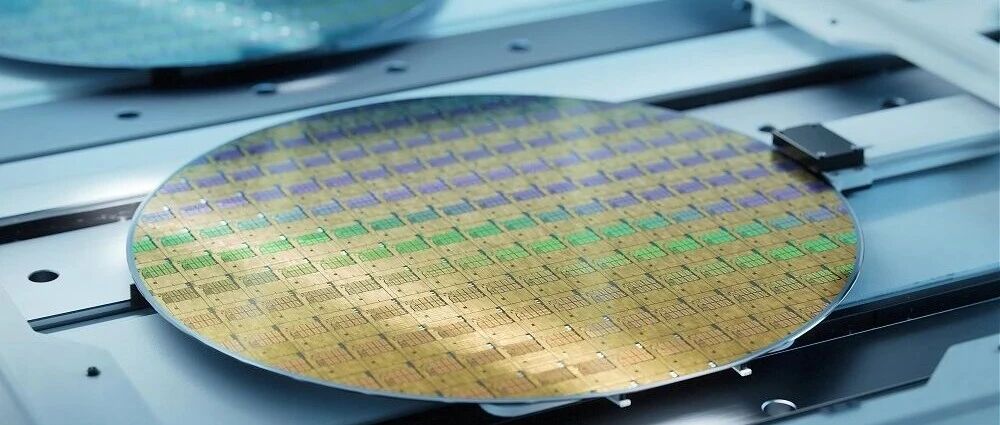
Core Viewpoint - TSMC's advanced 3nm process is experiencing high demand, leading to a temporary halt in new project kick-offs for this technology, as existing capacity is fully utilized and cannot meet the influx of orders [2] Group 1: TSMC's 3nm Process - TSMC has raised prices for its 3nm process and has stopped new project kick-offs due to full order books and limited capacity [2] - The company is strategically encouraging clients to shift their product planning towards the 2nm process, which offers better cost structures and efficiency [2] - The 3nm family of products is currently filled with orders from AI GPUs, cloud data center ASICs, and high-end mobile processors [2] Group 2: Transition to 2nm Process - The 2nm process is seen as a critical turning point for TSMC, introducing nanosheet transistor architecture that significantly improves performance, power consumption, and density [3] - The introduction of atomic layer deposition (ALD) in the 2nm process does not significantly increase the number of EUV exposure layers, making the overall manufacturing cost more competitive compared to the 3nm process [3] - The GAAFET process represents a significant upgrade in wafer manufacturing, requiring advanced techniques to overcome challenges in material layering and etching [3]
美股异动丨台积电盘前涨超1% 3nm制程供不应求
Ge Long Hui· 2026-01-08 09:21
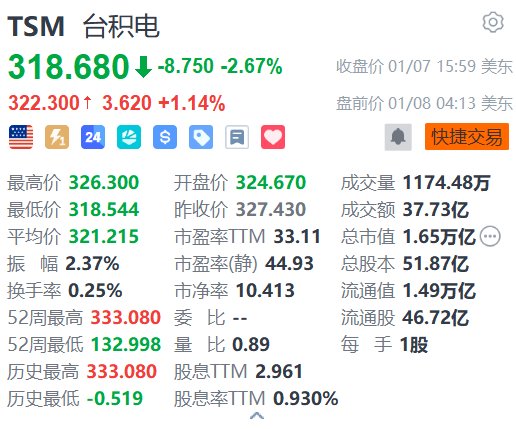
台积电(TSM.US)盘前涨1.14%,报322.3美元。消息面上,台积电先进制程维持高产能利用率,其中3nm 制程持续供不应求。芯片业内人士透露,台积电今年除调高3nm报价外,已暂时停止3nm新案启动。业 内人士分析,主因在于订单满载、现有产能已难以负荷,短期内扩产速度亦难以追上客户需求涌入。台 积电正鼓励仍处于产品规划初期的客户,直接评估导入2nm制程,以利后续量产与成本配置。 野村发研报指,鉴于供应严重受限,市场对亚洲AI半导体及服务器供应链公司今年的盈利预期将持续 上调。相信凭借相对审慎的产能扩建计划,台积电能充分利用英伟达和博通引领的强劲AI逻辑半导体 产业在今年实现潜在增长,并带来25%至30%的营收增长(以美元计)。(格隆汇) | TSM 台积电 | | | | --- | --- | --- | | 318.680 4 -8.750 -2.67% | | 收盘价 01/07 15:59 美东 | | 322.300 + 3.620 +1.14% | | 盘前价 01/08 04:13 美东 | | 二 24 24 5 8 9 日 0 | | ● 快捷交易 | | 最高价 326.300 | 开 ...
AI再定强增长路线!华尔街大幅上调台积电目标价:2026年营收有望增长30%
Hua Er Jie Jian Wen· 2026-01-08 06:53
Core Viewpoint - Major Wall Street investment banks are indicating that the supercycle for AI hardware has just begun, with TSMC positioned as an essential "toll booth" in this growth phase [1] Group 1: Target Price Adjustments - JPMorgan raised TSMC's target price to NT$2,100, while Nomura set a higher target of NT$2,135, reflecting strong demand and limited supply [1][6] - Both banks maintain a "overweight" or "buy" rating on TSMC, suggesting significant upside potential in the current stock price [6] Group 2: Revenue Growth Projections - JPMorgan forecasts a 30% increase in TSMC's dollar revenue by 2026, driven primarily by AI demand from data centers, with a continued growth rate of over 20% in 2027 [1][4] - Nomura emphasizes that TSMC's strong pricing power is a result of severe supply shortages, which will support revenue growth [1] Group 3: Advanced Process Technology - TSMC is expected to maintain over 95% market share in the AI accelerator market at the N2 node, with no signs of losing market share to competitors like Intel and Samsung [2] - The N2 process is projected to generate revenue of $8 billion in 2026 and surge to $36 billion by 2027, indicating rapid growth in this segment [4] Group 4: Capital Expenditure and Profit Margins - TSMC's capital expenditure is expected to approach $50 billion in 2026 and potentially exceed $55 billion in 2027 to meet rising demand [4][8] - Gross margins are anticipated to stabilize above 60%, with potential spikes to 62-63% in the first half of 2026 due to urgent orders [8] Group 5: AI Revenue Contribution - The compound annual growth rate (CAGR) for data center AI revenue has been revised upward to 57%, with expectations that AI-related revenue will account for over 40% of TSMC's total revenue by 2029 [4][8] - The transition of nearly all AI accelerators to the 3nm process by 2026 is expected to further enhance TSMC's revenue streams [4]