
TSMC(TSM)

Search documents
Option Volatility And Earnings Report For January 12 - 16
Yahoo Finance· 2026-01-12 12:00
Earnings Reports Overview - Earnings season is commencing with major banks and tech stocks reporting, including Bank of America, Taiwan Semiconductor, JP Morgan, Wells Fargo, Citigroup, Morgan Stanley, Goldman Sachs, and Delta Airlines [1] Implied Volatility Insights - Implied volatility tends to be high before earnings reports due to market uncertainty, leading to increased demand for options [2] - After earnings announcements, implied volatility typically decreases to normal levels [3] Expected Stock Movements - Expected price movements for stocks reporting this week include: - Delta Airlines (DAL) - 6.8% - JP Morgan (JPM) - 3.8% - Bank of America (BAC) - 4.0% - Citigroup (C) - 4.5% - Wells Fargo (WFC) - 4.9% - Goldman Sachs (GS) - 4.4% - Morgan Stanley (MS) - 4.3% - Taiwan Semiconductor (TSM) - 5.3% - PNC - 3.8% [4][5][6] Trading Strategies - Option traders can utilize expected moves to structure trades, with bearish traders selling bear call spreads and bullish traders selling bull put spreads or considering naked puts [7] - Neutral traders may opt for iron condors, ensuring short strikes remain outside the expected range [7] Risk Management - It is advisable to employ risk-defined strategies and maintain small position sizes when trading options over earnings, limiting potential losses to 1-3% of the portfolio [8] Stock Screening for High Implied Volatility - A stock screener can identify stocks with high implied volatility, focusing on those with total call volume greater than 5,000, market cap over 40 billion, and IV rank above 40% [9][10]


行业周报:美国政府放松H200对华出口,美光在纽约州兴建多座晶圆厂-20260112
Guoyuan Securities· 2026-01-12 11:20
Investment Rating - The report maintains a "Recommended" investment rating for the semiconductor and semiconductor production equipment industry [5] Core Insights - The U.S. government has relaxed export controls on NVIDIA H200 chips to China, which is expected to boost the AI chip market in China [3] - Micron plans to build up to four wafer fabs in New York, potentially receiving over $25 billion in federal subsidies, with the first fab expected to be operational by 2030 [3] - The global electric vehicle sales are projected to reach 20.985 million units in 2025, a year-on-year increase of approximately 22%, and are expected to rise to 24.166 million units in 2026, a 15% increase [2][23] - The domestic AI chip index increased by 7.8% this week, with several companies experiencing significant gains [10] Market Indices Summary - The overseas AI chip index fell by 1.5%, while the domestic A-share chip index rose by 7.8% [10] - The storage chip index increased by 12.1%, with notable gains from companies like Purun and Hengsuo [10][16] - The power semiconductor index rose by 5.7%, indicating positive market sentiment in this segment [10][16] - The server ODM index decreased by 3.0%, reflecting challenges in the server market [10][16] Industry Data Summary - Global smart watch shipments are expected to grow by 7% by the end of 2025, recovering from a decline in 2024 [2][25] - The shipment volume of foldable smartphone panels is projected to grow by 46% in 2026, driven by Apple's entry into the foldable smartphone market [2][28]


台积电,紧急扩产
半导体芯闻· 2026-01-12 10:23
Core Viewpoint - TSMC is focusing on advanced packaging as a key growth area, with plans to establish a "General Factory Manager" position to oversee all facilities, likely filled by Chen Cheng-hsien, who has extensive experience in the company [1][2]. Group 1: Advanced Packaging Business - TSMC's advanced packaging business, previously contributing about 6-7% of revenue, is expected to grow significantly due to surging AI demand, particularly for CoWoS technology, which has been in development since 2009 [1][3]. - The gross margin for TSMC's advanced packaging business has reached approximately 80%, contributing significantly to the company's overall profitability [1]. - TSMC is expanding its advanced packaging capabilities with new facilities in Taiwan and Arizona, including two new advanced packaging plants expected to be operational by the end of 2028 [3][4]. Group 2: Leadership Changes - Recent retirements of key executives, including Lin Jin-kun and Yu Zhen-hua, have led to increased attention on TSMC's succession planning and leadership transitions [2]. - Chen Cheng-hsien is anticipated to be promoted to the newly created "General Factory Manager" role, overseeing multiple advanced packaging facilities [2][3]. - TSMC is expected to announce further leadership changes by late January 2026, reflecting ongoing organizational adjustments [2]. Group 3: Technological Developments - TSMC is advancing its CoWoS technology, with new variants like CoWoS-S, CoWoS-R, and CoWoS-L being developed to meet high-performance computing (HPC) needs [4]. - The company plans to introduce a new CoWoS-L technology with a 5.5x larger mask size to address the high demand for this advanced packaging solution [4]. - TSMC is also shifting focus to CoPoS technology, integrating CoWoS with fan-out panel-level packaging (FOPLP), with plans to establish a CoPoS pilot line by 2026 [5].

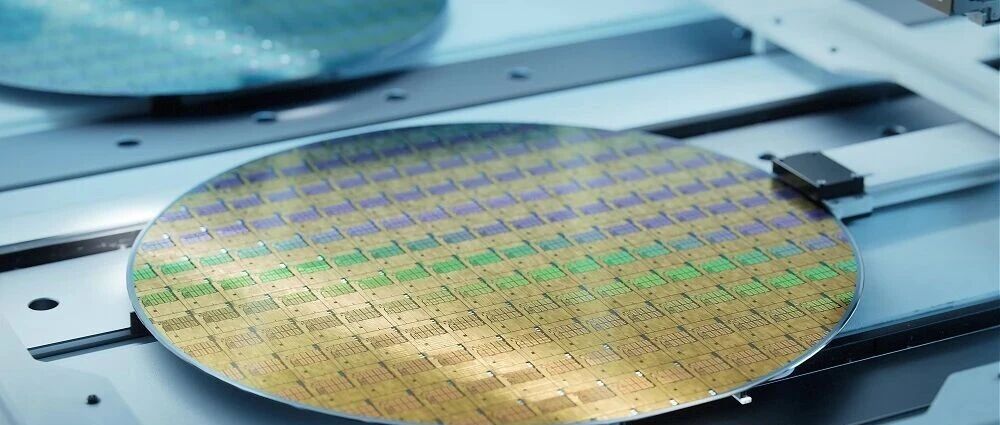
Taiwan Semiconductor Is Headed For A Record Quarter, And Wall Street Knows It
Benzinga· 2026-01-12 09:51
Core Viewpoint - Taiwan Semiconductor Manufacturing Co. is experiencing significant growth driven by surging demand for advanced chips, particularly in the artificial intelligence sector, with expectations for a strong earnings report in the upcoming quarter [1][2]. Group 1: Earnings Expectations - Analysts anticipate a 27% increase in fourth-quarter net profit, projecting it to reach 475.2 billion New Taiwanese dollars ($15.02 billion) for the period ending December 31 [2]. - The company has reported a 20.5% rise in fourth-quarter revenue, totaling 1.05 trillion New Taiwan dollars ($33.1 billion), surpassing market expectations [4]. - Any profit exceeding 452.3 billion New Taiwan dollars would set a record for the company's highest quarterly net income, marking the eighth consecutive quarter of profit growth [4]. Group 2: Revenue Drivers - Strong utilization of 3-nanometer capacity has significantly contributed to revenue growth, particularly due to demand from Apple Inc.'s iPhone 17 lineup utilizing the A19 chip [5]. - IDC has revised its revenue growth forecast for Taiwan Semiconductor to 25%-30% in 2026, up from a previous estimate of 22%-26%, driven by increasing demand for AI server accelerators and advancements in 2-nanometer technology [5]. Group 3: Market Outlook - The AI server accelerator market is projected to grow by 78% year over year in 2026, indicating robust future demand [6]. - Wall Street analysts have raised their price forecasts for Taiwan Semiconductor, highlighting its pivotal role in the AI hardware sector and its strong position in advanced chip capacity [7]. - Goldman Sachs has increased its forecast by 35% to 2,330 New Taiwan dollars, anticipating a 30% revenue growth in 2026, while JPMorgan expects operating margins to exceed 50%, reaching a three-year high [8].

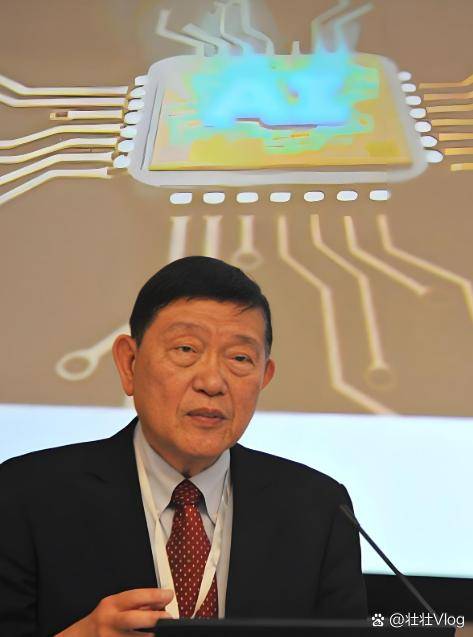
中芯国际创始人张汝京曾说,他在自己离开台积电时,台积电董事长告诉他,你敢去大陆,那在台积电的这么多股票就不能拿了!2025 年,满头华发的张汝京现身讲台,面对台下朝气蓬勃的年轻面庞,他身形瘦削却身姿挺拔,尽显风骨。外界给这位半导体老兵算过一笔账,怎么算,他这辈子都是在做“亏本买卖”...
Sou Hu Cai Jing· 2026-01-12 09:11
Core Viewpoint - The article highlights the life and contributions of Zhang Rujing, the founder of SMIC, emphasizing his sacrifices and relentless pursuit of advancing China's semiconductor industry despite facing numerous challenges and setbacks throughout his career [1][16]. Group 1: Early Career and Sacrifices - Zhang Rujing faced a difficult choice when leaving TSMC, where he had significant stock options, which he forfeited to pursue his dream of establishing a semiconductor company in mainland China [2][3]. - His decision was driven by personal motivations, including his father's wish to return to the homeland and his mother's desire to spend her later years in China, which he valued more than financial wealth [3]. Group 2: Challenges in Establishing SMIC - Upon arriving in Shanghai, Zhang encountered significant obstacles, including a lack of advanced equipment due to international embargoes, forcing him to source second-hand parts and assemble them into functional production lines [4][5]. - Despite the challenging environment, he and his team successfully established an 8-inch wafer production line within thirteen months, achieving technology nodes from 0.25 microns down to 90 nanometers [5]. Group 3: Legal and Competitive Struggles - As SMIC began to gain traction, it faced aggressive legal challenges from competitors, which were perceived as targeted attacks against China's semiconductor ambitions [6][8]. - In 2009, SMIC was forced to pay $200 million in damages and relinquish 10% of its shares, along with a non-compete clause that required Zhang to leave the company he founded [9]. Group 4: Resilience and Continued Contributions - After a three-year non-compete period, Zhang returned to the semiconductor industry, focusing on upstream materials, particularly domestic production of 300mm silicon wafers, which had been heavily reliant on imports [12]. - He successfully led a new venture, achieving breakthroughs in technology that addressed long-standing gaps in the domestic semiconductor supply chain [13]. Group 5: Ongoing Impact and Legacy - Zhang continued to innovate and support the semiconductor industry by founding multiple companies aimed at reducing costs for small design firms and addressing challenges in automotive chips [15]. - His philanthropic efforts included establishing numerous schools and promoting semiconductor education, reflecting his commitment to nurturing talent in the industry [15][16].

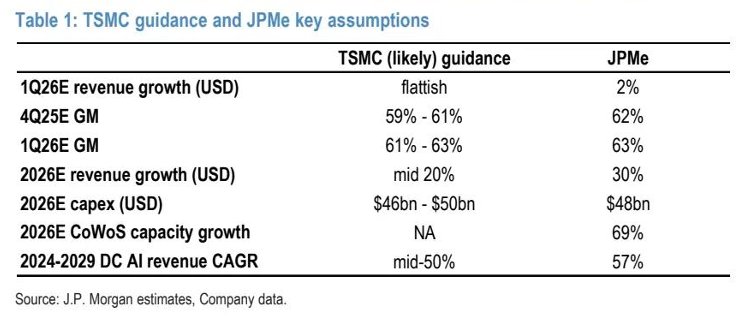
25%上行空间可期!台积电(TSM.US)绩前小摩唱多:2026年Q1及全年指引料强劲 基本面驱动估值重塑
智通财经网· 2026-01-12 09:03
Core Viewpoint - TSMC is expected to provide strong guidance for Q1 2026 and the full year during its Q4 2025 earnings announcement, with a target price of 2100 TWD reflecting a 25% upside from the recent closing price [1] Group 1: Financial Performance and Guidance - TSMC's revenue for Q4 2025 is projected to reach 1.046 trillion TWD, representing a year-on-year growth of 20% and a quarter-on-quarter increase of 6% [1] - For the full year 2025, TSMC's revenue is expected to be 335 billion TWD, showing a year-on-year growth of 20.4% and a quarter-on-quarter decline of 2.5% [1] - The gross margin for Q4 2025 is anticipated to exceed the company's guidance of 59%-61%, with Morgan Stanley predicting a gross margin of 62% [1] Group 2: Q1 2026 Expectations - For Q1 2026, TSMC is expected to provide guidance for revenue growth that is flat, while Morgan Stanley anticipates a 2% increase in USD terms [2] - The gross margin for Q1 2026 is projected to be between 61%-63%, with Morgan Stanley's expectation set at 63% [3] Group 3: Long-term Projections - For the full year 2026, TSMC is expected to provide guidance for revenue growth in the mid-20% range, while Morgan Stanley forecasts a 30% increase in USD terms [3] - Capital expenditures for 2026 are projected to be between $46 billion and $50 billion, with Morgan Stanley estimating $48 billion [2] - The compound annual growth rate (CAGR) for data center AI revenue from 2024 to 2029 is expected to be in the mid-50% range, with Morgan Stanley's estimate at 57% [2][3]
AI需求火爆带飞台积电(TSM.US)业绩!Q4净利润有望激增27%创新高
智通财经网· 2026-01-12 06:40
智通财经APP获悉,得益于对人工智能(AI)基础设施似乎永无止境的需求,全球最大AI芯片制造商台积 电(TSM.US)2025年第四季度净利润预计将激增27%、创下历史新高。根据LSEG SmartEstimate对19位 分析师的调查,台积电预计在截至2025年12月31日的三个月里将实现净利润4752亿新台币(约合150.2亿 美元)。只要公布的实际净利润数据高于4523亿新台币,都将标志着创下季度净利润的最高纪录,并实 现连续第八个季度的利润增长。 台积电在上周公布了好于市场预期的2025年第四季度营收数据——跃升约20%至1.05万亿新台币(约合 331亿美元),好于市场预期的1.02万亿新台币。市场研究公司IDC的高级研究经理Galen Zeng表示,台积 电2025年第四季度营收的增长得益于台积电3纳米制程产能的充分利用,这由使用苹果A19芯片的iPhone 17系列以及持续的强劲AI需求所推动。 此外,目前尚不清楚美国总统特朗普的关税政策将对台积电产生多大影响。中国台湾地区对美国的出口 商品面临20%的关税,但芯片除外。 自ChatGPT引发AI浪潮以来,台积电一直是最大受益者之一,这得益于其在 ...
三星晶圆厂,终于要翻身?
3 6 Ke· 2026-01-12 05:43
Core Insights - Samsung's foundry business is a crucial foundation for its overall operations, having started in 2005 with minimal revenue compared to TSMC, but achieved significant milestones by adopting advanced technologies [1][2] - Despite initial successes, Samsung faced setbacks due to aggressive strategies that led to quality issues and loss of trust among fabless clients, resulting in a decline in market share [2][3] - The company is now focusing on a strategic overhaul, emphasizing stability and yield improvement in its 2nm process technology, which is seen as a critical step for recovery [4][5] 2nm Process Development - Samsung is betting all resources on the 2nm process starting in 2024, shifting its strategy to prioritize stability and yield improvement over aggressive market positioning [4] - The new 2nm process utilizes an upgraded MBCFET architecture, which significantly enhances transistor performance and reduces power consumption compared to traditional FinFET technology [4][5] - Initial yield rates for the 2nm process were low but have improved significantly, reaching 50%-60% by 2025, which is essential for commercial viability [6] Capacity Expansion - Samsung plans to establish a 2nm production line in its Hwaseong S3 factory, aiming for a monthly output of 7,000 wafers by Q1 2025, with further expansions planned in the U.S. [7] - The company is developing multiple versions of the 2nm process to cater to different market needs, including high-performance computing and automotive electronics [7] Strategic Shift to Physical AI - Samsung is strategically pivoting towards the emerging physical AI market, where it sees greater opportunities compared to the highly competitive data center AI segment dominated by TSMC [8][9] - The company aims to leverage its flexible pricing and supply strategies to attract clients in the cost-sensitive physical AI sector, particularly in automotive applications [9][10] Client Ecosystem Diversification - Samsung is restructuring its client base to include a wider range of customers, from large tech giants to small fabless companies, to adapt to the changing AI semiconductor market [11][12] - The company has successfully secured automotive semiconductor orders, which not only boost revenue but also validate its capabilities in the physical AI domain [10][13] Competitive Differentiation - Samsung is focusing on differentiated strategies to compete with TSMC, particularly in mature process markets and advanced packaging technologies [15][16] - The company's vertical integration allows it to offer comprehensive solutions that reduce total cost of ownership (TCO) for clients, enhancing its competitive edge in emerging markets [17][18] Conclusion - Samsung's transformation story reflects its efforts to adapt to technological setbacks and market dynamics, with recent successes in automotive semiconductors and a diversified client ecosystem indicating progress [18]
人工智能需求推动台积电第四季度利润有望飙升 27%
Xin Lang Cai Jing· 2026-01-12 04:42
全球最大的先进人工智能芯片制造商台积电预计第四季度净利润将增长 27%,创下历史新高,原因是 对人工智能基础设施的需求似乎难以满足。根据LSEG SmartEstimate从19位分析师那里汇编的数据,全 球最大的合约芯片制造商、英伟达和苹果的主要供应商台湾积体电路制造股份有限公司在截至12月31日 的三个月里预计将实现净利润4,752亿(150.2亿美元)。台积电是亚洲最有价值的上市公司,市值约 1.38万亿美元,是韩国竞争对手三星电子的两倍多。该公司定于周四发布财报,并将在 GMT 上午 6: 00 举行的财报电话会议上提供第一季度和全年业绩指引。 责任编辑:王永生 全球最大的先进人工智能芯片制造商台积电预计第四季度净利润将增长 27%,创下历史新高,原因是 对人工智能基础设施的需求似乎难以满足。根据LSEG SmartEstimate从19位分析师那里汇编的数据,全 球最大的合约芯片制造商、英伟达和苹果的主要供应商台湾积体电路制造股份有限公司在截至12月31日 的三个月里预计将实现净利润4,752亿(150.2亿美元)。台积电是亚洲最有价值的上市公司,市值约 1.38万亿美元,是韩国竞争对手三星电子的两 ...
TSMC Q4 profit poised to soar 27% as AI demand drives growth
Reuters· 2026-01-12 04:42
Core Viewpoint - TSMC is projected to achieve a 27% increase in fourth-quarter net profit, reaching a record high, driven by strong demand for AI chips [1] Company Summary - TSMC is recognized as the world's largest manufacturer of advanced artificial intelligence chips [1] - The anticipated growth in net profit reflects the company's ability to capitalize on the growing market for AI technology [1]
