UBS(UBS)

Search documents
资本市场高水平制度型开放蹄疾步稳 中国资产吸引力不断增强
Zheng Quan Ri Bao· 2025-07-28 17:13
Core Viewpoint - The China Securities Regulatory Commission (CSRC) is advancing high-level institutional opening of the capital market, focusing on enhancing cross-border cooperation and attracting foreign investment [1][2][5] Group 1: Capital Market Opening - The CSRC is continuously improving policies for foreign investment, easing access for qualified foreign institutional investors (QFII), and expanding their investment scope [2][5] - The A-share market has successfully been included in major international indices such as MSCI and FTSE Russell, indicating a growing integration with global markets [2][3] Group 2: Foreign Investment Confidence - Foreign institutions, including Morgan Stanley and UBS, have expressed increased confidence in China's economic growth and stock market potential, particularly in the technology sector [4] - The overall foreign ownership in the Chinese capital market is steadily increasing, supported by favorable policies and the market's resilience [3][4] Group 3: Future Policy Directions - The CSRC plans to introduce more policies to enhance capital market openness, including optimizing the QFII system and expanding the range of products available for foreign investors [5][6] - Future recommendations include broadening cross-border investment channels, enhancing the derivatives market, and improving regulatory cooperation to create a more robust open ecosystem [6]


Will UBS (UBS) Beat Estimates Again in Its Next Earnings Report?
ZACKS· 2025-07-28 17:10
Core Insights - UBS has consistently surpassed earnings estimates, averaging a 75.71% beat over the last two quarters [1][5] - The most recent earnings report showed UBS earning $0.42 per share against an expectation of $0.51, resulting in a 21.43% surprise [2] - In the previous quarter, UBS reported $0.23 per share compared to an estimate of $0.1, achieving a 130.00% surprise [2] Earnings Estimates and Predictions - There has been a favorable change in earnings estimates for UBS, with a positive Earnings ESP of +30.81%, indicating bullish sentiment among analysts [5][8] - The combination of a positive Earnings ESP and a Zacks Rank of 3 (Hold) suggests a high probability of another earnings beat [5][8] - Research indicates that stocks with a positive Earnings ESP and a Zacks Rank of 3 or better have a nearly 70% chance of producing a positive surprise [6] Earnings ESP Explanation - The Zacks Earnings ESP compares the Most Accurate Estimate to the Zacks Consensus Estimate, with the Most Accurate Estimate reflecting the latest analyst revisions [7] - A negative Earnings ESP reduces predictive power but does not necessarily indicate an earnings miss [9] - It is crucial to check a company's Earnings ESP before quarterly releases to enhance the likelihood of successful investment decisions [10]


证券投资基金专题报告:美国多资产ETF发展历程及对国内市场的启示
Shanghai Securities· 2025-07-28 11:53
Report Summary 1. Report Industry Investment Rating No industry investment rating is provided in the report. 2. Core Viewpoints - The industry and market are increasingly focusing on multi - asset ETFs as an innovative product offering one - stop asset allocation solutions. The report explores the development of US multi - asset ETFs to provide insights for domestic market innovation [2][11]. - US multi - asset ETFs have shown significant growth in recent years, with distinct characteristics such as strong head - effects in scale, rapid development of actively managed products, and extensive application of FOF - type products [2][20][31]. - The development of US multi - asset ETFs offers important lessons for the domestic market, including deepening multi - asset index development, diversifying allocation strategies, and broadening underlying asset investment tools [5]. 3. Summary by Directory 3.1 Two Action Plans Mentioned, Multi - asset ETFs Are Approaching - The "Public Offering Plan" emphasizes increasing the creation of asset - allocation products to meet the needs of investors with different risk preferences and promote the coordinated development of equity and fixed - income investments [8]. - The "Index Plan" proposes researching and launching innovative index products such as multi - asset ETFs and expanding the underlying asset categories of ETFs. Recent releases of multi - asset indices indicate growing market attention [10][11]. 3.2 Analysis of the Development History and Current Situation of US Multi - asset ETFs - In 2005, BlackRock issued the world's first multi - asset ETF in Canada. In 2006, Invesco launched the first US multi - asset ETF. After the 2008 financial crisis, multi - asset ETFs evolved rapidly [13][14]. - As of March 31, 2025, there are 181 multi - asset ETFs in the US market, with a total scale of $36 billion, ranking first globally. However, their scale accounts for only 0.35% of all US ETFs, indicating significant growth potential [18]. - The top three fund managers in terms of management scale are BlackRock, Pacer Advisors, and First Trust Portfolios, with a combined scale ratio of 45.35%. The top ten multi - asset ETFs in terms of fund scale account for 51.26% of the total scale [22][25]. - Actively managed multi - asset ETFs have developed rapidly. As of March 31, 2025, 146 out of 181 multi - asset ETFs are actively managed, accounting for 80.66%. Their issuance has increased explosively since 2021 [31]. - FOF - type products are widely used in US multi - asset ETFs. As of March 31, 2025, 73 out of 181 multi - asset ETFs are marked as FOF - type, accounting for nearly 40%, with a fund scale of $13.041 billion, about 36% of the total [34]. - The expense ratios of US multi - asset ETFs vary significantly. The average expense ratio of all 181 multi - asset ETFs is 0.80%, with actively managed and passively managed products having average expense ratios of 0.83% and 0.69% respectively. The expense ratio has generally remained low since 2016 [5][40]. 3.3 Exploration of the Strategy Classification of US Multi - asset ETFs - **Core Allocation Type**: This is the most common strategy type, further divided into target - risk, macro - strategy, and subjective - allocation subtypes. Target - risk type aims to meet pre - designed risk metrics, with 28 products and a scale of $8.176 billion. Macro - strategy type adjusts asset allocation based on macro - economic analysis, with 12 products and a scale of $0.937 billion. Subjective - allocation type gives investment managers high freedom, with 57 products and a scale of $10.402 billion [44][47][51]. - **Trend - Following Type**: These ETFs use momentum factors or trend - following models for asset allocation. As of March 31, 2025, there are 26 products with a scale of $7.193 billion, accounting for about 20% of the total [54][55]. - **Target - Dividend Type**: These ETFs focus on interest (dividend) income, with 22 products and a scale of $6.384 billion. The average historical dividend rate of 17 products issued before 2024 is 7.20%, much higher than other types [58][63]. - **Option - Strategy Type**: These ETFs add option - based derivatives to underlying assets to change the risk - return characteristics. As of March 31, 2025, there are 36 products with a scale of $2.907 billion, accounting for 8.08% of the total [63][64]. 3.4 Suggestions and Insights - **Investor Suggestions**: Different types of investors can choose corresponding multi - asset ETFs. For example, risk - sensitive investors can choose target - risk type; policy - sensitive investors can choose macro - strategy type; investors seeking stable cash flow can choose target - dividend type; those preferring quantitative strategies can choose trend - following type; and investors interested in alternative strategies can choose option - strategy type [68][69][70]. - **Insights for the Domestic Market**: The domestic market should prioritize using existing multi - asset indices as tracking targets, deepen the development of multi - asset indices, focus on stable strategies and diversify allocation strategies, and broaden underlying asset investment tools to promote the development of multi - asset ETFs [72][73][75].




美股越涨越危险?“平静风暴”悄然酝酿,奇异期权成投资者新宠
智通财经网· 2025-07-28 02:05
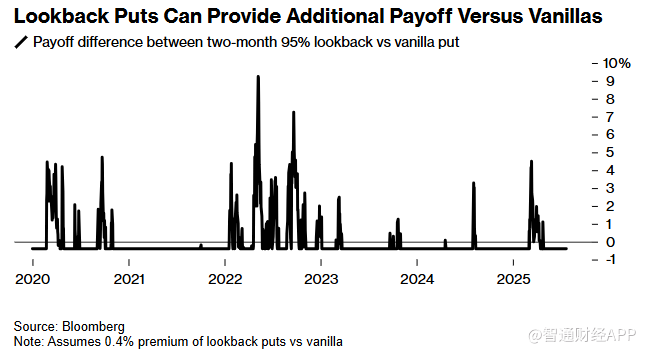
Core Insights - A "calm storm" is brewing on Wall Street as the S&P 500 index reaches new highs, with volatility indicators at multi-year lows, prompting savvy investors to consider exotic options for protection against potential market pullbacks [1][2] Group 1: Market Conditions - The S&P 500 index has steadily risen, pushing most implied and actual volatility indicators to new lows over several months [1] - Geopolitical tensions and uncertainties regarding tariffs on corporate earnings remain, contributing to a surprising decline in volatility following tariff impacts in April [1] - The resurgence of meme stocks indicates extreme investor enthusiasm, leading strategists to discuss measures to hedge against potential market corrections [1][2] Group 2: Hedging Strategies - Strategists are recommending over-the-counter alternatives, such as "backward-looking" or "resettable" put options, which dynamically adjust strike prices as the market rises [2] - JPMorgan's team noted that the premiums for these options are currently at historical lows compared to standard put options [2] - Interest in backward-looking put options is significant, as their pricing is low relative to historical standards, and their value depends on implied volatility, which is currently low [2][6] Group 3: Timing and Market Sentiment - The optimal time to buy backward-looking put options is after a market rebound followed by a decline, potentially yielding substantial additional returns compared to standard puts [6] - Interest in these hedging strategies has been reignited following recent market rebounds and volatility resets [6] - Upcoming market tests include Federal Reserve interest rate decisions, U.S. employment and GDP data, and the final deadline for tariffs, which may influence institutional investors to seek protective trades [7] Group 4: Investor Behavior - Interest in backward-looking put options is primarily from institutions outside of hedge funds, such as long-only asset management firms and private banks [7] - Hedge funds, particularly those engaged in volatility arbitrage, tend to prefer lower-cost downside strategies rather than the more expensive backward-looking options [7] - The significant decline in volatility within tech stocks has made them attractive to investors, with the Nasdaq 100's 10-day actual volatility reaching its lowest level since 2021 [7]


安联基金首任董事长正式官宣离职
news flash· 2025-07-27 13:19
安联基金首任董事长正式官宣离职 智通财经7月27日电,安联基金最新公告,因个人原因,公司首任董事长吴家耀因个人原因离职,不再 转任公司其他岗位,总经理沈良暂时代任董事长。吴家耀的下一站也是外资机构。瑞银今年6月公开宣 布,吴家耀将担任瑞银资产管理亚太区主管,任命自今年10月1日起生效。吴家耀将常驻香港,同时成 为资产管理全球管理团队及瑞银亚太区管理团队的成员。安联基金去年4月获批展业,截至今年二季度 末,旗下2只产品在管总规模为6.85亿元。(智通财经记者 封其娟) ...
美股亮起三大红灯
华尔街见闻· 2025-07-26 10:43
Core Viewpoint - Major investment banks on Wall Street are raising alarms about increasing speculative behavior and rising leverage levels in the U.S. stock market, indicating that bubble risks are accumulating [1]. Group 1: Speculative Activity - Goldman Sachs warns that high-risk activities in the U.S. stock market have surged, with indicators of market speculation reaching historical highs, second only to the 2000 internet bubble and the 2021 retail trading frenzy [2]. - Goldman Sachs' speculation trading indicators show that current levels are at historical peaks, except for the periods of 1998-2001 and 2020-2021 [6]. - The basket of stocks with the highest short interest has seen price increases exceeding 60%, indicating potential for further gains but also increasing the risk of a downturn [7]. Group 2: Leverage Levels - Deutsche Bank highlights that margin debt levels have reached a "dangerous" threshold, with total margin debt exceeding $1 trillion for the first time in history as of June [3][8]. - Margin debt surged by 18.5% over two months, marking the fastest pace of leverage increase since late 1999 or mid-2007, which poses potential threats to credit markets [8]. - Deutsche Bank strategists suggest that unless unexpected tariff reductions or a more dovish stance from the Federal Reserve occur, the current market exuberance may not be sustainable [9]. Group 3: Monetary Policy and Regulation - Bank of America emphasizes that loose monetary policies and relaxed financial regulations are contributing to rising bubble risks, with global policy rates expected to decline further from 4.4% to 3.9% over the next 12 months [10]. - The consideration of regulatory reforms aimed at increasing retail investor participation is noted, with the expectation that more retail investors will lead to greater liquidity, volatility, and bubble risks [11]. - Despite the stock market reaching new highs driven by economic resilience and optimistic corporate earnings, the S&P 500 index has underperformed compared to international peers this year [12].



外资金融机构连续上调中国经济增速预期:制造业展现强劲发展势头,“韧性”成核心关键词
Yang Shi Wang· 2025-07-26 03:48
Economic Growth Predictions - Several foreign financial institutions have raised their forecasts for China's economic growth following the release of Q2 economic data, with many making consecutive adjustments within six months [1] - Morgan Stanley increased its 2025 growth forecast by 0.3 percentage points, while other institutions like DBS, Nomura, and Goldman Sachs raised their forecasts by 0.3, 0.5, and 0.6 percentage points respectively [1] Industrial Performance - The strong performance of the industrial sector, including electricity, construction, and manufacturing, has been a key driver of economic activity, maintaining growth for 15 consecutive months [3] - Policies such as the appliance replacement program and consumer subsidies have effectively boosted retail sectors, particularly in home appliances, smartphones, and automobiles [3] International Trade - Demand for Chinese exports from economies outside the U.S. remains robust, contributing to a trade surplus in the first half of the year [5] - High net inflows of trade funds and strong export data have been noted by foreign financial institutions [3] Manufacturing Sector - China's manufacturing sector is highlighted as a key strength, supported by a complete industrial system that provides solid backing for the domestic market and serves global markets [10] - The acceleration of high-end, intelligent, and green development in manufacturing is a focal point for foreign research reports [10] Technological Advancements - China is significantly enhancing the added value of its manufacturing, focusing on high-tech and green products such as semiconductors, artificial intelligence, electric vehicles, lithium batteries, and robotics [10] - The country is making substantial progress in global technological advancement and introducing high-quality new products to the global market [10] Economic Resilience - Foreign financial institutions describe China's economy with the term "resilience," attributing this to continuous policy support, improving macroeconomic conditions, and various micro-level highlights [12] - The economy is characterized as "flexible," capable of adapting to various domestic and international economic situations while maintaining stable growth [15][16]

X @Bloomberg
Bloomberg· 2025-07-24 20:30
One billionaire has waged a five-year campaign to force Credit Suisse and later UBS to examine the mishandling of Holocaust victims’ money — and that quest is nearing completion.Read The Big Take ⬇️ https://t.co/8vjmUWxT5p ...
金十图示:2025年07月24日(周四)美股热门股票行情一览(美股盘中)


news flash· 2025-07-24 16:39
Market Overview - The market capitalization of major US stocks shows varied performance, with Oracle at 762.30 billion, Mastercard at 321.36 billion, and Visa at 770.15 billion, reflecting increases of +0.66%, +0.86%, and +0.68% respectively [3] - Exxon Mobil's market cap is 679.53 billion, with a slight decrease of -0.98%, while Johnson & Johnson and Netflix show minor changes of -0.08% and -0.05% respectively [3] - Companies like Wells Fargo and Cisco have market caps of 270.15 billion and 279.59 billion, with respective increases of +0.98% and -0.58% [3] Notable Stock Movements - T-Mobile US Inc experienced a significant increase of +6.20%, reaching a market cap of 272.19 billion [3] - General Electric and Coca-Cola saw market caps of 285.05 billion and 298.76 billion, with increases of +0.37% and +0.91% respectively [3] - Companies like Disney and Goldman Sachs have market caps of 229.06 billion and 221.80 billion, with slight changes of +0.01% and -0.60% [3] Sector Performance - The technology sector shows mixed results, with Intel at 991.05 billion, down -3.28%, while AMD increased by +2.46% to 254.92 billion [5] - The consumer goods sector is represented by companies like Procter & Gamble and Coca-Cola, with market caps of 371.68 billion and 298.76 billion, showing slight increases [3][4] - The energy sector, represented by Exxon Mobil and Chevron, shows varied performance, with Exxon down -0.98% and Chevron up +0.66% [3] Summary of Key Companies - Oracle's market cap stands at 762.30 billion, reflecting a positive trend [3] - Mastercard and Visa show strong performance with market caps of 321.36 billion and 770.15 billion, both increasing [3] - Companies like Pfizer and Comcast have market caps of 1579.81 billion and 1332.00 billion, with Pfizer showing minimal change and Comcast down -3.16% [4][5]

全球银行股的“上涨逻辑”:民粹主义、财政宽松、本币升值
Hua Er Jie Jian Wen· 2025-07-24 07:05
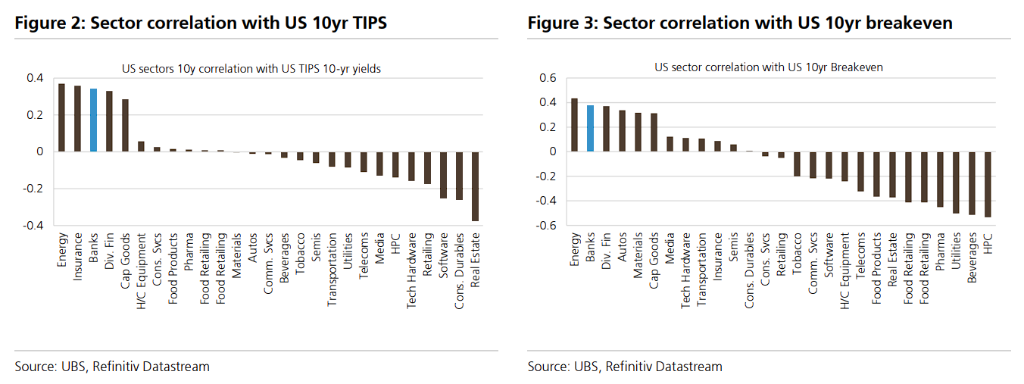
Core Viewpoint - UBS highlights multiple favorable factors driving global bank stocks, including populism, fiscal easing, currency appreciation, structural improvements, and attractive valuations [1][2]. Macro Factors - The rise of populism is leading to concerns over fiscal easing, which is pushing up bond yields, benefiting bank stocks as they are highly localized and gain from currency appreciation in regions like Europe and Japan [1][3]. - UBS maintains a bearish outlook on the US dollar, predicting a 1% rate cut by the end of the year, which will strengthen the euro and yen, directly enhancing the asset value and profitability of local banks [7][11]. Structural Improvements and Valuation - The banking sector has significantly improved its risk resilience post-financial crisis, with reduced litigation risks and manageable fintech disruption [2][26]. - Current bank stock valuations are attractive, reflecting excessive market concerns about an economic slowdown, with forward P/E ratios in Europe and the US showing about a 10% discount to historical norms [16][20]. Credit Growth and Economic Recovery - A turning point in private sector credit growth is evident, particularly in Europe, where demand for corporate loans is increasing, signaling a new upward cycle for banks' core lending business [11][15]. Indicators Supporting Bank Stock Allocation - UBS identifies several indicators supporting bank stock allocation, including moderate crowding and strong earnings revisions, with bank stocks ranking favorably in terms of earnings adjustments [36][41]. - The macro model indicates potential upside for bank stocks, particularly in Europe and Japan, where interest rates are nearing the end of a tightening cycle and will benefit from currency appreciation [41].