Venture(VEMLY)

Search documents
1月20日创业板高换手率股票(附名单)
Zheng Quan Shi Bao Wang· 2026-01-20 09:41
Market Performance - The ChiNext Index fell by 1.79%, closing at 3277.98 points, with a total trading volume of 709.27 billion yuan, a decrease of 5.791 billion yuan from the previous trading day [1] - Among the tradable ChiNext stocks, 377 stocks closed higher, with 14 stocks rising over 10%, while 991 stocks closed lower, including 7 stocks that fell over 10% [1] Turnover Rate - The average turnover rate for ChiNext stocks today was 5.01%, with 40 stocks having a turnover rate exceeding 20% [1] - The highest turnover rate was recorded by Blue Arrow Electronics at 46.83%, followed by Double杰 Electric at 46.79% [1] Sector Analysis - In terms of sector performance, the electronics industry had the most stocks with a turnover rate exceeding 20%, followed by power equipment and basic chemicals [2] Institutional Activity - Six high-turnover ChiNext stocks appeared on the Dragon and Tiger List, with institutional participation noted in several stocks, including Yunhan Chip City and Double杰 Electric [3] - Yunhan Chip City saw a net institutional buy of 26.86 million yuan, while Double杰 Electric experienced a net institutional sell of 10.56 million yuan [3] Capital Flow - Among high-turnover stocks, 19 stocks experienced net inflows of main funds, with the highest inflows seen in Sifangda, Doctor Glasses, and Tianlong Group [4] - Conversely, Tianyin Machinery, Shennong Agriculture, and Double杰 Electric had significant net outflows [4] Earnings Forecast - Six high-turnover stocks released earnings forecasts for 2025, with five stocks expecting profit increases and one stock expecting a profit [4] - The stock with the highest expected net profit growth is Chuanjin Nuo, with a projected net profit of 455 million yuan, representing a year-on-year increase of 158.44% [4]


A股重磅!宽基ETF连续出现净赎回,有“巨无霸”份额回落至“924”行情之前,多只科创、创业板系ETF份额缩水,发生了啥?
Jin Rong Jie· 2026-01-20 08:57
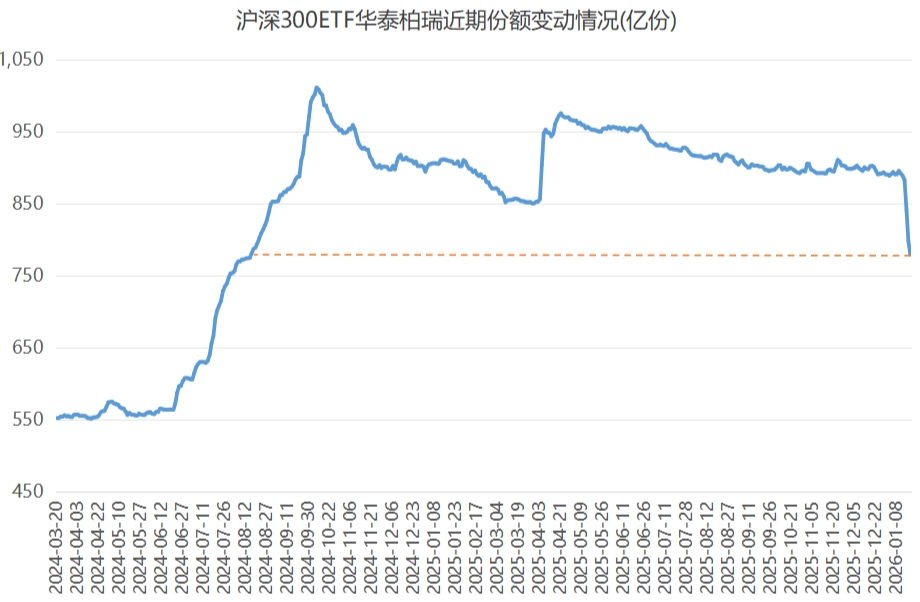
Group 1 - Recent net redemptions in A-share broad-based ETFs have drawn market attention, with significant outflows recorded on January 15 and 16, totaling 687 billion and 863 billion respectively, marking the highest single-day outflows in history [1] - As of January 19, four out of six major broad-based ETFs saw their shares decline by over 10% in the last three trading days, with the largest, Huatai-PB CSI 300 ETF, dropping to 778.63 billion shares, a scale of approximately 369.2 billion, the lowest since August 2024 [1] - The ChiNext and STAR Market ETFs also experienced significant declines, with the E Fund STAR 50 ETF and E Fund ChiNext ETF seeing share reductions of 34.55% and 20.22% respectively [3] Group 2 - In contrast to the outflows from broad-based ETFs, certain commodity, cross-border, and narrow-based ETFs attracted significant inflows, with the Southern Nonferrous ETF being the only product to receive over 10 billion in net inflows, totaling 100.87 billion, driven by rising base metal prices [3] - Other ETFs such as Yongying Satellite ETF, Harvest Software ETF, and GF Media ETF also received net inflows exceeding 6 billion [3] - According to CITIC Securities, the impact of ETF redemptions on individual stocks was significant, with main board, ChiNext, and STAR Market stocks experiencing sell-offs of 946 billion, 334 billion, and 265 billion respectively during the peak outflow days [3] Group 3 - Regulatory measures have been implemented to cool down the market following rapid price increases and overheated sentiment, including raising the minimum margin requirement for margin trading from 80% to 100% [5][6] - The China Securities Regulatory Commission emphasized the need for comprehensive market monitoring and timely counter-cyclical adjustments to maintain market stability and prevent excessive volatility [6] - There are differing views on the long-term outlook for A-shares, with some analysts suggesting the potential for a slow bull market due to reforms, while others remain skeptical about escaping historical volatility patterns [7]




创业板50指数ETF今日合计成交额28.56亿元,环比增加42.44%
Zheng Quan Shi Bao Wang· 2026-01-20 08:54
Core Viewpoint - The trading volume of the ChiNext 50 Index ETF reached 2.856 billion yuan today, marking an increase of 851 million yuan from the previous trading day, with a growth rate of 42.44% [1] Trading Volume Summary - The Huazhang ChiNext 50 ETF (159949) had a trading volume of 2.223 billion yuan today, an increase of 661 million yuan from the previous day, with a growth rate of 42.28% [1] - The Chuang 50 ETF (159681) recorded a trading volume of 247 million yuan, up by 149 million yuan from the previous day, with a significant growth rate of 151.94% [1] - The Invesco Great Wall ChiNext 50 ETF (159682) had a trading volume of 293 million yuan, increasing by 31.1 million yuan from the previous day, with a growth rate of 11.86% [1] Market Performance Summary - As of market close, the ChiNext 50 Index (399673) fell by 2.00%, while the average decline of related ETFs tracking the ChiNext 50 Index was 1.97% [1] - The ETFs with the largest declines today included the Huatai-PB ChiNext 50 ETF (159383) and the Wanji ChiNext 50 ETF (159372), which fell by 2.09% and 2.07% respectively [1] Detailed Trading Data - The trading data for various ChiNext 50 ETFs shows significant increases in trading volume for several funds, with the Chuang 50 ETF (159681) and the Chuang 50 ETF ICBC (159370) leading with increases of 151.94% and 145.14% respectively [1]
1月20日主题复盘 | 创业板大幅调整,化工股、黄金逆势走强,房地产也迎资金关注
Sou Hu Cai Jing· 2026-01-20 08:41
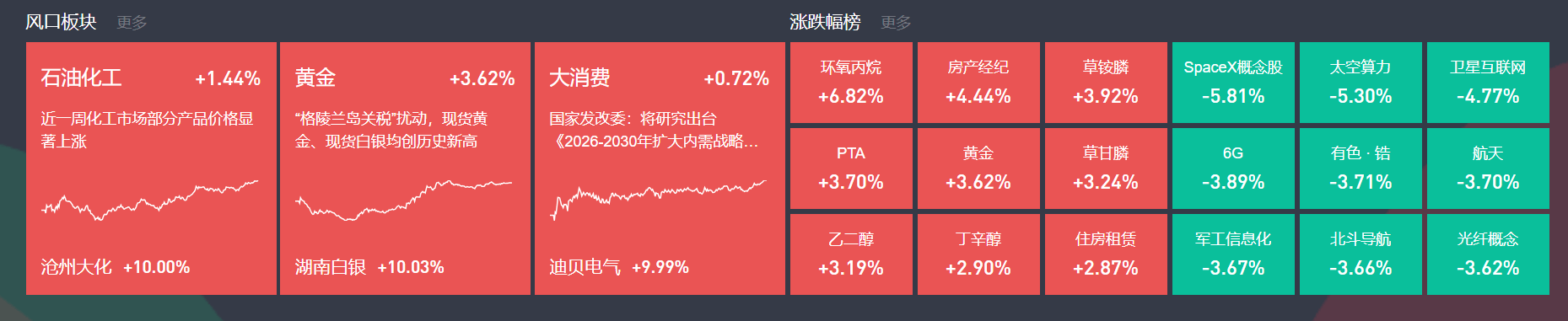
Market Overview - The market opened high but closed lower, with the ChiNext index dropping nearly 2%. Chemical stocks surged, with companies like Cangzhou Dahua and Xinxiang Chemical Fiber hitting the daily limit. Precious metals and consumer stocks also performed well, while real estate stocks rebounded. In contrast, the commercial aerospace sector faced adjustments, and computing hardware stocks fell sharply, with over 3,100 stocks declining across the Shanghai and Shenzhen markets, totaling a transaction volume of 2.8 trillion yuan [1]. Chemical Industry - The chemical sector experienced significant gains, with Cangzhou Dahua and Xinxiang Chemical Fiber achieving consecutive daily limits. Recent reports indicated that from January 12 to 18, the prices of certain chemical products, such as epoxy propylene, increased by 7.9% week-on-week, and prices for organic silicon intermediates also rose [4][5]. - The domestic epoxy propylene market continued its upward trend, supported by tight supply and low overall inventory levels. The price of propylene rose by 4.88% compared to the previous week, indicating strong cost support. The demand side was driven by the "last train" effect of the cancellation of export tax rebates for polyether, leading to active market trading [5][6]. Real Estate Sector - The real estate sector saw a significant rise, with companies like Hefei Urban Construction and Cheng Investment Holdings hitting the daily limit. Analysts noted that the changes in the second-hand housing inventory post-Spring Festival would be a key focus for the market, influencing supply-demand dynamics and financial institutions' concerns regarding collateral depreciation [7][8]. Gold Market - The gold sector remained active, with companies such as Hunan Silver and Zhaojin Mining reaching the daily limit. On January 20, spot gold prices broke the $4,700 per ounce mark, setting a new historical high. Since the beginning of the year, spot gold has consistently risen, surpassing multiple price thresholds [9][10]. - Analysts expect that the upcoming U.S. Federal Reserve meeting will influence gold prices, with a high likelihood of further interest rate cuts, which could provide upward momentum for gold [10][12]. Other Notable Sectors - The consumer sector, domestic chips, and smart grid industries showed localized activity, while AI applications and aerospace sectors faced the most significant declines [12].
财政部:中国企业的技术进步和竞争优势靠的不是财政补贴,而是中国企业持续的研发投入和企业家艰苦创业
Sou Hu Cai Jing· 2026-01-20 08:30
Core Viewpoint - The scale of fiscal subsidies in China is significantly lower than estimates from some international organizations, emphasizing that the competitive advantages of Chinese enterprises stem from continuous R&D investment and the hard work of countless entrepreneurs [1] Group 1: Fiscal Policy and Subsidies - The Chinese Ministry of Finance is taking a serious view of potential violations related to fiscal subsidies and has formed a cross-departmental task force to address these issues [1] - The Ministry plans to enhance the task force's operational mechanisms, improve information sharing, and strengthen regulatory systems to ensure proper management of fiscal subsidies [1] - There will be a focus on local accountability and supervision, with a commitment to identify and rectify any violations as they arise [1]
收评:创业板指跌1.79% 贵金属板块逆市大涨
Xin Hua Cai Jing· 2026-01-20 08:05
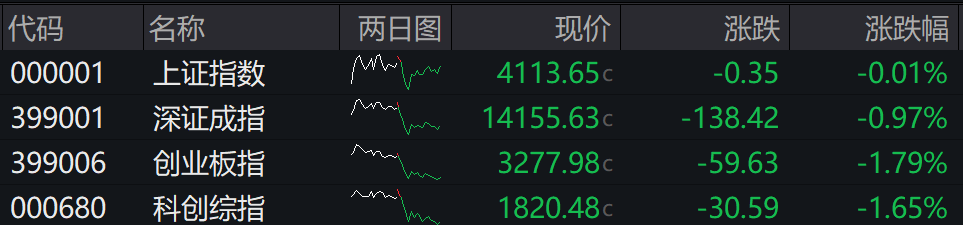
Market Overview - The A-share market saw all three major indices close lower, with the ChiNext index leading the decline, dropping nearly 2% [1] - The Shanghai Composite Index closed at 4113.65 points, down 0.01%, with a trading volume of 12.215 billion yuan; the Shenzhen Component Index closed at 14155.63 points, down 0.97%, with a trading volume of 15.563 billion yuan; the ChiNext Index closed at 3277.98 points, down 1.79%, with a trading volume of 7.093 billion yuan [1] Sector Performance - In terms of sector performance, there were more declines than gains, with the precious metals, chemical raw materials, cement building materials, and chemical fiber industries showing the largest gains, while sectors such as communication equipment, photovoltaic equipment, aerospace, power equipment, batteries, computer equipment, and electronic components experienced the largest declines [1] Hot Stocks - The chemical sector saw a surge, with over ten constituent stocks hitting the daily limit, including Hongbaoli, Shandong Heda, Weiyuan Co., and Hongqiang Co. [2] - The precious metals concept continued its strong performance, with Hunan Silver hitting the daily limit [2] - The real estate sector was active, with Dayue City and Urban Investment Holdings also hitting the daily limit [2] - In the AI application sector, stocks like Jiayun Technology, Yue Media, and Zhejiang Wenhe Internet also reached the daily limit [2] - Overall, more than 2100 stocks in the market rose, with over 60 stocks hitting the daily limit [2] Institutional Insights - According to Jifeng Investment Advisors, the market's short-term fluctuations are primarily due to capital switching, but the core logic for a positive market outlook remains unchanged, supported by resilient economic fundamentals and policy easing from the central bank [3] - CITIC Securities highlighted that the AI application sector has become a main line for 2026, with a year-to-date increase of 19%, leading the A-share market [4] - The semiconductor, consumer electronics, AI, robotics, and commercial aerospace sectors are recommended for mid-to-long-term investment opportunities [3] Policy Updates - Four departments announced a policy to provide a 1.5% interest subsidy on fixed asset loans for equipment updates, with a support period not exceeding two years, expanding the scope to include various sectors such as industrial, energy, transportation, and AI [5] - The Ministry of Finance and three other departments extended the personal consumption loan interest subsidy policy until the end of 2026, adjusting the terms to include credit card installment payments and removing previous limits on subsidy amounts [6]
AI玩具崛起,投融界解码“情感科技”创业新范式
Sou Hu Cai Jing· 2026-01-20 07:34
Core Insights - The article highlights the rising trend of AI toys, which are becoming emotional companions for users, reflecting a growing demand for low-burden companionship in modern fragmented lifestyles [1][4]. Group 1: Emotional Connection and Technological Integration - AI toys have evolved from being merely observed to being perceived, with capabilities such as emotional recognition and interactive memory, allowing them to "understand" users better [1][2]. - The transition from functional response to emotional resonance is driven by the democratization of AI technology, enabling toys to provide continuous emotional support and integrate seamlessly into daily life [2][4]. Group 2: Market Growth and Ecosystem Development - The AI toy market in China is projected to grow from approximately 24.6 billion yuan in 2024 to 29 billion yuan in 2025, with the global market expected to reach 58 billion USD by 2030 [4]. - The ecosystem of AI toys includes agile startups, tech giants leveraging their advantages, and traditional toy companies exploring AI transformation, indicating a diverse competitive landscape [4][5]. Group 3: Challenges and Future Directions - Key challenges for AI toys include achieving natural and long-term emotional companionship, balancing personification with privacy concerns, and creating sustainable product differentiation [4][5]. - The future of AI toys is anticipated to focus on deeper emotional connections, moving from novelty to becoming integral companions in daily life, with a shift in consumer spending from functionality to emotional resonance [5][6].

A股收评:创业板指跌1.79% 化工、贵金属板块逆势爆发
2 1 Shi Ji Jing Ji Bao Dao· 2026-01-20 07:23
Market Overview - The three major indices collectively declined, with the ChiNext Index dropping by 1.79% and briefly falling over 2% during the trading session [1][2] - The Shanghai Composite Index fell by 0.01%, and the Shenzhen Component Index decreased by 0.97% [1][2] - The total trading volume in the Shanghai and Shenzhen markets reached 2.78 trillion yuan, an increase of 694 billion yuan compared to the previous trading day [1][2] - Over 3,100 stocks in the market experienced declines [1][2] Sector Performance - The chemical sector showed strong performance, with over ten constituent stocks hitting the daily limit, including Hongbaoli, Shandong Heda, Weiyuan Co., and Hongqiang Co. [1][2] - Precious metals continued to perform well, with Zhaojin Gold achieving two consecutive limit-ups and Hunan Silver also hitting the limit [1][2] - The real estate sector was active, with Dayue City and Urban Investment Holdings reaching the daily limit [1][2] - AI application stocks saw localized gains, with Jiayun Technology, Yue Media, and Zhejiang Wenhu Interconnect hitting the limit [1][2] Declining Sectors - The computing hardware and commercial aerospace sectors experienced significant declines [1][2] - Stocks in the commercial aerospace sector collectively fell, with Shenjian Co. facing four consecutive limit-downs and Aerospace Power experiencing two consecutive limit-downs [1][2]
三大指数集体收跌,创业板指跌1.79%,化工、贵金属板块逆势爆发
Feng Huang Wang Cai Jing· 2026-01-20 07:16
Market Overview - The three major indices collectively declined, with the ChiNext Index dropping over 2% at one point. The Shanghai Composite Index closed down 0.01%, the Shenzhen Component Index down 0.97%, and the ChiNext Index down 1.79% [1] - The total trading volume in the Shanghai and Shenzhen markets reached 2.78 trillion yuan, an increase of 69.4 billion yuan compared to the previous trading day [5][6] Index Performance - Shanghai Composite Index: 4113.65, down 0.01% [2] - Shenzhen Component Index: 14155.63, down 0.97% [2] - ChiNext Index: 3277.98, down 1.79% [2] - The market saw over 3100 stocks decline, with a significant number of stocks in the chemical sector hitting the daily limit up [2] Sector Performance - The chemical sector showed strong performance, with several stocks such as Hongbaoli and Shandong Heda hitting the daily limit up [2] - Precious metals continued to perform well, with stocks like Zhaojin Gold and Hunan Silver reaching the daily limit up [2] - The real estate sector was active, with stocks like Dayuecheng and City Investment Holdings also hitting the daily limit up [2] Stock Movements - AI application stocks saw partial gains, with companies like Jiayun Technology and Yue Media hitting the daily limit up [3] - Conversely, sectors such as computing hardware and commercial aerospace experienced significant declines, with stocks like Shenjian Co. and Aerospace Power facing consecutive limit downs [3]

收盘丨创业板指高开低走跌1.79%,化工、贵金属板块逆势爆发
Di Yi Cai Jing· 2026-01-20 07:13
Market Overview - The total trading volume in the Shanghai and Shenzhen markets reached 2.78 trillion yuan, an increase of 69.4 billion yuan compared to the previous trading day [1][6] - The three major A-share indices opened high but closed lower, with the Shanghai Composite Index down 0.01%, the Shenzhen Component Index down 0.97%, and the ChiNext Index down 1.79% [1][2] Sector Performance - The satellite internet, CPO, commercial aerospace, and communication sectors led the decline, while cultivated diamonds, real estate, petrochemicals, and infrastructure sectors showed the most significant gains [2] - The chemical sector experienced a notable surge, with stocks such as Hongbaoli, Shandong Heda, Subote, and Hongqiang shares hitting the daily limit [2] Notable Stocks - The top gainers included Meibang Technology (+29.94%), Yida Co. (+11.96%), and Qicai Chemical (+10.71%) [3] - In the precious metals sector, Hunan Silver and Zhaojin Gold both reached the daily limit, with gains of 10.03% and 10.02% respectively [4][5] Capital Flow - Main capital inflows were observed in the real estate, banking, and cement materials sectors, while there were outflows from power equipment, communication, and aerospace sectors [9] - Specific stocks with significant net inflows included Shanghai Electric and China Power Construction, with inflows of 795 million yuan and 708 million yuan respectively [9] Institutional Insights - Guotai Junan expressed that the index is expected to experience strong range-bound fluctuations, recommending a focus on technology and cyclical sectors during pullbacks [9] - Flash Gold Asset Management noted that the fundamental logic for hard technology development remains unchanged [9] - Huaxin Securities projected that the potential incremental capital scale for A-shares could reach approximately 3 trillion yuan by 2026, with public funds, insurance funds, and bank wealth management being the main contributors [9]