
华菱钢铁

Search documents
证监会:始终把维护市场稳定作为监管工作首要任务丨盘前情报
Sou Hu Cai Jing· 2025-07-03 00:38
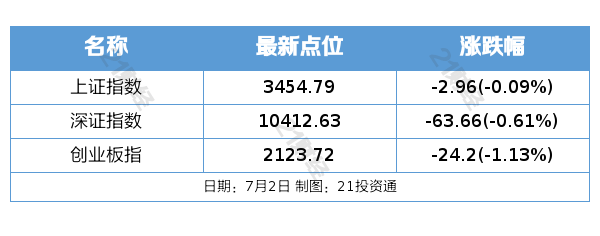
昨日A股 7月2日,A股三大指数集体下跌,截至收盘,沪指跌0.09%,深成指跌0.61%,创业板指跌1.13%,北证 50指数跌1.23%。全市场成交额14051亿元,较上日缩量914亿元。全市场超3200只个股下跌。板块题材 上,光伏、钢铁、养殖、代糖、煤炭、海工装备板块涨幅居前;算力硬件、半导体、脑机接口、数字货 币、多元金融板块跌幅居前。 盘面上,光伏板块集体大涨,钢铁板块午后强势拉升,海工装备板块集体爆发,算力硬件板块集体走 低,脑机接口板块集体调整。 | 名称 | 最新点位 | 、涨跌幅 | | --- | --- | --- | | 上证指数 | 3454.79 | -2.96(-0.09%) | | 深证指数 | 10412.63 | -63.66(-0.61%) | | 创业板指 | 2123.72 | -24.2(-1.13%) | | | 日期:7月2日 制图:21投资通 | | 隔夜外盘 纽约股市三大股指7月2日涨跌不一。截至当天收盘,道琼斯工业平均指数比前一交易日下跌10.52点, 收于44484.42点,跌幅为0.02%;标准普尔500种股票指数上涨29.41点,收于6227.42点 ...


周期论剑|重申布局周期的弹性与价值
2025-07-02 15:49
Summary of Key Points from Conference Call Records Industry Overview - The conference call discusses the economic governance and policy changes in various industries, particularly focusing on the steel, non-ferrous metals, coal, and engineering machinery sectors [1][5][6][13]. Key Insights and Arguments Economic Governance and Policy Changes - The Central Financial Committee emphasizes the need to regulate low-price disorderly competition and promote the orderly exit of backward production capacity, which is crucial for building a unified national market [1][3][4]. - Current economic policies have shifted from controlling high prices to managing low prices, reflecting a focus on high-quality development rather than mere scale expansion [5][6]. - The governance approach has transitioned from anti-monopoly to addressing disorderly competition, indicating a response to insufficient total demand and low-price competition [5][6]. Steel Industry - The steel industry is experiencing a demand downturn due to real estate sector weaknesses, with manufacturing demand now accounting for over 50% of total demand [1][16]. - The average net profit of listed companies in the steel sector has turned negative for three consecutive years, indicating a supply-side contraction [1][17]. - The steel demand cycle is gradually bottoming out, with exports performing better than expected [1][16]. - Future steel prices are expected to rebound as demand stabilizes and supply contracts, with a projected upturn in the industry over the next two to three years [19]. Non-Ferrous Metals - The non-ferrous metals market is characterized by resource scarcity and the interplay of U.S.-China liquidity cycles, with a focus on tin and copper due to their technological applications [21][22]. - Tin demand is expected to rise due to its applications in technology, despite a temporary increase in supply from the resumption of production in certain regions [21][22]. - Copper prices are anticipated to reach historical highs driven by U.S. debt relief and seasonal demand [22]. Coal Market - The coal market is showing signs of price stabilization, with overall coal prices slowly rising after a challenging first half of 2025 [23][24]. - The relationship between electricity consumption and GDP is expected to remain stable, with new policies reducing the expected returns on renewable energy installations [23][24]. - Future coal supply is likely to decrease, particularly in Xinjiang, impacting China's overall coal production landscape [25][26]. Engineering Machinery - The engineering machinery sector is facing severe internal competition, but leading companies are beginning to raise product prices, which may improve profit margins [29][30]. - Domestic sales are projected to grow by 15%-20% this year, with exports performing better than initially expected [31][32]. - The cyclical growth in the machinery industry is expected to continue for the next three to five years, benefiting major manufacturers [34][35]. Other Important but Overlooked Content - The governance of low-price competition and the orderly exit of backward production capacity are seen as critical to addressing the internal competition and ensuring sustainable economic growth [3][4][6]. - The focus on high-quality development and the regulation of local government behaviors are essential for stabilizing the market and fostering investment opportunities in various sectors [5][6][12]. - The anticipated structural investment opportunities arising from the exit of underperforming companies in the manufacturing sector could lead to a healthier market environment [12][13].
“反内卷式竞争”的投资机会
2025-07-02 15:49
"反内卷式竞争"的投资机会 20250702 摘要 反内卷政策升级,人民日报等媒体密集发文,预示行业协会将密集发文 控价控产能,主要集中在新能源车和光伏行业,可能引发市场预期波动, 影响相关公司股价和大宗商品价格。 大宗商品价格下跌源于需求侧居民收入和地产下滑。传统行业经过前期 去产能和企业整合,供给侧大幅出清空间有限,本轮周期股反弹更多源 于市场内生需求,而非供给侧改革。 新能源车和光伏领域是反内卷政策重点,政府鼓励民营企业信心。未来 或通过控制价格实现红利,但难以复制 2015-2016 年供给侧改革驱动 的大宗商品牛市。 钢铁行业:限产政策短期影响有限,但制造业需求超预期增长,成本端 双胶价格下跌提升钢厂利润。关注电炉减产及低位库存对钢铁价格和利 润的推动作用,预计 7-8 月钢铁股将有一波反弹行情。 水泥行业:协会推动供给侧改革,要求企业严格按照设计产能生产,有 望提升标的配置性价比。今年企业具备底线思维,避免激烈价格战,确 保行业微盈利,但需求淡季和错峰执行力度不足构成不利因素。 Q&A 如何理解中央财经委关于建设全国统一大市场的政策? 中央财经委近期强调建设全国统一大市场,旨在依法依规治理企业低价 ...
钢铁:持续看好钢铁板块行情,迎接转折之年
2025-07-02 15:49
Summary of Steel Industry Conference Call Industry Overview - The steel sector is expected to experience a turning point after a downturn since 2021, with demand stabilizing due to manufacturing growth and steady exports, offsetting the decline in real estate [1][3][4] - Supply-side reforms have limited new capacity, and measures to reduce outdated capacity are enhancing expectations for supply contraction, which is favorable for supply-demand balance [1][8] Key Points Demand Dynamics - Manufacturing demand has increased to 50%-60% of total steel demand, with significant growth in automotive, home appliances, and shipbuilding sectors, mitigating the negative impact of real estate decline [1][4][5] - Despite a 70%-80% drop in new real estate projects over the past four years, total crude steel demand has only seen a slight decline, indicating resilience in the manufacturing sector [4][5] Supply-Side Factors - The steel industry has been in a production reduction cycle since 2016-2018, with no new production capacity approved since 2018, which has helped stabilize market prices and improve profitability [8][9] - Recent policies have further pushed for the orderly exit of outdated capacity, enhancing supply contraction expectations [2][3] Cost Trends - Raw material costs are expected to decline due to falling coking coal prices and the commissioning of large mines, which will alleviate cost pressures in the midstream smelting sector [1][11] - The overall industry profitability is anticipated to recover as raw material prices decrease while demand remains stable [18] Investment Opportunities - The steel sector is projected to enter a volatile upward cycle over the next two to three years, with high dividend yield companies like Baosteel, CITIC Special Steel, and Hesteel being recommended due to their stable performance and potential for valuation reassessment [1][12][15] - Other recommended stocks include New Steel and Fangda Special Steel for their defensive and elastic characteristics, and Liugang for its pure elasticity [14][19] Company-Specific Insights - **Baosteel**: Largest steel producer in China with a strong product structure including high-value products like automotive and home appliance steel [16][20] - **Hesteel**: Expected to increase dividend payout to 50% following completion of environmental upgrades, making it a high dividend stock [21] - **Fangda Special Steel**: Known for its cost reduction and efficiency improvement capabilities, with potential for mergers and acquisitions to enhance growth [22] - **Liugang**: Recently commissioned a project with significant capacity, expected to contribute positively to performance [23][24] Market Performance - In the first 26 weeks of 2025, the apparent consumption of five major steel products showed a year-on-year decline of only 0.36%, indicating a narrowing decline compared to previous years [17] - The overall supply-demand data is favorable, with crude steel production down 1.7% year-on-year, suggesting a balanced market [17] Future Outlook - The steel industry is expected to stabilize and potentially see positive growth in demand due to urbanization and industrialization in Southeast Asia and the Middle East, as well as manufacturing returning to the U.S. and Europe [6][7] - The overall sentiment is optimistic for the next two to three years, with a focus on leading companies and those with defensive characteristics [26]


“反内卷”与供给出清行情展望
2025-07-02 15:49
Summary of Key Points from Conference Call Records Industry Overview - The current economic environment is facing downward pressure on prices, with insufficient motivation for inventory replenishment and industrial capacity utilization at a five-year low due to a 7-10 year capacity cycle [1][4] - Different industries face varying levels of supply-side clearing pressure, with downstream sectors like automotive, general equipment, and textiles under significant stress, while the steel industry maintains relatively high capacity utilization [1][5] Core Insights and Arguments - The supply-side clearing process is different this time, primarily involving private enterprises, which may lead to significant price volatility. However, the current demand environment is relatively mild, providing favorable conditions for supply-side adjustments [1][7] - Investment strategies should focus on natural clearing for long-term value investments, particularly in sectors like Hong Kong internet and white goods, while administrative interventions should consider policy strength in resource sectors like photovoltaics and automobiles [1][8] - The steel industry benefits from low commodity valuations and strong export resilience, which alleviates domestic demand pressure. However, production cuts may tighten in the second half of the year [1][9][11] Industry-Specific Insights Automotive Industry - The automotive sector is experiencing a stable price recovery, with discussions between the Ministry of Industry and car manufacturers to improve sales and supply chains. The penetration rate of new energy vehicles is expected to exceed 60% in the second half of the year [3][31] - Companies with strong new car cycles and product capabilities, such as Xiaomi Auto and Li Auto, are viewed positively [3][31] Steel Industry - The steel sector shows significant investment opportunities, with futures and stock prices rebounding sharply. The overall rebound is supported by low commodity valuations and strong export performance, with total demand decline not as severe as expected [9][10][11][12] - Recommendations for steel stock allocation focus on companies like Hualing and New Steel, which have both high-end product protection and potential production cut flexibility [14] Construction Industry - The construction sector is heavily impacted by internal competition, leading to a scale inefficiency. However, the anti-involution policy may improve the commercial model and competitive landscape, enhancing overall profitability [37][38] - Steel structure production may benefit from rising steel prices, improving financial performance for companies like Honglu Steel Structure [39] Chemical Industry - The chemical sector is facing a significant downturn, with many products at historically low price levels. However, sub-industries like organic silicon and polyester filament may see potential benefits from collaborative efforts to stabilize prices [18][19] Environmental Industry - The environmental sector is witnessing a shift towards mechanization and smart solutions, with companies like Yingfeng Environment and Yutong Heavy Industry leading the way in innovation [24][26] Other Important Insights - The current supply-side clearing differs from past experiences, as it involves more private enterprises and is expected to be more volatile due to the nature of supply adjustments [7] - The overall economic environment is supported by government debt issuance and rising social financing growth, which may provide a buffer for supply-side adjustments [7] - The construction and environmental sectors are expected to see improvements in profitability due to policy support and market dynamics [38][39][25] This summary encapsulates the key points from the conference call records, highlighting the current state and future outlook of various industries in the context of supply-side adjustments and anti-involution policies.


“反内卷”政策下,能源与材料有哪些投资机会?
2025-07-02 15:49
"反内卷"政策下,能源与材料有哪些投资机会? 20250702 摘要 国家层面反内卷政策升级,旨在解决低价竞争和产能过剩问题,尤其针 对地方政府不规范行为,以提振工业企业盈利能力,截至 2025 年 6 月 PPI 已连续 33 个月负增长。 光伏产业面临严重产能过剩,需通过供给侧改革盘活市场,并作为中美 关税谈判筹码,通过价格调整避免低价倾销指控,改善产业链盈利状况, 关注硅料价格和股价变化。 光伏行业供给侧改革分两步走:划定落后产能并约束开工率,通过收储 或成立基金消化多晶硅库存,优先关注上游原材料如通威股份,下游组 建环节如晶澳科技、晶科能源。 建材领域反内卷政策执行效果显著,水泥行业预计有 3-4 亿吨熟料厂退 出市场,推荐海螺水泥、华新水泥等;玻璃行业头部企业减产,关注浮 法玻璃及光伏玻璃投资机会。 钢铁行业通过环保限产和落后产能退出优化供给,企业主动调节产量, 利润有望走阔,关注新钢股份、华菱钢铁等估值较低的板材类标的,以 及宝钢股份。 Q&A 反内卷政策的演化脉络是什么? 反内卷政策最早在 2024 年 7 月 30 日的中央政治局会议上提出,当时强调行 业自律,防止内卷式恶性竞争,并畅通低效产 ...
午后爆拉!发生了什么?
Feng Huang Wang Cai Jing· 2025-07-02 13:38
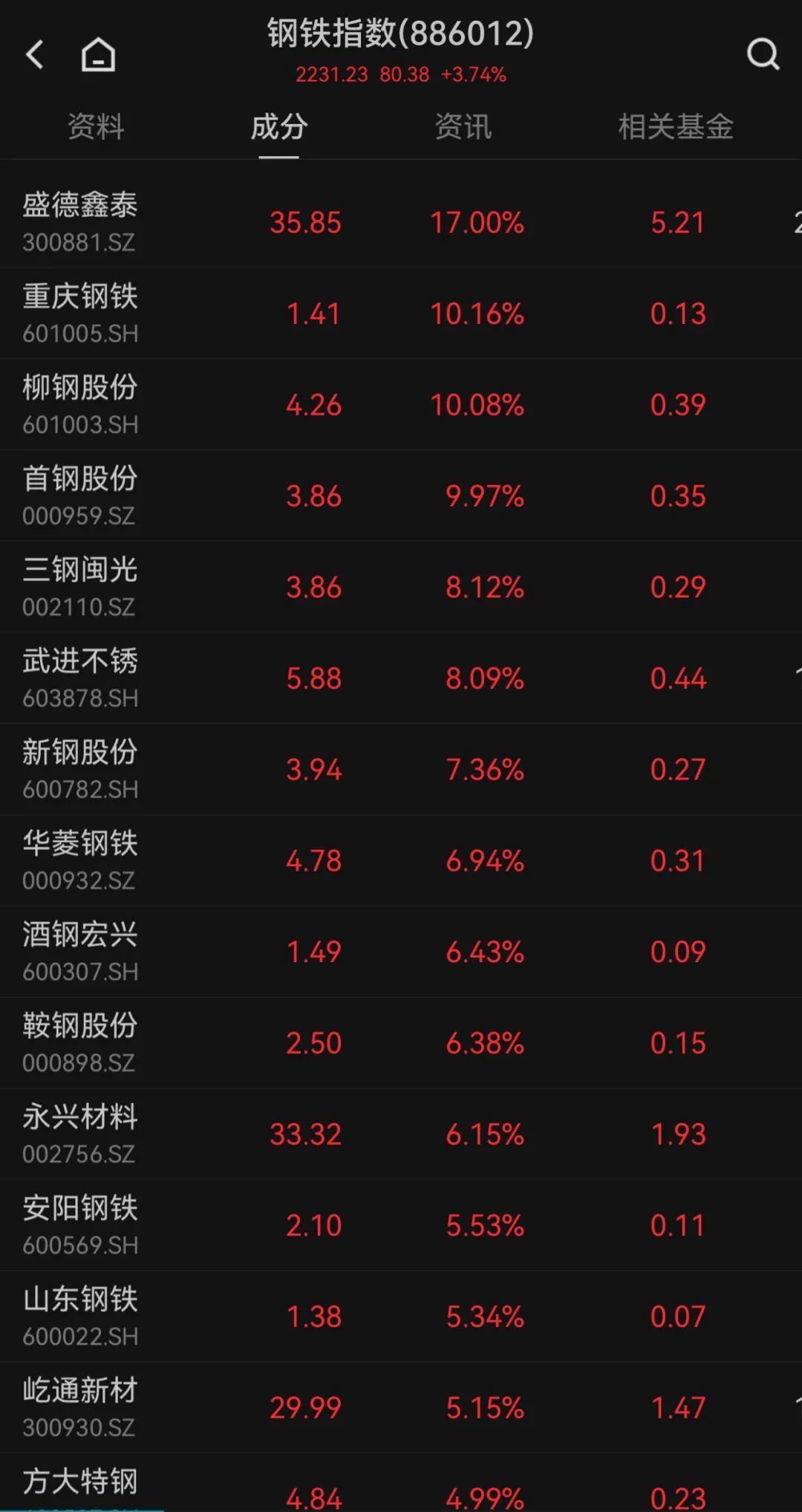
Group 1: Steel Industry Performance - The steel sector experienced significant gains, with the steel index rising by 3.74% to 2231.23 points [2] - Notable stocks included 盛德鑫泰, which surged by 17%, and 重庆钢铁, 柳钢股份, and others reaching their daily limit [3] - The market saw a strong correlation between the A-share market and commodity markets, with polysilicon and glass futures leading the gains [1] Group 2: Environmental Regulations Impact - Increased environmental restrictions in Tangshan are expected to affect steel production, with about half of the steel mills reporting notifications of production cuts [4] - The China Iron and Steel Association is set to hold a meeting to discuss the industry's progress and challenges, indicating a focus on future development strategies [4] Group 3: Marine Economy Development - The central government is promoting high-quality development of the marine economy, with policies encouraging social capital participation and innovation in marine technology [8] - The marine economy is expected to accelerate, supported by various regional policies aimed at optimizing and upgrading the marine industry structure [8] Group 4: Marine Economy Industry Chain - The marine economy industry chain is categorized into three levels: infrastructure, equipment technology, and resource development [9] - Key areas of focus include deep-sea technology, offshore wind power, and marine biological medicine, with significant investment opportunities identified [10]
华菱钢铁(000932) - 湖南华菱钢铁股份有限公司关于回购公司股份的进展公告
2025-07-02 10:48
证券代码:000932 证券简称:华菱钢铁 公告编号:2025-43 湖南华菱钢铁股份有限公司 关于回购公司股份的进展公告 本公司董事会全体成员保证信息披露内容的真实、准确和完整,没有虚假记载、误导 性陈述或重大遗漏。 湖南华菱钢铁股份有限公司(以下简称"公司")于 2025 年 1 月 20 日召开了第 八届董事会第二十八次会议、第八届监事会第二十一次会议,于 2025 年 2 月 14 日 召开了 2025 年第一次临时股东大会,审议通过了《关于回购公司股份方案的议案》, 公司将使用不低于人民币 20,000 万元(含)且不超过人民币 40,000 万元的自有资金 或自筹资金,在回购股份价格不超过 5.80 元/股(含)的条件下,通过深圳证券交易 所交易系统以集中竞价交易方式回购公司股份 3,448.28 万股(含)~6,896.55 万股, 占公司总股本的比例为 0.50%~1.00%(按最高回购价格测算)。具体回购股份数量 及比例,以回购期限届满或者回购实施完毕时实际回购的股份数量及占公司总股本 的比例为准。本次回购股份将全部用于注销并减少公司注册资本,实施期限为自股 东大会审议通过回购股份方案之日起 ...
今日共59只个股发生大宗交易,总成交9.79亿元
Di Yi Cai Jing· 2025-07-02 10:06
Summary of Key Points Group 1: Market Overview - On July 2, a total of 59 stocks in the A-share market experienced block trading, with a total transaction value of 979 million yuan [1] - The top three stocks by transaction value were Hongsoft Technology (166 million yuan), Minglida (96.9 million yuan), and Gaweida (52.83 million yuan) [1] Group 2: Pricing Trends - Among the stocks traded, 14 stocks were transacted at par value, 5 at a premium, and 40 at a discount [1] - The stocks with the highest premium rates were Tianyin Holdings (11.86%), Qidi Environment (10.55%), and Guoxuan High-Tech (4.31%) [1] - The stocks with the highest discount rates were Shengwugu (29.43%), Minglida (20.34%), and Heshun Technology (20.07%) [1] Group 3: Institutional Trading Activity - The top stocks by institutional buying were Gaweida (52.83 million yuan), Oujing Technology (26.30 million yuan), and Hualing Steel (25.48 million yuan) [2] - The top stocks by institutional selling were Zhongke Ruankai (48.42 million yuan), Huicheng Vacuum (13.45 million yuan), and Yuyue Medical (11.89 million yuan) [2]
特钢概念上涨3.25%,6股主力资金净流入超5000万元
Zheng Quan Shi Bao Wang· 2025-07-02 09:04
Core Viewpoint - The special steel sector has shown a significant increase, with a rise of 3.25%, ranking third among concept sectors, driven by strong performances from several stocks [1][2]. Group 1: Sector Performance - As of July 2, the special steel concept saw 31 stocks increase in value, with notable gains from Chongqing Steel, Shengde Xintai, and Sansteel Minguang, which rose by 10.16%, 17.00%, and 8.12% respectively [1][2]. - The sector experienced a net inflow of 684 million yuan from main funds, with 28 stocks receiving net inflows, and six stocks exceeding 50 million yuan in net inflows [2][3]. Group 2: Key Stocks - Huazhong Steel led the net inflow with 151 million yuan, followed by Baogang Co. and Sansteel Minguang with net inflows of 117 million yuan and 71 million yuan respectively [2][3]. - The top three stocks by net inflow ratio were Sansteel Minguang at 20.47%, Huazhong Steel at 15.30%, and Zhongnan Steel at 13.25% [3][4]. Group 3: Declining Stocks - The stocks with the largest declines included Guanda Special Materials, Tunan Co., and Steel Research High-tech, which fell by 2.81%, 1.60%, and 1.20% respectively [1][5].


