圆通速递

Search documents
中国快递:重要要点,供给侧改革 2.0
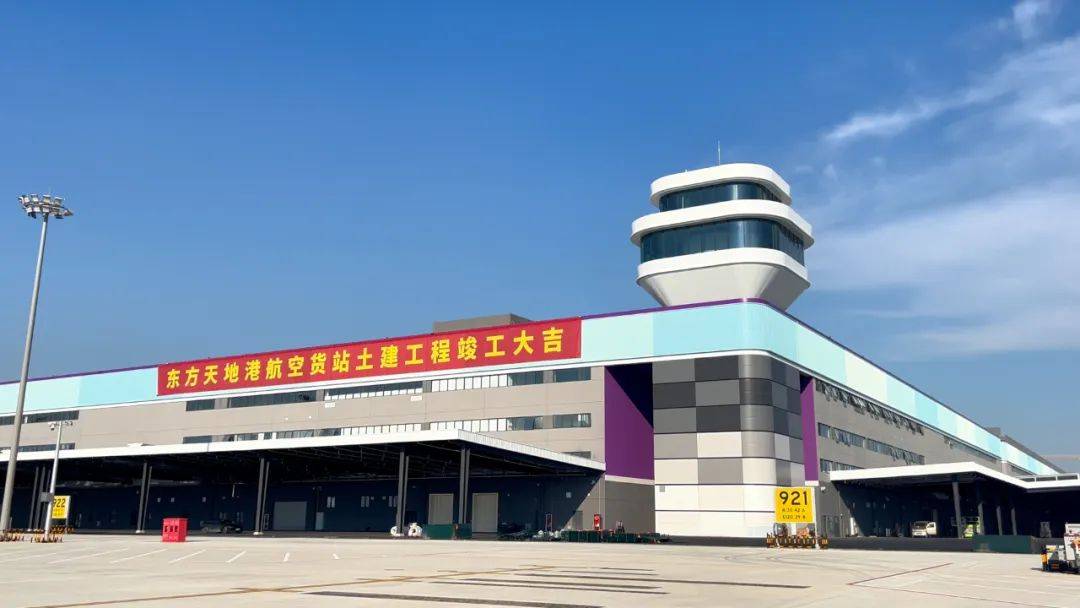
2025-08-25 01:39
Summary of Key Points from the Conference Call on China's Express Delivery Industry Industry Overview - The conference call focused on the express delivery industry in China, specifically discussing the impact of "anti-involution" policies on pricing and profitability within the sector [3][4]. Core Insights 1. **Price Increases in Key Regions** - Express delivery prices have risen in key regions, with Yiwu seeing an increase of RMB0.1 per parcel in July 2025. The current price for a 0.1 kg parcel is above RMB1.2. In Guangdong, prices for 0.1 kg parcels have risen to RMB1.45-1.55, with regular parcels increasing by RMB0.2-0.3 and discount parcels by approximately RMB0.6 [3]. 2. **Impact of Anti-Involution Policies** - The implementation of anti-involution policies has led to stronger price hikes in Guangdong, a key region for express delivery. However, many franchisees may still be operating at a loss due to high operating costs [3]. 3. **New Social Security Regulations** - New regulations effective from September 1, 2025, mandate that employers cannot opt out of social security payments, which will increase costs for express delivery companies by more than RMB0.1 per parcel. This is expected to further support price hikes in the industry [4]. 4. **Rising Delivery Costs** - The expert noted that the mandatory social insurance expenses and long-standing price competition have suppressed delivery fees, affecting couriers' income. The trend of rising delivery fees is also observed in Eastern and Northern China [4]. 5. **Profitability Concerns** - Despite price increases, the expert expressed concerns that the express delivery industry chain may struggle to maintain profitability due to increased mandatory costs. If these costs are passed on to consumers, delivery prices may rise further [4]. Investment Recommendations 1. **Preferred Companies** - The report recommends investing in STO and Yunda, both rated as "Buy" due to their higher earnings resilience. Target prices remain unchanged [5]. 2. **Other Ratings** - YTO and SF Holding-A/H also maintain "Buy" ratings with unchanged target prices. Conversely, Deppon Logistics is rated "Reduce" due to high valuation concerns [5]. Additional Insights - The expert highlighted that the express delivery market is characterized by intense competition, with 30% of the market being low-priced tickets and 7-11% being discount-priced tickets in Guangdong [3]. - The report anticipates more regional policy tailwinds that could drive further re-rating of express delivery companies [5]. This summary encapsulates the key points discussed during the conference call, providing insights into the current state and future outlook of the express delivery industry in China.




中国快递:2025 年 7 月市场分析,小玩家市场份额同比持续流失
2025-08-25 01:38
Key Takeaways from the Conference Call Industry Overview - The report focuses on the **China Express** industry, specifically analyzing the performance of major players in the express delivery market for July 2025 [1][6]. Market Share and Volume - **SF Express** led the market with a **34% YoY volume growth**, followed by **YTO Express** at **21% YoY**. In contrast, **STO Express** and **Yunda** experienced lower growth rates of **12%** and **8% YoY**, respectively, resulting in a loss of market share of **0.4ppt** and **0.9ppt** [2][11]. - **Yunda** continues to lag behind **STO** in both volume and revenue metrics [11]. Revenue Performance - **SF Express** achieved a **15% YoY growth** in domestic express revenue, outperforming **YTO** and **STO**, which recorded **12%** and **10% YoY growth**, respectively. **Yunda** underperformed with only **4% YoY revenue growth**, significantly below the industry average of **9% YoY** [3][11]. - Total revenue for **SF Express** grew by **10% YoY**, despite a **3% YoY drop** in international and supply chain revenue due to trade tensions and declining shipping rates [3]. Average Selling Price (ASP) Trends - The ASP for **SF Express** dropped by **14% YoY** in July, with **YTO** seeing a **7%** decrease, **Yunda** at **4%**, and **STO** at **2%**. **Yunda** maintained the lowest ASP among its peers [4][11]. - On a month-over-month basis, **SF** and **STO** both saw a **1%** decline in ASP, while **YTO** reached a new low in July [4]. Financial Metrics Summary (July 2025) | Metric | SF | Yunda | STO | YTO | Industry | | --- | --- | --- | --- | --- | --- | | Revenue (Rmb mn) | 18,657 | 4,120 | 4,287 | 5,371 | 120,640 | | YoY Revenue Growth | 15.0% | 3.8% | 10.0% | 12.1% | 8.9% | | Volume (mn) | 1,377 | 2,162 | 2,181 | 2,583 | 16,400 | | YoY Volume Growth | 33.7% | 7.6% | 11.9% | 20.8% | 15.1% | | Market Share | 8.4% | 13.2% | 13.3% | 15.8% | nm | | YoY Market Share Change | 1.2ppt | -0.9ppt | -0.4ppt | 0.8ppt | nm | | ASP (Rmb) | 13.55 | 1.91 | 1.97 | 2.08 | 7.36 | | YoY ASP Change | -14.0% | -3.5% | -1.5% | -7.2% | -5.3% | | MoM ASP Change | -0.9% | -0.2% | -1.1% | -1.2% | -1.7% | [5] Additional Insights - The overall market dynamics indicate that smaller players like **STO** and **Yunda** are struggling to maintain their market positions, while **SF Express** continues to show robust growth despite external challenges [11]. - The decline in ASP across all players suggests a competitive pricing environment, particularly for **YTO**, which is aggressively pursuing market share [11]. Conclusion - The express delivery market in China is characterized by significant growth for leading players like **SF Express**, while smaller competitors face challenges in maintaining market share and revenue growth. The competitive landscape is intensifying, with pricing strategies playing a crucial role in market dynamics [11].
快递费上调,广东浙江电商受影响大,部分商家月增成本3万
Sou Hu Cai Jing· 2025-08-25 00:27
Core Viewpoint - Recent increases in express delivery fees across multiple regions in China, particularly in e-commerce dense areas like Guangdong and Zhejiang, have raised significant attention. This price adjustment is seen as a response to the long-standing issue of cutthroat competition within the industry [1][2]. Group 1: Price Adjustments - In Guangdong, the increase in express delivery fees ranges from 0.3 to 0.7 yuan per package, with a minimum price set at 1.4 yuan per order. This region has historically had low delivery prices, with extreme cases of 0.8 yuan for nationwide delivery [1]. - A YTO Express franchisee in Guangdong noted that prior to the price increase, the shipping cost could be as low as 0.9 yuan, but it has now risen by 0.5 yuan, marking a 55% increase [2]. - On August 5, Jitu Express and Zhongtong Express both announced price hikes of 0.3 yuan and 0.5 yuan respectively, citing the need to respond to the competitive landscape [4]. Group 2: Impact on E-commerce - E-commerce merchants in Guangdong reported that while the price increase may seem minor, it results in substantial additional monthly costs, with some businesses facing increases of tens of thousands of yuan in operational expenses [1]. - Merchants are cautious about raising product prices to offset increased shipping costs due to concerns that it may negatively impact sales volume [4]. Group 3: Industry Response and Future Outlook - The price hikes are part of a broader industry response to combat "involution" in competition, as highlighted in a meeting by the State Post Bureau in July, which aimed to promote healthy and stable development in the express delivery sector [1]. - Industry insiders believe that these price adjustments could help the express delivery sector move away from price wars, leading to improved service quality and competitiveness in the long run [4]. - While Guangdong is currently the focus of these price adjustments, there is uncertainty about whether similar changes will be implemented nationwide. However, ongoing regulatory efforts to address competitive practices suggest a trend towards more rational and stable pricing in the future [4].

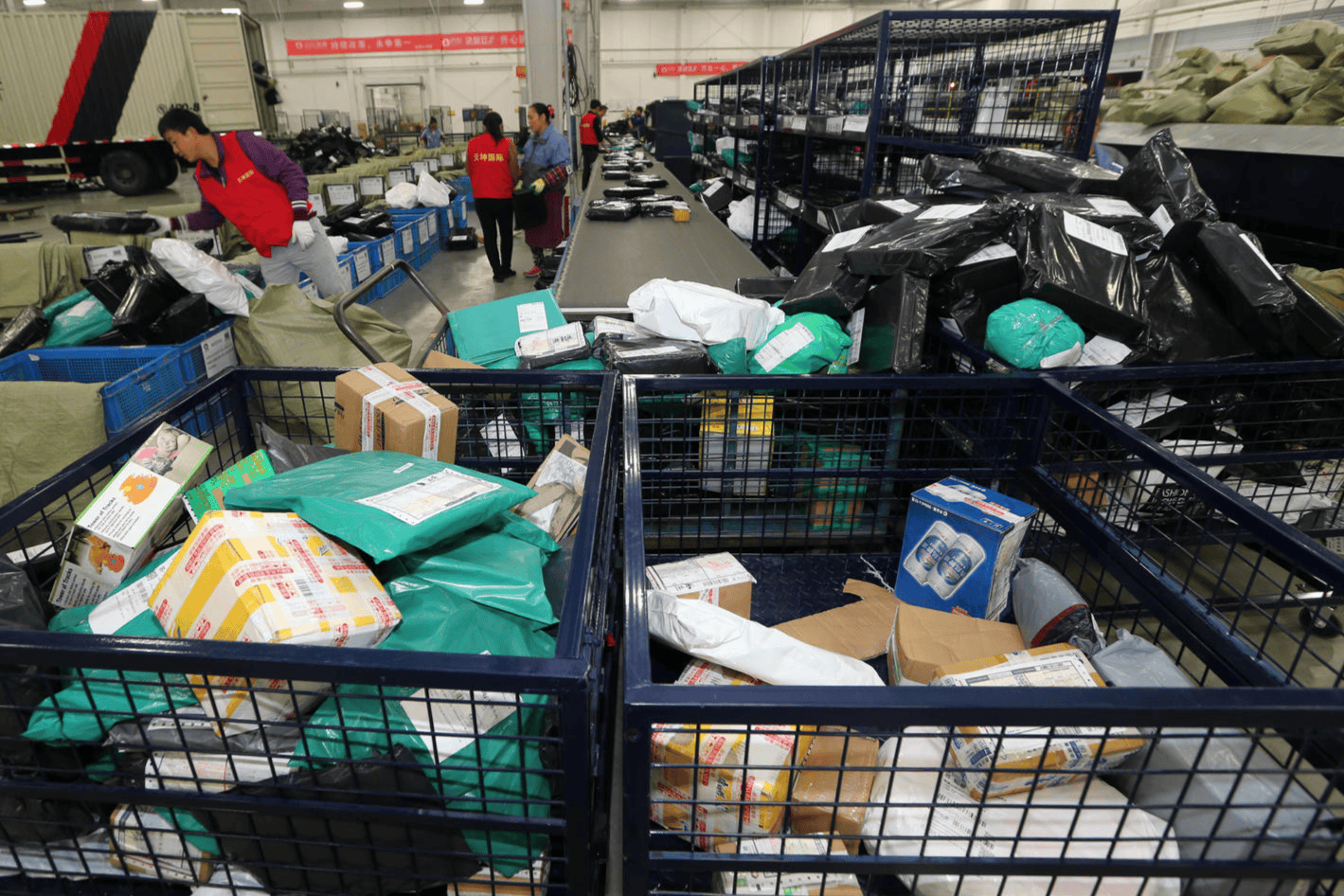
“反内卷”效果持续,多个电商重镇快递涨价
Xuan Gu Bao· 2025-08-24 23:19
因此,从成本端看,若后续快递小哥全员缴纳社保后,快递加盟商的成本增加,经营压力进一步提升, 而反内卷推动下的涨价将覆盖加盟商的新增社保成本,此次反内卷推动下的提价也具备一定的持续性。 各主要快递上市公司业绩弹性大。 公司方面,据国泰君安表示,核心公司主要包括顺丰控股圆通速递、中通速递、韵达股份。 *免责声明:文章内容仅供参考,不构成投资建议 点评:今年7月,国家邮政局先后召开党组会议及快递企业座谈会,明确提出治理行业内卷式竞争。 国泰海通认为,此轮"反内卷"自上而下将继续深化,后续多地或跟进治理。"反内卷"短期将缓和竞争压 力,更重要的是中长期继续保障良性竞争,有利于行业自然集中。 国盛证券表示,从需求端来看,此次反内卷效果具有一定持续性。最高人民法院强调依法参加社保是法 定义务,新规自9月1日起施行。以每人日均派件500票、按各地标准缴纳社保测算快递小哥全员缴纳社 保后,对单票的平均影响在6分钱。 据红星新闻8月24日报道,电商重镇广东、浙江多家快递公司目前已对电商客户涨价。 其中广东是重点调价地区,每件调价幅度在0.3元至0.7元之间,同时还设定1.4元/单的底线价。有业内 人士表示,广东地区贡献了快递公 ...
国资国企如何破圈成长——来自广西的调查
Sou Hu Cai Jing· 2025-08-24 22:59
Core Viewpoint - The article emphasizes the importance of state-owned enterprises (SOEs) in driving high-quality economic development in Guangxi, highlighting various initiatives to enhance the performance and international competitiveness of these enterprises. Group 1: Development of "New Brands" - Guangxi's state-owned enterprises are focusing on cultivating "new brands" to bridge the gap with more developed regions, with innovation being the primary driver for high-quality development [2][3] - The establishment of a project library for "new brands" aims to stimulate technological and industrial growth through dynamic adjustments and rolling implementations [2] - Measures such as benchmark demonstrations, enhanced assessments, and talent support systems are being implemented to promote the development of strategic emerging industries [2] Group 2: Upgrading "Old Brands" - Traditional "old brands" in Guangxi face challenges such as low technological content and market misalignment, necessitating a focus on innovation and product development [4][5] - The integration of modern marketing strategies, such as OMO (Online-Merge-Offline) marketing, has proven effective in revitalizing "old brands" and expanding market reach [5] - Companies like Yufeng Cement are successfully transitioning from traditional production to technology-driven enterprises, achieving significant technological advancements and awards [5][6] Group 3: Empowering "Original Brands" - "Original brands" represent Guangxi's traditional industries, which are undergoing transformation towards high-end, intelligent, and green production [7][8] - The introduction of technologies like AI and big data is enhancing operational efficiency and precision in traditional sectors, such as coal management and agriculture [7][8] - Companies are increasingly adopting automation and digitalization to improve productivity and reduce operational costs [6][8] Group 4: Expanding "External Brands" - Guangxi is leveraging its geographical advantages to enhance international trade, with initiatives like overseas warehouses and cross-border logistics [10][11] - The export sales revenue of state-owned enterprises in Guangxi reached 120.03 billion yuan, marking a 20.16% increase year-on-year [13] - Policies are being implemented to support enterprises in expanding their international presence, particularly in sectors like automotive and engineering machinery [13]

国资国企如何破圈成长 ——来自广西的调查
Jing Ji Ri Bao· 2025-08-24 22:08
Core Viewpoint - The article emphasizes the importance of state-owned enterprises (SOEs) in driving high-quality economic development in Guangxi, highlighting various initiatives to enhance the competitiveness and innovation of these enterprises. Group 1: Development of "New Brands" - Guangxi is focusing on cultivating "new brands" which represent emerging industries and innovative enterprises, addressing the gap between Guangxi and more developed regions in China [2] - The Guangxi State-owned Assets Supervision and Administration Commission (SASAC) is implementing measures to promote the growth of "new brands" through project-driven technology and industry development [2] - The emphasis on innovation as a primary driver for high-quality development is crucial for the leadership role of SOEs [2] Group 2: Upgrading "Old Brands" - "Old brands" in Guangxi, such as local food and cultural products, face challenges like outdated technology and market positioning [4] - The SASAC is enhancing the competitiveness of "old brands" through technological upgrades and product innovation [5] - Companies like Xijiang Dairy are adopting innovative marketing strategies to revitalize "old brands" and attract new customers [5] Group 3: Empowering "Original Brands" - "Original brands" represent traditional industries in Guangxi, which are undergoing transformation towards high-end, intelligent, and green production [7] - The introduction of smart technologies in traditional sectors, such as coal management and agriculture, is improving efficiency and sustainability [8] - Companies are leveraging AI and data analytics to enhance operational efficiency and drive innovation in traditional industries [9] Group 4: Expanding "External Brands" - Guangxi is enhancing its international logistics capabilities, exemplified by the establishment of overseas warehouses to facilitate cross-border trade [10] - The SASAC is implementing policies to support the international expansion of enterprises, focusing on sectors like automotive and machinery [13] - Export sales from Guangxi's SOEs have shown significant growth, indicating successful penetration into international markets [13]
股市热度下反内卷板块的机会展望
2025-08-24 14:47
Summary of Key Points from Conference Call Records Industry Overview - The petrochemical industry is facing a new round of policy adjustments, with refineries under 2 million tons potentially being eliminated and older facilities over 20 years old undergoing adjustments, which will constrain domestic capacity utilization [1][2][3] - The petrochemical sector has entered a downward cycle since the second half of 2022, with significant declines in safety investments and capital expenditures [1][4] - The China Chemical Industry Index PB percentile is at historical lows, and leading companies like Wanhua, Hualu, and Yangnong are expected to see significant gains in the next year and a half due to favorable policies [1][6] Policy Impacts - The recent policies targeting the petrochemical industry began in July 2023, focusing on assessing and potentially shutting down or upgrading older capacities [2][3] - The actual capacity ceiling is between 950 million to 1 billion tons, with small refineries (under 2 million tons) accounting for approximately 35 to 40 million tons, which may be eliminated [3] - The coal sector is also affected by stricter production limits, with coal prices expected to fluctuate between 650-750 RMB depending on policy enforcement [1][8] Market Dynamics - The aluminum and copper sectors are experiencing accelerated industrial upgrades due to the cancellation of export tax rebates, with demand from AI driving up processing fees for certain copper products [1][16][17] - The express delivery industry has seen significant price increases, particularly in Guangdong, where average prices rose by about 0.5 RMB, which is expected to enhance profitability for major express companies [1][19] Economic Indicators - The dovish stance of the Federal Reserve has raised expectations for interest rate cuts, which is likely to lead to price increases for upstream resources like copper, aluminum, and gold [1][18] - Recent macroeconomic indicators such as M1 and M2 growth rates have rebounded, driven by increased demand for currency exchange and a high trade surplus [1][24] Investment Outlook - The petrochemical sector is expected to enter an upward trend, with leading companies likely to benefit from upcoming policy support [1][6] - The coal sector's profitability will depend on the strictness of policy enforcement regarding production limits [1][8] - The express delivery sector's price increases are anticipated to provide substantial earnings elasticity for listed companies [1][19] Additional Insights - The complexity of the current capacity reduction differs from previous supply-side reforms, as many capacities are relatively new and require more coordination among local governments and ministries [1][7] - The overall market liquidity is expected to increase, benefiting various asset classes, although the stock market may experience some marginal outflows to the bond market [1][27]
粤浙快递费上涨,商家月增3万成本
3 6 Ke· 2025-08-24 12:09
Core Viewpoint - Recent price increases in express delivery services in multiple regions, particularly in Guangdong and Zhejiang, are impacting e-commerce costs significantly, with some businesses reporting an additional monthly expense of at least 30,000 yuan due to these changes [1]. Group 1: Price Increases - Several express delivery companies in Guangdong and Zhejiang have raised prices for e-commerce clients, with price adjustments ranging from 0.3 to 0.7 yuan per package [1]. - Guangdong is identified as a key area for these price hikes, contributing the largest volume of deliveries while previously maintaining very low prices, such as 0.8 yuan for nationwide delivery [1]. Group 2: Impact on E-commerce - The recent price increases are expected to raise operational costs for e-commerce businesses, making it difficult for them to absorb these costs through product price increases [1]. - A merchant in Guangdong reported that the price increase, although seemingly small, translates to an additional 30,000 yuan in monthly expenses due to high delivery volumes [1]. Group 3: Industry Context - The price adjustments are part of a broader effort to address "involution" in the express delivery industry, which has been characterized by intense price competition and a prolonged price war among delivery companies [1]. - The State Post Bureau has initiated discussions to mitigate this competitive environment, particularly focusing on franchise-based delivery companies that have been heavily involved in price wars [1].
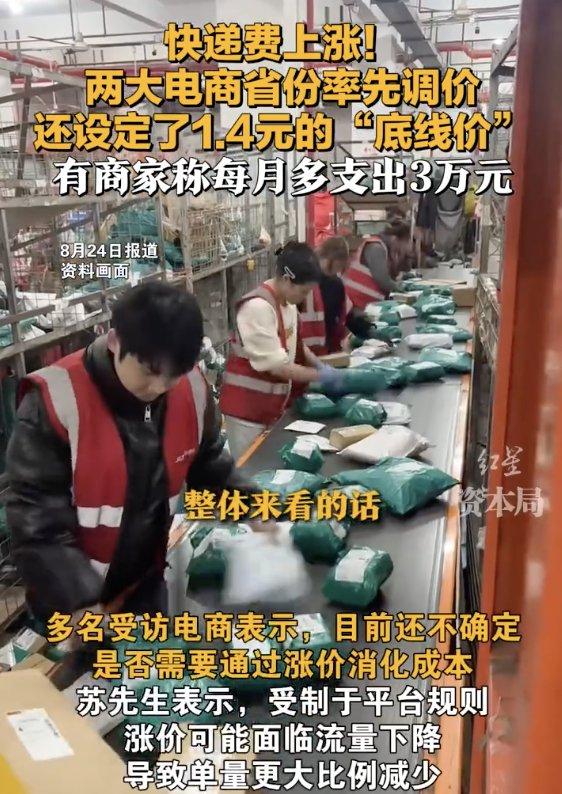
申万宏源交运一周天地汇(20250817-20250822):美股油轮股年内新高,淡季超预期进入右侧区间,船舶板块有望共振
Shenwan Hongyuan Securities· 2025-08-23 15:13
Investment Rating - The report maintains a "Positive" outlook on the shipping sector, particularly highlighting the potential for VLCC (Very Large Crude Carrier) rates to strengthen in the upcoming months [4]. Core Insights - The report indicates that tanker rates have exceeded expectations during the off-season, with VLCC rates expected to perform strongly from September to December due to reduced exports from Iran and increased production in the Middle East [4]. - The report recommends specific companies such as China Merchants Energy Shipping and highlights the potential for consolidation in the Chinese shipping industry [4]. - The report emphasizes the resilience of freight volumes in rail and highway transport, suggesting steady growth in these sectors [4]. Summary by Sections Shipping Sector - VLCC rates increased by 32% this week, reaching $45,800 per day, driven by limited supply and increased demand from the Atlantic market [4]. - The report notes that the average export volume from Iran has decreased to 1.3-1.5 million barrels per day, down from 1.7-1.9 million barrels per day in July [4]. - The Suez crude oil tanker rates rose by 15% to $59,563 per day, supported by strong demand from the West African market [4]. Dry Bulk Shipping - The Baltic Dry Index (BDI) fell by 4.9% to 1,944 points, primarily due to a decline in large vessel rates, while smaller vessels showed stronger performance [5]. - The report remains optimistic about the Capesize bulk carrier market in the second half of the year, citing expected increases in shipments from major miners [4]. Air Transport - The report suggests that the "anti-involution" policy from the Civil Aviation Administration is likely to optimize competition in the airline industry, benefiting airline profitability in the long term [4]. - Recommended airlines include China Eastern Airlines, Spring Airlines, and China Southern Airlines, with a focus on the potential for improved earnings due to supply constraints and demand recovery [4]. Express Delivery - The report anticipates a price increase in the express delivery sector driven by the "anti-involution" policy, with expectations for sustained profitability in the e-commerce delivery segment [4]. - Companies such as Shentong Express and YTO Express are highlighted as having strong potential for recovery and valuation improvement [4]. Rail and Highway Transport - Data from the Ministry of Transport indicates that rail freight volume increased by 1.22% week-on-week, while highway freight traffic rose by 3.06% [4]. - The report identifies two main investment themes in the highway sector: high dividend yield stocks and potential value recovery in undervalued stocks [4].



圆通东方天地港航空货站区土建竣工 打造区域跨境电商及物流新引擎
Sou Hu Cai Jing· 2025-08-23 04:13
Core Insights - The completion of the civil engineering works for the "Oriental Tian Di Port" marks a significant milestone in the construction of a global air logistics hub, laying a solid foundation for overall operational readiness [1] Group 1: Project Overview - The air cargo station area, covering 492 acres, integrates international, domestic, and platform cargo stations, encompassing core functions such as cargo handling, mail operations, special cargo handling, ULD management, customs clearance, and transshipment [3] - The T1 international cargo station, the largest single building at Jiaxing Airport, exceeds 140,000 square meters and is designed to enhance customs efficiency and logistics experience for high-value imported goods [5] Group 2: Strategic Importance - The Oriental Tian Di Port serves as the first specialized cargo hub in the Yangtze River Delta, with a mission to connect China with the world and enhance the resilience and international competitiveness of regional supply chains [7] - The project aims to create a modern air logistics park that adheres to principles of sharing, efficiency, intelligence, and sustainability, supporting the dual circulation development pattern of the domestic and international markets [7]