寒武纪

Search documents
知名基金经理调仓路线图揭晓 科技成布局焦点
Zheng Quan Ri Bao· 2026-01-23 16:10
Group 1 - The core focus of several prominent fund managers, including Xie Zhiyu and Fu Pengbo, has shifted towards the technology sector, with increased allocations in semiconductor and AI-related companies [1][2] - Xie Zhiyu's fund, Xingquan Helun Mixed Fund, significantly increased its holdings in technology stocks, particularly in the semiconductor industry, with companies like Zhongji Xuchuang and Ningde Times among the top ten holdings [1] - Fu Pengbo's Ruiyuan Growth Value Mixed Fund raised its stock position and concentrated its top ten holdings, increasing the proportion of assets from 66.04% at the end of Q3 2025 to 70.38% at the end of Q4 2025 [2] Group 2 - The Ruiyuan Growth Value Mixed Fund has prepared for 2026 by reducing positions in companies with weak fundamentals and increasing investments in data center cooling and computing power-related firms [2] - The top ten holdings of the E Fund Blue Chip Selected Mixed Fund remained consistent with Q3 2025, with notable adjustments in share quantities, including increased holdings in Alibaba and reduced positions in JD Health and Focus Media [2] - Morgan Stanley's Digital Economy Mixed Fund, managed by Lei Zhiyong, focused on the digital economy sector, particularly the AI computing power industry, with new additions to its top ten holdings including Xunwei Communication and Dongshan Precision [3] Group 3 - Lei Zhiyong expressed optimism about the ongoing A-share bull market, citing sustained investor confidence and a favorable market environment [3] - The fund manager highlighted continued interest in AI, military industry, nuclear power, wind power, and energy storage sectors, as well as traditional industry leaders leveraging AI for transformation [3]


如何理解-非理性繁荣-下的-理性泡沫
2026-01-23 15:35
Summary of Key Points from Conference Call Industry Overview - The conference discusses the global AI investment theme, highlighting significant growth from late 2023 to late 2025, with the A-share AI theme index rising approximately 1.2 times, the Hang Seng Tech Index increasing over 46%, and the market capitalization of the seven major US tech companies growing about 174% to reach $21.6 trillion [1][2]. Core Insights and Arguments - **Rational vs. Irrational Bubbles**: - Rational bubbles are driven by investor expectations of future price increases, supported by loose liquidity and technological advancements. In contrast, irrational bubbles are influenced by psychological biases and herd behavior, detaching from fundamental valuations [1][4]. - **Comparison with 2000 Internet Bubble**: - The current AI market shares similarities with the 2000 internet bubble, such as technological benefits and fundamental improvements. However, the macroeconomic environment is more complex, necessitating caution regarding liquidity changes and market sentiment [1][5]. - **Valuation Concerns**: - Current AI-related assets exhibit signs of overvaluation, with the Shiller P/E ratio indicating the Nasdaq is in a dangerous zone. The Tobin Q ratio is high, and the investment in information processing and software as a percentage of GDP is nearing levels seen during the 2000 bubble [16][20]. - **Liquidity and Market Dynamics**: - The decline in long-term risk-free rates in the US has created a favorable environment for tech stock valuation expansion, attracting capital inflows and boosting the dollar index [7][8]. - **Risk Indicators**: - Key risk indicators include the Buffett Indicator exceeding historical highs, equity risk premiums falling into negative territory, and total stock market capitalization compared to financial data being close to 2000 levels [13][16]. Additional Important Content - **Investment Trends**: - By 2025, approximately 50% of global AI industry data investment will come from large enterprises' own funds, contrasting with the 54% from venture capital in 2000 [20]. - **Employment Impact**: - AI technology enhances efficiency but also compresses certain job roles, necessitating attention to changes in employment structure to assess whether the AI bubble could evolve into a detrimental bubble [21][22]. - **Market Sentiment and Future Outlook**: - The AI investment landscape is expected to remain robust, with significant opportunities in 2026 and 2027, particularly in core asset pricing models. The US market, led by companies like Nvidia, shows strong growth potential [23][24]. - **China's Market Dynamics**: - The Chinese mainland market, especially the ChiNext board, mirrors the US market's trends, indicating a dual rise in valuation and profitability, with no immediate downturn expected [24]. - **Technology Cycle Theory**: - The current phase of technology investment may be in the mature stage, with potential for a peak following widespread adoption. Evaluating tech companies should consider their technological barriers and commercialization paths to identify resilient assets [25][26].
Alibaba Reportedly Planning T-Head Spinoff — Eyeing High China Chip Valuations?
Benzinga· 2026-01-23 14:58
Core Viewpoint - Alibaba Group is reportedly considering a spinoff and separate listing for its chip-making unit, T-Head, in response to high valuations in the Chinese AI chip market, following a similar move by Baidu [4][21]. Group 1: Spinoff Plans - The potential spinoff of T-Head would occur nearly three years after Alibaba's initial plan to split into six divisions was scrapped [5]. - T-Head is closely linked to Alibaba's Cloud Intelligence Unit, which had previously abandoned its own spinoff due to U.S. restrictions on advanced AI chips [6]. - Alibaba aims to restructure T-Head as a business partly owned by its employees before exploring an IPO, potentially within the next three to four months [12]. Group 2: Market Context - Chinese chip startups, including T-Head, are developing their own AI chips to fill the gap left by U.S. restrictions, with companies like Moore Threads and Biren seeing significant stock price increases [7][8]. - The high valuations of these Chinese companies are driven by expectations of state support as China seeks to reduce reliance on Western technology [9]. - Alibaba's stock rose 5% following the spinoff news, with its market cap reaching $423 billion, narrowing the gap with Tencent [15]. Group 3: Financial Performance - Alibaba's revenue rose 5% to 248 billion yuan ($35.6 billion) in the quarter through September, with a notable 34% growth in its cloud unit [18][19]. - The instant commerce segment, which includes the merger of Ele.me and Taobao Instant Commerce, reported a 60% year-on-year growth [19]. - The spinoff plan is seen as opportunistic, capitalizing on the inflated valuations of AI chip makers and the strong growth in Alibaba's cloud and instant commerce sectors [20].


公募基金调仓路线图浮现 中际旭创成头号重仓股
2 1 Shi Ji Jing Ji Bao Dao· 2026-01-23 13:33
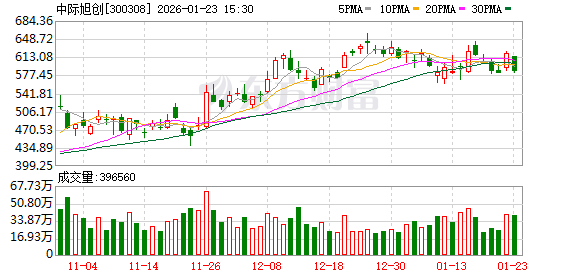
Core Viewpoint - The latest statistics indicate a significant shift in the top holdings of actively managed equity funds, with Zhongji Xuchuang replacing CATL as the largest holding, reflecting changing market dynamics and investment strategies [2][3]. Group 1: Changes in Top Holdings - As of the end of Q4 2025, the top ten holdings of actively managed equity funds are: Zhongji Xuchuang, Xinyi Semiconductor, CATL, Tencent Holdings, Zijin Mining, Alibaba-W, Cambrian Biologics-U, Luxshare Precision, Kweichow Moutai, and Dongshan Precision [3]. - The total market value of these top ten stocks held by actively managed equity funds is 76.8 billion, 63.8 billion, 63 billion, 57.4 billion, 36.8 billion, 31 billion, 29.1 billion, 28 billion, 25.8 billion, and 24.4 billion respectively [3]. - Notable changes from Q3 2025 include Zhongji Xuchuang rising from fourth to first, Xinyi Semiconductor from third to second, and Zijin Mining from eighth to fifth, while CATL and Tencent Holdings dropped to third and fourth respectively [3][6]. Group 2: Sector Allocation Adjustments - In Q4 2025, actively managed equity funds increased their allocations in sectors such as non-ferrous metals, communication, non-bank financials, chemicals, and machinery, while reducing exposure to electronics, pharmaceuticals, media, computers, and power equipment [2][8]. - The overall stock position of actively managed equity funds decreased to 84.4%, down 1.4 percentage points from the previous quarter, indicating a cautious approach amidst market volatility [7]. - The increase in allocation to sectors like non-ferrous metals and chemicals is attributed to supply constraints and recovering demand from new energy and AI applications, while the reduction in electronics and pharmaceuticals is linked to high valuations and weak short-term outlooks [8][9]. Group 3: Market Trends and Insights - The changes in top holdings and sector allocations reflect a shift in market focus towards technology, particularly in the communication sector, driven by the rapid development of the digital economy and AI [4][5]. - The strategic importance of communication infrastructure and chip manufacturing is highlighted, with ongoing policy support for industry upgrades creating new growth opportunities [5]. - The overall market sentiment is characterized by a balance between short-term gains and long-term strategic positioning, influenced by industry prospects and policy environments [9].





2025Q4基金仓位解析:四季度基金调仓五大看点
GOLDEN SUN SECURITIES· 2026-01-23 12:56
Overall Allocation: Scale Decline, Position Adjustment - In Q4 2025, the scale of actively managed equity funds slightly decreased, with the market value of holdings dropping by 5.21% to 33,843.12 billion yuan and total fund assets declining by 3.63% to 40,191.1 billion yuan. The proportion of circulating market value also fell from 3.72% in Q3 2025 to 3.44% [1][7] - The equity position was adjusted downwards, with the overall equity position decreasing by 1.40% to 84.21% from the overall perspective, and a decrease of 0.99% to 82.19% from the average perspective [9][10] Fund Reallocation Highlights in Q4 2025 - The overall scale fluctuation narrowed, and redemption pressure weakened. The impact of net value fluctuations on fund scale significantly decreased compared to Q3. The estimated redemption pressure in Q4 was approximately halved compared to Q3 [2] - The allocation to the ChiNext board saw a concentrated increase, reaching a new high since 2017. The fund's allocation to the ChiNext board increased while the allocation to the main board and the Sci-Tech Innovation board was adjusted downwards [2] - The main positions of AI and non-ferrous metals continued to strengthen. Despite fluctuations in risk appetite, AI and non-ferrous metals became the core focus of fund allocations, with significant investments in computing power and various sub-industries reaching historical peak levels [2][3] Industry Allocation - The marginal decline in industry concentration was noted, but the trend of reducing oligopoly remained strong. The allocation in the electronics sector decreased, leading to a slight reduction in industry concentration, yet it remained at historically high levels [3] - The overall allocation to TMT (Technology, Media, and Telecommunications) decreased, with a notable reduction in AI-related applications while maintaining a strong focus on core AI computing directions [3] Individual Stock Allocation - The concentration of holdings continued to rise, with TMT maintaining a high proportion. By the end of Q4 2025, the top 20, top 50, and top 100 stocks held by public funds saw their respective holding ratios change by 0.77%, 0.16%, and -0.44%, reaching 34.50%, 48.54%, and 61.02% [31] - The top five heavyweights included Zhongji Xuchuang, Xinyi Technology, CATL, Zijin Mining, and Cambricon, with Zhongji Xuchuang being the most significantly increased stock [31][32]
兴证策略:2025年四季度主动权益基金管理规模小幅下降 四季度存量基金的赎回压力仍然较大
Sou Hu Cai Jing· 2026-01-23 12:38
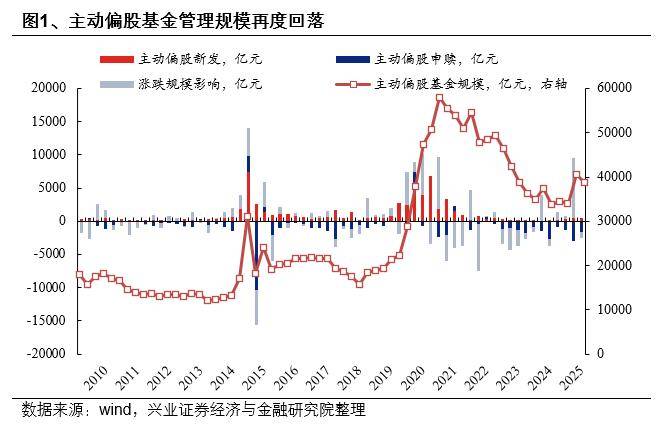
Group 1 - The active equity fund management scale decreased slightly in Q4 2025, primarily due to significant redemption pressure from existing funds, resulting in a net redemption of 165.6 billion yuan [1] - The total management scale of three types of active equity funds (ordinary stock, mixed equity, and flexible allocation) decreased by 189.8 billion yuan, with new active equity fund issuance at 56.2 billion yuan [1] - The active equity fund's position in Q4 2025 decreased by 0.83 percentage points to 86.62%, remaining at the second-highest level in history [2] Group 2 - In terms of sector allocation, the proportion of the ChiNext board increased by 1.24 percentage points to 24.98%, while the main board and Sci-Tech Innovation board saw declines [5][8] - The allocation to the main board decreased by 0.30 percentage points to 58.21%, indicating a further increase in underweight [8] - Active equity funds increased their positions in cyclical and financial real estate sectors while reducing exposure to technology growth and pharmaceuticals [11] Group 3 - The active equity funds increased their allocation in the non-ferrous metals, communication, and non-bank financial sectors, with increases of 2.26 percentage points, 1.85 percentage points, and 0.87 percentage points respectively [13] - The funds reduced their positions in electronics, pharmaceuticals, media, power equipment, and computers, with reductions of 1.72 percentage points, 1.54 percentage points, and 1.16 percentage points respectively [13] - Excluding thematic/sector funds, the active equity funds still increased their positions in non-ferrous metals, communication, and non-bank financial sectors [14] Group 4 - The allocation to the TMT sector slightly decreased in Q4 2025, with the configuration coefficient at 1.48, indicating room for further improvement [29] - Within the TMT sector, active equity funds increased their holdings in communication equipment and components while reducing positions in consumer electronics and semiconductors [32] - The dividend sector's allocation stabilized and increased, with the low-volatility dividend index rising by 1.7 percentage points to 4.3% [37] Group 5 - The top five stocks in active equity funds in Q4 2025 included Zhongji Xuchuang, Xinyi Sheng, Dongshan Precision, China Ping An, and Zijin Mining, with respective increases in holding ratios [43] - The top ten holdings accounted for 4.83%, 4.01%, and 3.97% of the total market value of the funds [46] - The concentration of individual stocks in active equity funds increased slightly, while the concentration of industries showed a mixed trend [49] Group 6 - The Hong Kong stock allocation of active equity funds decreased to 15.98%, down from 19.09%, with a total holding value of 302.9 billion yuan [51] - The funds increased their positions in the healthcare, materials, and energy sectors while reducing exposure to consumer discretionary and information technology sectors [54] - Tencent maintained its position as the largest holding in Hong Kong stocks, with a market value of 57.3 billion yuan [56]


沐曦施淑珏:国产GPU商业化加速 软硬协同跨越“好用”门槛
2 1 Shi Ji Jing Ji Bao Dao· 2026-01-23 10:55
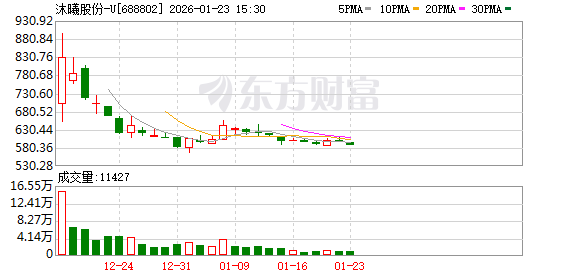
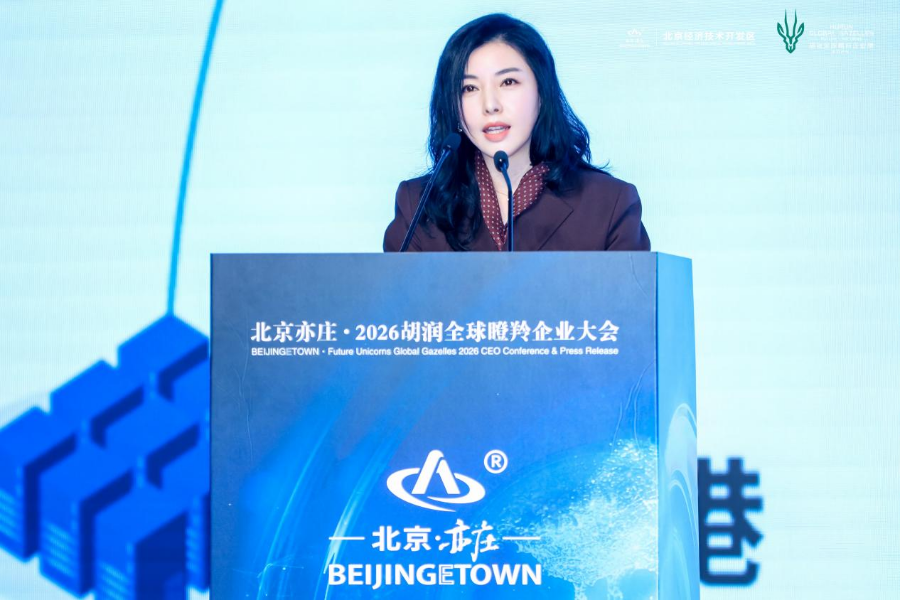
在国产GPU四小龙接连登陆资本市场的同时,国产算力芯片也进入大规模产业化落地的关键时期。现 场,施淑珏还谈到沐曦在商业化方面的探索,以及新一年的发展规划情况。 商业化核心门槛在于从"可用"到"好用"的跨越 施淑珏表示,沐曦已构建了从硬件架构到软件栈的完整自研技术体系。凭借全建制的研发团队,沐曦得 以推出覆盖人工智能训练和推理、通用计算、图形渲染的全栈GPU产品矩阵。目前,沐曦已具备从芯 片、到板卡、服务器、超节点直至部署大规模算力集群的全链条能力。 近年来,国产GPU的落地应用情况成为业界重点关注的话题。施淑珏指出,国产GPU商业化的核心门槛 在于从"可用"到"好用"的跨越。在她看来,衡量一款GPU是否好用,除了单芯片算力,也需要多维度的 能力,沐曦产品在通用性、易用性、稳定性和规模可扩展性四个方面均有亮眼的表现。 "我们更加注重真正交付给客户在AI应用场景实战中的产品性能。"她说。 近年来,在人工智能浪潮席卷全球、算力需求呈指数级增长的背景下,国产GPU成为资本市场瞩目的焦 点。2025年12月,摩尔线程、沐曦股份的接连科创板上市,再度将市场对国产GPU的追逐推向高潮。 近日,胡润研究院在北京亦庄发布的《2 ...
AI日报丨AI电力需求激增,加速美国得州及中西部碳捕集产业发展,英特尔Q1指引逊色,股价盘后大跌
美股研究社· 2026-01-23 10:55
Group 1 - The article discusses the rapid development of artificial intelligence (AI) technology and its potential opportunities in the market [3] - U.S. Senator Elizabeth Warren and three other Democratic senators have urged an investigation into the risks posed by large debt financing for AI companies, warning of potential financial crises if these companies fail to generate sufficient revenue [5] - The demand for clean and stable electricity is increasing due to AI-driven workloads, leading to accelerated development of carbon capture and storage (CCS) technologies, particularly in Texas and the Midwest [6] Group 2 - Public mutual funds have updated their top ten holdings, with new entries including Cambricon Technologies and Dongshan Precision, while companies like Industrial Fulian and SMIC have exited the list [8] - South Korea has implemented the world's first comprehensive AI law, aimed at promoting healthy industry development while addressing potential downsides, though concerns remain among small and medium enterprises regarding compliance [9] - Alphabet's Google is enhancing its AI search capabilities by personalizing responses based on user data from Gmail and Google Photos, allowing for more tailored search results [11] Group 3 - Intel reported better-than-expected fourth-quarter earnings, with a 9% year-over-year increase in its data center and AI business, but provided a weak first-quarter guidance due to supply constraints, leading to a significant drop in stock price [12] - Apple has expanded the responsibilities of hardware chief John Ternus, signaling his potential succession as CEO Tim Cook's successor, which emphasizes the importance of design in Apple's product strategy [13]



沐曦施淑珏:国产GPU商业化加速,软硬协同跨越“好用”门槛
2 1 Shi Ji Jing Ji Bao Dao· 2026-01-23 10:35
21世纪经济报道记者申俊涵北京报道 近年来,在人工智能浪潮席卷全球、算力需求呈指数级增长的背景下,国产GPU成为资本市场瞩目的焦点。2025年12月,摩尔 线程、沐曦股份的接连科创板上市,再度将市场对国产GPU的追逐推向高潮。 近日,胡润研究院在北京亦庄发布的《2025胡润中国人工智能企业50强》显示,寒武纪、摩尔线程、沐曦股份成为排名前三的 人工智能企业。据悉,该榜单按照企业价值进行排名,上市公司市值按照2026年1月9日的收盘价计算,非上市公司估值参考同 行业上市公司或者根据最新一轮融资情况进行估算。 "我们更加注重真正交付给客户在AI应用场景实战中的产品性能。"她说。 据悉,沐曦是国内少数实现千卡集群大规模商业化应用的GPU供应商,正研发和推动万卡集群的落地。施淑珏认为,这考验的 是中国企业最擅长的"工程能力"。事实上,中国企业在芯片设计方面,已经能够跟国际企业进行同等对话。 其中,寒武纪凭借 6300亿元的价值,位居榜单首位。2025年上半年,寒武纪实现营收28.8亿元,同比大幅增长43倍;摩尔线程 以3100亿元的价值排名第二,2025年公司以创科创板IPO最快过会纪录——88天。2025年前三季度 ...
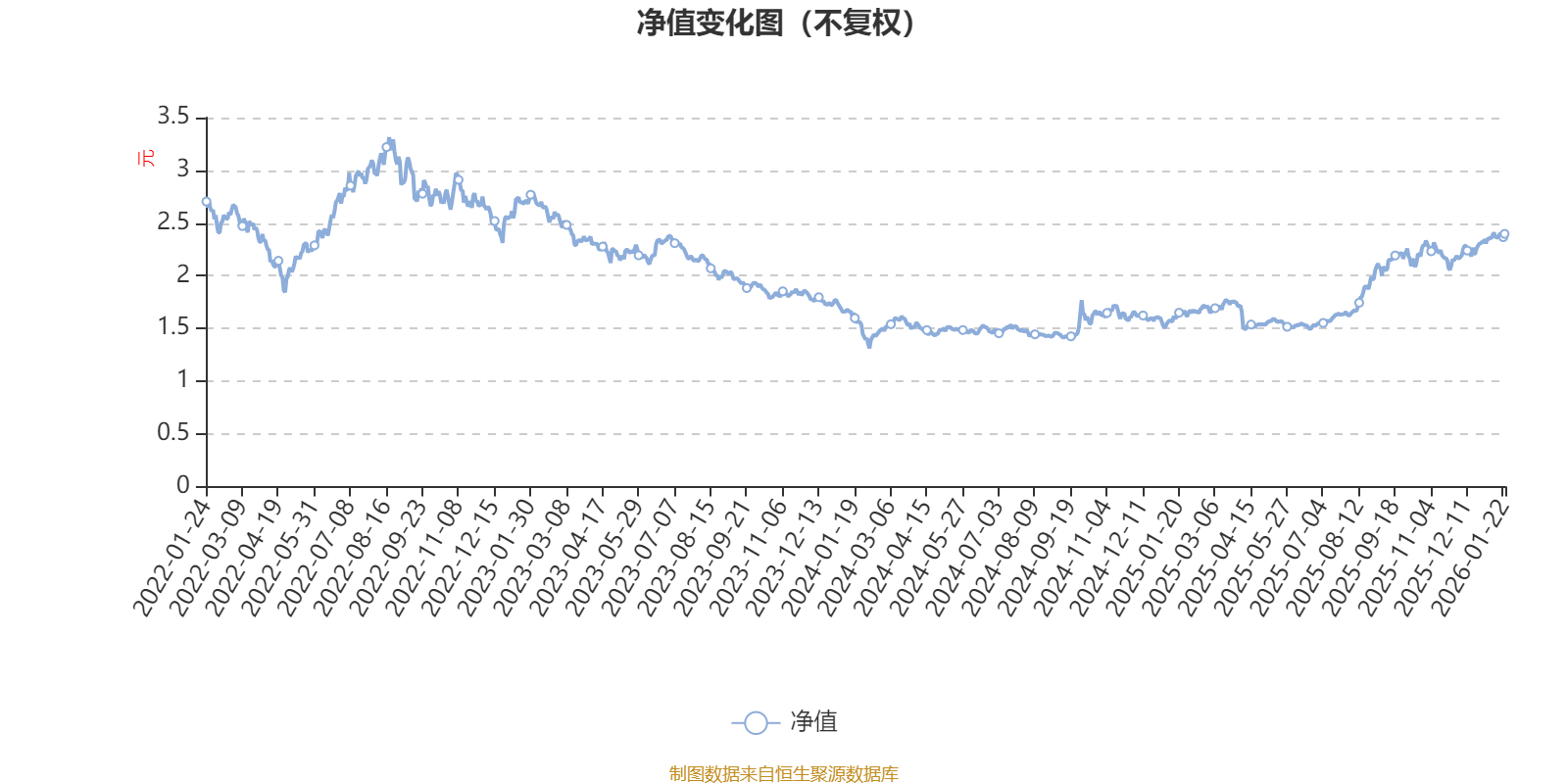
浦银安盛环保新能源A类:2025年第四季度利润247.83万元 净值增长率4.02%
Sou Hu Cai Jing· 2026-01-23 10:20
Core Viewpoint - The AI Fund Puyin Ansheng Environmental New Energy Class A (007163) reported a profit of 2.4783 million yuan for Q4 2025, with a net value growth rate of 4.02% during the reporting period [3]. Fund Performance - The fund's scale reached 62.5804 million yuan by the end of Q4 2025 [16]. - As of January 22, the unit net value was 2.397 yuan [3]. - The fund's performance over different time frames includes: - 3-month net value growth rate: 8.87%, ranking 73 out of 100 among comparable funds [3]. - 6-month net value growth rate: 46.35%, ranking 21 out of 100 [3]. - 1-year net value growth rate: 45.39%, ranking 49 out of 92 [3]. - 3-year net value growth rate: -11.96%, ranking 55 out of 68 [3]. Risk Metrics - The fund's Sharpe ratio over the past three years is 0.0855, ranking 55 out of 66 among comparable funds [9]. - The maximum drawdown over the past three years is 52.94%, with a ranking of 54 out of 66 [11]. - The highest quarterly maximum drawdown occurred in Q1 2020, at 29.78% [11]. Investment Strategy - The fund focuses on advanced manufacturing stocks, particularly in the tight supply chain segments of large storage, solid-state, and lithium batteries [3]. - The management is also monitoring opportunities in the photovoltaic industry and the expansion of new scenarios in wind power enterprises to enhance returns for investors [3]. Portfolio Concentration - The fund has a high concentration of holdings, with the top ten stocks including: - CATL (宁德时代) - Cambricon (寒武纪) - Industrial Fulian (工业富联) - Zhejiang Rongtai (浙江荣泰) - Shenzhen South Circuit (深南电路) - Yangtze Power (长江电力) - Shenghong Technology (胜宏科技) - Sungrow Power (阳光电源) - Topband (拓普集团) - Luoyang Molybdenum (洛阳钼业) [19]. Stock Positioning - The average stock position over the past three years is 81.04%, compared to a comparable average of 87.15% [14]. - The fund reached its highest stock position of 92.74% by the end of 2025, with a lowest position of 62.61% at the end of 2019 [14].