
奈雪的茶

Search documents
“零添加”成调味乳品零食等营销卖点!海天、金龙鱼等回应
Nan Fang Du Shi Bao· 2025-03-29 10:42
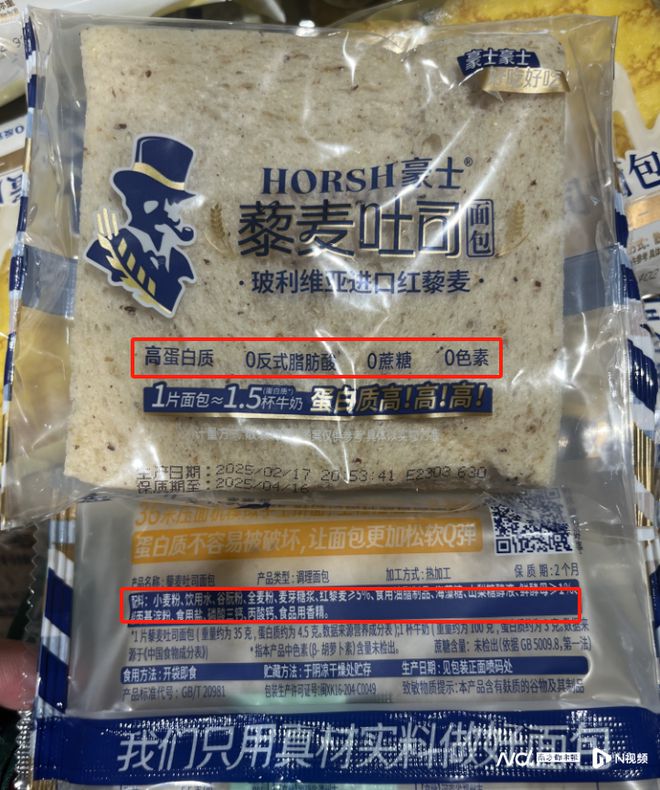
Core Viewpoint - The new food safety standards prohibit the use of terms like "zero added" and "not added" on pre-packaged foods, aiming to address misleading marketing practices in the industry. The implementation date is set for March 16, 2027, allowing companies a two-year transition period to comply [1][2][11]. Group 1: New Regulations - The newly released standards include 59 food safety national standards and amendments, specifically targeting misleading marketing language in pre-packaged food labeling [2][11]. - The revised GB 7718-2025 standard explicitly bans terms synonymous with "not added," such as "zero added" and "no added," to prevent consumer misunderstanding [2][13]. Group 2: Industry Response - Companies like Haidilao, Jinlongyu, and Qianhe have expressed support for the new regulations, indicating a commitment to comply and improve transparency in product labeling [11][12]. - The new regulations are expected to shift the industry focus from "label marketing" to "quality competition," encouraging companies to enhance product development and quality [11][12][14]. Group 3: Marketing Practices - Many brands, including Hao Shi and Wei Chuan, have been found to label products as "zero added" while containing other sugars or additives, highlighting the prevalence of misleading marketing in the industry [3][4][6]. - The dairy sector also sees widespread use of "zero added" claims, with brands like Nayuki and Mengniu promoting products as "zero sugar" or "zero fat," despite containing other forms of sugar [6][7]. Group 4: Consumer Misunderstanding - The marketing of "not added" products has created consumer misconceptions about the safety and quality of food products, leading to increased anxiety over the use of food additives [13][14]. - Experts argue that the new regulations will help consumers return to a more scientifically informed understanding of food safety, reducing the confusion caused by misleading claims [13][14].

奈雪的茶(02150) - 2024 - 年度业绩
2025-03-27 13:51
Financial Performance - For the fiscal year ending December 31, 2024, the total revenue decreased by 4.7% to RMB 4,921.2 million from RMB 5,164.1 million in 2023[4]. - Adjusted net loss for 2024 was RMB 918.7 million, a significant decline from a profit of RMB 20.9 million in 2023[4]. - Revenue for the year ended December 31, 2024, was RMB 4,921.2 million, a decrease of approximately 4.7% compared to RMB 5,164.1 million in 2023[28]. - The total comprehensive loss for the year was RMB (893,209) thousand, compared to a total comprehensive income of RMB 41,442 thousand in 2023[73]. - The company reported a basic and diluted loss per share of RMB (0.54) for 2024, compared to earnings per share of RMB 0.01 in 2023[72]. - The company reported a loss of RMB 2,124,388,000 for the year ending December 31, 2024, compared to a profit of RMB 122,083,000 in 2023[117]. - The comprehensive loss for the year ending December 31, 2024, was RMB 2,045,836,000, compared to a comprehensive income of RMB 218,970,000 in 2023[117]. Revenue Sources - The revenue from directly operated stores fell by 6.3% to RMB 4,158.4 million, accounting for 84.5% of total revenue[7]. - Revenue from freshly made tea sales was RMB 3,388,398,000, down from RMB 3,776,943,000 in 2023, indicating a decrease of about 10.3%[82]. - The revenue from bottled beverages increased by 10.0% to RMB 293.3 million, representing 6.0% of total revenue[8]. - The franchise business expanded from 81 to 345 stores, contributing a small portion of total revenue[14]. Membership and Customer Engagement - As of December 31, 2024, the registered membership reached approximately 102.8 million, with monthly active members totaling about 4.8 million and a monthly repurchase rate of 24.0%[12]. - Average daily order volume per tea shop dropped from 344.3 in 2023 to 270.5 in 2024[17]. - Self-pickup orders increased to 1,894,447 in 2024, representing 45.5% of total orders, up from 43.6% in 2023[18]. Operational Adjustments - The company plans to explore new store formats to adapt to different consumer scenarios and enhance market share[26]. - The company aims to enhance supply chain management and optimize operational costs at the headquarters level[27]. - The company has implemented a cautious strategy for business expansion due to a lack of significant recovery in consumer demand, extending the expected timeline for utilizing the proceeds[68]. Costs and Expenses - Material costs amounted to RMB 1,809.0 million, representing 36.8% of total revenue, an increase from RMB 1,699.4 million and 32.9% in 2023, driven by new franchise operations and a commitment to high-quality raw materials[31]. - Employee costs were RMB 1,434.6 million, accounting for 29.2% of total revenue, up from RMB 1,403.9 million and 27.2% in 2023, influenced by increased operating days despite a reduction in direct-operated store numbers[32]. - Advertising and promotional expenses increased to RMB 246.0 million, accounting for 5.0% of total revenue, up from RMB 165.8 million and 3.2% in 2023, as the company intensified marketing efforts[36]. Assets and Liabilities - The company's total assets decreased from RMB 7,540,364 thousand in 2023 to RMB 6,165,150 thousand in 2024, reflecting a reduction of approximately 18.2%[74]. - Current liabilities decreased from RMB 1,351,046 thousand in 2023 to RMB 1,152,683 thousand in 2024, a reduction of approximately 14.7%[75]. - The group's trade and other payables decreased from RMB 635.8 million as of December 31, 2023, to RMB 528.5 million as of December 31, 2024, primarily due to a reduction in payables to suppliers[54]. Cash Flow and Liquidity - The cash generated from operating activities dropped by 75.7% to RMB 201.6 million compared to RMB 828.5 million in 2023[4]. - As of December 31, 2024, the company held cash and deposits totaling RMB 2,694.2 million, providing sufficient liquidity for operational adjustments[27]. - The company's cash and cash equivalents increased from RMB 444,346 thousand in 2023 to RMB 579,122 thousand in 2024, an increase of about 30.3%[74]. Shareholder Actions - The company repurchased 6,966,308 shares in 2024 at a total cost of approximately RMB 22,641,000, with a maximum price of HKD 3.07 per share[98]. - The group canceled 7,538,000 shares during the year, with a total book value of RMB 18,167,000[116]. - The company did not declare or pay any dividends for the year ending December 31, 2024, consistent with 2023[121]. Future Outlook - The group plans to enhance its overall operations with 10.0% or HKD 484.2 million of the net proceeds, aimed at improving operational efficiency[68]. - The company has no plans for any future significant investments or capital asset plans beyond what has been disclosed in the prospectus[64].
霸王茶姬没有辜负茶叶
远川研究所· 2025-03-27 10:36
Core Viewpoint - The article discusses the rise of BaWang Tea Ji as a significant player in the tea beverage market, highlighting its unique business model and growth strategy amidst a saturated market. The company has demonstrated impressive growth metrics and a focus on efficiency and product quality, positioning itself as a potential leader in the industry. Group 1: Company Overview - BaWang Tea Ji was established in 2017, initially perceived as a minor player in the tea beverage market, but has since emerged as a leading brand with significant growth [1][5]. - The company has shown remarkable growth, with store numbers, GMV, and revenue projected to increase by 83.4%, 172.9%, and 167.4% respectively in 2024 [5]. - BaWang Tea Ji's product concentration is notably high, with three major products accounting for over 60% of its GMV in 2024, and a net profit margin exceeding 20% [6][27]. Group 2: Market Dynamics - The tea beverage market in China has seen substantial growth, with the market size surpassing 200 billion yuan, nearly tripling in five years [11]. - The industry has undergone significant changes, including a shift towards basic consumer goods and a restructured supply chain, which has facilitated the rise of brands like BaWang Tea Ji [10][14]. - The company has capitalized on the trend of health-conscious consumption, emphasizing transparency in product information and nutritional content [35]. Group 3: Business Strategy - BaWang Tea Ji's strategy focuses on a simplified supply chain and product offerings, allowing for high efficiency and rapid expansion, with a peak of 300 new stores opened in a single month [22][21]. - The brand has adopted a unique approach by emphasizing tea over milk in its products, creating a new category of tea beverages and avoiding the pitfalls of product homogeneity [31][37]. - The company aims to establish itself as a modern alternative to traditional tea consumption, similar to how Starbucks transformed coffee drinking habits [49][56]. Group 4: Future Prospects - BaWang Tea Ji is exploring new product lines and modernizing the tea industry, with plans to expand its offerings beyond traditional tea beverages [54][52]. - The brand's growth potential is linked to its ability to appeal to a new generation of consumers, making tea more accessible and enjoyable [47][48]. - The company is positioned to leverage the growing demand for healthier beverage options, aiming to become a staple in consumers' daily routines [36][35].

甜品赛道的行业整合正在加速
虎嗅APP· 2025-03-26 13:19
Core Viewpoint - The dessert industry faces significant challenges from the rapidly expanding new tea beverage sector, which is increasingly incorporating dessert items into their menus, leading to a blurred line between categories [1]. Market Dynamics - Top 10 new tea brands have increased their dessert SKU count by 170% over the past two years, with dessert sales now accounting for 18% of total sales, up from 5% [1]. - The dessert market is experiencing a slowdown in expansion among leading brands, while regional players are intensifying competition [1]. Company Strategy - The company plans to expand its franchise stores to over 2,000 in the next 3-5 years, targeting a net revenue of 1 billion from franchise operations [2]. - The company emphasizes a dual approach to supply chain management, balancing centralized production for core products with flexible supply chains for seasonal and trending items [14][15]. Competitive Landscape - The dessert sector is characterized by a lack of IPO cases, with leading brands like Baoshifu and Luxihe not yet listed, indicating a cautious approach to capital markets [3]. - The dessert market is currently in an "efficiency competition" phase, where companies must return to the fundamentals of business and respect single-store profitability to achieve sustainable growth [8]. Consumer Trends - The dessert market is primarily focused on intimate and family social settings, which limits its scene coverage compared to tea and coffee [5]. - There is a significant opportunity for dessert brands to innovate while maintaining traditional elements, as consumer preferences evolve [6][16]. Future Outlook - The company aims to achieve 500 direct-operated stores and 1 billion in net revenue from direct sales, alongside 1 billion from retail operations, while expanding its franchise network [19]. - The future of the dessert industry will likely hinge on enhancing consumer experience, adapting to changing lifestyles and consumption patterns [18].

夫妻店年入33亿,上市前夕遇麻烦
盐财经· 2025-03-21 09:10
文| 张婉莹、陈慧(实习生) 编辑| 何子维 视觉 | 顾芗 正值冲刺港股上市的紧要关头,茶饮品牌沪上阿姨却因3·15期间曝光的食品安全问题,陷入消费者对其 的信任危机。 据湖北经视《3·15特别报道》披露,其武汉汉口城市广场门店员工在制作杨枝甘露时,使用过期的西柚 粒,并撕毁原保质期标签后重新打印虚假效期。武汉市市场监管局已依据《食品安全法》对涉事门店立 案调查,最高面临货值金额20倍罚款。 湖北经视曝光了沪上阿姨食品安全问题 这一事件将沪上阿姨推向舆论风口,也为其港股上市前夕蒙上一层阴影。 从2013年上海人民广场一间25平米的档口奶茶店,到坐拥8500家门店的现制茶饮巨头, 由"75后"夫妻单 卫钧和周蓉蓉创办的沪上阿姨,用超过十年时间,在茶饮江湖中撕开一条"血路"。 然而,如今来看,过期食材重复使用的"标签门",或成为这家"夫妻店"IPO路上的拦路虎。 就在今年年初, 沪上阿姨带着年营收超33亿的成绩单冲刺港交所 ,试图成为继奈雪的茶、茶百道、古 茗、蜜雪冰城之后,第5家登陆资本市场的茶饮品牌。 可资本市场从来不缺故事,缺的是"确定性"。当蜜雪冰城以2.6万家门店在下沉市场筑起铜墙铁壁时,当 古茗、茶 ...

中金3月数说资产
中金点睛· 2025-03-17 23:51
Core Viewpoint - The economic performance in January-February 2025 shows stable growth despite a slight decline in production growth rates compared to December 2024, influenced by high base effects from the previous year and the timing of the Spring Festival. Investment is improving at a faster rate than consumption, but uncertainties remain in the real estate and export sectors, necessitating continued policy support [1][2][3]. Economic Performance - January-February industrial added value and service production index grew by 5.9% and 5.6% year-on-year, respectively, down 0.3 and 0.9 percentage points from December 2024 [1][2]. - Fixed asset investment and retail sales grew by 4.1% and 4.0% year-on-year, respectively, with increases of 1.9 and 0.3 percentage points compared to December 2024 [1][3]. - The demand structure indicates that investment is improving more significantly than consumption, with high growth in categories supported by the old-for-new policy, such as home appliances and furniture [1][3]. Real Estate Sector - The real estate sector shows signs of recovery in land acquisition in key cities, with land transaction area and value improving from December 2024's declines to -2.6% and 39.2% year-on-year, respectively [4]. - However, new construction starts have seen a significant decline of 29.6% year-on-year, indicating ongoing weakness in the sector [4][29]. - The sales of new homes have turned negative, with a 5.1% year-on-year decline in sales area, while second-hand home sales remain resilient, growing by 23% [28][29]. Investment Trends - Broad infrastructure investment grew by 9.9% year-on-year, with public utilities and transportation showing strong growth rates of 25.4% and 2.7%, respectively [5][40]. - Manufacturing investment remains robust, driven by prior export improvements and equipment upgrades, with significant increases in automotive and food manufacturing investments [6]. Consumer Market - The retail sales growth rate for January-February was 4.0%, with notable improvements in essential goods and certain discretionary categories, driven by consumption policies [35][36]. - The catering sector saw a 4.3% year-on-year increase, reflecting the impact of the Spring Festival [3][33]. - The introduction of the "Consumption Promotion Action Plan" aims to stimulate demand across various sectors, including maternal and child products [37][45]. Financial Sector - The financial data for February indicates a slight decline in new loans and a weak recovery in credit demand, highlighting the need for further monetary policy support [23][24]. - Government debt issuance has accelerated, contributing to a year-on-year increase in social financing [24][25]. Agricultural Sector - The agricultural sector is experiencing a gradual recovery, with leading companies expanding their market share through improved cost control and operational efficiency [49]. - The overall consumption of agricultural products remains stable, with expectations for a gradual increase in birth rates potentially benefiting the maternal and infant product market [45][46].

中国餐饮品类发展报告2025
Hong Can Chan Ye Yan Jiu Yuan· 2025-03-17 11:07
Investment Rating - The report does not explicitly state an investment rating for the industry Core Insights - The future of the restaurant market in China is expected to show a "dual-driven" development trend, characterized by a focus on "cost-performance" and category innovation, leading to differentiated consumption patterns [3] - In 2024, the national restaurant revenue is projected to reach nearly 5.6 trillion yuan, with a year-on-year growth of 5.3%, and the number of restaurant outlets is expected to approach 8 million, with a chain rate increasing to 22% [3][9] - The report highlights five major development trends in the restaurant market: significant track segmentation, a strong "smoky" consumption atmosphere, continuous category integration, innovative scene-based marketing, and a burgeoning trend of going overseas [3][60] Summary by Sections 1. Overview of the Restaurant Industry - The restaurant industry is entering a phase of competition within a 5 trillion yuan market, maintaining strong vitality [6] - In 2024, the national restaurant revenue is expected to exceed 5.5 trillion yuan, showcasing resilience and contributing significantly to the consumer market [9][10] 2. Track Insights - The innovation and iteration of store models are accelerating, with upstream service providers supporting brand expansion and upgrades [30] - The restaurant brands are exploring diverse store models to meet various consumer needs, including satellite stores and theme-based designs [36][41] 3. Development Highlights - The market is returning to "freshly cooked" offerings, with brands emphasizing the "smoky" atmosphere in their innovations [66] - The report identifies five key highlights: track segmentation, a strong "smoky" consumption atmosphere, deepening category integration, innovative scene-based marketing, and an ongoing trend of international expansion [60][61] 4. Segmented Tracks - The fast food segment is expected to lead in growth, with a market size exceeding 1 trillion yuan and a year-on-year growth rate of 7.5% in 2024 [3][76] - The report notes that Sichuan cuisine, Cantonese cuisine, Jiangsu-Zhejiang cuisine, and Hunan cuisine are the top four in terms of store numbers, with Hunan cuisine showing the highest growth rate [80] 5. Trends and Conclusions - The main theme of "cost-performance" continues to deepen, while category innovation is expected to show "dual breakthroughs" [3][5] - The report emphasizes the importance of adapting to consumer preferences and market dynamics to seize new opportunities in the evolving restaurant landscape [3][60]
海底捞(06862):预计2024营收与利润端低单位数增长,1Q25经营承压
Huajing Securities· 2025-03-16 03:30
Investment Rating - The report maintains a "Buy" rating for Haidilao with a target price of HK$19.45, representing a potential upside of 15% from the current price of HK$16.96 [1][5][6]. Core Views - The report anticipates low single-digit growth in both revenue and profit for 2024, with a projected revenue increase of 4.0% to RMB 431.1 billion and a net profit growth of 2.1% to RMB 45.9 billion [3][5]. - The company is expected to face significant operational pressure in Q1 2025, influenced by high base effects from the previous year and recent public relations issues at specific locations [4][5]. - Despite challenges, the long-term growth logic of "steady revenue growth and outstanding profitability" remains intact, with a projected market capitalization range of HK$570 billion to HK$1,141 billion based on various assumptions [5][6]. Revenue and Profit Forecasts - For 2024, revenue is expected to reach RMB 431.1 billion, with a net profit of RMB 45.9 billion, reflecting a year-on-year growth of 4.0% and 2.1% respectively [3][6]. - The report projects a slight increase in gross margin to 61.5% due to lower beef and lamb prices, despite a slight decline in net profit margin to 10.7% [3][6]. Adjustments to Estimates - The target price has been raised by 25% from HK$15.55 to HK$19.45, reflecting a 19x P/E ratio for 2026 [1][5]. - Revenue estimates for 2024-2026 have been adjusted downwards by 6.5%, 9.2%, and 10.5% respectively, while net profit estimates have been slightly adjusted upwards for 2024 and 2025, but down for 2026 [7][6]. Financial Summary - The financial data indicates a steady increase in revenue from RMB 31,039 million in 2022 to an expected RMB 46,859 million in 2026, with net profit projected to grow from RMB 1,374 million in 2022 to RMB 5,362 million in 2026 [6][13]. - The report highlights a consistent improvement in earnings per share (EPS), projected to rise from RMB 0.25 in 2022 to RMB 0.96 in 2026 [6][13].

海底捞:预计2024营收与利润端低单位数增长;1Q25经营承压-20250316
Huajing Securities· 2025-03-16 03:04
Investment Rating - The report maintains a "Buy" rating for Haidilao with a target price of HK$19.45, representing a potential upside of 15% from the current price of HK$16.96 [1][5]. Core Insights - The report anticipates low single-digit growth in both revenue and profit for 2024, with a projected revenue increase of 4.0% to RMB 431.1 billion and a net profit growth of 2.1% to RMB 45.9 billion [3][5]. - The first quarter of 2025 is expected to face significant operational pressure, with potential revenue and profit declines due to high base effects from the previous year [4][5]. - The valuation is based on a 19x P/E ratio for 2026, with adjusted earnings per share (EPS) estimates for 2024, 2025, and 2026 being RMB 0.82, RMB 0.91, and RMB 0.96 respectively [5][6]. Summary by Sections Financial Performance - Revenue for 2024 is estimated at RMB 431.1 billion, with a 4.0% year-on-year growth. The net profit is projected to be RMB 45.9 billion, reflecting a 2.1% increase [3][6]. - The report outlines a slight increase in gross margin to 61.5% for 2024, driven by lower beef and lamb prices [3][7]. Earnings Forecast - The report adjusts the revenue forecasts downwards for 2024-2026 by 6.5%, 9.2%, and 10.5% respectively, while net profit estimates are adjusted upwards by 2.1% for 2024 and 1.6% for 2025, but down by 0.4% for 2026 [7][6]. Market Position - Haidilao's market capitalization is approximately US$12.16 billion, with a current share count of 5,574 million [1][5]. - The report highlights that the company is expected to maintain a stable growth trajectory despite facing challenges in the upcoming quarters [5][6].
四川成都杀出年入百亿IPO,净利润率仅7.4%,营销投入巨大
凤凰网财经· 2025-03-15 15:42
01 市场竞争激烈 尽管中国现制茶饮市场规模已突破千亿元,并在持续增长,但行业增速正在放缓。根据中国连锁经营协会数据,我国现制茶饮店行业规模虽然保持增 长,但是面对2025年,新茶饮市场规模增速预计将从2023年的44.3%放缓至2025年的12.4%。 据GeoQData数据显示,2024年上半年101家连锁新茶饮品牌新开店量与去年同期持平,但闭店量却提升了近3000家。全国超过3000个品牌在市场中激战, 部分品牌选择降价以维持竞争力,喜茶和奈雪的茶将价格压至15元区间,而蜜雪冰城凭借6元柠檬水占据下沉市场,中端品牌则面临"上下挤压"的困境。霸 王茶姬虽在一二线城市占据一定市场份额,但如何在下沉市场维持竞争力仍是挑战。 近年来,国内新茶饮市场竞争日趋激烈,行业"内卷"现象明显。虽然整体市场规模仍在增长,但增速却在放缓。在这样的市场环境下,霸王茶姬虽然扩张 迅速,但业绩增长压力加大,寻求海外市场成为其突破口。 来源丨征探财经 作者丨征探君 霸王茶姬的快速扩张主要依赖于加盟模式,这一模式在助力门店数量增长的同时,也带来了一定的管理风险,尤其是食品安全问题。近年来,部分霸王茶 姬门店因食品安全问题被投诉,如何在 ...