
网易

Search documents
科网股分化,快手涨超11%,汽车股下挫,蔚来跌近6%
2 1 Shi Ji Jing Ji Bao Dao· 2026-01-05 09:28
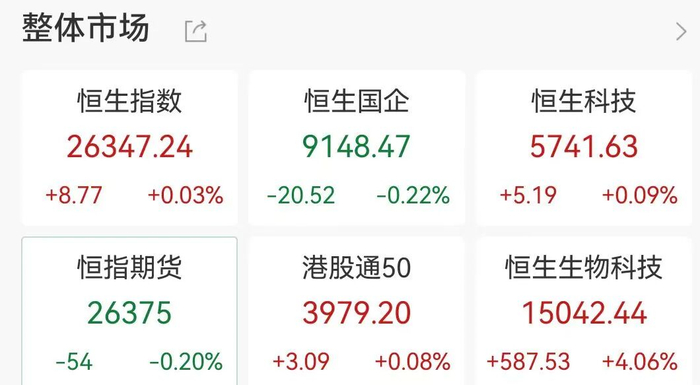
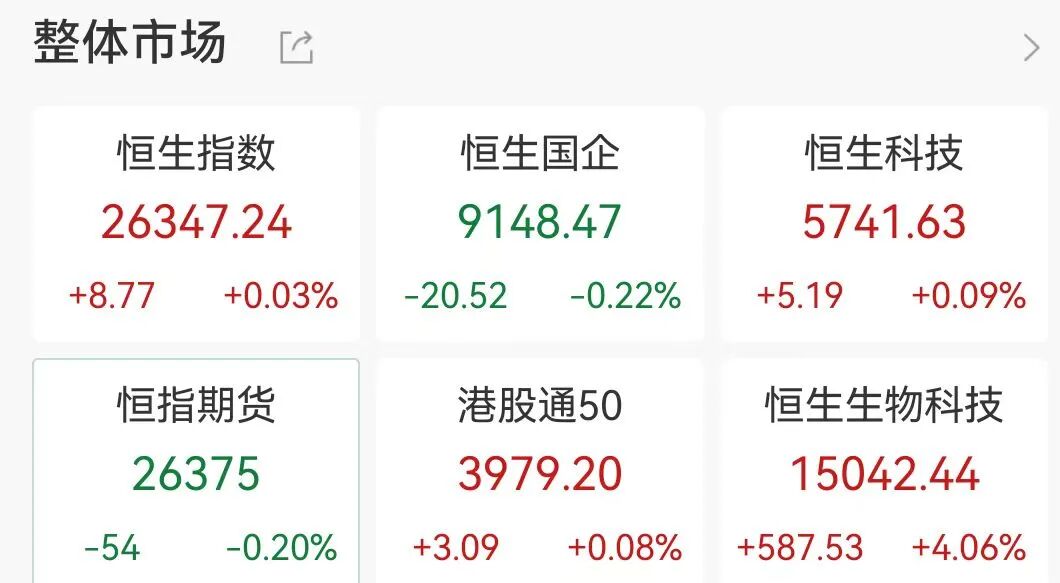
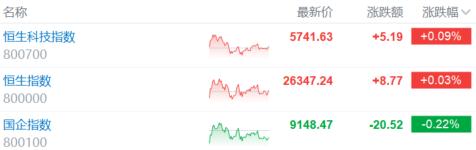
Market Overview - The Hong Kong stock market showed a narrow fluctuation today, with the Hang Seng Index slightly up by 0.03% to close at 26,347.24, while the Hang Seng China Enterprises Index fell by 0.22% to 9,148.47, and the Hang Seng Tech Index increased by 0.09% to 5,741.63 [1][2]. Technology Sector - The technology sector exhibited mixed performance, with Kuaishou rising over 11%, Bilibili increasing by over 4%, Alibaba up by over 2%, while NetEase and Xiaomi both dropped by over 2% [2]. Automotive Sector - The automotive stocks faced significant declines, with NIO down nearly 6%, XPeng Motors falling over 4%, and Li Auto dropping over 3%. Great Wall Motors also saw a decline of over 6% [4]. Biopharmaceutical Sector - The biopharmaceutical sector saw gains, with Rongchang Biopharmaceutical rising over 7%. The China Drug Evaluation Center (CDE) indicated that by December 31, 2025, 76 innovative drugs are expected to be approved, surpassing the 48 approved in 2024, marking a historical high [4]. Real Estate Sector - The real estate sector showed strength, with China Rongxin rising over 6% [5]. Brain-Computer Interface Sector - The brain-computer interface concept surged, with Nanjing Panda Electronics rising over 39%. Elon Musk announced that his company Neuralink plans to begin large-scale production of brain-computer interface devices in 2026 [5]. Oil Sector - The oil sector weakened, with PetroChina declining by over 3%. This follows reports of U.S. military actions against Venezuela, with plans for U.S. oil companies to invest billions in repairing Venezuela's oil infrastructure while maintaining an oil embargo [5].


科网股分化,快手涨超11%,汽车股下挫,蔚来跌近6%,小鹏跌超4%
2 1 Shi Ji Jing Ji Bao Dao· 2026-01-05 09:00
港股汽车股跌幅居前,蔚来跌近6%,小鹏汽车跌超4%、零跑汽车跌超3%,长城汽车(601633)跌超6%。 | 名称 | 现价 | 涨跌幅 -- | | --- | --- | --- | | 蔚来-SW | 38.860 | -5.95% | | 9866.HK | | | | 小鹏汽车-W | 76.650 | -4.60% | | 9868.HK | | | | 零跑汽车 | 47.880 | -3.39% | | 9863.HK | | | | 比亚迪股份 | 95.800 | -2.99% | | 1211.HK | | | | 长城汽车 | 14.190 | -6.15% | | 2333.HK | | | | 吉利汽车 | 17.600 | -3.30% | | 0175.HK | | | 生物医药股涨幅居前,荣昌生物涨超7%。2025年12月31日,CDE官网显示,荣昌生物维迪西妥单抗新适应症拟纳入突破性治疗品种。此外,1月3日晚 间,国家药监局官方微信公号发文称,2025年我国已批准上市的创新药达76个,大幅超过2024年全年48个,创历史新高。此外,2025年我国创新药对外 授权交易总金额超 ...
2026一开门,大佬们就忙着加仓
Ge Long Hui· 2026-01-05 08:57
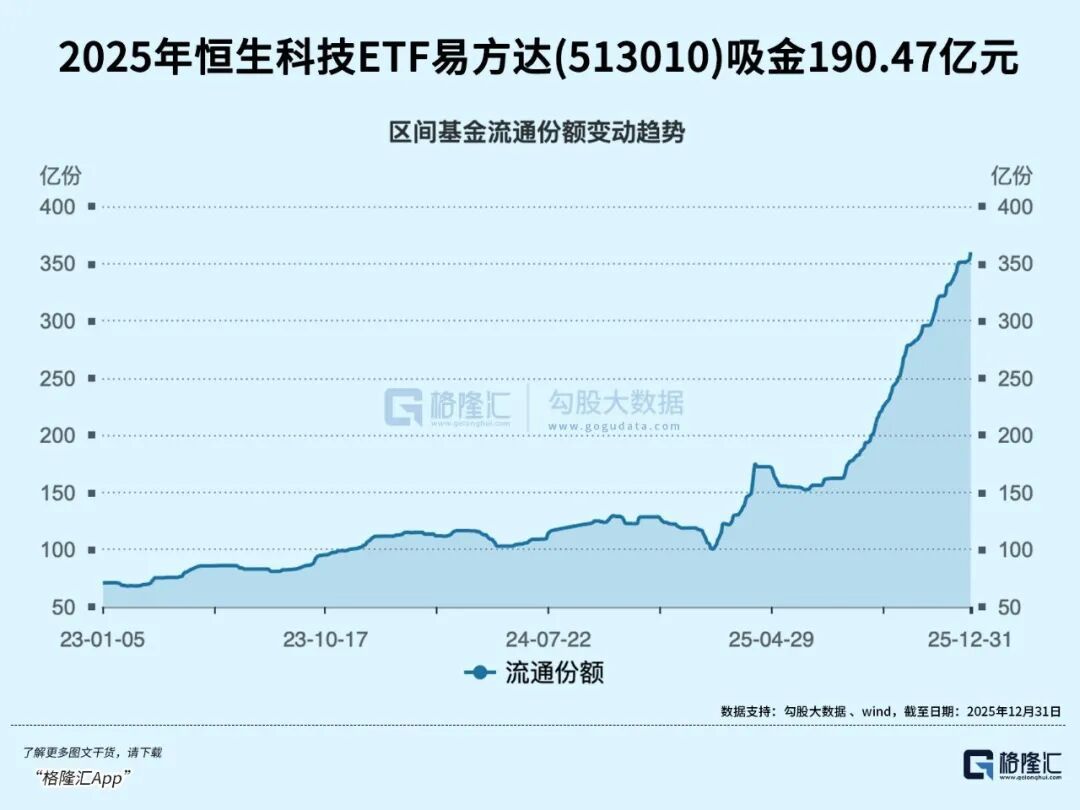
Group 1 - The core viewpoint of the article highlights the strong performance of the Hong Kong stock market, particularly the technology sector, driven by multiple factors including currency appreciation, capital inflows, and favorable policies [1][5][41] - The Hong Kong Technology Index saw a significant increase, with the Hang Seng Technology Index rising over 4% on the first trading day of the year [1][3] - The Chinese Yuan has appreciated against the US dollar, breaking the "7" psychological barrier, which reflects a fundamental shift in confidence and expectations regarding the Chinese economy [8][9][10] Group 2 - The appreciation of the Yuan has led to an increase in the intrinsic value of Chinese companies listed in Hong Kong, making them more attractive to investors [10][11] - In 2025, net inflows from mainland investors through the Hong Kong Stock Connect exceeded 1.4 trillion HKD, a 73.89% increase from the previous year, indicating strong demand for Hong Kong stocks [15][16] - Both domestic and foreign capital are favoring large-cap and technology stocks, with significant net purchases of companies like Alibaba, Tencent, and Meituan [20][22] Group 3 - The technology sector is particularly favored due to improved profit margins and cash flows following cost-cutting measures, as well as advancements in AI applications [26][27] - The Hang Seng Technology Index's dynamic P/E ratio is currently at 22.57, below its historical average, indicating a potential for value recovery [34][35] - The article suggests that the combination of currency strength, policy support, and technical corrections creates a conducive environment for a rebound in the Hong Kong technology sector [41][42]
科网股分化,快手涨超11%,汽车股下挫,蔚来跌近6%,小鹏跌超4%
21世纪经济报道· 2026-01-05 08:55
| 名称 | 现价 | 涨跌幅 -- | | --- | --- | --- | | 快手-W | 73.600 | 11.09% | | 1024.HK | | | | 毕 哩 哔 里-W | 209.800 | 5.06% | | 9626.HK | | | | 华虹半导体 | 84.000 | 3.32% | | 1347.HK | | | | 京东健康 | 58.200 | 3.28% | | 6618.HK | | | | 阿里巴巴-W | 152.800 | 2.55% | | 9988.HK | | | | 阿里健康 | 5.320 | 2.11% | | 0241.HK | | | | 中芯国际 | 76.500 | 1.86% | | 0981.HK | | | | 金山软件 | 29.700 | 1.78% | | 3888 HK | | | 港股汽车股跌幅居前,蔚来跌近6%,小鹏汽车跌超4%、零跑汽车跌超3%,长城汽车跌超 6%。 | 名称 | 现价 | 涨跌幅 -- | | --- | --- | --- | | 蔚来-SW | 38.860 | -5.95% | | 9866.HK ...

港股收评:脑机接口概念火爆!科技股分化,快手飙涨11%
Ge Long Hui· 2026-01-05 08:47
Market Overview - The Hong Kong stock market showed a narrow range of fluctuations on January 5, with the Hang Seng Index slightly up by 0.03%, the Hang Seng China Enterprises Index down by 0.22%, and the Hang Seng Tech Index up by 0.09% [1][2]. Sector Performance - Large tech stocks exhibited mixed performance, with Kuaishou surging by over 11%, while other notable stocks like Bilibili and Alibaba also saw gains of over 5% and 2%, respectively. Conversely, stocks like NetEase and Xiaomi fell by over 2% [2][4]. - The biotechnology sector was active, with companies like Rongchang Bio and Kelun-Bothai rising over 7%, and other firms like Fuhong Hanlin and Tigermed increasing by over 6% [7]. - The insurance sector saw strong gains, with China Pacific Insurance up over 6% and New China Life Insurance up over 5%. Analysts highlighted five key trends in the life insurance industry for 2026, including rapid growth in new business and a shift in customer demographics [8]. - The automotive sector faced declines, with Great Wall Motors dropping over 6% and NIO nearly 6%. Despite some brands achieving record sales in 2025, only a few met their annual sales targets [10]. Notable Stock Movements - Kuaishou's stock price reached 73.60 HKD, reflecting an increase of 11.09% with a market cap of 317.91 billion HKD [5]. - Nanjing Panda Electronics surged by nearly 40%, while Micron Brain Science and Brainhole Technology rose by nearly 20% and over 17%, respectively, following news of Neuralink's plans for large-scale production of brain-computer interface devices [6][4]. - The "three oil giants" saw significant declines, with China Petroleum and China National Offshore Oil Corporation both dropping over 3% due to geopolitical tensions and OPEC+ decisions [9]. Capital Flows - Southbound funds recorded a net inflow of 18.723 billion HKD, with the Shanghai-Hong Kong Stock Connect contributing 9.809 billion HKD and the Shenzhen-Hong Kong Stock Connect contributing 8.914 billion HKD [12]. Future Outlook - Goldman Sachs recommends overweighting Chinese stocks, predicting a 15% to 20% annual increase in the Chinese stock market for 2026 and 2027. Guosen Securities also sees potential in the market driven by a weaker US dollar and improved domestic liquidity in the spring of 2026 [15].
港股收评:香港恒生指数收涨0.03% 恒生科技指数涨0.09% 脑机接口概念股领涨
Jin Rong Jie· 2026-01-05 08:45
Group 1 - The Hang Seng Index closed at 26,347.24 points, up 0.03%, while the Hang Seng Tech Index rose 0.09% to 5,741.63 points. The National Enterprises Index fell 0.22% to 9,148.47 points, and the Red Chip Index increased by 0.07% to 4,086.74 points [1] - Brain-computer interface concept stocks led the market, with Nanjing Panda Electronics rising nearly 40% and Brain动极光 up over 15%. Meanwhile, domestic property stocks also saw gains, with融信中国 up over 6% and世茂集团 up over 5% [1] - New energy vehicle stocks continued to decline, with Great Wall Motors down over 6%, NIO down nearly 6%, and XPeng Motors down over 4% [1] Group 2 - GF Securities indicated that the recent rise in Hong Kong stocks is supported by fundamentals, with signs of structural recovery in profitability starting from the second half of 2024, driven by stable internal and external demand and macro policy support [1] - The report highlighted that most core companies in strategic technology sectors between China and the U.S. are listed in Hong Kong, with growth in high-end manufacturing and technology transitioning from "single-point breakthroughs" to "multi-point explosions" [1] - The weighting of new economy-related stocks in the Hang Seng Index has increased from 17% to nearly 50%, indicating a shift from traditional economic cycles to hard technology sectors such as AI applications, new energy, and semiconductors [1] Group 3 - Huajin Securities noted a correlation coefficient of approximately 0.5 between the performance of the Hang Seng Index during the New Year holiday and the performance of the Shanghai Composite Index in the following 10 trading days, suggesting that a strong performance in Hong Kong could positively influence A-shares [2] - The Hang Seng Index, Hang Seng Tech Index, and Hang Seng China Enterprises Index rose by 2.8%, 4%, and 2.9% respectively on January 2, indicating a potentially strong short-term outlook for A-shares following the holiday [2]
中国游戏十年
3 6 Ke· 2026-01-05 08:43
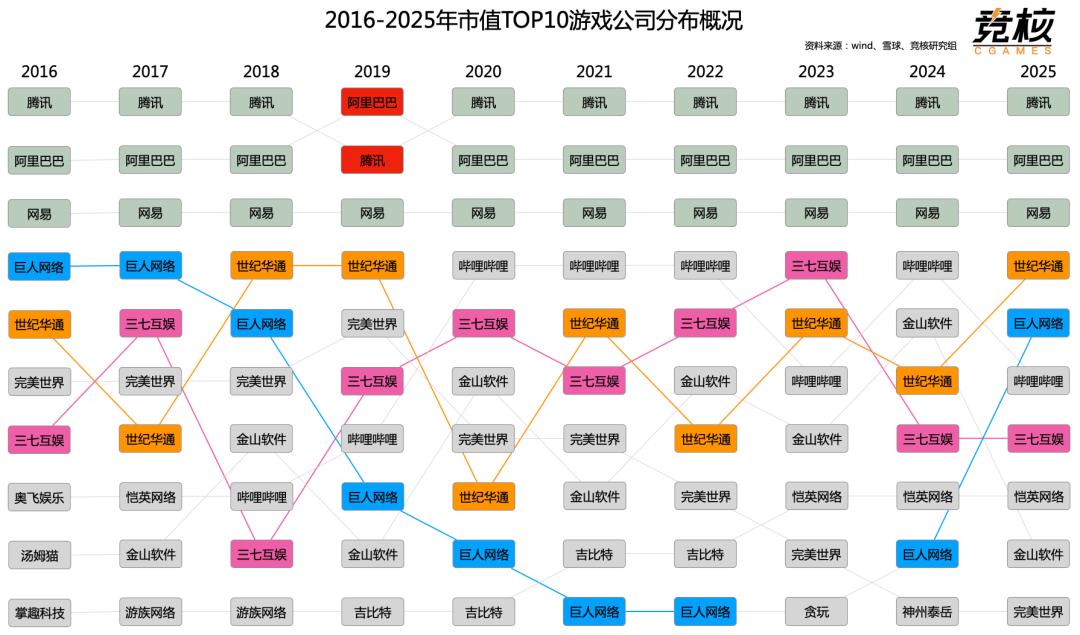
Core Insights - The Chinese gaming industry has evolved significantly over the past decade, transitioning from a focus on heavy mobile games to a more structured competitive landscape where major companies dominate the market [1][2] - The user base has become increasingly discerning, with players now demanding higher quality and more engaging experiences, leading to intense competition among developers [2][11] - The market is witnessing a shift from explosive growth to a more stable phase, with top companies like Tencent and NetEase solidifying their positions in terms of market capitalization and profitability [3][10] Industry Evolution - The first phase (2014-2017) was characterized by rapid growth, with Tencent and NetEase leading the charge, while mid-tier companies also benefited from the mobile gaming boom [6] - The second phase (2018-2020) saw market consolidation and regulatory pressures, leading to a reshuffling of market positions and a focus on sustainable growth [7] - The third phase (2021-present) has resulted in a solidification of the top players, with Tencent and NetEase maintaining their dominance in market capitalization and profitability [7][10] Financial Performance - The top 10 gaming companies have shown a trend of increasing stability in net profits, with Tencent's gaming business contributing significantly to its overall profitability [10][12] - The average net profit margin for the top 10 companies is over 22%, indicating a shift towards more sustainable business models [10] User Dynamics - The gaming audience has evolved into one of the most discerning user groups globally, with players now actively engaging in discussions about game quality and features [2][11] - The competition has intensified, with companies focusing on various aspects such as gameplay, art, and narrative to attract and retain users [2][11] Market Trends - The industry is moving towards a "quality first" approach, with successful games like "Genshin Impact" and "Yuan Yun Sixteen Sounds" setting new standards for content-driven products [11][12] - The commercialization model has shifted towards gacha mechanics, which have become a staple in mobile gaming, allowing for continuous revenue generation [15][16] Global Expansion - The overseas market for Chinese games has seen significant growth, with revenue from international sales surpassing $20 billion, marking a historical high [36][37] - Major companies like Tencent and miHoYo have successfully penetrated global markets, with titles like "PUBG MOBILE" and "Genshin Impact" becoming global phenomena [37][38] Technological Integration - The integration of AI in game development has become commonplace, with companies investing heavily in AI tools to enhance production efficiency and gameplay experiences [30][32] - The industry is witnessing a transition towards generative AI, which is expected to revolutionize game design and player interaction [30][34]





收评:港股恒指涨0.03% 科指涨0.09% 石油股走弱 生物医药股走强 快手涨超11%
Xin Lang Cai Jing· 2026-01-05 08:13
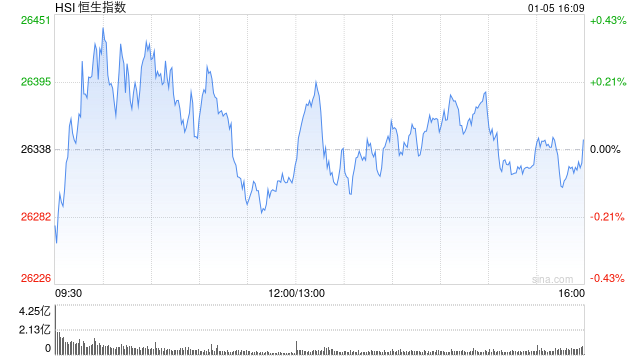
Market Overview - The Hong Kong stock market showed mixed results, with the Hang Seng Index up 0.03% to 26,347.24 points, the Hang Seng Tech Index up 0.09%, and the State-Owned Enterprises Index down 0.22% [1][7] Technology Sector - Internet stocks had varied performances, with Kuaishou rising over 11%, Bilibili up over 4%, Alibaba increasing over 2%, while NetEase and Xiaomi fell over 2% [1][7] Biopharmaceutical Sector - Biopharmaceutical stocks led the gains, with Rongchang Biopharmaceutical rising over 7%. The CDE announced that Rongchang's new indication for Vidi Xi Tuo monoclonal antibody is set to be included as a breakthrough therapy [3][9] - In 2025, China approved 76 innovative drugs for market entry, significantly surpassing the 48 approved in 2024, marking a historical high. The total value of innovative drug licensing transactions exceeded $130 billion, with over 150 transactions, also a record [3][9] Real Estate Sector - Real estate stocks strengthened, with Ronxin China rising over 6%. A recent article in the Communist Party's publication "Qiushi" has raised investor hopes for a policy shift, suggesting a more substantial approach to real estate policy this year [3][11] - Morgan Stanley noted that the commentary indicates a potential change in the official stance towards the real estate market, with the next policy windows being the March "Two Sessions" and the April Politburo meeting [11] Brain-Computer Interface Sector - The brain-computer interface sector saw significant gains, with Nanjing Panda Electronics rising over 39%. Elon Musk announced that his company Neuralink plans to begin large-scale production of brain-computer interface devices in 2026 [4][11] - According to Precedence Research, the global brain-computer interface market is expected to grow to approximately $12.4 billion by 2034, with a CAGR of 17% from 2025 to 2034 [4][11] Oil Sector - Oil stocks weakened, with PetroChina falling over 3%. The U.S. has launched military actions against Venezuela, with President Trump stating that U.S. oil companies will invest billions to repair Venezuela's oil infrastructure while maintaining a complete oil embargo [6][12] Automotive Sector - Automotive stocks faced declines, with Great Wall Motors dropping over 6%. CICC reported that the domestic automotive industry may face challenges under continued policy conditions, while overseas sales remain stable [6][12] - The investment strategy suggests focusing on auto parts over complete vehicles, with attention to opportunities in robotics, smart driving, and AI-related developments [12]
平安证券(香港)港股晨报-20260105
Ping An Securities Hongkong· 2026-01-05 05:21
Market Overview - The Hong Kong stock market experienced fluctuations, with the Hang Seng Index closing at 23,831 points, down 145 points or 0.61% [1] - The market saw a net inflow of funds through the Stock Connect, totaling 484 million HKD, with 283 million HKD from Shanghai and 201 million HKD from Shenzhen [1] - The semiconductor sector in Hong Kong showed strong performance, with the Wind Hong Kong Semiconductor Index rising by 7.87% [1] US Market Performance - The US stock market opened the year with mixed results; the Dow Jones increased by 0.66%, the S&P 500 by 0.19%, while the Nasdaq fell by 0.03% [2] - The semiconductor sector in the US saw significant gains, with the Philadelphia Semiconductor Index rising by 4% [2] - TSMC received a yearly license from the US government, allowing it to export chip manufacturing equipment to its Nanjing plant in 2026 [2] Investment Outlook - The Hong Kong market is expected to continue experiencing wide fluctuations, but southbound capital remains a significant net inflow, totaling 1,404.8 billion HKD in 2025, surpassing the 807.9 billion HKD inflow in 2024 [3] - The report emphasizes the importance of "technological self-reliance" as a core theme for future investments in Hong Kong stocks, particularly in sectors like semiconductors and robotics [3] - Recommendations include focusing on sectors supported by policies for "expanding domestic demand," such as sports apparel and non-essential services, as well as undervalued state-owned enterprises with high dividends [3] Key Company Highlights - Baidu Group's stock rose over 9% as it submitted a mainboard listing application for its subsidiary Kunlun Chip [1] - Netease-S saw a 6.6% increase, with its game "Yanyun" topping the iOS game sales chart in China [1] - In the US market, Micron Technology surged over 10%, while Nvidia and Intel also saw significant gains [9] Electric Vehicle Market - BYD surpassed Tesla in global electric vehicle sales in 2025, with a total of 4.6024 million units sold, a year-on-year increase of 7.73% [9] - Tesla's production and delivery numbers for Q4 2025 showed a decline, with production at 434,400 units, down 5.46% year-on-year [9] - The report suggests monitoring companies involved in the electric vehicle supply chain, including XPeng Motors and BYD [9]
资讯日报:特朗普宣称将接管委内瑞拉直至完成权力过渡安排-20260105
Guoxin Securities Hongkong· 2026-01-05 05:11
Market Overview - On January 5, 2026, the Hang Seng Index closed at 26,338, up 2.76% for the day and 2.76% year-to-date[3] - The Hang Seng Technology Index surged 4.00% to close at 5,736, marking a strong start to the year[3] - The Nasdaq China Golden Dragon Index rose 4.38%, achieving its largest single-day gain since May 12, 2025[2] Sector Performance - Baidu Group's stock increased by over 9% following the announcement of its subsidiary Kunlun Chip's IPO application, with expected revenue of approximately 5 billion yuan for 2025[9] - Aerospace and defense stocks saw significant gains, with Asia Pacific Satellite rising 34.53% and Goldwind Technology up over 20%[9] - Semiconductor stocks performed strongly, with Hua Hong Semiconductor up over 9% and SMIC rising over 5%[9] Economic Indicators - The U.S. Federal Reserve President anticipates a moderation in inflation and stable employment, projecting economic growth around 2% for the year[13] - The Chinese government has adjusted the weight of the U.S. dollar, euro, and yen in the CFETS RMB exchange rate index effective January 1, 2026[13] Investment Trends - The tourism and leisure sector showed active performance, with Hong Kong Travel and Ctrip Group both rising over 5%[9] - Institutional forecasts suggest that the net profit growth rate for Hong Kong Stock Connect constituents is expected to reach high single digits in 2026, with technology and healthcare sectors leading the growth[9]