
未提及具体公司

Search documents
截至10月底,山东辖区个人养老金开户数破1000万户
Qi Lu Wan Bao· 2025-11-27 07:18
Core Viewpoint - The Shandong Provincial Government is actively promoting the personal pension system, which has seen significant growth in account openings and product offerings, aiming to enhance the financial services for the elderly and the silver economy in the region [1][2]. Group 1: Implementation and Growth of Personal Pension System - The personal pension system in Shandong has been fully implemented for nearly a year, with over 10 million accounts opened by the end of October [1]. - More than 500 financial products have been launched, covering various types such as savings, insurance, funds, and wealth management [1]. - The majority of account holders are middle-aged individuals, with those aged 30-50 accounting for nearly 60% of the total [1]. Group 2: Promotion and Awareness Strategies - The Shandong Financial Regulatory Bureau has adopted a "three-pronged" approach to promote the personal pension system, focusing on multi-channel publicity [1]. - Online channels include official websites, mobile banking, and social media, while offline efforts involve community outreach and educational seminars [1]. - These initiatives aim to increase public awareness and understanding of the personal pension system, encouraging a culture of early savings and long-term investment [1]. Group 3: Product Development and Risk Management - Financial institutions are encouraged to develop a diverse range of stable and secure pension products tailored to different age groups and risk preferences [2]. - The actual contribution rate for personal pension accounts has increased by 7 percentage points since the beginning of the year, with contributions rising by over 80% [2]. - A robust risk management framework is being established to ensure product suitability and transparency, with strict guidelines to prevent misleading sales practices [2]. Group 4: Future Outlook and Commitment - The Shandong Financial Regulatory Bureau emphasizes the importance of broad societal participation in the personal pension system, viewing it as a long-term and systematic initiative [3]. - The bureau plans to continue enhancing product offerings, regulatory standards, and service quality to fulfill the vision of a secure and fulfilling retirement for the elderly [3].
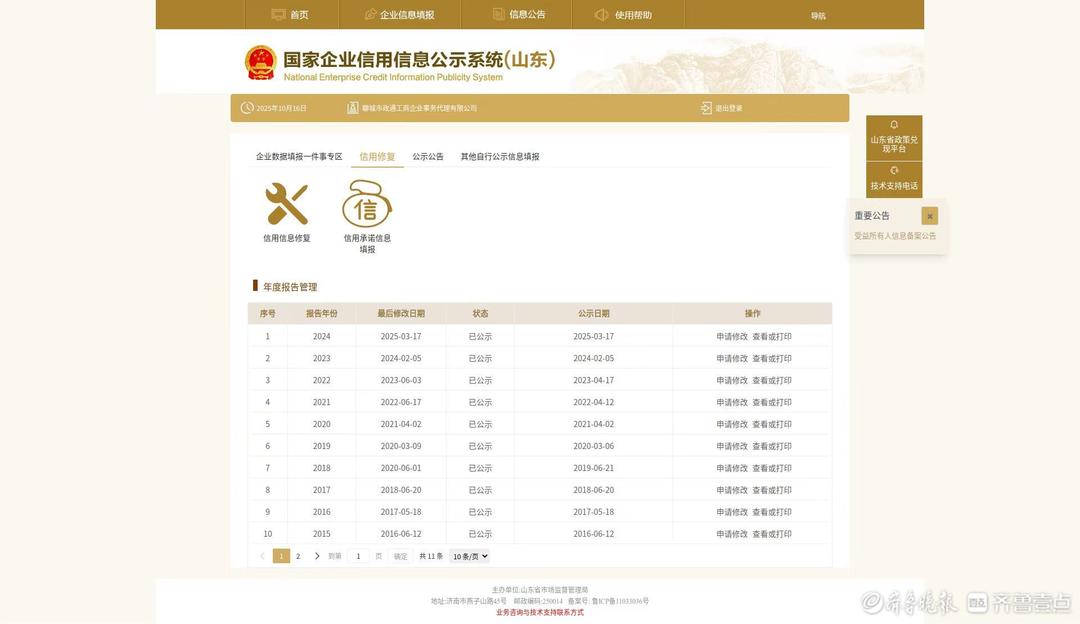
推行“惩教结合+修复回访”机制 彰显审慎监管“聊城温度”
Qi Lu Wan Bao· 2025-11-27 04:02
Core Viewpoint - The article discusses the innovative regulatory model implemented by the Liaocheng Market Supervision Administration, focusing on "risk prevention" and "sustained support" during periods of business fluctuation and adjustment, emphasizing a balanced approach to enforcement that combines punishment with guidance. Group 1: Regulatory Innovations - The "Three Letters Delivered Together" initiative upgrades the previous "Two Letters Delivered Together" model, now including an Administrative Penalty Decision Letter, Compliance Suggestion Letter, and Credit Repair Notification Letter, promoting a combination of punishment and education [1] - Over 800 compliance suggestion letters have been issued to proactively prevent and reduce violations [1] Group 2: Credit Repair Initiatives - The credit repair reform has streamlined the process, reducing application materials by over 60% and increasing processing efficiency by 80%, with 21,383 credit repair cases handled, helping 11,213 market entities return to normal operations [2][3] Group 3: Post-Penalty Follow-Up - A regular follow-up mechanism has been established for enterprises that have received administrative penalties, with 40 companies visited this year to assist in identifying violations and ensuring compliance [3] - The "No Penalty List" system has benefited 154 market entities, with a total of 8.07 million yuan in penalties waived, reflecting a tolerant and prudent regulatory philosophy [3]

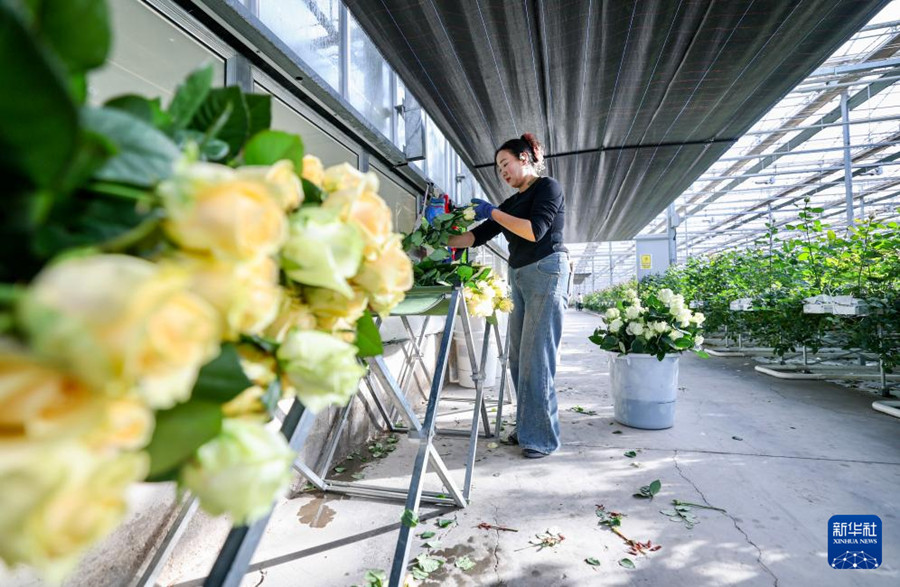
塞上江南 冬日花香
Xin Hua Wang· 2025-11-26 06:52
Core Insights - The article highlights the flourishing flower industry in Yinchuan, Ningxia, particularly in the Xinqing District, where various flower species such as roses, carnations, and orchids are being cultivated and marketed [2] Industry Development - Yinchuan's Xinqing District has leveraged its advantageous sunlight resources to develop a distinctive flower industry, establishing an agricultural high-tech smart demonstration park to enhance winter production capabilities [2] - The flower planting area in Xinqing District exceeds 7,000 acres, creating employment for over 4,000 farmers and forming a three-pronged industrial chain consisting of cut flowers, potted plants, and ornamental seedlings [2] Economic Impact - The annual output value of the flower industry in Xinqing District is approximately 160 million yuan [2]
中金 | 金融周期底部的结构性行情:向外而生
中金点睛· 2025-11-25 23:39
Core Viewpoint - The article discusses the structural rise of the Japanese stock market during the "lost two decades" post-1990, emphasizing that despite overall economic stagnation, there were significant structural changes and investment opportunities within the market [3][4]. Group 1: Structural Market Changes - Japan experienced a structural rise in its stock market driven by economic transformation, including increased overseas exposure, high-tech leadership, and improved corporate governance [3][4]. - The "new economy" sectors, excluding the "old economy" sectors heavily exposed to real estate and deflation, showed a strong upward trend post-1990, particularly in industries such as industrial, technology, communication, and even consumer sectors [3][12]. - The Nikkei index recorded negative returns overall, but the "new economy" index achieved an annualized compound return of 7.3%, outperforming other Asian countries and aligning closely with global averages excluding the U.S. [12][14]. Group 2: Overseas Exposure - Japan's export growth continued post-1990, with the export-to-GDP ratio rising from 10% in the early 1990s to 20% before the global financial crisis, with industrial goods and capital equipment making up a significant portion [24][26]. - Outward Direct Investment (ODI) increased significantly, from 0.3% of GDP in 1993 to 2.2% in 2008, with manufacturing being the primary focus, particularly in high-end sectors [26][29]. - The increase in ODI led to a rise in overseas production and sales, with overseas branches contributing over 30% to the revenue of Japanese manufacturing firms [31][32]. Group 3: High-Tech Leadership - Japan maintained a strong position in high-tech sectors despite domestic economic stagnation, with high-tech product exports consistently accounting for over 85% of total exports since the 1990s [42][44]. - R&D investment as a percentage of GDP rose from 2.5% to over 3%, surpassing the OECD average, indicating a commitment to innovation and technological advancement [42][44]. - Labor productivity in manufacturing increased by 50% during the "lost decade," reflecting the positive impact of high-tech industries on overall economic performance [51][53]. Group 4: Corporate Governance Improvements - Post-1990, Japan's corporate governance underwent significant changes, with an increase in foreign investor participation leading to a focus on profitability and shareholder returns [60][62]. - Reforms in corporate governance included lowering litigation costs for minority shareholders, aligning management compensation with company performance, and allowing stock buybacks, which improved shareholder value [63][67]. - The financial health of "new economy" sectors improved significantly, with return on equity (ROE) surpassing that of "old economy" sectors, indicating a shift towards more sustainable and profitable business practices [69][70]. Group 5: Stable Capital Inflows - Stable capital inflows, particularly from long-term and overseas investors, provided essential support for the structural rise of the Japanese stock market [74][76]. - The proportion of overseas funds in the Japanese stock market increased significantly post-bubble, contributing to improved corporate governance and performance [76][80]. - Long-term funds, especially from insurance and pension sectors, remained stable, while domestic retail investor participation declined, highlighting a shift in market dynamics [74][79].

刚果(金)东部一金矿被轰炸,有中国矿工受伤,两使馆介入处理
Xin Jing Bao· 2025-11-25 04:56
11月24日,记者获悉刚果(金)东部一金矿被轰炸,有中国矿工受伤。有涉事矿工家属在腾讯新闻热问 发声称暂无法联系上矿工。记者从驻刚果(金)使馆获悉,事发当地时间21日凌晨,事发地被叛军控 制,暂未知受影响矿工人数,目前大部分伤者已撤往卢旺达。驻卢旺达使馆人员称暂不确定伤者人数, 使馆会对涉事矿工家属提供帮助。11月23日驻刚果(金)使馆发文称,东部地区四省及周边安全风险极 高,驻留的中国公民应立即撤离。 ...
一级致癌物,超标9000倍!低价饰品被曝光,美丽外表下的健康雷区
Sou Hu Cai Jing· 2025-11-25 02:56
Core Viewpoint - The article highlights the health risks associated with alloy jewelry, particularly the prevalence of allergic reactions due to the presence of heavy metals like nickel and cadmium in these products [3][5][7]. Group 1: Health Risks - Patients at Peking University People's Hospital have been diagnosed with "jewelry dermatitis" due to prolonged wear of alloy jewelry, leading to symptoms such as skin redness, itching, and peeling [3]. - The primary culprits for allergic reactions are heavy metals found in jewelry, with nickel and cadmium being significant offenders [5][7]. - A significant number of jewelry samples tested showed that 17 out of 21 did not meet the required thickness standards for gold and silver plating, with some items having plating thicknesses far below the industry standards [5]. Group 2: Market Practices - Many jewelry items are sold at low prices, often misleading consumers regarding their material composition, with some items falsely labeled as gold or silver [5][9]. - Some merchants use deceptive practices, such as marking jewelry with high-purity indicators like "999" or "S925," while the actual metal content is significantly lower [7][12]. - The rise of live-stream selling has led to the distribution of substandard jewelry, with consumers expressing concerns over the authenticity of products being sold [9][12]. Group 3: Consumer Awareness and Regulation - The China Consumers Association reported a 43% increase in complaints related to jewelry, with 72% of these complaints concerning material misrepresentation [11]. - Experts suggest simple testing methods for consumers to check the authenticity of jewelry, although these methods may damage the items [11]. - Regulatory bodies are planning to initiate special inspections to combat fraudulent labeling of jewelry, particularly those claiming to be made of precious metals when they are not [12].

香港擘画“金融科技2030”新蓝图
Ren Min Ri Bao· 2025-11-24 22:57
Core Insights - Hong Kong is entering the "FinTech 3.0 era," integrating technology into daily life to create a resilient and impactful financial ecosystem [1] - The Hong Kong Monetary Authority (HKMA) has announced the "FinTech 2030" strategy, focusing on four key areas: new data and payment infrastructure, AI applications, business and technology resilience, and financial tokenization [2] - The government aims to encourage innovation in the financial sector by relaxing restrictions and exploring tokenization in traditional finance [3] Group 1: FinTech Development Strategy - The "FinTech 2030" strategy includes over 40 specific projects aimed at establishing Hong Kong as a robust international FinTech hub [2] - Hong Kong ranks third globally and first in Asia in the Global Financial Centers Index, with over 1,200 FinTech companies, a 10% increase from last year [2] - The total revenue of Hong Kong's FinTech industry is expected to exceed $600 billion by 2032 [2] Group 2: Government Initiatives - The Hong Kong government is implementing measures to promote technological innovation in finance, including the use of regulatory sandboxes [3] - Approximately 75% of financial institutions in Hong Kong are currently using or trialing generative AI, with plans to increase this to over 87% in the next 3 to 5 years [3] - The government is also focusing on seamless cross-border payment integration between Hong Kong and mainland China [3] Group 3: Virtual Assets and Market Development - The Hong Kong Securities and Futures Commission plans to introduce guidelines to enhance the virtual asset market, allowing licensed platforms to connect with global liquidity [4] - Measures will include enabling regulated virtual asset trading platforms to share global order books with affiliated overseas platforms [4] Group 4: Collaboration with Mainland China - The Hong Kong government is collaborating with Shenzhen to create a global FinTech center, focusing on digital finance, green finance, and inclusive finance [6] - This partnership aims to leverage Hong Kong's FinTech advantages and Shenzhen's industrial finance strengths to enhance cooperation [6] - The collaboration is expected to promote high-quality development of FinTech in the Guangdong-Hong Kong-Macao Greater Bay Area [6]
国内芯片用光刻胶,70%以上依赖日本,是形势不太妙的
Sou Hu Cai Jing· 2025-11-24 14:43
Core Insights - The semiconductor manufacturing process relies heavily on both semiconductor equipment and materials, with the top five materials being silicon wafers (33%), specialty gases (14%), photomasks (13%), photoresist auxiliary materials (7%), and CMP polishing materials (7%) [1] Group 1: Semiconductor Material Dependency - The overall domestic production rate of semiconductor materials is below 20%, with a significant reliance on imports, especially for advanced process materials [3] - The domestic production rate of photoresist is particularly low, estimated at only 10%, with over 70% dependence on Japan for these materials [3] Group 2: Market Share and Technology - Japan holds a dominant position in the global market for photoresist, accounting for 72% of the total share [3] - Different types of photoresist correspond to various chip processes, with Japan's market share increasing as the technology becomes more advanced [5] - Currently, China can only produce lower-end ArF photoresist, suitable for 65-40nm processes, while Japan dominates the EUV photoresist market with over 95% share [5] Group 3: Challenges in Catching Up - The lag in photoresist technology in China is attributed to the complexity of the chemical formulations and the high R&D costs associated with achieving the necessary performance metrics [7] - The semiconductor materials market is characterized by high technological content and a small market scale, making it difficult for latecomers to catch up without significant investment [9] - Japan's advancements in the semiconductor materials sector necessitate that China prepares to reduce reliance on Japanese products and improve self-sufficiency [9]

事关7000万患者,中国原研新药打破激素治疗恶性循环
Di Yi Cai Jing· 2025-11-24 12:22
Core Insights - The article discusses the challenges of managing atopic dermatitis (AD) in China, highlighting the issues of hormone abuse and the need for innovative treatments [1][2][3] - A new non-steroidal drug, Zeli Mei® (bimekizumab), has been approved for the treatment of AD, offering a potential solution to the ongoing cycle of flare-ups and treatment failures [2][3] Regulatory and Market Context - The current regulatory gray area and excessive marketing contribute to the widespread abuse of steroid medications for AD [2] - The prevalence of AD is increasing, with a reported incidence of 12.94% among children aged 1-7 years and 30.48% among infants aged 1-12 months in China [1] Treatment Challenges - Patients often resort to self-medication due to the availability of various topical treatments, leading to a dual challenge of overuse and fear of necessary steroid treatments [2] - Traditional steroid treatments are effective but can cause long-term skin damage, while non-steroidal options are safer but take longer to show results [2] Innovative Solutions - The introduction of Zeli Mei® represents a significant advancement, being the first aromatic hydrocarbon receptor (AhR) modulator approved for AD treatment in children over 2 years old and adults [3] - Clinical trials indicate that nearly 60% of patients experienced significant itch relief after 8 weeks of treatment, and 70% of patients remained relapse-free for 10 months after stopping the medication [3] Market Potential - China has approximately 70 million AD patients, with over 90% requiring topical treatments, indicating a substantial market opportunity for new therapies [3] - The market for eczema topical agents in China is projected to reach approximately 5.28 billion yuan in 2024, with steroid medications currently holding a significant market share [3]
前10个月江苏外贸进出口增长5.9%
Shang Wu Bu Wang Zhan· 2025-11-20 12:41
据南京海关统计,今年前10个月,江苏省外贸进出口总值4.88万亿元,较去年同期(下同)增长5.9%, 增幅较全国高2.3个百分点,占同期我国进出口总值的13.1%。其中,出口3.25万亿元,增长9.5%;进口 1.63万亿元,下降0.4%。 一般贸易进出口为主,加工贸易比重提升。前10个月,我省以一般贸易方式进出口2.74万亿元,增长 4.2%,占全省外贸进出口的56.2%。同期,加工贸易进出口1.61万亿元,增长9%。 民营、外资企业齐头并进,国有企业快速增长。前10个月,我省外商投资企业进出口2.28万亿元,增长 5.3%,占同期全省进出口的46.8%;民营企业进出口2.17万亿元,增长4.3%,占44.4%。同期,国有企 业进出口4281.9亿元,增长19.1%。 对共建"一带一路"国家进出口占半壁江山。前10个月,我省对共建"一带一路"国家进出口2.44万亿元, 增长11.7%,拉动全省进出口增长5.5个百分点,占比较去年同期提升2.6个百分点至50%。其中,对东盟 进出口8821.6亿元,增长22.1%;对欧盟、拉美地区分别进出口6830亿元、3374.7亿元,增长5.2%、 3.2%。 机电产品出 ...