蔚来

Search documents
“终于上路了”!车企竞逐L3
Zhong Guo Ji Jin Bao· 2026-01-11 11:19
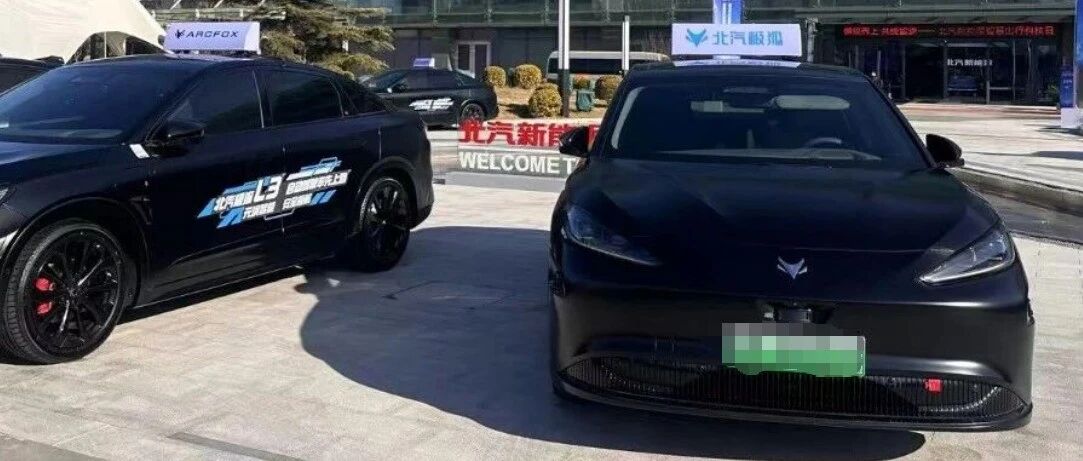
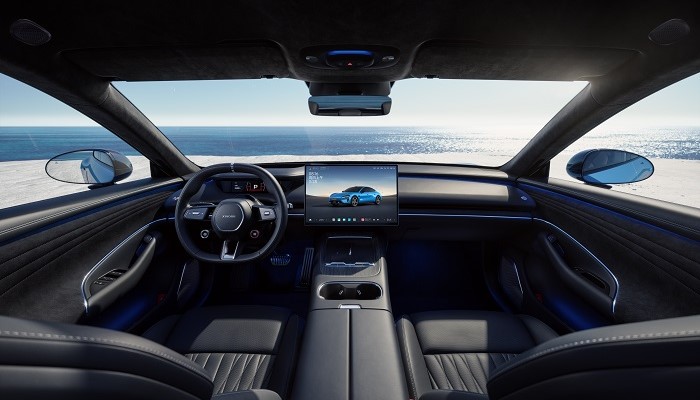
Core Insights - The article discusses the approval of L3 conditional autonomous driving vehicles by the Ministry of Industry and Information Technology in China, highlighting the competitive landscape among various automotive companies to secure entry into this advanced driving technology market [2][11]. Group 1: Approval and Launch of L3 Vehicles - BAIC's Arcfox Alpha S (L3 version) has officially started trial operations for L3 conditional autonomous driving [2][6]. - The first batch of approved L3 vehicles includes the Arcfox BJ7001A61NBEV and Changan SC7000AAARBEV, which are set to operate in designated areas in Beijing and Chongqing [6][11]. - The L3 vehicles are designed for specific scenarios, such as urban congestion and highway driving, with a maximum speed of 80 km/h [7][8]. Group 2: Competitive Landscape - Multiple companies, including BYD, NIO, and Geely, are vying for L3 conditional autonomous driving permits, with some obtaining local government approvals for testing [5][9]. - The distinction between the approvals from the Ministry and local governments lies in their nature; the former allows for commercial trial operations, while the latter is focused on research and testing [10][12]. Group 3: Future Developments and Collaborations - The industry is moving towards mass production of L3 technology, with 2026 anticipated as a pivotal year for its commercial launch [13]. - BAIC is collaborating with Pony.ai to enhance its Robotaxi services, aiming to expand its autonomous driving capabilities across various urban and highway scenarios [14]. - The development of Robotaxi services is seen as a significant opportunity for commercializing autonomous driving technology [14].


“终于上路了”!车企竞逐L3
中国基金报· 2026-01-11 11:13
Core Viewpoint - The article discusses the recent approval of L3 level conditional autonomous driving vehicles by the Ministry of Industry and Information Technology in China, highlighting the competitive landscape among various automotive companies to secure entry into this advanced driving technology market [2][4][12]. Group 1: Approval and Launch of L3 Vehicles - BAIC and Changan have received approval for their L3 level conditional autonomous driving vehicles, marking a significant step in the commercialization of autonomous driving technology in China [4][12]. - The first batch of approved L3 vehicles includes the BAIC Arcfox Alpha S and Changan SC7000AAARBEV, which are set to operate in designated areas in Beijing and Chongqing [4][12]. - The BAIC Arcfox Alpha S can achieve autonomous driving at speeds up to 80 km/h on specific highways and urban expressways, with plans to gradually open access to individual users by Q2 2026 [12][13]. Group 2: Competitive Landscape and Testing - Multiple automotive companies, including BYD, NIO, and Geely, are competing for L3 level conditional autonomous driving licenses, with some obtaining local government permits for road testing [7][15]. - The distinction between the licenses issued by the Ministry of Industry and local governments is significant; the former allows for commercial pilot operations, while the latter is primarily for research and testing purposes [16]. - Geely's vehicles have received road testing permits in Hangzhou, covering an area of 9,224 square kilometers, which will help in accumulating real-world data for optimizing autonomous driving technologies [15][16]. Group 3: Future Developments and Collaborations - The approval of L3 vehicles is seen as a pivotal moment for the autonomous driving industry, with expectations that 2026 will mark the beginning of mass production for L3 technology [18]. - BAIC is planning to introduce more high-end models equipped with L3 technology and is focusing on the development of Robotaxi services as a key application for commercializing autonomous driving [18][19]. - A strategic partnership between BAIC and Pony.ai aims to promote the deployment of the Arcfox T5 Robotaxi, with plans to establish a comprehensive operational model and technical standards for global markets [19][21].
一周新车盘点 | 中改小米SU7开启小订 极氪8X官图发布
Xin Lang Cai Jing· 2026-01-11 07:54
Group 1: Xiaomi SU7 Launch - Xiaomi announced the pre-sale price of the new generation SU7 starting at 229,900 yuan, marking its first mid-term facelift since launch [1] - The new SU7 maintains the overall design but features adjustments in exterior, interior, and configuration, with a maximum range of 902 kilometers under CLTC conditions [1][6] - Key changes include enhanced computing power, millimeter-wave and laser radar, improved driver assistance systems, and nine airbags as standard across all models [5] Group 2: Market Context for SU7 - The current competitive landscape for new energy sedans has intensified, with brands like XPeng, Zeekr, Tesla, and Hongmeng making significant advancements [8] - Xiaomi's strategy for the mid-term update focuses on configuration optimization and detail improvements to stabilize user expectations and balance the market dynamics [8] - The official launch in April may include new purchase incentives or product adjustments, which will be crucial for market performance [8] Group 3: Zeekr 8X Introduction - Zeekr recently unveiled the official images of its mid-large SUV, the Zeekr 8X, which is positioned as a high-performance flagship vehicle [10][11] - The expected starting price is around 400,000 yuan, with the main sales version anticipated to start at 430,000 yuan [11] - The 8X features a design similar to the Zeekr 9X, with a focus on sporty aesthetics and advanced driving assistance capabilities [11][12] Group 4: NIO ES9 Announcement - NIO's ES9 has appeared in the latest Ministry of Industry and Information Technology vehicle directory, marking its first official public appearance [16] - The ES9 is positioned as a flagship SUV with a design that aligns closely with the ES8, emphasizing administrative and high-end travel attributes [16][20] - It features a dual-motor all-wheel-drive system with a total output of 707 horsepower and is expected to utilize NIO's battery swap network for charging [18][20] Group 5: XPeng P7+ Launch - XPeng officially launched the 2026 P7+, offering four configurations with both pure electric and range-extended powertrains [22] - The pure electric version has a maximum CLTC range of 725 kilometers, while the range-extended version achieves a total range of 1550 kilometers [22][24] - The P7+ maintains its existing design while enhancing its intelligent features and charging efficiency, positioning it against competitors like BYD Han and LYNK & CO [24][26]

拆解车企2026新年致辞:反内卷、求质量成为集体共识
经济观察报· 2026-01-11 04:40
Core Viewpoint - The automotive industry is collectively reflecting on the past years of intense competition, termed "involution," and is advocating for a shift towards a more sustainable competitive landscape that emphasizes technology, quality, brand, and user experience rather than just cost and price [2]. Group 1: Involution and Industry Reflection - The automotive industry consensus in 2025 recognizes that endless low-price competition erodes profits and stifles innovation, leading to a narrow path that does not foster long-term competitiveness [2]. - Major automotive leaders, including those from FAW Group and BAIC Group, have publicly denounced "involution" and emphasized the need for fair competition and healthy industry development [2]. - Geely's chairman highlighted a pivotal moment in 2007 when the company decided to abandon low-price competition, marking a significant turning point in its development [2]. Group 2: Safety as a Priority - Safety has emerged as a critical topic in the automotive industry, especially following several high-profile electric vehicle accidents in 2025 [4]. - Companies like Chery and GAC have established stringent safety standards that exceed national regulations, with GAC introducing a comprehensive safety guarantee policy [4]. - Geely has expanded its safety focus to include data, software, and ecological safety, reflecting a broader understanding of safety beyond just physical vehicle safety [4]. Group 3: Openness and Collaboration - The automotive industry is shifting from a competitive mindset to one of collaboration across the supply chain, with companies forming partnerships with tech firms and other sectors [6][7]. - SAIC Group has articulated a strategy of "equal rights-driven advancement," listing numerous partners across various technological fields, indicating a move towards a more integrated ecosystem [6]. - Chery's initiative to collaborate with top global universities aims to create a platform for continuous innovation, moving beyond mere technology acquisition [7]. Group 4: Smart and Electric Transformation - The consensus among automotive companies is that electrification is a baseline requirement, while smart technology will determine competitive positioning in the industry [9]. - Companies like BYD and NIO are making significant investments in smart technology, with NIO announcing the production of advanced driving chips and operating systems [9]. - The evolution of vehicles into "mobile smart terminals" signifies a fundamental shift in the automotive value proposition, integrating technology and business models [9]. Group 5: Global Expansion - The export of Chinese automobiles has become a crucial factor for future success, with companies like BYD and Dongfeng accelerating their global strategies [12][13]. - The shift from mere product export to a comprehensive value chain export strategy is evident, as companies aim to establish sustainable competitive advantages in international markets [12]. - Chery's global strategy emphasizes becoming an integral part of local markets, highlighting the importance of localized operations and community engagement [13].

DeepSeek V4大模型被曝春节前后发布:AI编程能力超Claude;“死了么”APP引争议,开发者回应;演员闫学晶多个平台账号被禁止关注丨邦早报
创业邦· 2026-01-11 01:07
Core Insights - The article discusses significant developments in the AI and technology sectors, highlighting investments, new product launches, and market competition dynamics. Investment and Funding - OpenAI and SoftBank announced a joint investment of $1 billion in SB Energy, with each contributing $500 million, aimed at supporting the construction of a 1.2GW data center in Texas [2] - Coastal Financial acquired the GreenFi brand from Mission Financial Partners, enhancing its control over climate-friendly financial services [13] - XREAL completed a new funding round of $100 million, achieving a valuation exceeding $1 billion, focusing on augmented and mixed reality technologies [14] AI Model Developments - DeepSeek plans to release its V4 model around mid-February, which is expected to surpass existing models like Claude and GPT in programming capabilities [2] - Tencent's new chief scientist, Yao Shunyu, emphasized that the productivity gains from AI models are just beginning, with current opportunities being less than 1% utilized [3] - Kimi's CEO, Yang Zhilin, stated that future models will incorporate new mechanisms to enhance performance and will aim to set industry standards [3] Automotive Industry Insights - Lei Jun highlighted that the SU7 is the only electric sedan to surpass the Tesla Model 3 in sales, indicating competitive strength in the EV market [9] - NIO's new ES8 achieved retail sales of 22,258 units in December 2025, becoming the best-selling large SUV and outperforming competitors [10] - Xiaomi announced that the next generation of SU7 will feature the self-developed V6s Plus super motor, aimed at improving production efficiency [15] Market Performance - The total box office for January 2026 surpassed 1 billion yuan, with "Zootopia 2" leading the monthly box office at 25.5% share [16][19] - The average ticket price was reported at 39.5 yuan, with a total of 2,529 million tickets sold [18]

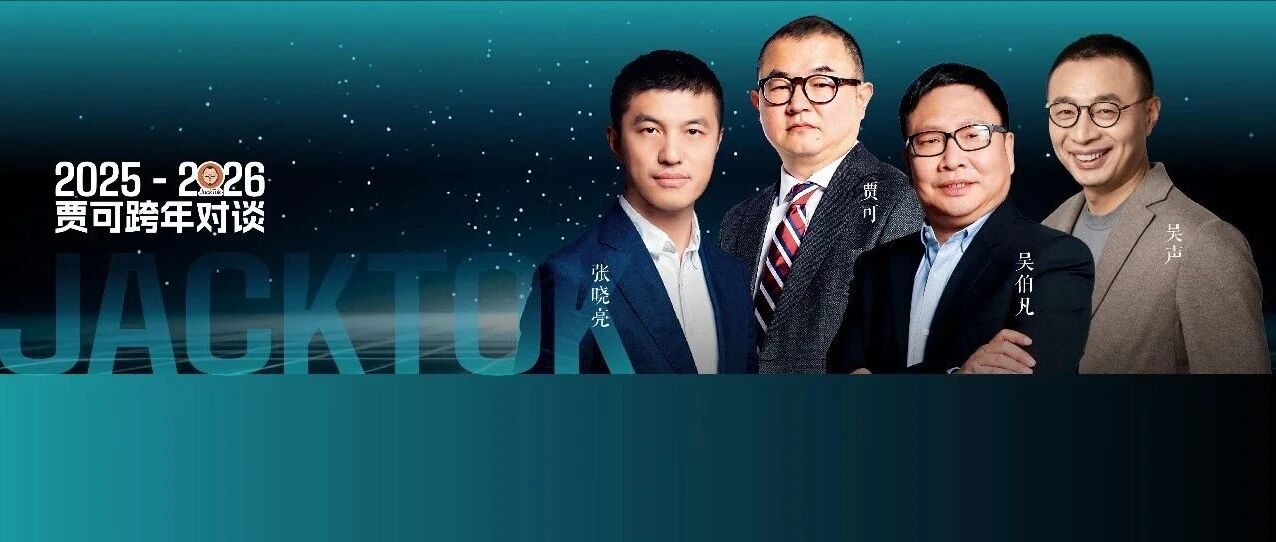
贾可吴伯凡吴声张晓亮,4万字2025-2026跨年对谈全文(上)
汽车商业评论· 2026-01-10 23:05
Core Viewpoint - The article discusses the evolution and current state of the Chinese automotive industry, highlighting the significance of achieving global sales leadership for domestic brands and the need for industry maturity and strategic resource consolidation [5][31][44]. Group 1: Achievements in the Automotive Industry - In 2025, Chinese domestic brands achieved global sales leadership, with total sales expected to reach 27 million units, surpassing Japanese brands by approximately 2 million units [13][20]. - The domestic market is projected to exceed 34 million units, marking a growth of about 3 million units from the previous year [13][20]. - The automotive industry contributes over 10% to China's GDP, emphasizing its critical role in the national economy [18][25]. Group 2: Industry Challenges and Maturity - The industry faces challenges such as declining profit margins, with the average profit rate rising slightly from 4.3% to 4.4% [35][25]. - There is a need for the industry to transition from aggressive competition to value-based competition, as highlighted by government interventions aimed at curbing price wars and promoting sustainable practices [31][36]. - The government has implemented measures to address industry chaos, including guidelines to prevent arbitrary price reductions and improve supply chain management [34][31]. Group 3: Resource Consolidation and Strategic Adjustments - Traditional automakers are increasingly consolidating resources and streamlining operations to enhance efficiency and competitiveness [45][47]. - Companies like Geely and Dongfeng are integrating their brands to strengthen their market position and improve operational effectiveness [45][47]. - The article emphasizes the importance of strategic focus and resource allocation in navigating the evolving automotive landscape, with companies needing to adapt to new market realities [51][53].
开年新车公告:宁德“LFP+三元”电池上车零跑、小米SU7更新三元Max版
高工锂电· 2026-01-10 12:19
摘要 高压平台 + 超快充电池已成高端 SUV 标配。 2026 年工信部新车第一弹来袭。 据第 403 批《道路机动车辆生产企业及产品公告》,开年共有 82 款新车公示,纯电车型 49 款,混动 / 增程共 33 款。其中,比亚迪系新车公示 最多,共 32 款,弗迪电池配套车型包括王朝、海洋系列,以及方程豹、领汇、腾势品牌。 宁德时代紧跟弗迪其后,拿下 28 款新车配套,三元车型共 16 款, LFP 车型 11 款," LFP+ 三元"电池 1 款,该电池上车零跑 SUV D19 。 从零跑的官方宣传来看, D19 部分车型搭载了宁德时代 115KWh 超混电芯,能量密度提升了 18.5% ,率先满足 2026 年最新电池国标。 值得一提的是,宁德时代此前已提出 AB 电池概念,可实现" LFP+ 三元"以及" LFP+ 钠电"等组合。而最新双核电池的概念在其去年首个科技日上 着重强调,成为行业焦点。 事实上,宁德时代双核电池可视为 AB 电池的加强版。 具体来看,宁德时代"双核架构"的其中一个矩阵为,骁遥 " 三元铁/ 双三元 " 双核电池(三元+铁锂/ 三元自生成负极电池),输出功率大于 1000kW ...

蔚来全新ES8获大型SUV销量冠军 纯电大三排SUV黄金时代到来?
Zheng Quan Shi Bao Wang· 2026-01-10 08:07
Group 1 - The core viewpoint of the articles highlights the significant growth and competitive dynamics in the large three-row SUV market, particularly focusing on NIO's new ES8 model, which has achieved impressive sales figures and strategic importance for the brand [1][2] - NIO's new ES8 achieved retail sales of 22,258 units in December 2025, becoming the best-selling large SUV and leading in the three-row SUV and models priced above 400,000 yuan [1] - The gross margin of the new ES8 is among the highest in NIO's product lineup, contributing directly to revenue growth, while the company is on track to reduce operating losses and potentially achieve profitability [1] Group 2 - In November 2025, pure electric large three-row SUV sales reached 46,209 units, marking a 16% month-on-month increase and setting a historical record, indicating the arrival of a golden era for this segment [2] - The market for large three-row SUVs in China is seen as a watershed in 2025, with a significant shift away from range-extended models, driven by advancements in technology, user demand, and infrastructure development [2] - The competitive landscape in the large three-row SUV market has evolved from a single-brand focus to a multi-brand, multi-technology approach, intensifying competition as new models enter the market [2]

美国频繁失态的原因或许是:中国一脚踏入了舒适区,特朗普还没辙
Sou Hu Cai Jing· 2026-01-10 04:46
Group 1 - The U.S. is facing unprecedented challenges as China enters strategic areas previously dominated by the U.S. [1] - The U.S. announced its withdrawal from 66 international organizations, including 31 UN entities, highlighting its unilateralism [3] - U.S. tariffs on Chinese electric vehicles have backfired, with China's exports to the U.S. increasing to 9% and a trade surplus growing by 34.6% year-on-year [4] Group 2 - The U.S. has historically maintained a clear division in global supply chains, controlling high-end manufacturing and key technologies while allowing other countries to develop low-end manufacturing [8] - The balance of power has shifted as China's industrial and technological capabilities have risen, breaking the previous equilibrium [10] - China's "Made in China 2025" initiative has achieved 86% of its goals, directly competing with the U.S. in core industries, particularly in renewable energy [11] Group 3 - Chinese companies like CATL and BYD are leading in battery technology and electric vehicle sales, with China accounting for 68% of global new energy vehicle sales in 2025 [13][14] - China's self-sufficiency in semiconductors has increased from 14% in 2014 to 23% in 2023, with projections of reaching 27% by 2027 [16] - Despite U.S. export controls, major chip companies like Intel and NVIDIA are still reliant on the Chinese market for revenue [17] Group 4 - Germany's automotive industry is resisting U.S. sanctions against China, with BMW investing $15 billion to expand its operations in China [19] - The anticipated anti-China coalition led by the U.S. is faltering due to the economic interdependence of other countries with China [20] - The U.S. strategy of tariffs and sanctions has led to significant losses for American companies reliant on the Chinese market [20] Group 5 - The U.S. is experiencing a decline in global trust, with its reputation and governance indicators dropping in the Global Soft Power Index [24] - Public sentiment in countries like Germany, France, and Spain is increasingly supportive of countermeasures against U.S. imports [26] - The U.S. is caught in a cycle of sanctions and shortages, struggling to adapt to the new global industrial landscape shaped by China's advancements [28] Group 6 - The U.S. fears losing its exceptional status as a dominant global power, which would limit its ability to impose sanctions and manage risks [29] - Global investment trends show that 60% of sovereign funds are planning to increase investments in China, indicating a shift in capital flows [30] - The competition of the future will focus on who can provide more public goods for global development rather than monopolizing core technologies [31][32]

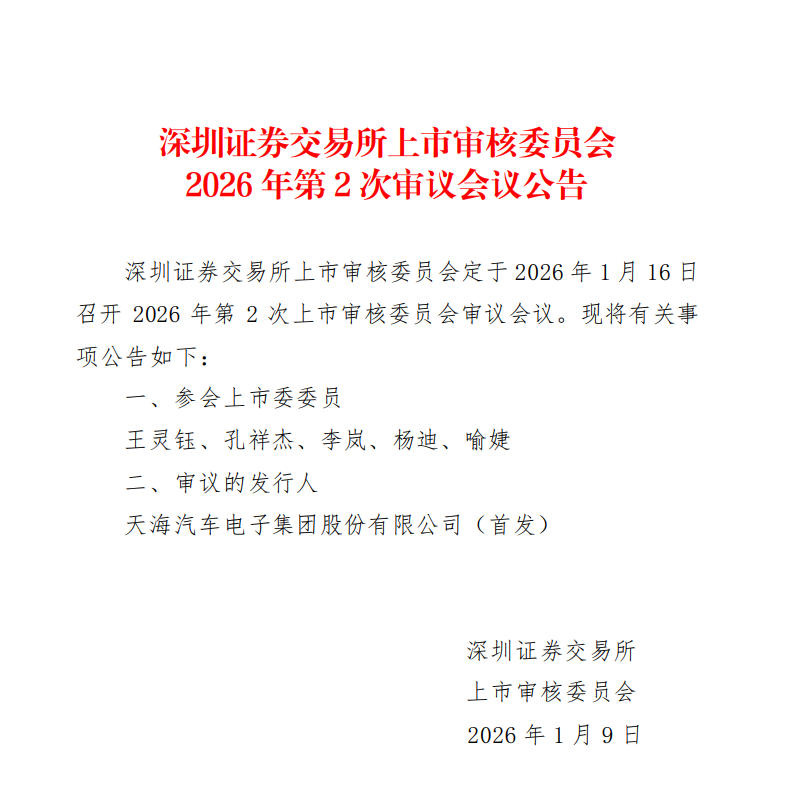
天海电子IPO将于1月16日上会
Zheng Quan Ri Bao Wang· 2026-01-10 02:46
Core Viewpoint - Tianhai Electronics plans to raise approximately 2.46 billion yuan through its IPO, with funds allocated to various projects aimed at enhancing production capacity and technological advancement in the automotive components sector [2]. Group 1: Fundraising and Investment Projects - The IPO is expected to raise around 2.46 billion yuan, which will be directed towards projects including connector technology upgrades, harness production base, automotive electronics production base, smart transformation and information technology construction, and the Tianhai Intelligent Connected Vehicle Industry Research Institute and supporting industrial park [2]. Group 2: Company Overview and Partnerships - Tianhai Electronics specializes in the research, production, and sales of automotive components such as automotive harnesses, connectors, and electronics, primarily serving the new energy vehicle and traditional fuel vehicle manufacturing sectors [2]. - The company has established multi-level and multi-dimensional partnerships with well-known automotive manufacturers including Chery Automobile, SAIC Group, Geely Automobile, Changan Automobile, Li Auto, NIO, Leap Motor, and Xpeng Motors [2]. Group 3: Strategic Goals and Market Position - The construction of the fundraising projects is expected to enhance the company's research and development capabilities, improve the intelligence and informatization of production processes, and expand existing production capacity, thereby supporting the gradual implementation of the company's development plan [2]. - These initiatives aim to strengthen the company's core competitiveness and profitability, ultimately increasing its market share [2].