三星

Search documents
DeepMind CEO算了4笔账:这轮AI竞赛,钱到底花在哪?
3 6 Ke· 2026-01-18 02:21
Core Insights - The current focus in the AI sector has shifted from enhancing capabilities to maximizing profitability, as highlighted by the new CNBC podcast featuring Google DeepMind's CEO, Demis Hassabis [1][2]. Group 1: AGI Capabilities - Hassabis emphasizes that current large models exhibit significant shortcomings, particularly in their ability to generalize and learn continuously, which he refers to as "jagged intelligences" [2][4]. - True AGI must possess the ability to independently formulate questions and hypothesize about the world, rather than merely responding to queries [3][4]. - DeepMind is transitioning its focus from large language models (LLMs) to developing AI that understands the world, as demonstrated through projects like Genie, AlphaFold, and Veo [6][9]. Group 2: Commercialization Strategies - The commercial viability of AI models is not solely about their strength but also about their cost-effectiveness and deployment efficiency [10][11]. - DeepMind's strategy includes creating both Pro and Flash versions of models to cater to different user needs, ensuring broader accessibility [11][12]. - Hassabis advocates for integrating AI into everyday devices, moving beyond traditional web interfaces to enhance user interaction [15][16]. Group 3: Energy Challenges - As AI capabilities expand, energy consumption becomes a critical concern, with Hassabis stating that increased intelligence will require more power [20][21]. - The industry faces a significant bottleneck in energy supply, which could hinder the practical application of AGI [22][23]. - DeepMind aims to leverage AI to address energy challenges, focusing on both generating new energy sources and improving energy efficiency [24][27]. Group 4: Competitive Landscape - The competitive dynamics in AI have shifted, with companies needing to focus on integration and deployment rather than just technological advancements [29][30]. - DeepMind has consolidated its teams to streamline AI development and deployment, enhancing efficiency and speed in bringing products to market [33][37]. - The ability to effectively utilize energy resources will be a key determinant of success in the AI sector, as highlighted by Hassabis [36][38].

彭博社:存储芯片最好的押注!刘德音高位增持!
是说芯语· 2026-01-18 00:41
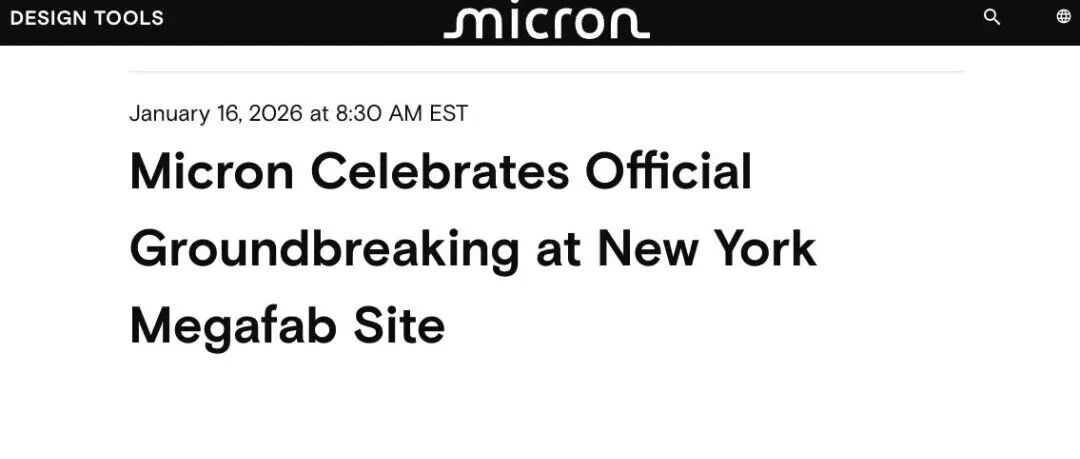
Core Viewpoint - Micron Technology's stock surged nearly 8%, reaching a historic high and surpassing a market capitalization of $400 billion, reflecting strong growth momentum in the storage chip sector driven by the AI wave [1][3]. Group 1: Company Developments - Micron held a groundbreaking ceremony for a $100 billion memory manufacturing complex in New York, which will include up to four fabs and become the largest semiconductor facility in the U.S. upon completion in 2030 [3]. - The company’s strategic moves, including the establishment of this facility, are aimed at solidifying its long-term production capacity [3]. Group 2: Insider Activity - Micron's board member, Liu Deyin, disclosed a significant stock purchase of 23,200 shares for $7.82 million, indicating confidence in the company's future despite its high stock price [6]. - Liu's background in the semiconductor industry and his previous role as chairman of TSMC lend credibility to his investment decision, suggesting he may have insights into Micron's undisclosed positive developments [6][7]. Group 3: Market Insights - The semiconductor industry is experiencing a structural bull market driven by AI, with professional investors like ClearBridge highlighting the potential for a decade-long upward cycle in storage chips [8]. - The supply-demand dynamics for high-bandwidth memory (HBM) are expected to remain tight until 2027, with Micron securing HBM supply orders for 2026 and planning to ramp up production of HBM4 products [8]. - The collaboration between Micron and TSMC in the AI chip supply chain could enhance their competitive edge, particularly in packaging and capacity coordination [7][8]. Group 4: Industry Outlook - The storage chip sector is transitioning from traditional cycles to an AI-driven structural bull market, with Micron and other leaders like Samsung and SK Hynix poised to benefit from this shift [8][9].

机械设备 3C 设备周观点:Meta 押注 AI 可穿戴设备,Open AI 或将推出首款硬件产品-20260117
Huafu Securities· 2026-01-17 11:36
Investment Rating - The industry rating is "Outperform the Market," indicating that the overall return of the industry is expected to exceed the market benchmark index by more than 5% in the next 6 months [11]. Core Insights - Meta is shifting its core strategy from the metaverse to AI wearable devices, planning to double the annual production capacity of AI smart glasses to 20 million units by the end of 2026, with potential further increases to 30 million units based on market conditions [2][3]. - The smart glasses market is becoming increasingly competitive with major players like Apple and Samsung entering the space. Meta's collaboration with EssilorLuxottica has seen strong market performance, with some models selling out immediately and the Ray-Ban Meta series experiencing over 200% year-on-year sales growth [3]. - OpenAI is expected to launch its first AI headphone product, targeting a production volume of 40 to 50 million units in the first year, competing directly with Apple's AirPods [3]. Summary by Sections Smart Glasses Market - The smart glasses segment is heating up with significant entries from companies like Apple, Samsung, and Xiaomi, indicating a robust competitive landscape [3]. - Meta's partnership with EssilorLuxottica has resulted in strong sales performance, with certain models selling out quickly and a notable increase in year-on-year sales [3]. AI Wearable Devices - Meta is focusing on AI wearable devices, with plans to enhance production capabilities significantly by 2026 [2]. - OpenAI is set to introduce a new AI headphone product, further diversifying the AI wearable market [3]. Investment Opportunities - Suggested companies to watch include those involved in smart glasses (e.g., Deep Science, Quick Intelligent), silicon-based OLED screens (e.g., Yirui Technology), and automation equipment (e.g., Bozhong Precision) [4].

中国企业获评电视行业全球首个 “灯塔工厂”
Guan Cha Zhe Wang· 2026-01-17 10:50
1月15日,世界经济论坛(WEF)公布最新一期全球"灯塔工厂"名单,海信电视工厂成功入选,成为全球电视行业首家获此认证的工厂。"灯塔工厂"被誉为全 球制造业的"奥斯卡",是智能制造领域的顶级认证,此次入选标志着该工厂在效率、质量与柔性化生产方面达到全球领先水平,也让其在与三星、索尼等国 际大厂的智能制造竞争中形成差异化优势。 该工厂的核心特色在于构建了"以用户为中心+全链AI智造"的双引擎数字化转型模式,其特殊性体现在对用户需求的精准捕捉与全流程智能化升级的深度融 合。 达0.1毫米级,替代了传统5名工人的手动操作。 质量管控方面,工厂打造了行业首创的AI智能检测平台,基于超过26万份高质量样本训练的深度学习模型,通过"拍检同步"技术构建完整质量闭环,检测效 率提升70.7%。 作为全球电视行业唯一的"灯塔工厂",该工厂通过用户导向的价值链重构,实现了从"等待需求"到"秒级响应"的转型,其在用户需求洞察、全流程AI应用、 柔性生产等方面的实践,为行业提供了可复制的数字化转型范例。 在用户需求洞察环节,工厂通过大数据技术与星海大模型协同,结合本地化产品知识库,实现了海量数据(603138)的分钟级深度分析。同时 ...


“又开始了”?韩媒集体关注:美商务部长威胁征收最高100%半导体关税
Huan Qiu Wang· 2026-01-17 10:03
Core Viewpoint - The U.S. Secretary of Commerce, Gina Raimondo, has threatened South Korean memory chip manufacturers with a potential 100% tariff if they do not commit to increasing production in the U.S. [1][5] Group 1: U.S. Policy and Implications - Raimondo stated that companies wishing to build memory capacity have two options: pay a 100% tariff or build in the U.S. [6] - The U.S. aims to restore its manufacturing leadership, starting with the semiconductor industry [8]. - The statement has raised concerns in South Korea, suggesting that the U.S. may impose a 100% tariff on South Korean semiconductor products [8]. Group 2: Reactions from South Korea - South Korean media quickly reported on the U.S. threats, with some outlets questioning if this is a repeat of past pressures [1][5]. - There is speculation that the U.S. may negotiate different terms for South Korea compared to Taiwan regarding semiconductor tariffs [8]. - South Korea previously agreed to a 15% tariff on its products during trade negotiations with the U.S., but semiconductor tariffs remain undecided [8]. Group 3: Trade Agreements and International Relations - The U.S. Commerce Department mentioned a trade agreement with Taiwan, which may serve as a reference for future negotiations with South Korea [8]. - China's Foreign Ministry has expressed strong opposition to any agreements between the U.S. and Taiwan that imply sovereignty [9].

特朗普最大的贡献,就是亲手摧毁了中国人对美国的幻想
Sou Hu Cai Jing· 2026-01-17 06:21
Core Insights - The article reflects on the evolution of China's response to the U.S.-China trade war over eight years, highlighting a shift from initial anger and anxiety to a more composed and resilient attitude as the realities of global trade dynamics became clearer [1][3][14]. Group 1: Historical Context - The period from the 1990s to the 2010s was marked by a high level of goodwill towards the U.S. among Chinese citizens, driven by the belief that integration into globalization would lead to a brighter future [3]. - The trade war initiated in 2018 marked a significant turning point, with tariffs and sanctions escalating, particularly against companies like Huawei, which faced severe restrictions from the U.S. government [5][10]. Group 2: Technological Developments - Huawei's proactive measures, including the establishment of its own chip design capabilities through HiSilicon, allowed it to mitigate the impact of U.S. sanctions, showcasing the importance of long-term planning in technology development [5][8]. - The launch of the Huawei Mate 60 Pro in 2023, featuring the domestically produced Kirin 9000S chip, symbolizes a significant achievement in China's semiconductor industry despite external pressures [8]. Group 3: Economic and Market Responses - By 2025, China's response to renewed tariffs under Trump's second term was markedly different, with a more assertive stance and a willingness to engage in negotiations without fear [10][12]. - The Chinese market demonstrated resilience, with significant advancements in domestic supply chains and a focus on diversifying international markets, reflecting a strategic shift in business operations [14]. Group 4: Shifts in Mindset - The most profound change over the eight years has been in the mindset of the Chinese populace and businesses, moving from fear of U.S. actions to a more confident approach in navigating global trade [14]. - The understanding that reliance on the U.S. market is not the only path forward has become a key realization, emphasizing the importance of self-sufficiency and innovation within China [14].

中信证券:看好半导体设备的投资机遇 建议关注具备平台化能力的领军企业及高弹性细分龙头
Xin Lang Cai Jing· 2026-01-17 02:58
Core Viewpoint - TSMC's 2025 performance is expected to set a record, with a significant increase in capital expenditure for 2026, indicating ongoing benefits from AI computing power and advanced processes. The domestic wafer fabs are entering an expansion phase to address a million-unit capacity gap, creating a multi-billion dollar opportunity for the equipment market, with a potential doubling of domestic equipment localization rates [1][2][3]. Group 1: TSMC's Performance and Capital Expenditure - TSMC is projected to achieve a revenue of $122 billion in 2025, a year-on-year increase of 35.9%, with a gross margin nearing 60% [2][10]. - The company's capital expenditure for 2025 is set at $40.9 billion, with an aggressive forecast for 2026, estimating capital expenditure to rise to $52-56 billion, exceeding market expectations of $45-48 billion [2][10]. - 70-80% of the 2026 capital expenditure will be directed towards advanced processes, while 10-20% will be allocated for advanced packaging, testing, and mask manufacturing [2][10]. Group 2: Global Semiconductor Market Outlook - The global semiconductor sales are expected to grow from $68 billion in 2025 to $174.1 billion by 2035, with a CAGR of 9.9% [3][11]. - Demand for semiconductors in servers, data centers, and storage is projected to increase from $15.6 billion in 2025 to $82.6 billion by 2035, with a CAGR of 18.6% [3][11]. - Global semiconductor manufacturing capacity is anticipated to rise from 11.2 million wafers per month in 2025 to 19 million wafers per month by 2035, with a CAGR of 5.4% [3][11]. Group 3: Domestic Semiconductor Industry Dynamics - The domestic semiconductor industry is experiencing a dual drive of "high growth in AI computing power" and "advanced process localization," with a capacity gap exceeding one million wafers [4][12]. - Currently, domestic production of advanced logic processes (7nm and below) accounts for less than 5% of global capacity, while China's semiconductor demand represents about 35% of the global market [4][12]. - The localization rate of semiconductor equipment is currently around 30%, with expectations to double in the future, driven by increased domestic production and technological advancements [5][13]. Group 4: Investment Strategy - The ongoing AI wave and the push for localization are expected to lead to sustained, large-scale investments in China to fill the advanced capacity gap of over one million wafers [7][16]. - Focus is recommended on leading companies that have achieved technological breakthroughs in core equipment areas such as etching, thin film deposition, cleaning, and CMP, as well as those with flexible localization rates [7][16]. - Companies that can leverage this historical industry opportunity are likely to emerge as internationally competitive domestic manufacturers in the global semiconductor equipment market [7][16].



ASML,史上首次
半导体行业观察· 2026-01-17 02:57
Core Viewpoint - ASML's market capitalization has surpassed $500 billion, driven by TSMC's higher-than-expected capital expenditures, indicating strong demand in the semiconductor industry, particularly in AI-related investments [1][2]. Group 1: Financial Performance and Market Position - TSMC's capital expenditure for 2026 is projected to be between $52 billion and $56 billion, exceeding market expectations of $46 billion, which positively impacts ASML's stock [1]. - ASML's stock has risen over 24% this month and 49% over the past year, outperforming the S&P 500 index, which increased by 15% [4]. - ASML's earnings per share (EPS) is expected to reach approximately $46 by 2027, nearly double that of 2025, reflecting strong growth momentum [2][3]. Group 2: Market Demand and Technological Advancements - ASML holds a 90% market share in advanced lithography equipment, primarily due to its unique capability to manufacture extreme ultraviolet (EUV) lithography machines [3][6]. - The demand for EUV technology is expected to grow rapidly by 2026, driven by advanced DRAM and cutting-edge logic devices, while the demand for deep ultraviolet (DUV) technology is anticipated to decline [6][7]. - ASML's high numerical aperture (High-NA) EUV systems are set to play a crucial role in the production of 2nm and below process technologies, marking a significant technological advancement in chip manufacturing [7]. Group 3: Analyst Predictions and Market Sentiment - Morgan Stanley analysts predict that ASML's stock could rise by up to 70%, potentially reaching $2,000 if profits exceed expectations and tech valuations continue to climb [2]. - The firm emphasizes that the ongoing capital expenditure cycle, particularly in the wafer foundry and memory sectors, supports their bullish outlook on ASML [2]. - ASML's service revenue has increased by 39% to €6 billion, accounting for 26% of total sales, indicating a strong growth trajectory in service offerings [3].

台积电,别无选择
半导体行业观察· 2026-01-17 02:57
Core Viewpoint - The article discusses the potential risks and opportunities for TSMC in the context of the AI boom, emphasizing the need for careful investment and market demand validation to avoid significant financial losses [1][3]. Group 1: Financial Performance and Projections - TSMC's revenue for Q4 2025 is projected to reach a record $122.42 billion, representing a 35.9% year-over-year increase, with a net profit of $55.18 billion, up 51.3% [3]. - The company plans to invest between $52 billion to $56 billion in capital expenditures to expand its chip etching and packaging facilities [3]. - TSMC's capital expenditures over the past five years totaled $167 billion, with expectations of significant increases in the coming years [9][11]. Group 2: Market Demand and AI Impact - TSMC's CEO has engaged with clients to ensure that the demand for AI-related chips is genuine, with positive feedback indicating that AI is driving business growth for cloud service providers [3][6]. - By 2025, AI-related revenue is expected to account for approximately 27.3% of TSMC's total revenue, with AI accelerator sales projected to reach $33.4 billion [16][17]. - The compound annual growth rate (CAGR) for AI accelerators is forecasted to be around 57.5% from 2024 to 2029, suggesting that AI business revenue could exceed TSMC's total revenue in 2025 [17]. Group 3: Cost and Margin Considerations - The cost of manufacturing processes is increasing, with the cost per wafer for the N2 process significantly higher than for the N3 process, leading to a projected gross margin decline of 2% to 4% [4][8]. - TSMC is adept at extracting higher profits from each wafer due to the necessity for clients to use more expensive transistors for high-performance AI applications [6]. - The company anticipates that the rising costs associated with advanced manufacturing processes will largely be passed on to chip designers, ultimately affecting end consumers [9][12].
DDR4涨疯了,大家被逼转向DDR 3
半导体行业观察· 2026-01-17 02:57
Group 1 - The article discusses the rising trend of using older hardware, specifically DDR3 memory, in China due to the skyrocketing prices of DRAM, with some system integrators opting for Intel X99 motherboards that support DDR3 memory [1] - Demand for motherboards supporting DDR3 memory surged by 100% to 200% last year, primarily driven by the high prices of DDR5 memory, indicating a potential continuation of this trend in the foreseeable future [1] - The price of DDR4 memory has also started to rise due to unexpected demand, making it less attractive for budget-conscious users, while manufacturers are gradually halting DDR4 production to focus on more profitable DDR5 memory [2] Group 2 - The sharp increase in memory prices is expected to significantly impact IT infrastructure budgets, with analysts warning that the cost surge will soon affect the entire supply chain [3] - Memory module prices for commonly used capacities (16 GB, 32 GB, 64 GB, and 128 GB) are projected to rise by an average of 63% between September and December 2025 [3] - The cost of storage components, including SSDs and HDDs, has also risen by 30% to 40% since September, compounding the pricing pressure on overall infrastructure systems [4] Group 3 - Companies facing IT budget pressures and ongoing digital transformation challenges may need to reassess their budgets and timelines for infrastructure updates or expansions [5] - Concerns have been raised about the potential impact on cloud service providers, who operate large data center infrastructures and may pass on cost pressures to enterprise customers [5]