腾讯

Search documents
每日投资策略-20251204
Zhao Yin Guo Ji· 2025-12-04 04:34
Group 1: Market Overview - Global markets showed mixed performance, with the Hang Seng Index closing at 25,761, down 1.28% for the day but up 28.42% year-to-date [1] - The US markets saw gains, with the Dow Jones up 0.86% and the S&P 500 up 0.30%, while the Nasdaq increased by 0.17% [1] - The Chinese stock market experienced declines, particularly in healthcare, consumer discretionary, and financial sectors, while materials and utilities outperformed [3] Group 2: Economic Outlook - The global economic outlook for 2026 suggests resilience due to inventory demand, AI trends, and fiscal expansion, despite challenges from tariffs [5] - The US GDP growth is projected to decrease from 1.9% in 2025 to 1.8% in 2026, with a cooling job market and rising unemployment rates [6] - The Eurozone GDP growth is expected to decline from 1.4% in 2025 to 1.2% in 2026, influenced by tightening financial conditions and slowing global trade [6] Group 3: Company Analysis - The report highlights that 巨子生物 (Giant Bio) is facing short-term sales pressure due to underperformance in its sales channels, but management remains focused on strategic adjustments [9] - The company plans to enhance its self-operated channels and reduce reliance on top influencers, aiming for long-term growth despite current competitive pressures [9] - The company has been approved to repurchase up to 10% of its shares, reflecting confidence in its long-term prospects [10]
东吴证券晨会纪要-20251204
Soochow Securities· 2025-12-04 02:33
Macro Strategy - The macro environment is influenced by both domestic and overseas factors, leading to a decline in market confidence due to a drop in manufacturing PMI and uncertainty in macroeconomic data [1][15] - Domestic liquidity support through fiscal issuance and monetary policy is stabilizing the valuation environment, while industry policies in sectors like renewable energy and satellite IoT provide long-term support for related sectors [1][15] - The consumer technology sector shows structural differentiation in earnings reports, with companies like Meituan, JD, and Alibaba facing profit declines due to intense competition, while Tencent and Xiaomi achieve profit growth through international expansion and premiumization [1][15] Industry Analysis - The Nasdaq 100 index experienced volatility driven by concerns over AI bubbles and mixed macroeconomic data, with strong non-farm employment data coexisting with rising unemployment rates, complicating the Federal Reserve's assessment of economic health [2][4][16] - The semiconductor sector's performance is shaped by the earnings of companies like Broadcom and Micron, which validate demand trends [4][17] - The gold market is influenced by interest rate expectations, geopolitical tensions, and the performance of other precious metals, with a significant focus on the upcoming Federal Reserve meetings and inflation data [5][18][19] Index Outlook - The Hang Seng Technology Index is expected to maintain a bottoming and slightly upward trend in December 2025, influenced by macroeconomic conditions and policy expectations [1][15] - The Nasdaq 100 index is projected to experience a volatile upward trend, supported by the AI industry revolution and commercial validation, despite potential pullbacks if key economic data underperform [4][17] - The gold price is anticipated to remain strong in the short term, with a bullish medium-term outlook, contingent on the Federal Reserve's policy direction and macroeconomic data releases [5][18][19] ETF Products - The Huaxia Hang Seng Technology ETF (513180) closely tracks the Hang Seng Technology Index, with a total market value of 47.745 billion yuan as of November 28, 2025 [1][15] - The GF Nasdaq 100 ETF (159941.SZ) also closely follows the Nasdaq 100 Index, with a circulating scale of 29.915 billion yuan as of November 28, 2025 [4][17] - The Huaan Gold ETF (518880.SH) tracks domestic gold spot price returns, with a total market value of 90.631 billion yuan as of November 28, 2025 [5][18][19]
新旧消费延续分化,消费行业快速迭代创新或迎结构性成长机会
Mei Ri Jing Ji Xin Wen· 2025-12-04 02:26
Group 1 - The Hong Kong stock market opened positively on December 4, with the Hang Seng Index rising by 0.17%, the National Enterprises Index by 0.26%, and the Hang Seng Technology Index by 0.21% [1] - The consumer sector in Hong Kong experienced a narrow fluctuation under pressure, with the Hong Kong Consumer ETF (513230) slightly declining by around 0.5%, and constituent stocks showing mixed performance [1] - The State Council's policy briefing highlighted a plan to enhance the adaptability of supply and demand in consumer goods, aiming to establish three trillion-level consumption fields and ten hundred-billion-level consumption hotspots by 2027 [1] Group 2 - Huatai Securities' research report indicates that in 2025, the consumer sector will continue to show a divergence between old and new consumption, driven by the transformation of "people, goods, and venues" and technological advancements [2] - The report anticipates that consumer policies will continue to stimulate supply and demand potential, leading to a steady recovery in domestic demand and ongoing sectoral divergence, with leading companies benefiting from innovation and integration capabilities [2] - The Hong Kong Consumer ETF (513230) tracks the CSI Hong Kong Stock Connect Consumer Theme Index, encompassing a wide range of consumer sectors, including new consumption leaders like Pop Mart and Mixue, as well as internet e-commerce giants like Tencent and Alibaba [2]
工程样机变“抢手货” 二手市场溢价上千元 “豆包AI手机”开启下一轮范式迁移?
Shen Zhen Shang Bao· 2025-12-03 23:01
Core Insights - The Nubia M153, also known as the "Doubao AI Phone," has faced login issues with WeChat, prompting users to switch devices for access, and has temporarily disabled WeChat functionalities [1][3] - The phone was launched on December 1 and quickly sold out, with resale prices on second-hand platforms rising significantly, indicating high consumer interest despite being a technical preview model [2][3] - User feedback on the AI capabilities of the phone has been mixed, with some praising its intelligent features while others criticize its performance and express concerns over privacy [3][5] Group 1: Product Launch and Market Response - The Nubia M153 was officially released on December 1, quickly selling out on the ZTE mall, with a limited initial stock of 30,000 units [2] - The phone features a 6.78-inch screen and is powered by the Snapdragon 8 Gen 2 processor, with its standout feature being the integrated Doubao AI system [2] - The initial retail price was set at 3,499 yuan for the 16GB+512GB configuration, and it is marketed primarily to industry professionals rather than general consumers [2] Group 2: User Experience and Privacy Concerns - User experiences have varied, with some users impressed by the AI's capabilities, while others report slow performance and long processing times for tasks [3][5] - Privacy concerns have been raised, particularly regarding the AI's ability to capture user interactions, leading to questions about data security and user consent [3][5] - The Doubao team has responded to privacy concerns by stating that permissions are disclosed in their privacy policy and that user authorization is required for operations [3] Group 3: Industry Context and Future Implications - The challenges faced by the Doubao AI Phone reflect broader issues in the AI smartphone market, particularly regarding the integration of AI with existing app ecosystems [5][6] - Industry experts suggest that a lack of standardized protocols complicates the interaction between AI assistants and mobile applications, potentially leading to regulatory conflicts [5] - The collaboration between ByteDance and ZTE represents a strategic approach to creating an AI ecosystem rather than partnering with a single hardware manufacturer, aligning with emerging trends in the smartphone industry [5][6]

腾讯研究院AI速递 20251204
腾讯研究院· 2025-12-03 16:03
Group 1: Amazon's Major Releases - Amazon Web Services (AWS) announced the fourth generation AI chip Trainium4, which boasts a performance increase of 6 times, along with Trainium3 UltraServers and the Amazon Nova 2 series self-developed models including Lite, Pro, Sonic, and Omni [1] - Amazon Bedrock introduced 18 new open-source models, including Qwen3, Kimi K2, and MiniMax M2, expanding its platform to over 100,000 customers [1] - The launch of AgentCore development tools and four advanced intelligent agents, such as AWS Transform Custom and Kiro Autonomous Agent, aims to accelerate the conversion of AI investments into commercial returns [1] Group 2: Mistral's New Model Launch - Mistral AI released the new Mistral 3 series models, including Ministral 3 (14B, 8B, 3B) and Mistral Large 3 (total parameters 675B, active parameters 41B), all under the Apache 2.0 open-source license [2] - Mistral Large 3 was trained from scratch on 3000 H200 GPUs and ranked second in the LMArena open-source non-inference model category, with each size offering a base version, instruction version, and inference version [2] - The comprehensive open-sourcing is seen as a strategic response to DeepSeek's aggressive open-source strategy, with Mistral seeking breakthroughs amid competition from major players in China and the U.S. [2] Group 3: KeLing's Audio-Visual Model - KeLing 2.6 launched the first audio-visual model that can generate images, natural speech, matching sound effects, and environmental ambiance simultaneously [3] - It offers two creative paths: text-to-audio-visual and image-to-audio-visual, supporting various application scenarios such as monologues, narrations, dialogues, music performances, and creative scenes [3] - The model is available on both web and app platforms, with membership benefits supporting standard and high-quality modes, and a limited-time promotional price of 6.6% off starting December 3 [3] Group 4: Qwen3-Learning Model by Alibaba - Alibaba's Qianwen launched the Qwen3-Learning model, featuring question answering and homework grading functions, based on a database of 500 million resources covering all educational stages and subjects, free of charge [4] - The model supports both printed and handwritten text recognition, allowing for simultaneous grading of multiple questions on a single page and providing improvement suggestions [4] - This model combines multi-modal understanding, precise text recognition, and a professional knowledge base, showcasing its capability to transition from general to specialized applications, with future potential in industrial inspection and medical assistance [4] Group 5: Ideal AI Glasses Launch - Ideal AI glasses Livis were officially released starting at a price of 1999 yuan (with a government subsidy price of 1699 yuan until December 31), featuring the world's lightest frame at only 36 grams and standard Zeiss lenses [5][6] - Key highlights include the industry's first vehicle control function, a 0.7-second cold start for capturing images, 800ms ultra-fast dialogue response, 78 hours of standby time, and the industry's first wireless charging glasses case [6] - Ideal plans a three-step strategy for AI glasses: first, to continuously optimize non-display glasses; second, to launch display glasses; and third, to develop independent terminals as part of its embodied intelligence strategy [6] Group 6: Tencent Advertising Algorithm Competition - The Tencent Advertising Algorithm Competition concluded after four months, with the "Echoch" team from Huazhong University of Science and Technology, Peking University, and University of Science and Technology of China winning the 2 million yuan prize, and all top ten teams receiving Tencent job offers [7] - The competition focused on "multi-modal generative recommendations," with over 2800 teams participating globally, and the champion's solution introduced innovations such as "position behavior conditioning" and the Muon optimizer [7] - The results indicate that current students show little gap with the industry and even exhibit greater creativity, with small teams able to accomplish tasks typically reserved for larger teams, reflecting new characteristics in AI-era talent cultivation [7] Group 7: Blue Arrow's Rocket Launch - Blue Arrow Aerospace successfully launched the Zhuque-3 rocket, marking China's first attempt at first-stage recovery in a real orbital mission, although the recovery task was unsuccessful [8] - The Zhuque-3 rocket measures 66.1 meters in length and has a takeoff mass of approximately 570 tons, equipped with nine Tianque-12A liquid oxygen methane engines and utilizing a stainless steel body and recovery plan [8] - The rocket's development from project initiation to first flight took about 28 months, signifying a historic breakthrough in China's commercial aerospace sector regarding large liquid reusable rocket technology, though further validation of reuse is needed [8] Group 8: Gamma's User Growth Strategy - Gamma's founder Grant Lee achieved 100 million users and 100 million USD in ARR without any advertising by focusing on product experience and word-of-mouth growth, emphasizing the first 30 seconds of product interaction and simplifying sharing [9] - The team adheres to a "painfully slow hiring" principle, with 25% of members being designers, and the founder personally handling marketing functions before hiring specialists to ensure core DNA replication in every role [9] - The product is positioned as a visual storytelling tool for the AI era, surpassing traditional slides through responsive design, rich media support, and interactivity, and has introduced Agent, Teams, and API for expansion from individuals to enterprises [9] Group 9: Anthropic's Internal Report Findings - Anthropic's internal survey of 132 engineers revealed that the use of Claude in daily work increased from 28% to 59%, with productivity rising from 20% to 50%, and 27% of tasks being new tasks that would not exist without AI [10][11] - Engineers have become more "full-stack" but express concerns about the erosion of deep skills, as Claude has become the first point of inquiry, reducing collaboration and mentorship opportunities [10][11] - Data from Claude Code usage indicates that task complexity increased from 3.2 to 3.8 over six months, with autonomous tool invocation rising from 9.8 to 21.2 times, and human intervention rounds decreasing by 33% [11] Group 10: Claude Opus 4.5 Document Extraction - Developer Richard Weiss successfully reverse-engineered the "soul document" of Claude 4.5 Opus for 70 USD, confirming its authenticity with Amanda Askell, head of role training at Anthropic [12] - The document defines Claude as a "new type of entity," establishing a four-tier loyalty system (safety > ethics > company policy > user assistance) and explicitly opposing excessive caution and lecturing, positioning it as a "brilliant expert friend" [12] - The document includes philosophical content such as "AI may have emotions" and instructs Claude to refuse inappropriate directives from Anthropic when necessary, with the full version expected to be released soon [12]


阿里千问App全球增速榜第一,AI眼镜赛道开始爆发丨AI产品榜·应用榜2025年11月榜单
36氪· 2025-12-03 13:41
Core Insights - The article discusses the latest AI product rankings for November 2025, highlighting significant growth in user engagement and market presence of various AI applications, particularly focusing on the performance of Alibaba's Qwen model and its associated app, Qianwen [5][9]. Global Rankings - The global monthly active users (MAU) for the top AI applications are led by ChatGPT with 775.57 million users, followed by Doubao and Quark with 167.91 million and 151.93 million users respectively [13]. - Qianwen app achieved a remarkable MAU growth rate of 149.03%, ranking first in the global growth chart [8][21]. Domestic Rankings - In the domestic market, Doubao leads with 167.91 million MAU, followed by Quark and Baidu Wangpan with 151.93 million and 142.61 million MAU respectively [22]. - Qianwen app, positioned as a personal AI assistant, is still in the public testing phase but has already shown explosive growth, indicating strong market potential [9][22]. Global Growth Rankings - The global growth rankings show that Qianwen app leads with a 149.03% increase in MAU, followed by Open Chat with a 53.48% increase and Meta View with a 44.42% increase [21]. - The article emphasizes that the strongest AI products emerge from teams with the most advanced models, as evidenced by Qwen's performance [9]. Download Rankings - The global download rankings indicate that ChatGPT leads with 8.91 million new downloads, followed by Gemini with 5.85 million and Doubao with 2.99 million [24]. - Qianwen app also shows significant download growth, reflecting its rising popularity in the market [25]. Subscription Revenue Rankings - The subscription revenue rankings highlight ChatGPT as the top earner with an annualized revenue of $191.1 million, followed by Gemini and other notable AI applications [26]. - The revenue growth of these applications underscores the increasing monetization potential within the AI sector [26].


Soul App递交上市申请:AI 驱动情绪社交,抢占先发优势
BambooWorks· 2025-12-03 10:48
Core Viewpoint - Soul App, backed by Tencent, aims to leverage its AI first-mover advantage to achieve a valuation premium in its upcoming Hong Kong IPO [1][2] Group 1: AI and Business Model - Soulgate's core competitive edge lies in "emotional empowerment," which aligns with the brand's essence, "Soul" [2] - The self-developed large model, Soul X, utilizes vast user interaction data from public social scenarios to enhance user experience through real-time emotional understanding [4] - Soul has achieved profitability, a rarity among AI companies, indicating a sustainable business model despite the high costs associated with AI development [4] Group 2: User Engagement and Financial Performance - As of 2025, Soul's daily active users (DAU) are approximately 11 million, with over 90% of revenue generated from AI-driven emotional value services [9] - The platform's revenue for 2024 is projected to be RMB 22.11 billion, a 19.7% increase from RMB 18.46 billion in 2023, with adjusted profits of RMB 3.37 billion and RMB 2.86 billion for 2024 and the first eight months of 2025, respectively [5][6] - The user interaction drives AI model iteration, creating a "user – AI – platform" flywheel effect that enhances commercial opportunities [9] Group 3: Market Position and Future Outlook - Soul's IPO application coincides with a favorable market window, allowing the company to assert its early commitment to generative AI before the current industry trend [6] - The company is positioned to attract Gen Z users seeking emotional empowerment, potentially leading to a new valuation premium [10]

新势力狂揽 1.72 亿用户?谷歌营收破千亿,搜索王座稳了
Sou Hu Cai Jing· 2025-12-03 10:40
Core Insights - The competition in AI search is intensifying, yet established players like Google and Baidu continue to thrive, with Google's Q3 revenue surpassing $100 billion and Baidu's AI revenue increasing by over 50% [1][9]. Group 1: New Entrants and Their Challenges - New AI search applications like Doubao and DeepSeek have gained traction, with Doubao reaching 172 million monthly active users in Q3, but they face a significant user retention challenge, with over 80% of users abandoning these apps after the first month [3][6]. - Many new entrants lack unique features and primarily offer a "dialogue + search" model, failing to meet core user needs, which leads users to prefer established platforms like Baidu for reliable results [6][9]. Group 2: Established Players' Strategies - Baidu has recently revamped its search capabilities with the introduction of an "intelligent box" that allows for more complex queries, enhancing user experience and retention [7][9]. - Google's financial performance remains robust, with Q3 revenue of $102.35 billion, a 16% year-over-year increase, and significant contributions from AI-related services [9][11]. - Both Google and Baidu have developed comprehensive AI capabilities, allowing them to manage the entire AI ecosystem from hardware to applications, which new entrants cannot match [11][14]. Group 3: Market Dynamics and Future Outlook - The search market is evolving from a zero-sum game to a more expansive landscape, with AI technology creating new opportunities for growth, benefiting both new entrants and established players [16]. - The competition in AI search is not just about immediate trends but also about long-term capabilities and practical applications, with both new and old players contributing to a more vibrant market [16].
“豆包AI手机”一天卖断货,四类AI应用端ETF或可关注
Xin Lang Cai Jing· 2025-12-03 10:06
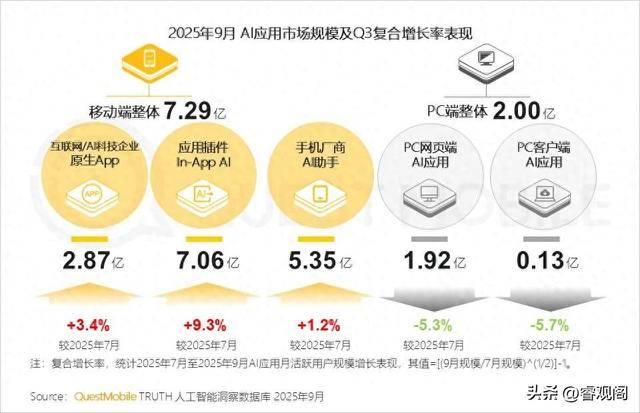
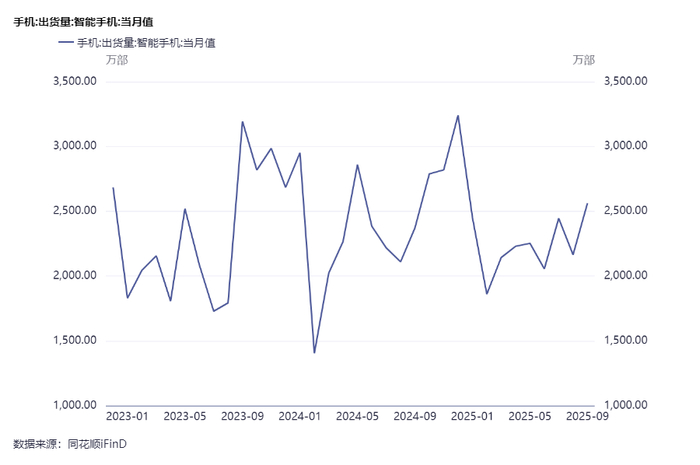
Core Insights - The introduction of Doubao AI phone by ByteDance aims to disrupt the smartphone industry by integrating AI in a way that transcends traditional app functionalities [1][4] - The smartphone market has seen stagnant growth, with monthly shipments remaining around 25 million units over the past three years, indicating a shift in consumer behavior towards longer upgrade cycles [1] - The success of Doubao AI phone is attributed to its innovative approach, which contrasts with previous attempts by brands like Honor that failed to resonate with consumers [1] Smartphone Market Dynamics - Traditional smartphone upgrades have slowed, with average replacement cycles extending from 18 months to 40 months as consumers prioritize essential spending [1] - The smartphone market's monthly shipment figures have plateaued, reflecting a lack of significant growth in the industry [1] AI Integration in Smartphones - Doubao's model redefines the role of apps and UI, focusing on modular services that can be called upon by AI as needed, thus minimizing user awareness of the AI's presence [4] - The future of smartphone advancement may hinge on the ability of AI to handle a majority of routine tasks seamlessly, shifting the competitive landscape [4] Investment Opportunities - The launch of Doubao AI phone has sparked interest in AI-related stocks, with companies like ZTE experiencing significant stock price increases following the announcement [6] - Investors are encouraged to explore various ETFs related to AI applications, with categories including gaming, media, consumer electronics, and VR [5][7][8][12][14] ETF Categories - **Gaming ETFs**: The gaming sector is expected to benefit from the rise of AI applications, with specific indices like the Zhongzheng Animation and Gaming Index capturing a significant portion of the market [7] - **Media ETFs**: Media companies are also poised to gain from AI advancements, particularly in advertising and content creation, with indices like the Zhongzheng Media Index being relevant for investors [8][11] - **Consumer Electronics ETFs**: The consumer electronics sector is likely to see growth due to the AI phone trend, with major indices covering a wide range of related companies [12][13] - **VR ETFs**: Virtual reality is highlighted as a niche within consumer electronics, with specific indices focusing on VR applications and gaming [14]
新LP入场,“麻花大王”出资近10亿
FOFWEEKLY· 2025-12-03 10:01
Core Insights - The primary market is experiencing a warming trend, contrasting with the previous years' pessimism, leading to increased activity in both investment and fundraising [3][4][8] - There is a notable return of institutional Limited Partners (LPs), particularly from traditional industries, indicating a shift in market dynamics [4][10] - Companies like Tianjin Guifaxiang, a traditional food enterprise, are actively participating as LPs, investing nearly 1 billion RMB this year, reflecting a strategic move to seek new growth avenues [5][10] Investment Activity - The recruitment market has become vibrant, with a significant increase in demand for investment and fundraising roles, contrasting sharply with the previous year's contraction [9] - Venture Capital (VC) firms are reporting a tripling of total investment projects by the end of the year compared to the previous year, indicating a robust recovery in investment activity [9] - The fundraising environment is also improving, with multiple new funds being announced, enhancing overall market confidence [9][20] New Capital Influx - A distinct trend is emerging where cash-rich companies from the consumer sector are forming a substantial "Consumer LP Army," actively investing in the primary market [12][14] - Notable examples include Nanji E-commerce, which is establishing a new investment partnership with a commitment of up to 50 million RMB, showcasing the growing involvement of consumer brands in private equity [13][14] - This influx of traditional industry capital is characterized by stable cash flows and a clear intent for asset allocation, making them attractive partners for General Partners (GPs) [14] Market Recovery Indicators - The private equity market in China is showing signs of recovery, with LP commitments reaching approximately 1.24 trillion RMB in the first three quarters of 2025, a 9% year-on-year increase [18] - The number of newly registered funds has also risen by 15.18%, indicating a revitalization in fundraising efforts [18] - Positive signals from industry leaders suggest a consensus on the warming trend in the venture capital sector, with increasing participation from both GPs and LPs [20][21] Future Outlook - The market is expected to undergo a structural transformation, moving from a focus on scale to prioritizing quality and cash returns, as evidenced by the return of previously cautious LPs and the entry of new capital [23] - The ongoing support from policy environments and the emergence of new technological sectors are likely to attract more players into the market, fostering a positive investment climate [20][23]